Yes, you can grow real, living plants in a jar, and some of them thrive there. The best options are moisture-tolerant, low-root-demand plants that don't mind humid, confined spaces: think moss, pothos, lucky bamboo, herbs like mint or basil, small ferns, air plants, and succulents (in open jars only). Which one you should actually start with depends on three things: how much light you have, whether your jar has a lid, and whether you want something to eat or just something to look at.
Plants You Can Grow in a Jar: Best Picks and How to Start
Rachel Hartley
20 Jun 2026
What you can realistically grow in a jar
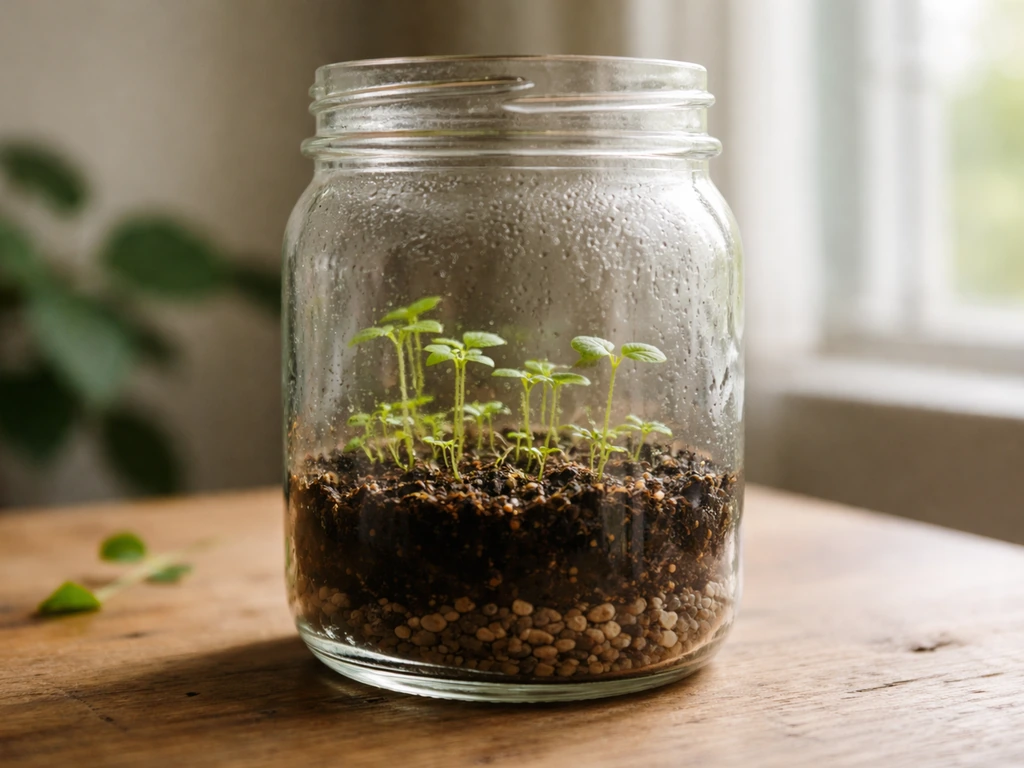
A jar is not a garden bed, so the plants that work best are ones that naturally grow in low-competition, humid, or nutrient-lean environments. You're looking at three broad categories: water-growing plants (no soil at all), terrarium-style humidity lovers (closed or semi-closed jars), and open-jar growers like herbs and succulents. Each category has genuine winners and clear failures, knowing which you're working with saves a lot of dead plants.
The best plant picks, sorted by category
Water-only jars (no soil needed)
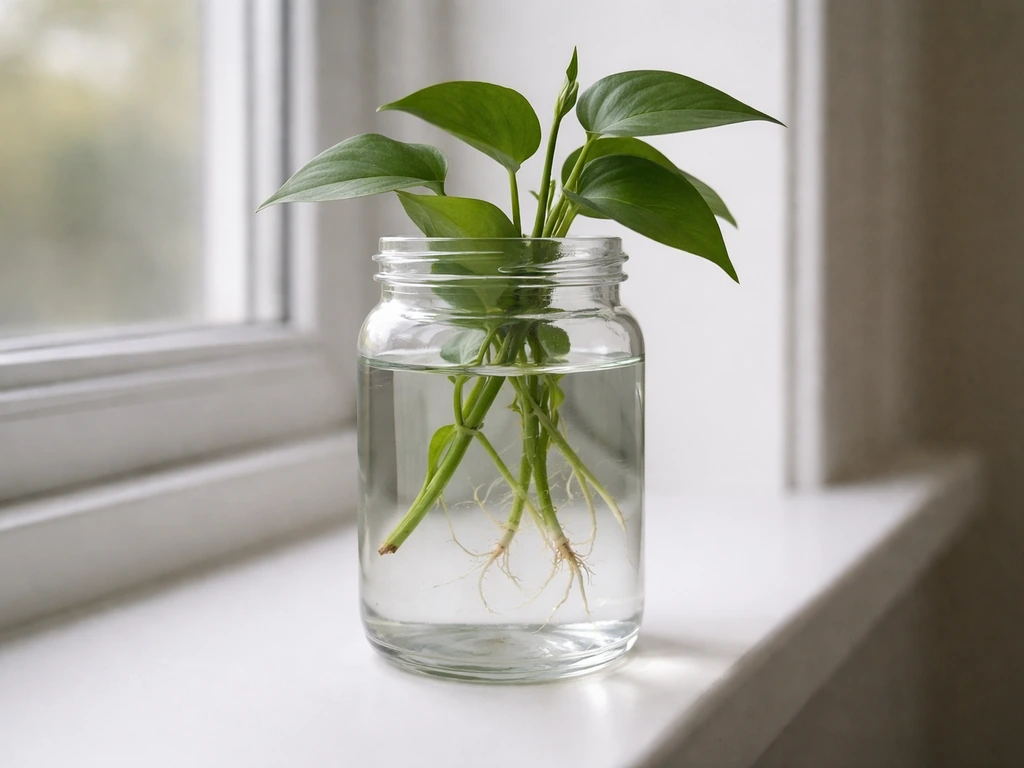
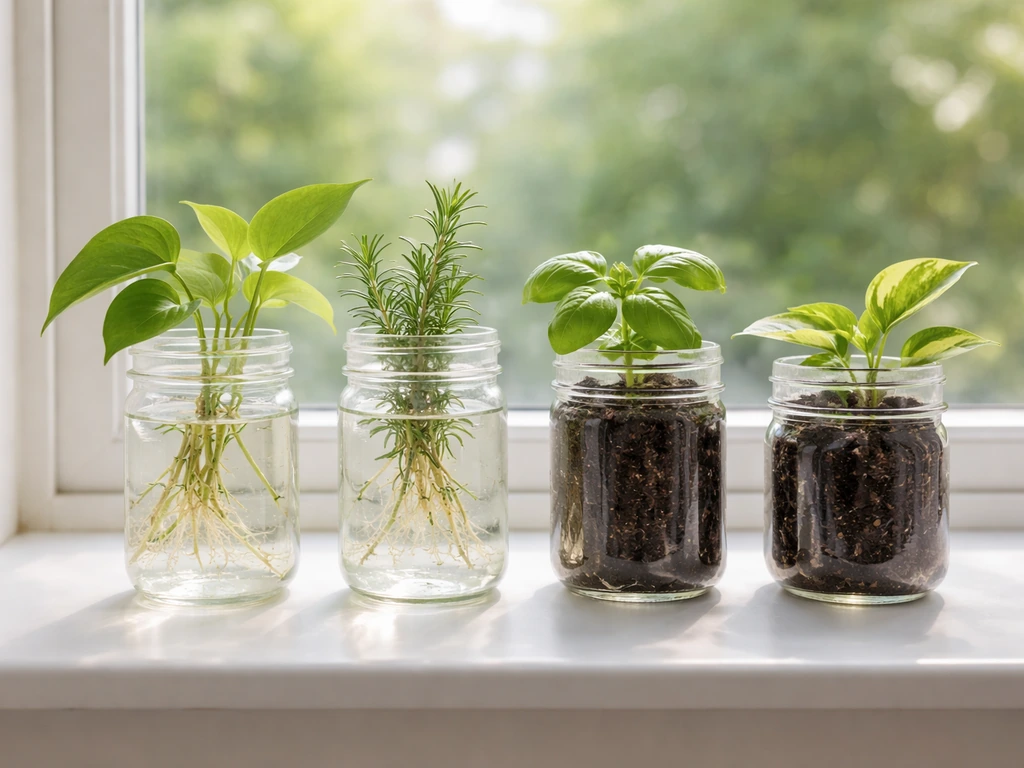
These are the easiest jar setups because there's no soil to go wrong. plants that can grow in glass bottles often do well in water-only jar setups like the ones above, especially in indirect light water-only jars. Lucky bamboo, pothos cuttings, and green onion regrowth all work in plain water with indirect light. Change the water every one to two weeks so it doesn't stagnate. Pothos in particular will root within days from a cutting and keep growing for months without any fuss. Green onions are the fastest return: cut store-bought onions about an inch above the roots, place them in a shallow jar with a little water, and you'll have fresh shoots within a week.
Closed-jar or lidded terrarium plants
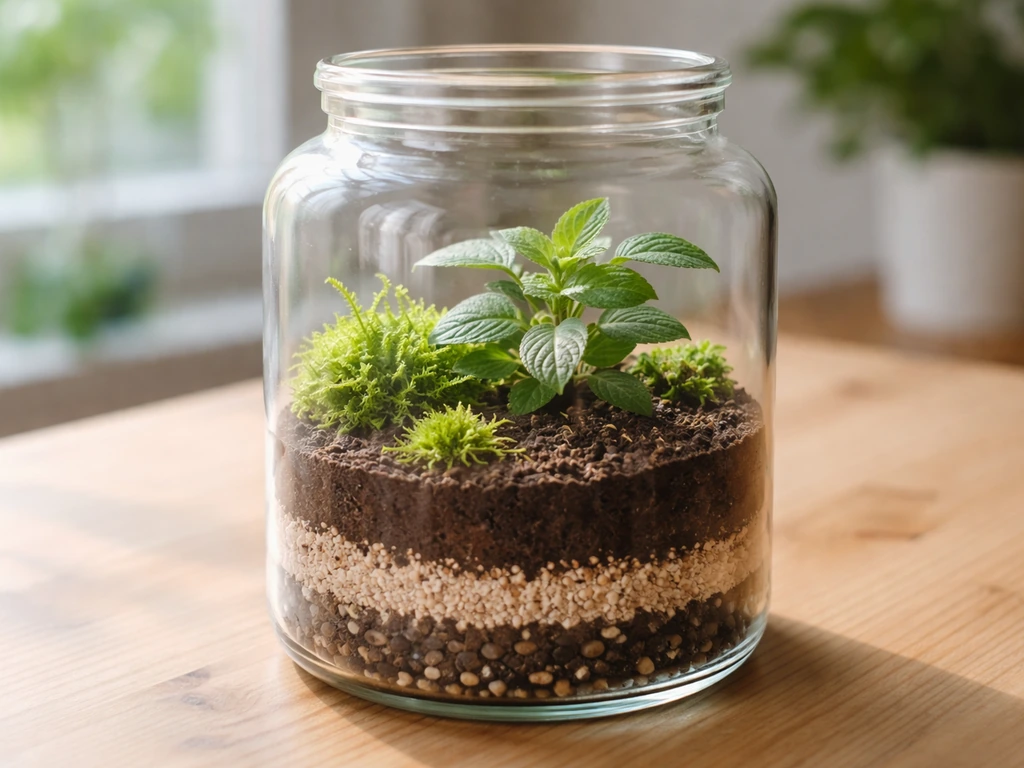
A sealed or tight-lidded jar creates a mini water cycle, moisture evaporates, condenses on the glass, and drips back down. That's the appeal, and it's real. Mosses are the gold-standard closed-jar plant because they evolved for exactly this: constant humidity, low light, no drainage. Small ferns like maidenhair or button ferns work well too. Selaginella (spike moss) is another reliable pick. Avoid anything that needs good air circulation or dislikes wet feet, most flowering plants, succulents, and cacti will rot quickly in a closed jar.
Open jars: herbs, succulents, and air plants
An open jar (no lid, wide mouth) is more forgiving for a wider range of plants. Plastic bottles can also work as a mini container for the same low-moisture or humidity-friendly jar plants discussed in this guide An open jar (no lid, wide mouth). Herbs like mint, basil, and chives do well if you have a bright windowsill.
Succulents can work if the jar is wide enough and the soil drains well, just don't use a deep, narrow jar that traps moisture at the bottom. Air plants (tillandsia) are an honest no-maintenance option: just set them in the jar, mist twice a week, and let them breathe. Small peperomias and spider plant babies also do nicely in open jars with indirect light.
Edible jar picks that actually produce
If food production is the goal, keep expectations calibrated. You won't grow a tomato in a mason jar, but you can grow a useful crop of cut-and-come-again herbs and microgreens. If you are specifically looking for the best plants to grow in mason jars, focus on options that match your jar type and available light. Mint is almost unkillable in a jar with water or moist soil.
Basil needs a bright window (four-plus hours of direct sun indoors or a sunny outdoor spot). Chives are slow but very low maintenance. Microgreens, radish, sunflower, pea shoots, are the fastest edible payoff: sow seeds on a thin layer of damp soil or a wet paper towel, keep in indirect light, and harvest in seven to fourteen days.
| Plant | Jar Type | Light Needed | Edible? | Difficulty |
|---|---|---|---|---|
| Moss | Closed/lidded | Low indirect | No | Easy |
| Pothos cutting | Water jar or open | Low-medium indirect | No | Very easy |
| Lucky bamboo | Water jar | Low-medium indirect | No | Very easy |
| Mint | Open (soil or water) | Medium indirect to bright | Yes | Easy |
| Basil | Open (soil) | Bright, 4+ hrs sun | Yes | Easy-moderate |
| Chives | Open (soil) | Bright indirect | Yes | Easy |
| Microgreens | Open (shallow soil) | Bright indirect | Yes | Very easy |
| Small fern | Closed/lidded | Low-medium indirect | No | Moderate |
| Air plant (Tillandsia) | Open | Bright indirect | No | Easy |
| Succulent | Open, wide-mouth only | Bright direct | No | Easy if setup right |
| Green onion regrowth | Water jar (shallow) | Any indirect | Yes | Very easy |
How to pick the right plant for your light, season, and jar
Light is the real deciding factor. If you are asking what to grow in a greenhouse, the same light and humidity considerations can help you choose the best plants to grow best plants to grow in a greenhouse. If you have a north-facing window or a dim apartment with no direct sun, stick to moss, pothos, lucky bamboo, or small ferns. If you have a south- or west-facing window with real sun hitting the sill for several hours, you can add basil, chives, and succulents to the mix. Anything in between works well with mint, air plants, and peperomia.
Season matters too, especially if you're starting edible herbs. It's late June right now, which is ideal for basil and chives indoors or on a balcony. Mint can go year-round. If you're in a hot climate this summer, keep open jars off south-facing sills that bake in afternoon heat, the glass concentrates heat and can cook roots. A few feet back from the window, or in bright but filtered light, is usually safer.
For jar type: a lidded jar (like a sealed mason jar or apothecary jar) is best for moss, ferns, and moisture-lovers. An open jar with a wide mouth suits herbs, succulents, and air plants. A deep narrow jar with drainage holes drilled in the bottom works for herbs in soil. A simple glass jar with water, no soil, no lid, works for pothos, lucky bamboo, and green onion regrowth. If you're choosing between glass containers more broadly, the same principles apply whether it's a jar, a glass bowl, or a bottle, it's the open-vs-closed and water-vs-soil decision that matters most.
How to actually start: seeds vs cuttings, and setting up the jar
Seeds or cuttings?
For most jar setups, cuttings are faster and more reliable than seeds. A pothos cutting roots in a week in water. A mint cutting from a grocery store bunch will root in ten days. Moss you can collect or buy and just lay it on moist substrate. Seeds make sense for microgreens, basil from scratch, and chives, they're small enough that the jar's limited soil depth doesn't restrict germination. For most other plants, skip seeds and start with a small nursery plant or cutting. Glass bowls can work like small open or closed jar setups, so match the plant to your light and how much you plan to water what plants can i grow in a glass bowl.
Setting up the jar
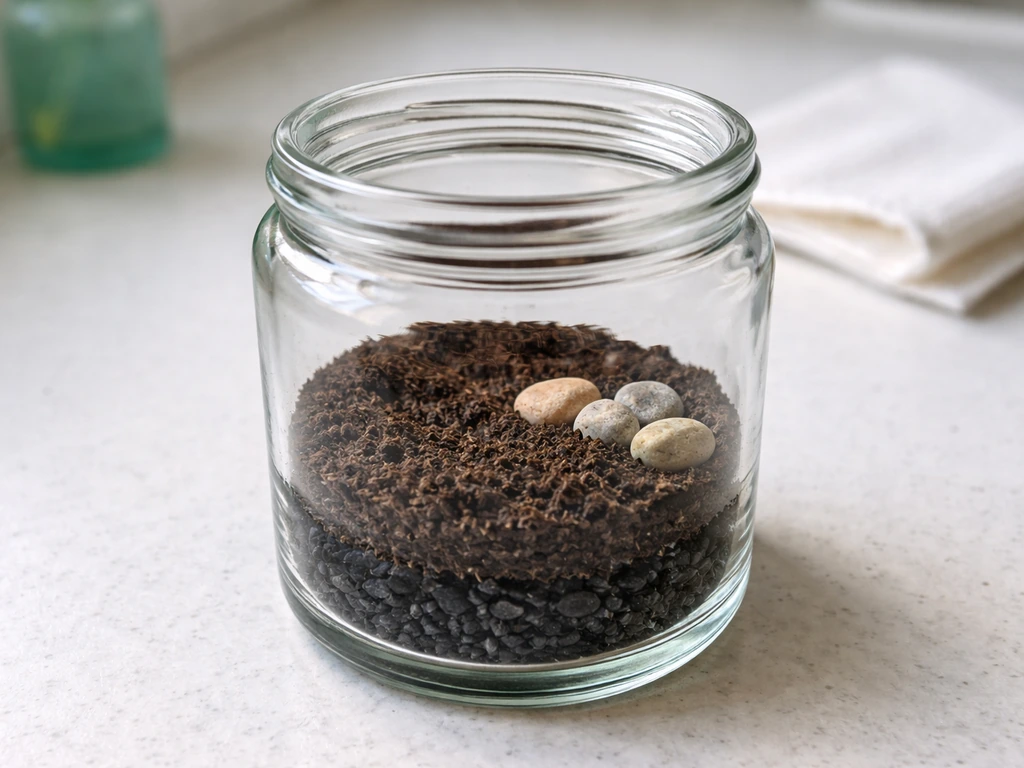
- Clean the jar with hot water and a little dish soap, then rinse thoroughly. Residue from food jars can cause mold.
- For soil-based setups: add a thin layer of activated charcoal (about half an inch) at the bottom to reduce odor and bacterial buildup. Then add your growing medium — potting mix for herbs, a peat-based or terrarium mix for ferns and moss.
- For closed terrariums, add a drainage layer of small pebbles or gravel under the charcoal and soil so roots don't sit in standing water.
- For water jars, fill with room-temperature water and place cuttings so the stem is submerged but leaves stay above the waterline.
- After planting, place the jar in shade or indirect light for about a week to let plants settle before moving to their permanent spot. This is especially important for closed jars — the roots need time to adjust before taking on stronger light.
Keeping your jar garden alive: light, water, and what to expect
Watering: less is almost always more
Overwatering is the most common way jar plants die. In a closed jar with no drainage, water has nowhere to go, what you add stays. A well-set-up closed terrarium with moss or ferns may need watering only once every four to six months, and sometimes even less. Open jars dry out faster, but they still need less water than a standard pot because the glass holds in some humidity. A good rule: water open jars lightly about once a week, and only when the soil is noticeably dry. For water-only jars, change the water every seven to fourteen days to prevent stagnation.
Light placement
Don't place glass jars in direct sun right away, the glass can magnify heat and scorch roots or leaves. Even sun-loving plants like succulents and basil do better in a jar that's slightly stepped back from the window rather than pressed against it. Leaves touching the glass can burn even in a shaded setup. Bright, indirect light works for almost everything on this list. If you're going for a moss or fern closed jar, a north-facing windowsill or a well-lit spot a few feet from any window is genuinely enough.
Growth expectations
Jar plants grow slowly, and that's mostly fine. A closed terrarium is almost a set-it-and-forget-it setup. Herbs in open jars will grow but won't get as large or as fast as they would in a full garden bed, harvest small amounts regularly to keep them productive. Water-growing pothos and lucky bamboo will grow steadily for months and eventually need a bigger vessel or a soil pot. Microgreens are the exception to slow growth: expect to harvest in one to two weeks.
When things go wrong: mold, rot, and stalled growth
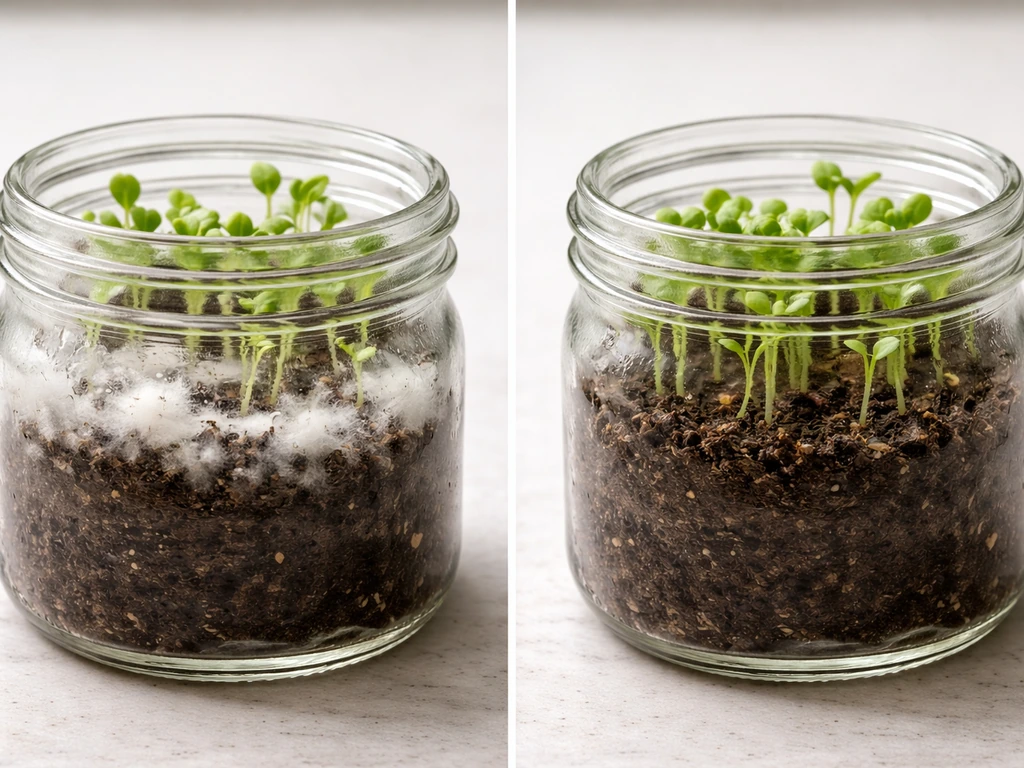
Mold and fungus
White, fluffy mold on the soil surface is common in closed jars and not always a death sentence, but it is a signal. It usually means the jar is too wet or doesn't have enough airflow. For closed terrariums: open the lid for a few hours each day for a week to dry things out, remove any visibly moldy plant material, and check that you haven't overwatered. A small piece of activated charcoal in the substrate helps prevent recurring mold. Fungus gnats are also attracted to persistently moist soil, letting the surface dry slightly between waterings in open jars keeps them away. If you see gnats, don't water for at least a week and see if the population drops.
Root rot
Root rot in jar plants smells bad and looks brown and mushy at the stem base. It's almost always caused by too much water with no drainage. Prevention is easier than cure: use a drainage layer, don't overwater, and choose plants that actually suit your jar type. If you catch it early in a water jar, remove the cutting, trim the rotted part of the stem back to healthy tissue, rinse in fresh water, and restart. In a soil jar, you may need to repot into fresh medium.
Condensation confusion
A little condensation on the inside of a closed jar is normal and healthy, it means the water cycle is working. Heavy condensation that drips constantly and fogs the glass completely means there's too much moisture inside. If you can't see your plant through the glass, open the lid for a few hours until the excess clears, then reseal. Before resealing any closed jar, make sure there's no water sitting on the leaves, wet foliage in an enclosed space is the fastest route to disease.
Stalled or yellowing plants
If growth just stops or leaves go yellow, the most likely culprits are too little light or too few nutrients. Jar plants in low-light spots stall fast. Try moving the jar closer to a window (but not into scorching direct sun) and see if things improve over two to three weeks. For nutrition, a diluted liquid fertilizer at about a quarter of the recommended strength works well for herbs and actively growing plants in open jars. For closed terrariums, skip fertilizer for the first year entirely, overfertilizing in a sealed system causes algae and fast, floppy growth you don't want.
FAQ
What should I do if I get white fuzzy mold on my jar plants?
If you see mold in a closed jar, it usually means the jar is staying too wet or the plant is too dense. Remove any visibly moldy pieces, wipe condensation from the glass, then open the jar lid for a couple hours daily for several days (not full-time) so humidity drops without fully drying the moss or fern.
How can I tell whether yellow leaves in a jar mean too much water or not enough light?
For jar herb cuttings like mint or basil, the safest check is to look at new growth, not only leaf color. Healthy cuttings develop fresh tips within 1 to 3 weeks, while yellowing that keeps worsening usually indicates either low light (stalls) or soggy conditions (rot). Adjust light first, then reduce moisture if you also notice soft stems.
How often should I change the water in a water-only jar, and should I ever just top it off?
In water-only jars, replacing the water every 7 to 14 days is the baseline, but if the jar is warm, use the shorter end (closer to 7 days). Also avoid topping off repeatedly, empty the jar and rinse it briefly each time so biofilm does not build up on the glass or around the roots.
Can I mix plants in the same jar, like succulents with moss or ferns?
Most jar plants fail because the container type does not match the plant’s moisture needs. If the jar is sealed, stick to moss, small ferns, Selaginella, and similar low-air-movement plants. If you want succulents or flowering herbs, use an open, wide-mouth jar so moisture does not stay trapped at the bottom.
Do sealed jars always limit which plants I can grow, or are there ways to expand the list?
A jar with a lid can work for more than moss, but only if the lid is not constantly airtight in practice. If you cannot open it, choose plants that tolerate very high humidity, and expect slower growth. If you can vent it briefly, you can keep ferns and Selaginella happy while avoiding persistent fogging.
What’s the correct first step if my jar plant develops root rot?
When roots in a water jar get brown and mushy, act fast. Remove the cutting from the water, trim back to firm healthy tissue, rinse, and restart in fresh water. If you notice a bad smell from the whole vessel, clean the jar thoroughly before reusing.
Is condensation a sign my jar is healthy, or could it be a problem?
Condensation should be light and temporary, then reduce as humidity balances. If you have constant dripping or the plant stays wet all day, open the lid for a few hours until the foliage is clearly dry, then reseal. Wet leaves inside a sealed jar are a major trigger for disease.
My growth stopped, what should I adjust first: light, watering, or fertilizer?
If your jar plant stops growing, try a two-stage fix. First, move it to brighter indirect light and wait 2 to 3 weeks. Second, only then consider feeding in open-jar setups using diluted fertilizer at about a quarter strength, closed terrariums should not be fertilized early.
How do I prevent mold when growing microgreens in a jar?
For microgreens in jars, timing matters more than plant height. Harvest the first flush at 7 to 14 days, then avoid keeping them too long because overcrowding and trapped moisture quickly raise mold risk. If mold appears, reduce moisture, and increase airflow by loosening the cover or using a more breathable setup.
What’s the best way to deal with fungus gnats in jar plants?
If fungus gnats show up, don’t just treat the adults. Let the top layer dry more than you think (at least a week without watering), remove any decaying plant bits, and avoid overfilling the jar. In open jars, drying cycles usually break the life cycle faster than repeated light misting.
Next Article
Best Plants to Grow in Mason Jars: What to Grow
Learn which plants thrive in mason jars and how to grow them step by step in water or soil by light and season.