A greenhouse gives you something most outdoor gardeners never get: real control. You control the temperature, the light, the humidity, and the season. That means the best plants to grow in a greenhouse are not just your favorites from the garden catalog. They are the ones that actually respond well to that controlled environment, plants whose performance genuinely improves when you stop depending on the weather. The short answer is: tomatoes, lettuce, cucumbers, herbs like basil and mint, strawberries, microgreens, and a range of flowering ornamentals like geraniums and orchids. But which ones work best for you depends on your specific greenhouse conditions. This guide breaks all of that down.
Best Plants to Grow in a Greenhouse: Easy Picks by Season
Rachel Hartley
8 Apr 2026
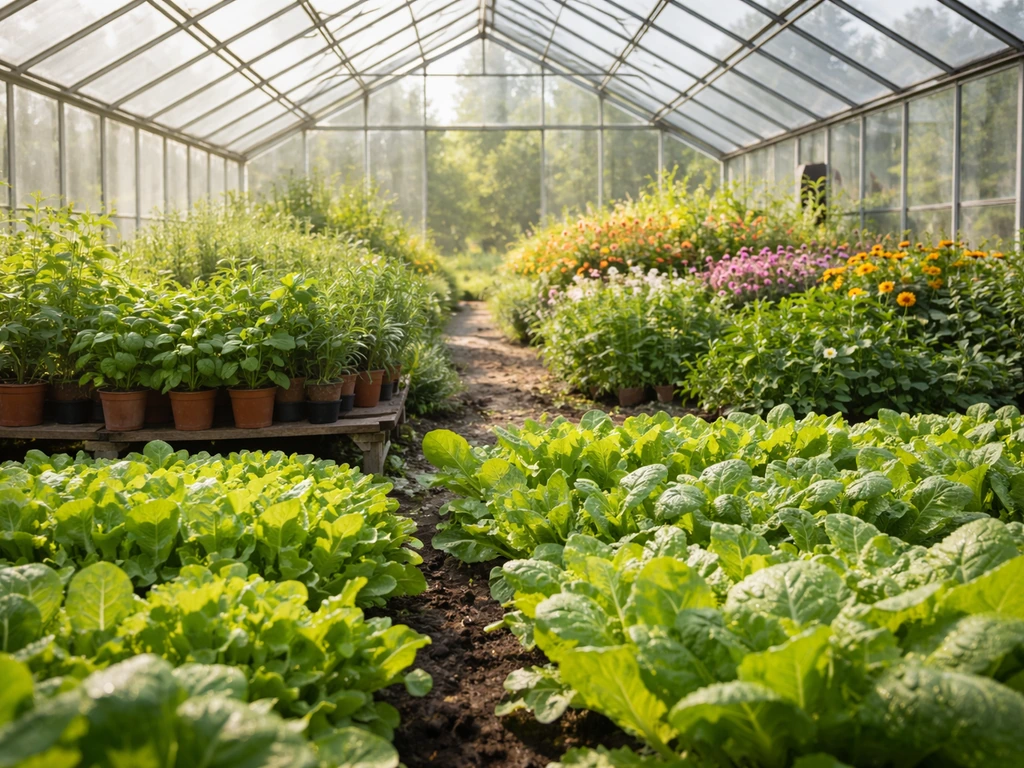
How to pick the right greenhouse plants for your conditions
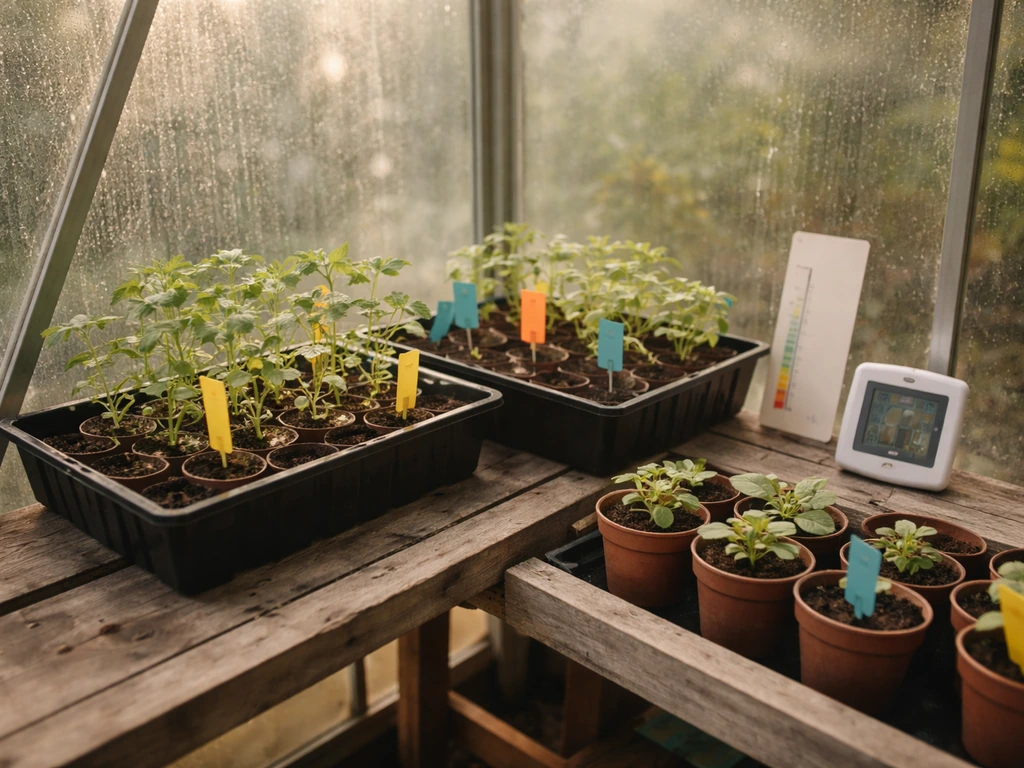
Before you buy a single seed packet, get honest about what your greenhouse actually does. Four things drive nearly every decision: temperature range, light levels, ventilation quality, and how much space you have. Most hobby greenhouses are not perfectly climate-controlled, so knowing your realistic low temperature on a January night, and your peak temperature on a July afternoon, tells you more than any plant hardiness zone chart.
Temperature is the biggest filter. Tomatoes, for example, want daytime air temps in the 70 to 82°F range with nights holding at 62 to 64°F. Push nights above 70°F and you get heat stress, which shows up as blossom drop and poor fruit set. Strawberries are on the cooler end: day temps around 68 to 70°F and nights closer to 50 to 55°F. Leafy greens like lettuce are tolerant and forgiving. If your unheated greenhouse in February runs cool, go with greens. If you have a heated space that holds 65°F overnight, you have real options.
Light is the second big variable. Greenhouses in the Pacific Northwest in winter deal with very different light budgets than a greenhouse in Arizona in March. As the Ohio Controlled Environment Agriculture Center points out, greenhouses let you independently control photoperiod and light intensity, which is a genuine superpower for crop scheduling. But only if you use it. If your structure is shaded or your glazing is dirty, some crops like tomatoes and peppers will underperform badly. Shade-tolerant herbs and greens handle low-light situations much better.
Ventilation matters more than most beginners expect. Poor airflow creates the wet, humid conditions that invite fungal disease. Basil downy mildew, for instance, develops at near 100% relative humidity with optimal pathogen temperatures around 68°F. That is a perfectly normal greenhouse evening. blank" rel="noopener noreferrer">Opening vents and heating toward the end of the day, especially when warm afternoons are followed by cool nights, dramatically cuts disease pressure. Think of ventilation not as an afterthought but as a basic crop management tool.
Best greenhouse plants for beginners vs low-maintenance growers
If you are just getting started, choose plants with a wide temperature tolerance and a short time to harvest. Microgreens are genuinely hard to mess up. Depending on the variety and your environment, they can go from seed to harvest in as little as 7 days and no more than 21. You get instant feedback, low stakes, and something edible on the table fast. Radishes are similarly satisfying: germination takes just 3 to 10 days and they grow quickly enough that you see progress every time you check on them.
Lettuce and other leafy greens are the other beginner sweet spot. They handle temperature fluctuations better than fruiting crops, do not need pollination help, and grow well in shallow containers. For genuinely low-maintenance results, look at green onions, which only need a 6-inch container depth and 3-inch spacing, and herbs like chives or parsley that do not demand precise conditions. If you want something with a bit more visual payoff and minimal fuss, geraniums and impatiens are classic greenhouse starter ornamentals that tolerate minor neglect well.
More experienced growers who want to push the space can move into tomatoes (indeterminate varieties trained vertically save a lot of floor space), cucumbers, peppers, and fruiting strawberries. These all reward better temperature management and consistent watering, but they are not out of reach once you have one season of greenhouse experience under your belt.
Top food crops that thrive in a greenhouse
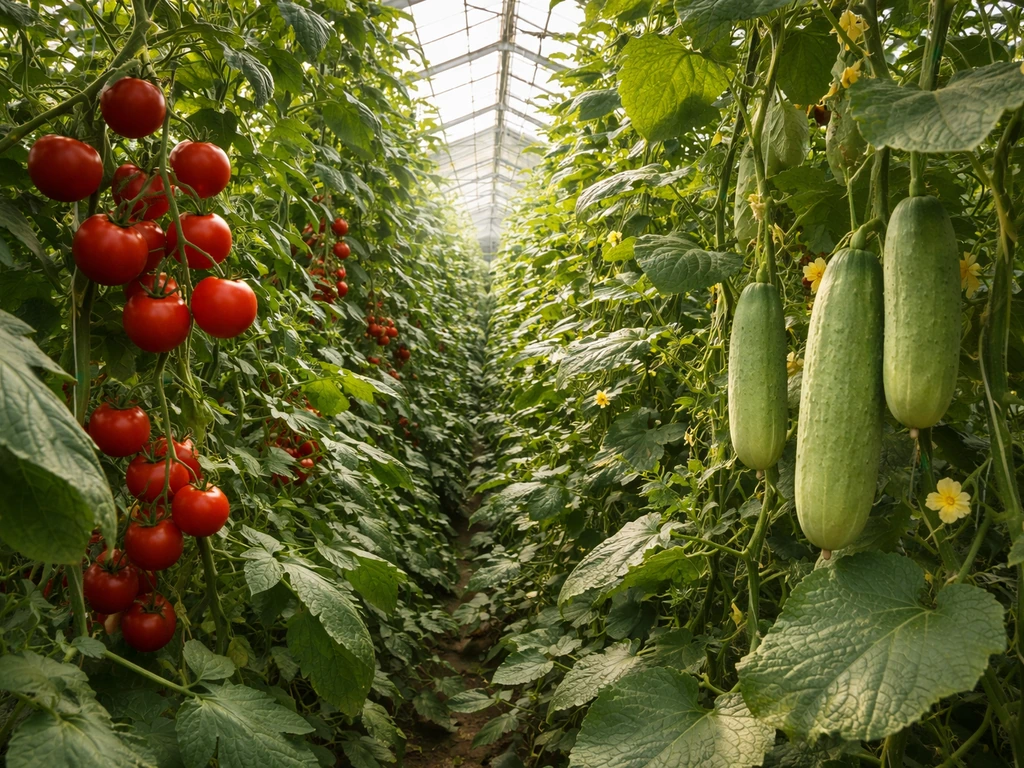
Tomatoes are the single most popular greenhouse food crop for good reason. A heated greenhouse lets you start plants in late winter, often as early as March if you're somewhere like the Wasatch Front in Utah, for a harvest weeks ahead of any field planting. Keep daytime temps in that 70 to 82°F window and nights above 55°F (that is the minimum for greenhouse tomatoes in containers, which need at least 12 inches of depth and 24 inches of spacing). Indeterminate varieties like Sungold, Sweet Million, or Beefsteak work well when trained on vertical strings.
Cucumbers and peppers follow similar warm-season logic. Cucumbers especially love the humidity that greenhouses tend to produce. Just make sure you are growing parthenocarpic (self-pollinating) greenhouse cucumber varieties rather than field types that need bee pollination. Peppers are slower than tomatoes but remarkably productive in a controlled environment, and the plants can be kept alive year to year in a frost-free greenhouse.
Strawberries are a bit underrated for greenhouse production. Day temps around 68 to 70°F and nights around 50 to 55°F suit them well, which is actually cooler than what tomatoes need. This makes strawberries a solid choice if your greenhouse naturally runs on the cool side in spring. They work well in hanging baskets or tiered containers, keeping fruit clean and easy to harvest.
Leafy greens and radishes fill out the mix beautifully. Lettuce is the year-round workhorse of a hobby greenhouse. Keep in mind that fall and winter plantings take longer to reach harvest than spring plantings, so plan your succession sowings accordingly. Radishes and microgreens work as fast gap-fillers between longer crops. Green onions are another reliable producer: thin them to about 2 inches apart if you are harvesting as green onions, and they reward you with minimal care.
| Crop | Day Temp (°F) | Night Temp (°F) | Min Container Depth | Time to Harvest |
|---|---|---|---|---|
| Tomatoes | 70–82 | 55–64 | 12 inches | 60–80 days from transplant |
| Lettuce | 60–70 | 45–55 | 6 inches | 30–60 days |
| Strawberries | 68–70 | 50–55 | 8–10 inches | 4–6 weeks from flower |
| Radishes | 60–65 | 50–60 | 6 inches | 3–5 weeks |
| Cucumbers | 70–80 | 60–65 | 12 inches | 50–70 days from transplant |
| Microgreens | 65–75 | 60–65 | 2–3 inches | 7–21 days |
Ornamental and flowering plants for year-round greenhouse color
A greenhouse does not have to be purely utilitarian. Flowering ornamentals pay you back in mood and beauty, and many of them are genuinely easier to grow under glass than in the open garden. Geraniums, cyclamen, primulas, and begonias are classics for a reason: they handle the slightly fluctuating temps of a hobby greenhouse without drama and deliver color through the months when your outdoor garden is bare.
Orchids, particularly Phalaenopsis (moth orchids), are more approachable than their reputation suggests in a greenhouse. They need bright indirect light, good air circulation, and temperatures that drop slightly at night to trigger re-blooming. That nighttime temperature differential is something a greenhouse gives you almost automatically in shoulder seasons. Pelargoniums and fuchsias can be overwintered in a cool greenhouse (around 40 to 45°F minimum) and then brought into peak growth in late winter for early spring color.
For year-round scheduling, the key concept is working backwards from when you want blooms. Want geraniums blooming for Easter? Count back from your target date to determine your sowing or potting date, factoring in your greenhouse temperature and light levels. This "work backwards" scheduling approach is the same logic commercial growers use and it works just as well at hobby scale.
If you enjoy small-scale container gardening indoors, the principles that apply to greenhouse ornamentals translate surprisingly well to tabletop setups. Thinking about what plants grow well in glass containers can give you ideas for propagation displays and small decorative setups inside the greenhouse itself, especially for starts and cuttings that need a sheltered spot.
Herbs, medicinal/utility plants, and easy greenhouse producers
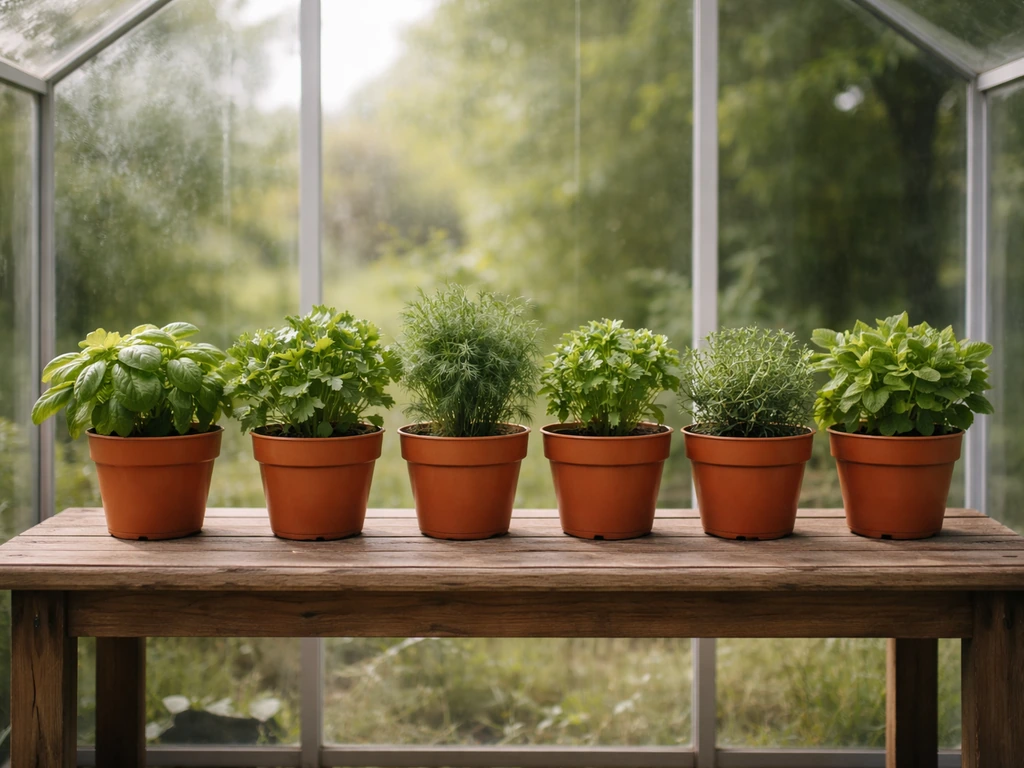
Herbs are one of the best greenhouse investments you can make. Basil, cilantro, dill, parsley, chives, thyme, and oregano all do well under glass, and you get harvests year-round instead of just in summer. Basil is the one herb that genuinely needs careful management in a greenhouse: high humidity and cool nights are exactly what trigger downy mildew, which can devastate a basil crop fast. Heat the greenhouse in the evening before temperatures drop, keep air moving, and avoid overhead watering on basil. Water at the base and in the morning.
Mint is another powerhouse but comes with a caveat. In a garden, mint will take over any bed it's planted in. In a greenhouse, the fix is easy: grow mint in its own container, about 12 to 16 inches in diameter, or in a bottomless container if you sink it into a bed. That containment strategy keeps it from colonizing everything around it while still giving you an almost unlimited harvest of fresh leaves.
On the medicinal and utility side, aloe vera, lemon balm, calendula, and echinacea all grow well in greenhouse conditions. Aloe especially benefits from the consistent warmth and low winter humidity a heated greenhouse provides. Calendula is fast-growing, edible, and medicinal, with flowers that double as a striking ornamental. It tolerates cooler greenhouse temps and is one of the plants that genuinely does not mind being a bit crowded in a container.
For anyone experimenting with propagation or unusual small-scale setups, herbs like thyme and oregano propagate easily from cuttings and can be started in small vessels before being moved to larger containers. If you want to experiment with unconventional growing vessels, you can even try rooting cuttings in repurposed containers. There is a whole world of creative options, from growing herbs in mason jars to starting seedlings in small pots before transitioning them to proper greenhouse beds.
Season and climate-based planting plans (what to grow now vs later)
Right now, in early April 2026, you are in a strong planting window for a lot of greenhouse crops across most of North America. If your greenhouse is heated, tomatoes and peppers started from seed in late January to February should already be transplant-size. If you're a bit behind, transplanting now is still viable for a late spring harvest. If you have not started warm-season crops yet, buy transplants rather than starting from seed at this point, since field-days from transplant are tight.
For cool-season crops, lettuce, spinach, radishes, and green onions are still very much in play. In most regions, a greenhouse lets you push these further into late spring before heat becomes an issue, since you have some control over ventilation and shading. Keep in mind that spring plantings harvest faster than fall or winter plantings because of longer day length and warmer soil temperatures. That shorter timeline is a real advantage right now.
Looking ahead to summer, the main challenge is managing heat rather than cold. Shade cloth, good ventilation, and switching to more heat-tolerant crops (sweet peppers, basil, eggplant) will carry you through July and August. Plan your fall crops now: if you want a productive fall and winter greenhouse, bulk growth for crops started in September and October will peak by mid-November. That means getting your fall brassicas, leafy greens, and overwintering herbs established early, before day length shortens too much to support fast vegetative growth.
In cooler climates, year-round greenhouse growing often follows a two-track approach: warm crops (tomatoes, cucumbers) in spring through fall, and cool crops (lettuce, spinach, herbs, greens) from fall through early spring. If you match the crop to the season rather than fighting temperature, you dramatically reduce your heating costs and your crop failure rate.
| Season (Northern Hemisphere) | Best Greenhouse Crops to Start | Notes |
|---|---|---|
| Late Winter (Jan–Feb) | Tomatoes, peppers, cucumbers (from seed) | Start 8–10 weeks before last frost; need supplemental heat |
| Early Spring (Mar–Apr) | Transplant tomatoes/peppers; direct sow lettuce, radishes, green onions | Strong natural light; cool nights still ideal for greens |
| Late Spring (May–Jun) | Basil, eggplant, melons; succession lettuce before heat | Ventilate aggressively; shade cloth may be needed |
| Summer (Jul–Aug) | Peppers, basil, heat-tolerant herbs; start fall brassica seeds late Aug | Heat management is the main challenge |
| Fall (Sep–Oct) | Lettuce, spinach, arugula, kale, overwintering herbs | Bulk growth peaks by mid-November; time plantings early |
| Winter (Nov–Feb) | Microgreens, leafy greens, cool herbs, ornamentals | Supplement light if needed; cool temps suit strawberries and greens |
Container and bed setup tips to help plants succeed
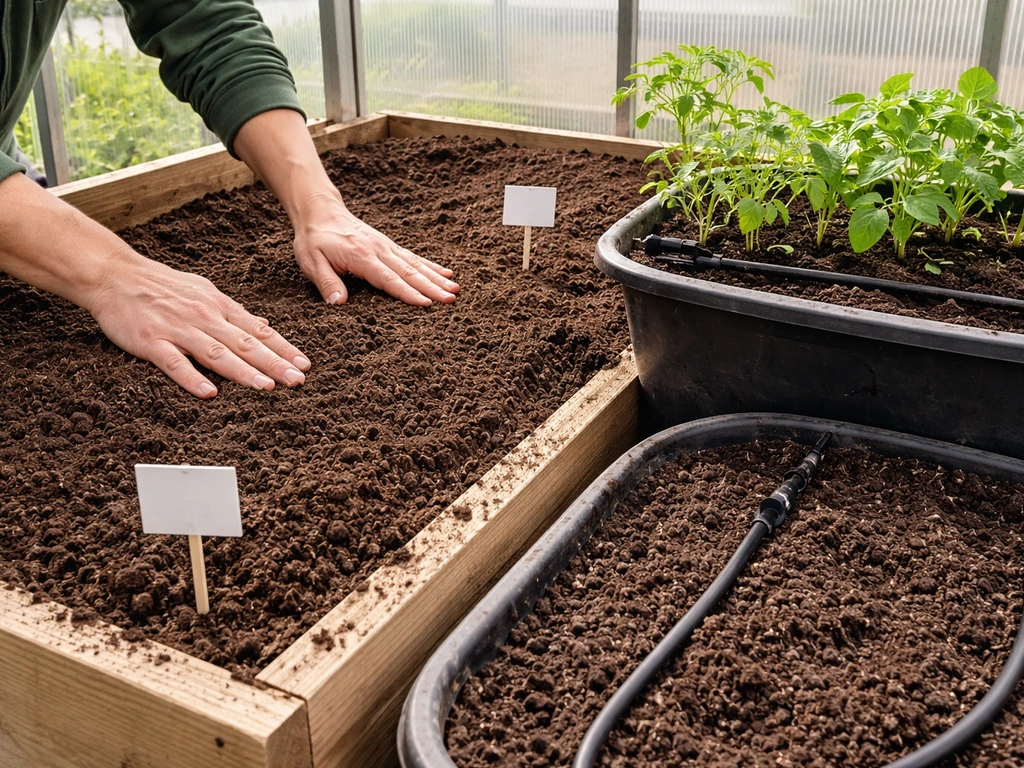
Whether you use raised beds or containers comes down mostly to what you are growing and how permanent your setup is. Beds give you more soil volume, which buffers temperature and moisture swings. Containers give you flexibility to move plants around and are often better for pest and disease management since you can isolate and replace individual pots. Most hobby greenhouse growers end up using both.
Container depth matters more than most people realize. Tomatoes need at least 12 inches of depth and 24 inches of spacing between plants. Green onions get by with 6 inches of depth. Strawberries do well in 8 to 10 inch containers. Crowding plants or using too-shallow containers stresses roots, reduces yields, and creates conditions where plants are more susceptible to both pests and disease.
For irrigation, greenhouse crops can be watered by drip tubes or tapes applied to the media surface, by hand with a hose, by overhead boom sprinklers, or by sub-irrigation (bottom watering). Each method has trade-offs. Overhead watering is fast but increases leaf wetness, which invites fungal disease on basil and tomatoes. Drip irrigation delivers water directly to the root zone and keeps foliage dry, which is why it is the method of choice for most serious greenhouse vegetable production. Sub-irrigation works extremely well for container-grown herbs and greens because it encourages deep root growth and keeps foliage completely dry.
Pest management in a greenhouse is a different game than outdoor gardening because pests can establish and multiply rapidly in the enclosed environment. The first line of defense is physical: install insect screening over vents and openings to block entry of aphids, whiteflies, thrips, and leafminers before they become a problem. Early detection is critical because populations that take weeks to build outdoors can explode in days under glass. Check the undersides of leaves regularly. Avoid overwatering and keep the floor dry to cut down on fungus gnats, which thrive in wet conditions.
Condensation is a subtler issue that catches people off guard. On winter mornings, as sunlight warms the air faster than plant tissue, water condenses on leaves, creating ideal conditions for fungal disease. The fix is to heat the greenhouse so plant temperatures rise to meet the day target before sunrise, not after. It sounds like a small detail but it makes a meaningful difference for tomatoes and basil in particular.
Finally, do not overlook the creative potential of small-scale container growing within the greenhouse itself. Propagation areas, windowsill-style micro-gardens, and small ornamental displays can occupy corners and shelving that would otherwise go unused. If you enjoy experimenting with unconventional containers for starting plants, ideas from guides on plants that can grow in plastic bottles or even repurposed glass vessels translate naturally to greenhouse propagation trays and nursery areas. Small starts in compact vessels, then up-potted as they grow, is a perfectly sensible greenhouse workflow.
For tabletop herb displays inside the greenhouse, or for anyone who wants to create an appealing propagation corner, it is worth knowing which varieties do well in smaller enclosed vessels. There are good options for plants that grow in glass bottles that can double as decorative propagation stations within a greenhouse, useful for rooting cuttings of herbs like basil and mint before transplanting them to production containers.
Some growers also enjoy setting up display shelves with small self-contained plantings. If that appeals to you, exploring plants you can grow in a jar can give you ideas for self-contained low-maintenance displays that work well in the warmer, sheltered environment of a greenhouse. And for anyone who wants to extend the aesthetic beyond purely functional production, what plants do well in a glass bowl is worth a look for ornamental terrariums or succulent displays on greenhouse staging shelves.
If you are working with very small containers, like repurposed mugs or small decorative pots on a potting bench, consider what compact herbs and greens actually work at that scale. A guide to the best plants to grow in mugs can help you identify which herbs tolerate tight root space long enough to be useful as a short-term harvest or display plant inside the greenhouse. Similarly, growing plants in a bottle is a practical approach for propagating greenhouse herbs in a low-cost, reusable vessel before moving them up to full production size.
The practical starting point: what to actually do next
If you are reading this in early April and you want to make the most of the next few months in your greenhouse, here is the simple action plan. First, assess your actual temperature range, not the target range, but what your space really does overnight right now. That tells you whether you are in warm-crop territory (tomatoes, cucumbers, peppers) or cool-crop territory (greens, radishes, herbs). Second, get seeds or transplants for the crops that match that temperature reality. Third, pick your container sizes based on the crop minimums above, and set up drip or sub-irrigation if you want to cut disease risk and reduce daily maintenance. Fourth, install vent screening before summer if you have not already. Pests are much easier to keep out than to manage once they are established inside.
The greenhouse rewards the grower who matches the plant to the conditions rather than forcing the conditions to match the plant. Start with the easy wins, microgreens, lettuce, herbs, and one reliable fruiting crop like tomatoes or strawberries. Get a season of data on how your specific structure performs. Then expand into more demanding plants with that knowledge behind you. That is how hobby greenhouse growing actually works in practice, and it is more satisfying than trying to grow everything at once and wondering why half of it fails.
FAQ
What’s the easiest way to prevent fungal problems in a greenhouse, especially with basil and tomatoes?
Yes. For tomatoes, basil, and many leafy greens, the biggest improvement is keeping plant foliage as dry as possible. Use drip or sub-irrigation where you can, irrigate early in the day, and if you must water overhead, do it with extra ventilation so leaves dry before evening.
I don’t heat my greenhouse, which crops are safest during cold snaps?
Start by matching the plant to your coldest nights, not your daytime highs. If your unheated greenhouse often drops near the low 40s to 50s°F, prioritize radishes, lettuce, spinach, onions, and hardy ornamentals, and keep tomatoes, cucumbers, and peppers for a heated or reliably warmer space.
How can I tell if my greenhouse conditions are good enough before I invest in a full crop?
Use a simple “night stress test” before committing. Put tomato transplants, cucumber starts, or strawberry crowns in the actual spot you plan to grow them, then track nighttime temperature and humidity for 1 to 2 weeks. If nights run consistently above tomato requirements or humidity stays near saturation, switch to cooling-tolerant crops or improve ventilation.
What should I watch for when my greenhouse has big day-night temperature swings?
Be careful with heat-loving crops during shoulder seasons. If your greenhouse swings from cool nights to hot days, you can get blossom drop in tomatoes and slow fruit set in peppers. Add venting and consider shade cloth during sunny afternoons, rather than trying to “push through” the heat.
Can I grow cucumbers and strawberries in a greenhouse without dealing with pollinators?
Yes, but only if you choose varieties that do well in enclosed spaces. For cucumbers, you generally want parthenocarpic (self-pollinating) types, and for strawberries you should use cultivars known for greenhouse performance. If you grow non-self-pollinating crops, you may need manual pollination.
Are microgreens always the easiest greenhouse crop, even in winter low-light conditions?
Microgreens are usually the fastest, but they are not automatically the easiest if light is limited. If your greenhouse is dim in winter, you will get long stems and weak flavor. Improve light with cleaning glazing, moving trays closer to the brightest area, or using supplemental lighting during the lowest-light weeks.
Can I grow tomatoes in smaller containers to save space?
Not always. Container size is a yield limiter. Tomatoes need enough root volume and spacing to avoid stress-related disease and reduced fruiting. If you must use smaller containers, use compact, determinate varieties and accept smaller yields, but don’t expect full-size greenhouse performance.
How do I space plants in a greenhouse to reduce disease without wasting space?
Plan spacing for airflow, not just plant size. Tight spacing increases humidity around leaves and makes it harder for vents to remove moisture. For vertically trained indeterminate tomatoes, keep a clear airflow lane between rows and prune to maintain open canopy structure.
What’s the best way to keep common greenhouse pests out early?
Install insect screening before the warm months and seal any gaps. Also, use sticky cards near vents and on plant benches as an early warning system for aphids, whiteflies, and thrips. The screening and monitoring step prevents infestations from “getting established” quickly under glass.
Why do I get water on leaves at the start of the day, and how do I stop it?
If you see condensation on leaves in winter mornings, the fix is timing and temperature management. Heat so plant tissue reaches the daytime target before sunrise, or delay vent closure until the air and plant temperatures are closer. Morning condensation is a major trigger for leaf-targeting fungal issues.
What’s the safest way to grow mint in a greenhouse without it taking over?
Yes, especially if you use containment. Mint should be grown in its own large pot or bottomless barrier so runners do not colonize beds. For best control and easier harvest, keep the container near where you already manage irrigation.
Next Article
Best Indoor Plants That Grow Tall: Top Picks & Care Guide
Best tall indoor plants by light, care and season, real heights, potting, pruning, pests, plus a quick picker's guide.