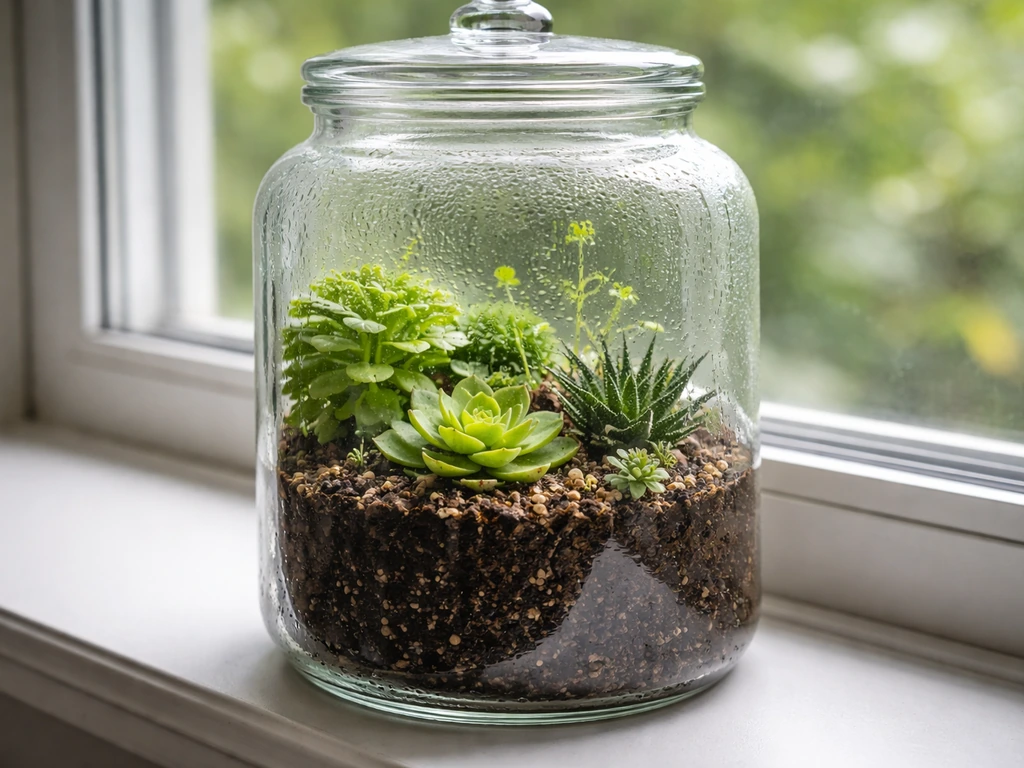
Moss, ferns, Fittonia (nerve plant), Selaginella, Peperomia, and Pilea are the plants most likely to thrive in glass bottles. The right choice depends on one thing above everything else: whether your bottle has a lid or not. A sealed bottle creates a humid, self-watering mini-ecosystem that suits moisture-loving, low-light plants. An open bottle is more like a decorative vase or planter, which opens the door to succulents and air plants but requires you to water regularly. Get that one distinction right and the rest falls into place.
Plants That Can Grow in Glass Bottles: Best Picks Guide
Rachel Hartley
11 May 2026
How bottle gardening actually works (closed vs. open)
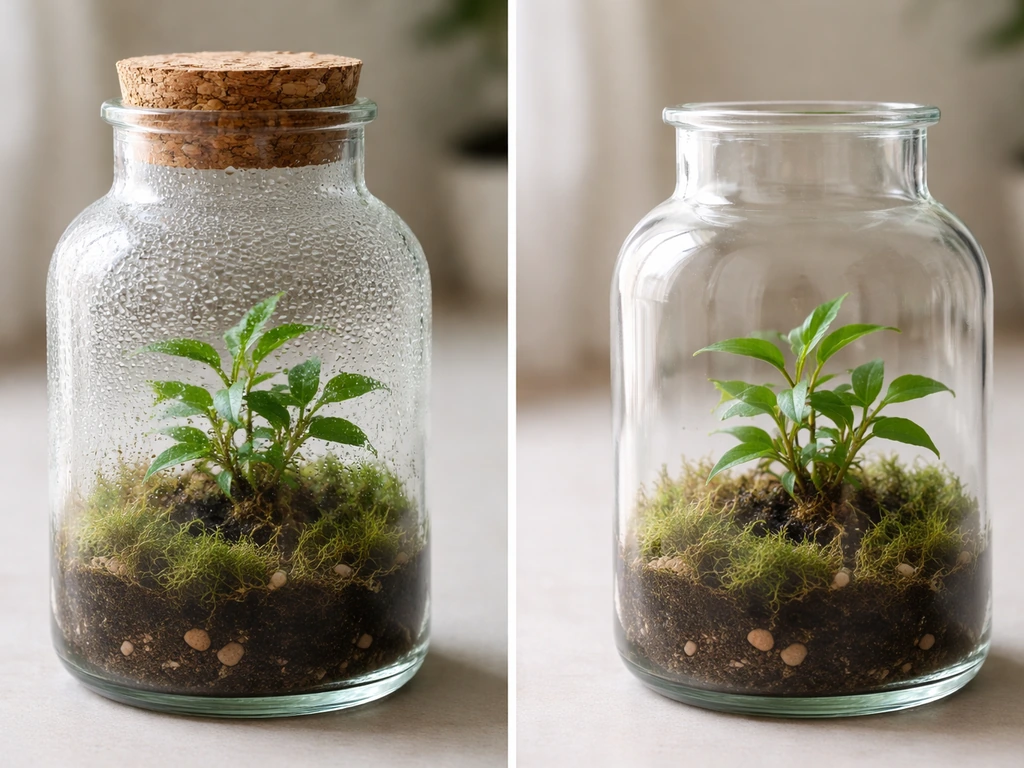
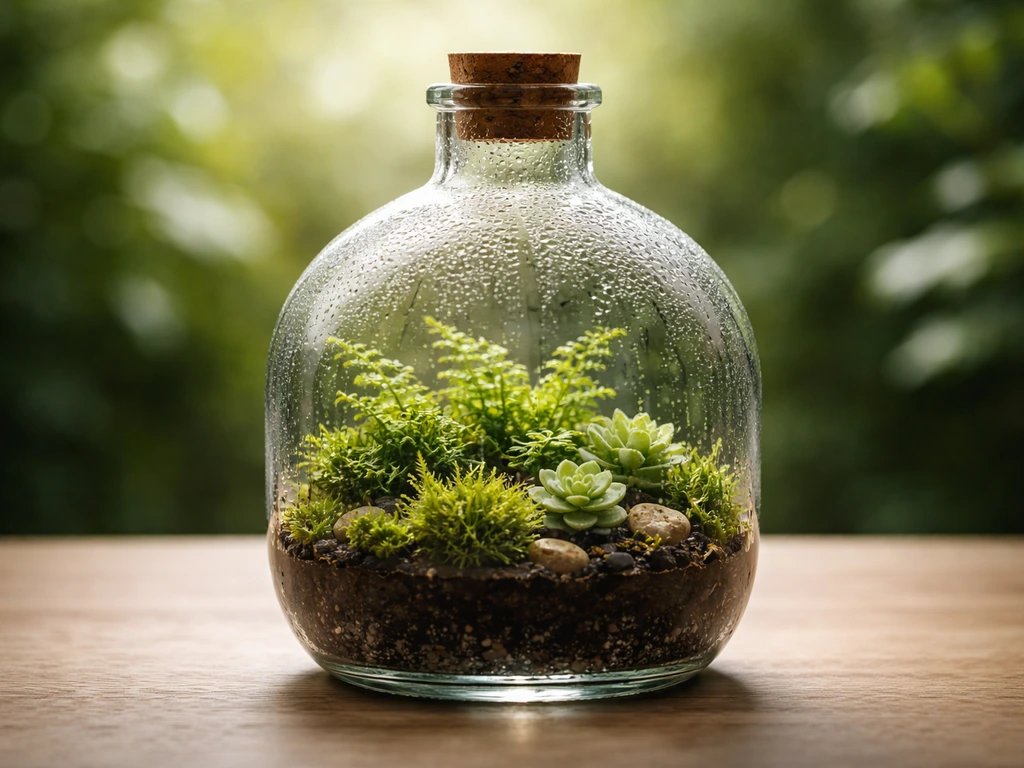
A glass bottle does something no ordinary pot can: it traps humidity. When you seal a bottle with a lid or cork, the water your plants transpire condenses on the inside walls and trickles back down into the soil. That's a genuine mini water cycle, and once it's balanced, a closed bottle terrarium can go three to six months without any added water. That's not a trick, it's just physics working in your favor.
An open bottle (no lid, or a wide-mouth bottle left uncovered) exchanges air freely, so moisture escapes continuously. Plants in open bottles need regular watering, much like any container plant. They're also more forgiving for beginners because you can see and feel the soil easily, and problems like overwatering are less likely to spiral. If you're nervous about glass-bottle gardening, start with an open setup.
The trade-off is real though. Closed setups are almost self-managing once balanced, but they're less forgiving of the wrong plant choice. Put a succulent in a sealed bottle and it will rot. Put a fern in a dry open bottle on a south-facing windowsill and it'll crisp up within a week. Match the plant to the bottle type, and you're most of the way there.
Best plants for glass bottles, organized by container type
Closed, sealed glass bottles
You want plants that love high humidity, tolerate low to indirect light, and stay small. If you are looking for plants you can grow in a jar, start by choosing small, humidity-loving foliage that fits the light in your space. Fast growers will outgrow a bottle quickly, so stick to slow-growing or naturally dwarf varieties. These are the plants that consistently work well in sealed glass bottles:
- Moss (any small terrarium moss): The easiest pick. Loves moisture, handles dim light, stays compact, and looks great against glass.
- Fittonia (nerve plant): Low-growing, dramatic leaf patterns, thrives in high humidity. One of the most rewarding closed-bottle plants you can grow.
- Miniature ferns (Adiantum, Pteris, Pellaea): Natural matches for sealed environments. They have an affinity for moisture and do well in lower light.
- Selaginella (club moss or spike moss): Stays small, spreads gently, and handles the humid sealed environment beautifully.
- Peperomia (small varieties): Tolerates lower light and moderate humidity. A good beginner pick if pure mosses feel too advanced.
- Pilea (small species like Pilea glauca): Compact, handles indirect light, and adapts well to the bottle's humidity.
- Liverworts: Not a common houseplant buy, but if you find them at a specialty nursery, they're ideal for sealed setups.
One plant category to avoid entirely in sealed bottles: flowering plants. They drop petals and organic matter, which decays quickly in a sealed humid space and invites mold. Stick with foliage.
Open glass bottles and vases
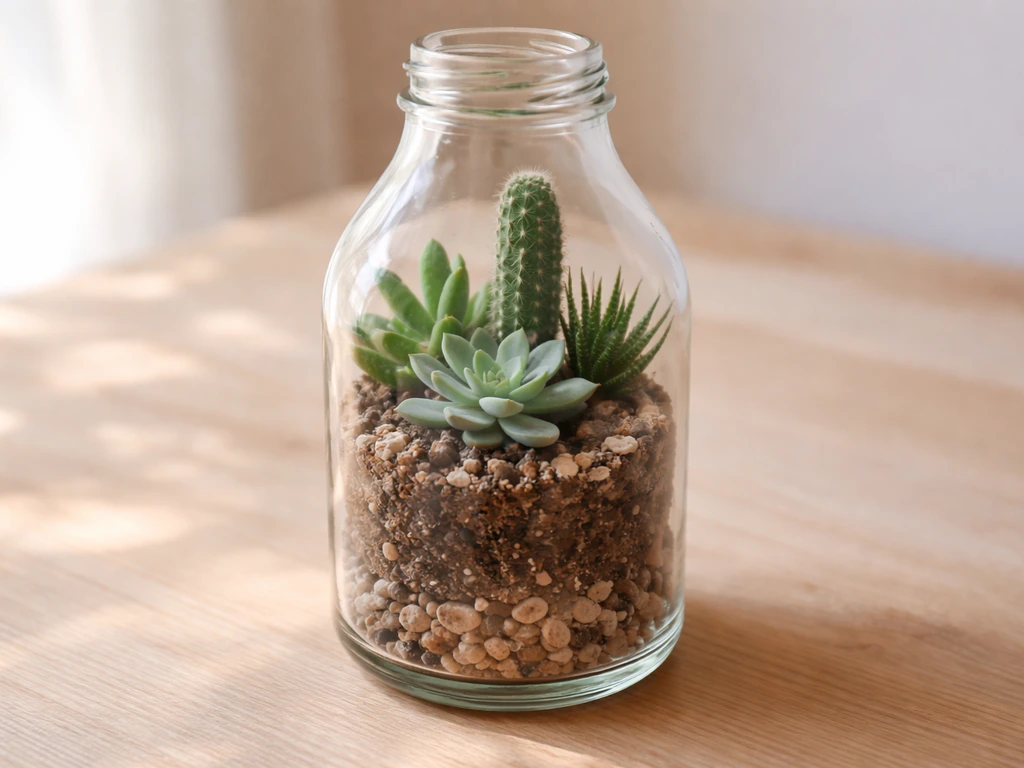
With open bottles, you're essentially working with a decorative container that happens to be glass. Drainage is the main challenge (more on that below), but your plant options expand considerably:
- Succulents and cacti: These are ideal for open glass because they need air circulation and dry out between waterings. They'd rot in a sealed bottle.
- Air plants (Tillandsia): No soil needed. Just wedge them into the bottle opening or nestle them on top of decorative pebbles. Mist once or twice a week.
- Pothos cuttings: A single stem in water or a shallow substrate in a wide-mouth bottle roots easily and grows well with indirect light.
- Small herbs (basil, mint, thyme): Possible in a wide-mouth open bottle on a bright windowsill, but they'll need drainage planning and regular watering.
- Tradescantia: Colorful, fast-rooting in water or soil, great in open glass bottles as a temporary display or propagation setup.
Light, humidity, and watering rules that actually matter
Light
Never put a glass bottle in direct sunlight. The glass magnifies heat and will cook your plants, literally. Both closed and open bottle setups need bright indirect light or moderate indirect light. A spot 2 to 4 feet from a south or east-facing window is usually ideal indoors. North-facing windows work fine for moss and fern closed terrariums, which are some of the most shade-tolerant plants you can grow. If you're in a low-light apartment, a small grow light on a timer (12 hours on, 12 hours off) solves the problem without much fuss.
Humidity
Closed bottles manage their own humidity, but you need to read the condensation. A light mist that trickles down the inside walls every morning is normal and healthy. If the inside is completely fogged up and you can't see the plants, it's too wet: remove the lid for a few hours to vent. If there's no condensation at all for several days, the bottle needs a light spray of water added through the opening before you reseal it. Open bottles don't self-regulate, so the indoor humidity of your home is what your plants get.
Watering
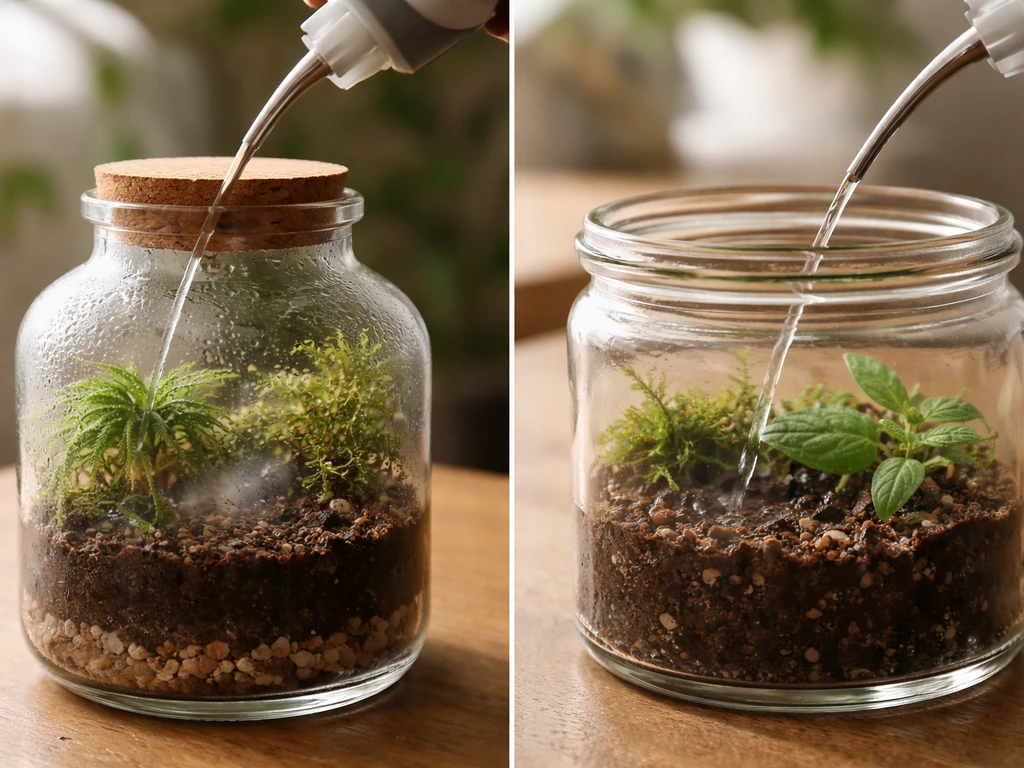
Closed bottles: Once set up correctly, water every three to six months, guided entirely by condensation cues rather than a calendar. Use a spray bottle or a thin-nosed watering can to add water without disturbing the substrate. A little goes a long way. Overwatering is the single most common mistake and almost always the cause when a closed bottle setup fails.
Open bottles: Water as you would a regular container, but more carefully because glass has no drainage holes. Stick your finger into the substrate; water only when the top inch feels dry. Use a spray bottle for small bottles to avoid adding too much at once. The goal is slightly moist substrate, never waterlogged.
Setup checklist: soil, substrate, and layering
Getting the substrate layers right is what separates a bottle garden that lasts years from one that turns into a soggy mess within weeks. This applies especially to closed setups, where you have no drainage hole to bail you out.
- Bottom drainage layer (1 to 2 cm): Small pebbles or horticultural grit. This creates a false bottom so roots never sit in pooled water.
- Activated horticultural charcoal layer (thin, about 0.5 cm): Goes on top of the pebbles. It keeps the closed environment fresh and helps prevent anaerobic odors and bacterial buildup.
- Barrier layer (optional but helpful): A thin piece of landscape fabric or a layer of sphagnum moss separates the charcoal from the soil above, so fine soil particles don't migrate down into your drainage layer.
- Substrate (main growing medium, 5 to 8 cm): Use a peat-based commercial potting mix for moisture-loving plants in closed bottles. For succulents in open bottles, use a well-draining cactus mix or add extra perlite to regular potting soil.
- Plant and settle: Insert plants using a long spoon or chopstick for narrow bottles. Tamp the substrate gently around roots.
- Clean up before sealing: Use a spray bottle or straw to rinse any soil off foliage and off the inside walls. Wipe the glass with a dry cloth. Seal, place in indirect light, and watch for condensation over the first 24 to 48 hours.
One honest note on the drainage layer: it does reduce the volume of available growing space, but it genuinely does prevent waterlogging in a container with no holes. Don't skip it.
Matching plants to your space and the current season
It's May, which means indoor light levels are climbing in most of the northern hemisphere. Days are longer, natural light is stronger, and that actually makes right now one of the best times of year to start a glass bottle garden. Plants establish faster when days are lengthening, and the warmth helps rooting. If you're in a hot climate (think Texas, Arizona, or the deeper South), avoid placing bottles near windows that will get intense afternoon sun through May and June, glass plus heat equals a bad outcome.
For indoor growers in apartments with north or east-facing windows, moss and Fittonia in a sealed bottle are your most reliable choices year-round, including now. If you want to go beyond bottle gardening, greenhouse growing can help too, and the best plants to grow in a greenhouse are often the same moisture-loving types that thrive under controlled humidity. They don't need much light to stay healthy and won't sulk through a gray stretch in winter.
| Your space / light situation | Bottle type | Best plant picks |
|---|---|---|
| Bright indirect light, east or west window | Closed sealed bottle | Fittonia, Pilea, miniature ferns, Peperomia |
| Low light, north window or shaded room | Closed sealed bottle | Moss, Selaginella, liverworts, ferns |
| Bright indirect to some direct morning light | Open bottle or vase | Succulents, air plants, Tradescantia |
| Sunny south window, strong light | Open bottle only | Cacti, succulents (never sealed glass) |
| Propagation on a kitchen counter | Open wide-mouth bottle (water) | Pothos, Tradescantia, basil, mint cuttings |
Season also affects watering frequency. In summer, even closed terrariums may need attention a little more often because warm temperatures accelerate the water cycle. In winter, a sealed bottle in a cool room can genuinely go months untouched. Pay attention to your condensation pattern rather than following a strict schedule.
When things go wrong: fixing the most common problems
Mold and algae on the glass or soil
This is the most common issue in closed bottles and almost always points to too much moisture or too much direct light (which fuels algae). Remove the lid and let the bottle vent for a few hours. If there's visible mold on the soil surface or plant material, remove any dead or decaying leaves immediately, decaying organic matter in a sealed humid space is a mold invitation. Then reseal and dial back your light exposure. If algae is coating the inside walls, your bottle is getting too much direct sun. Move it back from the window.
Leggy, stretched-out growth
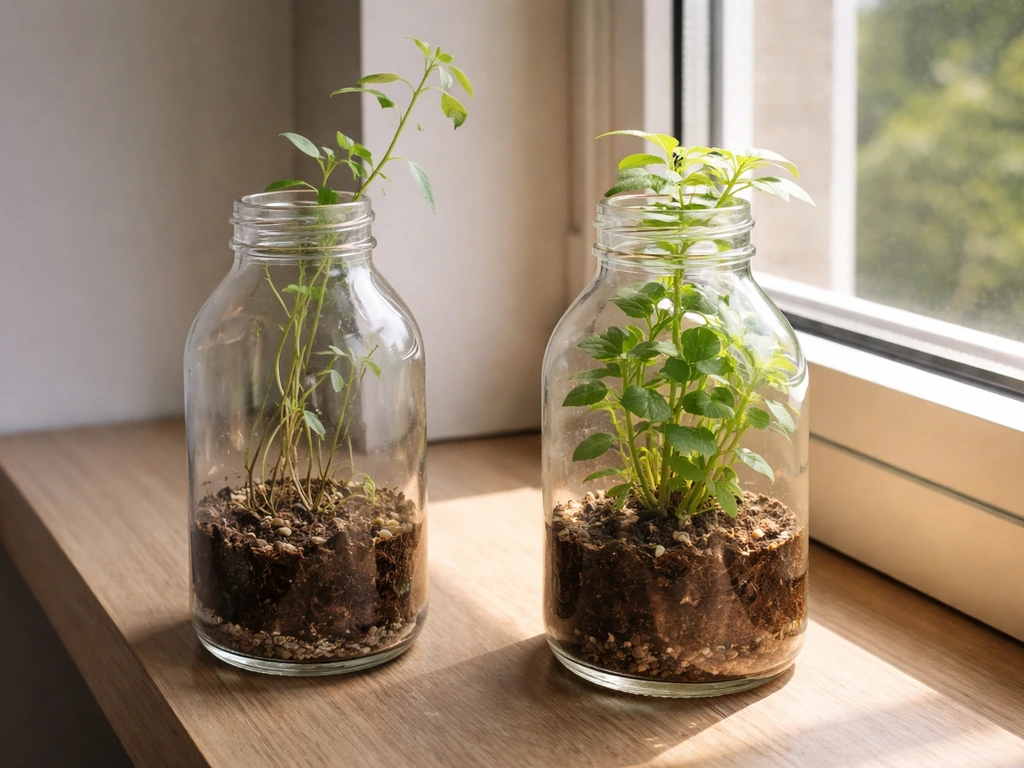
Leggy plants in glass bottles mean one thing: not enough light. The plant is stretching toward whatever light it can find. Move the bottle closer to the window (but still out of direct sun), or add a small grow light. In closed bottles, leggy growth also sometimes means the plant has outgrown the space. If a fern or Fittonia is pressing against the glass, it's time to trim it back or transplant part of it out.
Yellowing leaves
Yellow leaves in a glass bottle usually mean overwatering, even in a closed system where you've only misted once. In a sealed setup, excess water has nowhere to go except into the substrate. If you see yellowing alongside no condensation pattern, you may also have a root rot situation developing. Open the bottle, check the roots if you can, remove any mushy material, and let it dry out partially before resealing. In open bottles, yellow leaves more often point to sitting in waterlogged substrate, revisit your drainage layer.
Fungus gnats
Fungus gnats are more of a risk in open bottles because closed bottles limit their access. They're attracted to moist, organic-rich soil, so a well-draining substrate and the habit of letting the top layer dry between waterings makes your open bottle much less attractive. Remove any dead plant material promptly. If you already have gnats, allow the surface to dry as much as your plant tolerates, and consider a layer of fine sand or grit on top of the substrate to disrupt egg-laying.
Start here: your practical next step
If you want to start today, the simplest and most forgiving setup is a clean glass bottle or jar with a lid, a basic peat-based potting mix, a handful of pebbles, a bit of activated charcoal, and a small clump of terrarium moss or a single Fittonia. That's it. For mug gardening, focus on compact, moisture-friendly plants that fit the small volume, like succulents and mini houseplants best plants to grow in mugs. The plant costs a few dollars at any garden center, the bottle is already in your kitchen, and you'll have a self-sustaining setup within a day. For open bottles, grab a small succulent or air plant and a wide-mouth bottle, skip the lid, and you're done.
If you're interested in expanding beyond bottles, many of the same principles apply to glass jars, bowls, and other transparent containers. If you are specifically looking for the best plants to grow in mason jars, start with slow-growing, moisture-loving options for sealed setups and drought-tolerant plants for open ones.
If you mean a glass bowl specifically, the same rules apply: choose small, humidity-loving plants for a more enclosed setup, or go with drought-tolerant plants if the bowl is open glass bowls. Many of the same tips also work for plants that can grow in plastic bottles, so you can apply what you learn from bottle terrariums to other containers too.
The core logic stays the same: match moisture-loving plants to sealed humid setups, and drought-tolerant plants to open ones, and you'll get it right almost every time.
FAQ
Can I use any glass bottle, or do I need specific sizes or shapes?
You can use many containers, but shape matters. For sealed bottles, choose ones with enough headspace for the plant to grow and enough surface area on the opening for condensation to form and trickle back. For open bottles, wide mouths are easier because you can water without soaking the substrate all at once, and you can access the soil to check dryness.
What should I do if my sealed bottle has too much condensation all day?
If the inside stays fogged so you cannot clearly see the plants, vent immediately by removing the lid for a few hours. Also reduce light exposure, since high light plus humidity often drives excess moisture and algae. Once adjusted, you want light morning condensation with clear visibility most of the day.
How do I water a sealed bottle if I cannot tell when the soil is dry?
Use condensation as the cue, but if there is never any condensation for several days, add water in small amounts, then stop. Use a spray bottle or thin-nosed watering can to add a little, wait 24 to 48 hours, and reassess. Avoid topping up repeatedly the same day, since sealed substrates can oversaturate quickly.
Is it safe to add soil amendments like fertilizer or charcoal every time?
For most bottle gardens, skip fertilizer. In a sealed environment, nutrients build up faster and can accelerate algae and rot. Activated charcoal can help with odor control and buffering, but don’t overdo it, and ensure you start with a clean, low-mold mix rather than adding composty amendments.
Why do my plants die even when I picked the right type for a sealed bottle?
The most common hidden causes are light intensity and substrate quality. Too much direct sun can overheat the terrarium, while a mix that holds too much water (or lacks a proper drainage layer approach) can cause root rot even if condensation looked “normal.” If death happens quickly, re-check light placement first, then review the substrate and drainage layer.
Can I grow a flowering plant in a closed glass bottle if I remove petals?
It is still not recommended. Flowering plants shed petals and other organic debris continually, and those decaying particles raise mold risk in a sealed humid space. If you want blooms, choose an open bottle setup where airflow and evaporation reduce the speed of decomposition.
What’s the best way to prevent mold or fungus in a sealed setup?
Remove any dead leaves right away, and keep the bottle in bright indirect light rather than direct sun. When you first set up, avoid disturbing the substrate heavily, since trapped debris can decay later. If you see mold, vent for a few hours, prune affected material, and reseal with less light exposure.
Are air plants, succulents, or cacti workable in open bottles without drainage holes?
They can work in open bottles, but only if the setup dries reliably between waterings. Use a very fast-draining substrate or a minimal substrate approach, water sparingly, and prioritize bright indirect to moderate light. If you see mushy growth or yellowing, it usually means the substrate stayed wet too long.
How do I handle repotting or trimming if a plant outgrows the bottle?
Trimming is usually easier than a full transplant. For overgrown foliage, cut back to the plant’s branching points and remove the excess so it does not decay inside. If roots are tightly packed or the plant is pressing the glass, split the plant carefully and rehome part into a larger bottle or into a normal pot.
What light setup should I use if I live in a very dim apartment?
A small grow light on a timer is the most reliable solution. Position it so the plant receives consistent bright light without heating the glass, and use a 12-hours-on, 12-hours-off schedule. If growth becomes leggy, move the light closer slightly or increase intensity rather than increasing watering.
Do glass bottle gardens attract pests like gnats in both sealed and open containers?
Gnats are much more likely in open bottles because they can reach the moist soil surface. Reduce risk by using a well-draining substrate, letting the top layer dry between waterings, and removing dead plant material promptly. If you already have gnats, letting the surface dry further and adding a thin top layer like fine grit can disrupt egg-laying.
How can I tell the difference between overwatering and too little light?
Overwatering in bottles often shows up as yellowing plus persistently wet conditions, and in sealed bottles it usually comes with excessive condensation or a soggy look to the substrate. Too little light causes leggy or stretched growth, with longer stems and smaller leaves. If the bottle is leggy but not overly wet, adjust light before changing your watering habits.
Next Article
What Plants Grow Well in Glass Containers Yes and How
Discover what plants thrive in glass terrariums and jars, plus drainage, soil, care, and fixes for algae and rot.