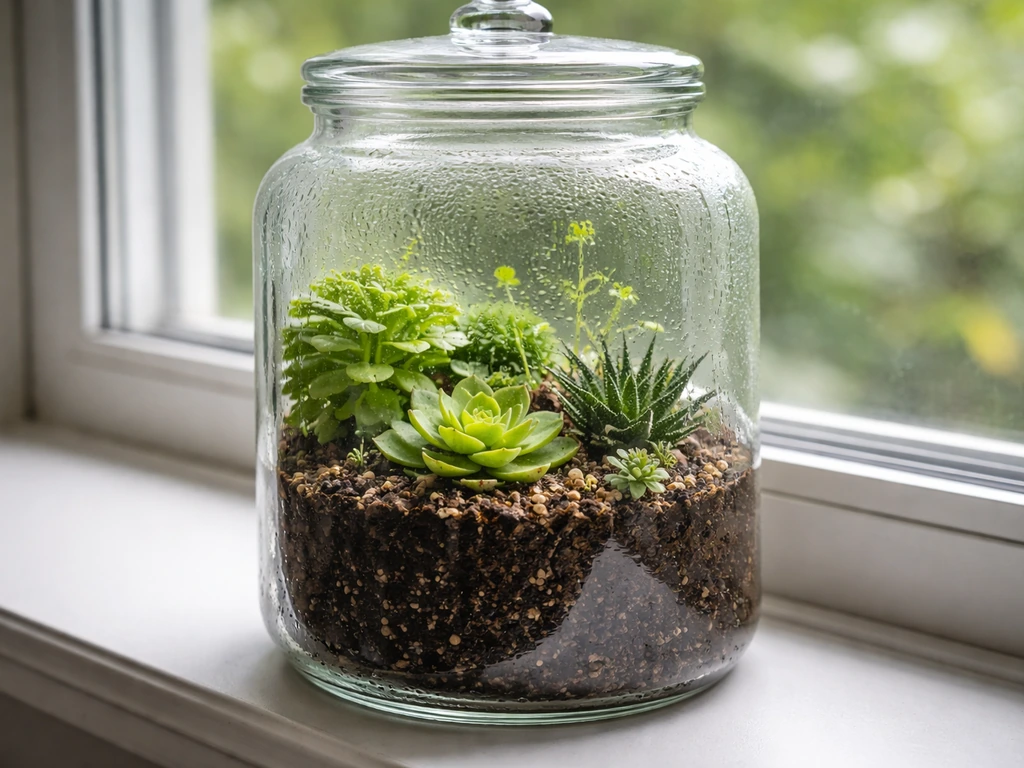
Yes, plants grow well in glass containers, but only when you match the right plant to the right glass setup. The glass itself isn't the problem. What causes failures is the mismatch: putting a cactus in a sealed jar, blasting a terrarium with direct sun, or drowning roots in a container with no drainage. Get the pairing right and glass containers are genuinely excellent growing environments, especially for humidity-loving plants that struggle in dry indoor air.
What Plants Grow Well in Glass Containers Yes and How
Rachel Hartley
30 Apr 2026
Do plants grow well in glass containers (and when they don't)
Glass containers work well because they're clear, which lets you monitor soil moisture and root health without disturbing the plant. Clear glass also passes light through reasonably well, and University of Missouri Extension specifically notes that clear containers are broadly useful, including fish bowls, fish tanks, old jars, and bottles. Where things go sideways is with tinted or cloudy glass, which reduces light transmittance enough to interfere with plant growth.
The bigger practical concern is heat and humidity. Direct sunlight hitting a closed or tall open container causes heat buildup that injures most plants, this is a consistent warning across multiple extension programs. The glass doesn't just let light in; it magnifies the sun's rays and traps warmth. A closed terrarium sitting in a south-facing window in late spring can cook its contents within days. Similarly, a sealed container builds humidity fast, and Oregon State University Extension notes that trapped humidity in closed terrariums can lead to disease and algae growth.
Plants that absolutely don't work in non-draining, sealed glass: succulents, cacti, and anything that needs dry soil between waterings. Penn State Extension specifically advises against succulents and cacti in closed terrariums. They rot. Save those for draining glass containers or open setups. What does thrive in sealed glass are moisture-lovers: mosses, ferns, fittonias, and small tropical plants that naturally live in humid, low-light forest floors.
Choose the right glass setup: terrarium vs draining container vs jar/water
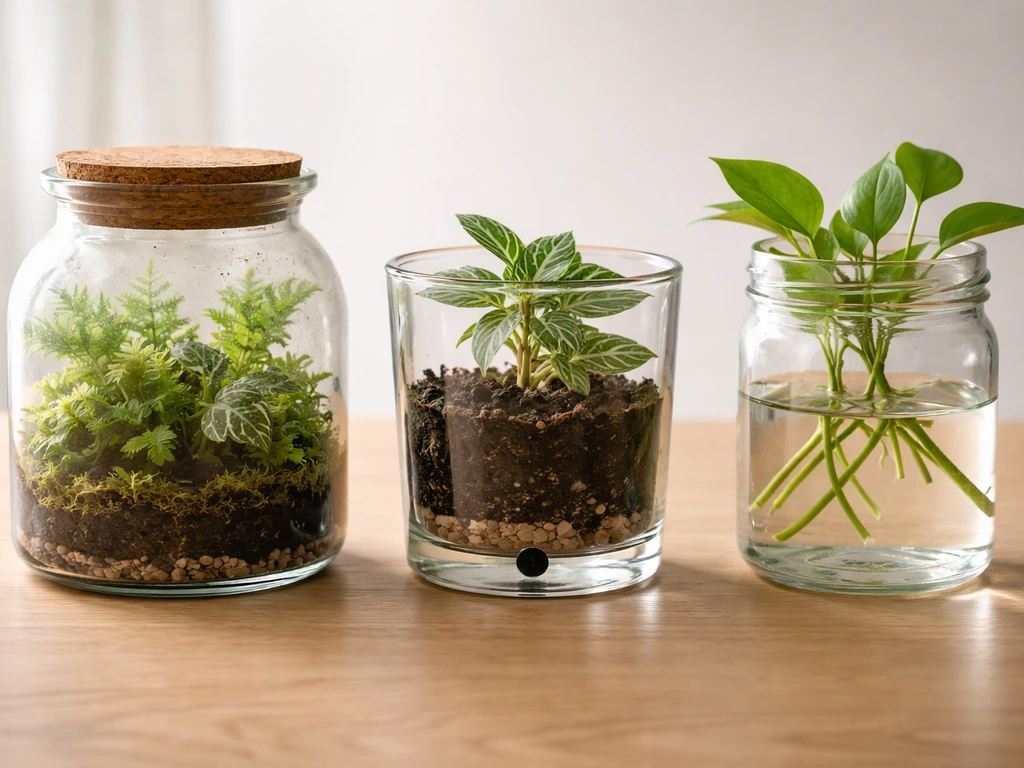
Before you pick a plant, decide what kind of glass container you're actually working with. These three setups have almost nothing in common in terms of care and plant selection.
| Setup | How it works | Best for | Key risk |
|---|---|---|---|
| Closed terrarium | Sealed lid, high humidity, recycling water cycle | Mosses, ferns, fittonias, peperomias | Overwatering, mold, overheating |
| Open/draining glass container | No lid or drainage holes drilled in, regular potting approach | Most houseplants, succulents, herbs | Root rot without drainage holes |
| Jar or water-only vessel | No soil, plant roots submerged or suspended in water | Pothos, philodendron, tradescantia cuttings | Algae, stagnant water, nutrient deficiency over time |
If you want the classic terrarium look with a glass bowl or fish tank, you're working with a sealed or semi-sealed system. If you are using a glass bowl specifically, you will usually want to treat it like a sealed or semi-sealed setup and choose low-light, high-humidity plants that can handle that environment. If you have a glass pot or vase with a drainage hole drilled in (or you're willing to drill one), you can grow almost anything you'd grow in a regular pot. And if you're just dropping cuttings in water in a glass jar, that's its own category with its own rules, and it's actually a great low-effort starting point for beginners.
One thing to skip: the old advice of adding a gravel layer at the bottom of a non-draining container. Oklahoma State University Extension specifically warns that drainage layers like rocks or sand in terrariums can actually hinder water drainage away from roots rather than help it. That gravel layer creates a perched water table right where your roots are. Use proper substrate depth and correct watering instead.
Best plants for non-draining glass: low-light, high-humidity picks
These are plants for closed or semi-closed terrariums, sealed jars with soil, and glass bowls with no drainage. The key requirements, as Oklahoma State University Extension puts it: naturally dwarf or slow-growing, tolerant of high humidity, and comfortable in low-to-medium light. Every plant in this category should also be disease-free before going in, Missouri Extension is firm on this because the enclosed environment accelerates any disease already present.
- Mosses (sheet moss, cushion moss): the easiest terrarium plant, thrives in sealed humid glass, needs almost no intervention
- Fittonia (nerve plant): small, patterned leaves, loves high humidity, stays compact, collapses dramatically when thirsty so it's easy to monitor
- Miniature ferns (button fern, maidenhair): ideal for sealed glass, can't handle dry air anywhere else indoors
- Peperomia (smaller varieties like peperomia rotundifolia or caperata): tolerates low light, slow-growing, handles humidity without rotting
- Selaginella (spike moss): looks like a tiny fern, handles consistent moisture, perfect ground cover in terrariums
- Miniature orchids (jewel orchids like Ludisia discolor): grows on the forest floor naturally, prefers low light and high humidity
- Pilea (tiny varieties like Pilea glauca): compact, bright-leafed, does well in humid enclosed spaces
- Baby tears (Soleirolia soleirolii): spreads as a mat, stays small, loves moisture
Avoid mixing plants with very different needs in the same container. Missouri Extension is clear on this: don't pair plants that need different light, temperature, and moisture. A sun-loving herb alongside a fern in a sealed terrarium means one of them is always unhappy.
Best plants for draining glass containers: houseplants that can handle normal potting
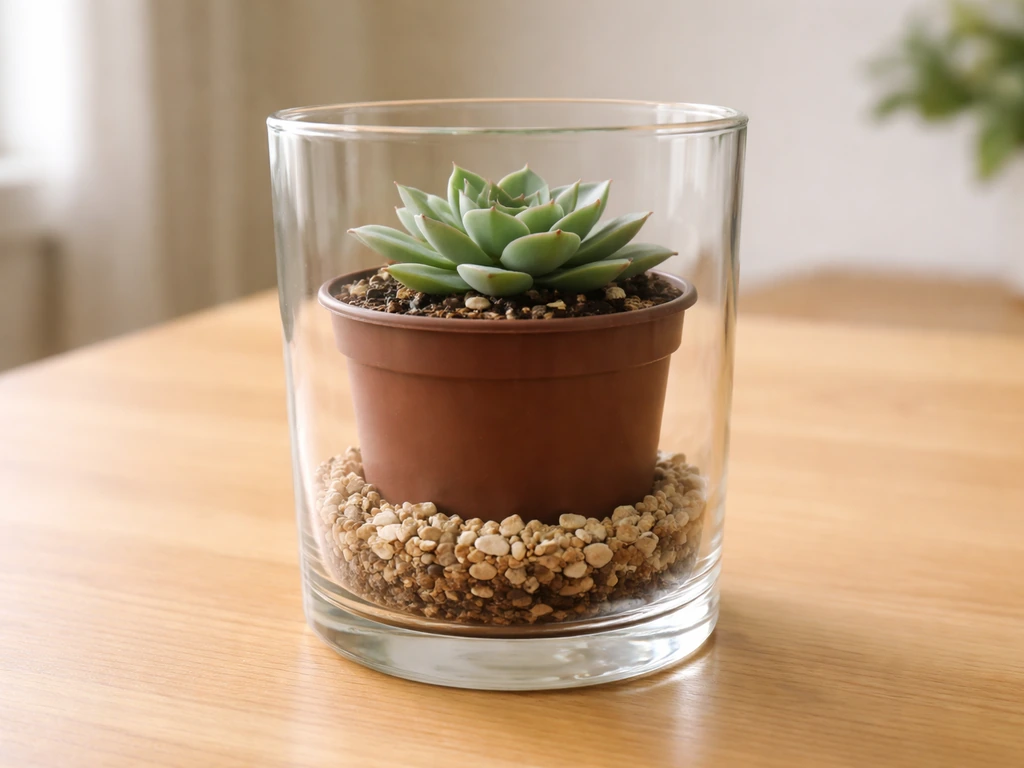
If your glass container has a drainage hole, or you're using a glass pot as a decorative cachepot with a nursery pot inside it, your plant list opens up considerably. You're essentially growing in a regular pot, just with transparent walls. This setup works well for many common houseplants and is where succulents and cacti actually belong in glass.
- Succulents (echeveria, haworthia, sedum): haworthia especially is ideal since it handles lower light better than most succulents
- Small cacti: fine in draining glass with gritty mix, just keep out of sealed setups
- Pothos: one of the easiest plants alive, tolerates low light, does great in glass with proper drainage or in water
- Snake plant (Sansevieria): handles neglect, tolerates low light, excellent in a glass pot with drainage
- ZZ plant: nearly indestructible, stores water in its rhizomes, fine in a draining glass container
- Peace lily: tolerates low light, likes consistent moisture, visible roots through glass walls are a bonus
- Small herbs (basil, mint, chives): do best in draining glass near a bright window, not great in sealed setups
- African violets: compact, love bright indirect light, thrive in humid conditions if drainage is solid
For water propagation in glass jars specifically, pothos, tradescantia, philodendron, impatiens, and coleus all root quickly and look great in clear glass. This is one of the most satisfying uses of glass containers and genuinely hard to mess up. Related approaches like growing in mason jars and glass bottles each have their own nuances depending on the opening size and light exposure. Some people also repurpose plastic bottles as tiny planters, but you still need to match the plant to the light and drainage conditions mason jars and glass bottles. If you are specifically comparing the best plants to grow in mason jars, the same success rules apply: match the plant to the jar's light and moisture conditions.
Plants for sunlight-sensitive indoor growing: avoiding heat and leaf burn
This is where most beginners go wrong. Glass and direct sunlight are a bad combination for enclosed containers. University of Vermont Extension puts it plainly: place a terrarium in bright but not direct sunlight because glass can magnify the sun's rays and overheat the enclosure. University of Arizona Cooperative Extension adds that even a partially open terrarium with a humid interior can overheat in direct sun. For any glass container that's enclosed or tall and narrow, bright indirect light is your target.
If your only available spot is a sunny windowsill, choose an open draining container (no lid) and pick sun-tolerant plants. Succulents and cacti handle direct sun in open draining glass without the heat buildup problem. But the moment you add a lid or glass cover, you've created a heat trap. In spring and summer especially, right now in late April, south or west-facing windows can get intense enough to damage plants in sealed glass within an afternoon.
If you're in a low-light apartment or working in a north-facing room, you're actually in good shape for terrarium plants. Mosses, fittonias, and jewel orchids are naturally low-light plants. They won't perform in bright sun anyway. A glass container in soft ambient light is a genuinely ideal setup for these plants, and you won't have to worry about heat buildup.
| Light condition | Recommended glass setup | Best plant choices |
|---|---|---|
| Bright indirect (near window, no direct sun) | Closed terrarium or open container | Fittonia, ferns, peperomia, pothos, peace lily |
| Direct sun (south or west window) | Open draining container only | Succulents, cacti, herbs, haworthia |
| Low light (north window, interior room) | Closed terrarium | Mosses, selaginella, jewel orchids, ZZ plant |
| Artificial light (grow light, ~6-8 hrs) | Any glass setup | Most terrarium plants, herbs with enough intensity |
Care basics: light, watering, soil, airflow, and preventing algae and mold
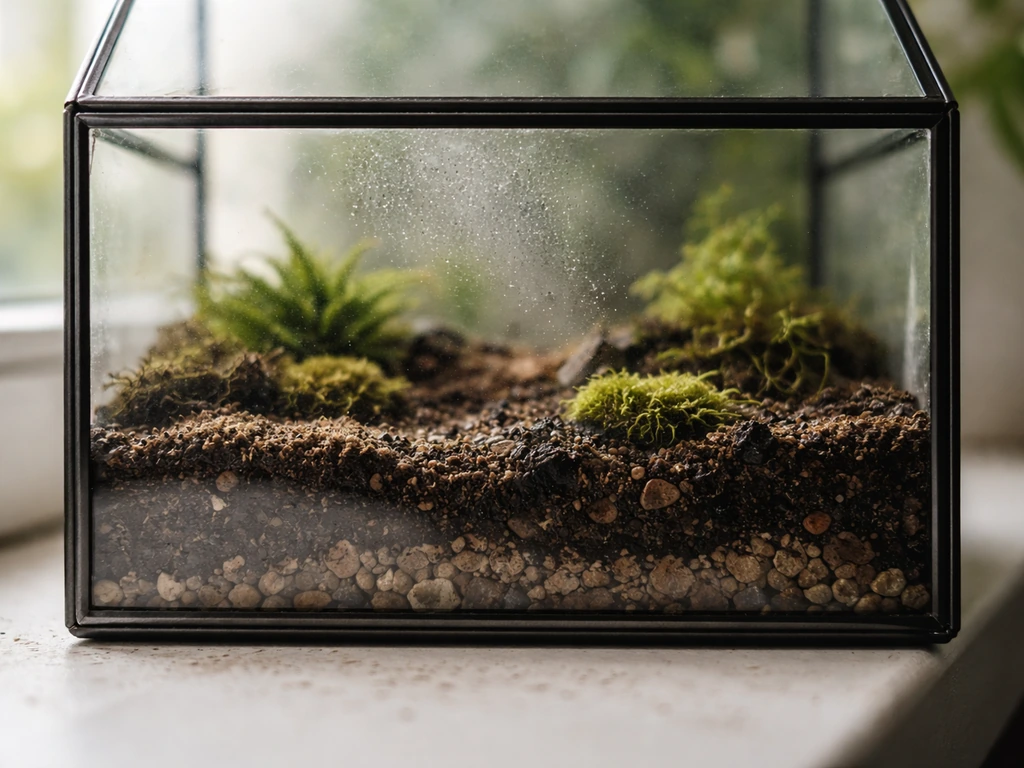
Watering
In a closed terrarium, water extremely sparingly. Iowa State University Extension notes that many closed terrariums only need watering every three to six months. Penn State Extension puts it well: it's easy to add a little more water later, but very difficult to remove excess once the container is sealed. Use a spray bottle or a thin straw to direct small amounts of water precisely. Rinse any potting medium off the foliage and off the inner walls when you do water, surface moisture on glass is where algae and mold get started.
Soil and substrate
For terrarium setups, use a well-draining potting mix rather than standard potting soil, and add about a quarter-inch layer of horticultural charcoal to help manage odors and keep things fresh, Iowa State University Extension recommends this specifically. For succulents in draining glass, use a cactus/succulent mix or cut regular potting mix with perlite at about 50/50. For water-only setups, no soil at all, just clean water changed every one to two weeks.
Airflow and condensation
Condensation on the inside of a closed terrarium is normal in small amounts, but heavy, constant condensation means too much moisture. Oklahoma State University Extension advises partially opening or briefly removing the lid to vent excess humidity, then replacing the cover once the condensation evaporates. University of Vermont Extension says the same: if excess moisture builds up, open the lid briefly. Don't leave it open permanently or you lose the humidity benefit, just vent it and close it back up.
Preventing algae and mold
Algae grows on glass walls where light and moisture meet. Keep the inside walls dry by wiping them down when you do your occasional maintenance. OSU Extension recommends cleaning and wiping the inside walls dry before replacing the lid. Mold usually appears when a plant is already diseased at planting or when conditions are too wet for too long. Start with healthy plants, Missouri Extension emphasizes this point directly. Remove any dead leaves immediately, decomposing organic material in a sealed container is a fast track to fungal problems.
Troubleshooting: fix condensation, rot, legginess, and failures
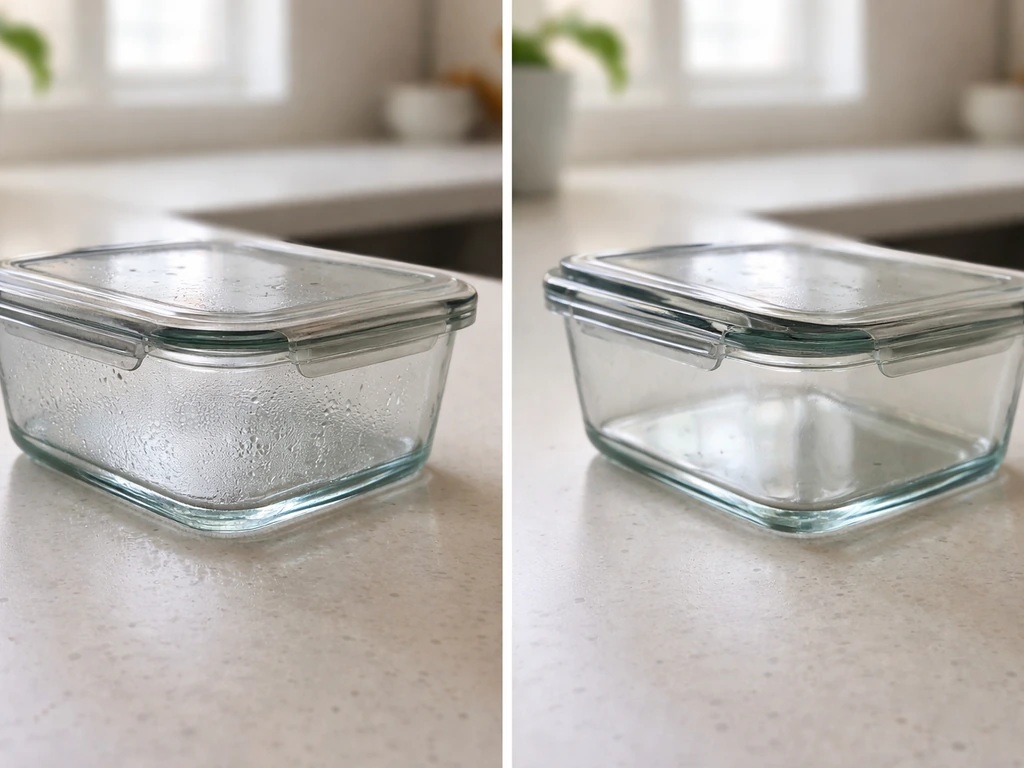
Here are the most common glass container problems and what to actually do about them.
- Too much condensation: Open the lid for a few hours until it clears, then close it again. If this keeps happening every few days, you added too much water at setup. Tilt the container so water pools at the edge, then wick it out with a paper towel — this is the specific fix OSU Extension recommends for accidental overwatering.
- Root rot in non-draining containers: Pull the affected plant out immediately. Trim off any black or mushy roots, let the plant dry slightly, and replant in fresh dry medium if the rot isn't too advanced. If it's gone, compost it and start fresh with a plant better suited to wet conditions.
- Mold on soil surface: Remove the moldy material with a small spoon, ventilate the container for 24-48 hours, and reduce watering going forward. If the mold is on a plant, remove that plant entirely — sealed environments accelerate disease spread.
- Algae on glass walls: Wipe down with a damp cloth during your next maintenance session. Reduce direct light exposure on the container walls. Algae needs light and moisture, so less of either slows it down.
- Leggy, stretched plants: This means not enough light. Move the container to a brighter spot (not direct sun for sealed setups) or add a grow light. Leggy growth won't revert, so trim it back and address the light source.
- Overheating/wilting after moving near a window: Move the container immediately to indirect light. If leaves are scorched (brown, papery patches), those won't recover but the plant may bounce back if moved quickly. Never put a sealed glass container in direct sun.
- Plant not growing at all in water: Change the water more frequently (every week), add a diluted liquid fertilizer at about quarter strength every two to four weeks, and make sure the roots have some exposure to air at the water surface — fully submerged roots in stagnant water don't thrive.
Your shortlist: what to plant today based on your setup
If you want the lowest-maintenance option, start with pothos cuttings in a clear glass jar of water. If you want more ideas, look for other plants you can grow in a jar, since water-propagation setups open the door to many fast-rooting species pothos cuttings in a clear glass jar of water. Change the water weekly, put it in bright indirect light, and it will root and grow for months with almost no effort. If you want a terrarium, build a closed one with moss, fittonia, and a small fern, these three together create a self-sustaining micro-ecosystem that only needs attention a few times a year. If you have a draining glass container and a bright spot, haworthia or a small echeveria is your most forgiving choice. Mugs with good drainage and bright light can be a practical alternative to glass jars for growing beginner-friendly plants best plants to grow in mugs. And if you want food, stick with small herbs in a draining glass container near your sunniest window, basil and chives both work, but they need real light and regular harvest to stay productive.
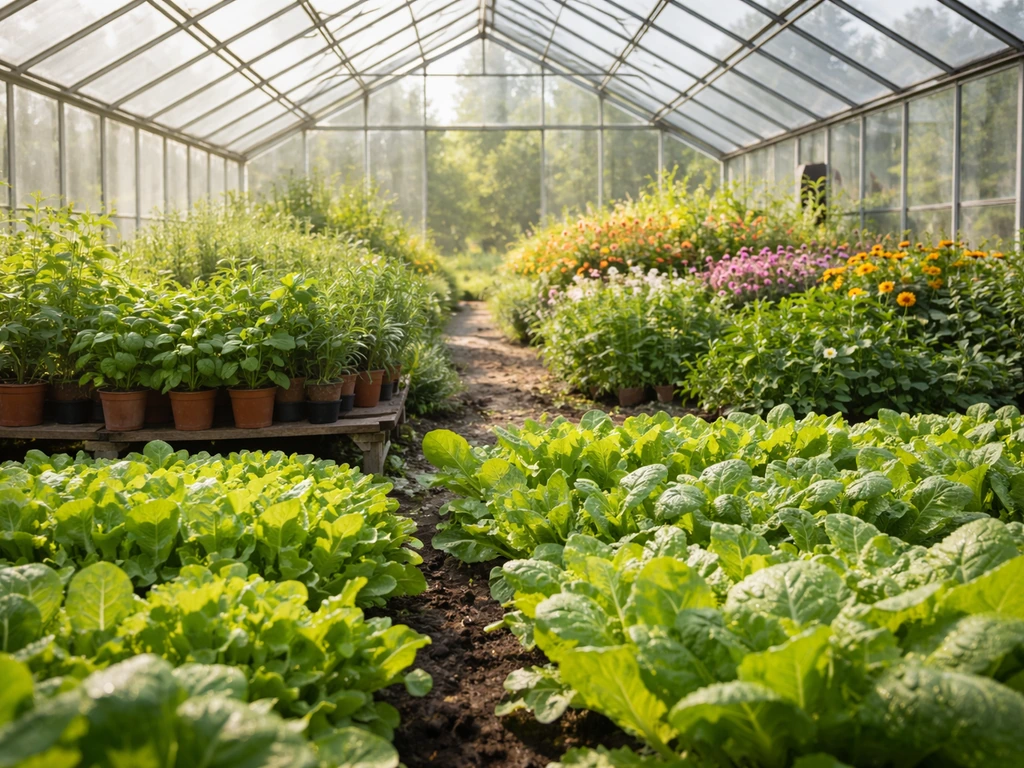
The through-line across all of these: match the plant's needs to the container's actual environment, not the environment you wish it had. Get that right and glass containers are genuinely one of the most rewarding ways to grow plants indoors. If you're shopping for the best plants to grow in a greenhouse, use the same logic and match species to your greenhouse humidity, light level, and drainage setup plants indoors.
FAQ
Can I reuse potting mix from a failed terrarium in a new glass container?
It depends on why it failed. If you see mold, fungus, or heavy algae growth, discard the mix rather than reusing it, since spores can persist in a sealed environment. If the failure was only from dryness or poor light, you can sterilize the mix (or use fresh mix) because soil structure breaks down after repeated wet-dry cycles.
How do I choose between a sealed, semi-sealed, and draining glass setup if I do not know the exact type?
Look for two cues: a drainage hole (or ability to add one) and whether the container has a lid or cover. If there is no drainage hole and the top is closed, treat it as sealed and only pick high-humidity, low-light plants. If there is a lid but water still cannot escape, it is still sealed behavior. If a nursery pot can drain freely inside your glass, treat it like a draining container.
What light level counts as “bright but not direct sunlight” for glass containers?
Aim for light where you can read comfortably without glare, and the container is not receiving direct sun rays on the glass during peak hours. As a quick test, if the glass walls create sharp sun hotspots or you see rapid temperature rise, move it back and give indirect light. South and west window placement often exceeds this threshold in spring and summer.
My sealed terrarium keeps getting a lot of condensation. Should I mist less, vent more, or change the plants?
First reduce misting and watering frequency. Then vent briefly if condensation is constant (remove the cover for a short time and close it once walls clear). If condensation remains heavy even with sparing watering, reassess plant density and airflow, because too many plants or too much organic matter can trap moisture and promote algae and disease.
Are there any glass container plants that tolerate occasional mistakes better than ferns and fittonias?
In sealed setups, your best “forgiving” choices are often slow-growing, naturally humidity-tolerant plants that are not sensitive to minor overwatering, but all closed terrariums punish prolonged wet conditions. If you want something more mistake-tolerant, switch to a draining glass container (or water propagation) instead of trying to make a sealed terrarium tolerate drought or oversaturation.
Can I grow herbs like basil in glass if I do not have a draining hole?
Not safely in a sealed jar or covered container. Herbs generally need more oxygen around roots and more frequent adjustment based on drying and growth. If you want food plants in glass, use a draining glass container with a nursery pot inside, or keep the container open (no lid) so the root zone does not stay trapped and oxygen-poor.
What is the safest way to add plants to an established sealed terrarium without introducing problems?
Start with disease-free plants and avoid adding any plant material that looks even slightly off (spots, mushy leaves, sticky residue). After planting, do minimal watering and keep light indirect. Remove any dead leaves immediately after introduction, since decomposing material is one of the fastest triggers for fungal issues in sealed environments.
Is it okay to combine moss, ferns, and fittonia in the same container if they look healthy?
They can be combined because they share similar humidity and low-light needs, but avoid adding another plant with different light requirements (like a sun-loving succulent) into the same sealed space. Also keep growth size in mind, since one plant that grows faster can crowd others and increase dampness and disease risk.
Why did my succulent in glass rot even though I followed watering advice?
The most common cause is missing drainage, soil that stays wet too long, or glass that overheats in sun. Even if you water “correctly,” a sealed or poorly drained glass container keeps roots oxygen-starved. For succulents in glass, use a draining setup (or an open container) and a cactus or succulent mix with high aeration (for example, added perlite).
How do I prevent algae from forming on the inside of the glass walls?
Algae usually comes from the combination of light and persistent surface moisture. Keep the interior as dry as possible by directing water at the soil (not the glass), wipe the inner walls during routine maintenance, and avoid placing the container where it receives extra direct sun that heats the enclosure.
Can I place a closed terrarium in a bathroom with good humidity?
It can work if light is still sufficient but indirect, and temperatures remain moderate. Bathrooms often have brighter conditions near windows, but low-light bathrooms can lead to slow growth and higher moisture persistence. If you do place it there, monitor condensation and algae closely during the first few weeks and adjust light location if walls stay wet.
What should I do if my water-propagation jar smells bad or clouds quickly?
Clouding and odor usually mean excess organic buildup or low water quality. Discard and restart with clean stems if the water turns cloudy quickly, then scrub the jar, use clean water, and change it weekly. Keep the jar in bright indirect light and trim the cutting so no submerged leaves rot.
Next Article
Best Plants to Grow in a Greenhouse: Easy Picks by Season
Seasonal, beginner-friendly picks for the best greenhouse plants by temperature, light, and space, with care and setup t