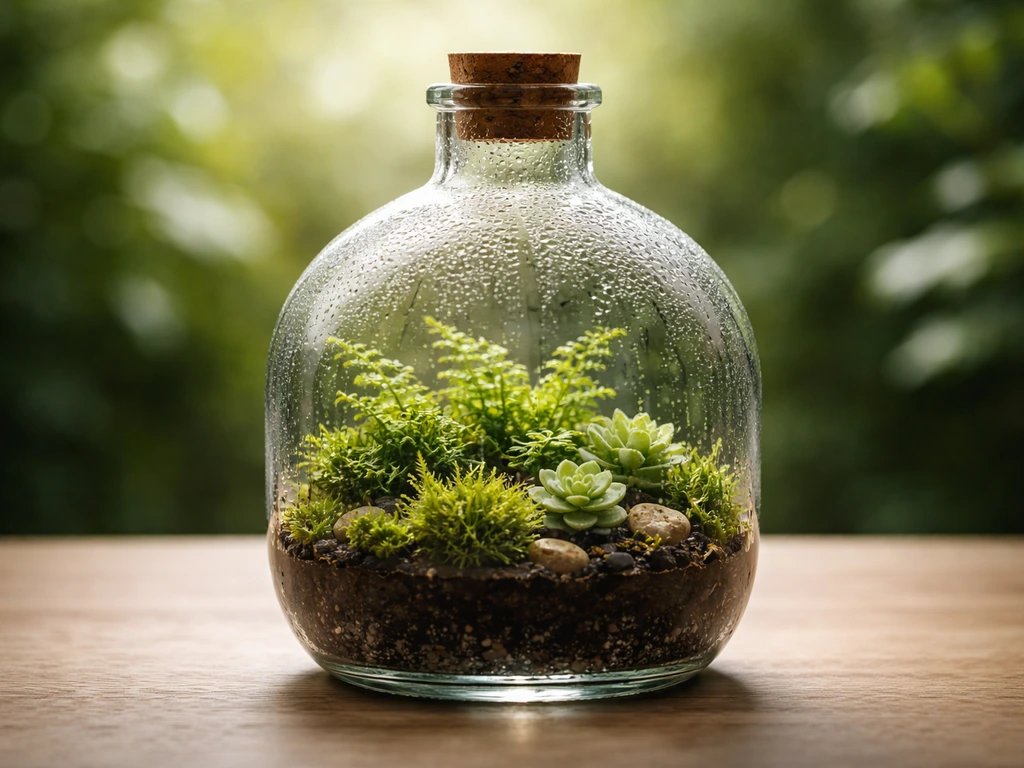
You can grow a surprising range of plants in a glass bowl or jar: succulents, herbs like basil and mint, microgreens, moss, air plants, pothos cuttings, and cut-and-regrow kitchen scraps like green onions or lettuce. If you're wondering what plants grow well in glass containers, look for ones that handle shallow soil or can thrive in a moisture-cycling terrarium setup. The catch is that glass traps moisture and has no drainage holes, so your plant choices and setup have to work around that reality. Get those two things right and a glass vessel is genuinely one of the most satisfying ways to grow something small at home.
What Plants Can I Grow in a Glass Bowl or Jar
Rachel Hartley
20 May 2026
The best plants for glass bowls and jars
The plants that do best in glass containers share a few traits: small root systems, tolerance for shallow soil, and either a preference for high humidity (terrarium-style) or drought tolerance (open bowl). Here are the options that consistently work well.
Open glass bowls (low sides, no lid)
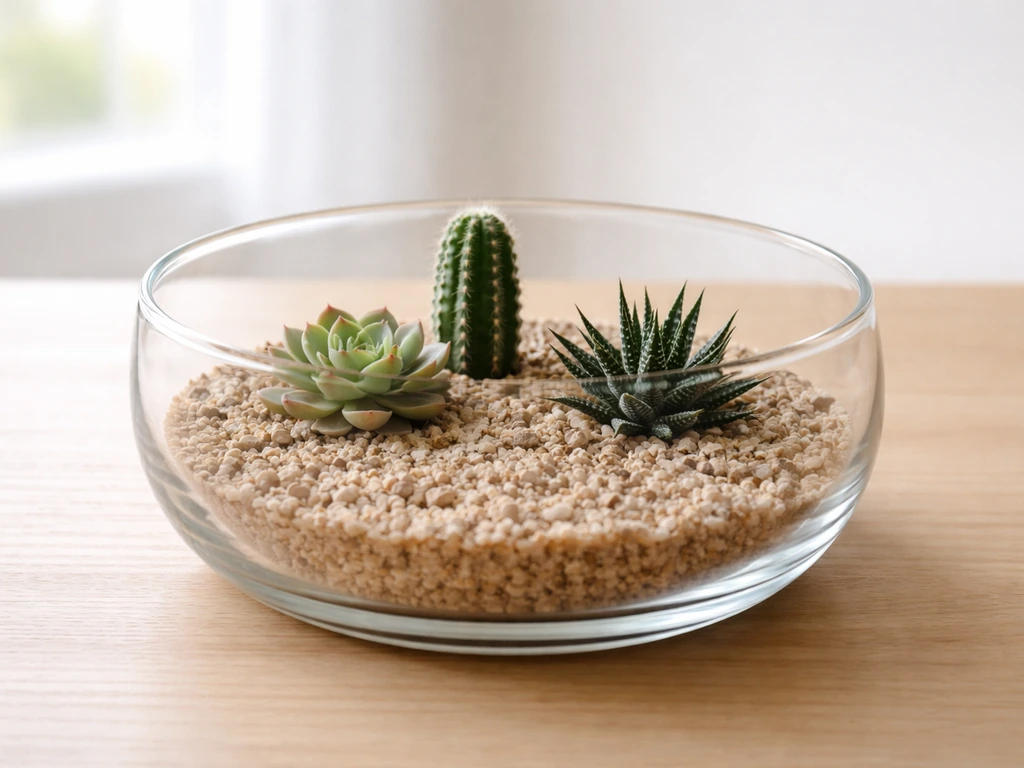
- Succulents (echeveria, haworthia, sedum): perfect for open bowls because they want dry conditions and good airflow. Haworthia is the best pick for lower-light spots.
- Cacti: same logic as succulents. Avoid giant columnar types; go for small globular or cluster-forming species.
- Herbs: basil, thyme, chives, and mint work in wider, shallower bowls with a well-draining mix. Mint is the most forgiving. Basil needs strong light.
- Air plants (Tillandsia): no soil at all, just tuck them into the bowl and mist them a few times a week. Zero drainage worries.
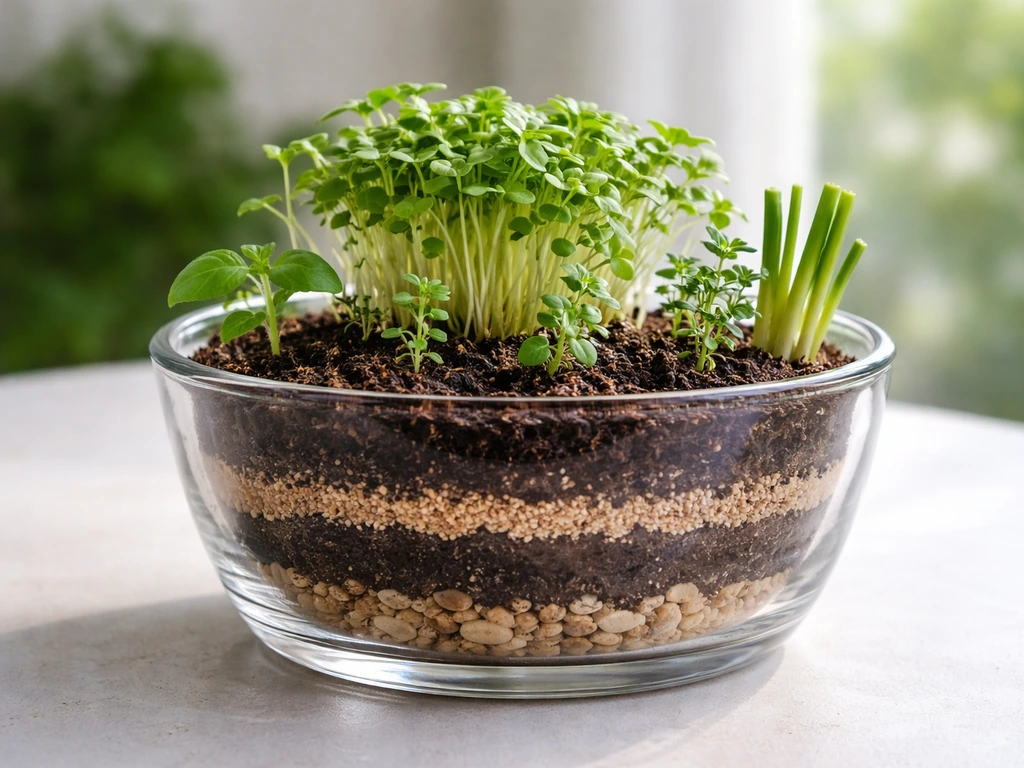
- Microgreens: arguably the best use of a glass bowl for a beginner. Short cycle (7 to 21 days), no deep roots needed, harvested before moisture issues compound.
- Cut-and-regrow scraps: green onion bottoms, celery bases, and romaine lettuce hearts regrow happily in shallow water in a glass bowl on a windowsill.
Glass jars and taller vessels (terrarium-style)
- Moss (sheet moss, cushion moss): thrives in the high humidity a closed or semi-closed jar creates. Almost impossible to kill if you keep it moist.
- Ferns (miniature varieties like button fern or maidenhair): love the enclosed humidity but need room for airflow. Open the jar every few days.
- Pothos or heartleaf philodendron cuttings: roots beautifully in a jar of water and can live there for months.
- Nerve plant (Fittonia): bold leaf patterns, loves moisture, stays small. Great for jars with a loose lid.
- Peperomia: compact, tolerates humidity fluctuations, slow-growing so it won't outgrow a jar quickly.
- Baby tears (Soleirolia): a low creeping groundcover that fills a terrarium jar beautifully and loves constant moisture.
If you're also considering other glass containers like bottles or mason jars, the same plant logic applies but the opening size changes your access and airflow. If you want a more specific shortlist for closed containers, see the best plants to grow in mason jars for what tends to thrive in that setup. If you're specifically aiming for a bottle-style setup, the best plants to grow in a bottle will help you choose varieties that match the tighter opening and airflow. If you're thinking about bottles specifically, choose plants with small root systems and be mindful of airflow at the narrow opening. Wider mouths give you more planting flexibility and better ventilation, which matters a lot for preventing the fogging and mold issues covered later in this guide.
Match your plant to your light and the current season
It's late May right now, which means you're heading into long days and strong sun in the Northern Hemisphere. That's actually ideal timing for herbs and microgreens because natural light is at its peak. Here's how to read your space and choose accordingly.
| Light situation | Best plant picks | What to avoid |
|---|---|---|
| South or west window, direct sun several hours daily | Succulents, cacti, basil, thyme, microgreens | Moss, ferns, nerve plant (will dry out fast) |
| East window, bright indirect light | Pothos cuttings, peperomia, chives, mint, microgreens | Cacti, sun-loving succulents |
| North window or low-light corner | Haworthia, moss, pothos in water, nerve plant, baby tears | Basil, cacti, most herbs |
| Grow light supplement (18 hrs/day on a timer) | Microgreens, herbs, any of the above with consistent results | Nothing — grow lights fix most light problems |
Microgreens are especially forgiving on light because their crop cycle is so short (7 to 21 days). Even under suboptimal conditions they typically produce a harvestable crop before light stress becomes a real problem. If you're unsure about your light level, start with microgreens or a pothos cutting in water, both are nearly foolproof and will tell you a lot about your space before you invest in a more elaborate setup.
Seasonally, the main thing to watch in late spring and summer is heat buildup inside glass. A closed jar on a south-facing windowsill in June can get hot enough to cook roots. Keep closed terrariums back from the glass pane or use a sheer curtain as a buffer on the hottest days.
Substrate and drainage: the setup that makes or breaks glass growing
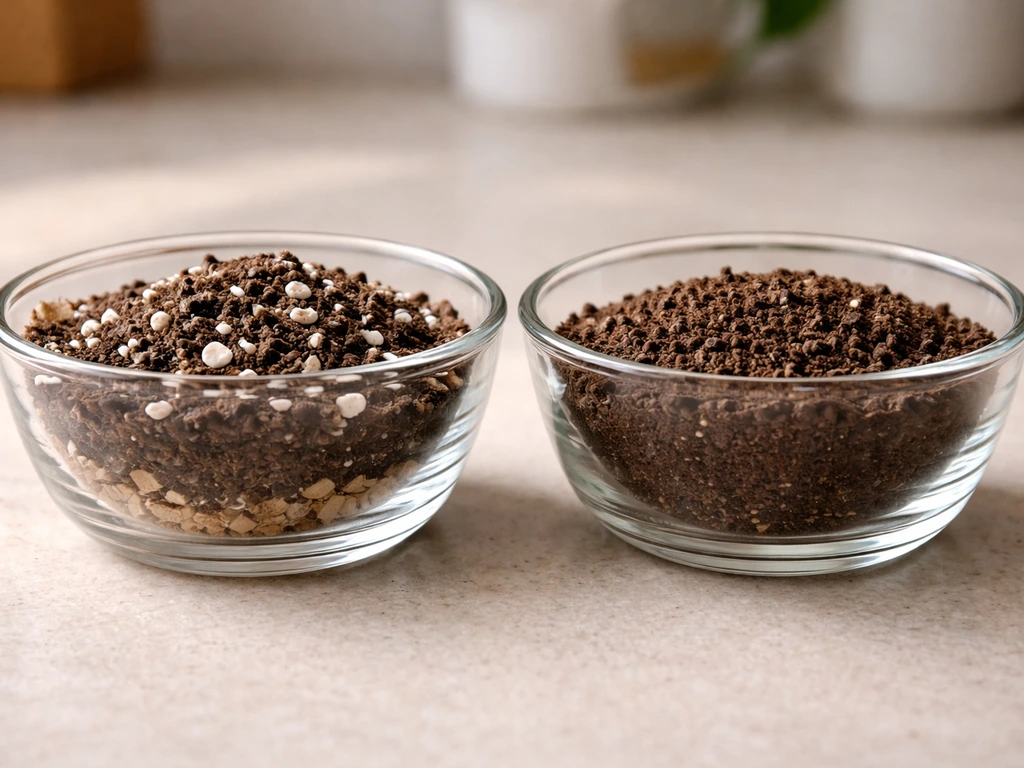
This is where most people go wrong. Glass has no drainage holes. Water that goes in has nowhere to go except up through evaporation or into your plant's roots indefinitely. Your substrate needs to compensate for that completely.
The layered drainage approach
For any glass bowl or jar where you're planting in soil, build the container in layers from the bottom up:
- Pebble or gravel drainage layer (1 to 2 inches): this holds excess water away from the root zone. Use aquarium gravel, small river pebbles, or lava rock.
- Activated charcoal layer (thin, about 0.5 inches): optional but helpful. It absorbs bacterial byproducts and reduces odor in enclosed setups.
- Growing medium (2 to 3 inches): equal parts peat moss and perlite works well for most plants. For succulents and cacti, add coarse sand (no more than one-third of total mix). Never use straight garden soil or field soil — it compacts, holds too much water, and kills roots in containers.
- Top dressing (optional): a thin layer of decorative sand or small pebbles looks clean and also slows surface moisture evaporation.
For microgreens or cut-and-regrow scraps in a glass bowl, skip the soil approach entirely if you want simplicity. A thin layer of coconut coir or a damp paper towel works perfectly for microgreens (you're harvesting in under three weeks so deep substrate doesn't matter). For regrowth scraps like green onions, just put the roots in a centimeter of water and refresh it every couple of days.
What to avoid in the substrate
- Garden soil or topsoil: too heavy, compacts in containers, reduces root aeration, and brings pests
- Straight peat moss with no perlite: holds moisture well past what most plants can handle in a sealed glass space
- Fine-textured or clumpy mixes: poor airflow and high waterlogging risk
- Too-deep substrate in a small bowl: more soil = more moisture storage = more risk; keep it minimal
Planting, watering, and everyday care in glass containers
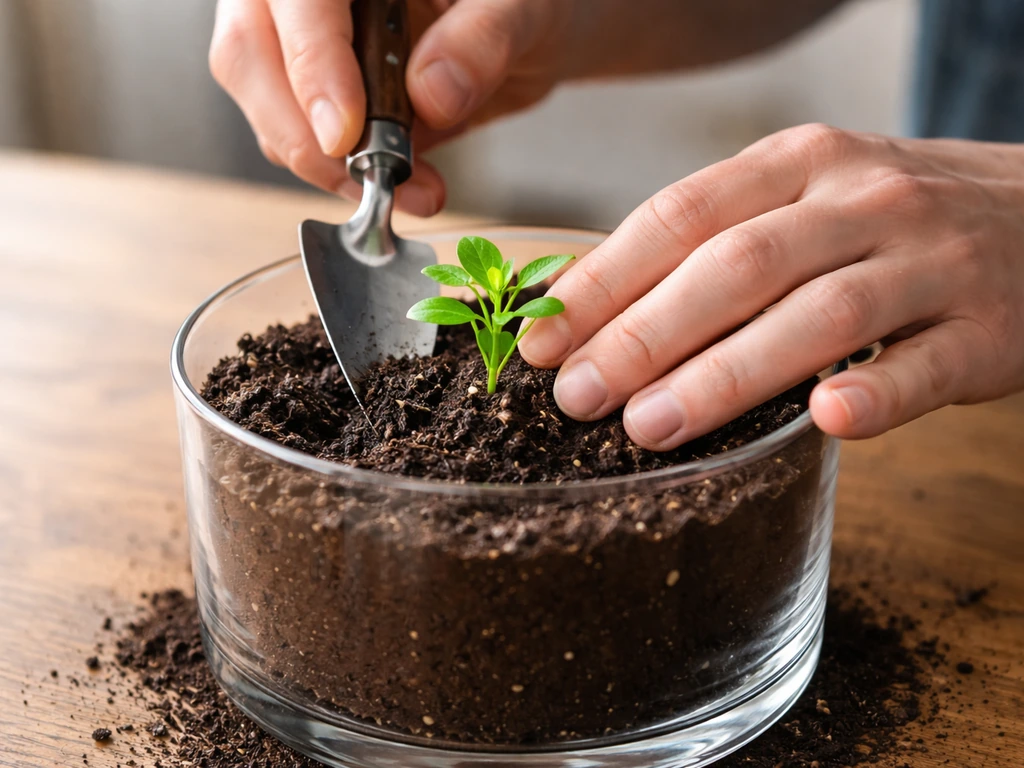
Once your layers are in place, planting itself is straightforward. Use a spoon or small trowel to create a pocket in the growing medium, set the plant in, and gently firm the mix around the roots. For jars with narrow necks, chopsticks and long tweezers are genuinely useful tools.
Watering: less is almost always more
The number one killer in glass containers is overwatering. Because there's no drainage hole, water accumulates in the gravel layer and creeps upward if you add too much. A good rule: water lightly, then wait until the top 1 to 2 inches of substrate are dry before watering again. For succulents in an open bowl, that might mean watering once every 10 to 14 days. For herbs or microgreens, every 2 to 3 days with a light hand. For terrarium plants in a semi-closed jar, you may only need to water once every one to two weeks because condensation recycles moisture back into the soil.
Use a spray bottle for small bowls and microgreens (misting rather than pouring). For jars with plants in soil, a squeeze bottle with a narrow tip gives you control over exactly where the water lands and how much you're adding. Avoid pouring water directly onto leaves or the soil surface near the glass walls, where it sits and promotes algae.
Fertilizing
Most glass-bowl plants don't need much fertilizer. Microgreens and cut-and-regrow crops need none at all (they run on seed energy or stored nutrients in the scrap). Succulents and terrarium plants in a fresh mix are fine for three to six months without feeding. If you're growing herbs longer-term, a diluted liquid fertilizer at quarter-strength once a month during spring and summer is plenty. More than that and you push rapid growth that the small container can't support.
Edible options: herbs, microgreens, and cut-and-regrow
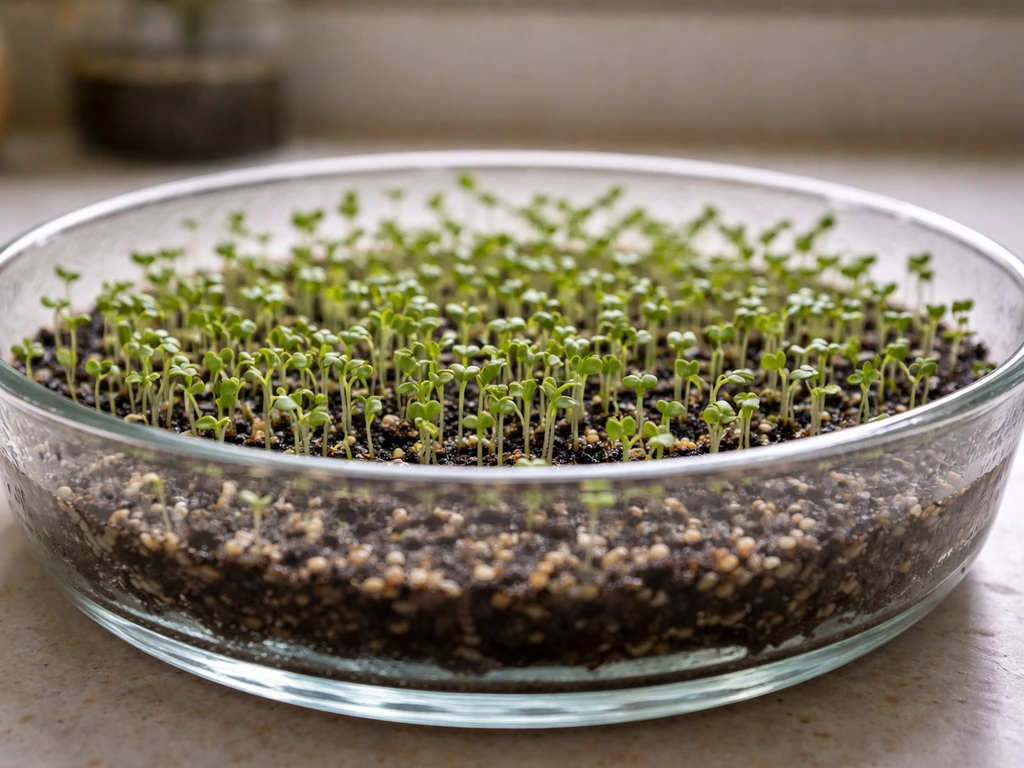
Glass bowls are genuinely useful for growing food at small scale, and this is where they shine for apartment growers who don't want a complicated setup. You can find plenty of plants you can grow in a jar, including edible options like herbs and microgreens genuinely useful.
Microgreens in a glass bowl
This is probably the easiest and most rewarding edible use. Fill a wide, shallow glass bowl with about an inch of coconut coir or a peat-perlite mix, scatter seeds densely across the surface, mist with a spray bottle, cover loosely for the first few days to retain humidity during germination, then uncover once sprouts are up. They'll reach 2 to 3 inches tall and be ready to harvest in 7 to 21 days depending on variety. Radish, sunflower, peas, and broccoli are fast and reliable. Harvest with scissors just above the soil line. There's no need to overthink this one.
Herbs
Mint, chives, and basil are the most practical herbs for glass bowls. Mint is the most forgiving and can even be grown as a cutting in water (just like pothos). Basil needs a south-facing window or grow light to do well. Thyme and rosemary are drought-tolerant but need really bright light and the driest possible substrate, better suited to an open bowl than a closed jar.
Cut-and-regrow scraps
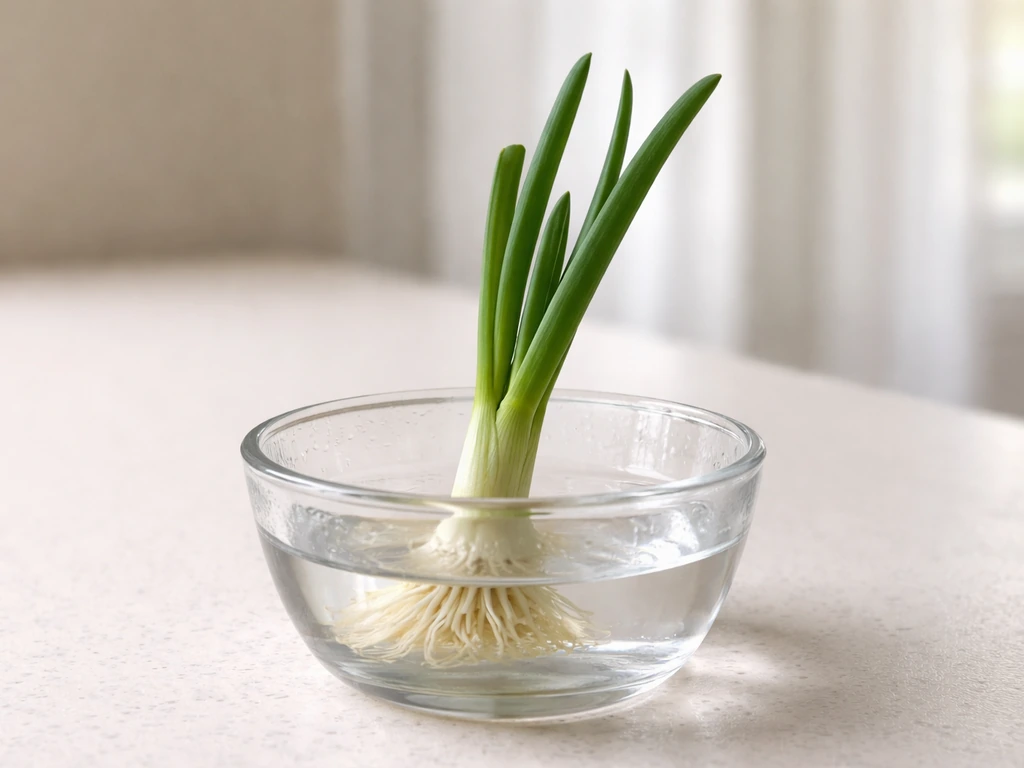
This is the lowest-effort edible option by far. Save the root end of a green onion bunch, set the white root base in a small glass bowl with just enough water to cover the roots, put it on a windowsill, and refresh the water every two days. If you want a simpler approach, look for the best plants to grow in mugs that fit how you’ll drain and water. You'll have harvestable green tops within a week. Romaine lettuce hearts and celery bases work the same way. These aren't long-term plants, they run out of stored energy after a few weeks, but as a quick, zero-cost experiment they're hard to beat.
Decorative vs. edible at a glance
| Category | Best options | Glass bowl or jar? | Ease level |
|---|---|---|---|
| Microgreens | Radish, sunflower, peas, broccoli | Wide open bowl | Very easy |
| Herbs | Mint, chives, basil, thyme | Wide open bowl | Easy to moderate |
| Cut-and-regrow | Green onions, romaine, celery | Any wide bowl with water | Extremely easy |
| Succulents/cacti | Echeveria, haworthia, small cactus | Open bowl | Easy |
| Terrarium plants | Moss, ferns, nerve plant, baby tears | Tall jar (semi-closed) | Moderate |
| Water cuttings | Pothos, philodendron, mint | Any jar with water | Very easy |
Common failure points and how to fix them
Glass containers have a handful of failure modes that come up repeatedly. Here's what causes each one and what to do about it.
Green algae on the glass walls
Algae grows where light meets moisture on a glass surface. It's harmless to most plants but looks bad and signals you have excess moisture. To reduce it: move the container slightly away from direct light, water less, or add a thin layer of decorative pebbles on top of the soil to slow surface evaporation. You can wipe the inside glass walls with a damp cloth wrapped around a stick if the jar opening is narrow.
Fogging and condensation
A little condensation on the inside of a closed jar is normal and means the system is cycling moisture. Heavy, persistent fogging that doesn't clear means too much water and not enough airflow. Remove the lid or prop it open for a few hours to let things dry out. If the fogging returns quickly every time you close it, you watered too much. Going forward, water less and always allow a gap for airflow in semi-closed containers.
Root rot
Root rot is the most serious issue and it comes from one thing: prolonged waterlogged conditions with low oxygen at the root zone. The plant looks wilted or yellowing even though the soil is wet, that's the tell. To confirm it, gently remove the plant and check the roots. Rotted roots are brown, mushy, and smell bad. Healthy roots are white or light tan and firm. If you catch it early, trim the rotted roots with clean scissors, let them air-dry for a day, and replant in fresh dry medium. Prevention is the real answer: stick to the layered drainage setup, use perlite-heavy mix, and water less than you think you need to.
Mold on soil or microgreen stems
White fuzzy mold on soil surface or on microgreen stems usually means stagnant warm humid air with no ventilation. For microgreens, this is a common issue during the covered germination phase. Remove the cover a day or two earlier than planned, increase air circulation by placing a small fan nearby or simply opening a window, and avoid overseeding (dense seeds trap more humidity). For terrarium plants, the fix is the same: more airflow, less standing moisture.
Fungus gnats
Fungus gnats are tiny flies that breed in moist soil. If you see small flies hovering around your glass bowl, the top layer of soil is staying too wet. Let the top 1 to 2 inches of soil dry completely before watering again. Bottom-watering (pouring water into the gravel layer by tipping carefully or using a syringe) keeps the surface drier and discourages gnats from laying eggs. Sticky yellow traps placed nearby will catch adults while you adjust your watering schedule.
Pests (other than gnats)
Mealybugs and spider mites occasionally show up on herbs and succulents. Inspect new plants before putting them in a glass bowl since you can't easily treat a shared-soil container. A cotton swab dipped in rubbing alcohol removes mealybugs on contact. Spider mites thrive in dry, dusty conditions, so they're more of a problem on succulents in a low-humidity open bowl than in a terrarium. Misting the leaves occasionally helps prevent them.
What to do today: getting started right now
The fastest, lowest-risk way to start is one of two routes: either set up a microgreens bowl (wide shallow glass, coir or peat-perlite mix, dense seed scatter, done in 15 minutes) or stick a pothos or mint cutting in a clean jar of water on your windowsill. Both are genuinely hard to fail and give you a feel for your light and humidity conditions before you invest in a more elaborate terrarium setup. If you want to scale this up beyond a windowsill, the best plants to grow in a greenhouse include herbs, leafy greens, and other varieties that match your available light and humidity microgreens bowl.
If you want to go straight to a planted bowl, gather your materials first: a bag of perlite, a bag of peat moss or coir, small pebbles for the drainage layer, and your chosen plant (pick up a small succulent or herb start from any garden center). Build your layers, plant, water lightly once, then leave it alone for at least a week before watering again. The hardest part of glass-bowl growing is resisting the urge to add more water.
Signs your plant is doing well: new leaf or stem growth, firm and upright structure, no yellowing, and roots that stay light-colored when you do need to inspect them. Signs something is off: yellowing leaves with wet soil, soft mushy stems at the base, or a sour smell from the container. Catch those early and you can almost always course-correct. Glass bowls reward a light touch and a watchful eye more than any other container type.
FAQ
Can I grow plants in a glass bowl if the bowl is completely closed, with no lid or airflow gaps?
You can, but only for plants that tolerate high humidity, or you need to add an airflow plan, like a loosely fitted lid that you open briefly each day. If the glass stays fully sealed, condensation and poor oxygen at the root zone become much more likely, which increases mold and rot risk.
What size glass bowl is best for first-time growers?
Go wide and shallow for microgreens and cut-and-regrow scraps, and wider openings are easier because you can water with less spillage and avoid wetting the glass walls. For soil-based plants, larger diameter reduces overheating and makes it easier to maintain the “wait until the top 1 to 2 inches are dry” rule.
Is it ever okay to drill drainage holes in a glass bowl or jar?
Not usually, glass bowls are often tempered or not intended to be drilled, and cracks can happen easily. Instead of drilling, use a layered approach and manage watering carefully, if you need drainage-like behavior you want a different container style with designed drainage or a planting jar system made for it.
How do I prevent algae if my container sits on a sunny windowsill?
The quickest fixes are reducing direct afternoon sun on the glass and keeping the soil surface from staying wet. You can also rotate the container slightly away from the light angle, and use a thin top layer like decorative pebbles to slow evaporation at the surface.
Can I use potting soil, or do I need a special mix for glass bowls?
Potting soil alone tends to stay too wet in a no-drainage container. For soil-based setups, mix in perlite heavily, and consider a peat-coir plus perlite blend. The goal is a substrate that holds some moisture without turning waterlogged.
How much water should I add when planting in soil, especially with no drainage holes?
Use less than you think, then wait. A practical approach is to water lightly until moisture reaches the lower layers, then do not top up again until the top 1 to 2 inches are dry. If you see pooling in the gravel layer, you already added too much.
What plants are safest for glass if I tend to overwater?
Microgreens, green onion regrowth in water, and drought-tolerant succulents in an open bowl are generally more forgiving. For herbs in soil, you still need a light hand, because frequent watering without drying leads to rot in a no-drainage setup.
Why do my microgreens develop fuzzy mold during the covered germination stage?
It usually comes from too much humidity combined with low airflow and a late uncovering. Try removing the cover a bit earlier than the label timing, avoid overseeding density, and add gentle airflow like cracking a window nearby or using a small fan on low.
How can I tell root rot versus normal wilting in a glass bowl?
Root rot often shows wet soil plus yellowing or wilting that does not recover after drying slightly. A sour odor and roots that are brown, mushy, and smell bad confirm it. Healthy roots should be light-colored and firm.
Do I need fertilizer in glass bowls, and how often?
Many glass-bowl crops do well with little or no feeding. Microgreens and cut-and-regrow scraps usually need none, succulents and many terrarium plants tolerate a fresh mix for months, and herbs only need diluted fertilizer at about monthly intervals during active growth, not on a heavy schedule.
Can I grow edible plants like basil or thyme in a closed jar terrarium?
Basil usually needs brighter light and more airflow than many closed jars can provide, thyme tolerates dryness better but still needs very bright light. If you want to grow these herbs long-term, an open bowl or a semi-closed setup with airflow gaps is typically a better match than a fully sealed terrarium.
What should I do if condensation keeps returning quickly after I open the jar?
Treat it as a watering issue, not a humidity issue. Water less next time, and keep a consistent airflow routine, like leaving the opening slightly ajar for parts of the day. If condensation still spikes, reduce sun exposure or move the jar away from direct heating.
Next Article
Plants That Can Grow in Glass Bottles: Best Picks Guide
Best plants for bottle gardens, from terrariums to open bottles, with setup, light, watering, and troubleshooting tips.