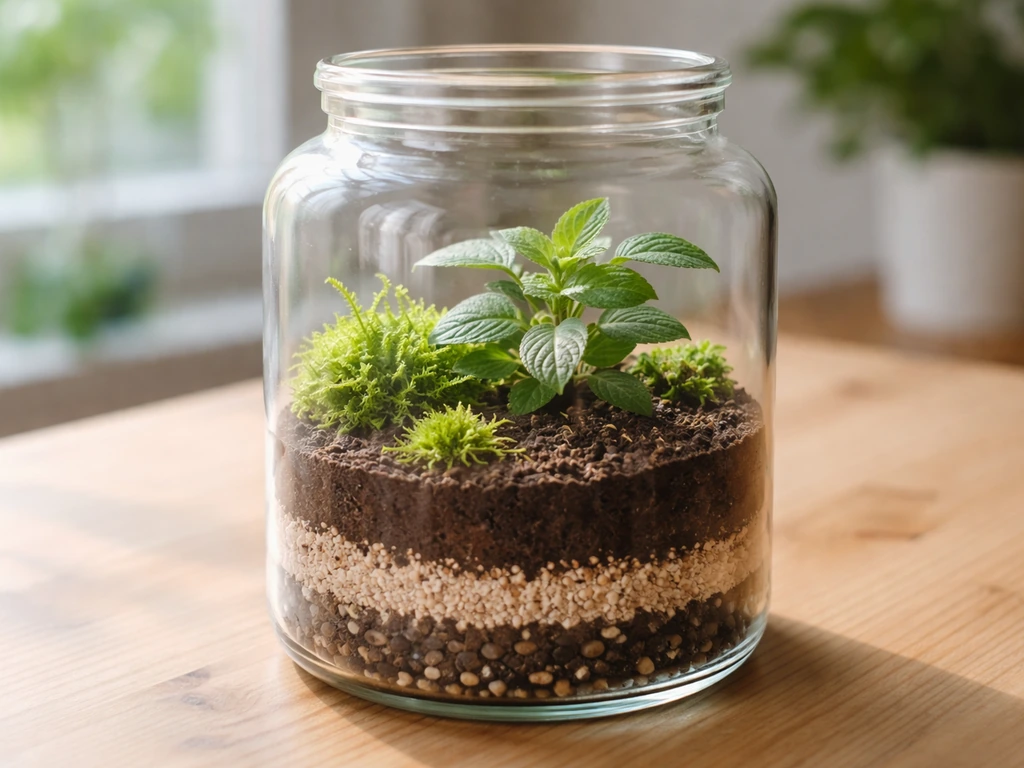
The best plants to grow in a bottle depend on one decision you need to make first: closed or open. Closed bottles (sealed or lidded) trap humidity and work brilliantly for moisture-loving tropicals like fittonia, baby's tears, spike moss (Selaginella), and miniature ferns. Open bottles (no lid, or a wide mouth left uncovered) are drier inside and suit succulents, cacti, jade, aloe, haworthia, and echeveria. Get that match right and bottle growing is genuinely low effort.
Best Plants to Grow in a Bottle: Terrarium Picks for Beginners
Rachel Hartley
24 Jun 2026
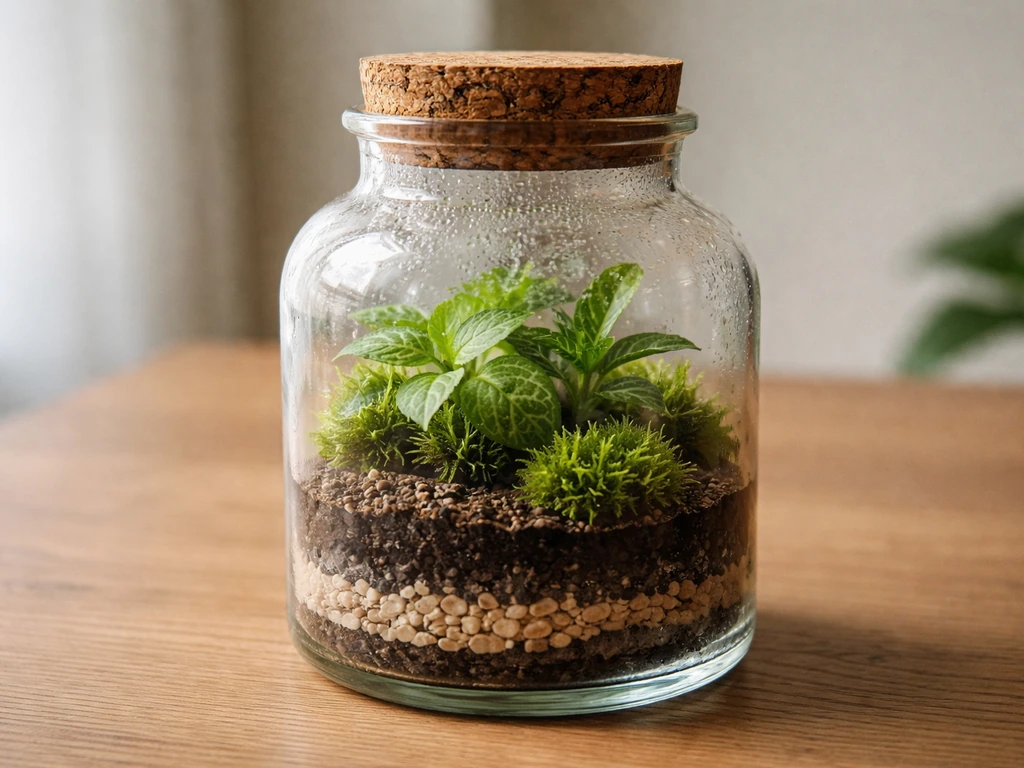
If you are looking for the best plants to grow in mason jars, focus on varieties that match your jar being open or sealed and your light level bottle growing. Get it wrong and you get mold, rot, or crispy dead plants within a few weeks.
What 'bottle growing' actually means (closed vs open)
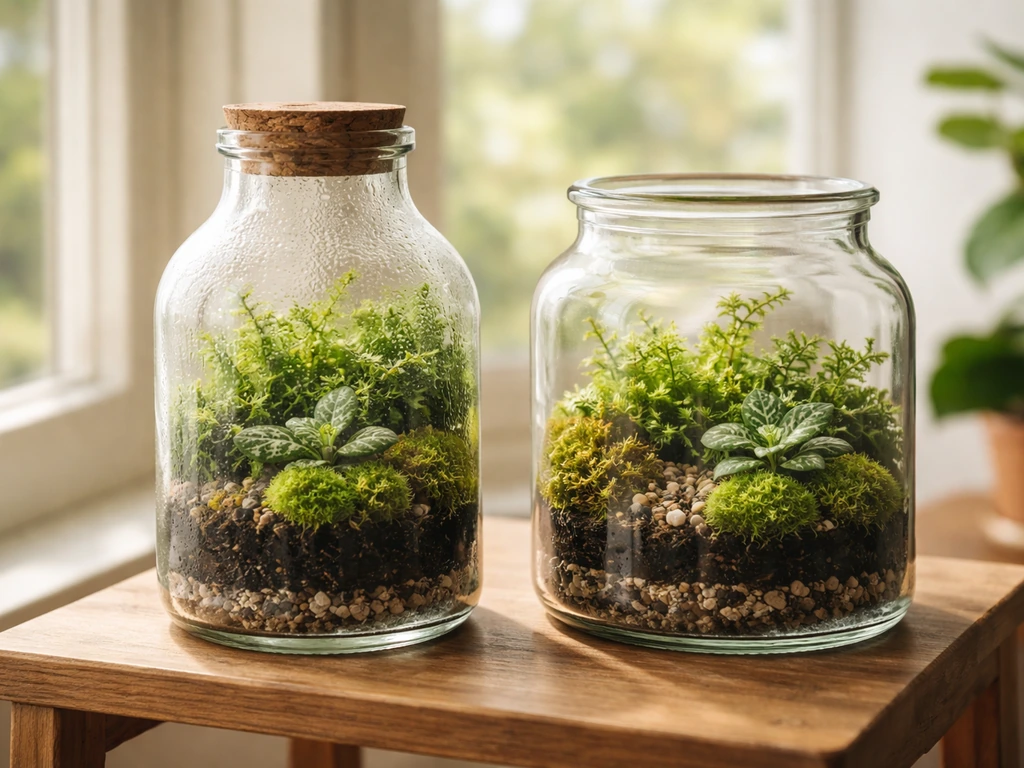
Almost any clear container, including glass jars, wine bottles, wide-mouth jugs, or repurposed plastic bottles, can work as a bottle garden. What changes everything is whether it has a lid or cover. A closed bottle garden is a sealed or nearly sealed system. Once you water it correctly at the start, moisture evaporates from the soil, condenses on the glass, drips back down, and the cycle repeats.
Penn State Extension notes that a properly sealed terrarium may only need watering once every four to six months. An open bottle garden has no lid, so moisture escapes and you're responsible for watering like any other container plant, though still less often than a typical pot because the glass walls reduce evaporation compared to terracotta.
The distinction matters for your plant choices more than almost any other factor. Closed bottles stay humid, which tropical moisture-lovers thrive in but which will rot out succulents and cacti quickly. Open bottles stay drier and have better airflow, which is exactly what drought-tolerant plants need. This is also why bottle gardens and glass-container gardens overlap so heavily: the glass walls create a microclimate regardless of whether the vessel is a dedicated terrarium, a mason jar, a fish tank, or a repurposed bottle.
Best low-maintenance plants for indoor bottle gardens
For closed bottle gardens, you want small, slow-growing foliage plants that love high humidity and tolerate low to medium light. The following are the most forgiving options and consistently recommended by extension services and experienced growers.
- Fittonia (nerve plant): The single best beginner choice for closed bottles. It's compact, loves humidity, comes in green or pink-veined varieties, and recovers well from mild neglect. 'Nana' is a miniature cultivar that stays small.
- Baby's tears (Soleirolia soleirolii): A creeping ground-cover that fills in beautifully and genuinely thrives in the sealed-bottle water cycle. Grows fast enough to look lush but not so fast it takes over immediately.
- Spike moss (Selaginella): Not a true moss, but it behaves like one. Loves moisture, stays low, and handles the indirect light of most indoor windowsills well.
- Miniature ferns: Lemon button fern and button fern (Pellaea rotundifolia) are reliably compact. Avoid large Boston ferns, they outgrow a bottle fast.
- Pearlwort (Sagina subulata): Looks like a delicate grass-moss hybrid, stays tiny, and handles closed conditions well.
- Mosses: Sheet moss, cushion moss, or preserved mood moss are ideal fillers. They absorb and release moisture slowly, which helps stabilize the water cycle in a closed bottle.
For open bottle gardens, succulents and cacti are your best bet. If you are specifically wondering what to grow in a glass bowl, look for compact plants that match your light and moisture level what plants can i grow in a glass bowl. Jade plant (Crassula ovata), aloe, haworthia, echeveria, and sedum are all solid. Haworthia is especially practical for indoor open bottles because it tolerates lower light than most succulents. If you want something a little different, polka dot plant (Hypoestes phyllostachya) can work in open bottles with medium light, though it grows faster and will need trimming.
Matching plants to your light situation
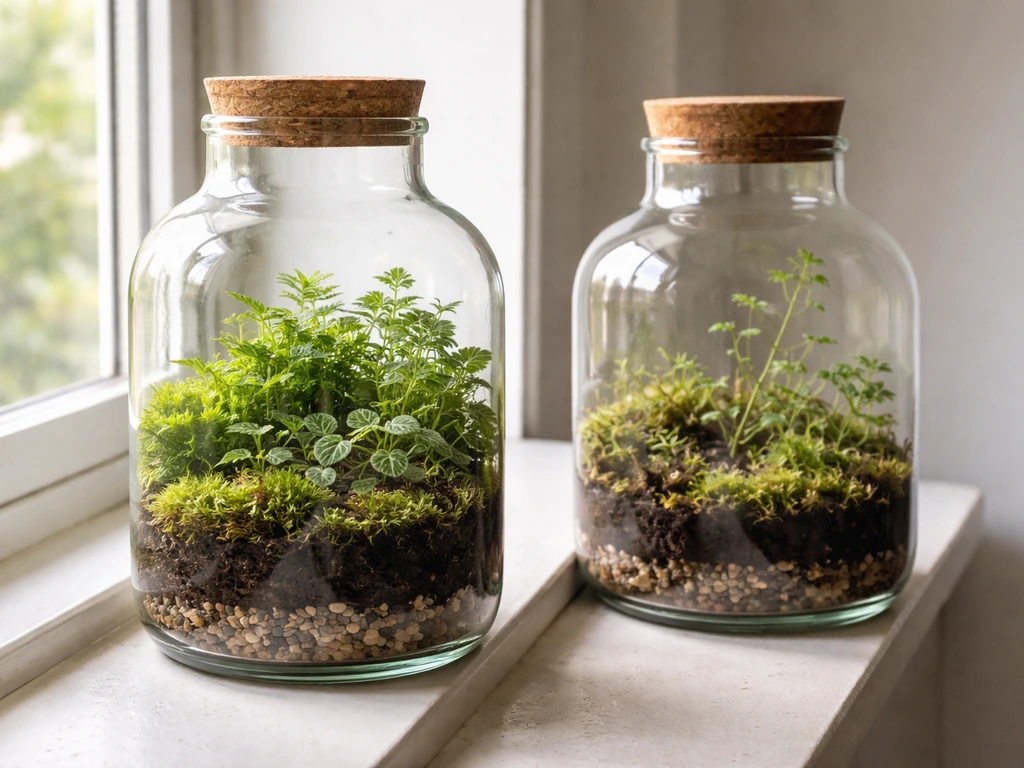
The University of Arizona Cooperative Extension classifies indoor light as high (150 to 1,000 foot-candles), medium (75 to 150 foot-candles), and low (25 to 75 foot-candles). Most homes land somewhere in the medium range a few feet from a window, dropping to low further in. The RHS recommends at least six hours of bright indirect light per day for terrarium plants, with a north- or east-facing window as ideal, shifting to south- or west-facing in winter when light intensity drops. Direct sun is a serious problem for closed containers because the glass amplifies heat quickly enough to cook plants.
| Light Level | Window Type | Best Closed Bottle Plants | Best Open Bottle Plants |
|---|---|---|---|
| High (bright indirect) | East or west-facing, 1–3 ft from glass | Fittonia, polka dot plant, baby's tears | Echeveria, sedum, aloe, jade |
| Medium | North-facing or 4–6 ft from east/west window | Fittonia, spike moss, miniature ferns, pearlwort | Haworthia, gasteria |
| Low | Deep in a room, minimal natural light | Mosses, baby's tears (slow growth) | Very few succulents tolerate this; consider a grow light |
One practical note: if your only available spot is a south- or west-facing window in summer (especially in warmer climates like the US South or Southwest), move closed bottle gardens back from the glass or add a sheer curtain. If you are planning a greenhouse setup, you can use the same idea of matching humidity and airflow to choose the best plants to grow in a greenhouse. Sealed glass in direct afternoon sun in July or August can heat up to temperatures that kill even heat-tolerant tropicals within hours.
Plants to avoid, and the failure modes that kill bottle gardens
Some plants that seem like obvious bottle choices will disappoint you fast. Here are the common mistakes and why they happen.
- Succulents or cacti in closed bottles: These need dry air and good airflow. A sealed bottle gives them neither. They'll rot within weeks.
- Large or fast-growing plants: Anything that outgrows a 12-inch pot within a season (like pothos, larger ferns, or tomatoes) will become overcrowded, touch the glass walls, and start to rot at contact points. Penn State Extension specifically flags leaves touching the glass as a pruning trigger.
- Herbs and edibles in closed bottles: Most culinary herbs (basil, mint, thyme, rosemary) need airflow, bright direct light, and regular harvesting. They can work in open bottles near a bright window but rarely thrive in closed setups.
- Plants that need dry-out periods: Peace lilies and ZZ plants can survive low light but dislike the constant humidity of a sealed bottle.
- Over-watering at setup: The single most common failure. Adding too much water at the start creates a swamp that causes mold, bacterial rot, and fungus gnats. UC ANR IPM and NC State Extension both link fungus gnat infestations directly to chronically wet soil.
Mold is the other big killer. Sky Nursery's terrarium guide flags more than 25% condensation coverage on the glass walls as a warning sign of excess moisture. If you see persistent white or gray fuzz on soil or plant material, the bottle is too wet and airflow is too low. blank" rel="noopener noreferrer">Fungus gnats in houseplants are linked to overwatering, saturated topsoil, and fungal growth, which is why getting moisture and airflow under control helps reduce them. Remove affected material immediately, vent the bottle for a few hours, and hold off on any further watering.
How to set up a bottle for planting
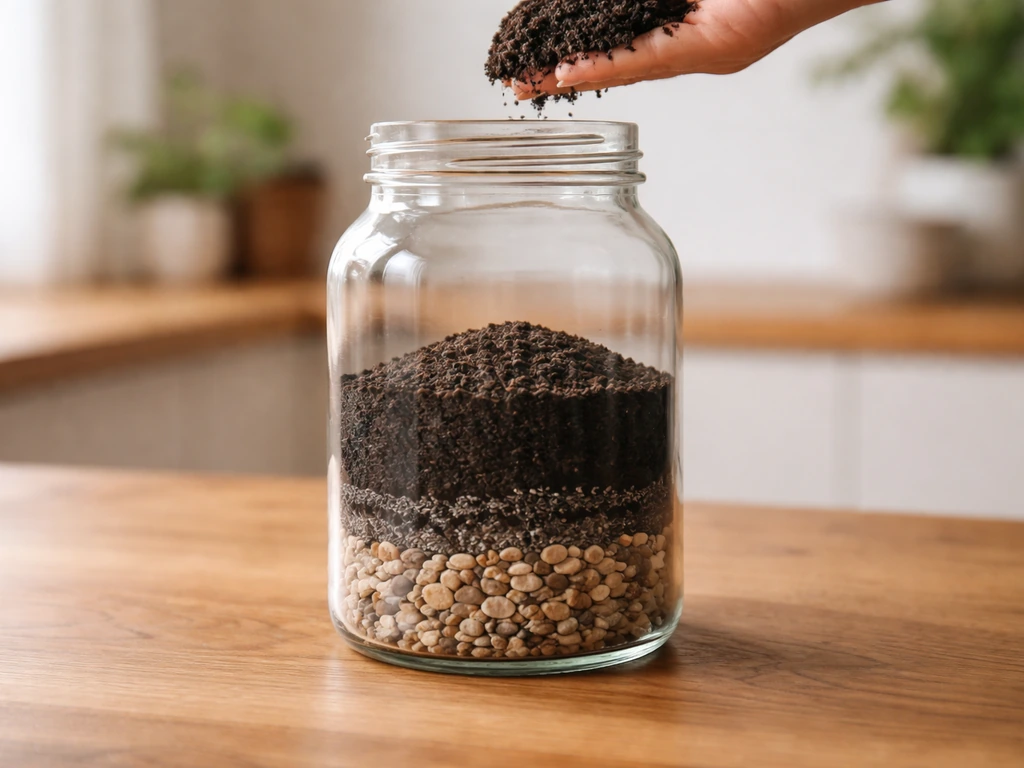
The layering system in a bottle garden isn't just aesthetic: it's functional drainage in a container that has no holes. Here's the setup that works reliably for closed or open bottles.
- Clean the container thoroughly. For closed terrariums, sterilize with diluted white vinegar or rinse well with boiling water and let it dry. Any residual bacteria or mold spores will thrive once you seal it.
- Add a drainage layer: about 1 to 1.5 inches of pea gravel, coarse sand, or small river stones at the bottom. This gives excess water somewhere to go that isn't the root zone.
- Add a thin layer of horticultural charcoal (about half an inch) directly on top of the gravel. MU Extension recommends this layer to help filter the water as it cycles through and to reduce bacterial and odor buildup. Penn State Extension suggests mixing some charcoal directly into the potting mix as well.
- Add your growing medium: 2 to 3 inches for small plants, more if the bottle is tall. For closed bottles with tropical plants, use a well-draining peat-based or coco coir mix. For open bottles with succulents, use a cactus/succulent mix or add perlite to regular potting soil at a 1:1 ratio.
- Plant your selections, keeping them away from the glass walls to reduce rot risk and heat damage.
- Water lightly at setup, just enough to moisten the soil. For a closed bottle, you want the soil damp but definitely not soggy. Then seal it and watch.
For narrow-mouthed bottles, use long tweezers, chopsticks, or a folded piece of paper as a funnel for the soil. It's fiddly but manageable. If roots won't fit through the opening, divide the plant or trim it down before planting.
Day-to-day care: watering, light, pruning, and seasonal shifts
Reading condensation as a care signal
In a properly balanced closed bottle, you should see some condensation on the walls each morning that clears as the day warms up. That cycling is healthy. What you don't want is condensation that never clears, which means the bottle is too wet: open it for about an hour as the Mississippi State Extension recommends, then reseal.
A Reddit thread also mirrors this troubleshooting pattern, with beginners debating whether persistent condensation indicates “too much water” and trying different venting and adjustment experiments condensation that never clears, which means the bottle is too wet. What you also don't want is no condensation at all combined with drooping plants or dry soil, which means the water cycle has broken and it's time to add a small amount of water.
Watering frequency
Closed bottles: water only when condensation has stopped completely, plants look wilted, or the soil feels dry when you touch it. Penn State Extension's guideline of once every four to six months is realistic for a well-sealed bottle with the right plants. Don't water on a schedule, use the visual and tactile cues instead. Open bottles need more frequent checking, roughly every one to two weeks in summer, less in winter, using the same soil-touch test.
Pruning and removing debris
Prune out yellowed leaves, any growth touching the glass, and anything that's outgrowing the space. Penn State Extension frames this as essential maintenance, not optional tidying. Dead or decaying plant material in a high-humidity closed bottle will mold quickly and spread to healthy plants. Remove it as soon as you see it, using long tweezers if the bottle neck is narrow.
Seasonal adjustments
In winter, move bottle gardens closer to south- or west-facing windows to compensate for lower light intensity. The RHS specifically recommends this seasonal shift. If you're in a northern climate where natural light drops significantly between November and February, a simple grow light on a timer (12 hours on) will keep tropical closed-bottle plants healthy without overheating them. In summer, pull bottles back from windows or add a sheer curtain to prevent heat buildup, especially in glass containers where temperatures can spike fast. Skip fertilizer entirely in closed systems; Mississippi State Extension advises against it because there's no way for excess nutrients to flush out and they'll build up to toxic levels.
Quick plant shortlists by goal
If you want the easiest possible bottle garden, start here and build from there. You can apply the same approach to container planting when choosing the best plants to grow in mugs, by matching moisture level to the mug setup bottle garden.
| Goal | Bottle Type | Top Plant Picks |
|---|---|---|
| Easiest/most forgiving | Closed bottle, medium light | Fittonia 'Nana', baby's tears, cushion moss |
| Best-looking foliage | Closed bottle, bright indirect light | Fittonia (pink or white veined), spike moss, pearlwort, lemon button fern |
| Low light, hands-off | Closed bottle, low light | Sheet moss, baby's tears, Selaginella uncinata |
| Succulents/drought tolerant | Open bottle, bright indirect to high light | Haworthia, echeveria, sedum, jade, aloe |
| Herbs or edibles | Open bottle, south-facing bright window | Basil (small pots), chives, mint (contained), small-leaf thyme |
| Desk or shelf display | Open bottle, medium light | Haworthia, air plants (Tillandsia, no soil needed) |
A note on herbs: if edibles are your main goal, an open bottle near your brightest window is workable for compact herbs like chives or a single basil cutting rooted in water, but you'll get better results from a wider container with more root room. Narrow bottles limit root depth, which caps the productivity of any food plant significantly. The sweet spot for bottle growing is really foliage and aesthetics, with edibles as a fun experiment rather than a primary harvest strategy.
If you're comparing bottle gardens to other glass-container options like bowls, jars, or mason jars, the core plant principles stay the same: match humidity tolerance to whether the vessel is sealed or open, match light needs to your window, and keep plants small and slow-growing. The shape of the vessel changes the setup logistics more than the plant selection. Wider-mouthed containers like glass bowls are easier to plant and maintain, while narrow bottles are more of a challenge but create a striking display when done right.
FAQ
Can I mix succulents and tropical plants in the same bottle?
It is usually better to choose plants that match the bottle type you are using, not the opposite. A closed bottle with succulents or cacti often rots even if the soil mix is airy, while an open bottle with tropicals like fittonia will dry out faster than those plants can recover. If you are unsure, start closed bottle plants with slow growers (fittonia, spike moss, miniature ferns).
What should I do if my closed bottle is always foggy and wet?
If condensation never clears for multiple days, treat it as an over-wet closed system. Vent the bottle for about an hour, then reseal and observe the next morning. Also remove any decaying leaf litter near the soil surface, because trapped organic debris keeps moisture and encourages mold.
How do I choose between low, medium, and bright indirect light for bottle plants?
Pick based on your light range and how close you can place the bottle to the window. Closed terrarium plants generally need stable, bright indirect light, while many succulents tolerate lower light than tropicals but will stretch or look washed out. A simple test is to place the bottle where it gets several hours of bright indirect light, then adjust by moving it a few feet or adding a sheer curtain.
Which bottle plants are easiest to manage in a narrow-neck bottle?
For narrow-neck bottles, avoid plants that need deep root space or wide crowns, because you may not be able to trim or reposition without damaging the root ball. Haworthia and small sedum are often easier in tighter openings, while many ferns, polka dot plant, and fittonia can become crowded and require more frequent pruning.
Can I grow herbs in a bottle, and which ones work best?
Yes, but only if your bottle has a wide opening or you plan to trim regularly. Most herbs stay small when rooted from cuttings and grown in compact setups, but narrow bottles limit root depth and reduce productivity. Also, open bottles near bright windows usually work better than closed bottles for herbs because you are less likely to keep the soil overly saturated.
Do fast-growing plants work in bottle gardens?
Start with slow-growing foliage for closed bottles, and choose compact plants for open bottles so they do not outgrow the container before you can adjust. Growth speed is a bigger issue than plant toughness, because fast-growing plants dump more dead material and trigger mold in closed, humid environments.
How often should I water if I cannot remember whether my bottle is “open” or “closed”?
Use the condensation test and the soil-touch test together. In open bottles, water when the surface feels dry a couple inches down, not just when the top looks dry. In closed bottles, wait until condensation has stopped completely and the soil feels dry when touched through the opening.
Will venting fix mold, or should I remove plants right away?
If you see white or gray fuzz, remove affected leaves and any visibly moldy material immediately, even if the rest of the bottle looks fine. Venting helps, but mold can reappear if decaying debris remains. In persistent cases, wait longer between waterings and ensure the bottle plants are not touching the glass constantly.
Can I fertilize bottle plants, and what happens if I do it too often?
Fertilizer is the main “hidden” mistake in bottle systems, especially closed ones. Nutrients build up because there is no natural flushing. If you ever fertilize an open bottle, use a very diluted, slow, light feeding and only during active growth, then stop if you see algae, heavy condensation, or fast soft growth.
When should I replace or replant bottle garden plants?
Yes, but use the right approach for your bottle type. For closed bottles, do not replant frequently, because disturbing plants can break the moisture cycle and increase mold risk. For open bottles, you can repot or adjust more often, but still choose compact plants and plan for trimming to keep airflow and maintain proportions.
Next Article
Plants You Can Grow in a Jar: Best Picks and How to Start
Best plants you can grow in a jar, plus starter steps and fixes for light, water, rot, and mold.