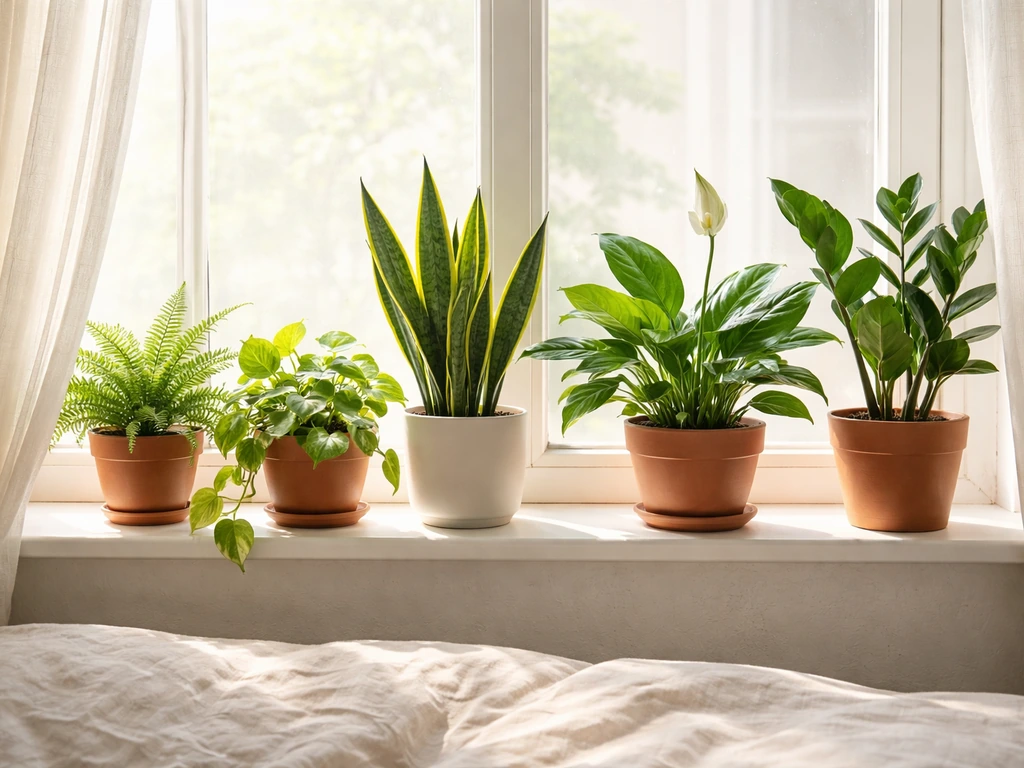
Plenty of plants can thrive in a basement, but the honest answer depends on one thing above almost everything else: how much light you actually have down there. With a decent grow light setup, you can grow herbs, leafy greens, microgreens, and a long list of tropical houseplants year-round. Without any supplemental light, you're working with a much shorter list, mostly shade-tolerant foliage plants like snake plants, ZZ plants, and pothos.
Plants That Can Grow in a Basement: Best Options
Rachel Hartley
23 Jun 2026
If you want similar options for indoor rooms, look for plants that can grow in bedroom conditions with low light and consistent care. Either way, a basement can absolutely be a productive growing space. You just need to match your plant choices to your real conditions rather than wishful thinking.
How to figure out what will actually grow in your basement
Before you buy a single plant, spend five minutes honestly evaluating four things: light, temperature, humidity, and airflow. If you’re trying to pick the best plant to grow in a bathroom, focus on high humidity tolerance and the amount of light the room actually gets. These four factors determine everything. Get them wrong and no amount of good intentions will keep your plants alive.
Light: the most important variable
Light is measured in foot-candles (fc) or lux (1 fc equals about 10.764 lux). As a practical baseline, even low-light tolerant plants tend to struggle below 50 foot-candles. Most basements with small egress windows or no windows at all fall well below that. A ZZ plant can technically survive as low as 25 fc, and snake plants are similarly forgiving, but "surviving" and "growing well" are two different things. If you want actual growth and not just a plant hanging on for its life, either pick the most tolerant species or add a grow light. A $30 to $50 LED panel changes everything.
Temperature: aim for the sweet spot
Most basements stay cooler than the rest of the house, which is actually fine for many plants. A daytime range of 65 to 75°F with nights around 10°F cooler is the target for most foliage plants and herbs. Some plants can tolerate and even thrive in a stable air conditioned room, so choose species that match your indoor temperature range plants that can grow in air conditioned room. The problems show up at the extremes: an unheated basement that drops below 55°F in winter will stop tropical plants cold, sometimes permanently. Cold or hot air blasting from HVAC vents can also cause sudden leaf drop. Check where your vents and pipes are before placing plants.
Humidity: enough but not too much
Most houseplants prefer relative humidity between 40 and 60%. Tropical species can handle 70 to 80%. The problem in basements is that high humidity combined with low airflow creates the perfect environment for mold, mildew, and fungus gnats. If your basement regularly sits above 60 to 65% RH, a dehumidifier is worth considering, though using one alone doesn't solve everything if moisture is actively entering from outside. A hygrometer (humidity gauge) costs under $15 and tells you exactly where you stand.
Airflow and space
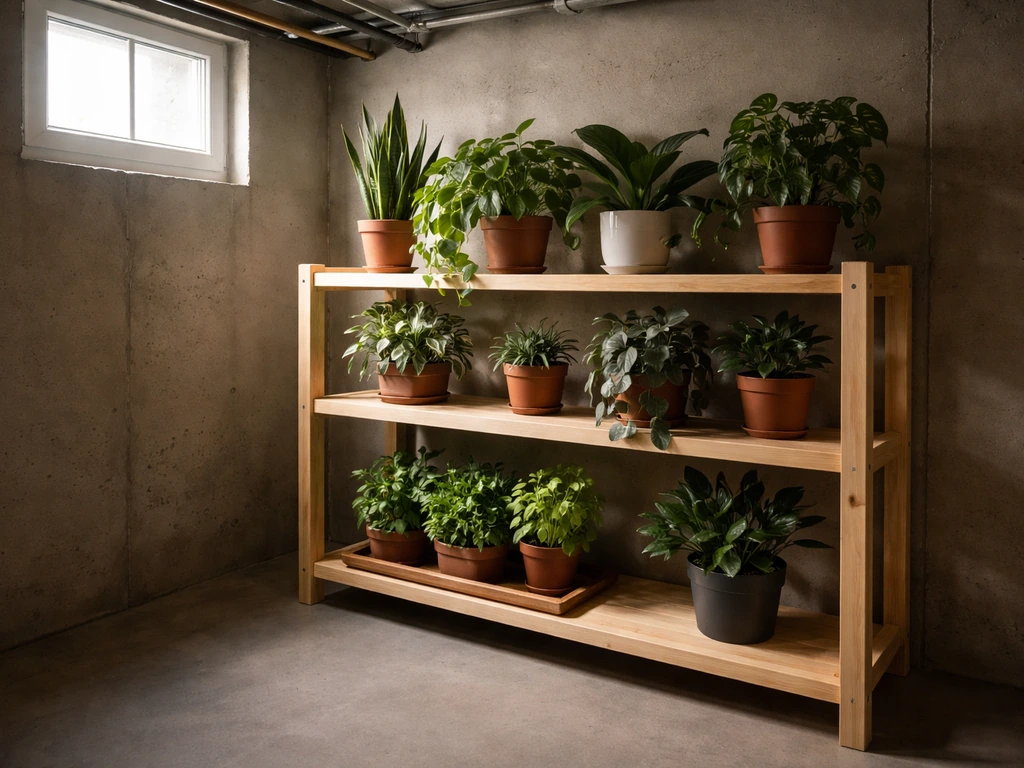
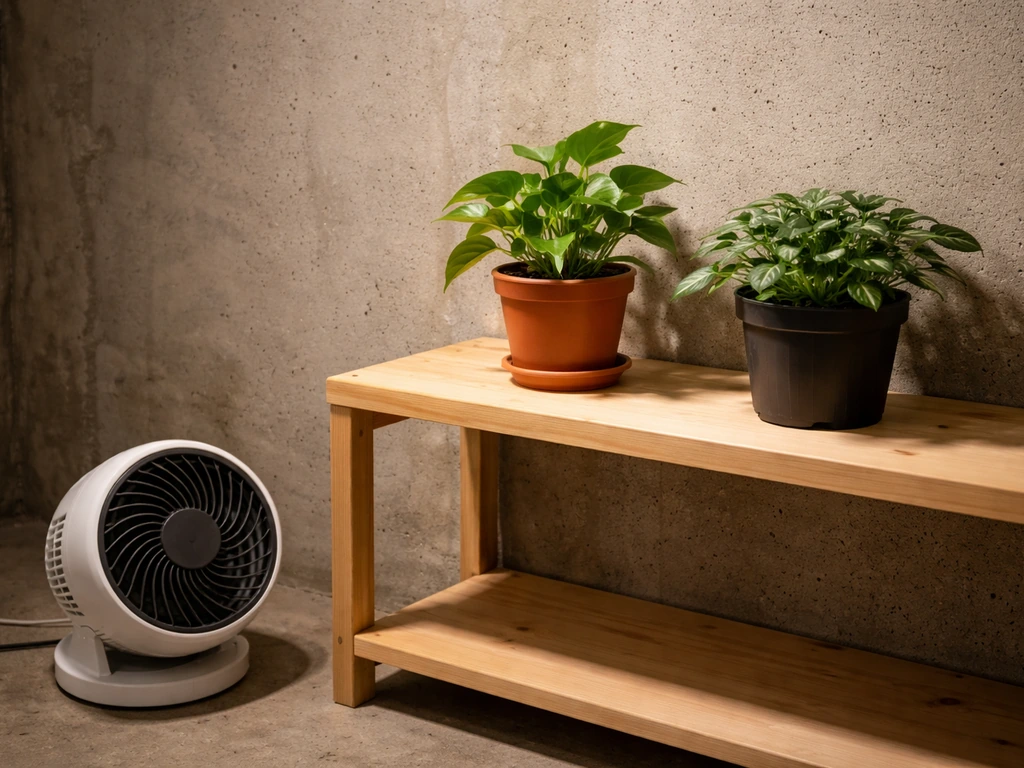
Stagnant air is the enemy of healthy indoor plants. Poor airflow accelerates mold growth on soil and leaves, especially in a humid basement. A small oscillating fan running a few hours a day makes a real difference. For space, measure your available area and plan for plant height at maturity, not just at purchase. Shelving systems work great in basements and let you position grow lights at the right distance for each tier of plants.
Best plants for a low-light basement (no grow lights required)
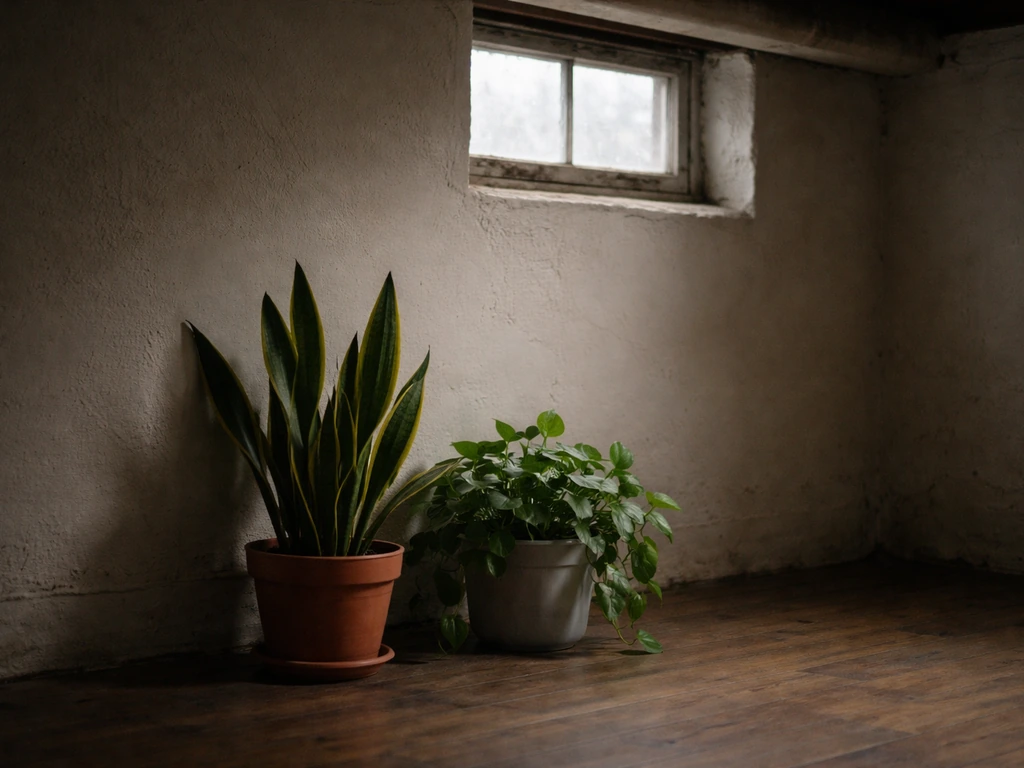
These are the plants that can genuinely handle the dim, naturally lit basement with a small window or just ambient light from an open door. They won't grow fast, but they'll survive and look decent with minimal fuss. Bathrooms can still support plants, but you need to choose species that tolerate low light and higher humidity, or provide supplemental light low-maintenance and hands-off. This is your list if you want something low-maintenance and hands-off.
- Snake plant (Dracaena trifasciata): probably the most forgiving plant you can own. It tolerates genuinely low light, survives infrequent watering, and rarely complains. Great for a basement corner.
- ZZ plant (Zamioculcas zamiifolia): handles light as low as 25 fc, making it one of the few plants that will stay upright and green in a really dark basement. Water it every 2 to 3 weeks and mostly ignore it.
- Pothos (Epipremnum aureum): fast-growing in moderate light, but it will hold on in low-light conditions. Trailing varieties look great on shelves. Easy to propagate if you want more plants.
- Cast iron plant (Aspidistra elatior): lives up to its name. One of the most shade-tolerant houseplants available. Slow-growing but nearly indestructible.
- Peace lily (Spathiphyllum): handles low light and actually prefers the cooler temperatures common in basements. Droops dramatically when thirsty, which makes watering timing easy to read.
- Chinese evergreen (Aglaonema): tolerates low to medium light well. Avoid variegated varieties with lots of white or yellow in a dark basement, as those need more light. Stick with darker-leafed cultivars.
- Dracaena (multiple species): low-light tolerant and slow-growing, which is a feature in a basement where you're not trying to manage rapid growth.
One honest caveat: none of these will thrive in true darkness. If your basement has zero natural light and zero supplemental light, even these tough plants will slowly decline. what plants can grow in an office with no windows. They need at least some light to maintain themselves. A single basic LED bulb left on for 12 or more hours a day is usually enough to keep them alive, even if it's not a dedicated grow light.
Best plants when you add grow lights (or have a bright basement)
Once you add a grow light, the options open up dramatically. This is where basements actually become one of the better indoor growing spots in the house, because temperatures are stable, the space is dedicated, and you control every variable. Full-spectrum LED grow lights are the go-to choice right now. Blue-spectrum or mixed-spectrum bulbs work well for leafy greens and non-flowering houseplants. Run most setups 12 to 16 hours per day, but don't go beyond 16 hours as plants need a rest period in darkness.
- Philodendron (heartleaf and other varieties): thrives under moderate grow light. Easy to manage and rewarding if you give it consistent indirect artificial light.
- Spider plant (Chlorophytum comosum): tough and adaptable. Does well under fluorescent or LED grow lights and produces babies you can propagate.
- Ferns (Boston, bird's nest): love the humidity of basements and do well under grow lights. Keep humidity at 50% or above for best results.
- Monstera deliciosa: if you have vertical space and a decent grow light, monstera will grow enthusiastically. It's not a low-light plant despite what you may have heard.
- Calathea and Maranta: love the consistent temperature and moderate light. These do well under grow lights and appreciate the stable basement environment.
- Orchids: once you have grow lights and a slight temperature drop at night (which basements naturally provide), orchids can rebloom more reliably than in warmer, inconsistent above-ground rooms.
Edible plants and herbs you can actually grow in a basement
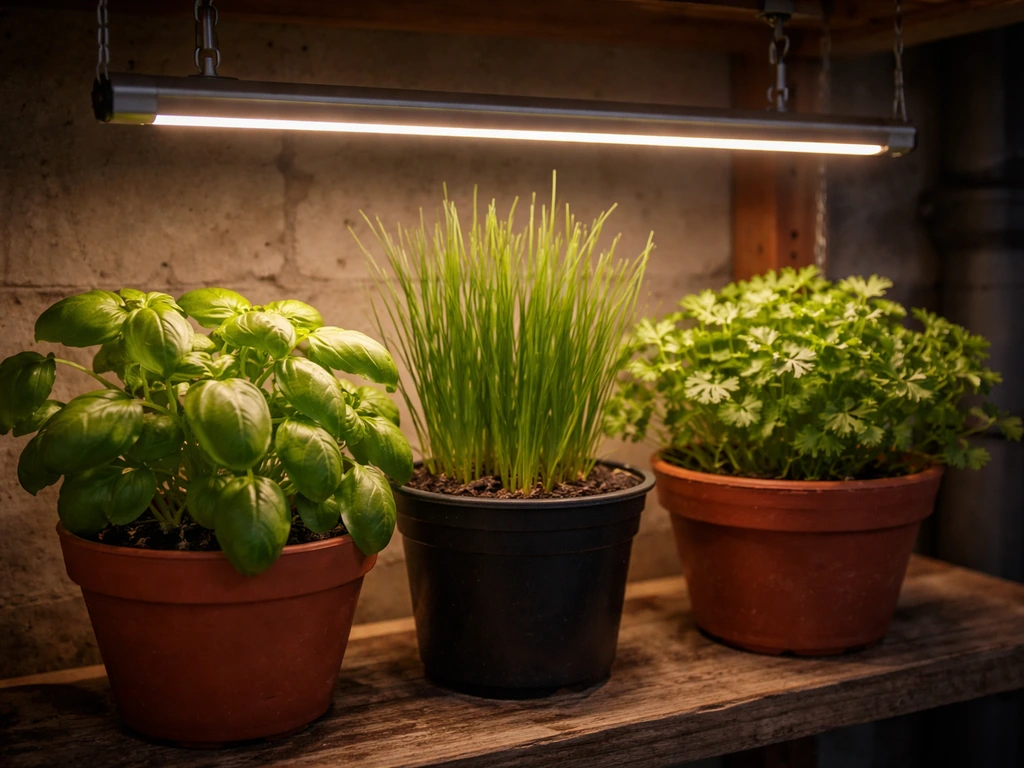
This is where a basement grow setup earns its keep. With grow lights, you can produce real food down there year-round. Set realistic expectations: you won't replace a vegetable garden, but you can keep yourself in fresh herbs and greens consistently.
Herbs that work well
Chives, basil, and cilantro are reliable beginner choices for basement herb growing. Basil needs the most light of the three and does best directly under a grow light at 12 to 14 hours per day. Chives are more forgiving and grow more slowly in winter when light is limited, but they're hardy and respond well to regular harvesting. Cilantro bolts quickly, so succession planting every 3 to 4 weeks keeps you in steady supply. Grow each herb in its own pot rather than mixing them in a single container, because their watering and light needs differ enough that a mixed planter always ends up favoring one plant at the expense of the others.
Leafy greens and microgreens
Spinach, lettuce, and Swiss chard are well-suited to basement growing under lights. They prefer the cooler temperatures basements typically offer and don't need intense light to produce edible leaves. Baby spinach and chard can be harvested repeatedly by cutting outer leaves, which keeps production going for months. Lettuce runs on 12 to 14 hours of light per day and can be harvested as a cut-and-come-again crop. Microgreens are the fastest return on your investment down there: most varieties are ready to harvest in 7 to 21 days after germination, and they need minimal space and no complex setup. Sunflower, radish, and pea shoot microgreens are beginner-friendly and give you a quick win while you're still figuring out your basement setup.
Realistic yield expectations
A single 2-foot grow light shelf can realistically support enough herbs for regular cooking use and a continuous rotation of microgreens or baby greens. You're not feeding a family from a single shelf, but you are cutting your grocery list for fresh herbs year-round. Scale up with additional shelves and lights if you want more. Basements are actually great for this because the space is available and you're not displacing anything in your living areas. For the best results in kitchen growing, choose plants that match your window light and the space you have for containers or grow lights best plants to grow in kitchen.
Setup checklist: containers, soil, drainage, ventilation, and watering
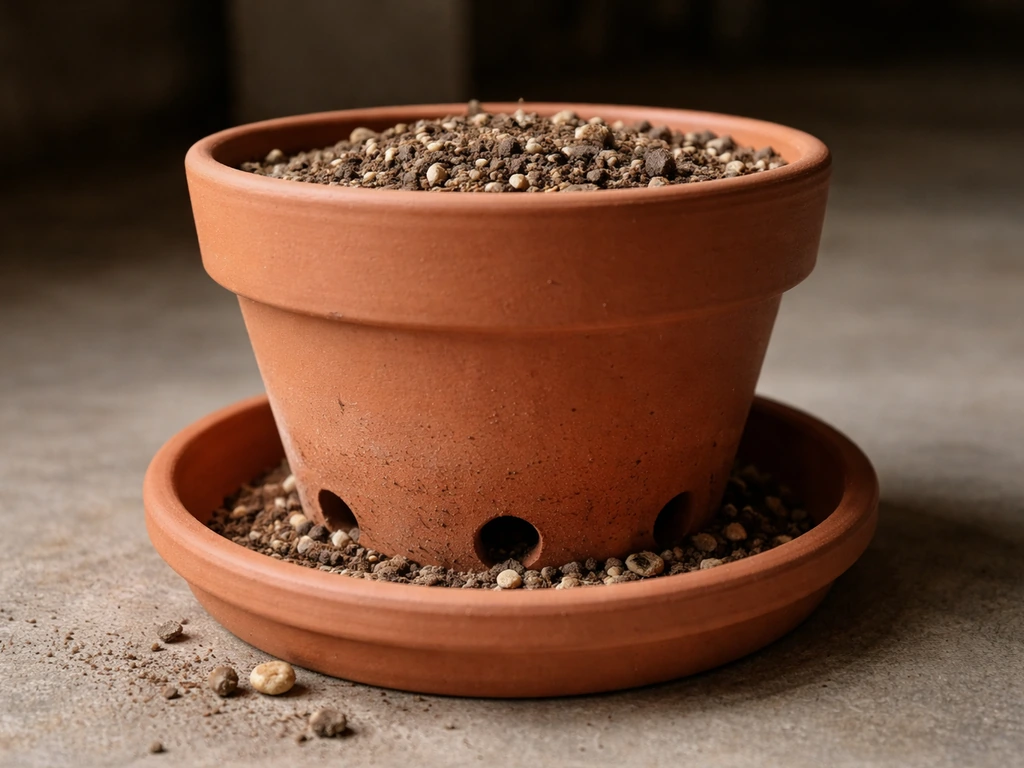
Getting the physical setup right prevents 90% of the problems people run into with basement plants. Here's what to get right before you start.
- Use containers with drainage holes, always. Pots without drainage holes dramatically increase root rot risk, and wet, stagnant soil in a basement is a disaster waiting to happen. Place saucers underneath and empty them after watering.
- Match pot size to plant size. A pot that's too large leaves excess soil that stays wet for too long. This is a common root rot trigger. Size up gradually as plants grow.
- Use a quality potless mix with added perlite. A standard potting mix with 20 to 30% perlite improves drainage and adds air space to the root zone. Avoid heavy garden soil in containers.
- Set up a small fan for airflow. A basic oscillating fan running a few hours per day prevents stagnant air, which reduces mold, mildew, and fungus gnat pressure. Position it so it moves air gently through your plant area without blasting leaves directly.
- Run a dehumidifier if basement RH exceeds 60%. Aim to keep humidity in the 40 to 60% range. Use a hygrometer to monitor this. If you're also running a grow light that generates heat, conditions can shift, so check regularly.
- Water based on soil moisture, not a schedule. Stick your finger 1 to 2 inches into the soil. If it's still damp, wait. Basement conditions mean soil dries more slowly than in warmer areas of the house, so your usual watering schedule will often be too frequent.
- Bottom watering works well for basement plants. Set pots in a tray of water for 20 to 30 minutes, then remove. This encourages deep root growth and avoids consistently wet topsoil, which is where fungus gnat larvae live.
- Position grow lights at the right distance. LED panels typically perform best at 12 to 24 inches above the plant canopy depending on wattage. Check manufacturer guidance. Too close burns leaves, too far causes leggy, stretched growth.
- Set grow lights on a timer. Aim for 12 to 16 hours of light per day depending on what you're growing. Seedlings and leafy greens often do well at 14 to 16 hours. Houseplants can get by with 12 to 14 hours.
Troubleshooting the most common basement plant problems
Fungus gnats
Fungus gnats are the most common pest in basement plant setups, and they're almost always caused by overwatering. The larvae live in the top 2 to 3 inches of moist soil and feed on roots and decaying organic matter. UMN Extension notes that damp indoor conditions help drive fungus gnat problems because their larvae feed on decaying roots and fungi in soil [fungus gnat larvae feed on decaying roots and fungi in soil](https://extension. umn.
edu/product-and-houseplant-pests/insects-indoor-plants). Fix the watering first. Let the top layer of soil dry out between waterings. Place yellow sticky traps at soil level near your pots to catch adult flies and monitor how bad the infestation is.
For active infestations, BTI (Bacillus thuringiensis israelensis) applied as a soil drench kills larvae without harming plants. Beneficial nematodes are another biological option that can be worked into the soil.
Root rot
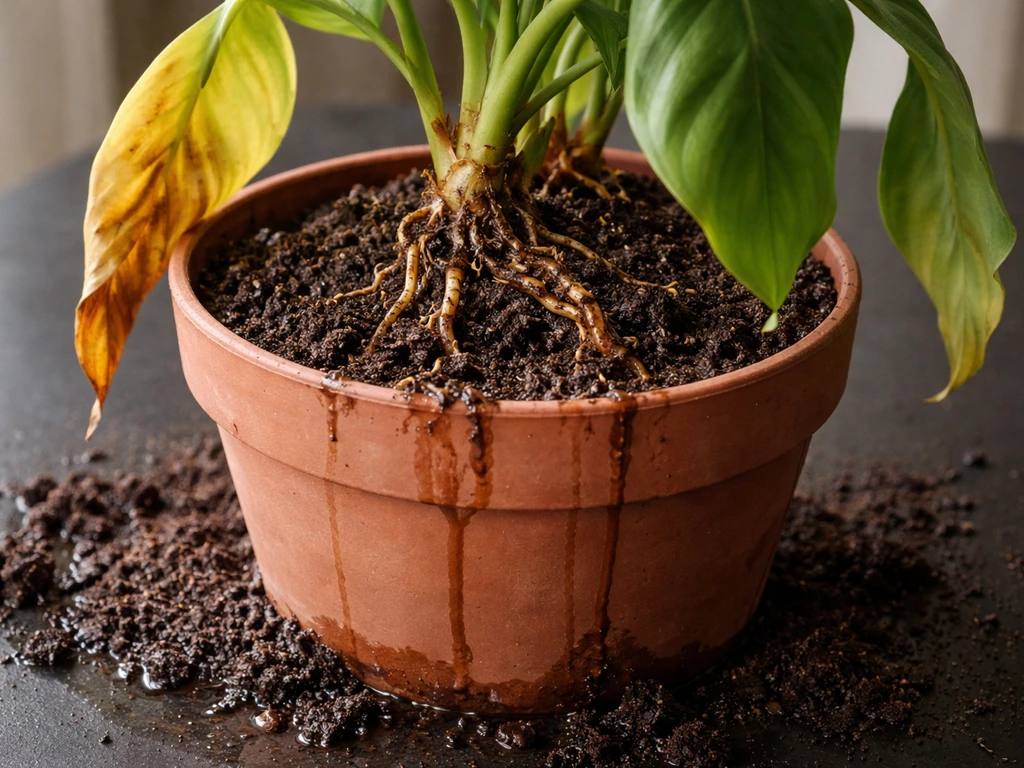
Root rot looks like wilting even when soil is wet, plus yellowing lower leaves, and brown or mushy roots when you pull the plant out. It's caused by overwatering, poor drainage, or a pot that's too large. If you catch it early, remove the plant from the pot, trim off any black or mushy roots, let the roots air out for an hour, and repot into fresh sterile mix in a clean pot with drainage. Separate any affected plants from healthy ones. Going forward, water less and make sure drainage is working properly.
Leggy, stretched growth
If your plants are reaching dramatically toward a light source or growing tall and thin with widely spaced leaves, they're not getting enough light. This is called etiolation. The fix is to move the plant closer to a light source or add a grow light. Once a stem has stretched, it won't compact back down, but new growth will be more compact once light improves. For seedlings especially, leggy growth is a sign to lower the light closer to the canopy or increase your daily photoperiod.
Mold and mildew
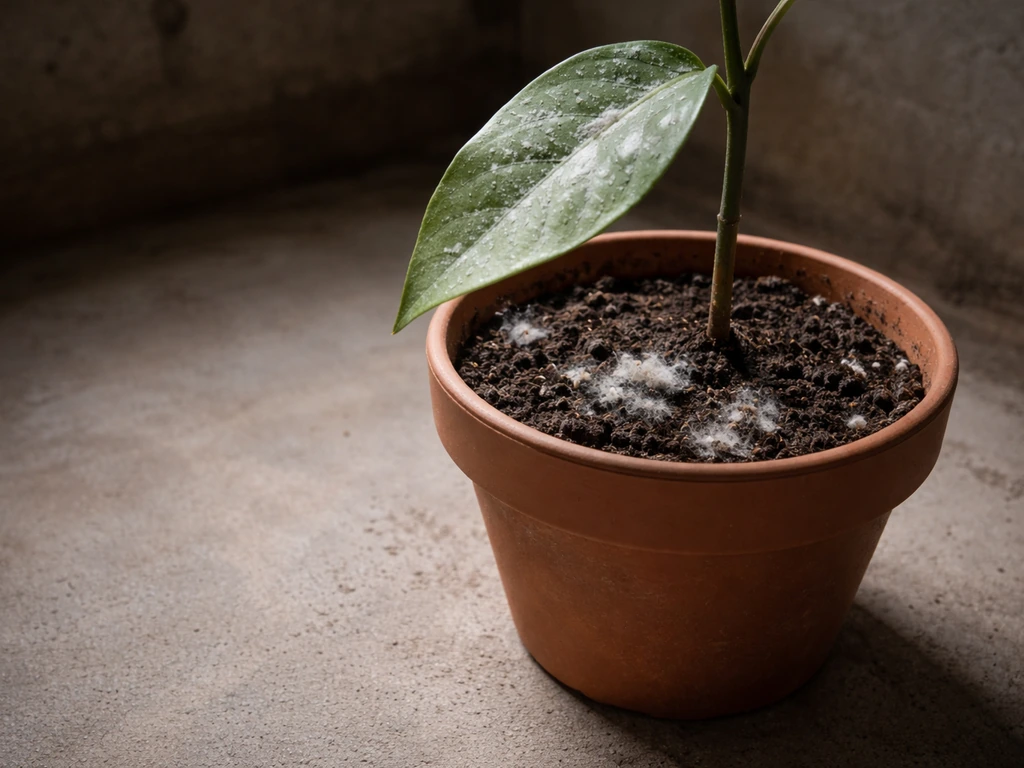
White or gray powdery growth on leaves is powdery mildew. Fuzzy growth on soil surfaces is usually a saprophytic fungus from too much moisture and not enough airflow. Both are signals that your basement setup needs better ventilation and lower humidity. Improve airflow with a fan, reduce watering frequency, and if RH is consistently above 60%, run a dehumidifier. Remove affected leaves and if soil mold is persistent, let the top inch dry out completely between waterings. Avoid misting plants in a basement environment: it only temporarily raises humidity and then raises ambient moisture that feeds mold.
Temperature stress and cold damage
Cold drafts from basement doors, windows, or HVAC vents can cause sudden leaf drop, browning edges, or stopped growth. If your basement drops below 60°F in winter, move cold-sensitive plants away from exterior walls and vents. A thermometer left in your plant area for 24 hours tells you the actual range, including overnight lows, which is often colder than you expect.
When to start plants and how to grow year-round in a basement
One of the genuinely great things about basement growing is that the season barely matters. You're working with a controlled environment, which means you can start and grow plants any month of the year. That said, timing still plays a role depending on what you're doing.
Starting right now (late June)
It's late June 2026, which is a great time to start a basement herb setup if you don't already have one. Basil, cilantro, and chives can all be started from seed now. Microgreens can be started any day and you'll have your first harvest within two to three weeks. If you're using a grow light, you can also start leafy green seedlings now for a late-summer basement harvest, though spinach and lettuce will be more productive when outdoor temperatures drop in fall and winter and your basement cools down a bit more naturally.
Fall and winter: peak basement growing season
Fall through early spring is arguably the best time for basement growing. Temperatures are cooler, which suits leafy greens perfectly. It's also the time when outdoor gardening is done but you still want fresh food. Spinach and chard do particularly well in winter basement setups. Basil struggles more in deep winter because it wants warmth and high light intensity, so give it more grow light hours and keep it away from cold spots.
Using your basement for seed starting
A basement under grow lights is an excellent seed-starting space. Most seedlings need 16 to 18 hours of light per day and benefit from having lights positioned close to the canopy (4 to 6 inches for many LED setups) to prevent leggy growth. If you're using a basement setup to start seeds for outdoor transplanting, work backward from your last frost date. For most of the US, that means starting tomatoes and peppers 6 to 8 weeks before transplant and using your basement lighting to give them the best possible start.
A simple grow-light schedule for year-round production
| Plant type | Daily light hours | Notes |
|---|---|---|
| Seedlings (tomatoes, peppers, herbs) | 16–18 hours | Keep lights 4–6 inches above canopy to prevent leggy growth |
| Leafy greens (lettuce, spinach, chard) | 14–16 hours | Cooler basement temps (60–68°F) suit these crops well |
| Herbs (basil, cilantro, chives) | 12–14 hours | Basil needs the most light; chives tolerate less |
| Microgreens | 12–16 hours | Ready to harvest in 7–21 days; rotate trays for continuous production |
| Tropical houseplants | 12–14 hours | Lower light needs; most do fine with ambient grow-light spillover |
| Low-light foliage (snake plant, ZZ) | 10–12 hours or ambient | Can manage on basic LED room light if no grow light is available |
A basement is genuinely one of the more underrated growing spaces in a home. It's stable, out of the way, and easy to dedicate to plants without taking up living space.
Whether you want a simple corner with a couple of snake plants or a full tiered shelving setup with grow lights and a rotating herb and greens harvest, the basics are the same: match your plant choices to your real light conditions, keep the soil drying properly between waterings, move some air through the space, and watch humidity.
If you want plants that can grow in kitchen conditions, the same light, temperature, and watering checks apply, just on a smaller scale match your plant choices to your real light conditions. Get those right and you'll have a productive basement garden that runs every month of the year.
FAQ
How do I measure whether my basement has enough light for plants that can grow there?
Basement light levels can change a lot hour to hour, especially if the only light comes from a door or small window. Use a cheap light meter app plus a simple schedule: measure brightness where the top of your plants will sit (not the floor), at several times (morning, midday, evening) for a few days. If readings consistently stay well under about 50 foot-candles, plan on grow lights for stable growth rather than relying on “surviving” plants.
Can I grow plants in a basement with regular light bulbs instead of grow lights?
If your basement never gets natural light and you only use normal indoor bulbs, choose low-light houseplants carefully because most food crops and leafy greens need grow-light intensity. A practical compromise is using a dedicated LED grow light on a timer for the grow area, while keeping the rest of the room lighting separate. This avoids the common mistake of under-powering the plants (enough light to look okay, not enough to produce new growth).
What’s the best way to prevent mold and fungus gnats in a very humid basement?
Yes, but the key is humidity and air movement, not just temperature. For basements that run above roughly 65% relative humidity most days, add a dehumidifier and keep an oscillating fan on low, angled to move air across leaves and soil. Also avoid very fine-misting, since it raises moisture temporarily and can make powdery mildew and fungus gnats worse even if it “feels” helpful.
Why do my basement plants keep getting root problems even when I water carefully?
Start by matching pot size and watering frequency to your basement conditions. If the basement stays cool and dim, plants use less water, so overwatering is more likely even if you water “on schedule.” Use the “top inch dry” rule, and consider terracotta or breathable fabric pots to help moisture move out of the root zone between waterings.
How can I tell the difference between underwatering and overwatering in a basement?
Overwatering signs can be confusing. Root rot often shows as wilting with wet soil, yellowing lower leaves, and mushy roots, even when you expect wilting to mean “needs water.” The quick decision aid is this: if soil is still damp when you check, pause watering and inspect roots, drainage, and airflow rather than adding more water.
What should I do if my basement plants start stretching or getting leggy?
If your plants grow tall with gaps between leaves (etiolation) or lean hard toward a lamp, adjust the light distance and duration first. For LED setups, move the light closer within the manufacturer’s safe range, and target a consistent photoperiod, typically 12 to 16 hours for most non-flowering plants. If you already have a grow light but growth is still leggy, check whether the timer is actually providing enough hours and whether shelves block the light.
Do I need a special type of soil or pot for plants that can grow in a basement?
Potting mix quality matters more indoors than most people expect. Choose a sterile, well-draining mix and avoid garden soil, especially in basements where airflow is low and temperatures fluctuate. For long-term success, make sure every pot has drainage holes and that any cachepot is emptied after watering so roots never sit in runoff.
My basement gets chilly in winter, which plants should I avoid or protect first?
Common temperature-related failures happen when plants sit near cold exterior walls or HVAC blasts. Put a thermometer near the plant height and leave it for at least a day, then reposition plants away from vents, pipes, and drafty doorways. For borderline-cold basements, prioritize foliage herbs and hardy houseplants, and treat tropicals as “only if stable,” not “might be okay.”
How do I know whether my basement plants need fertilizer or better light?
Nutrient deficiency is easy to miss because low light slows growth, so plants may not need frequent feeding right away. A safe approach is to start with light feeding once plants show active new growth under your light setup, using a diluted balanced fertilizer. If you see slow growth plus pale new leaves while light is adequate, adjust feeding before increasing watering.
What are the biggest mistakes when starting seeds in a basement grow setup?
For basement seed starting under lights, the most common mistake is light placement and photoperiod inconsistency. Keep lights close to the canopy (often a few inches for many LED setups) and run a timer so seedlings get the same daily schedule. If seedlings get leggy, the remedy is to raise light intensity by lowering distance and maintaining the full light period, not to water more.
Can I grow herbs, greens, and microgreens together in the same basement setup?
Yes, but choose based on your goal. If you want the easiest “hands-off” rotation, microgreens in shallow trays are fast and forgiving, while herbs in pots need slightly different watering and light spacing. To avoid one plant suffering, keep herbs in separate pots when their water needs differ, and use a shelf plan that positions each tier at the correct light distance.
Next Article
Plants That Can Grow in Bedroom: Best Picks by Light
Top bedroom-friendly plants ranked by light level, with quick light checks, easy care tips, and simple watering routine.