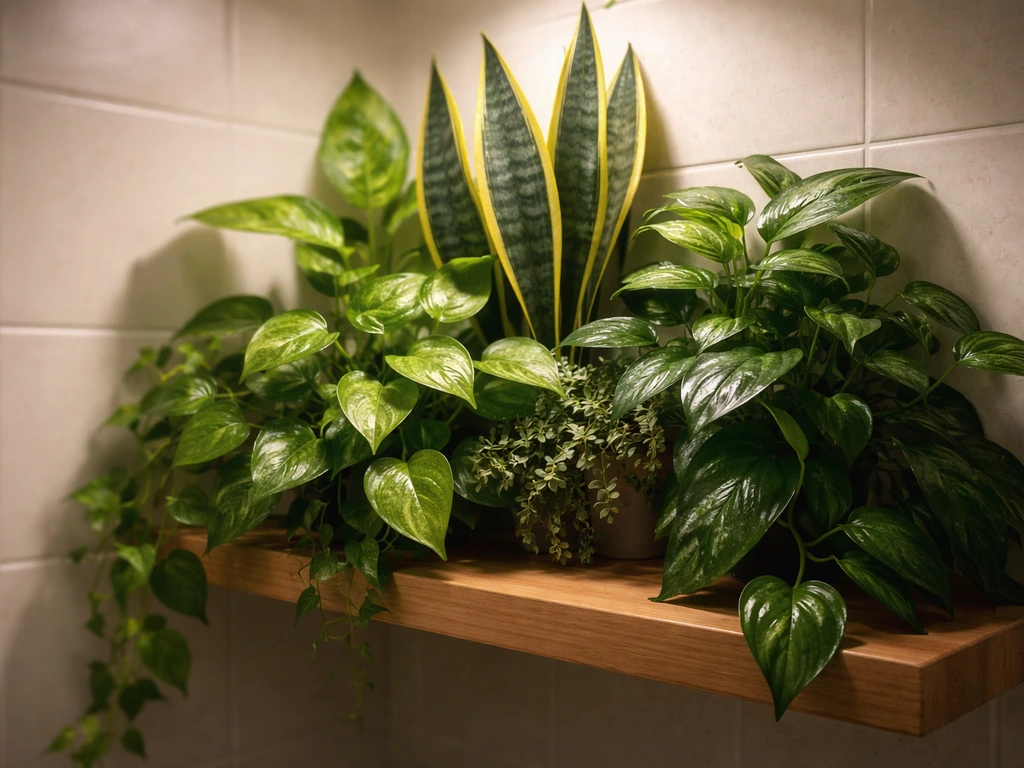
Yes, plenty of plants thrive in air-conditioned rooms. The ones that do best share a few traits: they tolerate dry air, don't mind cooler stable temperatures, and can handle the occasional blast of cold air without falling apart. Snake plants, pothos, ZZ plants, dracaenas, peace lilies, and cast iron plants are all proven performers. The challenge isn't really finding plants that survive AC. It's understanding what AC actually does to your indoor environment so you can set those plants up in the right spot and water them correctly.
Plants That Can Grow in Air Conditioned Rooms: Care Guide
Rachel Hartley
14 May 2026
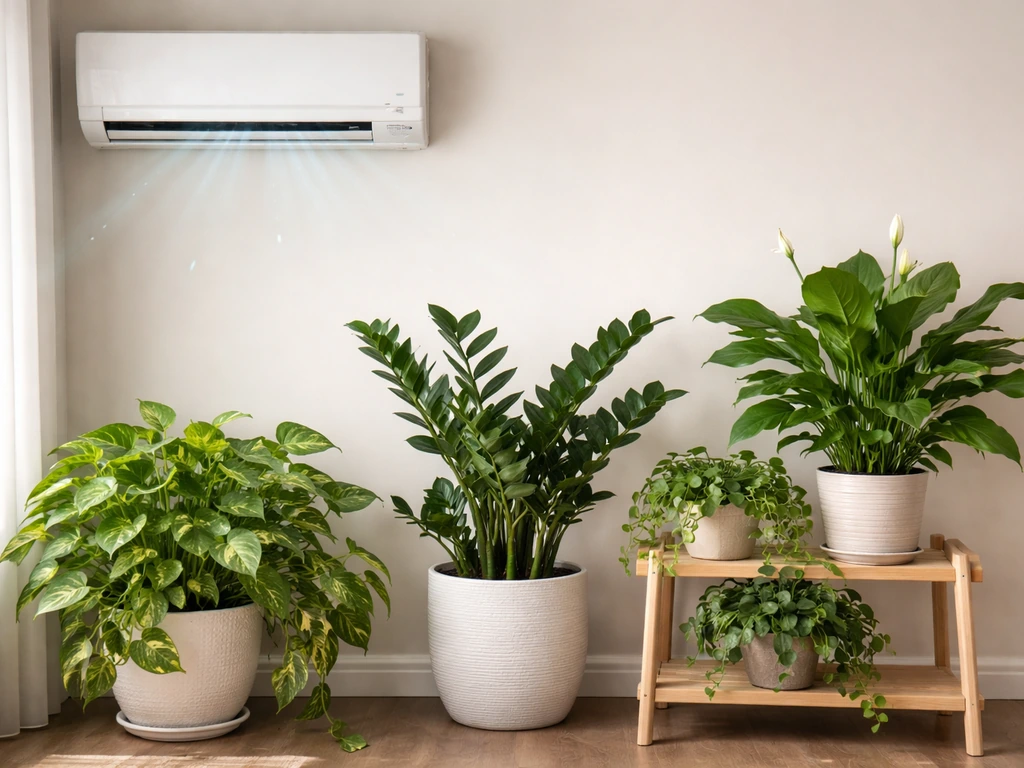
What air conditioning actually does to your plants
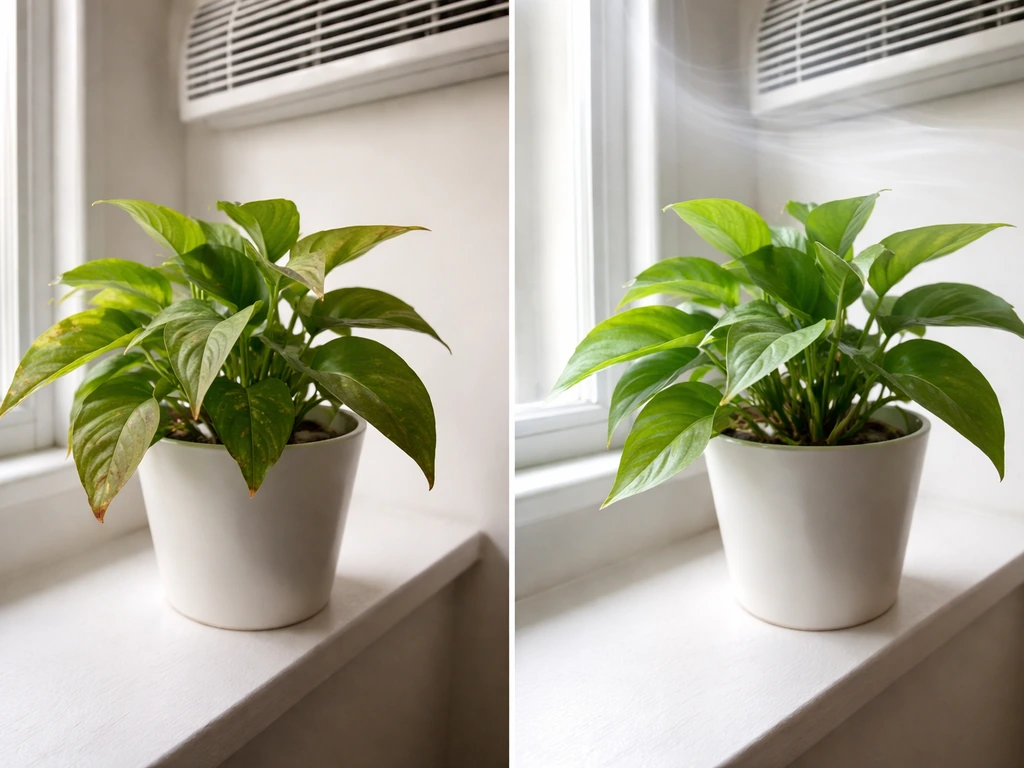
Air conditioning pulls moisture out of the air. A typical AC room runs at 30 to 50 percent relative humidity, and in dry climates or during heavy summer cooling, it can drop even lower. Most tropical houseplants prefer 50 to 70 percent humidity, so that gap matters. The result is faster evaporation from leaves, drier soil between waterings, and brown crispy leaf tips if the plant is sensitive.
Cold drafts are the other major issue. Vents push air at 55 to 60°F directly over plants placed underneath or in front of them. Even cold-tolerant species stress out with that kind of repeated chill. The damage usually shows up as yellowing leaves, wilting that doesn't respond to watering, or sudden leaf drop. This is why placement matters more than the plant choice itself.
AC also tends to stabilize indoor temperatures, which is actually good for many houseplants. Rooms held at 68 to 76°F year-round suit a wide range of tropicals. The problem comes from the extremes: vents that blow directly on leaves, windows that get hot afternoon sun while the AC fights to cool the space, and the low humidity that comes as a side effect of cooling. Manage those three things and your plant options open up considerably.
Plant types that handle AC conditions well
The best categories to focus on are succulents and semi-succulents, low-humidity tropicals, and slow-growing foliage plants. A good place to start is learning which plants that can grow in kitchen spaces handle dry indoor air and cooler drafts. Here's what makes each group a good fit.
- Succulents and cacti: evolved for dry air and infrequent watering. Low humidity is genuinely their home environment. Just give them a bright window.
- Low-humidity tropicals like snake plants, ZZ plants, and dracaenas: these come from seasonally dry regions and can handle extended dry spells between waterings. They don't demand high humidity.
- Slow-growing foliage plants like cast iron plants and Chinese evergreens: forgiving of temperature fluctuations and inconsistent care. They don't punish you as fast as something like a fern.
- Pothos and philodendrons: tough vining plants that tolerate a wide range of conditions, dry air included, though they'll grow faster with more humidity.
- Peace lilies: one of the few flowering plants that genuinely does well in AC rooms if kept away from vents. They signal thirst clearly by drooping, which makes watering timing easy.
Avoid humidity-lovers in a heavily air-conditioned space unless you're prepared to mist regularly or add a humidifier. Ferns, calatheas, orchids, and most tropical aroids like monstera need 60 percent or more humidity to look their best. They won't necessarily die in AC, but they'll struggle, and you'll spend a lot of energy compensating.
Top picks organized by how demanding they are
Start here if you're a beginner
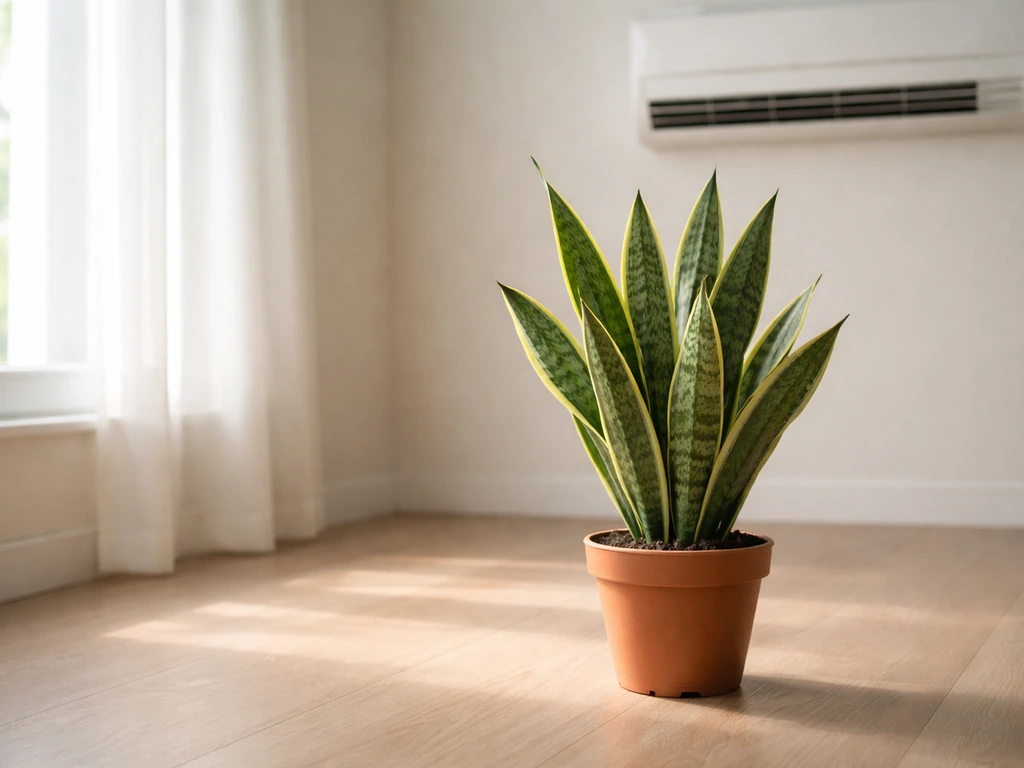
| Plant | Light needed | Watering frequency | Why it works in AC |
|---|---|---|---|
| Snake plant (Sansevieria trifasciata) | Low to bright indirect | Every 2–6 weeks depending on season | Tolerates dry air and cold drafts better than almost anything |
| ZZ plant (Zamioculcas zamiifolia) | Low to medium indirect | Every 2–4 weeks | Stores water in rhizomes; extremely drought tolerant |
| Pothos (Epipremnum aureum) | Low to bright indirect | Every 1–2 weeks | Adaptable, fast to signal stress, easy to rehabilitate |
| Cast iron plant (Aspidistra elatior) | Low light | Every 1–3 weeks | Handles temperature swings and dry air without complaint |
| Jade plant (Crassula ovata) | Bright direct or indirect | Every 2–3 weeks | Succulent; dry air is exactly what it prefers |
If you want more variety (and can manage a bit more care)
| Plant | Light needed | Extra care needed | Trade-off |
|---|---|---|---|
| Peace lily (Spathiphyllum) | Low to medium indirect | Keep away from vents; water when it droops slightly | Flowers fade fast in very low humidity |
| Chinese evergreen (Aglaonema) | Low to medium indirect | Occasional wiping of leaves | Sensitive to cold drafts below 60°F |
| Aloe vera | Bright direct | Sandy, fast-draining soil | Gets leggy without enough light |
| Dracaena marginata | Medium to bright indirect | Fluoride-free water if possible | Leaf tips brown if soil salts build up |
| Spider plant (Chlorophytum comosum) | Medium to bright indirect | Some humidity helps | Tip browning common in very dry AC air |
Where to put plants in an AC room
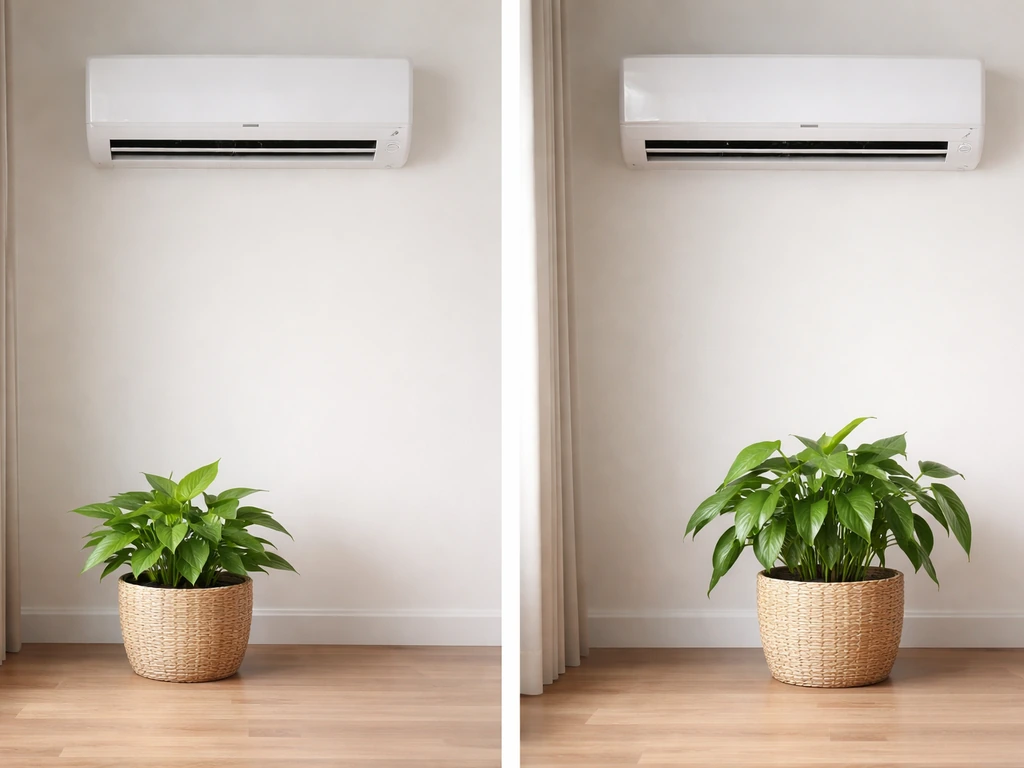
The single most important rule: never place a plant directly under or in front of a vent. Even drought-tolerant plants suffer when cold air blasts their leaves repeatedly. Check where your vents blow before you decide where to put anything. Hold a piece of tissue near the vent with the AC running to feel the actual airflow direction.
Light placement depends entirely on what you're growing. If your bathroom has no windows, look for low-light, high-tolerance plants like snake plants and ZZ plants that can handle drier indoor conditions what plants can grow in a bathroom without windows. For low-light plants like snake plants and ZZ plants, spots 5 to 8 feet from a window work fine. For succulents and aloe, you want a south- or west-facing windowsill with several hours of direct sun. Most foliage tropicals fall in the middle: bright indirect light within 3 to 5 feet of a window without direct afternoon sun, which can scorch leaves even in an AC room. If you're choosing plants that can grow in a bedroom, aim for options that tolerate lower humidity and bright indirect light.
For watering, ditch the calendar and use your finger instead. Push it about 2 inches into the soil. If it's dry at that depth, water thoroughly. If it still feels moist, wait and check again in a few days. AC rooms are drier than average, so soil often dries out faster than you'd expect in summer when the system is running hard. In winter when heating takes over, that same soil might stay wet for longer. The finger test accounts for all of that automatically. Wilting can mean either too dry or too wet, so always check the soil before reaching for the watering can.
On humidity: blank" rel="noopener noreferrer">a tray of wet pebbles under the pot does add some moisture to the immediate area around the plant, though the effect is modest since the evaporated water diffuses into the whole room. For sensitive plants like peace lilies or spider plants in a heavily air-conditioned space, it's worth trying. For snake plants and ZZ plants, don't bother. Some of the easiest options for plants that can grow in a basement include low-light, low-humidity-tolerant species like snake plants and ZZ plants. A small personal humidifier near a cluster of humidity-loving plants makes a much bigger difference if you're serious about it.
Diagnosing problems you'll actually see in AC rooms
Crispy leaf edges and brown tips
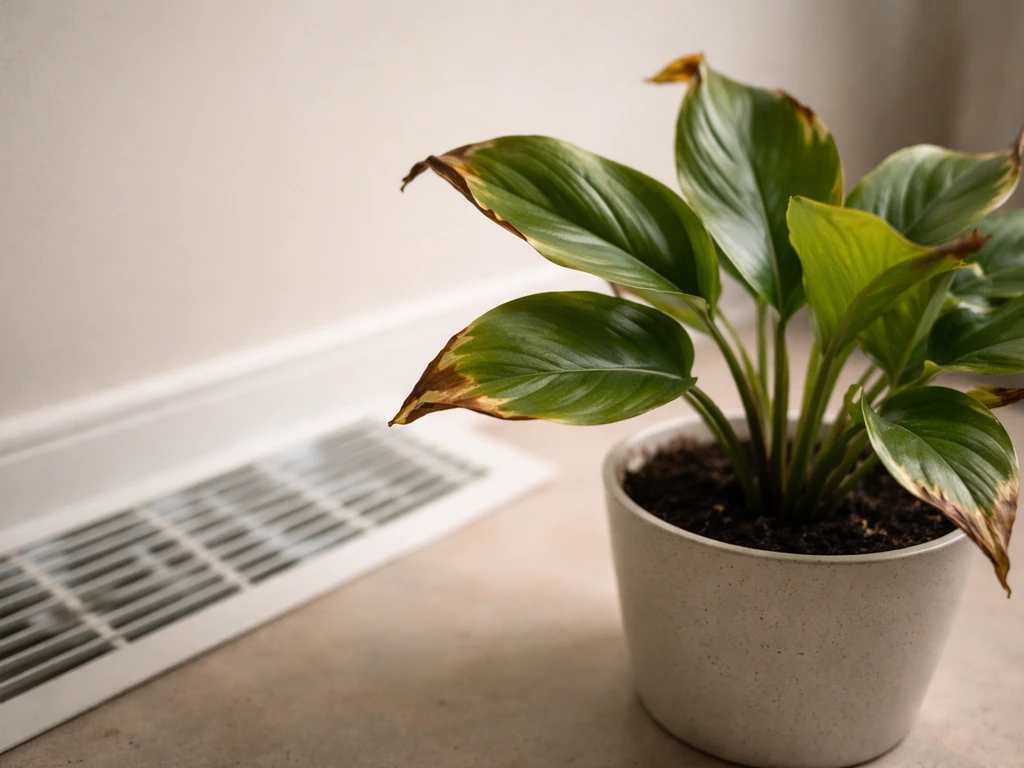
This is the most common AC-room complaint. It almost always means low humidity combined with dry air hitting the leaf surface. First, move the plant away from any nearby vent. Then check whether you're underwatering. If the soil is bone dry and the pot feels light, water more consistently. If soil moisture is fine, add a pebble tray or move the plant to a slightly less air-blasted spot. Brown tips on dracaenas specifically can also mean fluoride in tap water; switch to filtered water or let tap water sit overnight before using it.
Yellowing leaves
Yellow leaves have two main causes in AC rooms: overwatering and cold stress. If the lower leaves are yellowing and the soil feels wet, you're likely overwatering. Let it dry out completely and reassess your watering frequency. If multiple leaves yellow after the AC gets cranked up or the plant is near a vent, cold stress is the culprit. Move it at least 3 feet from the nearest vent and see if new growth looks healthier.
Drooping or wilting
Peace lilies droop to signal thirst and recover quickly after watering. One of the best bathroom plants is a peace lily, since it tolerates lower light and can handle the humidity swings better than many tropicals Peace lilies. For other plants, drooping that doesn't respond to watering usually means root rot from overwatering in low-light AC conditions where soil stays wet too long. Pull the plant from its pot and check the roots. Healthy roots are white or light tan. Brown, mushy roots need trimming and a dry-out period before repotting in fresh soil.
Slow or no growth
AC rooms are often dimmer than people realize. Light drops off fast as you move away from windows. If your plant has stopped growing entirely, try moving it closer to the window before diagnosing anything else. Also check whether the plant is rootbound: roots circling out of the drainage hole mean it's time to pot up. In AC rooms, fertilizing during the growing season (spring and summer) helps compensate for the lower humidity and stress.
Pests
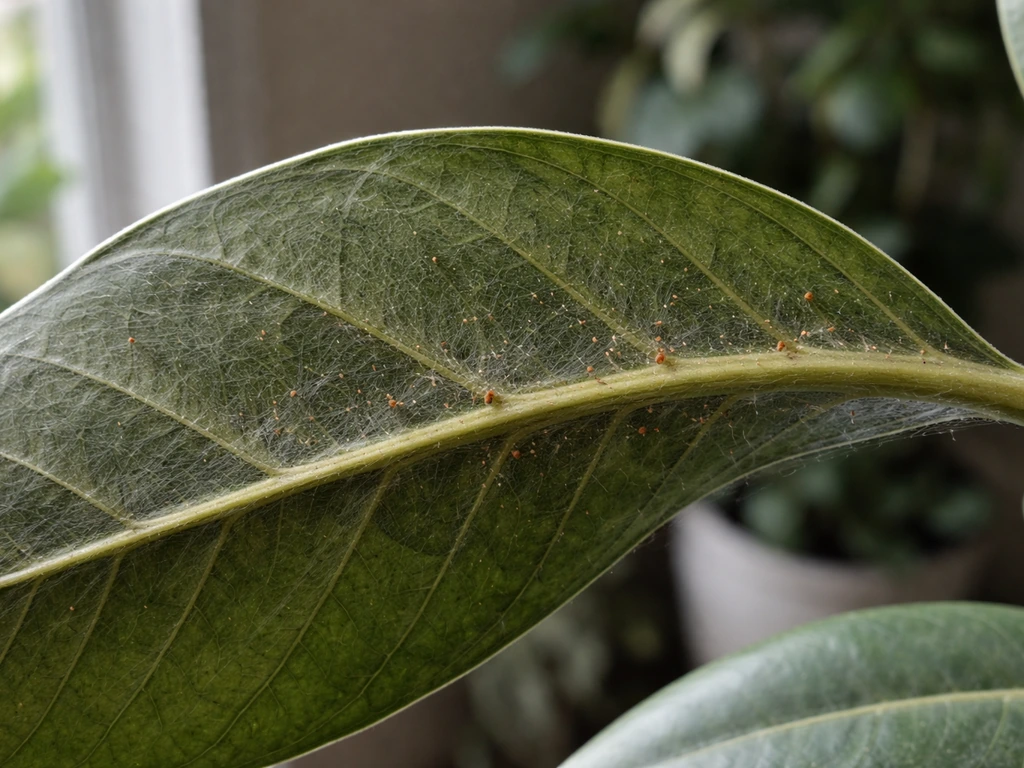
Dry AC air actually encourages spider mites. These tiny pests thrive in hot, dry conditions and reproduce fast. You'll see fine webbing on the undersides of leaves before you see the mites themselves. Wipe leaves with a damp cloth, spray with neem oil or insecticidal soap, and increase humidity around the plant temporarily. Mealybugs also appear more in stressed, dry-air plants. Dab them with rubbing alcohol on a cotton swab and follow up with neem oil.
How season and location change the picture
In summer, heavy AC use drops indoor humidity significantly, especially in humid climates like Houston or Miami where the system runs constantly. Plants dry out faster, pest pressure is higher, and sensitive plants suffer more. This is when placement away from vents matters most. In humid climates, even a heavily air-conditioned room stays a bit more livable for plants than the same room in a desert city like Phoenix.
In winter, heating takes over and the dynamic flips. Forced-air heat makes indoor air even drier than AC does in many regions. Your snake plant and ZZ plant will sail through it, but sensitive plants need even more attention to humidity. Watering frequency usually drops in winter as plants slow their growth and soil stays moist longer. The same finger-test rule applies, but you'll likely find yourself watering less often than in summer.
If you're in the southern US (Florida, Gulf Coast, Southeast), your AC runs nearly year-round, so summer care tips are essentially permanent for you. If you're in a northern climate with cold winters, expect a seasonal shift: AC stress in summer, heat-dry stress in winter. The plants listed here handle both, but check soil moisture more carefully through both transitions. This is the same type of environmental adjustment worth considering if you're also growing plants in other challenging spots, like bathrooms, basements, or offices without windows, where light and humidity control are similarly tricky.
Potting, soil, and fertilizing for AC rooms
Drainage is non-negotiable. AC rooms combine inconsistent watering habits with soil that can dry out fast at the surface but stay wet deeper. A pot with no drainage hole is a recipe for root rot. Use terracotta or unglazed ceramic pots for succulents and drought-tolerant plants as they wick moisture away faster. For most foliage plants in AC rooms, plastic or glazed ceramic pots actually work better because they hold moisture longer against the dry air.
For soil mix, don't use straight potting mix from the bag for succulents and cacti in AC rooms. Blend it 50/50 with perlite or coarse sand so it drains fast and dries completely between waterings. For tropical foliage plants, a standard houseplant mix with a handful of perlite added works well. Avoid heavy, dense soils that stay wet for weeks, especially in lower-light AC rooms where evaporation from the soil surface is slower.
Fertilize during active growth only, which typically means March through September in most of the US. A balanced liquid fertilizer at half the recommended strength applied once a month is plenty. Don't fertilize in fall or winter when plants are barely growing. In AC rooms, salt buildup from fertilizer can contribute to leaf tip browning, so flush the soil with plain water every few months to clear out any accumulated salts.
When buying plants for an AC room, inspect them carefully at the nursery. Avoid plants with yellowing leaves, mushy stems, or visible pests on the undersides of leaves. Give a new plant two to four weeks to acclimate before moving it to its permanent spot. The transition from a nursery greenhouse to a dry, cool AC room is a shock, and rushing the placement change often causes unnecessary leaf drop.
FAQ
Can I grow plants that need higher humidity in an air conditioned room if I use a humidifier?
Yes, but you need to treat the potting setup like part of the care. Choose plants with thicker leaves or tolerant roots, use a well-draining mix, and keep the soil slightly on the dry side between waterings. If your room gets truly cold near vents, still place plants well away from airflow and expect slower growth during cold snaps.
What humidity level should I aim for in an AC room for peace lilies and other humidity-sensitive plants?
If you can maintain humidity in the local “plant zone,” most people see better results. Use the humidifier close enough to cluster the plants, and confirm with a cheap hygrometer because room humidity can differ from what the plant actually experiences near the leaves. Also remember you still must prevent cold vent drafts, since humidity does not protect against leaf chilling.
How often should I water plants in an air conditioned room?
For many AC-tolerant plants, the easiest approach is “less often, but thoroughly,” while relying on the finger test. If you notice soil dries out fast at the surface but stays moist deeper, pause watering until the 2-inch depth is dry. Top watering a little every day can keep roots in chronically wet lower soil.
Should I repot my plant right away when it struggles in an AC room?
Repotting is usually not the first step. First, diagnose: check soil dryness at 2 inches, inspect roots if yellowing or drooping persists, and look for vent exposure. Repot only if roots are circling the drainage hole, the soil is staying wet for too long, or you find compacted media that dries unevenly.
How do I tell if my plant is getting too much sun or too little light in an AC room?
Don’t rely on window direction alone. In many AC rooms, a plant can get enough light but still get burned by hot afternoon sun, especially through glass. If you see bleaching or crispy patches on leaf tops, shift back from the window or use a sheer curtain during the brightest hours.
What’s the best way to position plants when I can’t avoid a vent?
Most problems come from either cold airflow or inconsistent moisture, not from the AC itself. Use the tissue test at each vent, then place plants so airflow never hits leaves directly. If you must keep plants near a vent for layout, rotate the plant weekly and use a small barrier or move it slightly to an angle where air passes above the canopy.
Are there plants that work well in an air conditioned bathroom?
Yes, but choose placement carefully. Use low-humidity tolerant plants and bright, indirect light, then keep the pot off cold tile drafts (even bathrooms can feel drafty around doorways or vents). Be cautious with peace lilies or spider plants if the bathroom is heavily air-conditioned and the door is often closed, because humidity swings still happen.
How can I prevent brown leaf tips caused by tap water in an AC room?
Switch water quality if you suspect buildup. For dracaenas with brown tips, try filtered water or let tap water sit overnight, then continue using the same approach consistently. If the issue spreads, also check fertilizer salt buildup by flushing the soil and reducing feed frequency.
What should I do if I suspect spider mites in an AC room?
If you see webbing on leaf undersides, treat early because spider mites multiply fast in dry air. Wipe leaves first, then use insecticidal soap or neem oil according to label directions, repeating as needed. Also temporarily raise humidity around the plant and reduce how long it sits right under cold airflow.
Does watering get easier in winter since AC becomes heat-drying instead?
AC rooms can make soils look dry on top while staying wet deeper, so calendar watering often backfires. In winter, soil may stay moist longer and growth slows, so watering frequency usually drops. Keep using the finger test, and also watch the pot weight, a light pot usually signals it is time.
My plant stopped growing in an AC room, how can I diagnose the cause?
Most AC-tolerant plants can handle lower light, but they will respond slowly. Before assuming low light is the problem, check for rootbound growth and ventilation. If roots are circling or drainage is poor, water and nutrients will not move properly, and growth will stall even with decent light.
Can fertilizing in an air conditioned room cause leaf tip burn?
Fertilizer can increase salt buildup, and dry air plus irregular watering can concentrate salts at the leaf edges. If you notice tip browning or a crust on the soil surface, flush with plain water until it runs freely from the drainage hole, then pause feeding until growth resumes.
How do I acclimate a new plant to an air conditioned room?
Yes, acclimation matters. Move the plant gradually if possible, keep it out of vents for the first couple of weeks, and avoid immediate repotting unless the plant arrived in poor soil. Sudden placement changes are a common trigger for leaf drop, even for otherwise hardy species.
Next Article
What Plants Can Grow in a Bathroom Without Windows
Low-light, windowless bathroom plants that actually thrive, plus light tests, setup tips, care routines, and troubleshoo