
Yes, you can grow plants in a windowless bathroom, but you need to be honest about what that actually means. A handful of plants, ZZ plant and snake plant chief among them, can genuinely survive and keep growing with only artificial room lighting. Most other "low-light" plants will limp along for a few months before slowly declining. If you're willing to add a simple clip-on grow light, your options open up considerably and you can actually garden in there instead of just keeping plants alive.
What Plants Can Grow in a Bathroom Without Windows
Rachel Hartley
1 May 2026
Light realities in a windowless bathroom
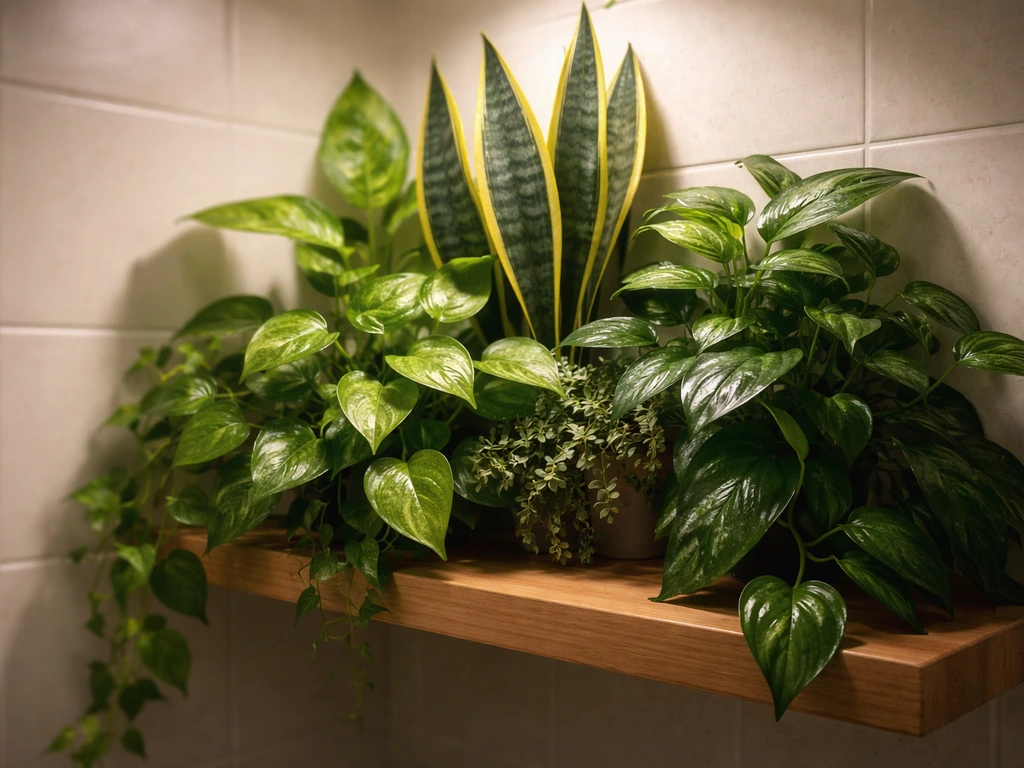
The word "low light" gets thrown around constantly, but a windowless bathroom is genuinely dark by plant standards. A typical bathroom with the overhead light on lands somewhere around 50 to 100 lux, which is roughly what you'd find in a dim hallway. Plants measure useful light in PPFD (photosynthetic photon flux density, in µmol·m⁻²·s⁻¹), which tracks the photons plants actually use for photosynthesis across the 400 to 700 nm range. Standard room lighting delivers barely a fraction of what most houseplants want.
Practically speaking, this means your overhead bathroom bulb doesn't count as "plant light" unless you're choosing plants specifically selected to tolerate near-darkness. Even plants marketed as low-light need some minimum PPFD to photosynthesize consistently. African violets, for example, want 50 to 150 µmol·m⁻²·s⁻¹. Philodendrons can manage on 50 to 250. Succulents want 100 to 200 and won't survive a windowless bathroom at all without a grow light. The rule of thumb: if you can comfortably read in the spot all day, some plants will manage; if you'd need to turn on a lamp to read, you're in tough territory without help.
The good news is that a windowless bathroom often has something most other low-light rooms don't: genuinely elevated humidity from showers. That's a real advantage for tropical foliage plants. The challenge is balancing that moisture with enough airflow to keep mold and fungus from becoming a problem, which I'll cover in the setup section.
Best low-light plants that will actually grow (not just survive)
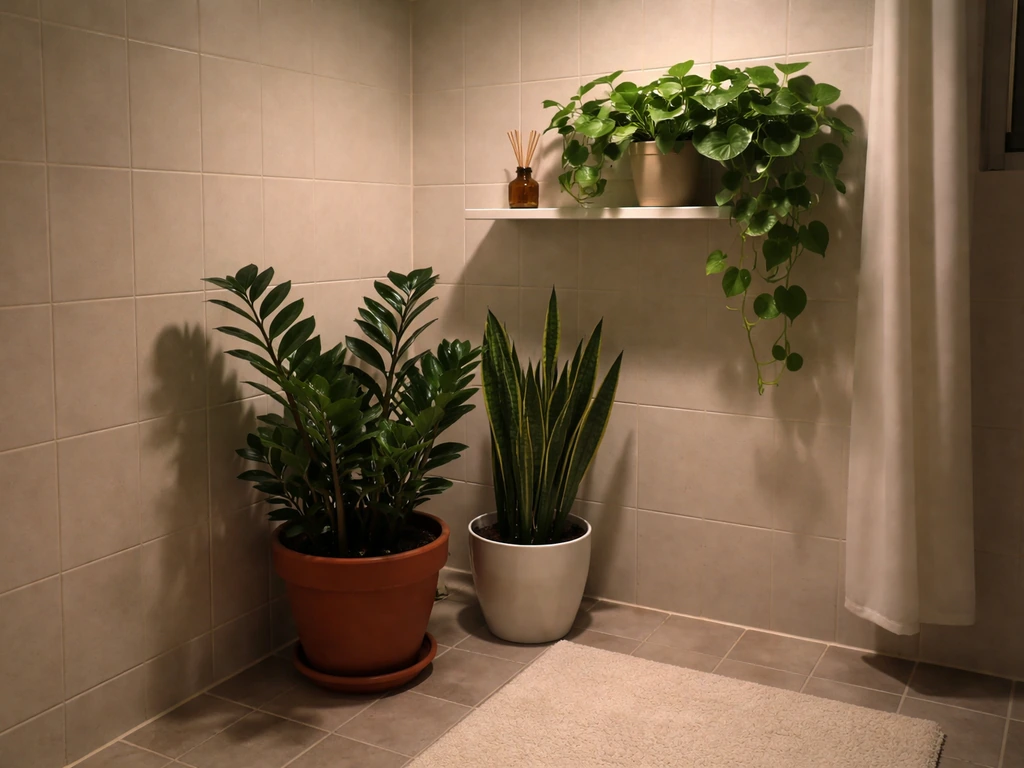
Here are the plants I'd actually put in a windowless bathroom with confidence, ranked roughly by how well they tolerate near-total darkness. If you are planning for a basement, aim for the same approach: pick low-light plants that tolerate near-darkness and use a grow light if needed plants that can grow in a basement.
ZZ plant (Zamioculcas zamiifolia)
This is the single best option for a truly windowless bathroom. University of Florida research confirms it tolerates low light better than snake plant, cast-iron plant, and most other interior foliage standbys. It stores water in its thick rhizomes, so it's extremely forgiving of irregular watering. Growth will be slow, but it won't fall apart. Let the soil dry out almost completely between waterings and you'll have very few problems.
Snake plant (Dracaena trifasciata, formerly Sansevieria)
University of Maryland Extension calls it out specifically as tolerating low light better than nearly any other houseplant. University of Maryland Extension also says snake plants tolerate low light better than any other house plant tolerating low light better than nearly any other houseplant. It does fine with ambient room light alone, grows slowly but steadily, and handles the temperature swings a bathroom can see. Let the soil dry completely between waterings, and be strict about it. The most common way to kill a snake plant is overwatering, especially in a low-light environment where the soil dries even more slowly.
Pothos (Epipremnum aureum)
Pothos is technically a moderate-to-bright indirect light plant, but it's genuinely one of the more forgiving options in low light. Illinois Extension notes it can be grown in lower light conditions, with the trade-off being faded leaf color and slower growth. In a windowless bathroom, golden pothos will hang in there under ambient light but will look noticeably better with a small grow light. It's a great trailing plant for a high shelf and handles bathroom humidity well.
Chinese evergreen (Aglaonema)
Chinese evergreen is a solid choice, particularly the darker green varieties, which handle lower light better than the bright-colored cultivars (those reds and pinks need more light to hold their color). Allow the top 1 to 2 inches of soil to dry before watering again. Clemson University notes that low light will limit flowering, but as a foliage plant in a bathroom you're not really growing it for the flowers anyway. Avoid cold water when watering, as it can stress the roots.
Heartleaf philodendron (Philodendron hederaceum)
Iowa State Extension notes heartleaf philodendron is one of the philodendron varieties that can actually tolerate very low light, which sets it apart from the wider philodendron family. It's a vining plant that looks great in a hanging basket or trailing from a shelf. Avoid soggy soil or letting it sit in water in the saucer, which is the main failure mode.
Peace lily (Spathiphyllum)
Peace lily is one of the few plants that will actually flower in low-light conditions, though it'll bloom less prolifically without brighter light. It likes humidity, which makes a bathroom a natural fit. South Dakota State Extension recommends keeping the soil consistently moist but not soggy, which is a bit more demanding than ZZ or snake plant. It's a good choice if you're willing to pay a little more attention to watering.
Cast-iron plant (Aspidistra elatior)
Lives up to its name. Extremely slow growing but extraordinarily tolerant of low light, neglect, and variable temperatures. If you want something that will genuinely just sit in the corner and be fine with minimal fuss, this is it. Not exciting, but reliable.
How to choose between true shade lovers and plants that need a grow light
There's an important distinction between plants that can survive in near-darkness and plants that will thrive with a little supplemental light. Think of it this way: ZZ plant and snake plant will hold their own under your standard bathroom overhead light with no help. But pothos, peace lily, Chinese evergreen, and most ferns will look noticeably better with even a basic grow light running 12 to 14 hours a day.
| Plant | Survives ambient room light alone? | Grows well with a grow light? | Best use case |
|---|---|---|---|
| ZZ plant | Yes | Yes (faster growth) | Set-it-and-forget-it, true low-light |
| Snake plant | Yes | Yes | Low-maintenance, very forgiving |
| Cast-iron plant | Yes | Yes | Extreme neglect tolerance |
| Heartleaf philodendron | Barely (slow decline) | Yes | Trailing/hanging with grow light |
| Pothos | Barely (fades) | Yes | Shelf trailing, best with grow light |
| Chinese evergreen (dark varieties) | Marginally | Yes | Foliage color, moderate care |
| Peace lily | Marginally | Yes (will flower more) | Humidity lover, moderate care |
| Ferns (Boston, maidenhair) | No | Yes | Humidity lovers, need grow light |
My honest recommendation: start with a ZZ plant or snake plant if you want zero-fuss plants that won't require you to change your bathroom setup. If you want a lush-looking bathroom with trailing plants and greenery, pick up a simple grow light and open up the whole list above.
Bathroom setup: containers, humidity, airflow, and watering
Containers and drainage
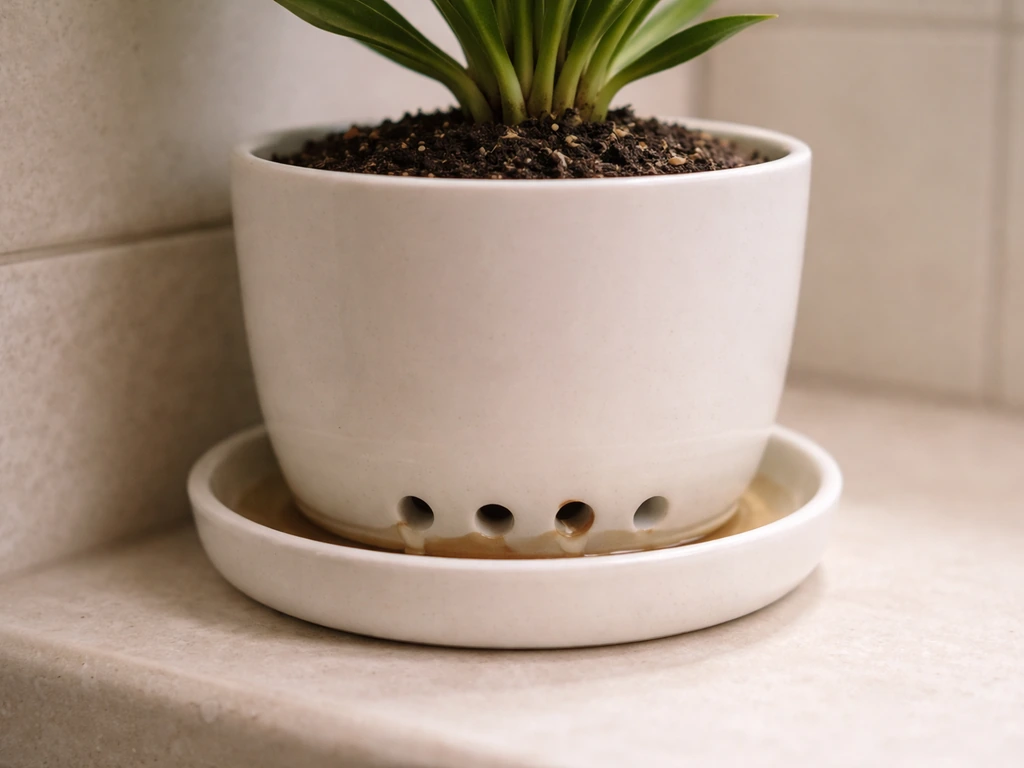
Drainage holes are non-negotiable in a bathroom. Low light means the soil dries slowly, and slow-drying soil in a container without drainage is a direct path to root rot. Oklahoma State Extension is blunt about it: never leave a houseplant standing in water. After watering, let it drain fully and then empty the saucer, as University of Maryland Extension recommends dumping excess water from drainage saucers to keep roots from sitting in standing water. Terracotta pots are genuinely helpful here because they're porous and help the soil dry faster, which is exactly what you want in a humid, low-light environment. Avoid large pots relative to the plant size; oversized containers hold more moisture than the roots can absorb, which invites rot.
Soil mix
Use a well-draining mix. A standard potting mix cut with perlite (roughly 2:1 potting mix to perlite) drains better and dries more evenly than straight potting soil. For ZZ plants and snake plants, you can go even chunkier, closer to a cactus mix with extra perlite. The goal is a medium that doesn't stay waterlogged for days in a humid, low-airflow room.
Humidity and mold control
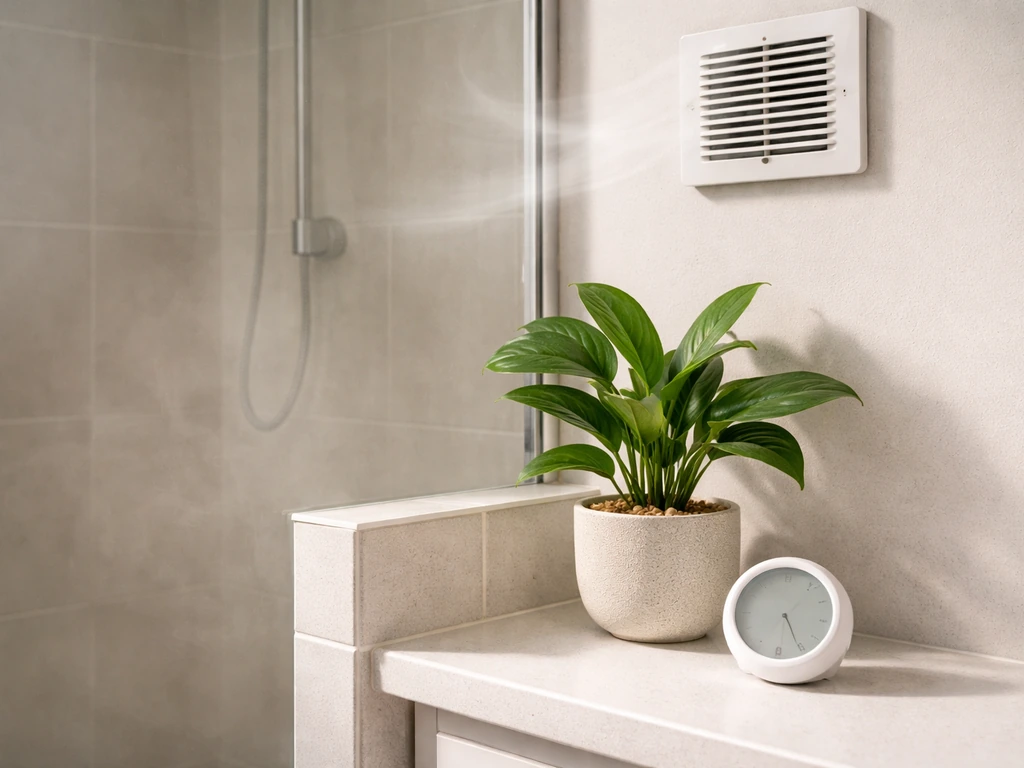
A bathroom with regular shower use can push humidity well above 70%, which is great for tropical plants but terrible for mold. The CDC recommends keeping indoor humidity below 50% to control mold, and the EPA lists 30 to 60% as the target range. The practical fix: run the exhaust fan during and after showers, and leave the bathroom door open when the room isn't in use to get airflow moving. University of Wisconsin research confirms that wider spacing and better airflow shortens the time leaves stay wet, which directly reduces pathogen establishment. Don't crowd plants together in a corner with no air movement.
Watering practices
Water less than you think you need to. In a low-light, humid bathroom, soil can stay wet for a surprisingly long time. For ZZ plant and snake plant, let the soil dry out almost completely before watering. For pothos and philodendron, let the top inch dry out. For peace lily, keep it moist but never soggy. Always water at the base of the plant rather than overhead, as UC IPM notes that avoiding splashing water onto foliage helps prevent leaf blights and rots. University of Minnesota Extension adds that bottom watering (setting the pot in water briefly to let it absorb from below) helps keep the soil surface drier, which is useful for controlling fungus gnats.
Simple grow light options for when ambient light isn't enough
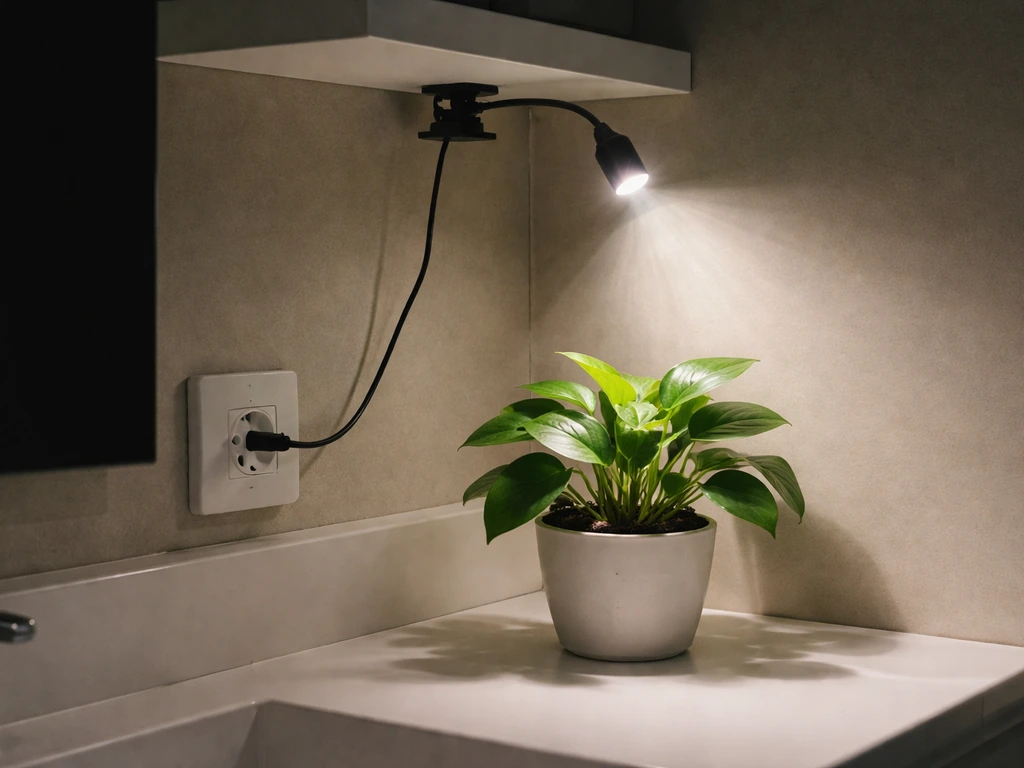
If your bathroom has a standard outlet, a basic grow light is cheap and genuinely effective. You don't need anything elaborate. A clip-on LED grow light with a built-in timer is the most practical option for a bathroom shelf or vanity. Set it to run 12 to 14 hours per day, which is the standard recommendation from both Iowa State and University of Minnesota Extension for foliage houseplants under supplemental lighting.
Placement matters more than wattage for most people. Gardening Know How points out that if your plants are leaning or stretching toward the light, the light source is too far away. For a small bathroom shelf, a 10 to 20 watt LED grow light positioned 6 to 12 inches above the plants is typically sufficient for low-to-moderate light plants like pothos, Chinese evergreen, and peace lily. You don't need to measure PPFD with a meter; stretched stems and pale leaves are your feedback system.
- Clip-on LED grow lights (10 to 20W): good for a shelf or vanity with 1 to 3 small plants
- LED strip lights mounted under a shelf above plants: clean look, even coverage for multiple plants
- Full-spectrum LED bulbs in a standard fixture: useful if you can swap a bulb in an existing light near the plants
- Smart plug with timer: pair any grow light with one so you're not manually switching it on and off
One important note: lux and PPFD are not the same thing, and the conversion between them varies depending on the light spectrum of your bulb. If you want to get technical about whether your grow light is delivering enough photons for plant growth, you'd need a quantum sensor to measure PPFD directly. For most bathroom gardeners, that's overkill. Focus on visible plant response and the 12 to 14 hour daily light duration, and you'll be fine.
Plant care routines and troubleshooting
Yellowing leaves
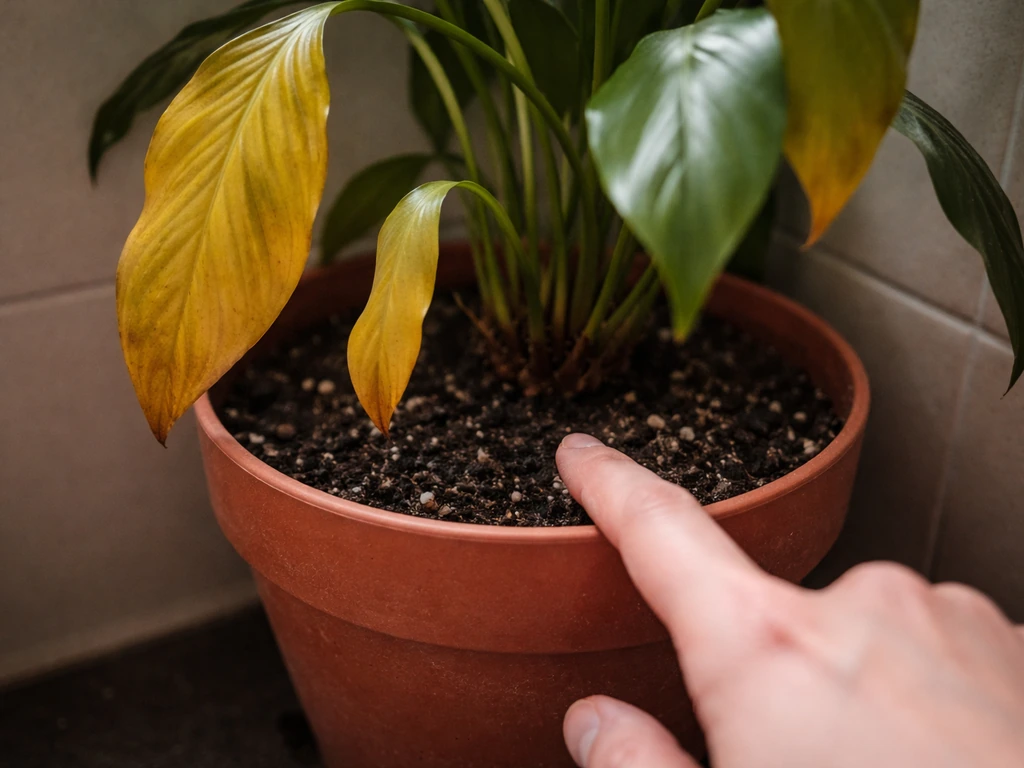
Yellow leaves in a low-light bathroom almost always mean one of two things: too much water or not enough light. Check the soil first. If it's soggy or has been wet for more than a week, you're overwatering. Pull back on frequency and improve drainage. If the soil seems fine but the lower leaves are yellowing and growth has slowed to almost nothing, it's a light issue. Add a grow light or move the plant to a brighter location temporarily to recover.
Leggy, stretched growth
Long, thin stems with wide gaps between leaves (etiolation) mean the plant is reaching for more light than it's getting. University of Nebraska-Lincoln Extension lists small leaves and long thin stems as classic signs of insufficient light. The fix is to move the grow light closer or increase the daily light duration toward 14 hours. Leggy growth won't reverse on its own, but new growth will be more compact once light improves.
Root rot
Mushy stems at the base, brown mushy roots, and a foul smell from the soil are signs of root rot. This is the most common killer of bathroom plants, driven by a combination of overwatering, poor drainage, and low light that slows the plant's water uptake. North Carolina State Extension notes root rots occur with overwatering and recommends allowing the medium to dry between waterings. If you catch it early, unpot the plant, trim the rotten roots, let them air dry for a few hours, then repot into fresh well-draining mix. If the whole root system is gone, the plant is done.
Fungus gnats and mold
Fungus gnats thrive in damp soil in humid rooms. You'll see tiny flies hovering around the pot. University of Wisconsin Extension is direct: let the top inch of soil dry out between waterings to disrupt their breeding cycle. UC IPM adds to check containers for excessively moist conditions. Bottom watering (as mentioned above) also helps because it keeps the soil surface drier. For mold on the soil surface, scrape it off, improve airflow, and cut back on watering. White fuzzy mold on the soil is usually harmless to the plant but signals conditions that aren't great long-term.
Basic care routine at a glance
- Check soil moisture before every watering (finger test to the first or second knuckle)
- Water at the base, not overhead, and drain fully within 30 minutes
- Empty drainage saucers after each watering
- Run the exhaust fan during and for 15 minutes after showers
- Leave the bathroom door open when not in use for passive airflow
- Run grow lights on a timer for 12 to 14 hours daily if you're using them
- Wipe dust off leaves monthly so they can absorb light more efficiently
How season and location affect your bathroom plant choices
Since there are no windows, season has less direct impact on a windowless bathroom than it would in a room with natural light. But it's not irrelevant. In winter, your home's heating system runs more, dropping indoor humidity and drying out soil faster, which actually helps in a bathroom where overwatering is your main risk. Indoor heating and cooling can change temperature and humidity, so choose plants and care routines that still work in an air conditioned room. In summer, ambient indoor temperatures rise and plants grow faster, meaning they'll use water more quickly even under artificial light.
Location matters more than you might expect even indoors. If you're in a cold climate and your bathroom is on an exterior wall, the floor and wall temperature can drop noticeably in winter, which stresses tropical plants. Keep pots off cold tile floors in winter by setting them on a small wooden trivet or shelf. If you're in a hot, humid climate like the Gulf Coast or Florida, your bathroom may naturally stay humid and warm year-round, which is ideal for tropical foliage plants and reduces the need to run a humidifier.
University of Minnesota Extension notes that plant selection and lighting need to match seasonal light availability. In a windowless bathroom that's entirely reliant on artificial light, this is primarily about being aware that your grow light's timer should stay consistent year-round since there's no natural light cycle to follow. Set it and forget it: 12 to 14 hours on, the rest off, every day regardless of season.
If you're comparing this to other challenging indoor spots, the logic is similar to growing plants in an office with no windows or in a basement, where artificial light and drainage discipline are the two main levers you control. Bathrooms have the unique advantage of built-in humidity, which most other windowless rooms lack, so lean into that by choosing humidity-loving tropicals over succulents or cacti.
What to actually buy and where to start
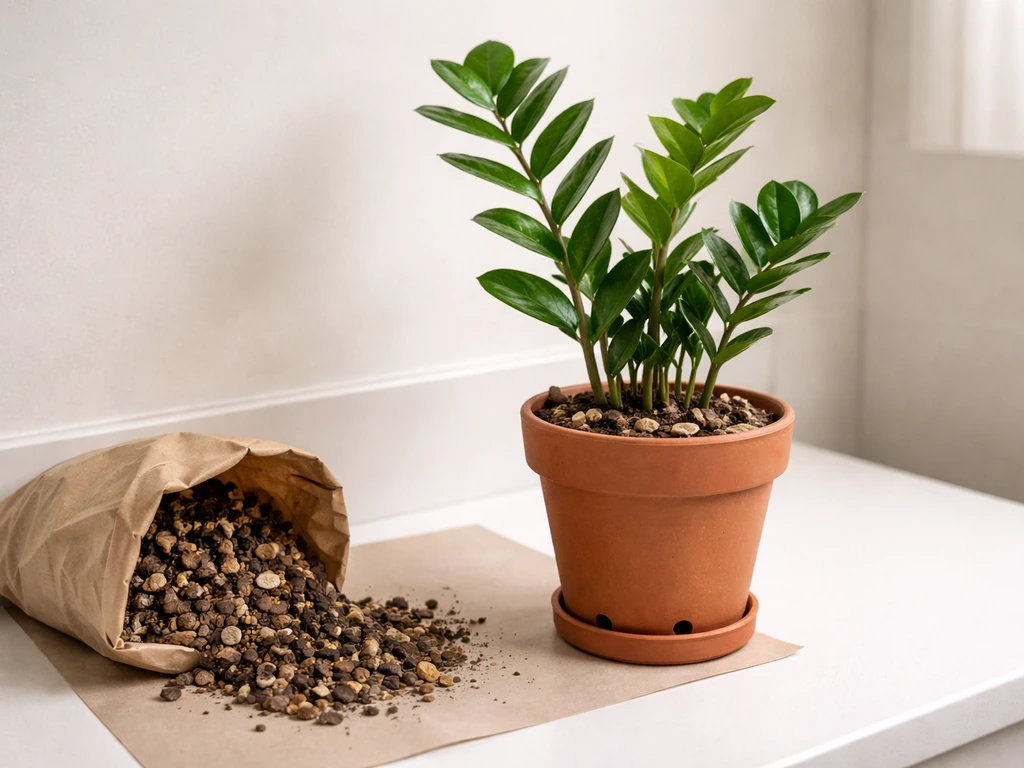
If you want the simplest possible setup with the highest chance of success: buy one ZZ plant in a terracotta pot with drainage holes, use a chunky well-draining potting mix, place it on a shelf or the back of the toilet tank, and water it once every two to three weeks. The same idea applies in a kitchen, where light and moisture needs vary by plant, so choose the best plants to grow in kitchen conditions before you buy grow plants. If you're looking for the single best plant to grow in a bathroom, ZZ plant is the easiest choice for consistent growth best plant to grow in bathroom. That's it. No grow light required. It will grow slowly but it will grow.
If you want a real bathroom garden with multiple plants and lush growth: pick up a clip-on LED grow light with a timer, set it to 12 to 14 hours daily, and add a pothos, heartleaf philodendron, or Chinese evergreen to the mix. Position the light 6 to 12 inches above the plants, keep the exhaust fan habit going, and water only when the soil actually needs it. You'll have a genuinely thriving setup within a few weeks of getting the light dialed in.
The mistake most people make is buying a beautiful plant at the nursery, putting it in a dark bathroom with no changes to setup, and then wondering why it deteriorates over a few months. The plants above are genuinely tough, but they're not magic. Match the plant to the light level honestly, control moisture, and keep air moving. Do those three things and you'll have plants that actually grow, not just plants that slowly give up. These same principles apply in a bedroom, where you can also use a grow light and humidity-friendly placement to help low-light plants actually grow plants that actually grow. The same idea applies to plants that can grow in a kitchen, since indoor lighting and watering habits still make or break growth.
FAQ
My bathroom fan is usually off or runs briefly, will plants still work without window light?
Yes, but pick plants that can handle low ventilation. If your fan is weak or the bathroom stays steamy for hours, prioritize ZZ plant, snake plant, and Chinese evergreen, and use a grow light only if you can also maintain a drying cycle between waterings. Always use containers with drainage holes, because low airflow combined with consistently wet soil is the fastest route to root rot.
If I run a grow light, do I still need to worry about watering and humidity cycles?
It can, because daytime warmth plus humid showers can make soil stay wet longer, even under a grow light. In practice, keep the same watering rule (drying first), and check moisture by lifting the pot or sticking a finger 1 to 2 inches down. If the soil takes a long time to dry, shorten your watering frequency rather than increasing light.
How should I care for bathroom plants when I’m away for a week or more?
For long stays without use, turn on your grow light on a timer but keep water conservative. A safe approach is watering right before you leave only if the soil is dry enough to justify it, then letting it dry again when you return. Avoid “topping off” damp soil, and skip self-watering bases in low-light bathrooms because they can keep the root zone too wet.
How do I tell if my grow light is actually strong enough in a windowless bathroom?
Be careful with fluorescent or budget LEDs marketed as “plant lights.” The key is intensity and distance, not just the label. If you see no improvement in growth within 4 to 6 weeks, raise the light’s duration only after confirming the bulb is close enough (often within about 6 to 12 inches) and that the plant is receiving steady daily hours.
Should I fertilize bathroom plants in winter or when they are growing slowly under artificial light?
Fertilizer is optional in a low-light, windowless setup. If you fertilize, use a diluted, balanced houseplant fertilizer and do it sparingly (for example, every 6 to 10 weeks) because slow growth means unused nutrients can accumulate and worsen root stress. With ZZ and snake plant, skip feeding unless you see active new growth.
Can I place plants right next to the shower for extra humidity?
Yes, but aim for controlled placement. Don’t put plants directly against the shower spray or where they’ll be hit by frequent wetting, and avoid the highest-splatter zones where leaves stay wet. If a plant’s leaves repeatedly get wet and can’t dry, you’ll usually see spotting and decline even if the plant tolerates humidity.
Is it better to run the grow light longer than 14 hours in a windowless bathroom?
If you keep plants under a grow light for too many hours, you can stress them and increase fungus issues because the plant stays photosynthetically active while the soil may stay damp. Stick to a consistent 12 to 14 hours daily, and then adjust based on visible response (compact growth, no new yellowing) rather than constantly extending the timer.
What if the leaves keep yellowing even after I fix watering and lighting?
Yellow leaves can also be caused by fluoride or mineral buildup from tap water, especially if you see crust on the pot rim or soil surface. If yellowing persists even when watering and light are corrected, try watering with filtered water or letting water sit to reduce additives, and consider flushing the pot occasionally by running water through the soil to clear salts.
Can I use larger pots to “give plants more room” in a windowless bathroom?
Yes, and it’s usually a mistake when the bathroom is humid. Large pots hold more water than the roots can use under low light, which slows drying and increases rot risk. A practical rule is to use a pot only 1 to 2 inches wider than the root mass, and repot only when the plant is clearly filling the container.
Why do my plants struggle in winter even when I’m watering less?
If your bathroom floor is cold in winter, root uptake slows and the plant can respond like it’s being overwatered. Keep pots off cold tile using a trivet, and avoid placing containers directly on unheated surfaces like some vanity bases. Also, check soil dryness more carefully, because cold slows drying even more.
What’s the fastest way to stop fungus gnats in a humid bathroom?
Fungus gnats don’t always mean your plant is doomed, but the response should be immediate. Let the top inch dry more consistently, avoid bottomless water traps, and consider a physical barrier like yellow sticky cards while you correct the moisture cycle. If you keep the soil surface damp, they usually return quickly.
How should I choose between a low-light plant and a humidity-tolerant plant for my bathroom?
For a bathroom with no windows, choose plants by “drying tolerance” as well as “light tolerance.” If your household showers a lot and the door stays closed, prioritize plants that can tolerate near-dry conditions between waterings, like ZZ and snake plant, and treat trailing plants as “light plus attention” plants.
Will heating or AC temperature swings ruin plants in a windowless bathroom?
Yes, but only if you can keep the schedule predictable. If the home uses frequent temperature swings, use a grow light timer with consistent daily hours and keep watering based on soil dryness rather than the calendar. Sudden temperature drops can also make leaves look dull, so adjust placement away from drafty vents or exterior cold walls.
Next Article
Best Plant to Grow in Bathroom: Low-Light and Humidity Picks
Curated low-light bathroom plants for small spaces and humidity, with placement and care tips to prevent overwatering.
