Yes, plants can survive in an office with no windows, but you need to be honest about what 'no windows' actually means for your space, because the answer changes dramatically depending on whether you have zero natural light at all or just a dim room with distant ambient light. The short answer: a small handful of very forgiving plants can hang on under low artificial light alone, and with a basic grow light setup, you can keep a genuinely healthy, even growing collection. Here is how to figure out your situation and what to do about it.
What Plants Can Grow in an Office With No Windows
Rachel Hartley
21 Apr 2026
What 'no windows' actually means for your plants

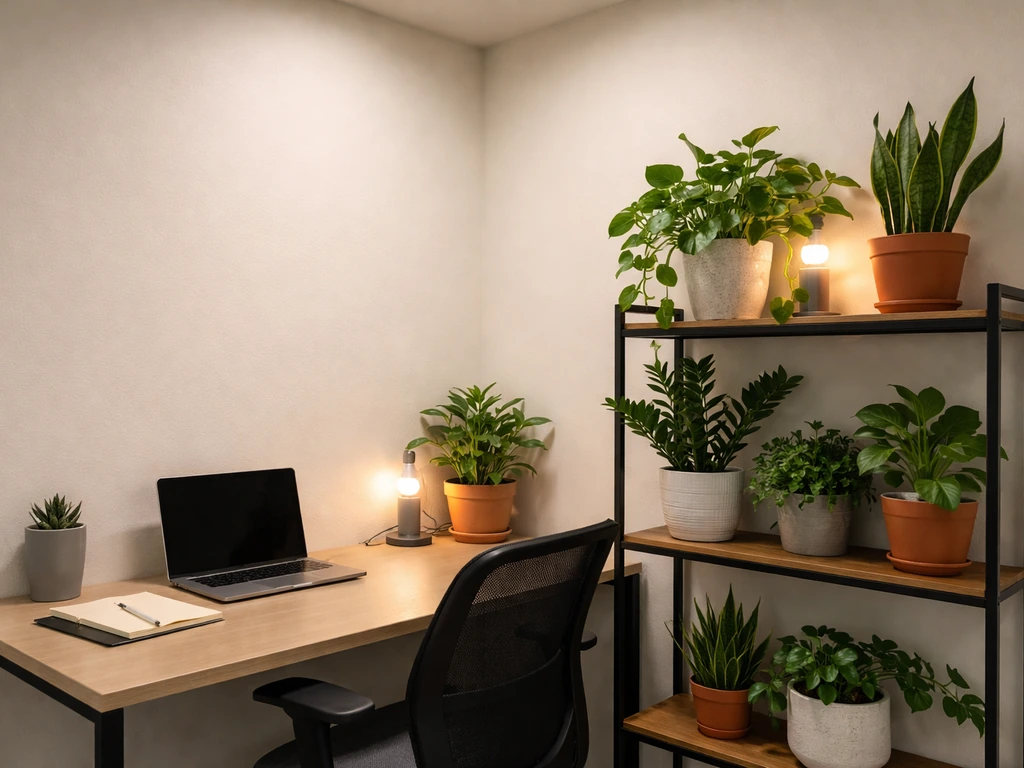
Most people say 'no windows' and mean one of two very different things. The first is a room with no windows at all, think a basement office, an interior conference room, or a storage-converted workspace. The second is a room that has windows somewhere nearby but the desk or the space in question gets almost none of that light. These situations call for different approaches.
Light for plants is measured in foot-candles (fc) or, more precisely for plant health, in PPFD (photosynthetic photon flux density, measured in micromoles per square meter per second). You do not need to memorize those units, but you do need a rough sense of where your space lands. University of Missouri Extension defines 'low light' for houseplants as roughly 50 to 250 foot-candles. Penn State Extension pegs the common baseline for low light at about 100 foot-candles. A windowless office with standard overhead fluorescent or LED office lighting typically falls between 20 and 75 foot-candles at plant height. That is below what even most 'low light' plants want for real growth.
The practical test: pull out your phone and download a free lux meter app, or buy a cheap dedicated light meter. Measure at the spot where you want to put the plant, at the height the foliage will sit, during your normal workday with all overhead lights on. Convert lux to foot-candles by dividing by 10.76. If you are reading below 50 fc consistently, you are in true low-to-no-light territory and you will need a grow light for almost anything beyond the toughest survivors. If you are between 50 and 150 fc, you have options.
Plant types that actually do well in dim offices
Not all 'low light' plants are equal. There is a real difference between plants that grow reasonably well in low light and plants that merely survive and hold their shape for a while without dying immediately. In a no-window office, you mostly want plants in that second camp unless you are adding supplemental lighting. Here is how to think about the categories.
Plants that tolerate genuinely low light (50 fc and below)
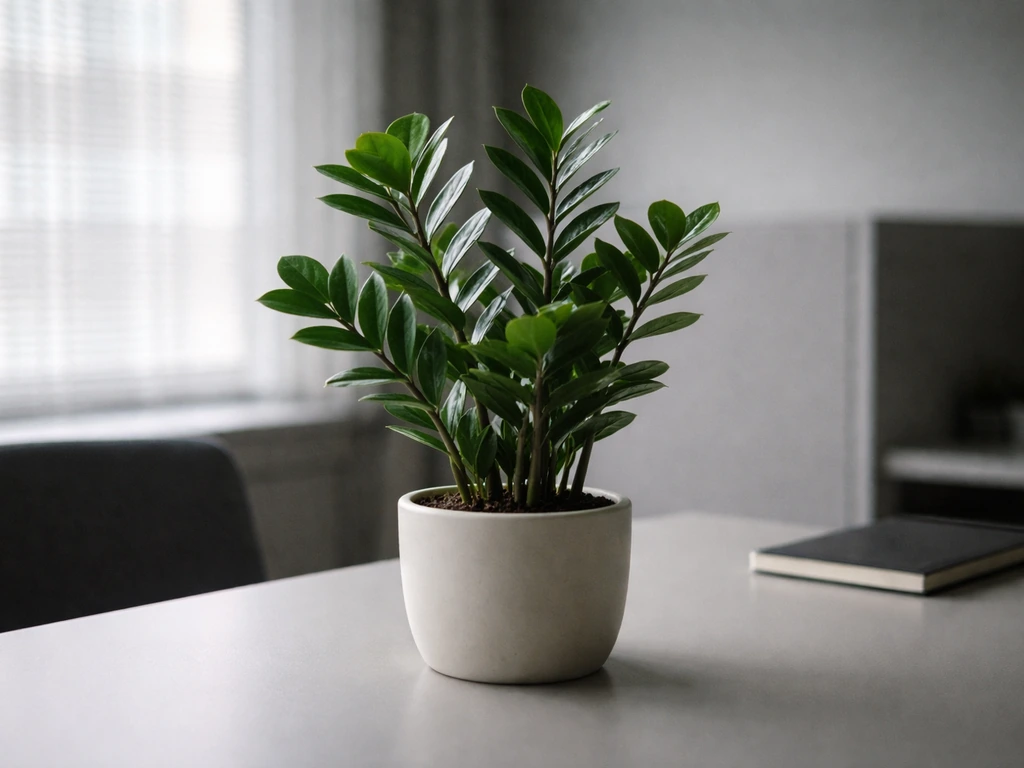
These plants will not put out a lot of new growth under office artificial light alone, but they hold their form, stay green, and will not die on you over a typical work season. They are your safest picks for a truly windowless setup without grow lights. The tradeoff is honest: you are keeping a plant alive and looking decent, not watching it thrive.
- ZZ plant (Zamioculcas zamiifolia): According to University of Florida IFAS, ZZ is more tolerant of low light than both snake plant and cast-iron plant. Its waxy leaves and thick rhizomes store water and slow transpiration, making it forgiving of both low light and irregular watering. This is probably the single best choice for a truly dark office.
- Cast-iron plant (Aspidistra elatior): Named for its toughness. University of Nebraska-Lincoln Extension lists it as one of the top low-light-tolerant houseplants. Slow growing, but nearly indestructible under poor conditions.
- Snake plant (Sansevieria trifasciata, also sold as Dracaena trifasciata): A classic for a reason. It handles neglect, dry air, and low light better than almost anything else. It will grow slowly but will not collapse on you.
- Pothos (Epipremnum aureum): Listed by University of Nebraska-Lincoln Extension as a reliable low-light grower. Pothos is forgiving, cascades attractively off a shelf or desk edge, and recovers well from missed waterings.
- Heart-leaf philodendron (Philodendron hederaceum): Similar in habit to pothos, and University of Maine Extension notes philodendrons can function at PPFD ranges as low as 50, which is at the floor of what qualifies as meaningful plant light.
Plants that do better with at least some supplemental light (100+ fc)
If you add even a modest grow light, the list opens up considerably. Peace lily, Chinese evergreen (Aglaonema), and dracaena species all prefer the 100 to 250 foot-candle range and will reward a small grow light investment with actual new leaves and better color. These are worth considering if you are willing to add a lamp.
The best specific plants for a windowless office
| Plant | Light tolerance | Watering frequency (in low light) | Best for | Notes |
|---|---|---|---|---|
| ZZ plant | Lowest (survives under 50 fc) | Every 3-4 weeks | Beginners, neglectful waterers | Best no-window pick; stores water in rhizomes |
| Cast-iron plant | Very low (50 fc or less) | Every 2-3 weeks | Set-it-and-forget-it offices | Extremely slow growing; nearly impossible to kill |
| Snake plant | Low (50-150 fc) | Every 2-3 weeks | Any skill level | Tolerates dry air well; dozens of varieties |
| Pothos | Low (50-150 fc) | Every 1-2 weeks | Beginners wanting trailing greenery | Vines elegantly; easy to propagate |
| Heart-leaf philodendron | Low (50-250 fc) | Every 1-2 weeks | Beginners, shelves or hanging pots | Similar to pothos but slightly more vigorous |
| Peace lily | Low-medium (100-200 fc) | Weekly when in active growth | Those with a small grow light | Will droop visibly when thirsty, useful signal |
| Chinese evergreen (Aglaonema) | Low-medium (75-200 fc) | Every 1-2 weeks | Adding color in dim offices | Many colorful varieties; very adaptable |
If you can only pick one plant for a truly windowless desk and you refuse to add any grow light, get a ZZ plant. It is not even close. If you want something that trails or feels more alive and you are willing to add a simple lamp, pothos or heart-leaf philodendron will reward that small effort.
Setting up your office for plants: the practical checklist
Light gets most of the attention, but the plants that die in offices usually die from overwatering or from sitting in poor drainage, not from darkness alone. Getting the rest of the setup right matters just as much. If you have a similar low-light setup at home, look for plants that can grow in kitchen conditions with the right light and watering rhythm. If you are also mapping out plant options for your home, the best plants to grow in kitchen can overlap with office picks, especially when you match light and watering. If you have a bright kitchen at home but still want low-maintenance options, check which plants can grow in your bedroom too plants that can grow in bedroom.
Containers and drainage
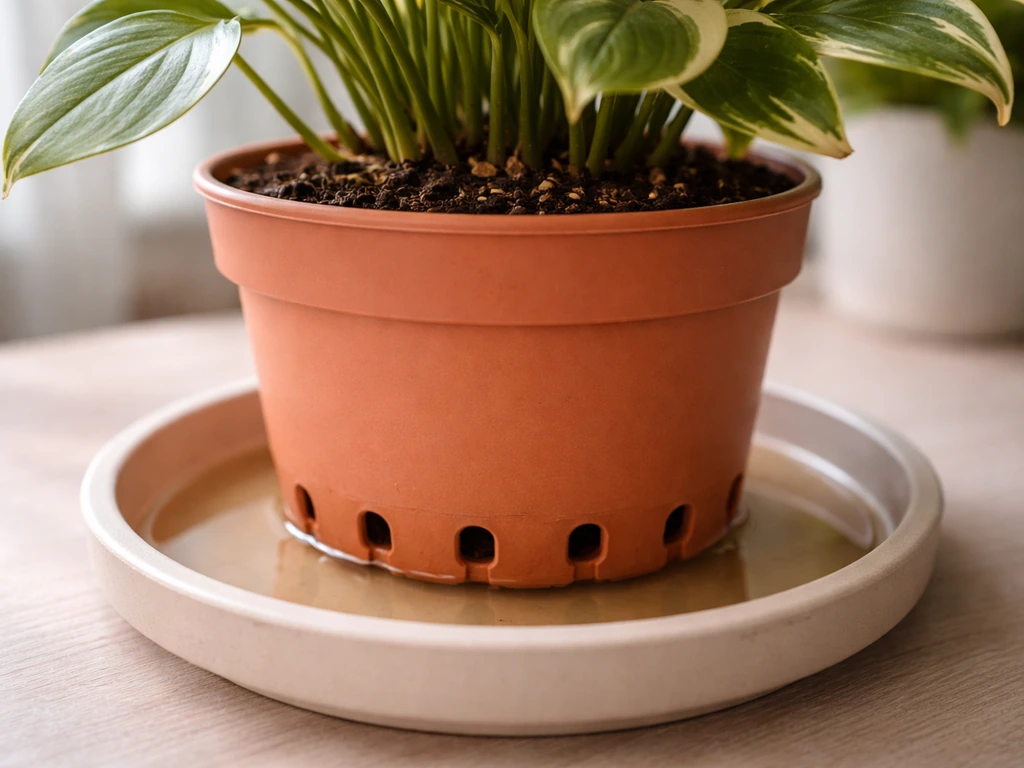
Oklahoma State University Extension is clear on this: never leave a houseplant standing in water, and if the container has no drainage hole, watering becomes much more critical because there is nowhere for excess water to escape. In a low-light office, the soil dries out even more slowly than it would near a window, so soggy roots are a real risk. Use a pot with a drainage hole and a saucer you can empty, or use a well-draining nursery pot inside a decorative cachepot and check that cachepot for standing water every time you water.
Soil mix
Standard all-purpose potting mix works fine for most of these plants, but if you are planting ZZ, snake plant, or cast-iron plant, mixing in about 20 to 30 percent perlite improves drainage noticeably. University of Missouri Extension notes that soil kept too moist invites root rot, and in a dim office where evaporation is slow, a chunkier mix gives you more room for error.
Watering
In a low-light office, plants need far less water than the care tags suggest. Those tags assume near-window light conditions. A ZZ plant or snake plant in a no-window office may only need watering every three to four weeks. The simplest approach: stick your finger two inches into the soil. If it feels dry at that depth, water thoroughly until it drains from the bottom, then let it dry out again before you water next time. Resist the urge to water on a fixed calendar schedule without checking the soil first. On Reddit, houseplant users also say ZZ plants do well with low light and that watering is best done by checking whether the soil is dry rather than following a strict schedule.
Humidity and temperature
Office HVAC systems are hard on plants. UC IPM notes that low relative humidity is one of the most common environmental causes of houseplant decline, and it is especially common in air-conditioned or heated office buildings. Most of the plants on this list tolerate dry air reasonably well, but if you see brown leaf tips or crispy edges, that is your first clue humidity is too low. A small desktop humidifier or a pebble tray with water under the pot helps. Keep plants away from heating and cooling vents, which also cause temperature shock.
Airflow
Stagnant air encourages fungal problems and pests. This does not mean you need a fan blowing on your plants, but a windowless office that never gets fresh air or any air circulation is worth thinking about. If the space gets stuffy, even cracking a door or running a ceiling fan on low helps keep the growing environment healthier long term.
Grow lights: when you need one and how to set it up
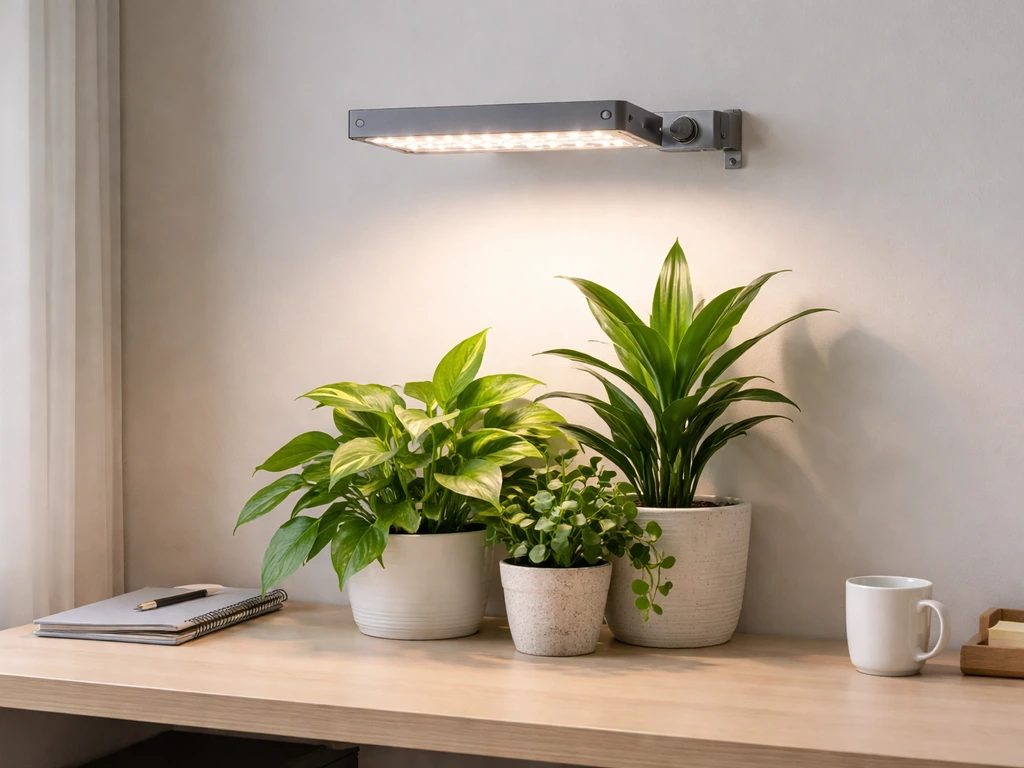
If your office reads below 50 foot-candles and you want plants that actually grow rather than just survive, a grow light is not optional, it is the actual solution. University of Maine Extension states that grow lights are an excellent way to grow houseplants and provides PPFD-based targets as benchmarks. The good news is that for low-light foliage plants, you do not need an expensive or powerful setup.
What to look for in a grow light
For the plants on this list, you are targeting roughly 50 to 250 PPFD at plant height. That corresponds to a modest full-spectrum LED grow light, not the high-intensity setups used for tomatoes or flowering plants (which need 400 to 1200 PPFD). Look for a full-spectrum LED with a color temperature in the 3000K to 6500K range. Small clip-on LED grow lights in the 10 to 25 watt range are often enough for a single desk plant. A dedicated grow light bar or panel works better if you want to cover a shelf of plants.
Positioning and timing
Position the light so the center of the plant canopy sits within 6 to 12 inches of the light source for most small LED grow lights, though you should check the manufacturer's recommended distance since intensity drops sharply with distance. University of Maine Extension notes that both light intensity and photoperiod (duration) matter. For foliage plants in an office, running the light 12 to 14 hours per day is a good baseline. A plug-in timer costs about five dollars and makes this effortless. Do not leave grow lights on 24 hours a day because plants need a dark period.
Realistic expectations with grow lights
A good grow light on a timer bumps your plant from 'barely surviving' to 'actually growing,' which is a meaningful upgrade. Pothos and philodendrons will put out new leaves regularly. ZZ and snake plants will stay full and healthy rather than slowly declining. North Carolina State Extension specifically notes that ZZ plants tolerate very low light levels, including only fluorescent light, but do best with bright indirect sunlight ZZ and snake plants will stay full and healthy rather than slowly declining.. You are not going to grow vegetables or flowering plants well under a small foliage-focused grow light, but for the plants on this list, it makes a real difference.
Keeping your office plants healthy: care plan and troubleshooting
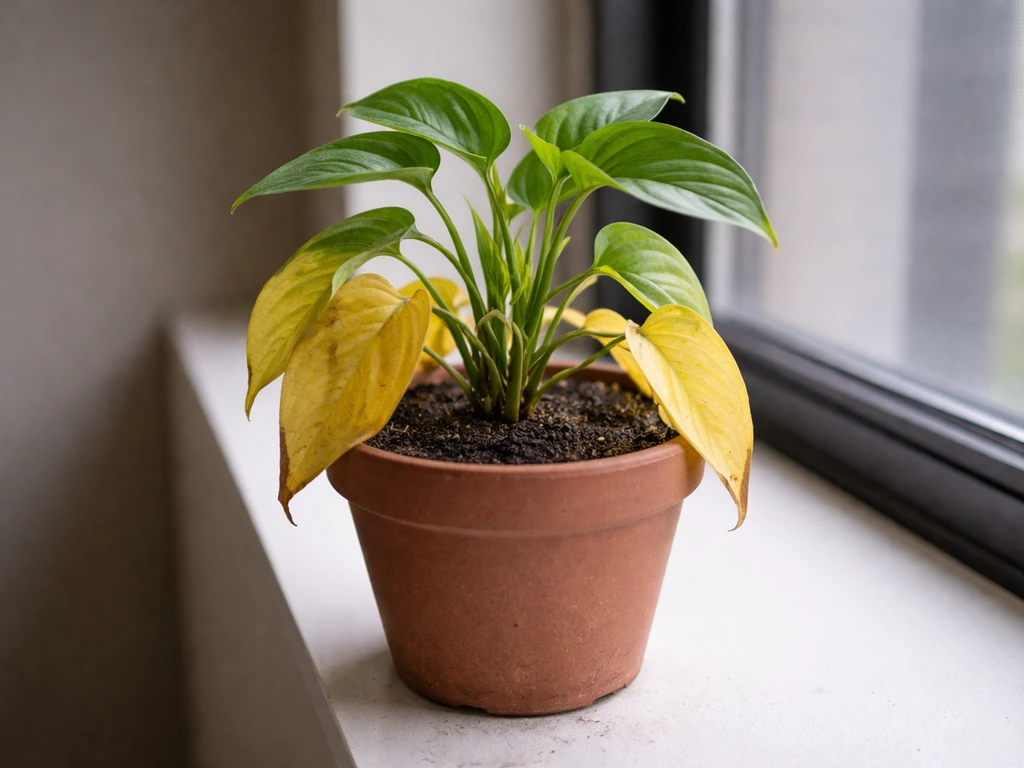
Most office plant failures follow a predictable pattern: overwatering because the soil never dries out, ignoring early stress signs until it is too late, or giving up on a plant that just needed a small adjustment. Here is how to stay ahead of the common problems.
Yellowing leaves
Yellow leaves in a low-light office are almost always overwatering. University of Missouri Extension links wet soil directly to root rot, with yellowing and leaf drop as the symptoms. University of Illinois Extension recommends withholding water until the soil is quite dry, then restarting a fresh schedule. If the yellowing is paired with mushy stems at the base or a sour smell from the soil, root rot has set in and you need to unpot the plant, cut off any brown mushy roots, let the remaining root ball dry slightly, and repot in fresh well-draining mix.
Drooping or wilting
A drooping plant in an office almost always signals one of two things: underwatering or, counterintuitively, overwatering. Iowa State University Extension notes that root rot can cause wilting even when the soil is moist, because damaged roots cannot take up water. Check the soil: if it is bone dry, water thoroughly. If it is wet and has been wet for a while, stop watering and check the roots. Peace lily is actually useful here because it droops visibly when it needs water and bounces back quickly after a good soak.
Brown tips and crispy edges
Brown leaf tips almost always mean low humidity or a vent blowing dry air directly on the plant. Move the plant away from HVAC vents and try a pebble tray. UC IPM links both low humidity and drafts to brown tip and margin symptoms. Trim the brown tips with clean scissors at an angle to keep the plant looking tidy.
Pests
The most common pest in low-light offices is fungus gnats. They thrive in consistently moist soil and are a reliable sign you are overwatering. Iowa State University Extension lists fungus gnats as one of the classic overwatering symptoms. Let the top two inches of soil dry out completely between waterings and the gnat population will drop fast. For scale, mealybugs, or spider mites (less common in dim offices but possible), wipe leaves with a damp cloth and treat with neem oil or insecticidal soap if the infestation persists.
When to reset or replace a plant
Some plants are worth saving and some are not. If a ZZ or snake plant has lost more than half its leaves, the remaining ones are yellowing, and the roots are brown and mushy, start fresh with a new plant rather than trying to rescue it. These plants are inexpensive and widely available. On the other hand, if the plant looks rough but the roots are still white or light tan when you check, it is worth repotting in fresh mix and giving it a reset. A good-faith effort at correction is always worth trying first before replacing.
A simple ongoing care schedule
- Every visit (or at least twice a week): glance at the plant for any visible drooping, yellowing, or signs of pests.
- Every 7 to 10 days: check soil moisture at two-inch depth. Water only if dry. Do not water on a fixed schedule without checking.
- Monthly: wipe dust off leaves with a damp cloth to keep photosynthesis efficient, especially under artificial light. Check for pests while you are at it.
- Every 3 to 4 months: check if roots are coming out of the drainage hole. If so, size up one pot diameter.
- Seasonally: if your office runs heavy HVAC in summer or winter, watch for increased brown tips or faster soil drying and adjust watering and humidity accordingly.
If you are also thinking about plants for other indoor spaces with challenging light, the approach for a windowless bathroom or a basement follows similar logic but with added humidity considerations for some spots. If you are planning for a bathroom without windows, pay extra attention to humidity and make sure any leaves stay dry enough to prevent fungus a windowless bathroom. The core principle is the same: match the plant to the real light level, get the watering right, and the plant will look after itself.
FAQ
If my office has no windows, will plants still grow or just survive?
Not necessarily. If your office truly has no natural light at all and the space reads under about 50 foot-candles, you should plan on using a grow light for anything beyond very tough plants. If your “no windows” room still gets regular ambient light from hallways or ceiling fixtures, you may be able to keep low-light plants alive longer, but they typically will not put out much new growth without supplemental light.
How do I change my watering routine for plants in a windowless office?
“Low light” houseplants can keep living in dim conditions, but the watering needs to slow down dramatically in windowless offices because evaporation is slower. As a practical rule, water only after the top two inches are dry, then fully soak and drain, instead of following a calendar schedule.
Can I use a decorative pot without drainage for office plants?
Use a drainage hole every time. If you only have a decorative pot, place the plant in a nursery pot with holes inside it, then empty the saucer after watering. Without drainage, excess water has nowhere to go, and root rot can develop before you notice symptoms.
Will a cheap desk grow light work, or do I need something stronger?
Yes, but it can backfire if the light is too close or too weak. Clip-on lights often work well for one desk plant, but you still need to keep the canopy within the manufacturer’s recommended distance because intensity drops quickly. If you see stretching (long gaps between leaves), move the light closer or extend photoperiod.
Should I leave a grow light on all day or 24 hours?
Most foliage plants do better with a dark period, not 24/7 light. For windowless office setups, a timer set to about 12 to 14 hours per day is a solid starting point, then adjust based on plant response and how quickly the soil dries.
What should I do if my plants keep getting brown tips in an office?
If the room HVAC is dry, your plants may show brown tips or crispy edges even when watering is correct. A pebble tray or small humidifier can help, but the most important adjustment is to move plants away from supply and return vents and avoid placing them directly under vents or radiators.
Do windowless offices need a fan for plant health?
Not usually. You want gentle air movement at most, but not cold drafts that stress foliage. If the office feels stagnant, cracking a door briefly or running a ceiling fan on low can help reduce pest pressure and fungal issues without blasting the leaves.
What’s the best way to tell if my office light is enough for more than survival?
Start by measuring at plant height during normal work conditions, then choose based on the reading. If you can’t measure, a simple backup method is to observe: if a plant keeps getting leggy or pale over a few weeks, your light level is likely too low and you should add a grow light or reposition closer to the strongest artificial light source.
Why am I getting fungus gnats in my office plants?
Yes, pests often show up when plants are overwatered, and fungus gnats are the most common in dim offices with consistently wet soil. Let the top two inches dry fully between waterings, and consider sticky traps to monitor. If you see recurring outbreaks, you likely need to reduce watering frequency rather than just adding treatments.
When should I repot versus replace a struggling ZZ or snake plant?
Repot immediately if there are signs of root rot, such as mushy dark roots, a sour smell, or rapid yellowing with wet soil. If roots are still healthy (white to light tan, firm), a repot into fresh well-draining mix plus corrected watering is often enough. If more than half the leaves are lost and roots are brown and mushy, replacement is usually faster and more reliable.
Can I grow multiple office plants on a shelf under one light, and how should I position them?
You can, and it helps if you rotate. Even with the same grow light, small differences in intensity across a shelf can cause uneven growth. Rotate pots every couple of weeks so all sides receive similar light, especially when leaves begin leaning strongly toward the brightest area.
Next Article
Best Pot Plants to Grow Indoors: Practical Guide for Apartments
Best pot plants to grow indoors: apartment-friendly picks with light, pot, watering, difficulty and seasonal tips.