
The best plants to grow between stepping stones are creeping thyme, Irish moss, ajuga, dwarf mondo grass, and low-growing sedums. Each one stays flat, fills gaps steadily, and handles the occasional footstep without giving up. Which one to pick depends on how much sun your path gets, how wet or dry the soil stays, how wide the gaps are, and whether anyone actually walks on them daily or just occasionally.
Best Plants to Grow Between Stepping Stones

Rachel Hartley
2 Jul 2026
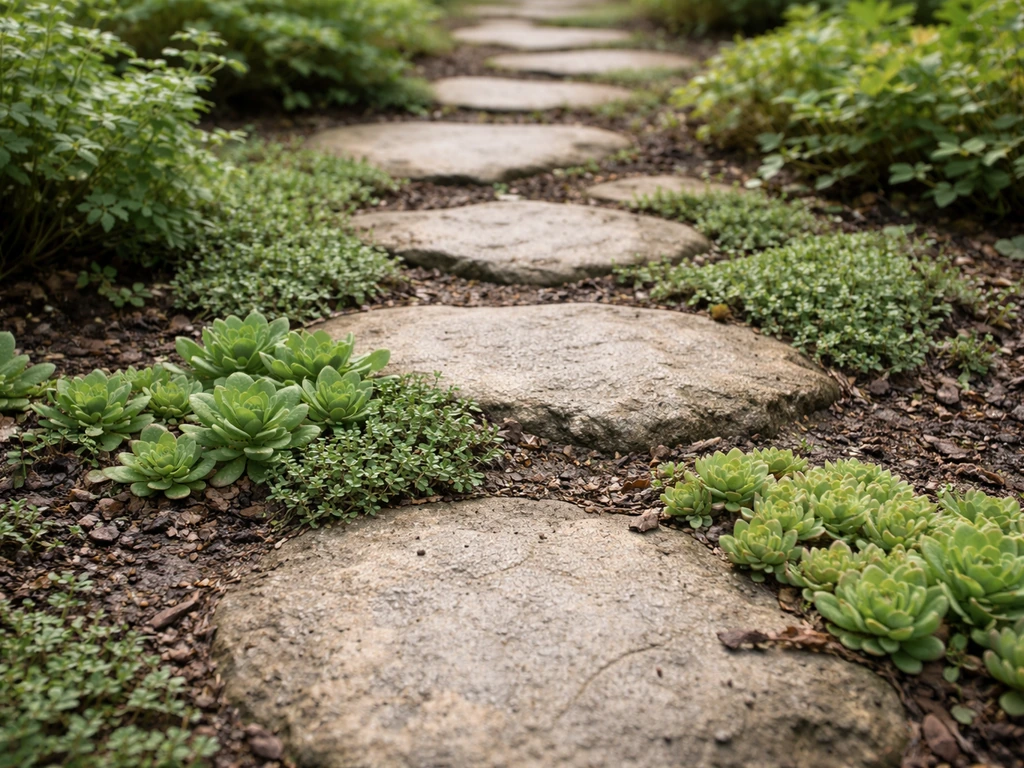
How to choose plants for between stepping stones
Before you buy anything, walk your path at midday and clock how many hours of direct sun it gets. That single factor eliminates most bad choices immediately. A sunny flagstone path in Arizona is a totally different environment from a shaded brick walkway in the Pacific Northwest, and plants that thrive in one will die in the other.
Here are the four questions worth answering before you pick a plant:
- Gap width: Gaps under 2 inches are really only suited to moss or very fine-textured groundcovers. Gaps of 3 to 6 inches give you room for creeping thyme, ajuga, or Irish moss. Wider gaps (6 inches or more) can support almost any of the options here, including small sedums and dwarf mondo grass.
- Sun vs. shade: Six or more hours of direct sun opens the door to creeping thyme, sedum, and most herbs. Fewer than four hours means you want Irish moss, ajuga, creeping Jenny, ferns, or true moss.
- Foot traffic: Be honest here. A path you walk every day to the back door is high traffic. A decorative garden path you step on a few times a week is low-to-moderate. Most ground-huggers tolerate occasional stepping but not constant pounding.
- Drainage: Lift a stone and look at the soil. Is it damp and heavy? Sandy and dry? Thyme and sedum want fast drainage. Creeping Jenny, ferns, and moss want consistent moisture. Putting the wrong plant in the wrong soil is the number-one reason these plantings fail.
If your path gets mixed sun (morning light, afternoon shade), you have the most flexibility. Both sun-loving and shade-tolerant options can work, which makes that the easiest scenario to plant.
Top low-growing groundcovers for the gaps
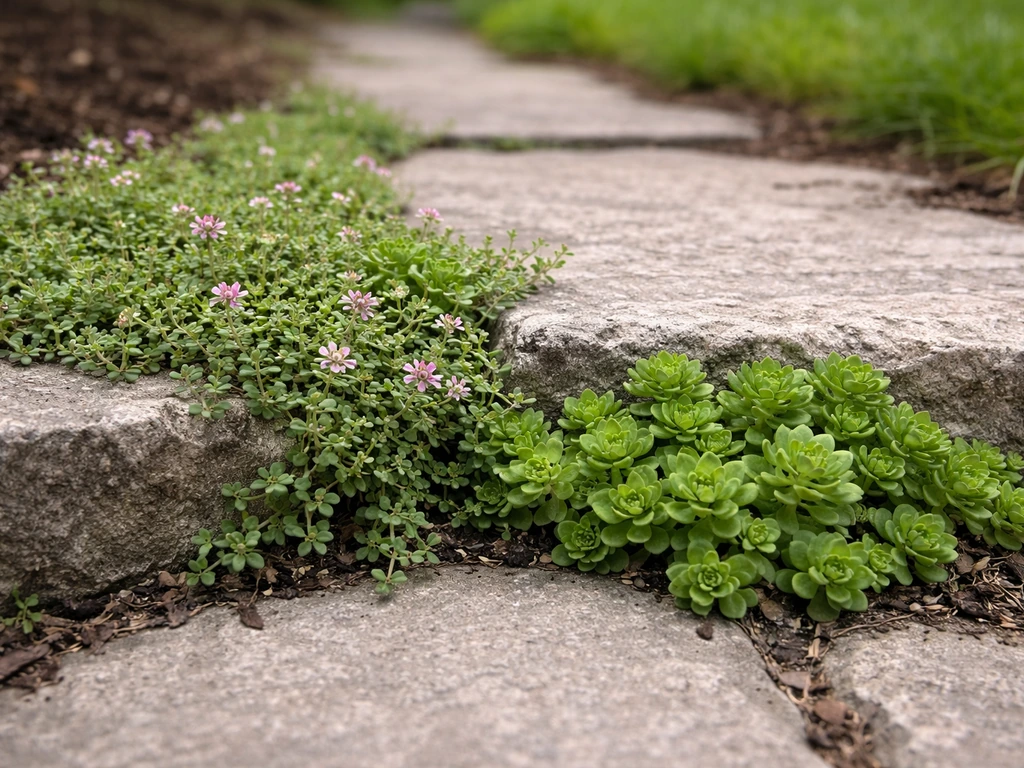
These are the workhorses: plants that spread reliably, knit together into a dense mat, and crowd out weeds without much fuss once they're established. For lattice planters, look for climbers and trailing plants that naturally cling to the grid and do well in your light and watering conditions. The key word is 'once.' All of them need weed-free soil and regular water for the first growing season.
| Plant | Height | Sun | Traffic Tolerance | Spacing | Best For |
|---|---|---|---|---|---|
| Creeping thyme (Thymus praecox) | 1–3 in | Full sun | Moderate (occasional stepping) | 12–24 in | Sunny, well-drained paths |
| Irish moss (Sagina subulata) | 1–2 in | Full sun to part shade | Light | 6–12 in | Moist, cool, partly shaded gaps |
| Ajuga (bugleweed) | 3–6 in | Part shade to shade | Low to moderate | 6–12 in | Shaded or woodland paths |
| Dwarf mondo grass 'Nana' | 3–6 in | Part shade to shade | Low foot traffic | 4–6 in | Shady, humid climates |
| Goldmoss sedum (Sedum acre) | 1–2 in | Full sun | Low to moderate | 6–12 in | Dry, rocky, sunny gaps |
| Creeping Jenny (Lysimachia nummularia) | 2–4 in | Full sun to part shade | Low | 12 in | Moist, evenly watered paths |
Creeping thyme is the most popular choice for good reason. It forms a dense, ground-hugging mat, smells wonderful when brushed, and handles moderate foot traffic far better than most alternatives. It won't survive a true pedestrian path where people walk the same line every single day, but for a garden walkway used casually, it's nearly ideal. Space plants 12 to 24 inches apart depending on how quickly you want coverage. Closer spacing costs more upfront but fills in within one season.
Goldmoss sedum is worth mentioning separately because it spreads aggressively in the right conditions, which is both a virtue and a caution. In sunny, rocky, fast-draining gaps it can take over quickly and needs occasional editing to keep it from swamping neighboring plants. In those tough, dry spots where other groundcovers fail, it's often the only thing that works.
Before planting any of these, pull every weed you can see and dig out the roots. University of Maryland Extension is blunt about this: weeds competing during establishment can genuinely prevent groundcovers from filling in the way you want. One afternoon of weeding before you plant saves months of frustration afterward.
Best flowering options for curb appeal
If you want the path to actually look like something, not just green, a few low growers deliver real color without getting tall enough to be a tripping hazard.
Creeping thyme doubles as a flowering plant. In early summer it covers itself in tiny pink or purple blooms that pollinators love. The bloom period is roughly four to six weeks, and the mat stays tidy the rest of the year. For a path that gets morning sun and afternoon shade, ajuga is a strong choice: it sends up short purple flower spikes in late spring and the foliage stays attractive all season. It spreads by runners and can fill a 2-foot gap in a single growing season.
Roman chamomile is sometimes suggested for stepping stone paths because it's low (about 3 to 6 inches), fragrant, and produces cheerful white daisy-like flowers. The honest caveat: it tolerates only minimal foot traffic according to UGA Extension research. If your path gets regular use, chamomile will look beat up within a season. Save it for a decorative path that's more for looks than for walking.
Creeping Jenny with its bright chartreuse foliage doesn't flower dramatically, but it provides color contrast that can make darker stones pop. It needs evenly moist, fertile soil and will scorch in hot, sun-baked spots, so skip it on south-facing paths in hot climates. In zones 3 to 9 with moderate summers, it's a reliable performer spaced about 12 inches apart.
Ferns, moss, and shade-friendly picks for damp or low-light paths
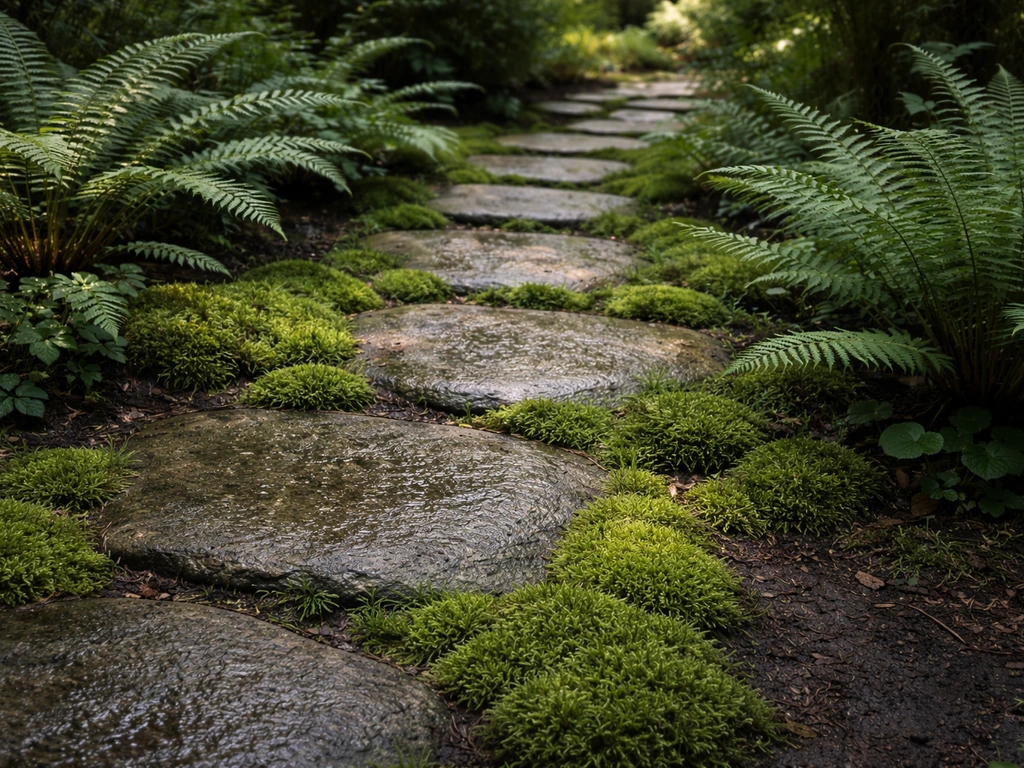
North-facing paths, areas under tree canopies, or paths that stay damp most of the year are often the hardest to plant because most low-growing groundcovers want at least some sun. This is where moss and shade-tolerant species come into their own.
True moss (not Irish moss, which is actually Sagina subulata, a flowering plant that just looks like moss) thrives in consistently moist, shaded conditions with acidic soil. If you already have moss establishing naturally between your stones, you can encourage it rather than fight it. Keep the area moist, avoid lime applications that raise soil pH, and remove competing plants. The main practical concern with moss is that it gets slippery when wet, so assess the slip risk on paths with any slope before going all-in.
Irish moss (Sagina subulata) is more adaptable than true moss and is the plant most garden centers actually sell for paving gaps. It prefers moderately fertile, acidic to neutral, moist but well-drained soil. It does best in full sun with some midday shade and tolerates light foot traffic. In hot climates with intense summer sun, the midday shade component matters a lot. NCSU Extension specifically recommends it for filling gaps in paving and as a lawn alternative along pathways.
For deeper shade, dwarf mondo grass 'Nana' is one of the most reliable options. It stays 3 to 6 inches tall, tolerates low foot traffic, and handles the part-shade to full-shade conditions that stump most other groundcovers. It spreads slowly, so plan on spacing plants 4 to 6 inches apart to get solid coverage within a season. It grows faster with consistent watering during establishment. Missouri Botanical Garden and NCSU Extension both note its suitability for this exact use case.
Small, compact fern varieties can work in larger gaps (6 inches or more) on shaded paths that stay naturally moist. They won't tolerate any foot traffic, so they're strictly for decorative paths. If you're dealing with other hard-to-plant areas beyond just stepping stone gaps, the challenges are similar to what applies to general hard-to-grow areas around the yard. In general, the best ground cover for hard-to-grow areas is the one that matches your sun and moisture conditions while still outcompeting weeds during establishment hard-to-plant areas.
Herbs and edible options for sunny, low-height gardens
If your stepping stone path gets six or more hours of direct sun and the gaps are 3 inches or wider, you can plant edible herbs that stay low enough to work in walkway gaps and are tough enough for occasional foot traffic. This is genuinely one of the more satisfying garden setups because the path becomes functional in two ways.
- Creeping thyme (Thymus praecox or Thymus serpyllum): Technically both an ornamental groundcover and a culinary herb. The leaves are smaller and more pungent than upright thyme. Brushing it as you walk releases the fragrance. Hardy, drought-tolerant once established, and handles occasional stepping.
- Woolly thyme (Thymus pseudolanuginosus): A non-culinary thyme variety but worth mentioning because it's one of the most traffic-tolerant stepping-stone plants available. Soft, silver-gray texture and stays very flat.
- Corsican mint (Mentha requienii): Extremely low-growing (under half an inch), intensely fragrant, and does well in partial shade with consistent moisture. Not for hot, dry spots. Very low traffic tolerance but produces a remarkable fragrance when stepped on lightly.
- Roman chamomile (Chamaemelum nobile): Edible flowers, low growth habit, fragrant foliage. Best in low-traffic decorative paths in full sun. As noted above, minimal foot traffic tolerance.
- Low-growing oregano varieties: Some prostrate oregano types stay under 4 inches and can fill sunny gaps, though they're slower to spread than thyme.
The consistent thread through all of these: they want lean, well-drained soil. Gardening Know How recommends amending heavy clay soils with coarse sand, grit, or perlite before planting thyme, and the same advice applies across all these herbs. Rich soil with high nitrogen encourages soft, floppy growth that doesn't hold up as well to stepping. Think of these plants as preferring a somewhat poor diet.
How to actually plant and maintain these gaps
Soil prep before you plant
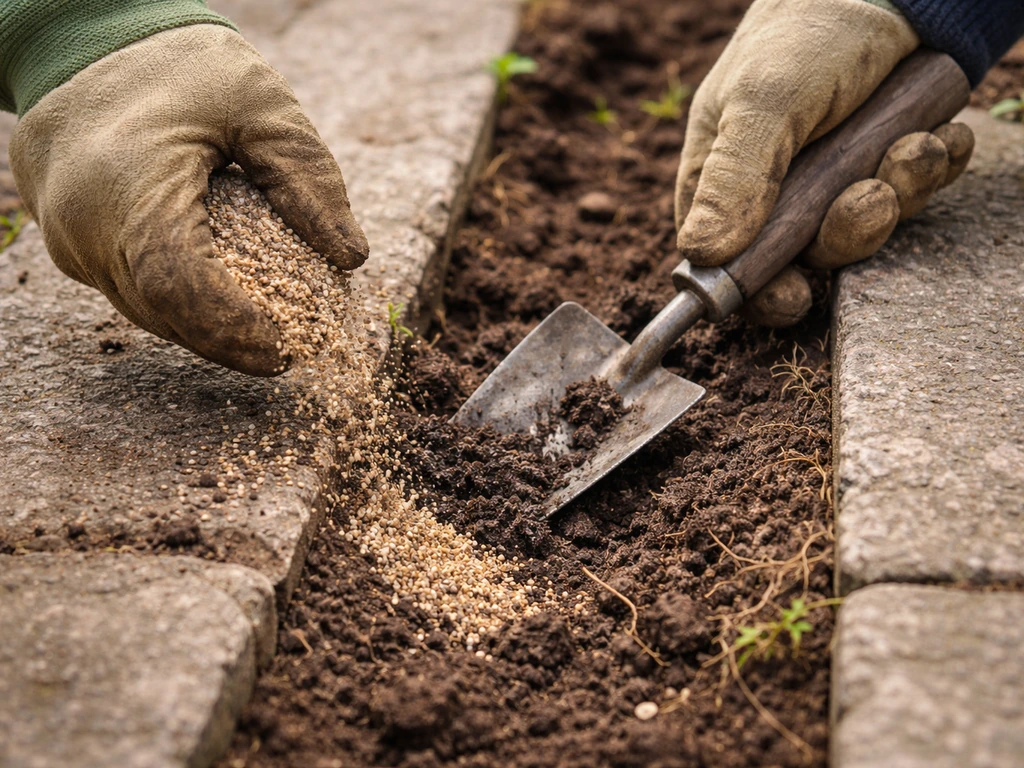
Dig out the gap soil to about 3 to 4 inches deep. Remove every weed root you find. Then amend based on what you're planting: for thyme, sedum, and herbs, mix in coarse sand or grit to improve drainage. Old Farmer’s Almanac also outlines the practical planting steps for creeping thyme, including setting plugs into prepared holes, checking depth, refilling, and firming soil around the roots setting plugs into prepared holes, checking depth, refilling, and firming soil around roots. For Irish moss, ajuga, creeping Jenny, and shade plants, work in some compost to add moisture retention and organic matter. Tamp the soil lightly so it won't sink drastically after the first rain and wash out around your new plants.
Skip landscape fabric. It sounds like it should help with weed suppression, but in planted gaps it causes more problems than it solves. Fabric reduces water and air permeability, can trap moisture against plant crowns, and eventually gets mixed into the soil so it becomes nearly impossible to remove cleanly. Your best weed barrier is dense, healthy plants that outcompete weeds on their own.
Planting steps
- Clear and weed the gaps thoroughly, removing roots down to 3 to 4 inches.
- Amend the soil appropriately for your chosen plant (drainage for sun plants, compost for shade/moisture plants).
- Dig small holes sized to each root ball or plug, keeping the crown at or just above soil level.
- Set plants in, backfill, and firm the soil gently around the roots.
- Water in thoroughly immediately after planting.
- Water every 2 to 3 days for the first 2 to 4 weeks until roots establish. Then shift to less frequent, deeper watering.
- Pull any weeds that appear during the first season before they seed.
Ongoing maintenance and trimming
Most stepping stone plants need minimal trimming. Creeping thyme benefits from a light shearing after it blooms in early summer to keep the mat tight and encourage fresh growth. Ajuga occasionally needs its runners cut back if it's spreading onto the stones themselves. Sedum acre can get aggressive and may need to be pulled back from the edges seasonally. Dwarf mondo grass needs almost nothing beyond occasional removal of dead leaves.
Seasonal timing
Right now in early July 2026, you're in the middle of the growing season for most of the northern hemisphere. This is actually a workable time to plant, but you need to be more attentive about watering during establishment because summer heat accelerates drying. If you're in a hot-summer region like the Southwest or Southeast, planting in late summer or early fall (September to October) will give your plants a much gentler establishment window.
In cooler northern climates (USDA zones 3 to 6), planting now through August works well and gives plants time to root before the first frost. Spring and early fall are the ideal windows everywhere, but mid-summer planting with diligent watering is entirely doable for most of these species.
Common mistakes and how to fix them
Choosing a plant that gets too tall is probably the most common error. It's easy to read '6 to 12 inches' on a tag and underestimate what that looks like between stones. Anything over 4 to 6 inches becomes a trip hazard on a path that actually gets used. Stick to the plants listed here and double-check mature height before buying, not just 'low-growing' marketing copy.
Planting a slow spreader and expecting quick coverage is another common frustration. Dwarf mondo grass and Irish moss are relatively slow. If you space them too far apart trying to save money, the gaps between plants will fill with weeds before the groundcover can close in. Closer spacing costs more upfront but is almost always worth it in the first season.
Drainage mismatches kill a lot of these plantings. If thyme is sitting in soil that stays wet for days after rain, it will rot at the crown. If creeping Jenny is planted in a hot, sandy spot with no irrigation, the foliage will scorch and die back. Matching plant to soil type is not optional, it's the whole game. If your soil is persistently waterlogged, address the drainage issue first, whether that means improving the soil mix in the gaps or checking whether the surrounding grade is channeling water toward your path.
Expecting traffic tolerance that isn't there. Creeping thyme handles occasional stepping, not a daily dog-walk path. If you are wondering what plants grow well around a pool, focus on low-growing, salt-tolerant options and choose based on how much sun the area gets and how wet it stays. Roman chamomile tolerates almost no traffic. If your path gets constant heavy use, honestly consider whether gap planting is the right approach at all, or whether tighter-set stones with minimal gaps is a more practical solution. The plants that genuinely handle repeated stepping well are a short list: woolly thyme, creeping thyme (moderate use only), and some sedum varieties in the right conditions.
Finally, skipping the initial weeding is a mistake that will haunt you all season. CSU Extension puts it plainly: control existing weeds before planting groundcovers. If you plant directly into weedy soil and expect your new groundcover to smother everything, you'll end up with a mixed mess that's harder to sort out later than if you'd just spent an hour weeding at the start.
If you're thinking beyond just stepping stone gaps and want to cover challenging bare patches elsewhere in the yard, the same principles around drainage, sun, and weed prep apply to other hard-to-grow areas. And if you're working on the broader look of a path or patio area, low-growing gap plants pair naturally with taller border plants and privacy screens that define the edges of the space. Privacy planting is all about choosing dense, reliably growing foliage that blocks sightlines without needing constant fuss.
FAQ
Can I plant between stepping stones if the gaps are narrower than 2 to 3 inches?
Yes, but plan for a slower fill unless you use a very fine, fast-knitting option. For tight gaps, dwarf mondo grass and true moss are often more realistic than thyme or sedums, which usually look best when they have enough room to spread without getting choked by the stone edges. If you want faster results, consider reducing the gap by resetting stones slightly or choosing plants that tolerate being crowded.
How much spacing should I use if I want the path to look filled in by next summer?
Use the tighter end of each plant’s spacing guidance and prioritize reliable spreaders during establishment. A common mistake is spacing for cost savings, then discovering weeds establish before the mat closes. For the quickest knit, keep creeping thyme and ajuga closer (closer than their maximum spacing), and for slower options like dwarf mondo grass, do not stretch spacing beyond what’s needed for one-season coverage.
What’s the best watering approach during the first 4 to 6 weeks after planting?
Water more consistently, less randomly. The goal is evenly moist soil right at plant level until roots grab hold, then you can ease off to match each plant’s needs. Avoid letting a gap fully dry out for long stretches during hot weather, but also avoid standing water around crowns, especially for thyme, sedums, and herbs. A helpful check is to press a finger into the gap, if the top couple inches feel dry, it’s time to water.
Will landscape fabric work if I’m trying to stop weeds in the gaps?
It’s usually a bad trade-off for stepping stone plantings. Fabric can reduce airflow and water movement, keep moisture trapped near crowns, and later become extremely difficult to remove cleanly when you need to adjust or divide plants. If weeds are a problem, the better approach is thorough initial weeding plus choosing a dense groundcover and keeping plants well-watered through establishment.
How do I keep creeping thyme from spilling onto the stones or into the walkway?
Light shearing right after it finishes flowering is the simplest control method. If it keeps creeping onto stone faces, trim it earlier and slightly more often, then correct the spacing so plants knit below the stone edges instead of reaching outward. Also make sure the soil isn’t richer than the surrounding area, excess nitrogen can push faster, leggier growth that spreads where you do not want it.
What should I do about slippery moss if my path has any slope?
Test after watering or rainfall, then reassess if the slip risk is high. Moss tends to be slipperiest when it’s fully wet, so on sloped or frequently used entries, consider a different groundcover or a planting plan that leaves a wider, less vegetated walking strip. If you keep moss, improve safety by using gentle paths with minimal grade and avoid letting moss build thick, continuous mats on the direct foot line.
Can I mix two plants between stepping stones to get color and coverage faster?
You can, but only mix plants with compatible light and moisture needs, and plan for different growth rates. For example, pairing a shade-tolerant filler with a similar moisture requirement works better than mixing hot-sun plants with moisture-loving plants. Also expect one plant to win over time, so choose a “dominant” groundcover and treat the other as a seasonal accent rather than assuming equal coverage.
Are Roman chamomile and chamomile flowers worth it if people walk on the path sometimes?
Only if the traffic is truly occasional. Roman chamomile is easily damaged by repeated stepping, so if you have pets, kids, or a routine walkway, it often turns scruffy within a season. If you want the white daisy look, consider planting chamomile in decorative pockets near the edges or in less-used sections, with a sturdier filler like creeping thyme or sedum doing the heavy lifting in the main foot line.
Why did my plants die after planting even though I followed the spacing and picked the right sun?
The most common causes are drainage and leftover weeds. If the soil stays wet for days, thyme and sedums can rot at the crown, and shade plants can struggle if water is pooling. Another frequent issue is failing to remove weed roots before planting, weeds that survive can outcompete groundcovers during the root-establishment window. If you see patchy dieback, check whether water is pooling in those exact gaps and whether any weeds are still actively growing underneath.
Next Article
Best Indoor Plants That Grow Tall: Top Picks & Care Guide
Best tall indoor plants by light, care and season, real heights, potting, pruning, pests, plus a quick picker's guide.