The best all-around privacy plants for most yards are arborvitae (especially Emerald Green), Leyland cypress, and clumping bamboo, they grow fast, stay dense from top to bottom, and work in a wide range of climates. If you want something flowering or you're in a container, skip straight to viburnum or Sky Pencil holly. But which one is right for your fence depends on your zone, how much sun you get, how fast you need coverage, and how much work you're willing to do long-term. Here's how to figure that out and get planted correctly.
Best Plants to Grow for Privacy Fence Screening
Rachel Hartley
6 Jul 2026
Quick privacy goal-setting for your space
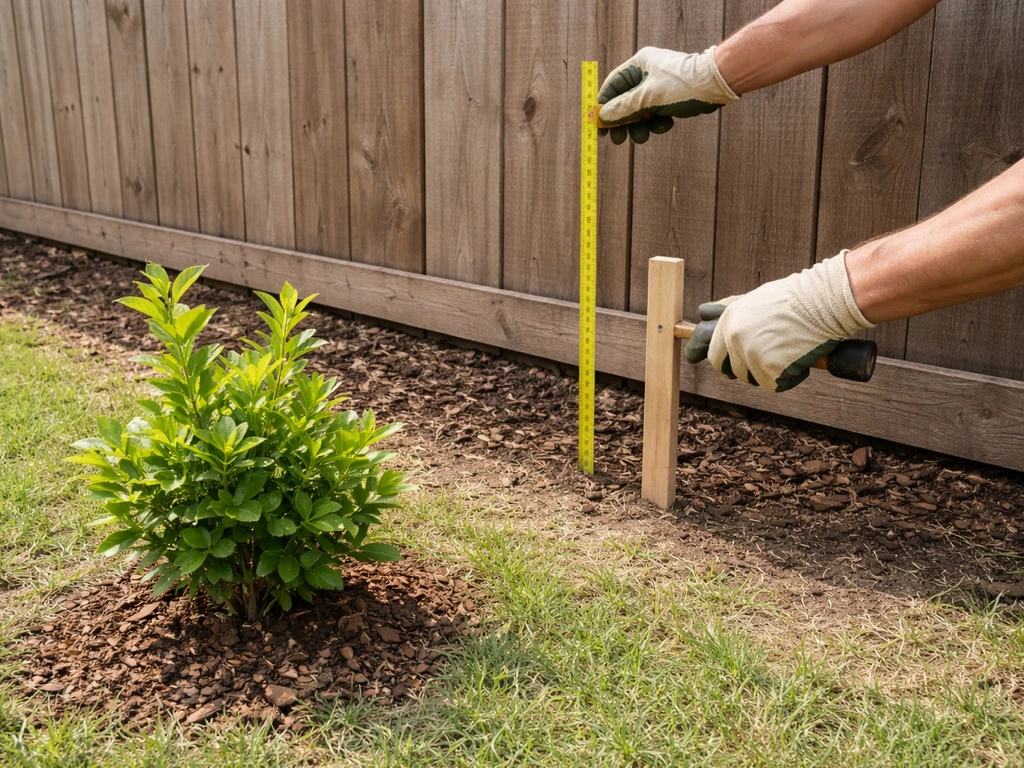
Before buying a single plant, answer four questions. First: how tall does your screen need to be? A 6-foot fence with a 6-foot shrub gives you eye-level privacy on flat ground, but if your neighbor has a second story or you're on a slope, you might need something that tops out at 10 to 15 feet. Second: do you need year-round privacy, or is seasonal coverage enough? A deciduous hedge like forsythia or lilac goes bare in winter, fine if you just want summer backyard seclusion, not fine if you're blocking a neighbor's bathroom window. Third: how fast do you need it? Most privacy shrubs take 3 to 5 years to form a solid screen from bare-root or small container stock. If you need coverage in one season, you're looking at larger container specimens (more expensive) or annual vines on a trellis as a short-term bridge. Fourth: how much space do you actually have? A six-inch gap between your fence and property line rules out most large shrubs, but still works for columnar forms or container planting.
Once you know those four answers, everything else, species selection, spacing, timing, gets a lot cleaner. If you're also thinking about using a lattice or trellis as part of your privacy setup, vining plants are worth considering alongside the shrubs and trees discussed here. Some of the best plants to grow on lattice for privacy are quick vining choices like sweet potato vine or black-eyed Susan vine.
Best privacy plants for a fence (fast, dense options)
These are the workhorses. They're chosen for fast vertical growth, density from the base up, and staying power along a fence line.
Emerald Green Arborvitae
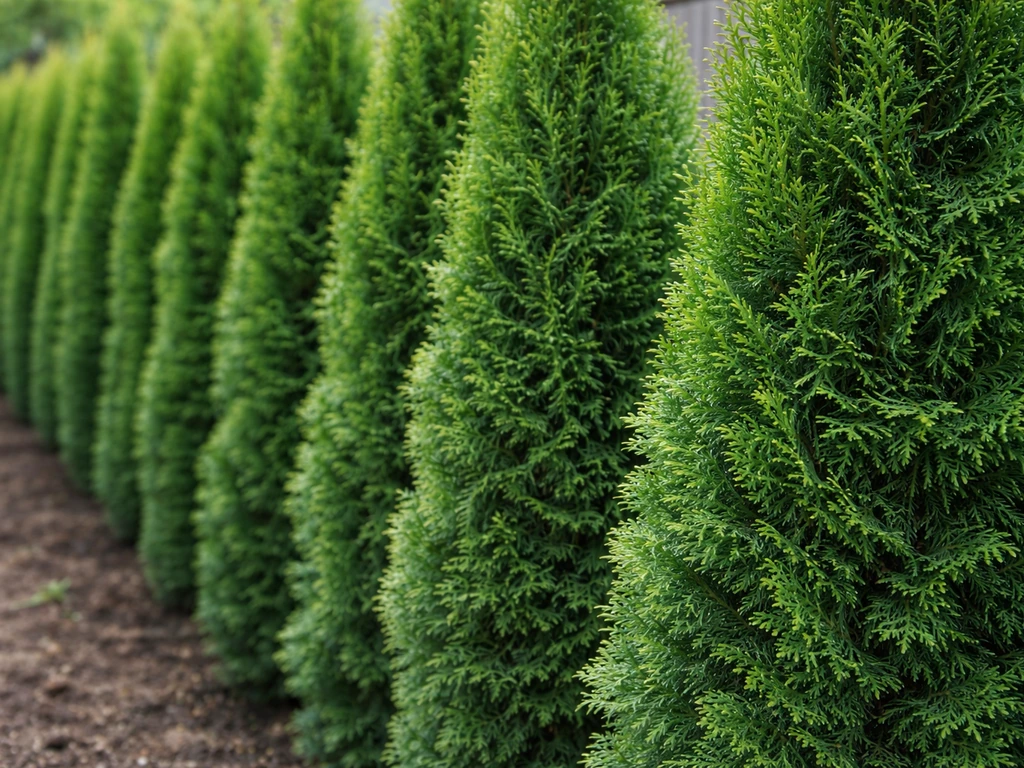
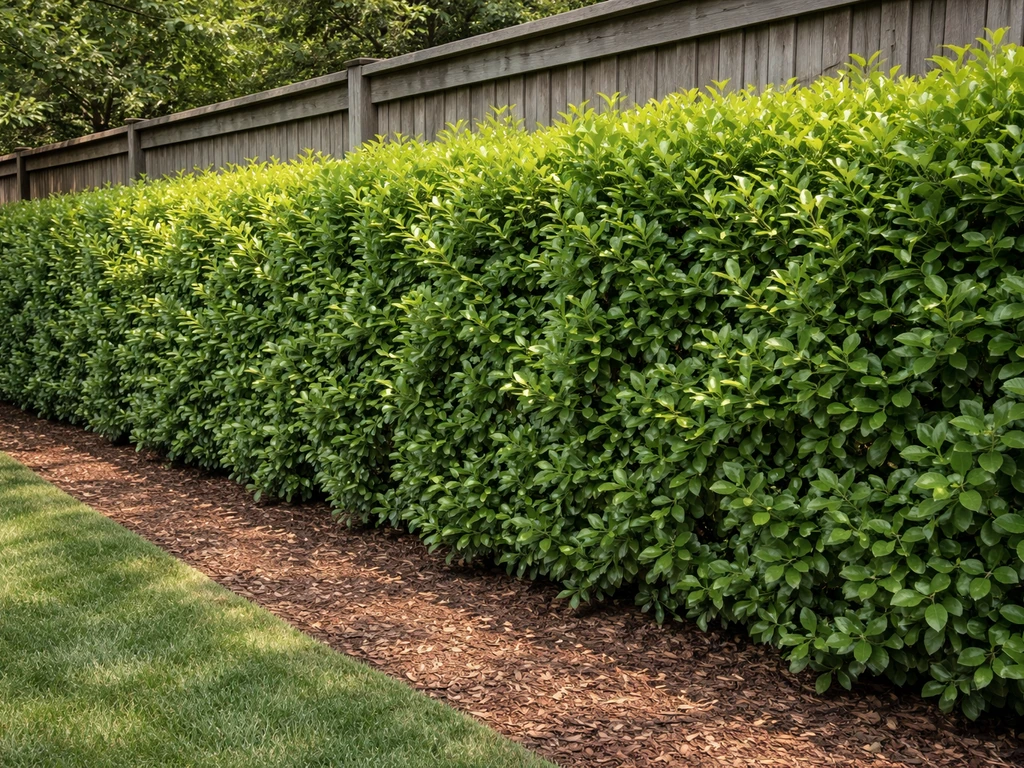
This is the go-to for most of the country, and for good reason. It's a narrow, upright evergreen that tops out around 10 to 15 feet tall and only 3 to 4 feet wide, so it fits tight fence lines without taking over your yard. It tolerates clay soil, wet sites, and air pollution, which means it survives conditions that kill most other evergreens. Space them about 3 feet apart on center for a tight hedge that fills in solidly within 3 to 4 years. American arborvitae in general is one of the most forgiving privacy plants you can buy, low fertilizer needs, minimal pruning required, and it doesn't drop messy fruit.
Leyland Cypress
If you need height fast in zones 6 to 10, Leyland cypress is hard to beat. It can put on 3 to 4 feet per year under good conditions and easily reaches 40 to 60 feet at maturity. The tradeoff is that it needs space, at least 6 feet from the fence and 8 to 10 feet between plants for a screen that doesn't choke itself out. It's also prone to canker and bagworm issues if you crowd it or water poorly. Used correctly, though, it creates a towering wall of dense green faster than almost anything else.
Clumping bamboo
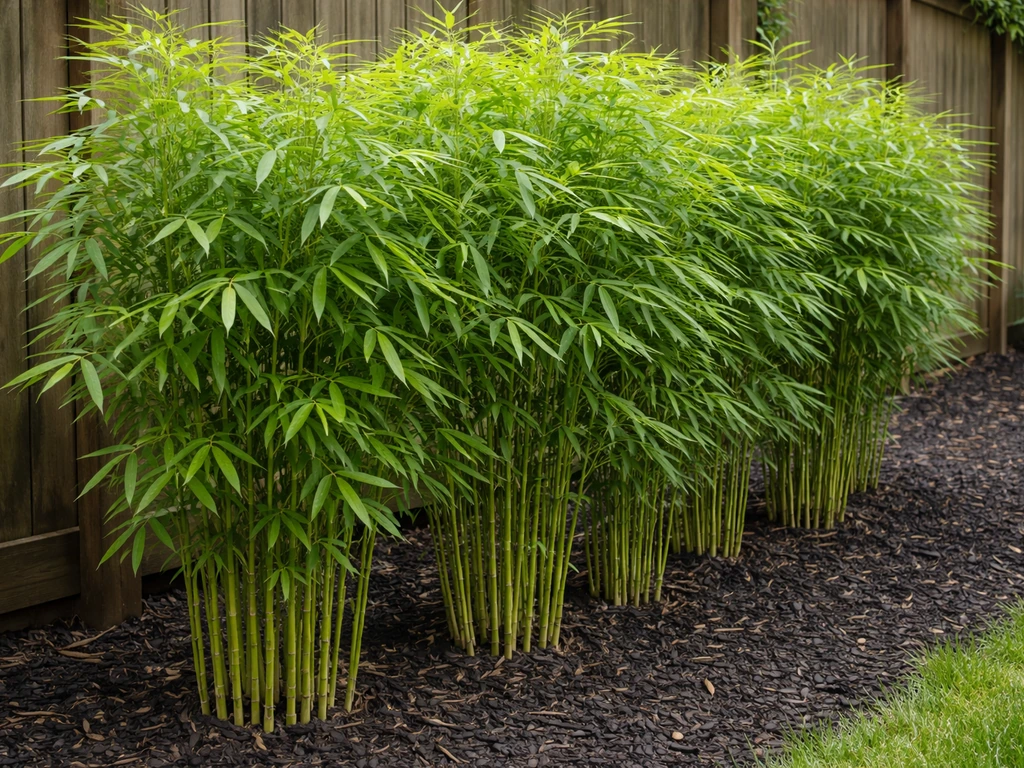
Bamboo gets a bad reputation, and running bamboo deserves it, it can spread 15 feet per year via underground rhizomes and become a serious invasive problem. Clumping bamboo is a completely different story. It expands slowly from a central base, won't escape under your fence, and can hit 15 to 20 feet in a few years. Look for Fargesia or Bambusa multiplex varieties for zones 5 to 9. It's especially useful in narrow beds and handles containers better than most large screening plants.
Viburnum
If you want flowers plus privacy, viburnum is the answer. Varieties like 'Spring Bouquet' or Viburnum odoratissimum (sweet viburnum, zones 8 to 10) grow quickly to 8 to 12 feet, produce fragrant white flowers, and stay semi-evergreen in mild climates. In colder zones, try Viburnum lantanoides or 'Alleghany', they're deciduous but still form a thick branching screen. Space 4 to 5 feet apart for a dense hedge.
Fast-growing screening options at a glance
| Plant | Growth Rate | Mature Height | Best Zones | Evergreen? | Spacing |
|---|---|---|---|---|---|
| Emerald Green Arborvitae | 6–9 in/year | 10–15 ft | 3–8 | Yes | 3 ft apart |
| Leyland Cypress | 3–4 ft/year | 40–60 ft | 6–10 | Yes | 8–10 ft apart |
| Clumping Bamboo | 1–2 ft/year | 15–20 ft | 5–9 | Yes | 5–6 ft apart |
| Sweet Viburnum | 2–3 ft/year | 8–12 ft | 8–10 | Semi | 4–5 ft apart |
| Green Giant Arborvitae | 3–5 ft/year | 30–40 ft | 5–9 | Yes | 6–8 ft apart |
| Privet (Ligustrum) | 2–3 ft/year | 8–15 ft | 4–8 | Semi | 3–4 ft apart |
Privacy plants for different climates and USDA zones
Climate is the single biggest filter for privacy plant selection. A plant that thrives in Georgia is often dead in Minnesota by March, and vice versa. Here's a zone-by-zone breakdown of what actually works.
Cold climates: zones 3 to 5
Your evergreen options narrow here, but arborvitae is genuinely excellent in this range. Emerald Green arborvitae is hardy to zone 3 and handles brutal winters. The main risk is winter burn, when frozen ground prevents root water uptake but winter sun and wind keep pulling moisture from the foliage, causing browning and dieback. In exposed locations, wrap young plants in burlap their first two winters, and make sure they're well-watered going into freeze-up. Spreading yew (Taxus) is another solid cold-climate evergreen. For deciduous options in zones 3 to 5, forsythia makes a dense thicket, and ninebark provides year-round structure even without leaves.
Mid-Atlantic and Midwest: zones 5 to 7
This is the sweet spot for diversity. Green Giant arborvitae, Leyland cypress, privet, and viburnum all thrive here. Holly (especially Sky Pencil or Nellie Stevens) is a great choice for evergreen density with attractive berries. In zones 6 to 7, you can also grow cherry laurel (Prunus laurocerasus), which grows quickly to 10 to 15 feet and produces broad, glossy leaves that create a dense, polished-looking hedge. It's one of the most underused privacy plants in this range.
The South and warm climates: zones 8 to 10
Heat and humidity open up options like sweet viburnum, wax myrtle, and Southern magnolia. Wax myrtle is arguably the best value in the Southeast, it's native, fast-growing to 10 to 15 feet, semi-evergreen, tolerates wet soil or drought once established, and resists pests. In Florida and the Gulf Coast (zone 9 to 10), Clusia guttifera and Podocarpus macrophyllus are outstanding, extremely dense screening plants that shrug off heat and salt air. Avoid arborvitae in zones 9 and 10, it doesn't handle sustained heat well.
Dry climates and the West: zones 5 to 10 (arid)
In the Mountain West, Southwest, and much of California, water is the main constraint. For the best ground cover in hard-to-grow areas, choose species that can handle drought or shade and establish quickly in your specific conditions best ground cover for hard to grow areas. Prioritize drought-tolerant species like Arizona cypress (Cupressus arizonica), blue point juniper, or Italian cypress for a tall, narrow screen. Once established, these need minimal supplemental watering. Avoid plants that require consistent moisture, like Leyland cypress or cherry laurel, unless you have reliable irrigation in place.
Container, small-space, and apartment-friendly privacy plants
Not everyone has a fence line to plant along. If you’re also working around pool landscaping, choose plants that tolerate splashes and the extra sun reflected off the water what plants grow well around a pool. If you're working with a patio, balcony, rooftop, or small backyard, containers are your tool, and the species selection shifts significantly.
The best container privacy plants are naturally columnar or compact, since you can't let a plant spread 8 feet wide in a pot on a 6-foot balcony. Sky Pencil holly is a standout, it stays 6 to 10 feet tall but only 2 feet wide, is evergreen, and is genuinely well-suited to large containers. Clumping bamboo (Fargesia varieties) also does well in containers with regular watering and a pot at least 15 to 20 gallons. Dwarf Alberta spruce works in cold climates and stays tidy without pruning.
For a quicker, seasonal screen, annual vines like black-eyed Susan vine, sweet potato vine for density, or morning glory grown on a trellis or lattice can fill in a patio in a single season. They won't give you winter coverage, but if you're renting or can't plant in-ground, they're the fastest way to create a visual barrier from now through fall. For apartment dwellers or anyone working with truly limited outdoor space, even a row of large containers with tall ornamental grasses like 'Karl Foerster' feather reed grass can create meaningful screening from spring through winter.
One important container note: plants in pots dry out much faster than in-ground plants, especially in summer heat. You'll likely need to water daily in July and August. Use a high-quality potting mix with moisture retention, and if you're going taller than 6 feet in a container, weight the bottom of the pot with gravel to prevent tipping in wind.
Seasonal timing: what to plant now vs later
Today is early July 2026. Depending on your region, you're either in peak summer heat or approaching it, which affects what you should do right now versus what to save for fall.
Planting now (July)
In most of the country, midsummer planting of large evergreen shrubs is risky unless you can water consistently. The combination of heat stress and transplant shock is hard on roots. If you're in the Pacific Northwest or a cooler inland region where July temps stay below 80°F regularly, planting now is fine with good watering. Elsewhere, container-grown plants with an intact root ball can be planted in July if you water daily for the first two weeks, checking that the top 6 inches of soil stay moist, letting that zone dry out can kill an evergreen shrub before it even gets started. Annual vines and ornamental grasses are a much lower-risk summer planting option if you need coverage fast.
Fall planting (mid-September through November)
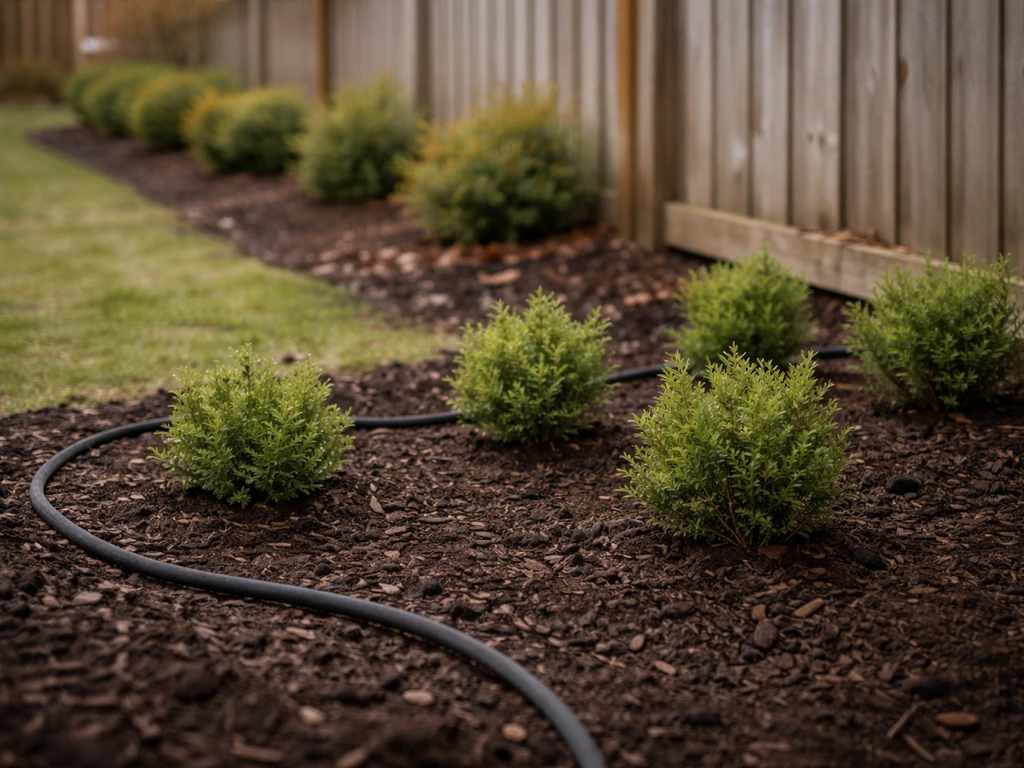
Fall is genuinely the best time to plant most privacy shrubs and trees. Soil stays warm enough for root development while air temperatures cool down, dramatically reducing transplant stress. Autumn rainfall in most regions also reduces how much supplemental watering you need to do. The key rule: get plants in the ground at least 6 to 8 weeks before your first average frost date. That gives roots time to establish before the soil freezes. If you're in the mid-Atlantic or Southeast, that means planting by mid-October. In the upper Midwest and New England, aim for early to mid-September.
Spring planting
Spring is the second-best window, especially in zones 3 to 5 where fall planting cuts it close to frost. Plant as early as the ground is workable and frost risk has dropped. The advantage of spring planting is a full growing season ahead; the disadvantage is that summer heat arrives before roots are fully established, so you'll need to stay on top of watering through August.
Care requirements and troubleshooting for privacy hedges and trees
Getting density: how to actually fill in a hedge
The biggest mistake people make with privacy hedges is spacing plants too far apart and then wondering why there are gaps. For a low hedge topping out at 3 to 4 feet, 18 inches between plants is the right density. For medium shrubs, a good general rule is to space plants at roughly two-thirds of their mature spread. So if a plant matures at 6 feet wide, space at about 4 feet; if it matures at 10 feet wide, space around 8 feet. Tighter spacing costs more upfront but means your screen closes in 2 to 3 years instead of 5 to 7.
Pruning also drives density. For most evergreen privacy hedges, shear lightly two to three times per year rather than letting plants get tall and leggy then cutting hard. Light, frequent shearing encourages lateral branching, which is what creates that solid wall effect. Never cut arborvitae or cypress back into bare wood, they won't regenerate from old wood the way broadleaf shrubs do.
Watering newly planted hedges
For the first two weeks after planting, check soil moisture daily. If the top 6 inches are dry, water deeply. Apply about one-quarter to one-third of the original container volume per watering, and expand the watering zone outward as the plant establishes, since roots will grow wider than the canopy. Container-grown specimens need more frequent watering than balled-and-burlapped trees for the first several weeks because their root zone is smaller and dries out faster.
What to do if plants fail to fill in or look patchy
Brown patches in an otherwise green hedge are usually caused by one of three things: winter burn (especially on windward sides), root competition from nearby trees, or a pest issue like spider mites or bagworm. For winter burn, the plant is often not dead, scrape the bark lightly and if there's green underneath, give it until mid-spring to flush out new growth. If patches are consistent on the north or windward side, a burlap windbreak for the second winter usually solves it. If the whole plant looks stunted rather than browned, suspect poor soil drainage or root disease and investigate before adding fertilizer, which won't help a drowning or diseased plant.
Winter care
Evergreens still lose water through their foliage in winter, and when the ground is frozen, roots can't replace it fast enough, that's winter desiccation, and it's one of the most common killers of newly planted arborvitae and holly. Water deeply in late fall before the ground freezes, especially if the season has been dry. Newly planted shrubs in their first winter need more attention than established plants. A 2 to 3 inch layer of mulch over the root zone helps hold moisture and moderate soil temperature fluctuations.
Budget, growth rate, and maintenance tradeoffs
The cheapest-per-plant option is almost never the cheapest long-term option. Here's how to think about the real cost of common privacy strategies.
| Strategy | Upfront Cost | Growth Rate | Maintenance Level | Long-Term Durability |
|---|---|---|---|---|
| Emerald Green Arborvitae hedge | Medium ($15–30/plant) | Slow to medium (6–9 in/yr) | Low | Excellent (30+ years) |
| Green Giant Arborvitae hedge | Medium ($20–40/plant) | Fast (3–5 ft/yr) | Low-medium | Excellent (40+ years) |
| Leyland Cypress | Low-medium ($15–25/plant) | Very fast (3–4 ft/yr) | Medium (needs space) | Good (20–25 years, disease risk) |
| Privet hedge | Very low ($5–12/plant) | Fast (2–3 ft/yr) | High (needs frequent shearing) | Good (20+ years) |
| Annual vines on trellis | Very low ($2–5/plant) | Very fast (seasonal) | Low | None (replant yearly) |
| Clumping bamboo | Medium-high ($30–80/plant) | Medium-fast | Low once established | Very good (non-invasive) |
| Large specimen (pre-grown) | Very high ($150–500+/plant) | Instant coverage | Medium | Excellent |
The honest recommendation for most people on a budget: buy 2 to 3 gallon Emerald Green or Green Giant arborvitae, plant them at the correct spacing, water them properly for two seasons, and let them do their job. You'll spend less than $300 on a 30-foot fence line and have a solid screen within 4 to 5 years. If you absolutely need coverage this season, supplement with annual vines on a trellis or large ornamental grasses while the permanent hedge establishes, that combination covers the short term without overspending on specimen-size shrubs.
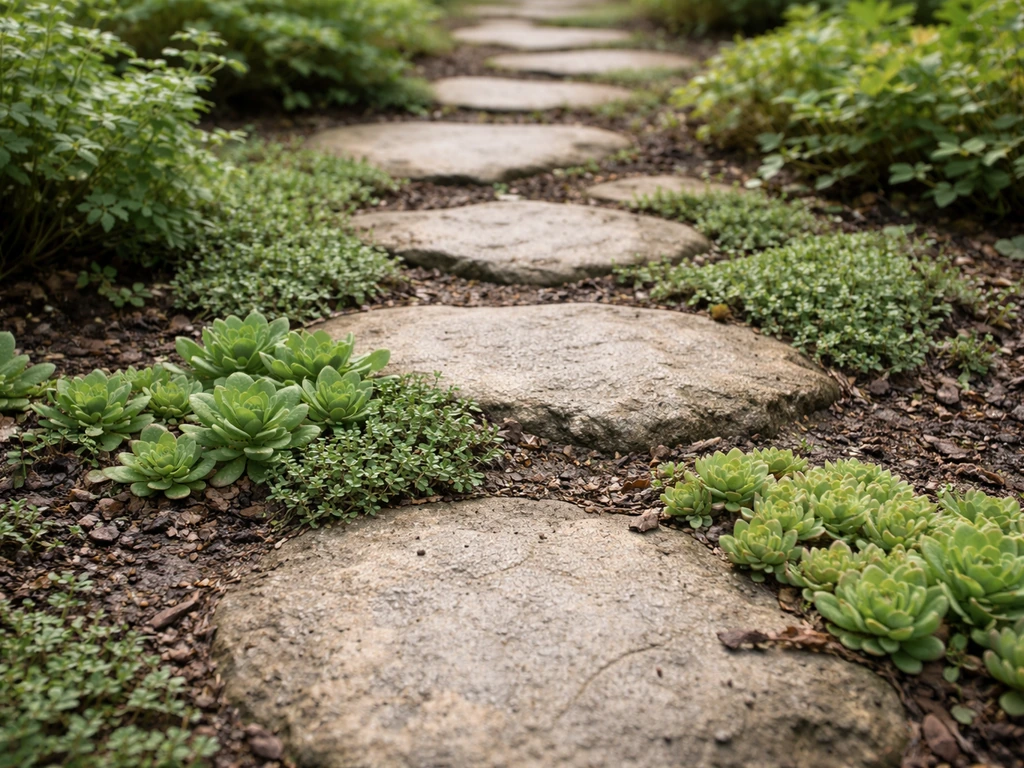
Privet is tempting because it's cheap and fast, but it requires hard shearing two to three times per year to stay tidy. Skip it if you hate pruning. Leyland cypress is fast but can develop serious canker issues after 15 to 20 years in humid climates, it's a great bridge plant or a good choice if you're not planning to be in your house for 30 years, but it's not the forever hedge that arborvitae is. For tall, narrow spaces and the cleanest long-term look, Italian cypress in warm zones and Sky Pencil holly in cold zones are worth the slightly higher price for their columnar form. And if you're working near a patio or stepping stones where you need low-profile screening rather than height, ground-level options solve a different problem entirely, one that warrants its own plant selection approach. Ground-level edging plants can help you get lush coverage right between stepping stones without trampling or looking patchy.
FAQ
How close to the fence line can I plant privacy hedges without running into property or HOA issues?
Check your property line set-back first, most areas require a buffer (often 3 to 5 feet) for taller shrubs/trees. If you are limited to a narrow strip, favor columnar or smaller mature widths and plan for pruning access on your side so you can shear and inspect without crossing onto a neighbor’s land.
What spacing should I use if I’m trying to block both views and noise, not just sightlines?
For visibility, the goal is near-continuous foliage, so use the mature width and avoid wide gaps. For noise, also account for the fence itself, dense screens work best when foliage touches or nearly touches the fence line, but do not crowd plants so tight that airflow is blocked, otherwise disease risk rises.
Can I mix different privacy plants along the same fence for a fuller look?
Yes, but keep mature heights and water needs aligned. A common approach is using one “main” evergreen for structure (like arborvitae or holly) and adding a second species for seasonal interest, just avoid mixing plants with very different drought tolerance, or one side will always look worse.
Which plants stay private in winter if my yard gets windy?
Choose evergreens and add wind protection during establishment. Winter burn risk is higher on windward sides, so for young arborvitae or holly, use burlap wraps the first two winters and water deeply in late fall, even if the forecast looks wet.
How do I prevent a privacy hedge from getting thin at the bottom?
Most thinning happens when plants are spaced too far apart or sheared too infrequently, or when taller plants shade the base. Use correct spacing for mature width, shear lightly and often to encourage lateral branching, and avoid letting weeds or lawn compete for water near the base.
Is it safe to prune arborvitae or cypress into older wood if it looks leggy?
No. Those evergreens usually cannot push new growth from bare or old wood once you cut back too far, so use gradual height control (light, repeated shearing) rather than hard renovation cuts, and plan to reshape over seasons.
What’s the best way to water privacy plants so they don’t die after planting?
Don’t rely on a light splash schedule. For the first 2 weeks, monitor soil depth (the top 6 inches) and water deeply when it dries, then expand the soaking area outward as roots grow. In containers, expect much faster drying, and plan on more frequent watering during summer heat.
Do I need a trellis if I already have shrubs for privacy?
Sometimes, trellis can fill visual gaps or speed up coverage while shrubs mature, especially if your fence has lattice sections. If you already have dense evergreens, trellis vines are mainly for short-term bridging, also ensure the vine is not smothering airflow around the shrub.
How long will it actually take to get privacy that feels “solid”?
It depends on starting size and spacing. Smaller plants often take 3 to 5 years to become a continuous screen, while larger specimens can shorten that timeline. If you need near-immediate privacy, combine permanent plantings with fast annual vines or tall grasses temporarily.
What are the most common causes of brown patches in an evergreen hedge besides pests?
Winter burn and root competition are frequent culprits. Check if browning is concentrated on the windward side, if so, use a windbreak and focus on late-fall watering, if the hedge is near mature tree roots, rework the area so the hedge gets its own watering zone and soil conditions.
Can I grow clumping bamboo near a fence without it escaping under the fence?
Clumping bamboo is designed to expand from a central base rather than running far via aggressive rhizomes, so it is the safer choice for privacy beds. Still, keep an eye on expansion rate, and maintain a consistent edge by trimming new shoots at the boundary.
Are there privacy plants I should avoid in my climate?
Yes, evergreen performance changes drastically by zone and heat tolerance. A key example is arborvitae, it often struggles in sustained heat in warmer zones, and Leyland cypress can be a poor match where it stays humid and crowded due to disease pressure, choose based on your zone and your watering reality.
What container size is enough for a privacy screen on a balcony or patio?
For meaningful height without constant failure, use at least 15 to 20 gallons for clumping bamboo and plan for frequent watering. For columnar container picks like Sky Pencil holly, prioritize a pot that won’t tip in wind and use a moisture-retentive potting mix, if you go tall, stabilize the pot base.
When is the best time to plant if I’m worried about summer heat?
In most regions, fall is the safest window for privacy shrubs because soil stays warm and air temperatures cool. If you must plant in midsummer, choose container plants with intact root balls and commit to consistent daily watering early on, then keep watering adjustments through the first dry spells.
Next Article
Best Plants to Grow Between Stepping Stones
Curated low plants for gaps between stepping stones. Choose by sun, shade, drainage, and trampling with easy planting ti