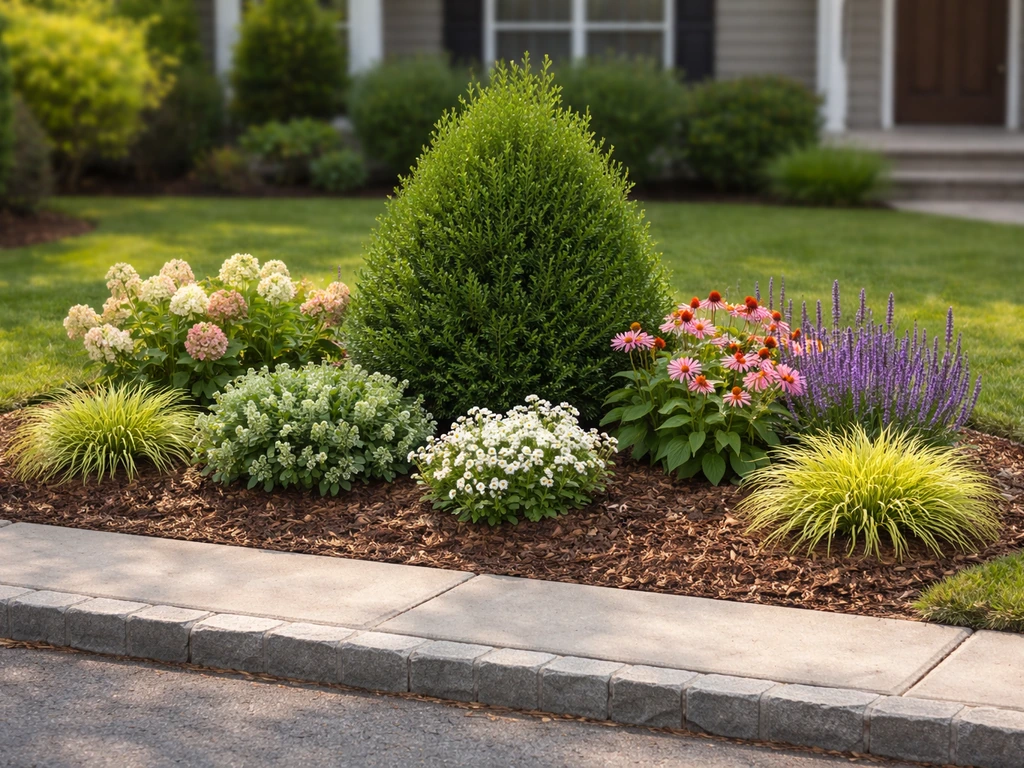
The best plants for the side of your house depend almost entirely on which direction that wall faces and how much space you're working with. For hillside sites, focus on plants that handle drainage and erosion so they can settle in without constantly drying out or washing away best plants to grow on hillside.
Best Plants to Grow on the Side of a House: Guide
Rachel Hartley
7 Jun 2026

If you're looking for the best plants to grow in front of house, start with your sun exposure and pick species that match your spacing and maintenance level. A north-facing strip in Oregon needs completely different plants than a west-facing strip in Phoenix. But as a starting point: for shady, narrow strips, Japanese forest grass, hostas, and sweet woodruff are hard to beat. For sunny sides, lavender, ornamental grasses, and creeping thyme handle heat and tight quarters well.
For screening and privacy, arborvitae, boxwood, or native viburnums give you a living wall without wrecking your foundation. What follows is a full decision framework so you can match the right plant to your exact situation.
Quick Site Checklist Before You Buy a Single Plant
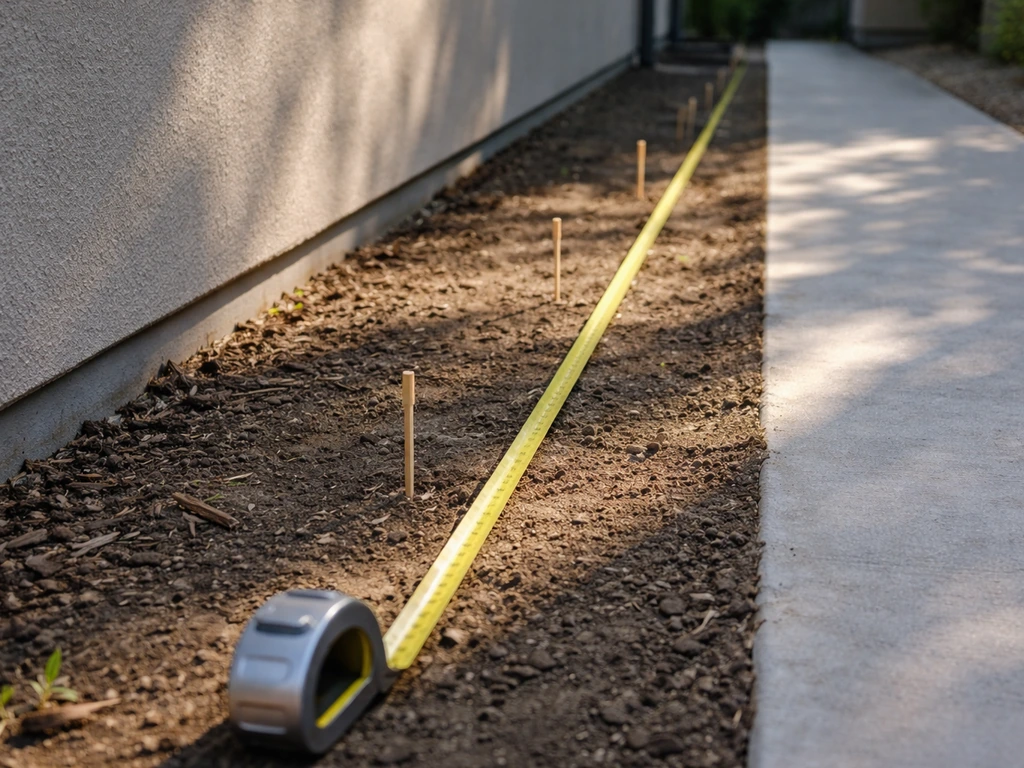
Skipping the site assessment is how people end up with dead plants and wasted money. Before picking plants, WSU Extension recommends assessing site conditions such as sun exposure, climate zone, microclimate, soil condition, and soil drainage site assessment. Before you go to the nursery, spend 20 minutes on this checklist. It takes almost no time and completely changes which plants you should pick.
- Sun exposure: Track how many hours of direct sun hit the strip between 9am and 4pm. Less than 2 hours is deep shade, 2-4 hours is part shade, 4-6 hours is part sun, and more than 6 hours is full sun. The side of the house facing north almost always falls in the shade category; south-facing sides are usually full sun.
- Wall exposure and reflected heat: West-facing walls are the most punishing because they absorb heat all afternoon and radiate it back into the planting bed. This can push a plant's effective temperature 10-15°F above ambient. Brick and stucco walls amplify this more than wood siding.
- Wind: Note whether the strip gets funneled wind between your house and a fence or neighbor's wall. That kind of channeled wind dries soil and damages soft-stemmed plants fast. Wind exposure matters especially in open prairie climates and coastal areas.
- Soil: Grab a handful of soil and squeeze it. Sandy soil falls apart; clay soil forms a sticky ball. Clay drains slowly and compacts under foot traffic. Sandy soil drains too fast and needs more water. Most side-yard strips have compacted, root-heavy, often alkaline soil from construction backfill.
- Drainage: Do this quick test before planting anything: dig a hole one foot deep, fill it with water, let it drain completely, then refill it and measure the drop every 15 minutes. One to six inches per hour means you're in the well-drained sweet spot. Slower than one inch per hour means you have drainage problems that will rot most plant roots without amendment or raised beds.
- Drip line and runoff: Check where rain comes off your roof if you have no gutters. That spot gets a concentrated flood every time it rains, which compacts soil and drowns shallow roots. Make sure any plant within two feet of the wall can handle intermittent flooding or redirect runoff with a simple gravel channel.
Best Low-Maintenance Groundcovers for Side-of-House Strips
If your side-yard strip is narrow (under 4 feet), groundcovers are your best friend. They suppress weeds, prevent erosion, and look finished with almost no maintenance after establishment. The key is picking the right one for your light level. If you’re also deciding what plants grow best on the west side of your house, focus on sun level and heat exposure first what plants grow best on west side of house.
For Shady Strips

- Sweet woodruff (Galium odoratum): Spreads to fill bare soil, stays under 8 inches tall, smells faintly of vanilla when crushed, and handles dry shade once established. Space plants 12 inches apart. Zones 4-8.
- Hostas: Bulletproof in shade, come in sizes from 6 inches to 4 feet wide, and need essentially no care after year one. Keep 18-24 inches from the wall to allow air circulation. Zones 3-9.
- Ajuga (bugleweed): Spreads aggressively, which is actually what you want in a strip you're trying to cover fast. Purple-blue flower spikes in spring. Space 12 inches apart. Zones 3-9.
- Liriope (lilyturf): Evergreen in most climates, handles both shade and part sun, tolerates drought and clay. Space 12-18 inches apart. Zones 5-10.
For Sunny Strips
- Creeping thyme (Thymus serpyllum): Stays 2-3 inches tall, tolerates foot traffic, blooms pink-purple in early summer, and handles hot dry conditions most plants hate. Space 12 inches apart. Zones 4-9.
- Ice plant (Delosperma): Built for hot, dry, reflected heat situations. Blooms bright magenta or yellow, handles poor soil. Zones 5-10 depending on cultivar.
- Creeping phlox: Covered in flowers in spring, stays low the rest of the year, spreads slowly and predictably. Zones 3-9.
- Sedum (stonecrop): Drought-tolerant, fleshy leaves, stays tidy, thrives in reflected heat. Space 12-18 inches apart. Zones 3-9.
Privacy and Screening Plants
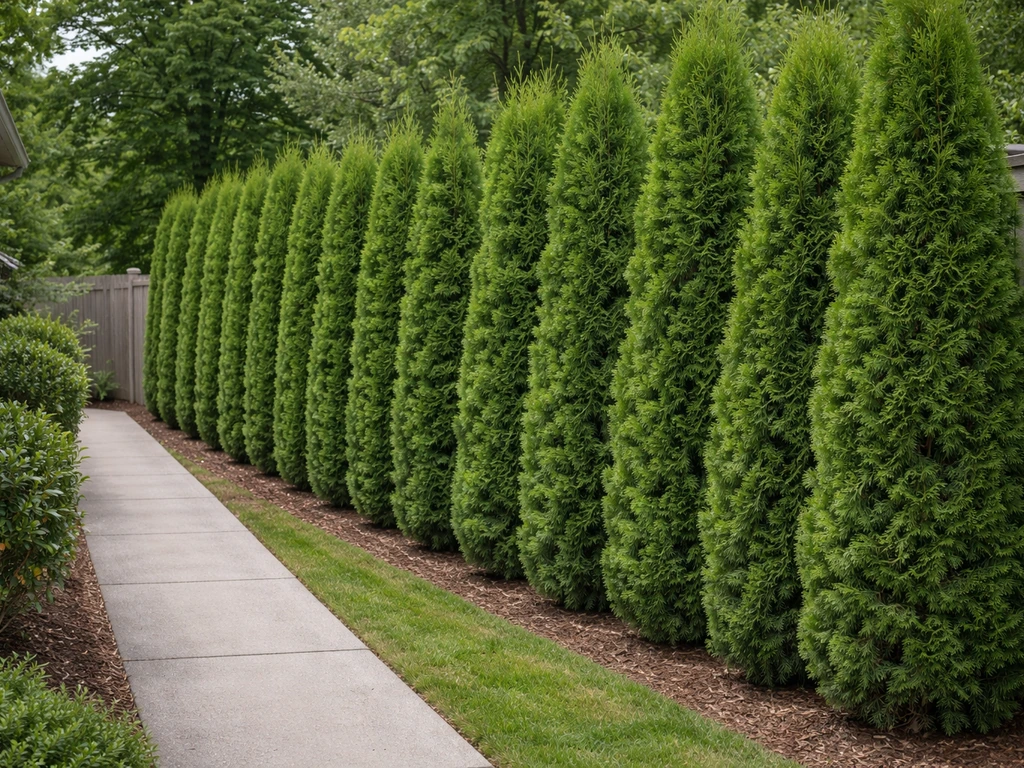
If you want to block the view from a neighbor's window or screen a utility area along the side of your house, you need something with vertical density. The trade-off is always between how fast it grows and how much space and maintenance it demands long-term.
| Plant | Mature Height | Growth Rate | Best For | Zones |
|---|---|---|---|---|
| Emerald Green Arborvitae | 10-15 ft | Slow (6-9 in/yr) | Narrow passages, year-round privacy | 3-8 |
| Green Giant Arborvitae | 40-60 ft | Fast (3-5 ft/yr) | Wide strips, large screens | 5-8 |
| Boxwood (Buxus) | 3-8 ft | Slow (3-6 in/yr) | Formal, compact hedges under windows | 5-9 |
| Viburnum (native species) | 6-12 ft | Moderate (1-2 ft/yr) | Wildlife habitat, informal screens | 4-9 |
| Leyland Cypress | 60-70 ft | Very fast (3-4 ft/yr) | Fast privacy, open areas only | 6-10 |
| Dwarf Alberta Spruce | 6-8 ft | Very slow (2-4 in/yr) | Small spaces, tight spots near walls | 2-8 |
| Inkberry Holly (native) | 6-8 ft | Moderate | Wet, shady spots; winter berries for birds | 4-9 |
If you want fast privacy in the next 2-3 seasons, Green Giant Arborvitae is hard to beat, but only plant it if your strip is at least 6 feet wide and you have room for a mature spread of 12-15 feet. For narrow passages under 4 feet wide, stick with Emerald Green Arborvitae or columnar boxwood. Native options like viburnum and inkberry holly are slower but support local pollinators and birds, and they rarely need the constant shearing that non-native hedges demand.
Climbers and Wall-Friendly Vines
Vines are the smartest solution when you want vertical coverage without width. They let you green up a blank wall or fence in a strip that's too narrow for shrubs. The catch is that you need to be careful about what you let attach directly to your siding or foundation. Self-clinging vines like English ivy and Virginia creeper can wedge their holdfasts into mortar joints and wood siding, leading to moisture damage and rot over time. The safer approach is to train all vines on a freestanding trellis positioned 4-6 inches away from the wall, which also improves air circulation and reduces the chance of mildew on both the plant and the wall.
Recommended Vines by Light and Climate
- Climbing hydrangea (Hydrangea anomala petiolaris): Best for shady north or east walls. Slow to establish (2-3 years) but then dramatic and self-sufficient. Attach to a sturdy trellis; mature plants get heavy. Zones 4-8.
- Clematis: Sun to part shade, hundreds of cultivars in every color, most stay 8-12 feet. Use a trellis or wire guide. Prune based on which group (1, 2, or 3) you buy. Zones 4-9.
- Star jasmine (Trachelospermum jasminoides): Evergreen, fragrant, tolerates shade and sun. Ideal for warm climates (zones 8-10). Train on a wire or trellis along a fence.
- Trumpet vine (Campsis radicans): Hummingbird magnet, blooms all summer, tolerates heat and drought. WARNING: it spreads aggressively by runners and can become invasive. Plant only in contained areas or in a buried root barrier. Native to eastern US. Zones 4-9.
- Passionflower (Passiflora incarnata): Native to the eastern US, supports fritillary butterflies, blooms stunning lavender-purple. Twines around a trellis. Dies back in winter in zones 5-8, returns from roots. Zones 5-10.
- Roses (climbing varieties): 'New Dawn' or 'Climbing Iceberg' for cooler climates, 'Cecile Brunner' for warm zones. Needs a substantial trellis and annual pruning but delivers unmatched curb appeal.
For trellis placement, mount posts at least 6 inches away from the wall and space them every 4-6 feet horizontally. Use galvanized or powder-coated hardware to prevent rust staining on siding. For heavy climbers like climbing hydrangea or wisteria, you need posts anchored at least 18 inches into the ground to handle wind load on a mature plant.
Flowering and Pollinator-Friendly Choices by Season

A side-of-house strip can deliver color and pollinator activity from early spring through fall if you layer plants with staggered bloom times. The following plants all work well in side-yard conditions and bring in bees, butterflies, and hummingbirds without needing constant attention.
| Season | Plant | Light Needed | Height | Pollinators Supported |
|---|---|---|---|---|
| Early Spring | Creeping phlox | Full sun | 4-6 inches | Early bees, butterflies |
| Early Spring | Hellebore | Shade to part shade | 12-18 inches | Early bumblebees |
| Late Spring | Salvia nemorosa | Full sun | 18-24 inches | Bees, hummingbirds |
| Late Spring | Catmint (Nepeta) | Full sun | 18-24 inches | Bees, butterflies |
| Summer | Lavender | Full sun | 18-30 inches | Bees, butterflies |
| Summer | Agastache (hyssop) | Full sun to part shade | 24-36 inches | Hummingbirds, bees |
| Summer | Coneflower (Echinacea) | Full sun | 24-36 inches | Bees, butterflies, birds (seeds) |
| Late Summer/Fall | Aster (native) | Full sun to part shade | 18-36 inches | Monarchs, late bees |
| Late Summer/Fall | Russian sage | Full sun | 36-48 inches | Bees, hummingbirds |
| Fall | Goldenrod (Solidago) | Full sun | 24-48 inches | 30+ bee species, butterflies |
For shady strips, lean into hellebores, astilbe, and native coral bells (Heuchera). They provide foliage interest all season and still bring in some pollinators. Pair them with ferns for texture and you've got a finished-looking bed that needs almost no intervention.
Planting Distance and Foundation Safety
This is the section most people skip and later regret. Roots from aggressive trees and large shrubs can infiltrate foundation cracks, clog drains, and heave pavement. You don't have to be paranoid about every plant, but there are clear rules worth following.
General Spacing Rules from the Wall
- Small perennials and groundcovers: Keep at least 18-24 inches from the wall to allow air circulation and prevent moisture buildup against siding.
- Medium shrubs (3-6 ft mature): Plant at least 3 feet from the foundation, accounting for their mature spread. A shrub that's 4 feet wide needs its center at least 2 feet from the wall, but 3 feet is better.
- Large shrubs and hedges (6+ ft): Keep 4-6 feet from the foundation minimum.
- Aggressive spreaders (bamboo, trumpet vine, mint, some ornamental grasses): Use an underground root barrier at least 18 inches deep, or skip them entirely near foundations.
- Trees: Never plant a tree closer to your foundation than half its expected mature height. A tree that tops out at 40 feet belongs at least 20 feet from the wall.
Irrigation and Runoff
Overwatering near the foundation is a real problem. Saturated soil against a foundation wall eventually works its way into cracks and basements. If you're installing drip irrigation (which is the right move for a side-yard strip), keep emitters at least 18 inches from the wall and direct water toward the root zone, not the wall itself.
Make sure the grade slopes away from the house at a minimum of 1 inch per foot for the first 6 feet out from the foundation. If you have a flat or inward-sloping side yard, fix that grading before you plant anything. On a slope, choosing plants that handle runoff and variable moisture is just as important as matching sun and shade plants grow best on a slope.
Climate, Region, and Timing: What to Plant Now vs. Later
It's early June 2026 right now, which means most of the US is either in peak planting season or heading into summer heat. Here's how to time your plantings by region.
| Region/Climate | Current Conditions (June) | Plant Now | Wait Until Fall |
|---|---|---|---|
| Pacific Northwest (Zones 7-9) | Mild, transitioning to dry summer | Clematis, lavender, native ferns, salvia | Arborvitae, ornamental grasses, bulbs |
| Northern/Midwest (Zones 4-6) | Warm, active growing season | Hostas, echinacea, catmint, climbing hydrangea | Viburnum, arborvitae, native asters |
| Southeast/Gulf Coast (Zones 8-10) | Hot and humid, summer stress starting | Star jasmine, liriope, agastache | Most shrubs and trees (September-October ideal) |
| Southwest/Desert (Zones 8-11) | Extreme heat, pre-monsoon | Ice plant, desert willow, native agave | Almost everything else (October-March is prime) |
| Mid-Atlantic/Northeast (Zones 5-7) | Warm, ideal planting window open | Anything on this list, especially perennials | Large shrubs, hedges, spring bulbs |
| Mountain West (Zones 4-6) | Short season, warming up | Sedum, creeping phlox, native grasses | Arborvitae, ornamental shrubs after monsoon |
If you're in the Southeast or Southwest, June is honestly a tough time to plant anything except the most heat-tolerant species. You'll get better survival rates if you wait until September for major plantings like hedges or screening shrubs. In the meantime, use containers to test how plants perform in that microclimate before committing to in-ground planting.
Native Plants Worth Prioritizing
Native plants generally outperform non-natives in side-yard conditions once established because they're adapted to local rainfall patterns, soil chemistry, and temperature swings. Some reliable natives by region:
- Northeast: Wild ginger (Asarum canadense) for shade, native asters for sun, inkberry holly for screening
- Southeast: Beautyberry (Callicarpa americana) for part shade, native coral honeysuckle vine instead of invasive Japanese honeysuckle
- Midwest: Wild blue indigo (Baptisia australis) for sun, native sedges for shade, prairie dropseed grass for dry sunny strips
- Pacific Northwest: Sword fern for shade, red-flowering currant for part shade, kinnikinnick (Arctostaphylos uva-ursi) as a groundcover
- Southwest: Blackfoot daisy, desert marigold, native salvias, and agave for hot sunny walls
- Mountain West: Blue grama grass, Apache plume, native penstemons for sunny exposed strips
If Your Spot Is X, Choose Y: A Quick Decision Guide
If you want one quick reference before heading to the nursery, here's the decision shortcut. The east side of your house gets gentler morning sun and is often the most forgiving microclimate for a wide range of plants. The west side gets punishing afternoon heat. The north side is deep shade. The south side is typically the sunniest and driest. For more detail on specific sides, the articles on what to grow on the east side, west side, and south side of the house go deeper on each orientation.
| Your Situation | Best Plant Choice |
|---|---|
| Narrow shady strip, north-facing, no foot traffic | Sweet woodruff, hostas, ajuga groundcover |
| Sunny strip, reflected wall heat, dry soil | Lavender, creeping thyme, sedum, ice plant |
| Need fast privacy/screening in 6 feet or more of width | Green Giant Arborvitae or native viburnum |
| Need screening in under 4 feet of width | Emerald Green Arborvitae, columnar boxwood |
| Want vertical coverage without width (fence or wall) | Clematis on trellis, climbing hydrangea for shade |
| Wet or poorly draining strip | Inkberry holly, native sedges, Japanese iris |
| Want pollinators and color, full sun | Lavender + echinacea + native aster layered by height |
| Hillside or slope along house wall | Creeping juniper, crown vetch (contained), native grasses |
| Low maintenance, any light, just want it covered | Liriope or hostas in shade; sedum in sun |
Maintenance Plan: What It Actually Takes to Keep This Looking Good
The good news about side-yard plantings is that once established, most of the plants recommended here are genuinely low-effort. The first year is the hardest because you're managing establishment, not maintenance. Here's how to think about the ongoing schedule.
Watering
Water newly planted perennials and shrubs deeply 2-3 times per week for the first 4-6 weeks, then taper to once a week for the rest of year one. After that, most established plants in temperate climates only need supplemental watering during dry stretches longer than 2 weeks. In the Southwest and Southeast, adjust based on your seasonal rain patterns. Drip irrigation on a timer is the most efficient setup for a side-yard strip because hand-watering a narrow passage is awkward and easy to skip.
Mulch
Apply 2-3 inches of shredded bark or wood chip mulch every spring. Keep it 2-3 inches away from plant stems and away from the wall base to prevent rot. Mulch is the single highest-leverage thing you can do: it suppresses weeds, retains moisture, moderates soil temperature, and improves soil structure as it breaks down. Skip the dyed stuff near the wall; it fades and looks shabby fast.
Weed Control
Use a landscape fabric only under gravel or rock mulch, not under wood mulch (it degrades, weeds grow on top anyway, and it blocks soil improvement). The better approach is thick mulch plus hand-pulling the first season while plants fill in. Once groundcovers or dense perennials knit together, weed pressure drops dramatically on its own.
Pruning and Growth Control
- Shrubs near the wall: Prune once a year after flowering to keep them from pushing against siding. Most flowering shrubs should be pruned right after they bloom, not in fall.
- Groundcovers: Cut back aggressively spreaders like ajuga or liriope every 2-3 years in early spring to refresh and prevent them from overtaking adjacent areas.
- Vines on trellises: Annual pruning keeps most vines manageable. Clematis pruning depends on the group; check your label at purchase.
- Ornamental grasses: Cut back to 4-6 inches in late winter before new growth starts. Don't cut them in fall; the winter structure adds visual interest and shelters overwintering insects.
- Hedges and screening shrubs: Shape arborvitae and boxwood once a year in late spring after new growth hardens off. Never remove more than one-third of the plant at once.
Soil Amendment Over Time
Side-yard strips are often full of compacted builder's fill with poor structure. In year one, mix 2-3 inches of compost into the top 8-10 inches before planting. After that, top-dress with an inch of compost each spring under the mulch layer. Over 3-5 years, this dramatically improves soil structure and drainage without any tilling.
If you did the drainage test and found very slow drainage (under 1 inch per hour), consider building the bed up 4-6 inches above grade with amended soil rather than fighting the native soil. Cornell Extension describes the drainage test as filling a one-foot-deep hole with water, letting it drain completely, then refilling and measuring the drop to characterize well-drained soil as one to six inches per hour very slow drainage (under 1 inch per hour).
FAQ
What should I plant if the side of my house is mostly shade but also gets runoff from the roof (downspout area)?
Treat it like a moisture and light “edge case.” Look for plants that tolerate both shade and periodic wetting, then improve the ground under the downspout with a shallow swale or a small gravel-lined splash zone to slow and spread water before it hits the soil.
How do I decide between a groundcover bed and several perennials on a narrow side strip?
If the strip is under about 4 feet and you want low maintenance, groundcovers usually win because they close the canopy quickly and suppress weeds. Choose staggered perennials only if you can commit to at least some seasonal weeding and you’re comfortable managing spacing so plants do not crowd each other.
Can I use English ivy or Virginia creeper to quickly cover a blank side wall?
It’s risky near siding and foundation. If you still want ivy-like coverage, use a freestanding trellis system with a clearance gap from the wall (so air can circulate and water does not get trapped against the building). Avoid letting self-clinging vines access mortar joints directly.
How far from the foundation should I keep shrubs and how wide can a mature plant be?
Use a minimum clearance of several feet for woody plants, and ensure the mature width will still fit without forcing pruning that repeatedly stresses the plant. Practical rule: if the plant’s mature spread would push roots into the foundation repair zone or block drainage paths, choose a narrower cultivar or a different species.
What’s the best way to water a side-yard strip if I do not want an irrigation system installed yet?
Run a hose on a timer with a soaker hose along the root zone, and only after establishing deep watering schedules. Aim water several feet away from the wall and use a simple catch-time approach (for example, water long enough to wet the top 8-12 inches, not just the surface).
Why do plants keep dying on the side of my house even when I follow the sun guidance?
Most failures come from micro-drainage and soil structure, not light. If the soil stays soggy or dries out hard within a day or two after watering, you likely need compost and grade correction (or a raised bed) before choosing more plants.
Is landscape fabric a good idea under mulch on the side of a house?
Generally skip it under wood-chip mulch. Fabric can block mulch from improving soil over time and often traps debris, leading to persistent weed issues. If you use it at all, limit it to settings like gravel where you are not relying on mulch breakdown.
How do I manage pests specific to side-yard plantings, like slugs in shady areas?
In deep shade, slugs often hide in dense mulch. Keep mulch slightly farther from plant stems, reduce excess leaf clutter, and consider using plants with less continuously wet foliage. If needed, place slug barriers or traps only in the problem zone, not across the whole yard.
When should I prune hedges or screening plants along the side of my house?
Prune after the main flush of growth for the season, and avoid heavy pruning during extreme heat (common in July and August). For evergreen hedges, light, consistent shaping in cooler months usually looks better and reduces stress compared with one drastic trim.
Can I mix natives with non-natives in the same side-yard strip?
Yes, but group plants by water needs and sun tolerance so the watering schedule stays consistent. If natives are drought-adapted and your non-natives require regular moisture, the bed may perform unevenly unless you use drip zones or separate plant pockets.
What is a simple way to test drainage beyond the “under 1 inch per hour” guideline?
Do a small percolation test by digging a hole, filling it with water, and timing how long it takes to drop a few inches. If the water level drops very slowly and the soil looks anaerobic or smells sour after 24 hours, plan on raised beds and soil amendment rather than just adding mulch.
Next Article
Best Plants to Grow in Front of House: Picks by Sun, Soil
Best plants to grow in front of your house, matched to sun, soil, space, wind, and goals like evergreen curb appeal and