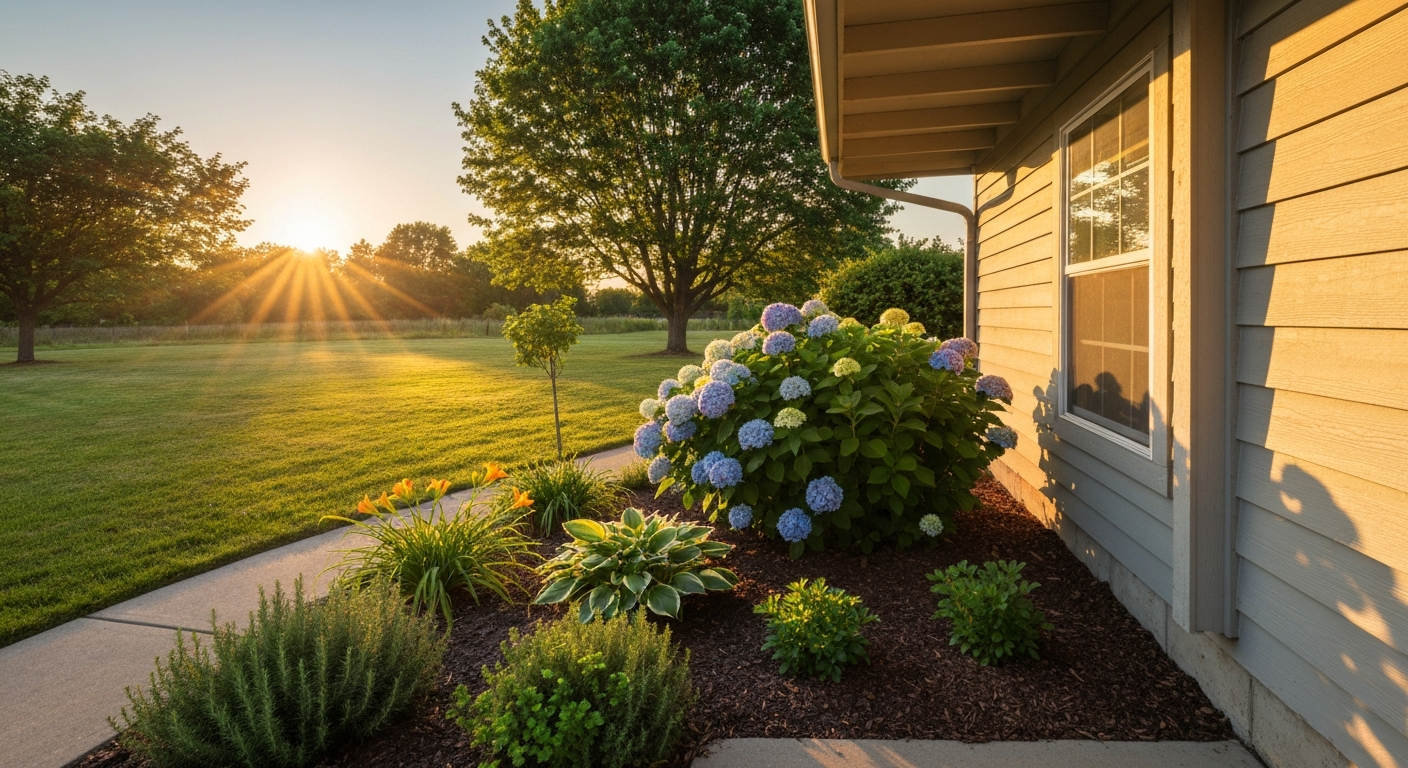
The east side of your house gets direct morning sun and afternoon shade, which makes it one of the most versatile and forgiving spots in the yard. You can grow a surprisingly wide range of plants there: shade-tolerant perennials like hostas and astilbes, morning-sun lovers like roses and daylilies, edible herbs such as mint and parsley, and flowering shrubs like azaleas and hydrangeas. The key is matching each plant to the actual hours of sun your specific east wall receives, because that number changes with latitude, season, and how much a roof overhang or nearby tree trims the light.
What Plants Grow in East Side of House: Guide & Plant Lists
Rachel Hartley
12 Jul 2026
Why the east side of your house matters
East-facing beds are often treated as an afterthought, but they offer a genuinely useful light pattern that many plants prefer. The sun rises on the east side, so your plants get direct light from roughly sunrise until solar noon, then transition into shade for the hottest part of the afternoon. In practice, depending on your latitude, that means roughly 4 to 6 hours of direct sun in summer and 2 to 4 hours in winter, with the afternoon protected from the scorching western sun. That protection matters more than most gardeners realize. In zones 7 through 10, afternoon shade on the east side can be the difference between a plant that thrives and one that wilts and burns by August.
Morning sun also has a practical benefit for disease management. It dries dew off foliage quickly, which reduces fungal problems like powdery mildew on roses and black spot on susceptible perennials. If you have plants that are prone to leaf diseases, an east exposure is often healthier than a shaded north side where foliage stays wet for hours. The tradeoff is that east-side plants still need enough afternoon moisture, because the morning sun does draw down soil moisture, especially in summer.
Understanding east-side light and microclimates
The sun does not rise due east year-round. In summer, sunrise shifts noticeably northeast, meaning the sun hits your east wall at a shallower angle early in the morning before sweeping higher in the sky. In winter, it rises southeast, tracking lower across the sky and delivering less total daily light. NOAA's solar position data shows that at latitude 40°N, a true east wall receives direct sun from about 6:00 a. For exact solar geometry and sunrise-to-noon timing calculations, use NREL Solar and Moon Position Calculators (SOLPOS), tools and data NREL Solar and Moon Position Calculators (SOLPOS) — tools and data. m. to 12:30 p.m. in late June, but only from roughly 7:30 a.m. to noon in late December. If you're further south, in Dallas or Atlanta, you get more winter sun hours and more intense morning light year-round. If you're in Minneapolis or Portland, winter light on the east wall is limited enough that some shade-tolerant perennials can be grown almost as if they were in a north bed from November through February.
The wall itself modifies the microclimate in ways worth understanding. Brick and concrete walls absorb heat during those morning sun hours and release it slowly through the afternoon and evening. This thermal mass effect can warm the adjacent soil by 2 to 5 degrees compared to open-ground temperatures, which is useful for extending the growing season in colder climates but can stress plants placed directly against a dark brick wall in warmer zones. A light-colored or stucco wall reflects more light back onto plants, effectively increasing the light intensity for plants growing close to the wall, sometimes enough to push a normally part-shade plant into full-sun territory during peak morning hours.
Roof overhangs and upper-story windows are another variable. A standard 18-inch to 24-inch overhang on a single-story house can cast a shadow strip 3 to 5 feet wide along the foundation for much of the morning in late spring and summer. Plants in that strip may get significantly less direct sun than plants 6 feet out from the wall, even though both are technically on the east side. Wind patterns also shift on the east side: in most of the U.S., prevailing winds come from the west or southwest, so the east side is often calmer and more sheltered, which reduces desiccation stress on tender plants in spring and fall.
How to assess your specific east-side site
Before you buy a single plant, take an hour on a clear day in late spring or early summer and actually observe what the light does. Start with an orientation check: face your house and confirm which side faces closest to true east using a compass or a mapping app. In some neighborhoods, streets run at 30 or 45 degree angles to true north-south, which means your so-called east side might actually be a southeast or northeast exposure. A southeast exposure gets more intense sun and less afternoon shade than true east; a northeast exposure gets less total sun and behaves more like a north bed. That distinction matters when choosing between sun-tolerant and shade-tolerant species.
For shade mapping, visit the east side every hour from sunrise to 2 p.m. and note where shadows from the roofline, trees, fences, and neighboring structures fall. Sketch a rough diagram or take photos at each hour. Do this both in spring (when trees are leafing out) and in summer (full leaf) if you have nearby deciduous trees, because the shade pattern can change dramatically between April and July. The USDA NRCS Web Soil Survey is worth a quick lookup for your address to get baseline soil texture and drainage class before you dig. Then do a simple drainage test in your actual bed: dig a hole about 12 inches deep, fill it with water, and check how fast it drains. If it's still standing after an hour, you have drainage issues to address before planting.
Get a soil test through your local Cooperative Extension service before the first planting season. Extension labs at universities like UNH, Cornell, and OSU typically test for pH, organic matter, phosphorus, potassium, and cation exchange capacity for under $20. East-side beds near house foundations sometimes have elevated pH due to lime leaching from concrete, which can lock out nutrients and cause chlorosis, especially in acid-loving plants like azaleas and rhododendrons. Knowing your pH before you plant saves you from watching expensive shrubs yellow and stall. Aim for pH 6.0 to 6.8 for most perennials and shrubs, and 4.5 to 6.0 for acid-lovers.
- Determine true orientation with a compass or mapping app (not assumed street-facing direction)
- Map shade every hour from sunrise to 2 p.m. on a sunny day in both spring and summer
- Check for roof overhang shadows and note the width of the shaded strip at the foundation
- Conduct a drainage test: fill a 12-inch-deep hole with water and time how fast it empties
- Look up your soil series and drainage class on USDA NRCS Web Soil Survey
- Submit a soil test to your Cooperative Extension lab for pH, nutrients, and organic matter
- Note any slope: even a gentle downhill grade toward the house changes drainage and erosion risk
- Record proximity to windows, air conditioning units, and downspouts that affect moisture distribution
East vs. north, south, and west: when east wins (and when it doesn't)
East is the sweet spot for a long list of plants that prefer partial sun or part shade, but it is not automatically better than every other exposure. Understanding when to lean into it and when to compensate helps you choose and adapt smarter.
| Exposure | Typical sun hours (summer) | Best plant types | Main limitation | How to adapt |
|---|---|---|---|---|
| East | 4–6 hours (morning) | Part-sun perennials, shade shrubs, edible herbs, roses | Low afternoon light may limit heavy-fruiting edibles | Extend bed outward from wall for more open sky exposure |
| West | 4–6 hours (afternoon) | Heat-tolerant perennials, drought-tolerant shrubs, ornamental grasses | Intense afternoon heat stresses cool-season plants | Use mulch, drought-tolerant species, and afternoon windbreaks |
| South | 8–12 hours | Vegetables, full-sun perennials, fruiting shrubs, Mediterranean herbs | Intense heat and drought stress; frost-pocket risk in winter | Deep watering, heat-tolerant cultivars, mulching |
| North | 0–2 hours | Ferns, hostas, astilbes, mosses, deep shade groundcovers | Very limited flowering; soil stays wet longer | Improve drainage; focus on foliage interest |
East beats west for gardeners in hot-summer climates (zones 7 to 10) who want to grow plants that technically prefer full sun but burn or drop buds in intense heat. Roses, for example, often perform better on the east side in the Southeast and Gulf Coast than on a south or west exposure because they get adequate morning sun for flowering without the afternoon heat that causes bud blast and black spot. East also beats north any time you need flowers: almost all flowering perennials and shrubs need at least 3 to 4 hours of direct sun, and the east side reliably delivers that. Where east falls short is with vegetables that need 8-plus hours of sun for fruiting: tomatoes, peppers, squash, and corn all want a south or west bed. If your only growing space is east-facing, stick to leafy greens, herbs, and root vegetables, which tolerate partial sun much better than fruiting crops. For guidance on selecting species for a sunnier exposure, see what plants grow in south side of house.
Plant-selection principles for east exposures
Once you know your sun hours and soil baseline, plant selection comes down to a few practical principles. First, lean toward plants labeled 'part sun' or 'part shade' (typically defined as 3 to 6 hours of direct sun). They are specifically suited to the east-side pattern of strong morning light with afternoon shade. Second, consider moisture needs carefully. East-side soil can swing from wet in the morning (due to overnight dew and less evaporation in the shade) to moderately dry by evening in summer, especially in beds close to the house foundation where roof runoff is redirected away and the wall creates a rain shadow. Plants with moderate, consistent moisture needs fit this rhythm; drought-tolerant plants that need near-perfect drainage and dryland conditions often struggle.
Third, account for mature size and wall clearance. The east wall often channels foot traffic along the side of the house, so plants that spread more than 4 feet or send up arching canes into pathways cause problems. For beds narrower than 4 feet, choose compact or upright cultivars and check the mature spread before buying. Fourth, for cold climates (zones 3 to 5), the east-side microclimate can be slightly warmer than open ground due to wall thermal mass, but it can also experience late spring freezes because the east side warms up early in the morning and then drops back after sunrise on clear, cold spring nights. Avoid placing the most frost-tender new growth right up against the foundation until your last frost date has reliably passed.
Plants that thrive in morning sun
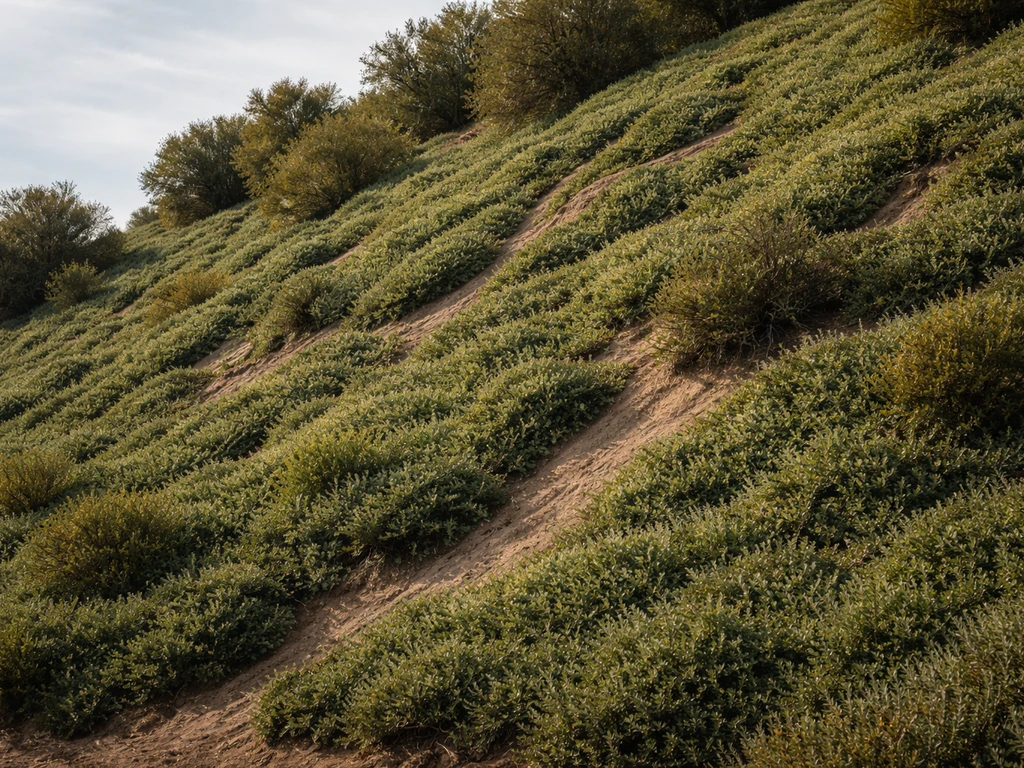
These are the workhorses of the east-side bed: plants that perform best with direct morning sun plus afternoon shade, or that tolerate the transition well across a range of USDA zones. If you also have a sloped area, see a short guide on what plants grow best on a slope for erosion control and low-maintenance options. For a quick checklist, see our guide to the best plants to grow on the side of a house. If you’re also working with a slope, see our guide to the best plants to grow on hillside for species and erosion-control tips suited to sloped sites. Notes on height, bloom time, and maintenance are included so you can plan the bed without guessing. For a concise list of recommended species and layouts, see best plants to grow in front of house.
| Plant | Height | Bloom time | USDA zones | Maintenance notes |
|---|---|---|---|---|
| Daylily (Hemerocallis hybrids) | 1.5–4 ft | June–August | 3–9 | Deadhead spent scapes; divide every 3–5 years when crowded |
| Rose (Rosa, shrub types) | 3–6 ft | May–frost (reblooming) | 4–9 | Prune in early spring; spray for black spot in humid climates |
| Coral bells (Heuchera) | 8–18 in | May–July (foliage interest year-round) | 4–9 | Cut back in early spring; divide every 3–4 years |
| Japanese iris (Iris ensata) | 2–4 ft | June–July | 4–9 | Needs moist, acidic soil; do not lime near plantings |
| Astilbe (Astilbe spp.) | 1–4 ft | June–August (varies by cultivar) | 3–8 | Keep soil consistently moist; cut back spent plumes in fall |
| Bleeding heart (Lamprocapnos spectabilis) | 2–3 ft | April–May | 3–9 | Goes dormant in summer heat; interplant with hostas to fill gaps |
| Foxglove (Digitalis purpurea) | 2–5 ft | June–July | 4–8 | Biennial; self-seeds freely; toxic if ingested |
| Lungwort (Pulmonaria officinalis) | 8–12 in | March–May | 3–8 | Early spring bloomer; slug-prone; divide every 3 years |
| Sweet William (Dianthus barbatus) | 12–24 in | May–June | 3–9 | Short-lived perennial or biennial; deadhead to extend bloom |
| Impatiens (Impatiens walleriana) | 8–24 in | Summer–frost (annual) | Annual all zones | Consistent moisture critical; do not let dry out completely |
A few practical notes on this group: daylilies and coral bells are my first recommendation for gardeners who want reliable color with minimal fuss. They tolerate the morning-sun-to-afternoon-shade swing without complaint and come back stronger each year. Roses on the east side work especially well in the South and Mid-Atlantic; in zones 3 to 5, choose cold-hardy shrub roses like the Knock Out or Canadian series rather than hybrid teas, which need more sun and winter protection. Bleeding heart is a genuinely brilliant east-side plant, but it disappears by July in warm climates, so plan for something to fill that gap, either hostas planted close by or a container that can be slid into place.
Shade-tolerant perennials for east-side shaded pockets
Not every part of the east side gets even those 4 to 6 hours of morning sun. Areas near the foundation under a deep overhang, in the corner where the east wall meets the north wall, or under a dense deciduous tree can get just 1 to 2 hours of dappled light or filtered shade all day. These spots need genuinely shade-tolerant plants, not just part-shade ones. The good news is there is a strong palette available for these conditions.
- Hosta (Hosta spp.): The gold standard for shade. Sizes range from 4-inch miniatures to 4-foot giants. Varieties like 'Sum and Substance' and 'Halcyon' take deep shade but perform best with 2 to 3 hours of morning light. Slugs are the main pest; treat with iron phosphate bait, not metaldehyde.
- Ferns: Lady fern (Athyrium filix-femina, zones 3–8), Japanese painted fern (Athyrium niponicum var. pictum, zones 5–8), and ostrich fern (Matteuccia struthiopteris, zones 3–7) all thrive in moist, shaded east-side pockets. Ostrich fern spreads by underground runners, so give it room or contain it.
- Tiarella (Foamflower): Delicate white or pink flower spikes in spring, good groundcover foliage through summer. Zones 3–8. Pairs beautifully with hostas and ferns.
- Epimedium (Barrenwort): One of the toughest shade perennials. Tolerates dry shade near tree roots and competition from surface roots. Evergreen in mild winters. Zones 4–9.
- Hellebore (Helleborus spp.): Blooms in late winter to early spring when almost nothing else does. Zones 4–9. Prefers part shade and moist, well-drained, humus-rich soil. Toxic; wear gloves when dividing.
- Solomon's seal (Polygonatum spp.): Architectural, arching stems with dangling white bells in May. Native options available for eastern North America. Zones 3–8.
- Wild ginger (Asarum canadense): Low, spreading native groundcover for moist, shaded east-side edges. Zones 3–7. Slow to establish but very tough once settled.
- Brunnera (Siberian bugloss): Heart-shaped leaves with silver markings in variegated cultivars like 'Jack Frost'. Blue forget-me-not flowers in April. Zones 3–7.
For pairing tips: hostas and ferns are the classic combination because their textures contrast well and they have similar moisture needs. Add a hellebore at the front for late-winter interest when everything else is dormant. Epimedium works as a front-edge groundcover that bridges the gap between the hostas and the pathway. If you have a deeper shaded pocket under an overhang, try a Solomon's seal as a vertical accent behind low-growing tiarella and brunnera. The goal in a shaded east pocket is to layer foliage textures since flowers will be limited, so contrast bold hosta leaves with fine fern fronds and narrow solomon's seal stems.
Shrubs that perform well on the east side
Shrubs give the east-side bed structure and year-round presence. The best performers here fall into two broad groups: acid-loving flowering shrubs that prefer the sheltered east-side conditions, and tough evergreen shrubs that provide winter screening while tolerating the morning-sun-to-afternoon-shade pattern.
Flowering shrubs
| Shrub | Mature size | Bloom time | USDA zones | Spacing | Pruning notes |
|---|---|---|---|---|---|
| Azalea (Rhododendron spp., evergreen) | 3–6 ft H x 4–6 ft W | April–May | 5–9 | 4–5 ft centers | Prune immediately after bloom; never cut back into leafless wood |
| Hydrangea (H. macrophylla, bigleaf) | 4–6 ft H x 4–6 ft W | July–September | 5–9 | 5–6 ft centers | Prune lightly after bloom (blooms on old wood in most cultivars) |
| Hydrangea (H. paniculata, panicle) | 6–15 ft H x 5–8 ft W | July–September | 3–8 | 6–8 ft centers | Prune hard in early spring; blooms on new wood |
| Mountain laurel (Kalmia latifolia) | 5–15 ft H x 5–15 ft W | May–June | 4–9 | 6–8 ft centers | Deadhead after bloom; minimal pruning needed |
| Enkianthus (Enkianthus campanulatus) | 6–8 ft H x 4–6 ft W | May | 4–7 | 5–6 ft centers | Minimal pruning; excellent fall color bonus |
| Itea (Virginia sweetspire) | 3–5 ft H x 5–6 ft W | June–July | 5–9 | 4–5 ft centers | Cut back oldest canes in late winter; spreads by suckers |
Azaleas and bigleaf hydrangeas are the two most commonly planted shrubs on east-facing walls, and for good reason: both prefer exactly the morning sun and afternoon shade that east exposures provide, and both are sensitive to intense afternoon heat. The classic mistake with bigleaf hydrangeas is pruning them too aggressively in fall or spring, removing the buds that carry next year's flowers since most cultivars bloom on old wood. Cultivars in the Endless Summer or Let's Dance series rebloom on both old and new wood, which makes them more forgiving of accidental hard pruning. Mountain laurel is an excellent choice in the Northeast and Appalachian region; it is slower-growing but reliably evergreen and incredibly showy in bloom.
Evergreen shrubs for structure and screening
- Boxwood (Buxus spp., zones 5–9): Classic, dense, evergreen. Tolerates the east-side light pattern well. Susceptible to boxwood blight in humid climates; consider 'NewGen' resistance series. Space 2–3 feet apart for hedging.
- Leucothoe (Leucothoe fontanesiana, zones 5–8): Arching, deer-resistant native shrub with burgundy winter foliage. Prefers moist, acidic soil. Excellent at the foundation under deeper shade. Space 3–4 feet apart.
- Holly (Ilex spp., zones 4–9): Many species and cultivars for varying sizes. Inkberry (I. glabra) is a low-maintenance native option for wet spots; Japanese holly (I. crenata) is a compact evergreen for tighter spaces. Winterberry (I. verticillata) is deciduous but offers spectacular winter berry display.
- Andromedas/Pieris (Pieris japonica, zones 5–8): Early spring bloom (February–March), attractive red new growth, and evergreen. Needs acid, well-drained soil. Susceptible to lace bugs in hot, dry locations, which makes the sheltered east side ideal.
- Dwarf Alberta spruce (Picea glauca 'Conica', zones 2–6): Slow-growing, dense conical form. Excellent structural anchor in cold-climate east-side beds. Watch for spider mites in dry summers; a strong water spray dislodges them early.
For spacing and layout, a practical approach is to place one or two taller flowering shrubs like hydrangeas or mountain laurels as anchors at the corners or ends of the east-side bed, then fill in with lower-growing perennials and groundcovers in front. Evergreen shrubs like boxwood or leucothoe work well as a middle layer, giving winter structure when the perennials are dormant. Keep all shrubs at least 18 to 24 inches away from the house foundation to allow air circulation and prevent moisture buildup against the wall, which can cause rot and create overwintering habitat for pests. If your east side is also a side yard where foot traffic is common, stick to upright or compact cultivars and leave a clear 36-inch walkway, which keeps the bed maintainable and the path usable year-round.
Edible herbs and vegetables for the east side
The east side is not ideal for heavy-yielding fruiting vegetables, but it is genuinely productive for leafy greens, root vegetables, and a solid range of culinary herbs. Mint, lemon balm, chervil, parsley, cilantro, and chives all tolerate partial sun and actually prefer some afternoon shade in hot-summer climates since full sun can cause them to bolt faster. In zones 7 and warmer, you can extend the cool-season harvest of lettuce, spinach, and arugula well into June on an east-facing bed when the same crops would be bolting on a south or west exposure by May.
- Mint (Mentha spp.): Grows aggressively in morning sun with consistent moisture. Plant in buried containers to prevent spreading. Zones 3–8.
- Lemon balm (Melissa officinalis): Similar light needs to mint, slightly less invasive. Excellent for tea. Zones 4–9.
- Parsley (Petroselinum crispum): Biennial; tolerates 3–4 hours of sun well. Direct-sow in early spring or fall in warm climates.
- Chervil (Anthriscus cerefolium): Specifically prefers partial shade and cool conditions. One of the best east-side culinary herbs for zones 4–8.
- Chives (Allium schoenoprasum): Reliable, low-maintenance, and early-season. Handles part sun easily. Zones 3–9.
- Lettuce and salad greens: Direct-sow in spring and again in late summer. East-side shade extends harvest by 2–3 weeks in summer.
- Spinach: Cool-season crop that bolts quickly in full sun; the east-side afternoon shade is an advantage from April through June.
- Kale: Tolerates partial sun and actually benefits from afternoon shade in warm climates. Harvest outer leaves continuously.
One honest note on basil: most basil varieties want 6 to 8 hours of full sun and warm soil to produce well. On an east-side bed with only 4 to 5 hours of morning sun, you'll get plants that grow slowly and produce less than on a south or west bed. In cooler climates like the Pacific Northwest or New England, though, some basil cultivars ('Genovese' especially) can work on a true east exposure in July and August when temperatures are moderate. Worth trying in containers so you can move them if they sulk.
Native and pollinator-friendly plants for the east side
East-side conditions align well with a range of native plants that support pollinators throughout the growing season. Morning-sun-to-afternoon-shade exposures suit woodland-edge natives especially well since that light pattern mirrors their natural habitat at the edge of eastern deciduous forests. The Xerces Society and Lady Bird Johnson Wildflower Center both maintain regionally organized native plant lists that are worth cross-referencing for your specific state and ecoregion.
- Wild columbine (Aquilegia canadensis, zones 3–8): Blooms April–May, red and yellow flowers beloved by hummingbirds and early bumblebees. Self-seeds freely. Tolerates part shade.
- Eastern red columbine pairs well with Virginia bluebells (Mertensia virginica, zones 3–8), which bloom at the same time and go dormant by midsummer.
- Black-eyed Susan (Rudbeckia hirta, zones 3–9): Tolerates part sun; blooms July–September and attracts a wide range of bees and butterflies. Short-lived perennial that self-seeds.
- Joe Pye weed (Eutrochium spp., zones 4–9): Tall (4–7 ft), late-summer bloomer with lavender-pink clusters that are magnets for monarchs and swallowtails. Needs some moisture.
- Spicebush (Lindera benzoin, zones 4–9): Native flowering shrub with early yellow blooms (March), spicy aromatic foliage, and red berries. Host plant for spicebush swallowtail butterfly. Tolerates part shade beautifully.
- Native ferns (Athyrium, Dryopteris, Osmunda spp.): Habitat structure and foliage interest; supports many moth and butterfly larvae.
- Solomon's seal and wild ginger: See shade-tolerant perennials section above; both are valuable native groundcovers on east-side shaded areas.
- Goldenrod (Solidago spp., zones 3–9): Some species tolerate part shade; outstanding late-season pollinator plant for September and October when other nectar sources are scarce.
For bloom succession on the east side, aim to have something flowering from March (hellebores, Virginia bluebells, spicebush) through October (goldenrod, Joe Pye weed, rudbeckia). That continuous forage window matters more than individual plant choices for supporting a healthy pollinator population. The Pollinator Partnership's ecoregional planting guides are free to download and give you a ready-made succession plan organized by your specific North American ecoregion, which is a genuinely useful shortcut.
Container gardening on the east side
If your east side is a narrow paved strip, a concrete patio, or a rental property where you cannot plant in the ground, containers work well there. Morning sun with afternoon shade is actually a favorable container environment because the intense afternoon sun that bakes containers and stresses roots on south or west patios is absent. This means soil in east-side containers stays more evenly moist, which reduces watering frequency compared to west-facing containers in summer.
For container plant selection on the east side, use the same part-sun principles as in-ground planting. Impatiens, begonias, fuchsias, astilbes in pots, small hostas, and herbs like mint, lemon balm, and parsley all thrive in east-facing container setups. Fuchsias in particular are almost impossible to grow successfully on a south or west-facing patio in zones 6 and warmer because of heat sensitivity, but they perform beautifully in the morning sun of an east exposure. Use containers at least 12 inches in diameter for most perennials and 16 inches or larger for shrubs, and choose a well-draining potting mix rather than garden soil, which compacts quickly in pots. Water when the top inch of the potting mix is dry; east-side containers in summer may need watering every 2 to 3 days rather than daily.
Seasonal planting schedule by USDA zone
Timing your planting to your zone and the current season is as important as the species you choose. Here is a practical planting calendar framework organized by broad zone group.
| Zone group | Last spring frost | Best time to plant perennials and shrubs | Best time to plant cool-season edibles | Best time to plant annuals |
|---|---|---|---|---|
| Zones 3–4 (MN, ND, northern New England) | Late May | Late May–June | April–May (cold frames) / May (open) | After last frost: June |
| Zones 5–6 (Chicago, Denver, DC area) | Mid-April to early May | Late April–May; or September | March–April (hoops/covers) / April (open) | May |
| Zones 7–8 (Southeast, PNW, Mid-Atlantic) | Late March to mid-April | March–May; or October–November | February–March / September–October | April–May |
| Zones 9–10 (Gulf Coast, Southern CA, AZ) | Little to no hard frost | October–March (best planting season) | October–February | October–November or February–March |
A note for fall planting: in zones 5 through 8, planting perennials and shrubs in September or October is often better than spring planting. Roots establish in cool, moist soil without the heat stress of summer, and plants head into their first growing season with a more developed root system. The east side is particularly well-suited to fall planting because the afternoon shade keeps transplants from drying out before roots are established. Water fall-planted shrubs thoroughly until the ground freezes, and mulch with 2 to 3 inches of shredded bark or wood chips to moderate soil temperature swings through the first winter.
Planting, care, and troubleshooting essentials
Soil prep and planting
For new east-side beds, prepare soil to at least 12 inches depth, ideally 18 inches for shrubs. Amend with 3 to 4 inches of compost worked in before planting. If your soil test showed pH above 7.0 and you plan to grow acid-lovers like azaleas, rhododendrons, or blueberries, work in elemental sulfur according to the extension lab's recommendation and retest after 6 months before relying on the amendment. For beds with poor drainage that cannot be resolved by amending, consider raised beds 8 to 12 inches above grade, which also bring the planting level closer to the morning sun above a deep overhang.
Watering
East-side beds generally need less water than south or west beds because afternoon shade reduces evapotranspiration. However, the area directly against the foundation in a 1 to 2 foot strip is often a dry zone due to roof overhang rain shadow. Water that strip separately and more frequently than the rest of the bed, or install a soaker hose along the foundation edge on its own zone. Established shrubs and perennials in zones 5 and above typically need about 1 inch of water per week during the growing season, from rain or irrigation.
Fertilizing
Most established perennials and native plants in amended soil need minimal fertilizer: one application of a balanced slow-release fertilizer (10-10-10 or similar) in early spring is sufficient. Flowering shrubs like azaleas and hydrangeas benefit from an acid-formulated fertilizer (e.g., 30-10-10 or Holly-tone) applied in early spring before bud break and again lightly after bloom. Do not fertilize woody shrubs after July in zones 5 and colder; late fertilization pushes soft new growth that is vulnerable to early frost damage.
Common pests and problems on the east side
- Slugs and snails: The combination of morning moisture and afternoon shade creates prime slug habitat. Use iron phosphate slug bait (Sluggo, Escar-Go) around hostas, astilbes, and other susceptible plants from spring through early summer.
- Powdery mildew: Despite morning sun drying foliage, some susceptible plants like garden phlox and monarda can develop powdery mildew in humid summers. Choose mildew-resistant cultivars (e.g., phlox 'David', monarda 'Jacob Cline') and space plants for air circulation.
- Boxwood blight: A serious fungal disease in the Southeast and Mid-Atlantic. Use blight-resistant cultivars or replace boxwood with Japanese holly (Ilex crenata) as a substitute.
- Lace bugs on pieris and azaleas: More common when plants are stressed or in dry conditions. The east-side's afternoon shade and regular moisture usually reduces incidence; treat with insecticidal soap or neem if stippled foliage appears.
- Root rot in poorly drained soil: The most common killer of shrubs in east-side beds. Resolve drainage before planting; if drainage cannot be improved, plant in raised beds or elevated containers.
- Foundation pH issues: Lime leaching from concrete footings raises soil pH over time. Test soil annually for the first 3 years of a new foundation-side planting and amend as needed.
A simple east-side layout example
To put all of this together, here is a practical planting layout for a typical east-side bed about 15 feet long and 4 feet deep in zones 6 to 7. Back row (against wall, 18 inches from foundation): one panicle hydrangea 'Little Lime' at the center, flanked on each side by a leucothoe 'Scarletta'. Middle row: three astilbes in mixed cultivars (early, mid, and late season for succession), spaced 18 inches apart, with two coral bells 'Palace Purple' filling gaps. Front row: a continuous drift of 'Jack Frost' brunnera along the edge for spring interest, and impatiens or low hostas in the shaded strip near the foundation. This combination gives four-season interest: brunnera and astilbe in spring, hydrangea and coral bells through summer, leucothoe's scarlet fall color, and leucothoe's evergreen foliage in winter. Total plant cost for this layout is roughly $120 to $180 at retail, and maintenance beyond spring fertilization and summer watering is minimal.
The same principles apply whether you are planning for the east side specifically or thinking about how other exposures compare. Plants chosen for the side of the house in general benefit from the same site-assessment approach, and the characteristics that make east-side conditions distinct, that morning light pattern and the sheltered afternoon, shape every planting decision from shrub selection to how often you need to water. For specific recommendations, see our guide to the best plants to grow next to house. Getting the site right before you plant is the single step that pays off more than any other.
FAQ
What solar/geometric data do I need to quantify morning sun on an east-facing wall, and which authoritative sources provide it?
Research questions: How many hours of direct sun fall on a vertical east facade at my latitude on target planting dates? What are the sunrise azimuth, solar altitude through the morning, and seasonal variation? Authoritative sources: NOAA Solar Position Calculator/solcalc (solar azimuth/altitude, sunrise/sunset) and NOAA solar equations; NREL SOLPOS/Solar Position Algorithm for high-precision sun position and irradiance modeling. (NOAA GML solcalc; NREL SOLPOS)
How should I convert solar geometry into on-site direct-sun hours and irradiance for plant-selection?
Research questions: Given solar azimuth/altitude vs time and surrounding obstructions, what are the realistic direct-PAR/irradiance levels on the planting plane? How do morning irradiance peaks compare to full‑sun midday values? Authoritative sources: NREL SOLPOS (irradiance modeling) and NOAA solar geometry documentation; use these alongside on-site shade mapping or ray-tracing to estimate usable PAR hours.
What microclimate modifiers near an east wall must be measured, and where do I find guidance on their effects?
Research questions: How do building materials, wall color, eaves, thermal mass, and wind shadow change temperature, frost risk, and reflected heat at planting height? Authoritative sources: University Extension microclimate guidance (UC ANR, Colorado State) for practical assessment methods; peer‑reviewed façade/green‑façade studies (Energy & Buildings, MDPI) for quantified thermal/reflection effects.
What soil and drainage data are required before recommending in-ground plantings, and which sources are authoritative?
Research questions: What is the mapped soil series, texture, drainage class, depth to restrictive layer, and erosion risk at the site? How should I sample for lab tests? Authoritative sources: USDA NRCS Web Soil Survey (SSURGO) for mapped soils; university extension soil‑testing protocols (e.g., UNH, Cornell) for field sampling and lab tests (pH, nutrient status, organic matter, Mehlich/Bray, CEC).
How should plant‑hardiness and heat tolerance be integrated into region‑aware planting schedules?
Research questions: What USDA hardiness zone and AHS heat zone apply at the site? What are local average last/first frost dates and typical heat‑day counts that affect species timing and cultivar choice? Authoritative sources: 2023 USDA Plant Hardiness Zone Map (USDA ARS), AHS Heat‑Zone Map, and local frost‑date climatology from extension services.
Where do I get vetted, region‑specific native and pollinator‑friendly plant lists appropriate for morning‑sun/afternoon‑shade exposures?
Research questions: Which native species reliably bloom across seasons and provide nectar/host value for local pollinators under part‑sun conditions? Authoritative sources: Xerces Society pollinator‑friendly plant lists, Lady Bird Johnson Wildflower Center Native Plant Database, Pollinator Partnership ecoregional guides, and state native plant societies.
Next Article
Best Plants to Grow on Hillside for Erosion Control
Find the best hillside plants for erosion control, with sun, slope, and soil tweaks plus step-by-step planting and first