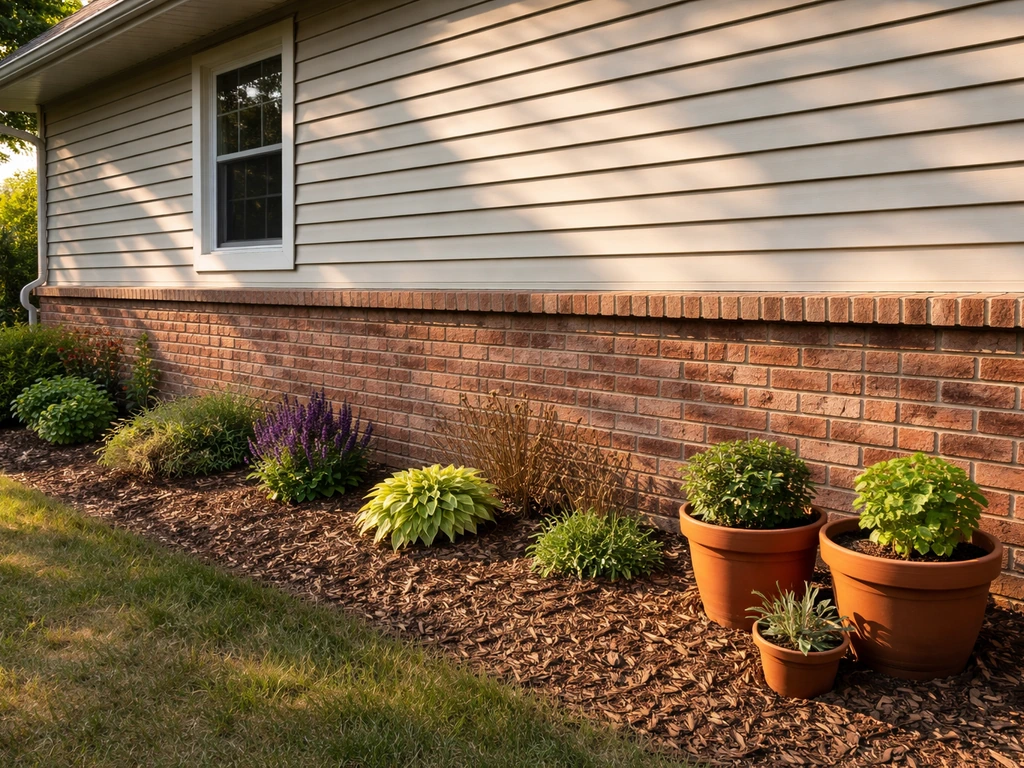
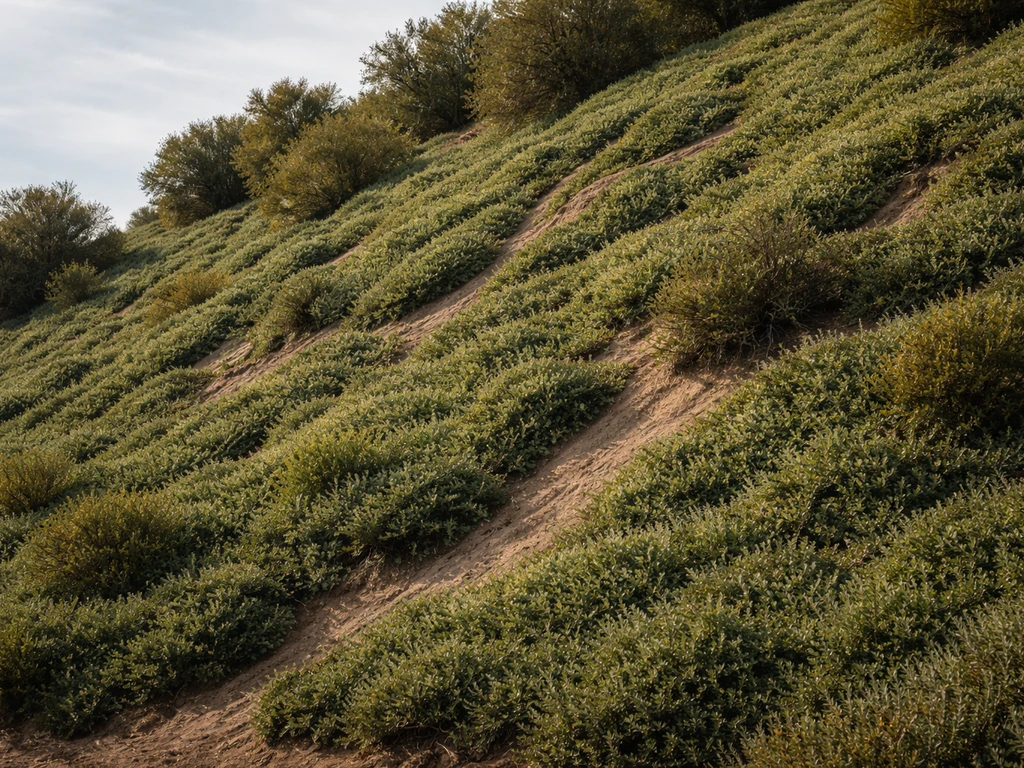
The best plants to grow on a hillside are deep-rooted, spreading ones that grip soil and tolerate the punishment of fast drainage, wind, and uneven moisture. For quick erosion control, go with groundcovers like creeping phlox, crown vetch, or native sedges. For long-term structure, add shrubs like fragrant sumac, native dogwoods, or juniper. If you want food too, currants and gooseberries can work on moister sections of slope. The right pick comes down to your specific slope: how steep it is, which way it faces, and whether the soil dries out fast or stays damp. This guide helps you match plants to those conditions and actually get them established without losing half of them to washouts.
Best Plants to Grow on Hillside for Erosion Control
Rachel Hartley
3 Jul 2026
Why hillsides are hard (and what plants must handle)
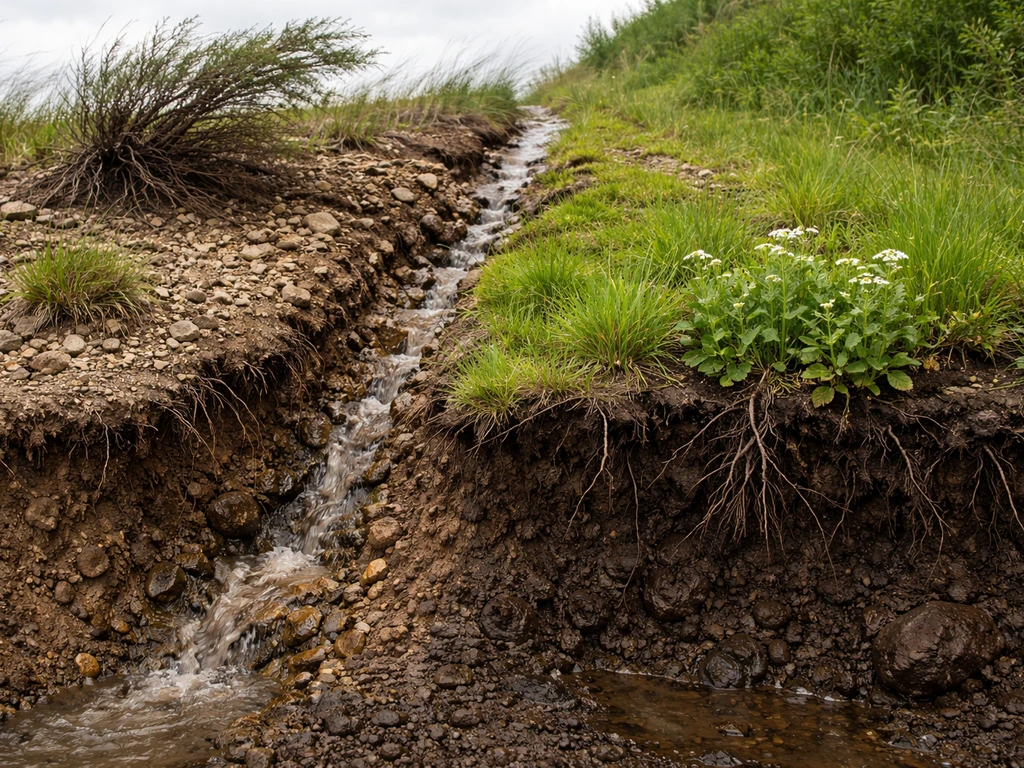
Hillsides throw several problems at plants simultaneously, which is why a plant that thrives in a flat garden bed can fail completely on a slope. Water is the biggest issue: on a moderately steep slope (roughly 8 to 16 percent grade), rainfall runs off rather than soaking in, leaving soil drier than you'd expect. The best plants for a slope are those that can handle runoff, shallow soil, and erosion risk under your particular grade and exposure a moderately steep slope. Steeper than that and erosion risk climbs fast, especially if surface water is also flowing down from higher ground. Soil on slopes tends to be shallower and less fertile too, because topsoil washes downhill over time.
Aspect, meaning which direction the slope faces, changes everything about moisture and temperature. A south-facing hillside in full sun can be blazing hot and bone dry in summer, almost desert-like. A north-facing slope might stay shaded and cool enough to retain more moisture but struggles with frozen, compacted soil in winter. East and west aspects split the difference, but west-facing slopes often cook in afternoon sun. West-facing conditions also vary by shade, soil type, and how much wind exposure you get, so choose plants that match those factors west-facing slopes. Add wind exposure on ridgelines, frost pockets in sheltered gullies, and you're dealing with multiple microclimates sometimes within the same hillside.
What plants must do on a slope is different from what they do in a border. Root architecture matters enormously. Shallow-rooted plants can actually destabilize a slope by creating a surface layer that peels away during heavy rain. You need plants with deep taproots, wide-spreading fibrous roots, or rhizomes that bind soil horizontally. Stems and branching that slow water velocity help too. That's why trees and shrubs, which create a tight network of roots and stems binding soil particles and slowing rushing water, are so valuable as the structural backbone of any hillside planting.
Pick plants by slope conditions (sun, soil, moisture, wind)
Before you grab plants, spend a few minutes reading your hillside. Is it mostly sunny or shaded? When picking hillside options, also think about whether your south side gets mostly sunny or shaded, since that affects what plants grow in south side of house. Does water drain so fast the soil is consistently dry, or do you notice moist patches, especially at the base or in natural swales? How steep is it really, is it a gentle roll you can comfortably walk up, or are you grabbing shrubs to keep your footing? Is the top of the slope exposed and windy, or sheltered by a fence or tree line? Your answers narrow your plant list dramatically.
| Slope condition | Best plant types | Ones to avoid |
|---|---|---|
| Full sun, dry, fast-draining | Creeping phlox, fragrant sumac, juniper, prairie natives, lavender | Hostas, ferns, moisture-loving shrubs |
| Part shade, moderate moisture | Native sedges, wild ginger, Virginia creeper, red twig dogwood | Drought-tolerant cacti, sun-loving groundcovers |
| Full shade, damp or wet pockets | Redosier dogwood, ostrich fern, native gingers, sweet woodruff | Sun-requiring ornamentals, drought-adapted natives |
| Windy ridge or exposed top | Low-growing shrubs, native grasses, creeping juniper | Tall single-stem plants, anything prone to windrock |
| Steep slope (over 15–20%) | Deep-rooted shrubs, sod-forming grasses, erosion blanket + plugs | Annuals alone, shallow-rooted groundcovers, seed-only approach |
| Moderate slope (under 15%) | Most shrubs, ornamental grasses, perennial groundcovers, small trees | Bare soil left unplanted for more than a few weeks |
One more variable worth checking: is your soil sandy, clay-heavy, or rocky? Sandy and rocky soils drain fast and need drought-tolerant plants. Heavy clay on a slope can become waterlogged after rain, then crack in summer. Native plants tend to handle both extremes better than cultivated ornamentals because they evolved in your region's actual soil conditions, not amended garden beds.
Best hillside groundcovers for fast coverage and erosion control
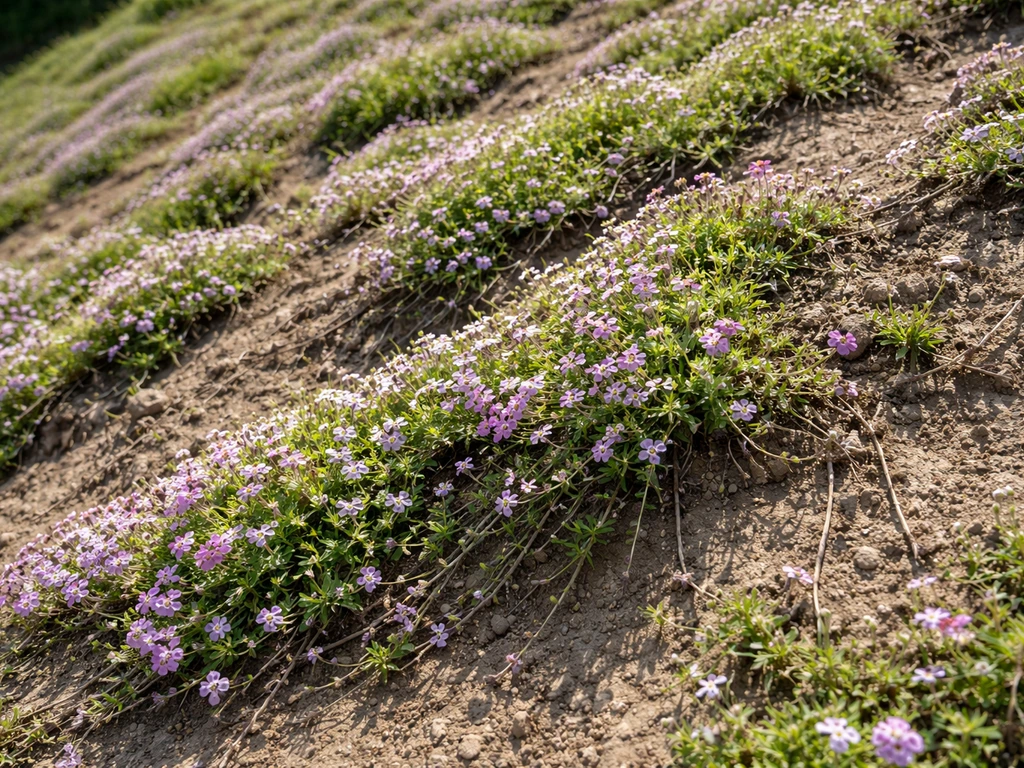
Groundcovers are your first line of defense, especially while shrubs and trees are getting established. The goal is continuous living coverage that keeps soil from moving. Gaps between plants are where erosion starts, so dense planting and fast spread matter more here than in a typical garden border.
Creeping phlox (Phlox subulata) is one of the best sunny-slope groundcovers available. It stays 4 to 6 inches tall, spreads 12 to 18 inches wide per plant, blooms beautifully in mid to late spring, and it genuinely grips soil on slopes. It's hardy from Zones 3 to 7, handles drought once established, and is dense enough to suppress weeds. Spacing plants about 12 to 18 inches apart gives solid coverage within one to two seasons.
'Gro-Low' fragrant sumac (Rhus aromatica 'Gro-Low') sits on the line between groundcover and low shrub. It spreads wide, roots aggressively, and holds soil beautifully on dry sunny slopes. Rockspray cotoneaster does similar work with a slightly more ornamental look and berries that birds love. Both are worth knowing if you're in the Midwest or Northeast.
- Creeping phlox: sunny, dry to moderate slopes, Zones 3–9, spreads by stems rooting as they go
- 'Gro-Low' fragrant sumac: wide-spreading, drought tolerant, excellent for full-sun dry slopes in Zones 3–9
- Rockspray cotoneaster: arching stems root on contact, good on sunny to partly shaded slopes
- Crown vetch: aggressive spreader, great for fast erosion control on tough bare slopes (be cautious in natural areas near wildlands)
- Native sedges (Carex species): fine-textured, spreads steadily, excellent for part shade or moist slopes depending on species
- Wild ginger (Asarum canadense): dense shade-tolerant mat, slowly covers shaded hillsides in Zones 4–8
- Virginia creeper: fast, shade tolerant, deep root system, great on slopes with varied light
A note on invasive species: some of the most aggressive spreaders, like English ivy, kudzu, and Japanese honeysuckle, are genuinely terrible choices even though they cover ground fast. They can outcompete native vegetation, reduce biodiversity, and become unmanageable. Stick to region-appropriate plants and check your state's invasive species list before planting anything you don't already know well.
Best shrubs and small trees for stability, roots, and structure
Groundcovers handle the surface, but shrubs and small trees do the deep work. Their roots go down 18 inches, 3 feet, sometimes deeper, binding soil layers that surface plants can't reach. On steep slopes, you want at least a third of your planting to be woody plants. They also create microclimates that protect smaller plants nearby and slow wind across the slope.
- Red twig dogwood (Cornus sericea): fibrous root system, tolerates both wet and dry areas, used in riparian restoration for bank stabilization, Zones 3–8
- Redosier dogwood: similar attributes, tolerant of flooding and wet soil pockets, ideal for damp hillside gullies
- Fragrant sumac (full-size): deeper roots than the groundcover form, fast-growing, drought tolerant, stunning fall color
- Juniper (Juniperus horizontalis and similar): creeping forms root deeply, extremely drought and wind tolerant, good for exposed sunny slopes
- Native viburnums: dense branching, moderate root depth, part shade tolerant, berry production for wildlife
- Spirea (Spiraea species): easy to establish, spreads by suckering, good mid-slope filler in Zones 3–9
- Serviceberry (Amelanchier): small tree or large shrub, deep roots, edible berries, tolerates varied moisture
- Eastern red cedar (Juniperus virginiana): deep taproot, very tough on exposed dry slopes, doubles as a windbreak in the East and Midwest
When the slope borders a yard or is visible from the house, using a combination of two or three shrub species alongside a groundcover gives you a layered, naturalistic look while providing better slope stability than a monoculture. To pick the best plants to grow in front of a house, use the same approach: match light, soil, and moisture to the plants you choose. Mixing plant types (groundcovers plus shrubs) improves stability because different root depths anchor different soil layers simultaneously.
If you're dealing with a very steep slope, consider adding small terraces cut into the slope to break it into shorter, flatter sections before planting. Even rough terraces carved with a mattock or spade reduce the distance water travels before hitting a plant or barrier, which dramatically cuts erosion during the establishment period.
Best hillside perennials, bulbs, and native plant options
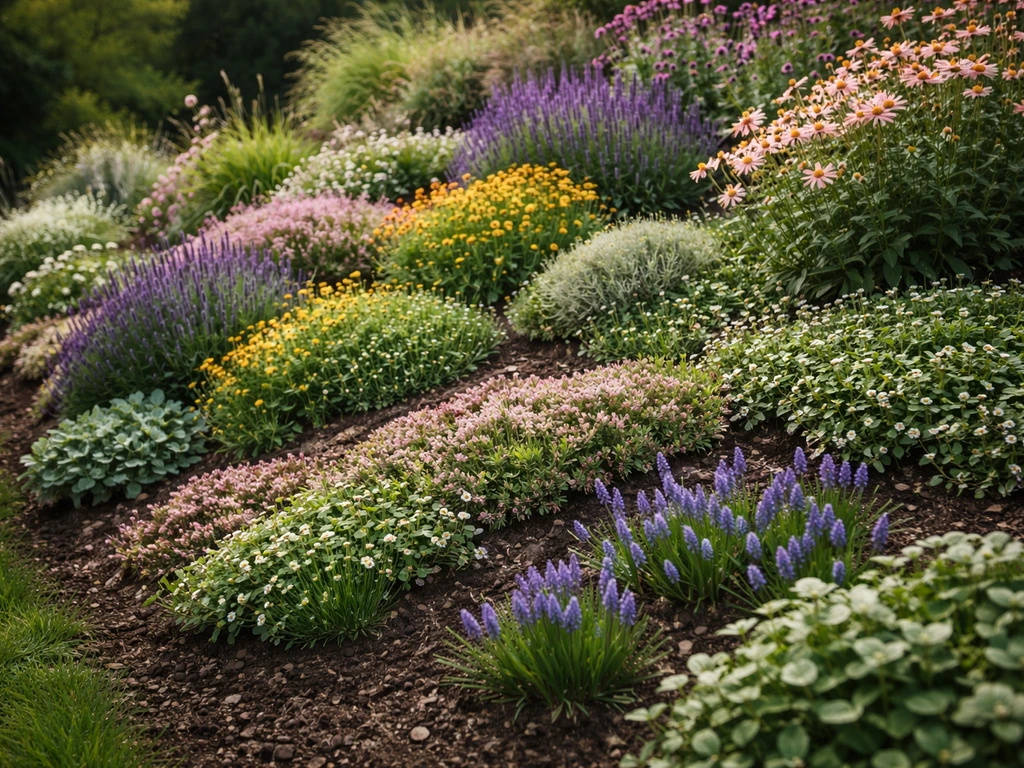
Perennials don't provide the deep root reinforcement of woody plants, but they fill gaps, add seasonal color, attract pollinators, and can be planted densely enough to suppress weeds and hold surface soil. Bulbs are especially useful because they go dormant in summer, which is often when hillsides are driest, then return reliably each spring.
- Daylilies (Hemerocallis): tough, dense clumps, spreads by rhizome, handles dry or moist slopes, Zones 3–9
- Black-eyed Susan (Rudbeckia hirta): native, drought tolerant, self-seeds on slopes to fill gaps, full sun
- Purple coneflower (Echinacea purpurea): deep taproot, drought tolerant once established, pollinators love it
- Prairie dropseed grass (Sporobolus heterolepis): fine-textured native grass, forms tidy mounds, excellent on dry slopes
- Little bluestem (Schizachyrium scoparium): native warm-season grass, fibrous roots, brilliant fall color, very drought tolerant
- Daffodils: naturalize easily on slopes, deer resistant, require almost no maintenance once planted, spread over time
- Wild columbine (Aquilegia canadensis): native, works on partly shaded slopes, self-seeds readily
- Liriope (Liriope muscari): heat tolerant, works in the South, holds slope soil well with dense clumps
Native plants deserve special attention here. They're well-suited to local climate and soil by definition, which means less supplemental watering, less fertilizing, and stronger establishment once past that first critical season. Local native plant societies and your state cooperative extension can tell you exactly which species are native to your area. Native seed mixes designed specifically for slopes or erosion control are available from many regional suppliers and are worth the extra few dollars over generic wildflower mixes.
Edible and medicinal hillside choices (where they fit)
Hillsides can absolutely produce food, but the plants need to earn their place functionally. If they're only providing harvest without contributing to slope stability, you're better off growing them somewhere easier. The best edible hillside plants are the ones that happen to have good root systems and spreading habits, and there are more of those than you'd think. When you plan for the best plants to grow next to a house, prioritize varieties with strong roots that help stabilize soil near foundations good root systems.
Currants and gooseberries are probably the best edible shrubs for hillside growing. They tolerate partial shade (which matters on north- or east-facing slopes), prefer cool moist conditions, and have root systems that contribute meaningfully to slope stability. Currants and gooseberries also tolerate the partial shade that often comes with east-side house planting. Plant them 3.5 to 4.5 feet apart with rows 6 to 8 feet apart if you're doing a full hillside planting. They're productive in Zones 3 to 8 and are genuinely low maintenance once established.
Serviceberry doubles as both an ornamental small tree and a food source. The berries are edible fresh and make excellent jam, wildlife eats the excess, and the root system is deep enough to contribute to slope stability. It handles part shade, adapts to a range of moisture levels, and looks good year-round with spring flowers, summer berries, and fall color.
- Currants and gooseberries: partial shade, moist hillside pockets, Zones 3–8, productive and low maintenance
- Serviceberry (Amelanchier): edible berries, deep roots, works across a wide range of slope conditions
- Elderberry (Sambucus canadensis): native, fast-growing, does well in moist low spots on slopes, medicinal berries
- Creeping phlox: the fruit is edible (though not a significant food crop), but it's worth noting for edible-landscape contexts
- Thyme and other low-growing herbs: on sunny well-drained slopes in milder climates (Zones 5+), creeping thyme works as a groundcover with culinary use
- Wild bergamot (Monarda fistulosa): native medicinal herb, attracts pollinators, handles dry slopes well once established
Avoid putting annual vegetables or high-maintenance food crops on a hillside unless you've built proper terracing with level planting beds. The combination of fast drainage, erosion risk during watering, and the difficulty of accessing steep terrain for regular harvesting and maintenance makes it more trouble than it's worth. Save the terraced level spots for vegetables and let the slope itself do the work it's suited for.
How to plant on a slope: preparation, spacing, mulching, and establishment
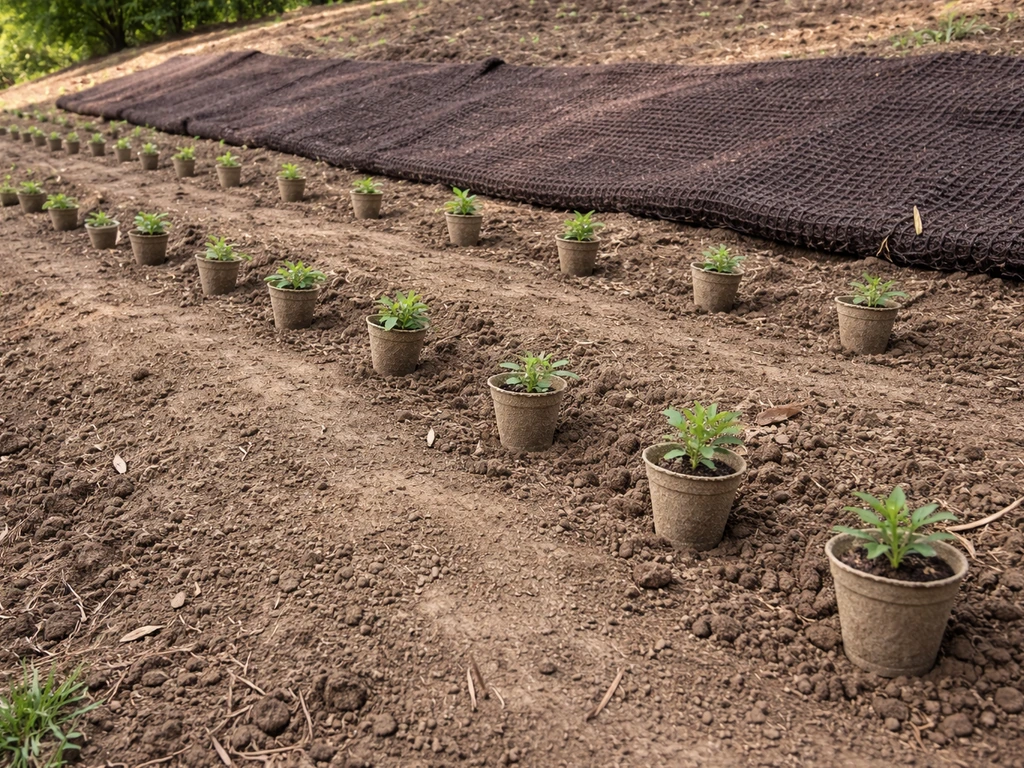
Planting on a slope requires a bit more work upfront, but most of that work is about placement and timing, not heavy equipment. Getting this right in the first season prevents you from replanting after a washout.
Plugs, containers, or seed?
For steep slopes, skip direct seeding and use plugs or container plants. Seeds wash away before they can germinate, especially if you get rain shortly after planting. Plugs establish faster than seeds and hold the soil from day one. Container plants are even better for shrubs and the structural layer. If you do want to seed, do it in combination with an erosion control blanket (burlap or jute netting, not plastic) that holds seed and soil in place until vegetation establishes. Overlap edges by at least 6 inches across the slope when installing blankets.
Many successful slope plantings use a layered approach: fast-growing annuals seeded to provide temporary cover while perennial plugs and shrubs develop their root systems underneath. The annuals die back after one season, by which point the permanent plants are established enough to hold soil on their own.
Site preparation and spacing
Clear existing vegetation if you're starting from scratch, but don't leave bare soil exposed for more than a few days. Work from the top of the slope downward to avoid compacting soil you've already prepared. For container plants and perennials, dig holes just deep enough to set the plant at the same level it was in its container, then backfill and firm gently. On a slope, dig the downhill side of the hole slightly deeper to create a level planting pocket so water doesn't run straight past the roots.
Space groundcovers closer than you would on flat ground. On a slope, you want canopy coverage within one growing season if possible, so lean toward the denser end of any spacing recommendation. For most spreading perennial groundcovers, 12 to 18 inches apart works well. For shrubs, follow species recommendations but plant the structural layer first, then fill in groundcovers between them.
Mulching on a slope
This is where slope planting diverges from standard advice. Loose mulch washes downhill in heavy rain, sometimes taking your newly planted plugs with it. Keep mulch layers thin on steep sections, no more than 2 inches, and use shredded bark or wood chip mulch rather than straw or light material that moves easily. Better yet, use an erosion control blanket over seed areas and mulch only the immediate root zone of shrubs and container plants. Groundcovers themselves, once they fill in, become the best possible living mulch.
Watering through the first season
Water deeply but less frequently from the start. The goal is to push roots downward into the slope, not just keep the surface moist. At planting, soak thoroughly so water reaches the full rooting depth and settles backfill soil around the roots. After that, water weekly during the first growing season unless you've had significant rainfall, expanding the application area slightly outward from the planting hole as the plant grows. Let the soil surface dry between waterings. Overwatering on a slope creates more runoff and can saturate soil to the point of destabilizing it, which is the opposite of what you're after.
Once plants are through their first full growing season with established root systems, most slope-appropriate plants need little to no supplemental irrigation. That's the reward for picking the right plants in the first place. The first 12 weeks are the critical window, water consistently during that period and you're most of the way home.
Match timing to your region
In most of the US, the best time to plant hillside vegetation is early to mid spring or early fall, when temperatures are cooler and rain is more reliable. Avoid planting in midsummer if you're in a hot climate because establishment stress is much higher and watering needs are harder to meet on a slope. If you're in the Pacific Northwest or coastal California, fall planting works especially well because the rainy season does most of your establishment watering for you. In the South, late fall through winter is often ideal for woody plants. Check in with your local cooperative extension service or NRCS office if you're unsure of the best timing and seed mixes for your specific region, they'll have data tailored to your soil and climate that no general guide can match.
FAQ
Can I grow vegetables or fruit on a hillside without terracing?
Yes, but in very different ways. For edible options on slopes, prioritize shrubs or perennials with stable, deep root systems (for example currants, gooseberries, serviceberry) and avoid annual crops unless you terrace and create flatter, controllable planting pockets. If you must grow vegetables on a slope, confine them to the most sheltered, moist section and expect you will need stronger erosion protection during harvest and watering.
What’s the best way to start plants from seed on a hillside?
Do not rely on broadcast seeds alone for steep or windy slopes. If you seed, use erosion control blanket or similar seed-holding fabric and overlap seams at least 6 inches across the slope direction, otherwise heavy rain and runoff wash seed away before germination. Plugs and container plants are faster to establish because their roots hold soil from day one.
How should I mulch a slope without making erosion worse?
For most hillside plantings, you want to avoid thick mulch that can act like a sliding layer. Keep mulch thin on steep sections (about 2 inches or less), use heavier materials like shredded bark or wood chips rather than light straw, and consider using erosion-control blanket for seed areas. Mulch only the immediate root zone around shrubs or containers if you are seeing washouts.
My hillside still erodes during heavy rain, what should I do besides adding plants?
If water consistently runs down the same line during storms, plants alone may not be enough. Add a simple drainage strategy such as contour planting, small check dams (using logs or biodegradable measures in early establishment), or swales at appropriate intervals, and consider terracing for very steep grades. The goal is to shorten runoff distance so soil does not get repeatedly scoured.
How do I choose plants for different slope exposures and sunlight patterns?
Many slope failures come from planting too far apart or choosing a plant that cannot handle the specific exposure. On sunny, dry slopes (often south or west-facing), lean toward drought-tolerant, dense groundcovers and be stricter with spacing. In shaded or cooler pockets (north or east aspects), you can sometimes use more moisture-tolerant natives, but still keep coverage dense enough that bare soil does not persist.
How often should I water hillside plants in the first year?
Measure watering by soil response, not by a calendar. After initial soak-in, water weekly during the first growing season if rainfall is limited, and always let the surface dry slightly between waterings. Signs you are overwatering include algae or saturated soil that stays dark, and underwatering signs include wilting with dry, dusty soil, especially on the upper slope where runoff concentrates.
What’s the biggest mistake people make when preparing a hillside before planting?
Bare soil is a bigger problem on slopes than on flat ground. If you are clearing and installing plants, avoid leaving ground exposed for more than a few days, and prioritize temporary cover. Layering helps too, such as using short-term annual cover while permanent shrubs or perennials develop their deeper root systems.
How do I plant correctly on a slope to prevent roots from washing out?
On slopes, adjust planting depth so the plant sits at the same depth it was growing in its container, then create a “level pocket” by digging the downhill side slightly deeper. Firm gently after backfilling, and be careful not to leave air gaps, which can channel water around roots and increase washout risk.
Do I need shrubs and trees, or can I rely on groundcovers for slope stability?
Start with a layered plan, even if you think the groundcover will do the job. Groundcovers control the surface, while shrubs and small trees provide deeper anchoring. As a practical rule, aim for at least a third of the planting by presence to be woody plants on steep slopes so you get multiple root depths working together.
Will hillside plants really need little to no irrigation after they establish?
Yes, but manage expectations. Many native and erosion-control plants establish with little supplemental irrigation after year one, but that depends on your rainfall, soil type, and whether you planted during favorable weather. If your slope is unusually drought-prone, windy, or sandy, you may still need limited watering during the second growing season to fully transition to low maintenance.
What’s a good plant mix strategy instead of planting just one species?
Absolutely, and it often improves overall control. Use an approach like planting a few compatible shrub species as the structural backbone, then fill between them with dense groundcovers for continuous coverage. This reduces the risk of one species failing due to microclimate differences within the same hillside.
How can I tell whether a fast-growing groundcover is a bad choice for a hillside?
Do not assume fast-spreading groundcovers are automatically good. Some species spread aggressively and can become unmanageable or outcompete natives (examples include English ivy, kudzu, and Japanese honeysuckle in many regions). Before buying, verify whether a plant is invasive in your state or county, and prefer locally appropriate natives or noninvasive cultivars.
Next Article
What Plants Grow Best on the West Side of a House
Best west-side plants by sun level, heat, wind, and season, with container and in-ground picks and care tips.