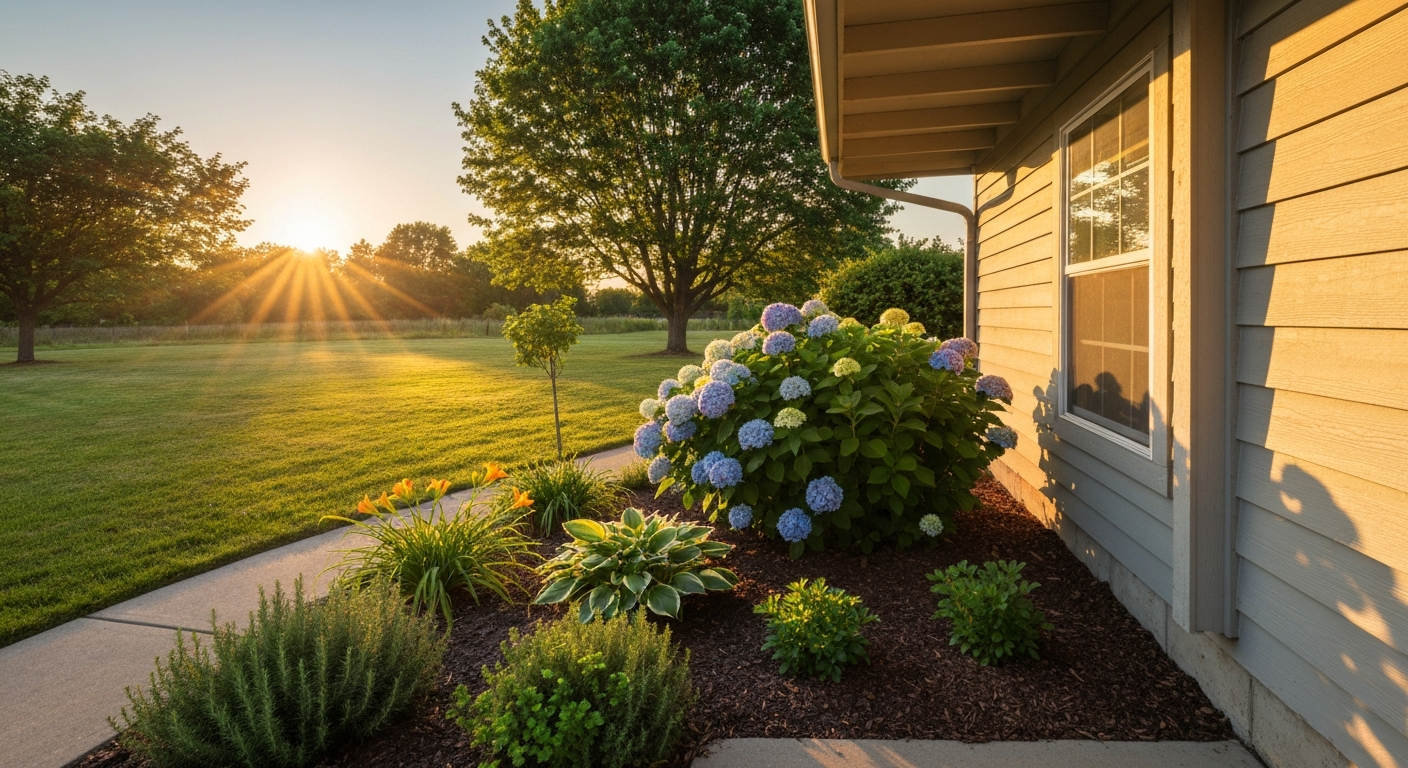
The south side of your house (in the Northern Hemisphere) is almost always your sunniest, warmest growing spot. That means you can grow full-sun vegetables, Mediterranean herbs like rosemary and lavender, heat-loving climbers like roses and wisteria, and warm-season food crops that would struggle anywhere else on your property. The catch is that "south side" doesn't automatically mean the same thing everywhere: your hemisphere, latitude, season, and local obstacles all shape how much sun actually reaches your plants. This guide walks you through how to measure what you actually have, then matches you with the right plants for your goal, food, herbs, low-maintenance ornamentals, or containers on a patio.
What Plants Grow in South Side of House: Climate-Smart Picks
Rachel Hartley
15 Jul 2026
Why the south side is worth planning carefully
Most gardeners instinctively know the south side gets more sun, but they underestimate just how different it is from the rest of the yard. A south-facing wall in a temperate climate can run 5–10°C warmer than open ground on a summer afternoon, the wall stores heat and re-radiates it at night, and the soil at the foundation dries out faster than any other bed. Garden UK summarizes RHS guidance that south‑ and west‑facing walls create heat‑storage microclimates (walls and paving absorb and re‑radiate heat), often raising nighttime temperatures by several °C and allowing more sun‑loving or tender species to be grown against sheltered, warm walls, Fast‑Growing Climbers for Fences and Walls, Garden UK (summarizes RHS guidance on south‑facing walls) Fast‑Growing Climbers for Fences and Walls — Garden UK (summarizes RHS guidance on south‑facing walls). That combination is genuinely useful, it means you can push your hardiness zone by half a step or more, ripen fruits earlier, and overwinter marginally tender plants that would die elsewhere. But it also means the wrong plants will cook, dry out, and fail just as dramatically. This guide is for anyone from a first-time gardener with a single container near a sunny wall to a more experienced grower planning a full foundation bed. Whether you're in Minnesota, coastal California, the UK, or Sydney, the principles are the same even if the plant lists differ.
What "south side" actually means, and why hemisphere matters
A surface faces "true south" when its azimuth is 180°. In the Northern Hemisphere, that orientation maximizes solar exposure because the sun arcs through the southern sky all day. In the Southern Hemisphere, the opposite is true: the sun tracks through the northern sky, so a north-facing wall receives the equivalent maximum sunlight. If you're in Australia, New Zealand, South Africa, or southern South America, everything in this guide that says "south" functionally applies to your north-facing wall instead. The solar geometry is the same; only the compass direction flips. This matters when you're reading plant labels or using apps that describe "south-facing" conditions, always translate to your hemisphere first.
A practical note on magnetic versus true south: standard compasses point to magnetic south, which can differ from true solar south by several degrees depending on your location (called magnetic declination). For gardening purposes that difference rarely matters, but if you're doing a careful sun survey for solar panels or a very precise planting plan, use a solar calculator or NOAA's free solar position tool to confirm true south at your site.
How the sun actually moves across a south-facing wall through the year
The sun doesn't hit your south wall the same way in July as it does in January, and the difference is big enough to influence what you plant and where. In midsummer at mid-latitudes (roughly 30–45°N), the sun rides high in the sky, sometimes almost directly overhead, so less direct light hits a vertical south-facing wall than you might expect. Your best direct-sun window on a vertical south wall is actually autumn through spring, when the sun sits lower in the sky and strikes the wall more perpendicularly. In winter, a south wall at 40°N can still collect useful warmth on clear days, which is why wall-trained fruit trees and overwintering tender plants benefit so much from south-facing walls.
Reflected heat from the wall and from nearby paving adds to the equation. Brick, stone, and concrete absorb heat during the day and release it overnight, often keeping the zone directly against the wall several degrees warmer than the open garden. That nighttime warmth is the reason gardeners in the UK have been training peaches and apricots on south-facing walls for centuries, the wall compensates for an otherwise marginal climate. In hotter climates (Phoenix, inland California, Texas), this same effect can create damaging heat stress for the wrong plants in July and August, so reflected heat is both an asset and a hazard depending on your climate.
Microclimate checklist: what to measure before you plant anything
Before you go shopping for plants, spend a week or two just observing. A south-facing exposure at one house can be completely different from another depending on overhanging eaves, nearby fences, paved surfaces, and tree cover. Here's what to actually measure and note:
- Daily direct sun hours: The single most important number. Count hours of unshaded direct sun from sunrise to sunset on a typical day. Full sun is 6 or more hours; part sun/part shade is 4–6 hours; shade is fewer than 3–4 hours. Measure this in the season you plan to plant, since overhangs cast different shadows in summer versus winter.
- Reflected heat: Check whether a wall, fence, or paved path runs along the bed. Light-colored walls and concrete patios bounce significant heat back onto plants. Put your hand near the surface on a sunny afternoon — if it's uncomfortably hot, sensitive plants will suffer.
- Daytime and nighttime temperature: A cheap min/max thermometer placed at plant height for a week tells you more than any weather app. South-facing microclimates at the wall can run 5–10°C warmer than recorded ambient temperatures.
- Wind exposure: South-facing walls often funnel wind along the house face, desiccating plants faster than you'd expect. Check whether there's a corner effect that creates turbulence.
- Soil texture and depth: Dig a small hole. Sandy or gravelly soil near foundations drains fast and dries quickly; heavy clay holds water but can become waterlogged. Foundation beds often contain builder's rubble — check before planting.
- Drainage: After a heavy rain, check whether water pools for more than an hour. Standing water for longer signals poor drainage that most sun-loving plants won't tolerate.
- Frost pockets: Cold air is denser than warm air and flows downhill, pooling in low spots or behind solid barriers at the base of slopes. A depressed area at the base of a south wall can be several degrees colder than the wall above it on still, clear nights. Watch where frost lingers longest on spring mornings.
- Slope and aspect: If your south-facing bed also slopes away from the house, drainage improves but so does dryness. A slight slope toward a drain can actually be ideal. If you're also dealing with a hillside situation, plant selection and erosion control become additional factors.
Tools and simple methods to measure sun, heat, and drainage
You don't need expensive equipment, but having at least a couple of measurement tools will save you from planting expensive plants in the wrong spot.
Measuring sunlight
The simplest method is just sitting outside and counting. Visit your south-side bed every hour from sunrise to sunset on a sunny day and note whether direct sun is hitting the spot you care about. Mark the results in a notebook. This takes a day of your time but costs nothing. For a more systematic approach, the Solar Pathfinder is a classic low-tech tool: it uses a reflective dome with a sun-path chart overlay to show you exactly which hours of each month will have direct sunlight at your location. You read the chart in under ten minutes and get a seasonal picture of sun availability. Digital alternatives include the Solmetric SunEye (and similar fisheye-camera systems) which automatically calculate monthly sun hours, faster, but more expensive. Smartphone apps like Sun Surveyor, Sunseeker, or LightTrac use your phone's GPS and augmented reality to overlay the sun's path on a live camera view, letting you see where the sun will be at any time of year. These are free or cheap and accurate enough for garden planning. NOAA's free online solar calculator lets you enter your coordinates and any date to get solar elevation and azimuth, useful for understanding why your south wall gets less direct sun in June than in March.
Measuring temperature and drainage
A simple analog min/max thermometer (under $15 at any garden center) placed at plant height against the wall gives you real microclimate data within a week. For drainage, dig a hole about 30 cm deep, fill it with water, and time how long it takes to drain. If it's still full after an hour, drainage is poor. If it's gone in under 15 minutes, the soil is very free-draining and you'll need drought-tolerant plants or frequent irrigation. These two tests take less than ten minutes of actual effort and tell you more about your site than any app.
From measurement to planting: a simple decision workflow
- Measure your site: Record daily sun hours, check for reflected heat, test drainage, note your USDA hardiness zone (or equivalent for your country), and identify any frost pocket or wind exposure issues.
- Pick your purpose: Decide whether you want food production (vegetables, fruit, herbs), low-maintenance ornamentals, medicinal herbs, climbers for coverage, or container plants for a south-facing patio or windowsill.
- Match plants to your climate and conditions: Use the regional tables below to filter by your climate type (cool temperate, Mediterranean, hot/arid, subtropical/tropical) and your measured sun hours. Narrow to 3–5 candidates that match your purpose and your site.
- Choose your planting method: Decide between in-ground beds, containers, or wall-trained/climbing plants based on your space, soil quality, and proximity to the foundation. See the container vs. in-ground section below for guidance.
- Plant at the right time for your region and season: Use the seasonal timing notes for each plant type. Most sun-loving plants go in after last frost; Mediterranean perennials establish best in autumn or early spring.
- Care for your microclimate: Water more frequently than you would in a shadier bed, mulch to retain moisture against the wall, and monitor for heat stress in peak summer (wilting at midday that doesn't recover by morning is the key warning sign).
Choosing plants by what you want to grow
The south side suits a wide range of plants, but the right choice depends heavily on your goal. For a quick reference, check our list of the best plants to grow next to house, organized by sun exposure and maintenance needs. Here's how to think about each category and what to prioritize.
Food crops: vegetables and fruit
If your south-side bed gets 6 or more hours of direct sun, it's prime real estate for vegetables. Tomatoes, peppers, courgettes (zucchini), cucumbers, and climbing beans all perform better here than anywhere else in the garden. For a quick list of the best plants to grow on the side of a house, see our regional recommendations for sun-loving vegetables, herbs, and ornamentals. In cool temperate climates (UK, northern US, Canada), the wall warmth genuinely extends your growing season by two to four weeks at each end. Wall-trained fruit, particularly peaches, nectarines, figs, and apricots, thrive against south-facing walls in climates where they'd otherwise be marginal. In hotter climates like southern Texas or inland California, the same wall heat that helps in cooler regions can stress cool-season crops in summer; focus on heat-tolerant varieties and shift cool-season crops (lettuce, chard, spinach) to spring and autumn when the south side is warm but not brutal.
| Crop | Climate best suited to | Min. sun hours | Seasonal timing (N. Hemisphere) | Notes |
|---|---|---|---|---|
| Tomatoes | Cool temperate, Mediterranean, subtropical | 6–8 hrs | Plant after last frost (Apr–May in most zones) | Wall heat boosts ripening in cool climates |
| Peppers (sweet/chili) | Mediterranean, hot/arid, subtropical | 6–8 hrs | Apr–Jun | Very heat-tolerant; drought-stress intensifies flavor |
| Cucumbers | Cool temperate to subtropical | 6+ hrs | May–Jun | Trellis up the wall to save space |
| Climbing beans (runner/pole) | Cool temperate to Mediterranean | 6+ hrs | May–Jun after frost | Fast cover; productive on a south wall trellis |
| Fig | Mediterranean, warm temperate | 6+ hrs | Plant in spring; fruit by late summer | Container fig can be moved inside in cold winters |
| Peach / nectarine (wall-trained) | Cool temperate to Mediterranean | 6+ hrs | Plant bare-root Nov–Mar (UK/northern US) | Fan-train directly against the wall |
| Courgette / zucchini | Cool temperate to subtropical | 6+ hrs | May–Jun after frost | Needs space; harvest frequently to keep productive |
| Strawberries | Cool temperate to Mediterranean | 4–6 hrs min | Plant Jun-Jul (everbearing) or Aug–Sep | Good for containers or hanging baskets on south patios |
Culinary and medicinal herbs
This is where a south-facing bed truly shines with minimal effort. Mediterranean herbs, rosemary, lavender, thyme, sage, and oregano, evolved on sun-blasted, free-draining hillsides. They actively prefer the conditions your south wall creates: full sun, reflected heat, and soil that dries out between waterings. In cool temperate climates, the wall warmth keeps these herbs growing weeks longer into autumn. In hot, dry climates they're essentially fire-and-forget once established. Medicinal herbs with the same preferences include Echinacea (coneflower), St. John's Wort, and Calendula, all hardy, sun-loving, and genuinely pretty as well as useful. Basil needs similar conditions but is frost-tender, so treat it as an annual and plant it in the warmest spot against the wall after any frost risk is gone.
| Herb | Sun requirement | Water needs | Climate suitability | Medicinal / culinary use |
|---|---|---|---|---|
| Rosemary | Full sun (6+ hrs) | Low (drought-tolerant once established) | Mediterranean, warm temperate, mild coastal | Culinary, memory/circulation (traditional) |
| Lavender | Full sun (6+ hrs) | Low | Mediterranean, cool temperate, semi-arid | Culinary, anxiety/sleep (aromatherapy/traditional) |
| Thyme | Full sun (6+ hrs) | Low | Very adaptable; most climates | Culinary, antimicrobial (traditional) |
| Sage | Full sun (6+ hrs) | Low–medium | Cool temperate to Mediterranean | Culinary, sore throat (traditional) |
| Oregano | Full sun (6+ hrs) | Low | Mediterranean to subtropical | Culinary, antioxidant |
| Basil | Full sun (6+ hrs) | Medium (consistent moisture) | Subtropical, Mediterranean, warm temperate | Culinary; frost-tender annual |
| Echinacea | Full sun to part sun | Low–medium | Cool temperate to hot/arid | Medicinal (immune support); also ornamental |
| Calendula | Full sun (6+ hrs) | Low–medium | Cool temperate to Mediterranean | Medicinal skin use; edible petals; self-seeds freely |
Low-maintenance ornamentals
If food production isn't the goal and you want something that mostly looks after itself, Mediterranean and prairie-style plants are your best allies on a south-facing wall. Lavender and ornamental grasses are the workhorses, drought-tolerant, long-flowering, and virtually indestructible once established. Rudbeckia (black-eyed Susan), Salvia nemorosa, Nepeta (catmint), and Achillea (yarrow) all thrive in full sun with minimal watering and reward you with months of flowers. In hot/arid climates, native options like agave, sedum, and ornamental cacti handle reflected heat from walls and paving without batting an eye. In subtropical climates, bougainvillea is the obvious choice against a south wall, it blooms most prolifically when slightly root-stressed and drought-stressed, exactly the conditions a south-facing wall creates.
Climbers and wall plants
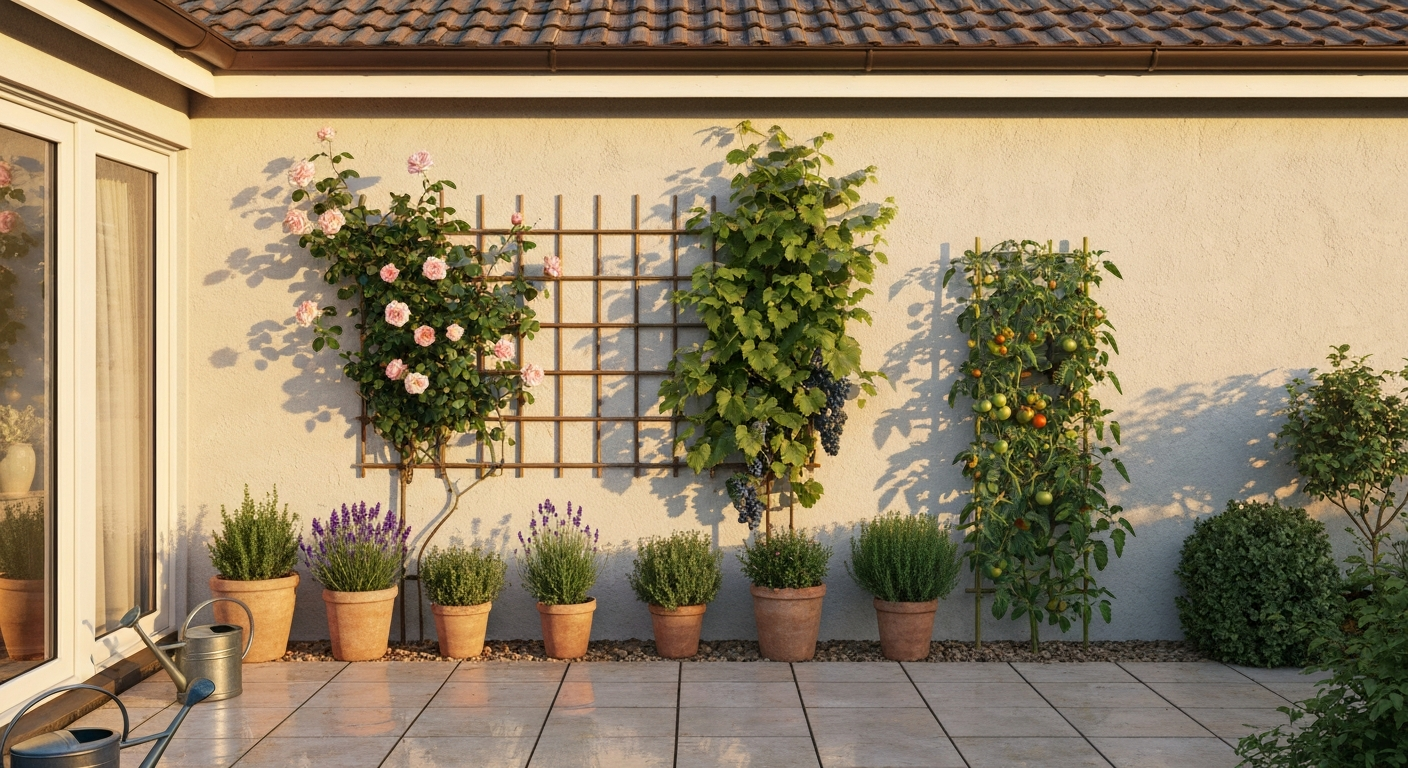
A south-facing wall is arguably the best possible location for climbing plants. The wall provides support and heat storage; the climber provides insulation, beauty, and in some cases fruit. Roses, particularly climbing and rambling varieties, have been trained on south walls for good reason: they bloom best in maximum sun. Wisteria is spectacular on a south wall but needs firm support and patience (it can take three to five years to bloom). Grape vines are a practical choice if you want both foliage cover and harvestable fruit; in most temperate climates a south wall provides the extra warmth grapes need to ripen reliably. Clematis works well if you choose late-flowering large-flowered hybrids or species clematis and allow their roots to stay cool while the top reaches the sun. Passion flower (Passiflora caerulea) is surprisingly cold-hardy (to about -10°C) and produces exotic flowers against warm south walls in temperate gardens.
| Climber | Growth rate | Max height | Climate suitability | Best use |
|---|---|---|---|---|
| Climbing rose | Medium | 3–6 m | Cool temperate to Mediterranean | Wall coverage, flowers, cottage aesthetic |
| Wisteria | Fast once established | Up to 10 m | Cool temperate to subtropical | Dramatic flowering; needs very strong support |
| Grape vine | Fast | 4–8 m | Mediterranean to cool temperate | Fruit + shade in summer, bare in winter |
| Clematis (large-flowered hybrids) | Medium | 2–4 m | Cool temperate to Mediterranean | Mix with roses; prune by group (1/2/3) |
| Passion flower (P. caerulea) | Fast | 4–8 m | Cool temperate to subtropical | Exotic flowers; may need winter protection in cold zones |
| Bougainvillea | Fast | 5–12 m | Mediterranean, subtropical, tropical | Bold color; thrives on heat and drought stress |
| Campsis (trumpet vine) | Very fast | Up to 10 m | Warm temperate to subtropical | Hummingbird-friendly; can be invasive — contain it |
When the south side is shaded, shade-tolerant alternatives
Not every south-facing spot is actually sunny. Deep roof overhangs, large trees, neighboring buildings, or recessed entryways can reduce a technically south-facing location to only 2–3 hours of direct sun, or even full shade. If your measured sun hours come in below 4, you're better off treating the space as a shade or part-shade bed. Good options include hydrangeas (Hydrangea macrophylla or paniculata), climbing hydrangea (Hydrangea petiolaris) for the wall, ferns, hostas, and woodland perennials like astilbe and hellebores. Extension guides such as Gardening in the shade, University of Minnesota Extension recommend shade‑tolerant understory alternatives (woodland perennials, ferns, hydrangea, climbing hydrangea) and advise measuring actual direct‑sun hours before selecting plants Gardening in the shade — University of Minnesota Extension. These won't give you the Mediterranean-herb benefits of a sunny south wall, but they'll thrive where sun-lovers would fail. Worth noting: if you're also looking at east- or west-facing exposures, those come with their own distinct plant lists and timing considerations that differ meaningfully from a south-facing bed.
Plant recommendations by regional climate
Your broad climate type shapes which south-side plants are realistic and which are wishful thinking. Here's a practical breakdown by climate zone.
| Climate type | Examples | Best food crops | Best herbs | Best ornamentals / climbers | Watch out for |
|---|---|---|---|---|---|
| Cool temperate | UK, northern US, Canada, northern Europe | Tomatoes, beans, courgettes, wall-trained peach/apricot | Rosemary, lavender, thyme, sage | Climbing roses, clematis, wisteria | Late frosts killing new growth; wet winters rotting herbs |
| Mediterranean | Coastal CA, southern Europe, parts of Australia | Tomatoes, peppers, figs, aubergine, grapes | All Mediterranean herbs, basil | Roses, bougainvillea, grape vines, jasmine | Summer drought stress; fire risk with dry mulches |
| Hot / arid | Arizona, inland TX, desert SW, parts of Middle East | Peppers, melons, heat-tolerant tomatoes, pomegranate | Sage, oregano, lemon verbena | Bougainvillea, agave, sedum, ornamental grasses | Extreme reflected heat damaging plants; soil moisture loss |
| Subtropical / tropical | Florida, Gulf Coast, SE Asia, coastal Brazil | Cucumbers, peppers, beans, tropical fruits | Basil, lemon grass, ginger | Bougainvillea, passion flower, Campsis | High humidity causing fungal issues; intense summer sun scalding |
Seasonal timing and a quick planting calendar
Timing matters as much as plant selection. Even the perfect south-wall plant will fail if you put it in at the wrong time of year. The most common mistake is planting tender warm-season crops (tomatoes, basil, peppers) too early and losing them to a late frost, the wall warmth is not enough to protect against a genuine freeze. Here's a general timing guide for the Northern Hemisphere; reverse the months for the Southern Hemisphere.
| Season | Northern Hemisphere months | Key tasks | Best plants to put in |
|---|---|---|---|
| Late winter / early spring | Feb–Mar | Prune wall-trained fruit; prepare beds; sow indoors | Bare-root climbing roses, bare-root fruit trees |
| Spring | Apr–May | Plant after last frost; stake climbers; sow direct | Tomatoes (post-frost), beans, courgettes, Mediterranean herbs, clematis |
| Early summer | Jun | Mulch to retain moisture; tie in climbers | Basil, cucumbers, peppers; second sowing of beans |
| Midsummer | Jul–Aug | Irrigate; watch for heat stress and powdery mildew | Strawberry runners (late Jul–Aug for next year) |
| Autumn | Sep–Oct | Plant perennial herbs and shrubs (best establishment season); collect seed | Lavender, rosemary, sage, roses (bare-root from Oct) |
| Winter | Nov–Jan | Protect marginally tender plants with fleece/hessian; plan next season | Bare-root roses and fruit trees (Nov–Feb) |
Containers vs. in-ground vs. foundation planting: what works where
How you plant matters just as much as what you plant on the south side. Each method has real trade-offs, and the south-wall environment, heat, dryness, and proximity to the house foundation, makes those trade-offs more consequential than in cooler, shadier parts of the garden.
Container planting on a south-facing patio or wall
Containers give you total control over soil quality, drainage, and position. They're the right choice when your foundation soil is poor or full of rubble, when you're renting, or when you want to move tender plants (like a container fig or lemon) indoors for winter. The downside is that containers in a south-side microclimate dry out fast, sometimes daily in hot weather, and dark-colored pots absorb heat that can literally cook roots. Use light-colored or insulated containers, always choose the largest pot you can manage (roots need room), and water before the soil is bone dry, not after. Avoid setting plastic pots directly on reflective paving in a hot climate.
| Plant type | Minimum container size | Notes |
|---|---|---|
| Herbs (single plant: basil, thyme, rosemary) | 5–10 liters (1–3 gallons) | Good drainage essential; terracotta dries faster than plastic |
| Herbs (mixed planter / 3–4 plants) | 15–20 liters (4–5 gallons) | Group plants with similar water needs |
| Tomatoes (standard / indeterminate) | 20–30 liters (5–8 gallons) minimum | Self-watering containers are ideal for south walls |
| Tomatoes (patio/dwarf varieties) | 10–15 liters (3–4 gallons) | Bush types better in smaller pots |
| Peppers | 10–15 liters (3–4 gallons) | Overwintering in frost-free space is possible |
| Fig (container) | 30–50 liters (8–13 gallons) | Root restriction actually encourages fruiting |
| Strawberries | 10–15 liters per 3–4 plants | Hanging baskets and window boxes work well |
| Climbing rose (patio variety) | 30–40 liters (8–10 gallons) | Feed regularly; wall-mounted support needed |
| Lavender / Rosemary (large specimen) | 15–20 liters (4–5 gallons) | Ensure drainage holes; don't let it sit in water |
In-ground beds on the south side
In-ground planting gives roots unlimited space, better moisture retention in summer (once plants are established), and much better resilience to heat. The challenge on the south side is that soil close to the house is often compacted, nutrient-poor, and affected by the roof drip line (a strip of very dry, often slightly alkaline soil directly under the roof overhang where rainwater never reaches). Before planting, dig in generous amounts of organic matter, well-rotted compost or manure, and check drainage as described above. For most perennial herbs and ornamentals, a raised bed built out from the wall solves both drainage and soil quality issues in one step.
Foundation planting: root safety and planting distances
Planting directly against the house foundation is one of the most common south-side scenarios, but it comes with rules worth following. Vigorous shrubs and trees with invasive root systems, wisteria, large roses on their own roots, mature fig trees, can damage foundations, drain pipes, and paving if planted too close. Climbing plants attached to walls can damage mortar and brick if the supporting structure (trellis, wire, hooks) isn't properly installed, or if plants like ivy (Hedera) are allowed to grow directly against the masonry. As a general rule: keep large shrubs and trees with significant root spread at least 1–2 meters from the foundation, and use a proper trellis or wire system (not the wall itself) as the primary support for climbers. Herbaceous perennials, annuals, and most compact shrubs can be planted closer. Always check with a local extension service or building professional if you have older foundations or known drainage pipe routes.
| Plant type | Recommended minimum distance from foundation | Root safety notes |
|---|---|---|
| Herbaceous perennials (lavender, salvia, echinacea) | 30–60 cm | Low root impact; fine for foundation beds |
| Annual vegetables and herbs | 30 cm or more | No structural root risk |
| Compact shrub roses (patio types) | 60–90 cm | Well-behaved root system |
| Climbing rose on trellis | 45–60 cm to wall | Use wall-mounted trellis, not ties directly on masonry |
| Wisteria | 1.5–2 m minimum | Extremely vigorous; can damage older masonry |
| Fig (in-ground) | 2–3 m | Root barrier recommended; consider container instead |
| Grape vine on wire system | 60–90 cm to wall | Train on wires anchored to wall bolts |
| Large ornamental shrubs (ceanothus, pyracantha) | 1–1.5 m | Check mature spread before planting |
| Trees (any) | 3–5 m or more | Consult a professional for older or shallow foundations |
Troubleshooting common south-side problems
Too much heat and reflected light
The most common failure mode I've seen on south-facing walls, especially in hot climates or against white/pale walls, is heat stress from reflected light and re-radiated warmth. Symptoms are leaf scorch (brown, crispy leaf edges), wilting that doesn't recover overnight, or complete collapse of soft-leaved plants in midsummer. The fix: choose inherently heat-tolerant species (Mediterranean herbs, succulents, warm-season grasses), mulch heavily to cool the soil, position reflective paving surfaces away from the planting zone, and consider shade cloth as a temporary fix during the worst heat weeks. In Phoenix in August, even rosemary benefits from afternoon shade from a pergola or trellis.
Poor drainage and root rot
Foundation beds are notorious for poor drainage, the soil gets compacted from construction, often contains rubble, and may slope toward the house. Lavender, rosemary, and most Mediterranean plants will die in waterlogged soil faster than almost anything else. If your drainage test shows water sitting for more than an hour, either build a raised bed with free-draining compost-and-grit mix, install a French drain, or move to containers entirely. Don't try to fight this with more drought-tolerant plants, the problem is the soil structure, not the plant choice.
Underestimating the roof drip line
The zone directly under the roof overhang is often bone dry even after rain, because the roof sheds water beyond the planting area. Plants in this zone effectively live in a drought condition that you can't see from the other side of the yard. The practical response is either to position your main planting zone beyond the overhang line, or to set up a simple drip irrigation line in that zone. Even drought-tolerant herbs will struggle here without some supplemental water in summer.
Late frost on tender new growth
Wall warmth can trick plants into breaking dormancy early, a peach or rose against a south wall may be three weeks ahead of the same plant in the open garden. That's great for the growing season but dangerous if a late frost hits. Keep fleece or frost cloth handy in early spring and be ready to drape it over newly leafed-out plants on nights when temperatures are forecast to drop to 0°C or below. This is especially important for wall-trained fruit trees in flower, a single frost event during blossom can kill the entire year's crop.
When to look at other walls and orientations
The south side is the most productive exposure for most gardeners, but it's not right for every plant or every purpose. If you're choosing plants for different parts of your property, around the front of the house, along the side, or on a sloped bed, the conditions change enough to warrant a different plant list. East-facing walls get morning sun and afternoon shade, which suits many roses and some food crops that prefer cooler afternoons. For more on specific species and timing, see a dedicated guide on what plants grow in east side of house. West-facing walls get afternoon sun that can be brutal in hot climates, favoring heat-tolerant ornamentals and lavender but stressing some vegetables. Foundation and front-of-house plantings come with their own aesthetic and structural considerations worth addressing separately. For curated suggestions, see our guide to the best plants to grow in front of house. And if you have a sloped site, erosion control and root structure become priorities that shape the plant list significantly. For help choosing species that control erosion and establish well on inclines, see our guide on what plants grow best on a slope. For recommendations on slope-stabilizing species, see our guide to the best plants to grow on hillside.
FAQ
What does “south side” of a house mean in the Northern and Southern Hemispheres?
‘South side’ is defined by solar azimuth: in the Northern Hemisphere a wall or yard facing ~180° azimuth is true south and receives the most sun; in the Southern Hemisphere the equivalent maximum‑sun exposure is on the north‑facing side (orientation conventions reverse). Use a compass or phone app and a solar calculator (NOAA/NREL) to confirm aspect for your site and date.
What microclimate factors should I measure at the south side before choosing plants?
Measure these core variables: direct sun hours (seasonal), reflected heat from walls/paving, daytime and nighttime air/surface temps, wind exposure, soil texture/depth/drainage, and presence of frost pockets/cold‑air pooling. Tools: Solar Pathfinder or fisheye camera/SunEye apps for sun hours, soil probe/trowel for depth, simple thermometer/data logger for night minima. Record summer and winter differences.
How do I classify light levels for plant selection?
Use extension definitions: Full sun = ≥6 hours direct sun/day; Part sun/part shade ≈4–6 hours direct sun; Shade = <3–4 hours direct sun. Pick plants labeled for the correct light category after confirming your measured seasonal direct‑sun hours.
What decision steps should I follow from site assessment to planting?
1) Measure site (sun hours, temps, soil, wind). 2) Choose purpose (ornamental, edibles, herbs, low‑maintenance). 3) Match species to hemisphere, local climate (USDA/AHS/Köppen), and microclimate. 4) Plan spacing, planting dates, and irrigation. 5) Plant using recommended soil prep/container sizes. 6) Provide season‑appropriate protection and maintenance. Keep notes and adjust based on early performance.
Which plant types thrive on exposed, hot south walls in cool‑temperate climates? (examples and spacing)
Edibles: tomatoes (2–3’ spacing for determinate, 3–4’ for indeterminate), winter squash (space 3–5’), trellised peas in spring. Herbs: rosemary (2–4’), thyme (8–12"), sage (2–3’). Ornamentals: roses (2–4’), lavender (2–3’), buddleia (3–6’). Climbers: grape (8–10’ between anchors), honeysuckle (6–10’). Use sheltered microclimates and wall heat to extend season.
What plants suit a true south exposure in Mediterranean climates (hot, dry summers)?
Drought‑tolerant Mediterranean species: rosemary, lavender, thyme, sage, oleander (zones permitting), rockrose (Cistus), Grevillea, and many salvias. Edibles: grapes, figs, olives (where winter minima and heat permit). Planting spacing: Mediterranean shrubs generally 3–6’ apart depending on mature size. Choose low‑water natives and amend soil for drainage.
Next Article
What Plants Grow in East Side of House: Guide & Plant Lists
East-side planting guide: morning-sun picks, shade perennials, edibles, containers, seasonal schedules and care.