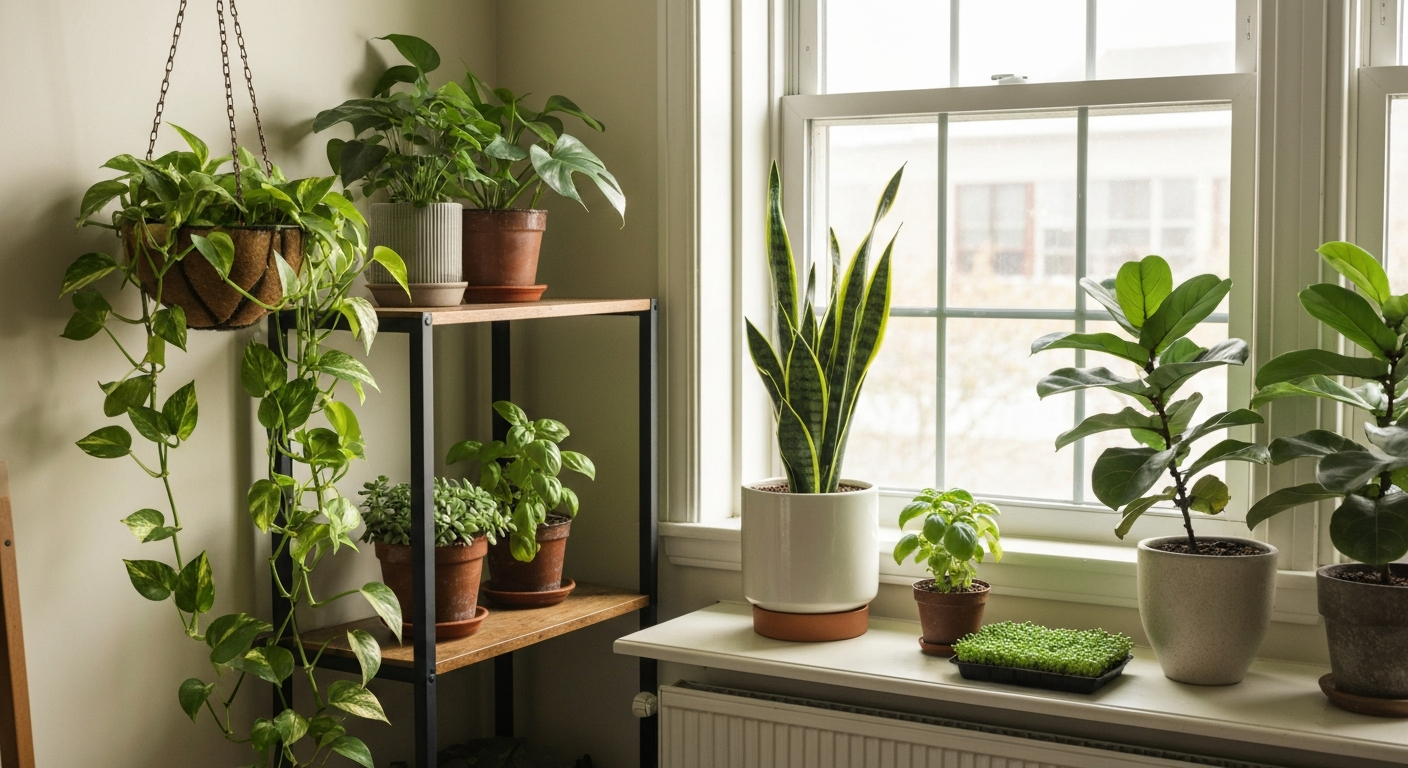
The best plants to grow in front of your house depend on three things above everything else: how much sun the space gets, how much time you want to spend on upkeep, and what you actually want the yard to do (look tidy year-round, wow people with flowers, block out the street, or survive a drought). If you have a slope in the front yard, choose plants that can handle water runoff and erosion as well as your sun and soil conditions. Once you nail those three, the plant choices get obvious fast. Below you'll find concrete picks for every common front-yard scenario, plus a simple seasonal plan so you can take action this week.
Best Plants to Grow in Front of House: Picks by Sun, Soil
Rachel Hartley
28 Apr 2026
Read your front yard before you buy a single plant

Most planting mistakes happen at the garden center, not the garden. People fall for a beautiful shrub without knowing whether their front yard is full sun, partial shade, or deep shade for most of the day. Before you spend a dollar, spend 20 minutes observing. Does the front of your house face north, south, east, or west? South and west-facing fronts get intense sun and heat. North and east-facing fronts tend to be cooler and shadier. For more ideas that match your exact exposure, see what plants grow in east side of house as a related option. That single fact rules out or rules in a huge number of plants.
After light, check your soil. Grab a handful and squeeze it. Sandy soil falls apart immediately and drains fast (sometimes too fast). Clay soil holds its shape and drains slowly, which can waterlog roots. Most front-yard foundation beds are compacted from construction and often filled with poor subsoil. If you're not sure, dig a hole about 12 inches deep, fill it with water, and time how long it takes to drain. If it's still sitting there after an hour, you have a drainage problem you need to solve with amendments or raised beds before planting anything.
Foundation clearance is the other thing people skip. Most shrubs and perennials should be planted at least 18 to 24 inches away from the foundation wall, and larger shrubs need 3 to 5 feet. If you are planning best plants to grow on side of house, use the same foundation-clearance rule so plants do not trap moisture against siding or crowd the structure foundation beds. Too close and you get moisture trapped against siding, pest problems, and roots that eventually push against the structure. It also cuts off air circulation, which invites fungal disease. If your planting strip is narrow, think low-growing perennials, ornamental grasses, and compact varieties rather than standard-size shrubs.
Finally, look up your USDA Plant Hardiness Zone before buying anything. The USDA Plant Hardiness Zone Map is the standard reference that tells you the average minimum winter temperature in your area, and every reputable plant tag will list a zone range. If you're in Zone 6 and a plant is rated for Zones 8 to 11, it won't survive your winters outdoors. You can find your zone on the USDA website in under a minute by entering your zip code.
Best low-maintenance plants for the front of the house
If you want the yard to look decent without constant attention, these are the workhorses. They establish quickly, tolerate some neglect, and don't need to be babied through summer heat or winter freezes.
- Knock Out Roses (Zones 4 to 11): disease-resistant, repeat-blooming, and genuinely hard to kill. They need one hard pruning in late winter and almost nothing else. Plant them 3 feet apart in full sun.
- Spirea (Zones 3 to 9): fast-growing, spring-blooming, and tolerates a wide range of soils. 'Magic Carpet' stays compact (under 2 feet) for tight spaces. Cut it back by a third after it blooms.
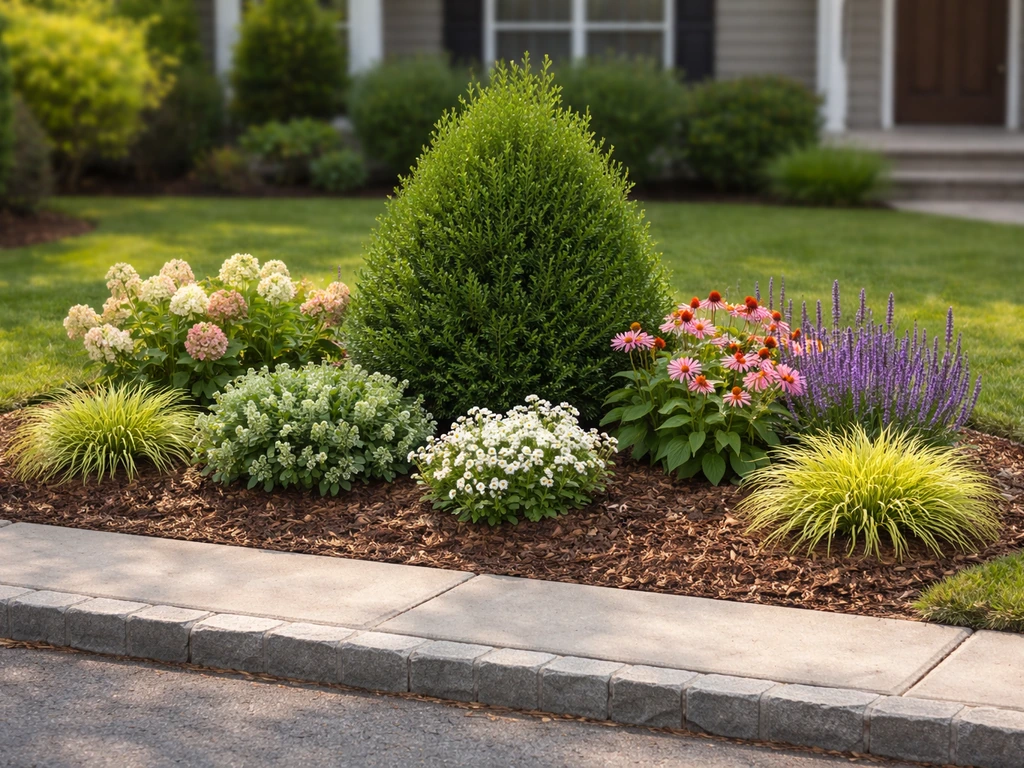
- Dwarf Alberta Spruce (Zones 2 to 8): a slow-growing conical evergreen that gives year-round structure with zero pruning. It maxes out at 6 to 8 feet over many years, so it won't swallow your porch.
- Ornamental grasses like Karl Foerster feather reed grass (Zones 4 to 9): upright, architectural, and attractive all four seasons. Cut them back to about 4 inches in late February or March.
- Hostas (Zones 3 to 9): the single best plant for shady north-facing fronts. They spread slowly, suppress weeds, and need almost nothing besides water in dry spells. Not deer-proof, which is the one honest warning.
- Daylilies (Zones 3 to 10): nearly indestructible perennials that multiply on their own. Stella de Oro stays compact and reblooms all summer. Divide clumps every 3 to 4 years to keep them vigorous.
For all of these, mulch is the biggest single upgrade you can make. A 2 to 3 inch layer of shredded bark or wood chip mulch keeps moisture in, weeds down, and soil temperature stable. Reapply every spring and your maintenance time drops dramatically.
Best flowering plants for curb appeal
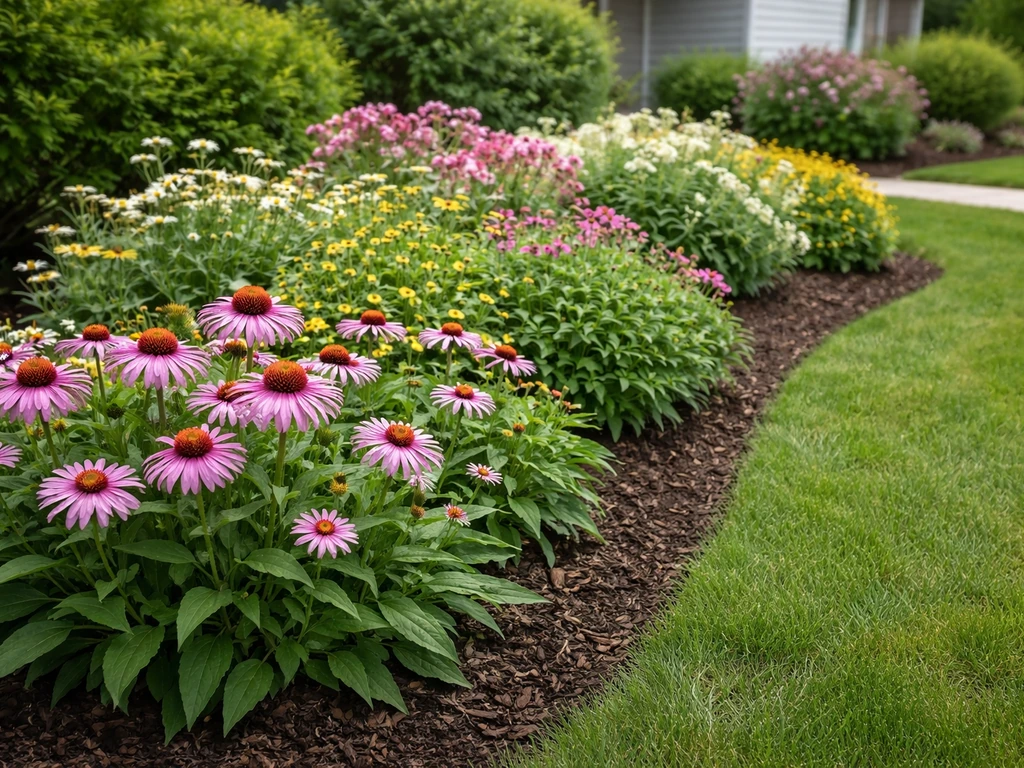
If you want color and impact, these plants consistently deliver from spring through frost. The key is layering them so something is always blooming, not just one big flush in May and then nothing.
- Coneflower / Echinacea (Zones 3 to 9): blooms June through September, attracts pollinators, and the dried seed heads look good in winter. 'Magnus' and 'PowWow White' are reliable performers.
- Black-eyed Susan / Rudbeckia (Zones 3 to 9): golden-yellow flowers from July to October that absolutely glow in afternoon sun. Extremely drought-tolerant once established.
- Lavender (Zones 5 to 9): fragrant, bee-friendly, and beautiful as a low border or lining a front walkway. Needs well-drained soil and full sun. Dies fast in wet clay without amendments.
- Catmint / Nepeta (Zones 3 to 9): soft lavender-blue flowers from late spring to fall if you shear it back after the first flush. Works beautifully edging a path or in front of larger shrubs.
- Salvia 'May Night' (Zones 4 to 8): deep purple spikes in May and June, often reblooms in fall. Deer-resistant, drought-tolerant, and pollinators go crazy for it.
- Hydrangea (Zones 3 to 9 depending on variety): 'Incrediball' (smooth hydrangea) and 'Limelight' (panicle hydrangea) are the most adaptable and easiest to bloom reliably. Panicle types handle full sun better than bigleaf types.
- Petunias and Calibrachoa (annuals): for fast, season-long color in sunny spots, nothing beats these in containers or as a front border filler while perennials establish.
Deadhead spent blooms on roses, coneflowers, and catmint to keep the flowers coming. For perennials, that just means snipping the faded flower stem back to the next set of leaves. It takes five minutes and makes a visible difference within a week.
Drought-tolerant and climate-hardy picks
If you're in a hot, dry climate (think the Southwest, Southern Plains, or even a west-facing front in the mid-Atlantic) or if you simply can't count on regular watering, lean into plants that evolved to handle stress. The same applies if you're in the Upper Midwest or Northeast where winters are brutal.
| Plant | Zones | Best For | Notes |
|---|---|---|---|
| Sedum 'Autumn Joy' | 3 to 9 | Dry, sunny spots | Succulent foliage, pink flowers in fall, seed heads persist through winter |
| Blue Oat Grass | 4 to 9 | Edging, color contrast | Steel-blue foliage, stays evergreen in mild winters, very low water needs |
| Russian Sage | 4 to 9 | Hot, sunny, dry borders | Airy lavender flowers all summer, deer-resistant, needs excellent drainage |
| Yucca | 4 to 11 | Extreme drought and heat | Dramatic architectural plant, nearly indestructible, keeps away deer |
| Mugo Pine | 2 to 7 | Cold-hardy evergreen structure | Slow-growing, mounding, needs no pruning, handles harsh winters |
| Creeping Phlox | 3 to 9 | Ground cover, slope coverage | Spring bloom is stunning, cascades over walls, drought-tolerant once established |
| Agave (cold-hardy types) | 5 to 11 | Very hot, arid climates | 'Blue Glow' hardy to Zone 5 with good drainage; pairs well with gravel mulch |
One honest gotcha with drought-tolerant plants: they still need regular watering for the first full season after planting while their roots establish. UMN Extension recommends watering newly planted shrubs about every 2 to 3 days for the first 12 weeks to help them establish roots, and notes that mulching the root area helps hold moisture watering newly planted shrubs frequently. 'Drought-tolerant' means tolerant once the plant is established, not the day you put it in the ground. Water new plantings deeply once or twice a week for the first 8 to 12 weeks, then back off.
Best privacy and evergreen structure plants

Evergreen plants are the backbone of a front yard that looks intentional year-round, not just in summer. They also solve the problem of screening views from the street, buffering wind, and giving the eye something to land on in January when everything else is bare.
- Arborvitae 'Emerald Green' (Zones 3 to 8): the gold standard for a privacy hedge or screening row. Columnar shape, 10 to 15 feet tall at maturity, 3 to 4 feet wide. Plant 3 feet apart for a solid screen. Needs full to part sun.
- Boxwood (Zones 5 to 9): classic evergreen structure, great for borders, foundation planting, and formal framing of an entry. 'Green Mountain' and 'Winter Gem' are reliable and less prone to boxwood blight than older varieties.
- Holly 'Sky Pencil' (Zones 6 to 9): extremely narrow columnar form (2 feet wide, up to 10 feet tall), perfect flanking an entry door where space is tight.
- Nellie Stevens Holly (Zones 6 to 9): fast-growing, dense, and tops out at 15 to 25 feet. One of the best large privacy screens for the Southeast. Red berries in winter are a bonus.
- Inkberry Holly (Zones 4 to 9): native, deer-resistant evergreen shrub that tolerates wet soils better than almost anything else in this list. Great for poorly drained front yards.
- Leyland Cypress (Zones 6 to 10): grows 3 to 4 feet per year and creates a dense screen fast. Plant only if you have room for something that can hit 60 to 70 feet. Often overplanted in small yards, which creates problems later.
- Skip Laurel (Zones 5 to 9): fast-growing, broadleaf evergreen that handles shade better than most. Good for north or east-facing fronts where arborvitae might struggle.
For evergreens near the foundation, always check the mature width before you plant. A shrub that looks perfect at 2 feet wide in the pot can hit 8 feet wide in 10 years and end up covering windows, blocking the walkway, and requiring major removal work. The plant tag or any reputable nursery will give you mature dimensions.
Container plants for porches and entryways
Containers are the fastest way to add impact right at the front door, and they work whether you have a sprawling front yard or a narrow townhouse stoop. The trick is using the thriller-filler-spiller formula: one tall, upright focal plant (thriller), one mounding plant that fills the middle (filler), and one trailing plant that spills over the edge (spiller). That combination looks intentional and lush even in a single pot.
- Thriller options: Cordyline (spiky, tropical look), Caladium (big bold foliage for shade), upright Salvia, or a small ornamental grass like Purple Fountain Grass
- Filler options: Impatiens (shade), Petunia or Calibrachoa (sun), Begonias (sun or shade), Coleus (shade to part sun, stunning foliage color)
- Spiller options: Sweet Potato Vine (fast, dramatic, sun or shade), Bacopa, trailing Lobelia, or Creeping Jenny for a shade entry
- For year-round evergreen interest: plant a dwarf boxwood, 'Sky Pencil' holly, or dwarf conifer in a large container flanking the door. These stay in the pot year-round and just need watering.
Container plants dry out fast, especially on a south or west-facing porch in summer. A pot in full sun in July may need water every single day. Use a potting mix with moisture-retaining material (not straight garden soil, which compacts), and add a slow-release fertilizer granule at planting time. If you want to water less, self-watering containers or large-diameter pots (18 inches or bigger) hold moisture much longer than small ones.
If your porch or entry faces east, you're working with morning sun and afternoon shade. That's actually a sweet spot for plants like Impatiens, Begonias, Caladiums, and Ferns, which burn in direct afternoon sun. North-facing entries with deep shade do best with Impatiens, Coleus, and shade-tolerant ferns. If your entry faces west or south, lean into sun-lovers like Petunias, Zinnias, and tropical-look Cordyline.
When and how to plant: your seasonal action plan
Spring (now through June)
Spring is the best time to plant nearly everything on this list. The soil is workable, temperatures are mild, and plants have the whole growing season to establish roots before facing summer heat or winter cold. Right now, in late April, is prime planting time in most of the country (Zones 5 through 9). If you're in Zone 4 or colder, wait until after your last frost date, which may still be a few weeks out. Head to a local independent nursery rather than a big-box store if you can: staff will know your local conditions and the plants are usually better quality.
- Prep your bed first: loosen soil to 12 inches, remove weeds, and work in 2 to 3 inches of compost if the soil is compacted or clay-heavy.
- Plant at the same depth the plant was growing in its pot. Burying stems too deep is one of the most common causes of plant failure.
- Space plants according to their mature width, not how they look today. It feels sparse at first, but crowded plants compete for water and air.
- Water deeply right after planting, soaking the root zone. Then water every 2 to 3 days for the first two weeks, every 4 to 5 days for weeks 3 and 4, then weekly through the first summer.
- Mulch the entire bed 2 to 3 inches deep, keeping mulch a few inches away from plant stems and the house foundation.
Summer (June through August)
Summer is not the ideal planting window for most shrubs and perennials, but annuals and container plants go in any time. If you're planting shrubs or perennials in July or August (especially in the South, Southwest, or any Zone 7 and warmer region), do it in the evening, water heavily, and shade newly transplanted plants for the first week with a temporary shade cloth. Heat stress during establishment is the number-one killer of summer-planted shrubs. Focus summer energy on maintaining what you planted in spring: deadhead flowering plants, check soil moisture weekly, and watch for pests.
Fall (September through November)
Fall is actually an excellent time to plant trees, shrubs, and evergreens because the soil is still warm but air temperatures are cooling, which reduces stress on the plant while roots keep growing until the ground freezes. If you missed spring planting, fall is your second-best window and often your cheapest: nurseries discount plants heavily in September and October. Plant at least 6 weeks before your average first frost date so roots have time to settle in. Add a layer of mulch before winter to insulate roots against freeze-thaw cycles.
Basic ongoing care in 10 minutes a week
- Water new plants deeply and less frequently rather than a little bit every day. Deep watering encourages roots to grow down, making plants more drought-tolerant long-term.
- Deadhead flowering perennials and annuals to extend the blooming period.
- Prune spring-blooming shrubs like Spirea right after they finish blooming. Prune summer bloomers in late winter before new growth starts.
- Refresh mulch every spring. Old mulch compacts and loses its effectiveness.
- Fertilize most foundation shrubs and perennials once in spring with a balanced slow-release granular fertilizer. Evergreens generally need even less feeding.
One last practical note: your front-of-house conditions are a specific microclimate, and the exact right picks shift depending on whether your front faces north, south, east, or west. For more tailored options, see our guide to the best plants to grow next to house. If you are also figuring out what plants grow best on the west side of your house, focus on intense afternoon sun and pick drought-tolerant options that match that exposure.
If you are also figuring out the best plants to grow on the side of your house, start by matching sun and shade on that specific side best plants to grow on side of house. If your yard also slopes, choose plants that can handle runoff and uneven soil, which is often the key to success what plants grow best on a slope.
If your yard also slopes, choose plants that can handle runoff and uneven soil, which is often the key to success best plants to grow on hillside. A south-facing front yard needs a completely different plant palette than a shaded north-facing one. If you're working on other sides of the house too, the exposures and plant choices genuinely differ, so think of each side separately rather than using the same plant list everywhere.
FAQ
How far should I keep plants from my driveway and walkway in front of the house?
In addition to foundation clearance, give paths and driveways breathing room. A good rule is to keep shrubs and taller perennials about 1 to 2 feet back from edges so they can expand without constantly overhanging where people walk. For tight spaces, choose compact varieties and plan to prune rather than forcing a mature plant to stay “small.”
What’s the best way to tell if my yard is full sun or partial shade?
Use a simple observation window. Watch the spot for 6 to 8 hours on a typical day and note whether it gets direct sun, dappled light, or mostly shade. If it receives direct sun for most of that time, treat it as full sun, if it’s mostly filtered or only a few hours of direct light, treat it as partial shade. If it never seems to warm up in the afternoon, assume deeper shade even if mornings get bright.
Can I plant evergreen shrubs right up against the foundation if they look small in the pot?
Avoid it. Even “slow-growing” evergreens often spread wider than expected over a decade, and tight placement traps moisture against siding and reduces airflow. Follow the mature-size rule from the start, and if the strip is narrow, consider smaller shrubs, low perennials, or ornamental grasses instead of full-size foundation plantings.
Should I use mulch or gravel in the front foundation beds?
Mulch is usually the better default because it stabilizes soil temperature and reduces weeds while holding moisture. Gravel can work in very dry, hot areas, but it typically increases temperature swings and makes it harder to keep consistent moisture at the root zone. If you go with gravel, use a fabric liner and plan on more attentive watering during establishment.
Do drought-tolerant plants still need extra watering after I plant them?
Yes, for establishment. The plants still need consistent deep watering for the first 8 to 12 weeks so roots spread into surrounding soil. After that first full season, you can usually scale back. A common mistake is cutting watering immediately after planting and assuming drought-tolerance will “kick in” right away.
How do I water new plants correctly without overdoing it?
Water deeply so moisture reaches the root zone, then wait until the top layer starts to dry before watering again. For many front-yard plantings, that often means 1 to 2 deep sessions per week depending on heat and soil drainage. Avoid frequent light sprinkling, it encourages shallow roots and can increase disease in beds near foundations.
What should I do if my soil drains slowly and I still want shrubs near the foundation?
Don’t skip the drainage test. If water sits after an hour, plan for amendments and/or a raised bed before planting. Also consider choosing plants that tolerate wet feet only if the site truly stays moist, otherwise opt for drainage fixes first because foundation beds are often compacted and stay waterlogged longer than expected.
How can I prevent pests like fungus when plants are close to the house?
The main prevention is spacing and airflow. Keep plants off the foundation as recommended so air can move and leaves can dry after rain. Also avoid burying stems too deep, and don’t let mulch pile directly against the base of shrubs, which can trap moisture and encourage rot.
Is fall planting always better than spring for front-yard shrubs?
Fall is often excellent because the soil is warm and air temperatures cool, but timing matters. Aim to plant at least 6 weeks before your average first frost, and make sure the soil drains well enough to avoid winter waterlogging. In regions with very early frosts or harsh freezes, spring planting may be safer for some moisture-sensitive plants.
What’s a low-maintenance way to get color for the whole season without constant deadheading?
Choose plants that set less need for frequent grooming, then combine them with a “always-there” structure. Pair repeat-blooming or long-flowering perennials with a few deadheading-free annuals or groundcovers, and use mulch to reduce weed pressure. If you do deadhead, focus on one or two high-impact plants rather than everything.
Can I use containers for year-round interest, or do I need to swap them by season?
You can use containers year-round if you select hardy plants for your zone and use a container size large enough to insulate roots. Larger pots (18 inches or bigger) dry out more slowly and are less vulnerable to freeze damage. In winter, protect the pot with insulation or move it to a sheltered spot if your winters are severe.
What fertilizer should I use for front-yard plants and containers?
For most in-ground beds, mulch provides ongoing soil support, and you often only need light feeding based on plant needs. In containers, incorporate a slow-release fertilizer at planting because nutrients wash out faster than in-ground soil. Avoid over-fertilizing newly planted shrubs, it can stress roots and create weak, overly leafy growth.
Next Article
Best Pot Plants to Grow Indoors: Practical Guide for Apartments
Best pot plants to grow indoors: apartment-friendly picks with light, pot, watering, difficulty and seasonal tips.