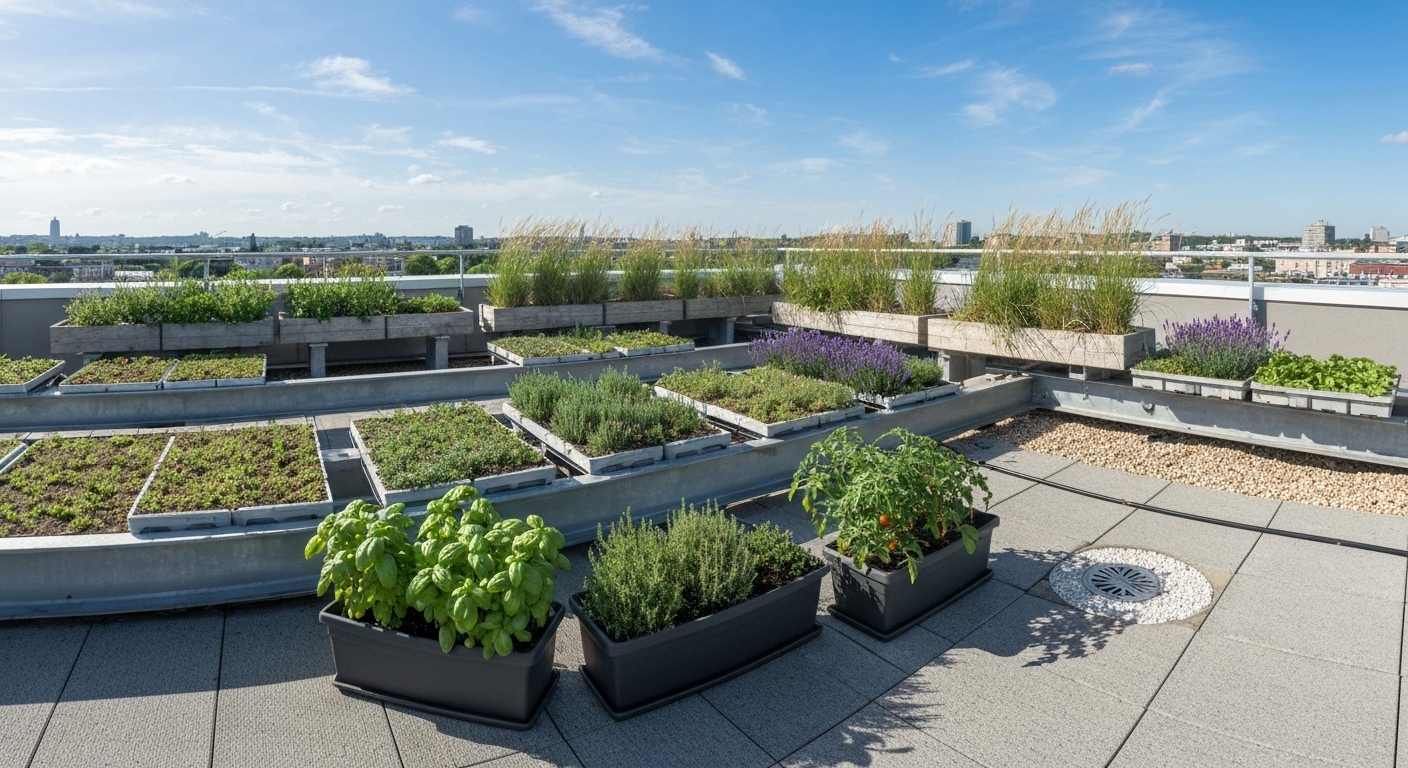
The best plants to grow on a patio depend on three things you can figure out in about ten minutes: how much direct sun your space gets each day, how large your containers can realistically be, and what you actually want out of the space (food, colour, fragrance, or just something green that stays alive). For a sunny patio with room for 5-gallon or larger pots, you can grow tomatoes, peppers, herbs, strawberries and bold ornamentals like lavender and pelargoniums. For a shadier or more exposed spot, the list shifts toward ferns, hostas, begonias, leafy greens and tough structural plants. This guide walks you through every scenario so you can make the right call for your specific patio, terrace, balcony or rooftop, today.
Best Plants to Grow on Patio: Light, Space & Container Guide
Rachel Hartley
13 Aug 2026
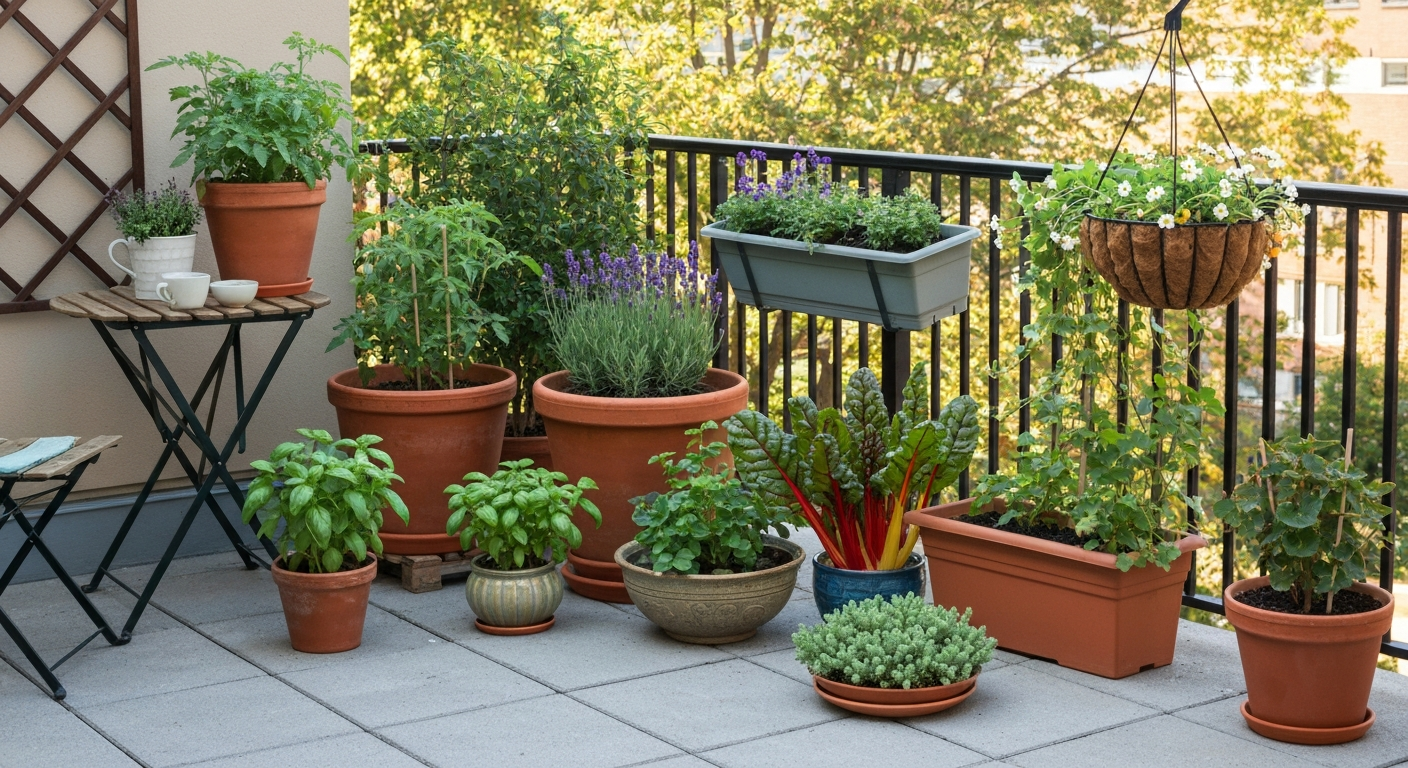
8 easy plants you can pot up and grow on your patio right now
If you want to skip the theory and just get something in a pot, here are eight reliably successful patio plants that suit a wide range of conditions. For a quick plant-by-plant list of what you can grow on your patio, see what can i grow on my patio. These are plants I return to year after year because they perform, look good and don't require heroic effort.
- Basil (Ocimum basilicum) — plant in a 6–8 inch pot in full sun, pinch flower buds to extend harvest. Fastest return on investment of any patio plant.
- Tumbling Tom tomato — a trailing variety bred for hanging baskets and window boxes; no staking needed, produces clusters of cherry tomatoes all summer.
- Lavender (Lavandula angustifolia) — thrives in free-draining mix, full sun, low water once established. Handles heat, deters pests and smells incredible.
- Pelargonium (zonal or ivy geranium) — long-blooming, drought-tolerant, happy in cramped pots. Ivy types trail beautifully from railing planters.
- Swiss chard — tolerates as little as 4 hours of sun, looks ornamental with coloured stems, grows well in a 10–12 inch pot.
- Alpine strawberry (Fragaria vesca) — compact, no runners, produces fruit continuously from late spring to first frost. Works in window boxes and hanging baskets.
- Sedum (e.g., 'Autumn Joy') — essentially indestructible in a well-drained pot; handles drought, heat, and cold snaps.
- Begonia (tuberous or wax types) — the go-to for shady patios where little else flowers reliably; keep soil moist and they bloom from June to frost.
How to read your patio before buying a single plant
Matching plants to your space is the single most important thing you can do. A plant that's perfect on a south-facing suburban patio will sulk and die on a breezy north-facing rooftop terrace. Spend one day observing your space before you spend a dollar.
Light: count the hours honestly
U.S. horticultural extension services define full sun as 6 or more hours of direct sunlight per day. Partial sun is roughly 4–6 hours, partial shade is 2–4 hours, and full shade receives little to no direct sun. Annual Flowers: Culture and Maintenance | Virginia Tech (VCE Publications) defines full sun as about 6 or more hours of direct sunlight per day. Check your patio at three different times (morning, midday, late afternoon) and note where shadows fall and for how long. Walls, overhangs and neighbouring structures can shave off hours you didn't expect to lose. A patio that feels bright can easily be partial shade once you count carefully.
Space and container load
Measure your actual usable floor space and decide how much of it you want occupied by pots. A 5-gallon pot filled with moist growing media weighs roughly 30–40 lb (14–18 kg); a 20-gallon container with a mature shrub or fruit tree can easily hit 150–200 lb (68–90 kg). For balconies and rooftops this matters a great deal. If you're on an upper-floor balcony or a rooftop, check your building's load capacity before stacking heavy planters. Concentrate weight near load-bearing walls or structural columns, not at the outer edges.
Wind exposure and microclimate
Wind is the hidden killer on exposed patios, rooftops and high-rise balconies. It shreds foliage, rocks containers off ledges and dramatically increases water loss. If your space is routinely windy, prioritise compact, low-growing or flexible-stemmed plants over tall, brittle ones. A simple windbreak (trellis, bamboo screen, dense hedge in a planter) can drop wind speed enough to expand your plant palette considerably. Rooftop gardeners especially need to factor this in.
Microclimate checklist
- Which direction does your patio face? South/southwest = hot and sunny; north/northeast = cooler and shadier; east = gentle morning sun; west = intense afternoon heat.
- Are there reflective surfaces nearby (pale walls, glass)? These amplify heat and light, sometimes by a full hardiness zone.
- Does water puddle after rain? Poor drainage at the base signals you need feet under pots or raised staging.
- How exposed is the space to wind? Upper floors and open rooftops need wind-resistant varieties and secure mounting.
- What is the lowest temperature you get in winter? This determines whether tender plants can stay out or need bringing in.
- Are there weight restrictions on your balcony, deck or rooftop? If unsure, consult a structural engineer before filling large planters.
Choosing your plants: a step-by-step decision guide
Work through these steps in order and you will arrive at a shortlist that actually suits your space, rather than a wishlist that frustrates you in July.
- Determine your light category (full sun, partial, shade) using the hour count above.
- Decide your primary goal: ornamental colour, edible harvest, fragrance, wildlife value, or low-maintenance greenery.
- Assess your largest feasible container size — this sets the ceiling on what you can grow.
- Check your local frost dates to know how many frost-free weeks you have for tender annuals and vegetables.
- Shortlist from the table below by matching exposure and goal, then refine by pot size requirement.
- Start with two or three species from the easy starter list, then add ambition once you know your space works.
| Light | Goal | Top plant choices | Min. pot size |
|---|---|---|---|
| Full sun (6+ hrs) | Edibles | Tomato (patio/dwarf), pepper, basil, strawberry, dwarf beans | 5–10 gal (fruiting); 6–8 in (herbs) |
| Full sun (6+ hrs) | Ornamental | Lavender, pelargonium, portulaca, marigold, agapanthus | 6–10 in (annuals); 10–15 gal (shrubs) |
| Full sun (6+ hrs) | Low-maintenance | Sedum, sempervivum, rosemary, ornamental grasses | 6–10 in |
| Partial sun/shade (2–6 hrs) | Edibles | Lettuce, spinach, chard, kale, chives, parsley, mint | 8–12 in |
| Partial sun/shade (2–6 hrs) | Ornamental | Fuchsia, astilbe, impatiens, heuchera, hydrangea (dwarf) | 8–12 in (annuals); 10–15 gal (shrubs) |
| Full shade (<2 hrs) | Ornamental | Fern, hosta, begonia, ivy, camellia (shade side) | 8–12 in (annuals); 15+ gal (shrubs) |
| Rooftop/exposed/windy | Any | Sedum, sempervivum, dwarf grasses, santolina, compact lavender | 8–12 in; use lightweight substrate |
| Hanging baskets | Ornamental/edible | Trailing pelargonium, tumbling tomato, alpine strawberry, lobelia, bacopa | 12–14 in basket minimum |
Container and growing-method basics
The RHS is right when it says you can grow almost anything in a container, but the word 'almost' is doing a lot of work. The container has to be sized to the plant's root system, filled with a mix that drains freely but holds some moisture, and set up so that excess water can escape. Get these three things right and you will succeed with almost any plant. Get them wrong and you will lose plants that should have been easy.
Pot size and root depth
As a general rule, shallow-rooted herbs (mint, thyme, oregano, basil) are comfortable in 6–8 inches (15–20 cm) of soil depth. Leafy vegetables and short-rooted crops like lettuce and chard need about 10–12 inches (25–30 cm). Fruiting vegetables, tomatoes, peppers, eggplant, do best with 12–18 inches (30–45 cm) of depth and a minimum of 5 gallons of volume for compact varieties. Indeterminate tomatoes (the big climbing types) really want 10–20 gallons if you expect reliable production. Undersizing is the most common cause of container crop failure.
Soil mix matters more than people realise
Don't use garden soil in containers. It compacts, drains poorly and introduces pests and diseases. Use a quality peat-free or peat-reduced potting mix and amend it based on what you're growing: add extra perlite (about 20–30% by volume) for succulents and drought-loving Mediterranean herbs; use a rich, moisture-retentive mix for tomatoes, peppers and leafy crops; add slow-release fertiliser granules at planting to reduce the feeding chore through the season.
Drainage and watering systems
Every container must have at least one drainage hole. Place pot feet or raise containers on bricks to allow free drainage and air circulation underneath. For larger collections, consider a simple drip irrigation timer, especially if your patio gets hot afternoon sun, containers in summer sun can dry out completely in under 24 hours. Self-watering pots with a reservoir base are excellent for herbs, lettuces and small flowering annuals; they reduce watering frequency and buffer against overwatering simultaneously.
Railing planters
Railing-mounted planters save floor space and work beautifully for trailing ornamentals and herbs. Check the weight rating of your railing before mounting anything, especially on balconies. Most railing planters hold 6–12 inches of soil depth, enough for herbs, lettuce, trailing petunias and pelargoniums, but not fruiting crops. Ensure the planter faces the right direction (outward-facing gets more light; inward gets more shelter) and check that any drip won't fall on neighbours below.
Hanging baskets, railing boxes and mobile planters
Each of these formats suits a different kind of growing. Knowing when to use which saves you from buying a basket when you needed a box, or vice versa.
Hanging baskets
Best for: trailing annuals (lobelia, bacopa, calibrachoa), ivy-leaf pelargoniums, fuchsias in partial shade, and compact fruiting varieties like Tumbling Tom tomato or alpine strawberries. Use a minimum 12–14 inch (30–35 cm) wire or plastic basket. Line with coir liner and use a moisture-retentive mix, baskets dry out faster than any other container format. In a hot summer, you may need to water twice a day at peak heat. A water-retaining gel additive in the compost helps significantly. Hang at head height or just above for easy watering access, and check that your hook or bracket is rated for the filled weight (a 14-inch basket saturated with compost can weigh 20–30 lb).
Railing boxes and window boxes
These are the workhorse format for balcony and patio edge planting. Use them for herbs, lettuces, trailing flowers and low compact vegetables. A 24-inch (60 cm) box in partial sun can easily produce enough salad leaves for one or two people through spring and autumn. Space out plants to allow airflow, crowded box plantings are prone to fungal disease. Replace the soil each year or every two seasons; exhausted compost in a box shows up quickly as weak, yellowing growth.
Mobile planters
Pots on wheeled plant caddies or lightweight lightweight fabric grow bags give you the ability to chase the sun or shelter from a storm, invaluable on a patio where shade moves through the day. Fabric grow bags (available in 5, 10 and 20-gallon sizes) are especially popular for tomatoes and peppers because the porous sides air-prune roots and prevent overwatering. Move tender plants into cover before late-season frosts; you can extend the productive season by three to four weeks this way.
Growing vertically: trellises, obelisks, living screens and safe mounting
Vertical growing is the single best way to expand your patio's planting capacity without using more floor space. A single 6-foot obelisk in a 10-gallon pot can host a clematis, a climbing rose, a sweet pea or a fruiting cucumber, the same footprint as one flat pot but with ten times the growing surface.
Trellises and obelisks
Freestanding obelisks and trellis panels set behind large pots are the easiest option on a patio where you can't fix anything to a wall. Anchor obelisks in the pot itself (plant around the base) or weight the base with heavy stones. For wall-fixed trellis, use sturdy masonry anchors and leave a 2–4 inch (5–10 cm) gap between the trellis and the wall to allow air circulation and room for stems to attach. Wall trellis on a south-facing patio creates an excellent warm microclimate for sun-loving climbers and wall-trained fruit.
Living screens
A row of large pots planted with fast-growing climbers on a trellis panel creates an effective living privacy screen within one season. Hop (Humulus lupulus) and black-eyed Susan vine (Thunbergia alata) are excellent annual options; for perennial screens, try star jasmine (Trachelospermum jasminoides) in a sheltered spot or climbing hydrangea for shady walls. Living screens also buffer wind, making the rest of your patio more hospitable.
Safety notes for balconies and terraces
On a balcony or upper-floor terrace, never fix heavy trellis panels to railings unless the railing is structurally rated for that load. Use freestanding frames ballasted with weight in the base pot, or fix trellis to the building wall (with landlord permission and structural anchors, not just rawlplugs in render). A full trellis panel loaded with wet climbing stems acts as a sail in high winds, make sure whatever holds it can take the force. This is relevant for terraces and rooftops as much as for standard balconies.
Climbers for pergolas, arbors and arches: species, training and pruning
A pergola, arbor or arch changes what's possible on a patio entirely. Suddenly you have overhead growing space for shade, fruit or dramatic seasonal display. For examples of climbers particularly suited to arches, see our guide to the best plants to grow on a garden arch. The key is choosing the right climber for your structure's scale and your maintenance appetite. For recommendations on the best plants to grow on an arbor, see our climber selection guide. Get this wrong and you're either pruning frantically every summer or watching a sparse climber look underwhelming for years. For suggestions on the best plants to grow up a pergola, see our quick guide to climbers suited for pergolas, arbors and arches.
Fast climbers vs. twining climbers
Fast, vigorous climbers like wisteria (Wisteria sinensis or W. floribunda), Virginia creeper (Parthenocissus quinquefolia) and trumpet vine (Campsis radicans) will cover a pergola in two to three seasons but require annual or twice-yearly pruning to stay in check. Wisteria in particular must be summer-pruned (cut new laterals back to 4–5 leaves in July–August) and winter-pruned (shorten further to 2–3 buds) to keep it flowering well and under control. Twining climbers like clematis, sweet peas and black-eyed Susan vine are gentler, they work through tendril or stem rotation and attach themselves to wires, trellis or the structure's uprights without damaging the wood.
Best species for pergolas, arbors and arches
| Plant | Type | Speed | Light needed | Container suitable? | Key care note |
|---|---|---|---|---|---|
| Clematis (large-flowered hybrids) | Twining | Moderate | Roots cool, top in sun | Yes, 15+ gal | Prune group 1/2/3 by variety; cool roots with mulch or a shading pot |
| Wisteria | Twining | Fast/vigorous | Full sun | Yes, very large pot | Needs firm structure; summer and winter prune every year without fail |
| Sweet pea (Lathyrus odoratus) | Tendril annual | Fast (annual) | Full sun | Yes, 5–10 gal | Sow early; deadhead constantly for continuous flower; not for heat-heavy summers |
| Climbing rose | Scrambler (tie in) | Moderate | Full sun to part sun | Yes, 20+ gal | Tie new canes horizontally for more flowers; prune and feed each spring |
| Star jasmine (Trachelospermum) | Twining | Slow at first, then vigorous | Full sun to part shade | Yes, 10–15 gal | Frost-tender; move or protect in cold winters; prune after flowering |
| Nasturtium (climbing type) | Scrambler annual | Very fast | Full sun to part shade | Yes, 3–5 gal | Edible flowers; self-seeds freely; tolerates poor soil — don't overfeed |
| Hop (Humulus lupulus) | Twining perennial | Extremely fast | Full sun | Yes, 10–15 gal | Dies back each winter; aggressive in good soil; excellent annual screen |
| Chocolate vine (Akebia quinata) | Twining | Moderate–fast | Part shade to full sun | Yes, 10–15 gal | Semi-evergreen; fragrant spring flowers; can become invasive in mild climates |
Where to plant and how to train
Plant climbing containers at the base of the structure's upright, not underneath the canopy where rainfall is blocked. Position the pot on the windward or open side so the stem can travel toward the light. For twining climbers, attach horizontal guide wires to the structure every 12–18 inches (30–45 cm) before planting, trying to retrofit wires around a mature climber is miserable work. Fan out new stems as they grow and tie loosely with soft garden twine; never use wire directly on stems. Remove crossing stems early to prevent congestion and disease.
Structure safety
A mature wisteria or Virginia creeper on a pergola adds significant weight and wind resistance. Before planting anything vigorous, check that your pergola or arbor structure is solidly anchored and built from rot-resistant timber (cedar, oak or pressure-treated pine) or powder-coated metal. Wooden structures should be inspected each spring for rot at the base and at joints. Replace any compromised posts before the climber adds more load. This is especially important on patios that adjoin living spaces or are above ground level.
Seasonal timing, regional notes and overwintering
Timing matters enormously and gets ignored in most plant guides. In the northern US and UK, don't put tender plants out until night temperatures reliably stay above 50°F (10°C), typically late May in colder zones, mid-April in warmer coastal areas. In hot climates like Texas or the US Southwest, August is the time to start autumn vegetables (lettuce, chard, kale) in containers since the worst heat is breaking. In the UK and Pacific Northwest, summer comes late and you can plant out into September with success for cool-season crops.
Overwintering container plants is the area where most beginners lose plants they didn't have to lose. Tender perennials, dwarf citrus, pelargoniums, marguerite daisies, tropical herbs, should come inside to a bright, frost-free spot (sunroom, garage window, cool conservatory) before first frost. For hardy perennials left outdoors, the main danger is freeze-thaw cycles damaging the pot and rootball: group pots together against a sheltered wall, wrap with bubble wrap or hessian, and raise off frozen ground. Mediterranean herbs in well-drained pots (rosemary, thyme, sage) typically survive outdoors in Zone 7 and above if kept dry; soggy winter soil kills them faster than cold does.
Rooftop patios: plants that handle the extremes
Rooftop growing is a genuinely different challenge from a ground-level patio. You're dealing with more intense sun, higher and more consistent wind, load restrictions and often a substrate that can only be so deep. For specific recommendations suited to shallow substrates, high winds and load limits, see our guide to the best plants to grow on rooftop. If you're on a true rooftop with a structural weight budget, the most important thing to do before buying plants is to find out your load capacity from an engineer or building manager. Beyond that, the plant list essentially writes itself around those constraints.
For shallow rooftop growing (2–6 inches of substrate), sedum and sempervivum are the professional standard, they're exactly what's used on extensive green roofs globally because of their shallow roots, drought tolerance and minimal maintenance. Once depths reach 6–12 inches, you can add ornamental grasses, lavender, santolina, dwarf alliums and even compact vegetables in taller individual containers placed near load-bearing points. Xeric species such as Sedum spp., Sempervivum, lavender (Lavandula spp.), rosemary (Salvia rosmarinus), santolina and drought‑tolerant ornamental grasses, planted in free‑draining media and grouped by water need (hydrozoning), are recommended for hot, exposed patios and rooftop planters (see Xeriscape / Xeriscape Gardening fact sheets | Colorado State University Extension (PlantTalk CO references)). Use lightweight growing media (pumice, perlite-rich mixes, proprietary green-roof substrates) rather than standard potting compost, which gets very heavy when wet. Group water-hungry plants together near any irrigation source and put xeric species where they'll fend for themselves.
Common problems and how to head them off
Most patio plant failures come down to five repeatable mistakes. Recognise them early and you save yourself replanting and frustration.
- Underwatering in summer heat: containers in full sun can dry out in 12–18 hours during a heatwave. Check daily, water deeply (until it drains from the bottom), and consider self-watering pots or a drip timer for anything fruiting.
- Overwatering in pots without drainage: roots rot fast in waterlogged compost. Every pot needs a drainage hole — no exceptions.
- Undersized pots for fruiting crops: a tomato in a 1-gallon pot will stunt, stress and produce almost nothing. Match pot volume to the plant's expected root mass.
- Planting sun-lovers in shade (or vice versa): this seems obvious but the light in your garden at the nursery is nothing like the light at home. Count your hours at your actual site.
- Aphids and vine weevils: aphids congregate on soft new growth — knock them off with a strong water jet first, use insecticidal soap if they persist. Vine weevil grubs eat roots from below and often kill plants before you notice; use a biological nematode drench in late summer as prevention in at-risk containers (primulas, hostas, strawberries).
Patios versus balconies, terraces and other outdoor spaces
A ground-level patio gives you the most flexibility: more weight capacity, easier access to water and soil, and typically more floor space. As you move to balconies, terraces and rooftops, the constraints tighten. Balconies often have lower load limits, more wind exposure and less sun on higher floors. For a focused list of the best plants to grow on balcony, see our recommended balcony plant picks. Shady balconies call for a completely different plant list centred on shade-tolerant foliage plants and partial-shade flowering annuals. For specific recommendations, see best plants to grow on shady balcony (reference 84dc0050-ae54-4f36-9d3f-864dba2e1485). Terraces tend to be larger and more structurally robust than balconies, so they bridge the gap between a balcony and a full rooftop garden. The practical principles in this guide apply across all of these spaces, you're always solving the same equation of light, root volume, water and wind; the numbers just change.
Your next steps
Start with two or three plants from the quick-starter list that match your light and pot situation. Get those established and observe how your space actually behaves through a season, where it dries out fastest, where wind hits hardest, where light lingers longest. Then build your planting up from a place of real knowledge about your specific patio. The gardeners who succeed in containers aren't the ones who know the most plants; they're the ones who know their space well. Everything else follows from there.
FAQ
How do I assess my patio or balcony before choosing plants?
Check light (measure or observe hours of direct sun): full sun = ~6+ hrs, partial = ~2–6 hrs, shade = little/no direct sun. Note size (floor space, railing depth, vertical space), weight limits (ask building manager/engineer for rooftop/balcony load rating), wind exposure (gusts and prevailing direction), and microclimate (heat from walls, reflected light, frost pockets). Also consider access for watering and moving pots and whether you need privacy, screening, or seating space.
Which plants work best in full sun patios/rooftops?
Choose sun‑loving ornamentals, edibles and drought‑tolerant species. Ornamentals: lavender, salvias, lantana, gaura, ornamental grasses, geraniums. Edibles: tomatoes (compact/patio varieties), peppers, eggplant, cucumbers (trained), herbs (rosemary, thyme, basil, oregano). Rooftop‑tough: succulents (Sedum, Sempervivum), lavender, rosemary and drought‑tolerant grasses. Use well‑draining soil and group plants by water need (hydrozoning).
What about partial‑sun / partial‑shade balconies?
Partial exposures (2–6 hrs) are good for many herbs (parsley, chives, cilantro), leafy greens (lettuce, spinach, arugula), begonias, fuchsias and many container perennials (hosta for deeper containers). Fruiting crops can work if they get closer to 6 hrs—choose compact/early varieties and place them in the brightest spot.
What grows well on shady balconies or patios?
For full/mostly shade choose shade‑tolerant ornamentals and edibles: ferns, hostas (container‑friendly small types), heuchera (coral bells), impatiens, coleus, astilbe, and shady herbs like mint, lemon balm and chives. For leafy veg, try lettuce, kale and mizuna that tolerate lower light. Use lighter‑colored pots and reflective surfaces to boost light.
Which plants are best for edible containers on patios and balconies?
Herbs: basil, parsley, chives, thyme, oregano, rosemary (in sun), mint (in its own pot). Vegetables: compact tomatoes (Micro‑Tom, Patio Princess), determinate/bush tomato cultivars, compact peppers, baby carrots, salad greens, radish, dwarf eggplant, bush beans, compact cucumbers or trellised cucumbers if vertical space exists. Strawberries (day‑neutral/alpine) for windowboxes and hanging baskets.
How should I choose container size and pot depth?
Match pot volume to plant root needs. Herbs and small annuals: 3–5 gallon (10–12 in/6–8 in depth) often OK. Leafy greens and short root crops: 10–12 in (25–30 cm) depth. Fruiting vegetables (tomato, pepper, eggplant): minimum 5 gallons for compact types; 10–20+ gallons for indeterminate or larger varieties and 12–18+ in (30–45+ cm) depth. Dwarf trees and citrus: start in 5–15 gallon and upsize progressively to 25+ gallons as they grow.
Next Article
Best Plants to Grow on Rooftop: Setup, Picks & Care Checklist
Best plants to grow on rooftop: practical lists, setup checklist, climate-aware tips for containers, green roofs.