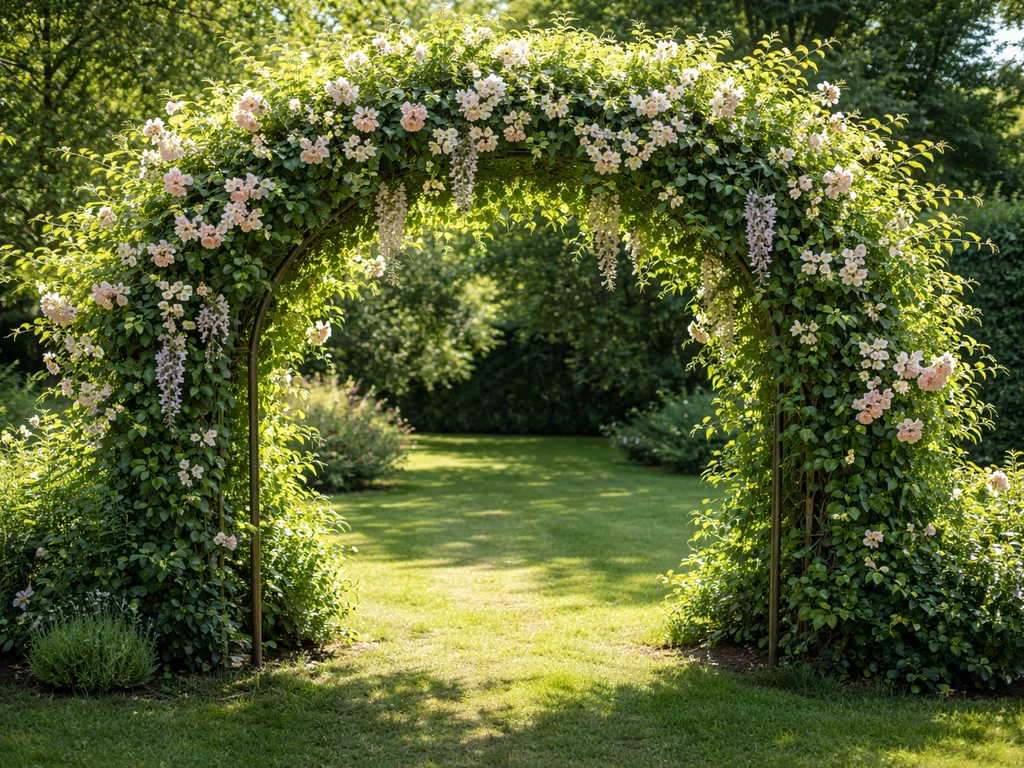
The best all-around plants for an arbor are climbing roses, clematis, wisteria, honeysuckle, and trumpet vine if you want flowers and fast coverage, or English ivy and evergreen clematis if you want year-round screening. Which one you should actually plant depends on three things: how much sun your arbor gets, what USDA hardiness zone you're in, and what you want the arbor to do for you. Get those three factors right and you'll have a thriving, covered structure within one to three seasons. Get them wrong and you'll be wrestling a plant that either dies back every winter or takes over your yard.
Best Plants to Grow on an Arbor: Curated Picks by Conditions
Rachel Hartley
25 Jun 2026
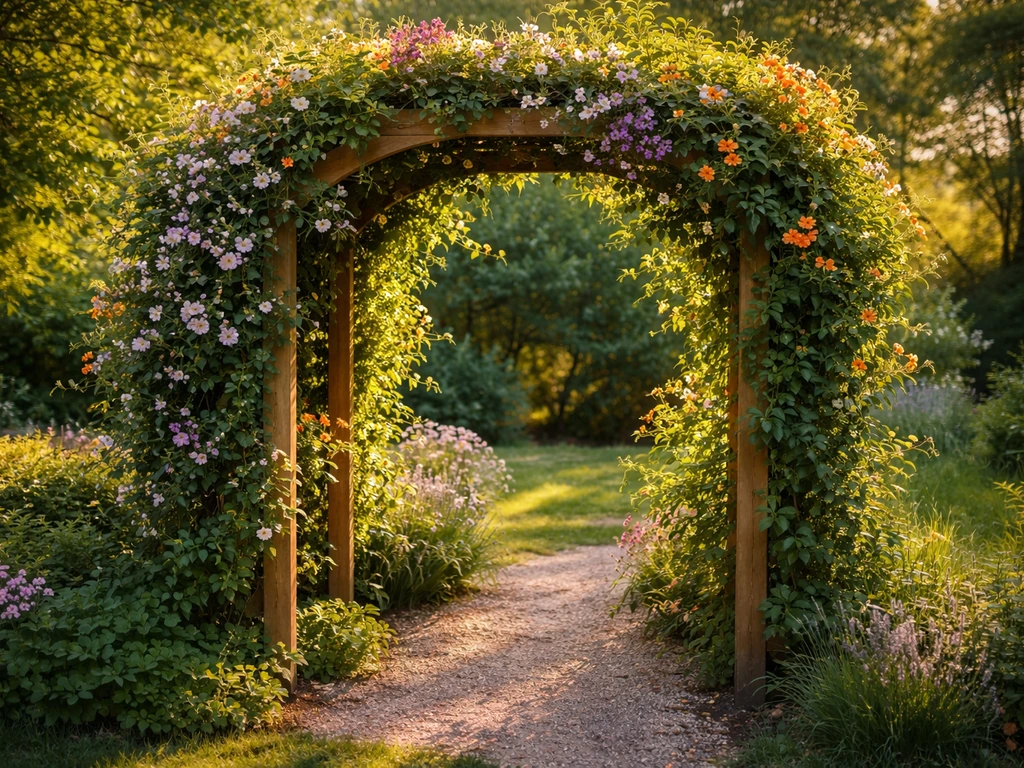
How to pick the right plant for your arbor
Start with sun. Choosing the best plants to grow on a rooftop also starts with matching them to your sunlight exposure and local conditions best plants to grow on rooftop. A south- or west-facing arbor in full sun (6-plus hours daily) opens up almost every option: roses, wisteria, trumpet vine, passionflower, clematis, grapes, and hops will all thrive. A north- or east-facing arbor, or one under a tree canopy, is a different story. Shade-tolerant options like climbing hydrangea, Schizophragma, golden hops (Humulus lupulus 'Aureus'), or the shade-tolerant clematis varieties (C. montana, C. viticella) handle those conditions much better than sun-lovers that will just sit there and sulk.
Next, check your zone. Wisteria sinensis is stunning but dies back in zones below 5 and becomes a serious invasive problem in the South and Pacific Northwest, where it can strangle trees and shrubs if you don't stay on top of it. Trumpet vine (Campsis radicans) is hardy to zone 4 but spreads aggressively by root suckers, so it's not a great pick for a small garden. Bougainvillea, on the other hand, is spectacular on arbors in zones 9-11 but won't survive a freeze. Knowing your zone narrows the shortlist fast.
Finally, define your goal before you buy anything. Do you want: seasonal color and fragrance, a privacy screen that works all winter, fast coverage within one season, edible crops, pollinator support, or something you can basically ignore once it's established? Each goal points to a different group of plants, and some goals conflict (fast-coverage plants are almost never low-maintenance). Once you've answered these three questions, the rest of the article will feel like a checklist rather than a guessing game.
Top flowering climbers and vines for arbors
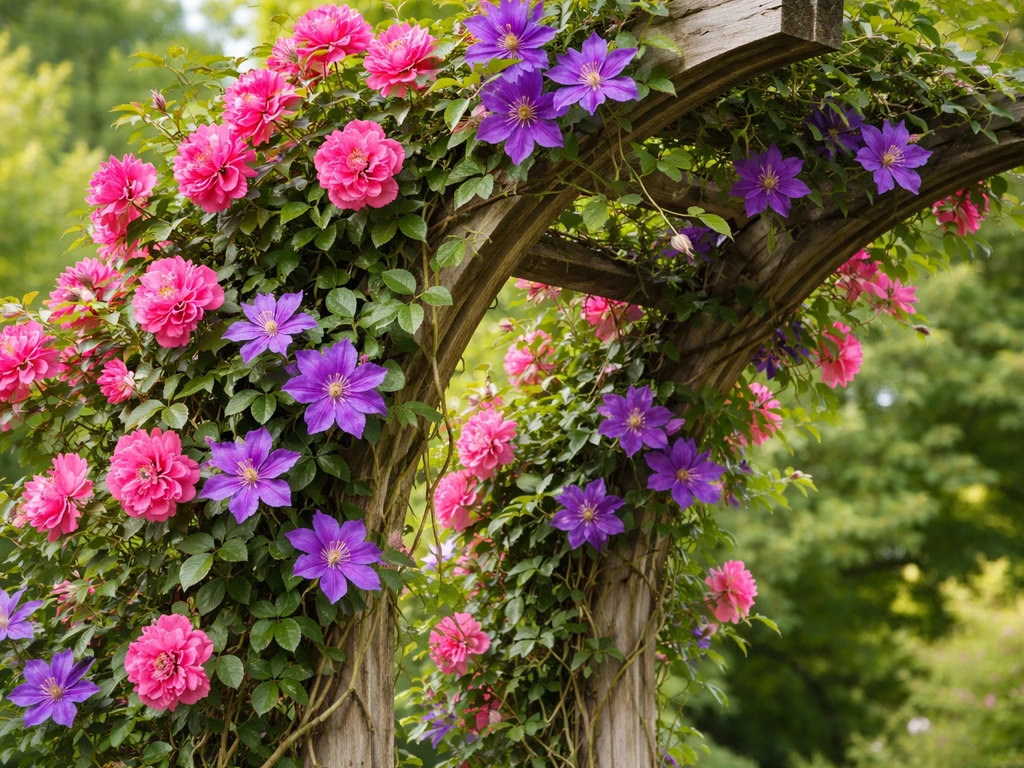
These are the plants that reliably look spectacular on an arbor, hold up to the structure, and are widely available at garden centers right now in late June 2026. Each one has a distinct personality, so read the notes before you commit.
| Plant | Best Zones | Sun Needs | Coverage Speed | Standout Feature |
|---|---|---|---|---|
| Climbing Rose | 4-9 | Full sun | 2-3 years (full) | Repeat blooms, fragrance, structure |
| Clematis (large-flowered hybrids) | 4-9 | Full to part sun | 1-2 years | Huge blooms, huge variety of colors |
| Wisteria (Japanese/Chinese) | 5-9 | Full sun | Fast (2-3 years) | Dramatic cascading blooms in spring |
| Wisteria (American, W. frutescens) | 5-9 | Full to part sun | Moderate (3-4 years) | Less aggressive, great for smaller arbors |
| Trumpet Vine (Campsis radicans) | 4-9 | Full sun | Very fast (1-2 years) | Hummingbird magnet, tough as nails |
| Honeysuckle (Lonicera) | 4-9 | Full to part sun | Fast (1-2 years) | Heavy fragrance, long bloom period |
| Passionflower (Passiflora) | 6-10 | Full sun | Fast (1 season) | Exotic blooms, attracts fritillary butterflies |
| Climbing Hydrangea | 4-8 | Part shade to shade | Slow (3-5 years) | Best shade option, stunning white blooms |
Climbing roses are the gold standard for arbors, and for good reason. They give you structure, seasonal fragrance, repeat blooms from late spring through fall, and they actually improve with age. Varieties like 'New Dawn', 'Zephirine Drouhin', and 'Cecile Brunner' have been covering arbors for over a century. The key with roses is training: the canes need to be tied horizontally or at an angle rather than straight up, because horizontal canes produce far more flowering laterals. An upright, untrained rose cane will bloom only at the tip. Retrain those canes into a more horizontal position and the whole length of the cane breaks into bloom.
Clematis is probably the most versatile arbor plant in temperate gardens. Large-flowered hybrids like 'Nelly Moser', 'The President', and 'Jackmanii' give you dinner-plate-sized blooms in colors from deep purple to blush pink. Clematis holds itself onto supports using its leaf petioles, which curl around thin supports naturally, so wire or mesh works better than thick wooden posts for the main framework. Pair clematis with a climbing rose on the same arbor and they'll twine together beautifully, each filling in gaps the other leaves.
Wisteria is the showiest option, but choose the species carefully. Japanese and Chinese wisterias are powerful growers that can damage light arbor structures over time, and they bloom notoriously late after planting (sometimes 5-7 years from seed). American wisteria (W. frutescens) and Kentucky wisteria (W. macrostachya) are much better-behaved options: they bloom younger, stay manageable in size, and aren't invasive. 'Amethyst Falls' and 'Blue Moon' are reliable named selections available at most garden centers.
Evergreen, screening, and privacy options
If you need the arbor to provide privacy or screening during winter, you need an evergreen or semi-evergreen plant. This rules out most of the classic flowering vines unless you're in a mild climate (zones 8+). Here are your best options by climate.
- Evergreen clematis (Clematis armandii): zones 7-9, full to part sun, vanilla-scented white flowers in late winter/early spring, glossy dark leaves year-round. Outstanding arbor plant for mild climates.
- Star jasmine (Trachelospermum jasminoides): zones 8-10, full to part sun, intensely fragrant white flowers in late spring, slow to establish but very dense once mature.
- Carolina jessamine (Gelsemium sempervirens): zones 7-9, full to part shade, evergreen with bright yellow spring flowers. Excellent for Southern gardens. Note: all parts are toxic.
- English ivy (Hedera helix): zones 5-9, shade tolerant, provides dense year-round coverage. Be careful: it's invasive in many regions of the US and Europe. Check your local invasive species list before planting.
- Climbing fig (Ficus pumila): zones 8-11, shade tolerant, clings by adhesive rootlets to create a very flat, dense surface. Excellent for brick or stone arbors in warm climates.
- Chilean jasmine (Mandevilla laxa): zones 9-11, full sun, semi-evergreen in mild winters with sweetly fragrant white flowers. Can be grown as an annual in colder zones.
- Boston ivy (Parthenocissus tricuspidata): zones 4-8, sun to shade, technically deciduous but provides dense summer screening and stunning fall color. Clings without tying.
For those in zones 4-6 who want some degree of winter structure without full evergreen coverage, consider a mix: plant a deciduous flowering climber like wisteria or climbing rose for seasonal interest, then add a few terracotta pots of star jasmine or citrus nearby that you bring inside when frost threatens. It's not a perfect solution but it keeps the arbor looking intentional rather than bare through the cold months. For a shady arbor, climbing hydrangea provides excellent summer screening and its dried seed heads and exfoliating bark add real winter interest even without leaves.
Fast coverage vs. low-maintenance: knowing the trade-off
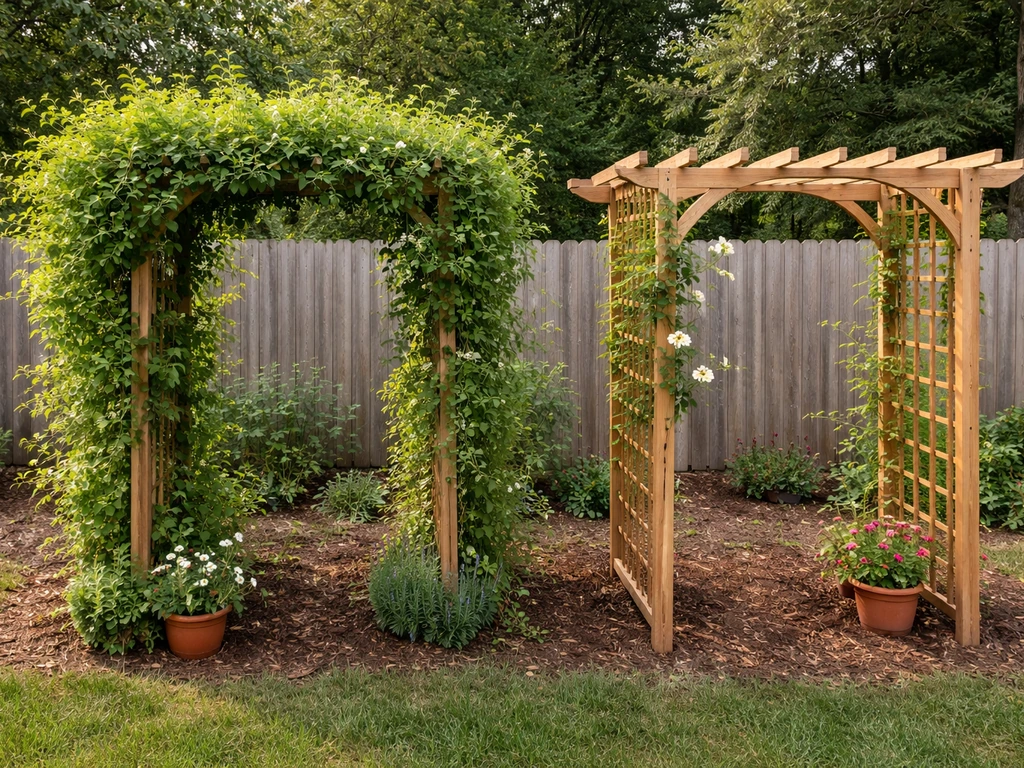
Here's the honest truth: the fastest-growing plants on an arbor are almost always the highest-maintenance ones. Trumpet vine, wisteria, and Virginia creeper will cover your arbor in one to two seasons, but you'll be pruning them at least twice a year and pulling up root suckers constantly. If you plant trumpet vine and ignore it for three years, you'll have a structural problem on your hands. Fast coverage and low-effort don't usually go together.
If you want low-maintenance coverage and are patient enough to wait two to three years, climbing hydrangea and star jasmine are your best options. Both are slow starters that barely seem to move in their first year (there's an old saying: 'first year sleep, second year creep, third year leap'), but once established they're self-supporting, rarely need major pruning, and don't send out invasive runners. 'New Dawn' climbing rose is also one of the most forgiving roses you can grow, resistant to disease, reliably repeat-blooming, and reasonably self-managing with one annual prune.
| Plant | Coverage Speed | Annual Maintenance | Best For |
|---|---|---|---|
| Trumpet Vine | Very fast (1 season) | High (2-3x pruning + sucker removal) | Instant impact, tough sites, hummingbirds |
| Wisteria (Asian species) | Fast (2-3 years) | High (2x annual pruning essential) | Dramatic show, patient gardeners |
| Wisteria (American species) | Moderate (3-4 years) | Medium (1-2x pruning) | Smaller arbors, less aggressive growth |
| Honeysuckle | Fast (1-2 years) | Medium (annual thinning) | Fragrance, pollinators, informal look |
| Climbing Rose ('New Dawn') | Moderate (2-3 years) | Medium (1x annual pruning + tying) | Classic look, repeat blooms, disease resistance |
| Clematis (large-flowered) | Moderate (1-2 years) | Low-medium (group-dependent pruning) | Color, flexibility, pairs well with roses |
| Climbing Hydrangea | Slow (3-5 years) | Low (minimal pruning needed) | Shade, patience, long-term investment |
| Star Jasmine | Slow (2-4 years) | Low (light annual trim) | Evergreen, fragrance, warm climates |
If you're somewhere in the middle (want reasonable coverage in two seasons without constant intervention), honeysuckle is a really solid middle-ground plant. The same advice applies to patio spaces too, so pair your climber with the best plants to grow on patio for your light and container size. Lonicera periclymenum 'Serotina' or 'Graham Thomas' will give you solid coverage by year two, bloom heavily from June through September, smell incredible, and only need one good haircut in early spring to stay in shape. It's not as dramatic as wisteria but it's far less work and it's one of the best pollinator plants you can grow.
Edible and pollinator-friendly options for your arbor
An arbor is actually a great place to grow food, and the structural height makes harvesting easier than on a low trellis. Grapes, hops, kiwi, hardy passionflower (which produces edible fruit in zones 6+), and climbing vegetables like runner beans and squash all work well on an arbor. The key difference from ornamental climbers is that edibles generally need more sun (6-8 hours minimum), richer soil, and consistent moisture, especially once they're fruiting. If you’re wondering what can i grow on my patio, container-friendly vines and climbers can give you similar results with less space.
- Grapes (Vitis vinifera, V. labrusca): zones 4-10 depending on variety, full sun, take 2-3 years to produce well. American varieties like 'Concord' and 'Niagara' are disease-resistant and better for most home gardens than European wine grapes. Need annual dormant pruning to maintain productivity.
- Hops (Humulus lupulus): zones 3-8, full sun, spectacularly fast (20-30 feet in a single season from dormant rhizomes). Decorative and useful for home brewing. The golden form 'Aureus' is beautiful even in light shade. Dies back to the ground each winter and regrows.
- Hardy Kiwi (Actinidia arguta): zones 4-8, full sun to part shade, grape-sized kiwi fruit with no need to peel. Needs a male and female plant for fruiting. Very vigorous once established.
- Maypop / Hardy Passionflower (Passiflora incarnata): zones 5-9, full sun, native to the eastern US, produces golf ball-sized edible yellow fruit after those exotic purple flowers. Spreads by underground runners so give it space.
- Runner Beans and Scarlet Runner Beans: treat as annuals in all zones, extremely fast-growing (10-15 feet in one season), brilliant red flowers beloved by hummingbirds and bees, followed by edible beans. Perfect for a seasonal arbor display.
- Squash and Cucumbers: can be trained vertically on an arbor for summer production in any zone. Fruit needs support (small hammock slings work well) once it gets heavy. Great use of vertical space in small gardens.
For pollinators specifically, honeysuckle, passionflower, climbing roses, and runner beans are the standout choices. Wisteria is also a heavy nectar producer but it blooms before many pollinators are fully active in spring. If you're trying to support native bees and butterflies, native climbers like coral honeysuckle (Lonicera sempervirens) and maypop passionflower are far more valuable than exotic cultivars because they co-evolved with local insects. Coral honeysuckle in particular is one of the best plants you can grow in the eastern US for ruby-throated hummingbirds and native bees.
Planting, training, and pruning basics
Getting the planting right from the start
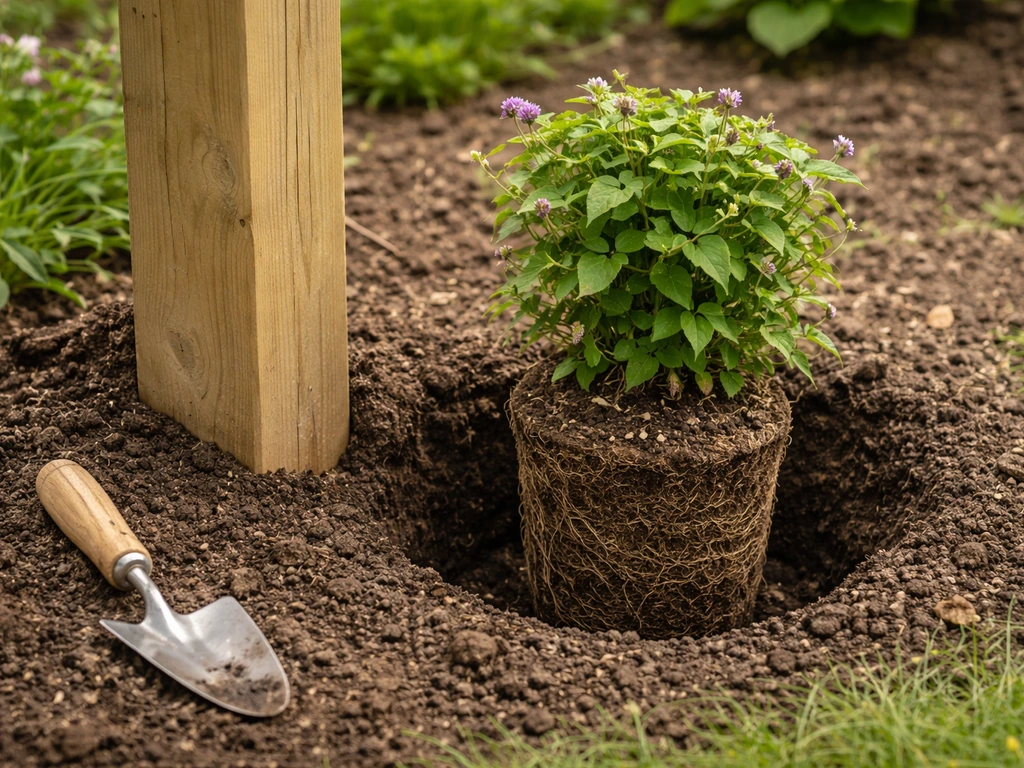
One of the most common mistakes people make is planting right up against the arbor post. The wall or post creates a 'rain shadow' where the soil stays drier than the surrounding ground and airflow is restricted, which stresses the plant and encourages fungal problems. Plant your climber at least 12-18 inches away from the post and angle the rootball toward the structure, then guide the stems to the support with a cane or stake. This small adjustment makes a big difference in how well the plant establishes.
Clematis deserves a special note on planting depth. Bury the rootball about 2-3 inches below soil level (Penn State Extension recommends this), not flush with the soil surface. This is because clematis can suffer from a fungal wilt that kills the visible stems, but if the crown is buried deep enough, dormant buds below the soil will reshoot and the plant recovers. It's not a guarantee against wilt, but it's real insurance. In the first spring after planting, cut clematis back hard to about 18-24 inches from the ground, even if it feels brutal. K-State Extension also advises that newly planted clematis be pruned hard the first spring, about 12, 18 inches from the ground, to stimulate branching and resprouting cut clematis back hard to about 18-24 inches from the ground. This stimulates branching and gives you a much fuller plant by year two instead of a single weak stem racing up the support.
For climbing roses, plant the bud union (the swollen knob where the canes join the rootstock) at or just below soil level in cold climates (zones 5-6) to protect it from freeze damage, or at soil level in zones 7 and warmer. After planting, remove any dead or very weak canes and cut back remaining canes by about one-third to reduce transplant stress.
How to train stems onto an arbor
Different plants climb in different ways, and knowing this saves you a lot of frustration. Clematis uses its leaf petioles to grip thin supports, so it needs wire, narrow mesh, or wooden lattice with openings no wider than about 2 inches. It won't grab a thick post on its own. Climbing roses don't actually climb at all: they're scramblers, not true climbers, and every cane needs to be tied to the structure manually. Wisteria, honeysuckle, and hops are twiners that wrap their stems around supports, so they'll grab onto anything they can reach, including other plants, gutters, and your eaves if you let them.
For tying, soft materials like jute twine, budding tape, or silicone ties work better than wire, cable ties, or anything that won't expand as the stem thickens. Tie in a figure-eight pattern with the loop around the stem loose enough to fit two fingers between the stem and the tie. Check ties every season and replace any that are cutting into the bark. For roses specifically, train new canes outward and slightly downward or horizontal rather than straight up. As mentioned earlier, a horizontally trained rose cane will produce flowering shoots all along its length, while a vertical cane flowers only at the tip.
Pruning schedules by plant type
Clematis pruning is famously confusing but it breaks down into three groups. Group 1 (C. montana, C. armandii, early-spring bloomers): prune only lightly right after flowering, since they bloom on old wood. Group 2 (large-flowered early hybrids like 'Nelly Moser', 'The President'): light prune in late winter, remove dead wood, trim to strong buds. Group 3 (late-flowering like 'Jackmanii', viticella types): cut back hard to 12-18 inches from the ground every late winter. The good news is that if you don't know which group your clematis is, just watch when it blooms: if it blooms before June, treat it as Group 1 or 2 and prune lightly after flowering. If it blooms from June onward, it's almost certainly Group 3 and you can cut it back hard in late winter without risk.
Climbing roses need their main structural canes left in place for several years. The routine is: in late winter/early spring, remove completely any dead, diseased, or very old (woody, unproductive) canes at the base. Then shorten the lateral (side) shoots that grew off the main canes to two or three buds. Don't cut the main framework canes back unless they're crossing badly or dead. Once a main cane is several years old and no longer producing strong laterals, remove it entirely and tie in a vigorous new basal shoot to replace it. Once or twice a season, untie the main canes and reposition any that have drifted, pushing them back toward horizontal to maintain even coverage and flowering across the whole structure.
Wisteria needs two pruning sessions a year without exception if you want it to stay in bounds and bloom reliably. In July or August, cut back all the long whippy new shoots to about 5 leaves from the main framework. In January or February, go back and cut those same shoots back again to 2-3 buds. This two-cut approach builds up flowering spurs on the framework rather than letting the plant put all its energy into vegetative growth. Skip either pruning and you'll get less bloom and a much bigger mess to deal with the following year.
Seasonal checklists and troubleshooting
Seasonal maintenance at a glance
| Season | Task |
|---|---|
| Late winter (Feb-Mar) | Prune Group 3 clematis hard; cut wisteria shoots to 2-3 buds; remove dead rose canes and shorten laterals; apply slow-release fertilizer around all climbers |
| Spring (Apr-May) | Tie in new growth as it appears; check and replace any damaged ties; apply first liquid feed for roses and clematis; watch for aphids and vine weevil on new growth |
| Early summer (Jun) | Deadhead climbing roses to encourage repeat bloom; train new clematis and honeysuckle shoots; check wisteria for excessive new shoot growth |
| Midsummer (Jul-Aug) | First wisteria pruning: cut new shoots to 5 leaves; harvest hops and any runner beans; check grapes for powdery mildew; water deeply in dry spells |
| Fall (Sep-Oct) | Tie in any loose rose canes before autumn winds; plant new bareroot climbers (roses and clematis can go in now through winter); collect seed from passionflower if wanted |
| Winter (Nov-Jan) | Second wisteria pruning: cut summer-shortened shoots back to 2-3 buds; inspect arbor structure and repair before growth starts; mulch around roots of marginally hardy plants |
Troubleshooting the most common problems
Clematis wilt: stems suddenly collapse and go black, often on newly planted clematis or after a wet spell. Cut all affected stems back to healthy growth (or to the ground if needed). Deep planting (crown 2-3 inches below soil) helps the plant resprout from below. Don't panic: most clematis recover fully from wilt if the crown was buried at planting.
Wisteria not blooming: the most common cause is too much nitrogen (often from lawn fertilizer runoff), which pushes leafy growth at the expense of flowers. Stop feeding with high-nitrogen fertilizers and switch to a low-nitrogen, high-potassium feed in late summer. Also check that you're doing both rounds of pruning. Young plants from seed may take 5-7 years to bloom; named cultivars on grafted rootstock typically bloom within 3 years.
Climbing roses getting leggy and bare at the base: this usually means the canes are running too vertically. Untie them and retrain at a more horizontal angle. You can also plant a low-growing Group 3 clematis at the base: it will weave up through the rose structure and cover the bare lower zone with flowers from summer onward.
Honeysuckle or trumpet vine taking over: both spread vigorously, and trumpet vine especially sends up root suckers far from the main plant. Prune hard in late winter (you can cut trumpet vine almost to the ground) and dig out suckers as soon as you see them. If either plant has gotten genuinely out of control, sometimes the right call is removing it and starting over with a less aggressive species.
Powdery mildew on roses or grapes: almost always linked to poor airflow, dry roots combined with wet foliage, or overhead watering. Water at the base, improve airflow by thinning congested stems, and if needed, apply a sulfur-based fungicide early in the season before the problem takes hold. Choosing mildew-resistant rose varieties (like 'New Dawn', 'Zephirine Drouhin', or any David Austin shrub rose with a climbing habit) saves a lot of grief.
Quick 'choose your plant' decision guide
Run through this before you head to the garden center. If you are aiming for the best plants to grow up a pergola, focus on sun, your climate zone, and the amount of maintenance you can handle. It'll save you from buying something that doesn't fit your situation.
- Full sun arbor + want flowers + don't mind annual pruning: climbing rose ('New Dawn', 'Zephirine Drouhin') or wisteria ('Amethyst Falls', 'Blue Moon').
- Full sun + want flowers + low-maintenance: honeysuckle (Lonicera periclymenum 'Graham Thomas') or clematis Group 3 ('Jackmanii', viticella types).
- Part shade or shade arbor: climbing hydrangea (patience required) or golden hops for faster coverage.
- Mild climate (zones 7-10) + want year-round screening: Clematis armandii or star jasmine.
- Cold climate (zones 4-6) + want year-round interest: climbing rose with good winter cane structure, or hops (dies back but regrows fast each spring).
- Want fast coverage this season: trumpet vine (sun, zones 4-9), hops (sun or light shade), or annual scarlet runner beans for a single-season solution.
- Want edible crops: grapes (2-3 years to produce), hardy kiwi (3-4 years), or hops (first harvest possible in year 2).
- Want to support pollinators and native wildlife: coral honeysuckle, maypop passionflower, or climbing roses with open single or semi-double flowers.
- Have a garden arch or smaller structure rather than a full arbor: opt for compact or moderately vigorous options like clematis, a patio climbing rose, or annual sweet peas rather than wisteria or trumpet vine.
A note on structure before you plant: make sure your arbor is actually up to the job. A lightweight metal arch is fine for clematis or annual beans but will buckle under a mature wisteria or grape. Timber arbors need to be pressure-treated or made from naturally durable hardwood, and posts should be sunk at least 18-24 inches into the ground or set in concrete. Deal with any structural issues before you plant because fixing them later means disturbing an established climber. If you're choosing between an arbor and a pergola for a larger planting, the approach is essentially the same but a pergola's horizontal beams give even more training options. Similarly, a garden arch suits lighter, more compact climbers where an arbor suits more vigorous, permanent plantings. If you want the best plants to grow on a balcony, prioritize containers, strong sun exposure, and climbers or compact vines that fit your space.
FAQ
Can I grow these plants on a lightweight metal arbor, or will they break it?
Yes, but plan for training and pruning differences. Fast twining vines (wisteria, honeysuckle, hops) need a strong, stable framework and more frequent trimming to keep them from wrapping where you do not want growth. Clematis and climbing roses can work better on lighter structures if you use the right support surface (wire or narrow mesh for clematis, ties for roses), but avoid letting any vine reach gutters or eaves where they can cause moisture problems.
What soil and watering setup helps climbers succeed on an arbor?
For most of these climbers, the critical “soil” part is the planting hole and water access, not just fertilizer. Dig a slightly wider hole than the rootball, loosen the surrounding soil, and water deeply right after planting, then keep the roots evenly moist for the first growing season. Once established, reduce watering frequency gradually, because constant soggy roots increase disease risk on many vines and especially roses.
Why does my new arbor plant seem stuck or slow for the first year?
Look for a “buy now, grow later” plan. Many vines, especially wisteria and large-flowered clematis, can appear slow right after transplant because they are rooting. Avoid overfeeding in the first season, stake and train early to prevent tangled growth, and expect the first meaningful coverage window to start around year two for most moderate-growth options.
How do I prevent aggressive vines from invading nearby beds or spreading beyond the arbor?
If your arbor is near a walkway or fence, choose carefully. Vines like trumpet vine and wisteria can send growth into unwanted areas quickly, and trumpet vine in particular can sucker far away. Create a defined plant zone with a physical barrier (or commit to regular sucker digging), and keep a clear margin so you are not pruning into neighboring plants every month.
What tie method should I use so the plant does not get strangled or turn into a maintenance nightmare?
Use an “access and safety” tie strategy. Tie supports so you can reach the stems for pruning (do not fully wrap with twine you cannot undo), check ties seasonally, and replace any that are constricting as growth thickens. Also angle and space ties so airflow moves through the canopy, which reduces mildew pressure on roses and other foliage-heavy climbers.
Can I grow these climbers in containers on or next to my arbor?
Yes for several, but container success depends on weight and root volume. Choose a large pot with drainage, use a trellis or sturdy internal stake for roses and clematis, and keep watering consistent during hot weather. Wisteria and some vigorous vines can outgrow containers quickly, so consider training them more conservatively or reserve containers for slower options like star jasmine or smaller clematis types.
What are the most common pruning mistakes that reduce flowering on arbor climbers?
Pruning timing is the most common reason people lose blooms. If you are unsure which clematis group you have, use bloom timing as the guide (before June is light prune, June onward is hard prune). For roses, focus pruning on removing weak or dead canes at the base and shortening laterals, then train the main canes into a more horizontal angle rather than cutting them back aggressively.
How should I reassess sun exposure if my arbor is partially shaded?
Test your light before choosing. A “south-facing” arbor that looks sunny can become shaded by nearby trees, walls, or seasonal foliage. If you see less than about 6 hours of direct sun, prioritize shade-tolerant options like climbing hydrangea or shade-capable clematis varieties, because sun-lovers may survive but underperform.
Is clematis crown depth really important, and what should I do right after planting?
For clematis, do not skip the crown depth and the first-season hard cut. Plant with the crown below soil level (around 2 to 3 inches), then cut back hard in the first spring to build branching. This combination is a major factor in avoiding patchy growth and helps the plant recover if wilt shows up after a wet spell.
What should I choose if I want privacy, but also want winter interest?
It depends on your end goal. If you want privacy in winter, evergreen or semi-evergreen choices matter most, and most classic flowering vines will look sparse or bare. If you want year-round structure, consider combining a backbone plant that keeps leaves or stems through winter, with a seasonal bloomer trained alongside, rather than expecting a single vine to deliver all seasons.
My wisteria or other vine is leafy but not flowering, what should I check first?
It is usually a nutrient balance and pruning issue. Too much nitrogen can reduce flowers on wisteria, and incomplete or mistimed pruning can also delay or reduce blooms. Stop high-nitrogen feeding in late summer, switch to a lower-nitrogen, higher-potassium approach if you fertilize, and confirm you are doing the required two pruning windows for wisteria.
Can I combine two different climbers on the same arbor without them fighting?
Yes, and it can improve both coverage and performance if done thoughtfully. Using a lower clematis at the base helps fill the “bare knees” on roses, and pairing a rose with clematis can cover gaps while keeping the two plants’ climbing habits compatible. Just avoid creating too much crowding against the arbor posts, since that increases fungal risk and reduces airflow.
Next Article
Best Plants to Grow on a Garden Arch: Options by Sun, Zone
Best arch climbing plants by sun, zone and style, with evergreen, flowering, edible picks, plus planting and training ti