The best plants to grow up a pergola are wisteria, climbing roses, clematis, Virginia creeper, jasmine, and fruiting vines like grapevines or kiwi. p0s0 best plants to grow on arbor like grapevines or kiwi can be a great comparison point for pergolas too, depending on the coverage and fruit you want to prioritize. Which one is right for you depends on whether you want dense shade, fragrant flowers, edible crops, or year-round coverage, and on where you live. Get those two things straight first, and the choice becomes pretty obvious.
Best Plants to Grow Up a Pergola: Top Picks by Goal
Rachel Hartley
16 May 2026
Quick criteria for choosing pergola climbers
Before you pick a plant, run through these five questions. They'll save you from planting something beautiful that either takes over the whole garden or never actually covers the structure.
- Sun exposure: Full sun (6+ hours) opens up almost every option. Partial shade (3–5 hours) rules out sun-hungry fruiting vines and most roses but makes clematis and honeysuckle shine.
- Coverage speed: Do you want shade this summer or are you happy waiting? Fast-growers like Virginia creeper, hops, and annual sweet peas cover a pergola in one season. Wisteria and roses take 2–4 years to fill out properly.
- Goal: shade and privacy, flowers and fragrance, edible crops, or evergreen year-round screening? Each goal has a different shortlist.
- Hardiness and climate: A tender jasmine that thrives in coastal California will die back hard or perish entirely in a New England winter. Always check your USDA hardiness zone before committing to a woody perennial climber.
- Training style: Some plants (roses, clematis) need active tying and training. Self-clinging or twining vines like Virginia creeper and wisteria are more hands-off once established, though wisteria needs hard pruning twice a year to stay manageable.
One more thing: decide whether you want deciduous or evergreen coverage. A deciduous climber like wisteria gives you dappled winter light coming through the pergola, which is actually lovely. An evergreen like star jasmine (Trachelospermum jasminoides) keeps its leaves year-round but in colder climates it may not survive without protection. More on that tradeoff later.
Top plant picks by goal
Dense shade and fast coverage
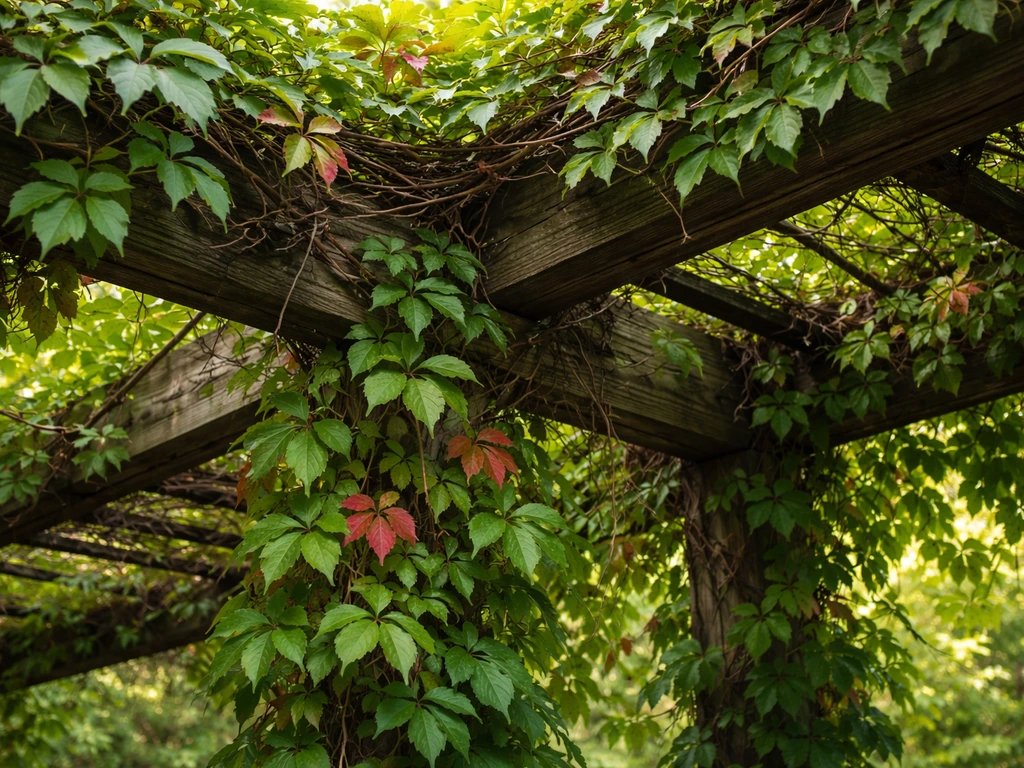
Virginia creeper (Parthenocissus quinquefolia) is the workhorse here. It's self-clinging, grows aggressively, tolerates full sun to heavy shade, and turns a spectacular crimson in autumn. It's hardy to USDA zone 3, so it works almost everywhere in North America. Hops (Humulus lupulus) are the speed champion for a single season, easily reaching 15–20 feet in one summer, but they die back to the ground in winter and re-shoot in spring. If you just want shade fast and you're okay with an annual reset, hops are hard to beat. Grapevines also fall into the shade category once mature, with the bonus of fruit.
Flowers and fragrance
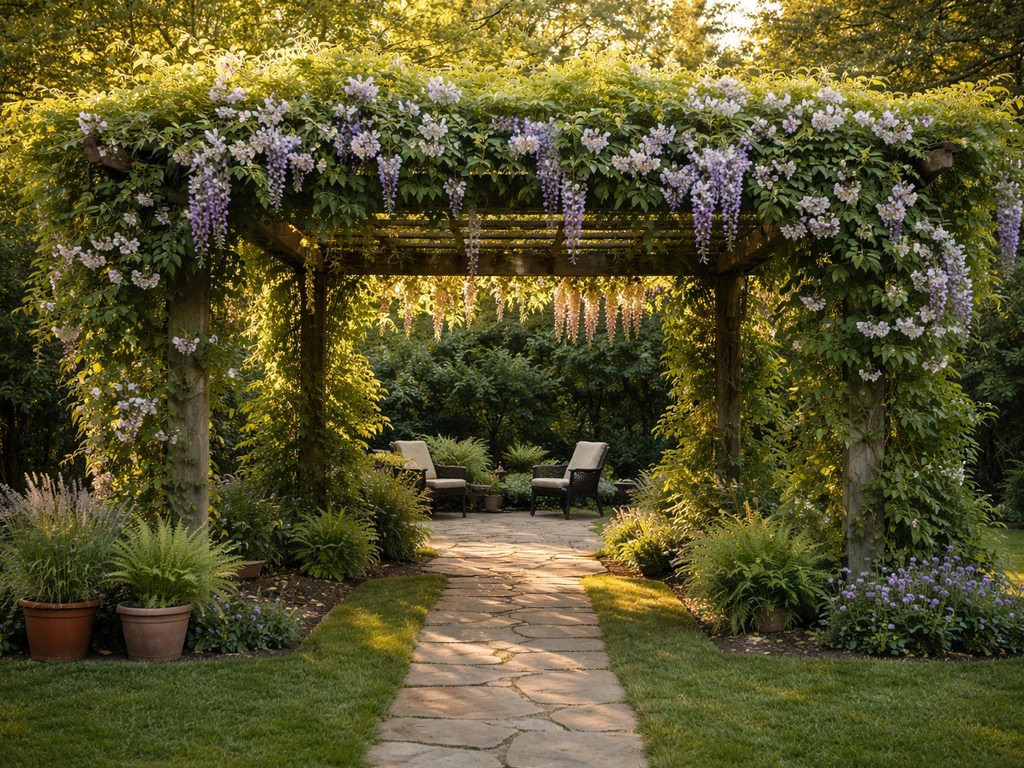
Wisteria is the classic pergola plant for a reason. The curtains of purple or white blooms in late spring are genuinely spectacular, and a well-established plant can cover a large pergola completely. Chinese wisteria (Wisteria sinensis) and Japanese wisteria (W. floribunda) are the showiest, though both can become invasive in some US states, so check local guidance. American wisteria (W. frutescens) and Kentucky wisteria (W. macrostachya) are better-behaved alternatives with repeat bloom that work well in zones 5–9.
Climbing roses give you a long flowering season, often from late spring through autumn if you pick a repeat-flowering variety like 'New Dawn', 'Climbing Iceberg', or 'Zephirine Drouhin'. They're fragrant, dramatic, and come in every color. The tradeoff is that they need more maintenance than most other pergola plants, including annual pruning, tying in, and vigilance against black spot and aphids.
Clematis is endlessly versatile. You can combine early-flowering varieties (like 'Montana') that cover the whole pergola with a flush of pink or white in spring, with a late-summer Group 3 variety like 'Jackmanii' that takes over from mid-summer. Planted together, two clematis cultivars can give you flowers from April through September.
Honeysuckle (Lonicera) is an underrated choice for fragrance and wildlife value. It's fast-growing, tolerates part shade, attracts hummingbirds and pollinators, and is much lower maintenance than roses. 'Scentsation' and 'Belgica' are particularly good-scented varieties.
Fruiting climbers
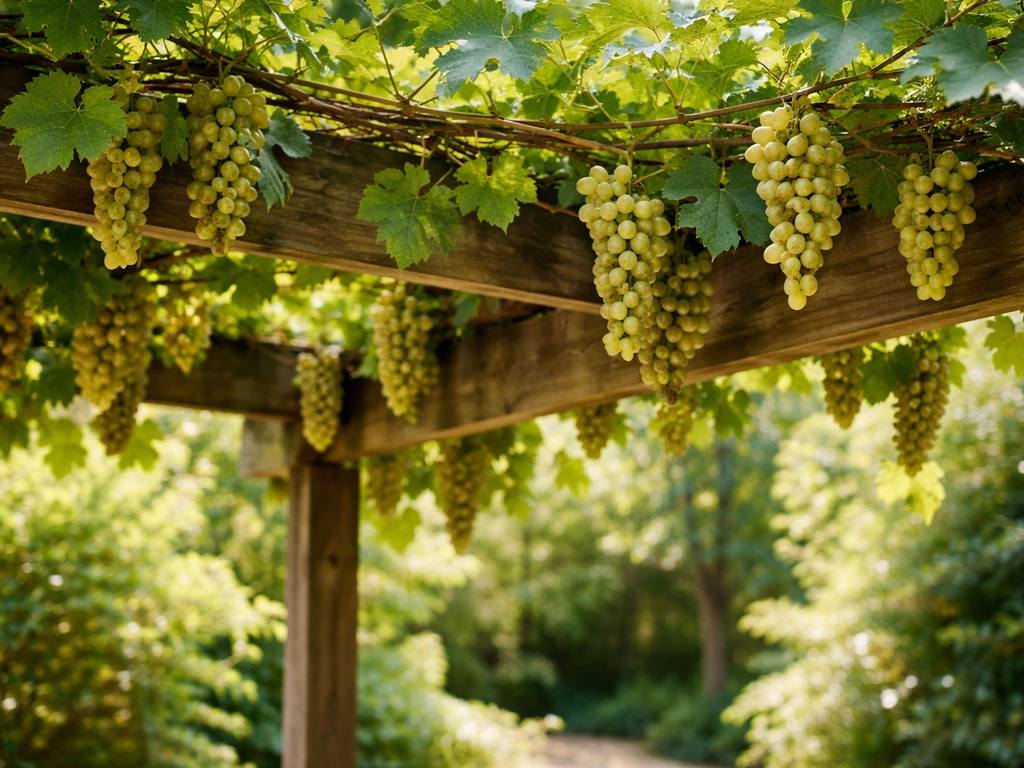
Grapevines are the premium choice if you want both shade and a crop. A mature grape over a pergola creates beautiful dappled shade, and with varieties chosen for your climate (muscadine grapes in the South, cold-hardy types like 'Marquette' or 'Frontenac' for northern zones), you'll get real fruit. Kiwi vines (both Actinidia deliciosa for mild climates and the cold-hardy Actinidia arguta for zones 4–8) also grow vigorously and produce fruit on established plants. One note: most fruiting kiwis need a male and female plant to fruit, so plan for two plants and at least 10 feet of pergola length.
Evergreen coverage
Star jasmine (Trachelospermum jasminoides) is the top pick for year-round green coverage in zones 8–10. It's fragrant, relatively tidy, and can handle partial shade. In cooler zones (6–7), it may survive with some protection but will look ragged in hard winters. Evergreen clematis (Clematis armandii) is another option for zones 7–9, flowering in late winter or early spring before most other plants have woken up. For colder gardens, ivy gives you year-round coverage but can become invasive and is best avoided on wooden structures where it retains moisture and can cause rot.
Best plants by climate and growing season
Climate shapes everything. A plant that's a moderate grower in Seattle becomes an unstoppable monster in Atlanta, and something evergreen in Los Angeles needs to be treated as an annual in Chicago. Here's a practical breakdown by region and season.
| Climate / Region | Best Pergola Plants | Notes |
|---|---|---|
| Cold winters, zones 3–5 (Upper Midwest, New England, Canada) | Virginia creeper, hops, hardy clematis, American wisteria, hardy kiwi (A. arguta) | Stick to plants rated at least one zone colder than your actual zone for safety. Hops die back in winter but return reliably. |
| Temperate, zones 6–7 (Mid-Atlantic, Pacific Northwest, UK) | Climbing roses, wisteria, clematis, honeysuckle, grapevine | Almost everything works here. This is the sweet spot for wisteria and roses. Start planting in spring once soil is workable. |
| Warm, zones 8–9 (Southeast, Southern California, Texas) | Star jasmine, grapevine, muscadine grape, climbing rose, trumpet vine, passionflower | Watch out for trumpet vine (Campsis radicans), which can be invasive in the South. Choose repeat-flowering roses. Spring and autumn are better planting times than summer. |
| Hot and humid, zone 9b–10 (Florida, Gulf Coast, Hawaii) | Passionflower, bougainvillea, coral vine, Confederate jasmine | Many temperate climbers won't perform here. Lean into tropical vines and embrace fast growth. Bougainvillea needs full sun and does well on large, sturdy pergolas. |
| Dry/arid, zones 7–10 (Southwest, desert Southwest) | Grape, trumpet vine, Arizona trumpet (Macfadyena), Lady Banks rose | Drought tolerance matters more than cold hardiness here. Lady Banks rose ('Lutea') is nearly thornless, evergreen in mild winters, and extremely heat-tolerant. |
Timing matters too. If it's May and you're in zones 6–8, right now is the ideal time to plant container-grown climbers. The soil is warm, roots will establish before summer heat, and most climbers will put on a good season of growth. In zones 9–10, spring planting is also ideal, but early autumn planting (September to October) often works even better because the intense summer heat is past. In cold zones 3–5, wait until after your last frost date if planting outside, and give young plants a layer of mulch over the root zone going into their first winter.
Training and setup basics
Most pergola climbers won't just find their way up the structure on their own, at least not gracefully. A little setup at the start makes a huge difference in how they fill the pergola and whether they stay manageable.
Choosing the right support
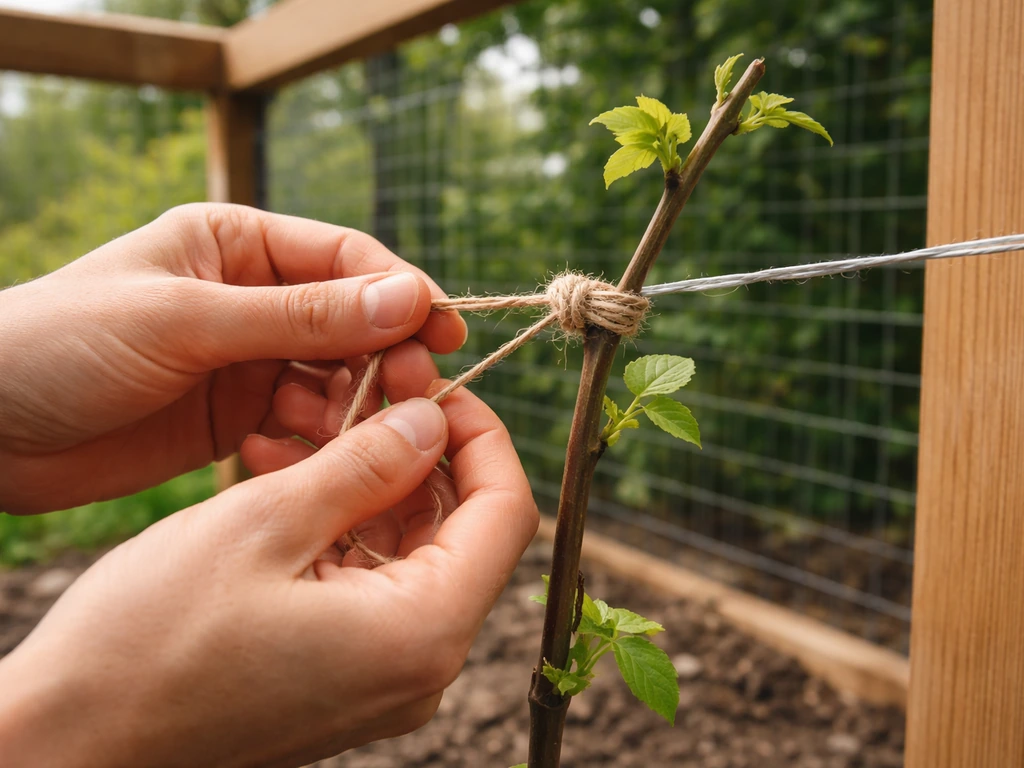
For twining plants like wisteria, honeysuckle, and clematis, horizontal wires or mesh attached to the pergola uprights give the stems something to wrap around. Use galvanized wire (at least 12-gauge) tensioned between vine eyes screwed into the wood, running every 18 inches or so up the posts. Self-clinging plants like Virginia creeper grip wood and stone directly and don't need added support. Roses don't twine or cling, so they absolutely need to be physically tied to the structure throughout their life.
How to train from day one
When you plant, angle the canes or main stems toward the pergola post and tie them loosely to the support with soft garden twine or rubber plant ties. The RHS recommends choosing your main structural stems early, tying them in a fan shape, and removing weak or twiggy growth that won't contribute to the main framework. If a young plant looks spindly, cutting the main stems back by about one-third encourages more vigorous branching and gives you a stronger framework to work with.
Space plants at least 3–4 feet apart along the pergola base, and plant them a foot or so away from the post itself so you can access the ties later. For clematis specifically, plant the root ball about 2–3 inches deeper than it was in the pot. This protects against clematis wilt: if the top growth is affected, the buried stem can shoot new growth from below soil level.
Managing growth direction
Once stems reach the top of the uprights, guide them horizontally along the pergola beams. For wisteria and roses especially, training stems horizontally rather than straight up encourages more flowering. Horizontal stems trigger the plant to push out flowering side shoots rather than channeling energy purely into vertical extension. Tie them in along the beams using cable ties or twine every 12–18 inches. Check and retie or replace ties every year, as they can cut into stems as the plant thickens.
Ongoing care: pruning, watering, feeding, and pest control
Pruning
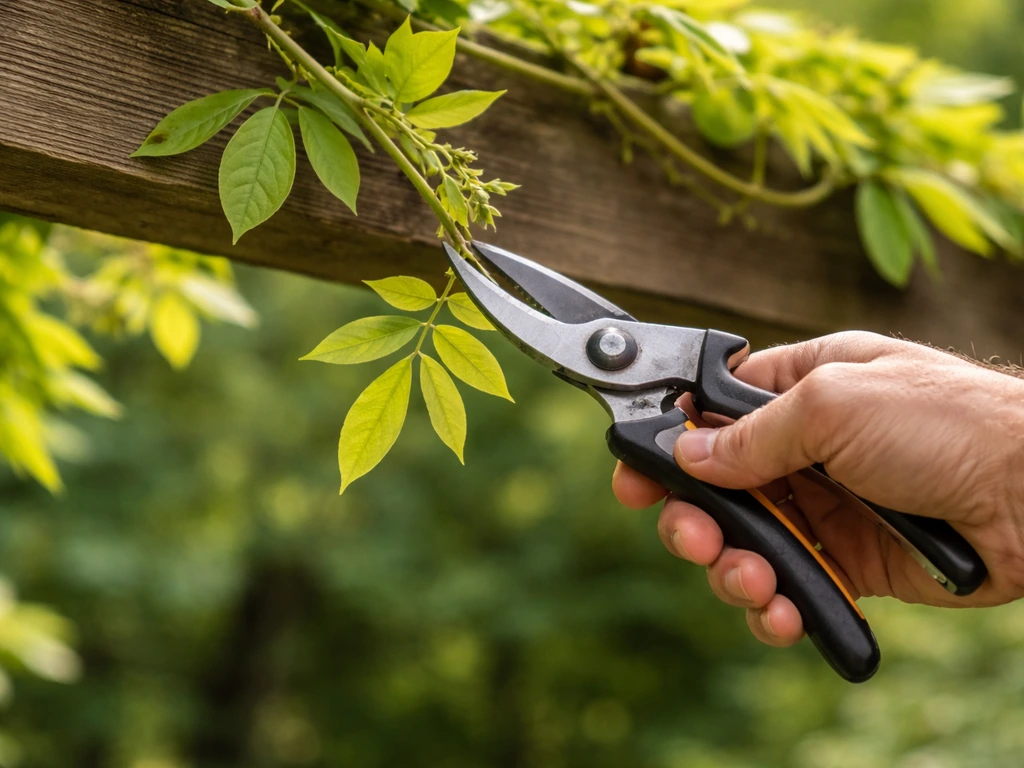
Wisteria is the most pruning-intensive pergola plant. Prune it twice a year: once in summer (July to August) cutting new whippy shoots back to 5–6 leaves from the main framework, and again in late winter (January to February) cutting those same shoots back to 2–3 buds. This double pruning builds up flowering spurs and keeps the plant from turning into an impenetrable jungle. Skip it for a season or two and you'll spend a weekend in autumn untangling meters of unwanted growth.
Clematis pruning depends entirely on which group your variety belongs to. Group 1 (early-flowering, like C. montana) needs minimal pruning, just tidy up after flowering. Group 2 (large-flowered, blooming in late spring and again in late summer) only needs light pruning in early spring, cutting just above a strong pair of buds. Group 3 (late-flowering, blooming in summer and autumn) can be cut back hard to about 8–12 inches from the ground each late winter or early spring. Always check your variety's label before cutting.
For climbing roses, the key pruning job is in early spring: remove any dead, diseased, or crossing canes, then tie in new strong shoots to fill gaps in the framework. University of Maryland Extension guidance suggests light trimming through summer keeps climbing roses within bounds without reducing flowering too much.
Watering
Newly planted climbers need consistent watering in their first season, roughly every 2–3 days in dry weather for the first 6–8 weeks, tapering off once established. After the first year, most pergola climbers are reasonably drought-tolerant, but grapevines and roses benefit from deep watering (soaking the root zone rather than light surface sprinkles) during dry spells, especially when forming buds or fruit. Always water at the base of the plant rather than overhead, particularly for roses, to reduce the risk of black spot.
Feeding
Flowering climbers benefit from a general slow-release fertilizer in spring, followed by a high-potassium feed (like a tomato fertilizer) monthly through summer to encourage flowers rather than excessive leafy growth. For roses, start fertilizing in spring when growth begins and stop by late August or early September so the plant starts hardening off for winter rather than pushing soft new growth that will be damaged by early frosts. Fruiting vines like grapes need a balanced fertilizer in spring and benefit from added potassium once grapes begin to develop.
Common pests and diseases
Clematis wilt is the main thing to watch for with clematis. It's caused by the fungus Ascochyta clematidina and causes sudden, dramatic stem collapse, often just as flower buds are about to open. It looks devastating but isn't always fatal: cut the affected stems right back to ground level, remove and bin (don't compost) the infected material, and in many cases the plant will reshoot from the buried stem. Planting a few inches deep, as mentioned above, is your best protection.
Black spot on roses is a particular problem in humid, foggy climates (coastal areas of California and the Pacific Northwest are especially prone) but occurs anywhere conditions are damp. Fungal spores need free water on leaf surfaces to germinate, so overhead watering, poor air circulation, and wet summers all increase risk. Water at the base, remove and dispose of infected leaves, and don't leave fallen leaves around the plant through winter. Resistant rose varieties like 'Knock Out' types are much less prone if disease is a recurring problem for you.
Aphids are the most common pest across almost all pergola climbers, especially in spring. A blast of water from a hose, or spraying with insecticidal soap, handles most infestations without damaging beneficial insects. Japanese beetles can shred rose and grape foliage badly in the eastern US during July and August. Hand-picking in the early morning (when they're sluggish) into soapy water is effective at low populations.
Maintenance tradeoffs: deciduous vs evergreen, longevity, and growth control
This is where a lot of gardeners don't think things through until a few years in. Here's the honest breakdown.
| Plant Type | Coverage in Winter | Longevity | Growth Control Needed | Best For |
|---|---|---|---|---|
| Wisteria (deciduous) | Bare stems, architectural look | Decades, can become permanent | High: twice-yearly pruning essential | Patient gardeners wanting a dramatic long-term feature |
| Climbing rose (deciduous) | Bare canes, some hips for interest | 15–30+ years with care | Medium: annual pruning and tying-in | Colour, fragrance, repeat flowers |
| Clematis (mostly deciduous) | Bare or cut back | 10–20+ years | Low to medium, varies by group | Flowers from spring to autumn depending on variety |
| Virginia creeper (deciduous) | Bare, autumn colour is exceptional | Indefinite | Medium: spreads enthusiastically | Fast coverage, wildlife value, autumn drama |
| Star jasmine (evergreen) | Full cover year-round in mild zones | 15+ years in suitable zones | Low to medium: light annual trim | Year-round privacy and fragrance in zones 8–10 |
| Grapevine (deciduous) | Bare but architecturally attractive | 50+ years | Medium: annual pruning required | Shade, fruit, the classic Mediterranean pergola look |
| Hops (herbaceous perennial) | Dies back to ground in winter | 10+ years from established crown | Low: dies back naturally each year | Fast seasonal coverage, brewers, low-fuss gardeners |
The biggest maintenance mistake people make with pergola climbers is underestimating aggressive growers. Wisteria can lift roof tiles, crack gutters, and pry apart wooden joints if left unpruned. Virginia creeper will escape into trees and neighboring garden walls. Trumpet vine (Campsis radicans) can sucker extensively and is borderline invasive in the Southeast. None of these are bad plants, but they need honest management. If your pergola is small or attached to a house, pick a climber with naturally moderate vigor, like a compact clematis or a restrained climbing rose, rather than a wisteria that will outgrow the structure in five years.
Best low-maintenance options and container-friendly pergola plants
Not everyone has a ground-level bed at the base of a pergola. If yours is on a patio, deck, rooftop, or balcony, you can still grow impressive climbers in containers, though it changes what you should pick and how you manage them. This also matters for renters or anyone who wants a beautiful setup without a huge annual maintenance commitment.
Low-maintenance picks for ground planting
Honeysuckle wins on ease. Once established, it needs almost no intervention beyond thinning out congested growth every couple of years. It handles part shade, attracts wildlife, and flowers reliably. For pure coverage with minimal fuss, Virginia creeper is similarly reliable. If you want flowers with low effort, Group 3 clematis is about as easy as it gets: cut everything back hard in late winter, and new growth comes up and blooms every year with almost no decision-making required.
Container-friendly options
For a pergola on a deck or patio where plants need to live in pots, your best choices are smaller clematis varieties, patio roses, and annual climbers. Compact clematis varieties like 'Wisley' or 'Arabella' (which actually grows more like a scrambler and can be tied up) work well in 40–50 litre containers. Sweet peas (Lathyrus odoratus) are brilliant annuals for container growing: plant them in deep pots (at least 12 inches), give them some thin canes or wire to grab onto, and they'll clamber up a pergola with extraordinary fragrance through summer. Replace them each year.
For containers, watering is the critical discipline. A container-grown climber in full sun may need watering every day in July and August. Use a large, heavy pot (the bigger the better, since larger volumes dry out more slowly) and mix in water-retaining gel crystals. Feed container climbers every two weeks through the growing season with a liquid fertilizer, since nutrients leach out far faster than in ground-planted specimens.
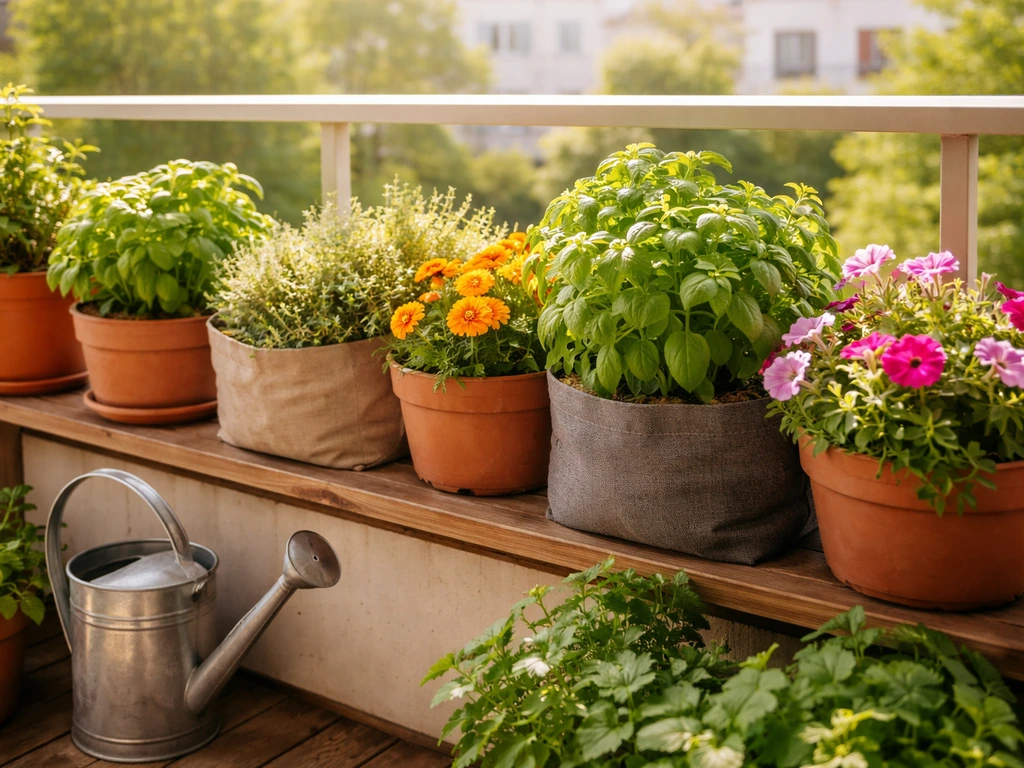
If your setup is a balcony or a smaller patio space, this approach has a lot in common with growing climbers on balcony railings or garden arches, where the same logic of compact varieties and consistent feeding applies. If you’re asking for the best plants to grow on rooftop, container climbers and consistent feeding can be the easiest place to start.
If you are choosing plants for a garden arch, aim for varieties that can be trained to follow the frame and match your sunlight and climate garden arches. If you’re working with a terrace space, choose compact climbers and container-friendly varieties so you get lush coverage without overwhelming the area.
If you're wondering what can i grow on my patio, stick to compact container climbers and plan for regular watering and feeding to keep them thriving growing on a patio. If your balcony is shady, focus on compact climbers that tolerate low light and stay manageable in containers, which is where the best plants to grow on shady balcony really shine.
One final word: start with something that matches your actual level of commitment, not your aspirational one. A neglected wisteria becomes a structural problem. A neglected honeysuckle just looks a bit wild. If you're new to growing climbers, pick honeysuckle or a Group 3 clematis, get the training and watering habits established, and then add something more ambitious alongside it next season. The pergola will look better for it, and so will you.
FAQ
How do I choose between deciduous and evergreen climbers for year-round coverage?
If you want consistent privacy and greenery, prioritize evergreen options (like star jasmine in suitable zones, or evergreen clematis in warmer areas). If you prefer winter light and easier maintenance, deciduous climbers are safer bets. A practical compromise is using an evergreen plant on one side and a deciduous, flowering climber on the other so you still get shade and blossoms but won’t lose everything in winter.
Will wisteria damage a pergola if I keep pruning it?
Pruning helps, but wisteria can still become forceful once mature, especially if the structure is lightweight or older. Make sure your pergola is rated for climbing loads, and use the reinforced training approach (main stems trained to beams, ties replaced regularly). If your pergola wobbles now, don’t use wisteria without structural reinforcement.
What’s the best way to prevent clematis wilt beyond planting deeper?
Planting deeper is key, but also keep the root zone cool and consistently moist (mulch helps). Avoid overhead watering on clematis and remove collapsed stems immediately at ground level when wilt appears. Don’t compost affected material, because the problem can persist in plant debris.
Can I mix two different climbers on the same pergola without them fighting?
Yes, but choose companions with different habits and maintenance needs. For example, combine an easy, self-managing plant (like Virginia creeper) with a plant that you can train on wires (like clematis), while keeping pruning routines compatible. Avoid pairing two aggressive twiners (like wisteria plus another vigorous vine), because they will tangle and become hard to separate.
How long will it take for a pergola to look fully covered?
Fast coverage typically comes from vigorous growers like Virginia creeper or hops, often within a season or two for partial canopy. Wisteria, climbing roses, and clematis usually take longer to become dense, often requiring 2 to 4 seasons of training and consistent pruning or tying. Planning for a “grow in” phase avoids disappointment.
What’s the safest support method for different climbers if my pergola doesn’t have wire attachment points?
For twining plants (wisteria, honeysuckle, clematis), you can add removable horizontal trellis wires or mesh panels attached to the uprights. For self-clinging plants (Virginia creeper), direct attachment is less critical. For roses, you must create physical tie points and guide the canes early, because they won’t cling reliably to beams on their own.
How should I water newly planted climbers in hot summers or during drought?
Even if the plant is drought-tolerant later, the first 6 to 8 weeks after planting are the critical window. Water deeply and consistently at the base, aim for saturation of the root zone, and taper off once you see steady new growth. For containers, expect faster drying, and adjust to weather so the pot never repeatedly dries out fully.
Do I need two kiwi plants every time I grow kiwi on a pergola?
Most fruiting kiwi types need male and female plants to produce reliably, so one vine alone often stays non-fruiting. Also plan space: it typically takes at least two plants and substantial length to establish a productive framework. If you want only one plant, look for self-fertile cultivars where available, and still confirm the pollination requirement for your specific variety.
How do I reduce black spot risk on climbing roses if I live in a damp climate?
The biggest wins are watering at the base, improving airflow by not overcrowding, and cleaning up leaves. Remove infected foliage promptly and avoid leaving leaf litter around the plant over winter. Choosing repeat-bloom, more resistant rose varieties also reduces how often you need to intervene.
What’s the easiest pergola plant if I want low maintenance year to year?
For the least decision-making, Group 3 clematis can be a strong pick because it’s typically cut back hard in late winter and then returns with new growth and blooms. Honeysuckle is also low effort once established, requiring mostly thinning rather than ongoing tying and framework work.
Is it a bad idea to grow vines on a pergola attached to a house?
It can be done, but you must consider clearance and access for pruning and tie checks. Leave space so vines don’t press against siding or window trim, and avoid plants known for extreme vigor if the pergola is small. If you choose a stronger climber, plan for more frequent monitoring and consider training it to stay centered on the pergola rather than drifting toward the home.
Which climbing plant is best for a small pergola or limited yard space?
For limited space, choose plants that naturally stay more compact or that you can reliably prune and train. Compact or restrained climbing roses and more manageable clematis cultivars are often better than highly vigorous species, since even “well-managed” aggressive vines can outgrow a small structure quickly.
Next Article
Best Plants to Grow on a Balcony: Easy Picks by Sun
Best plants for a sunny balcony: top easy picks for planters, from herbs to flowers, with seasonal care tips.