The best plants to grow on a balcony are the ones that actually match your specific conditions, not just whatever looks good at the garden center. Before you buy a single pot, you need to know how much sun your balcony gets, how exposed it is to wind, and roughly what climate zone you're in. Get those three things right, and almost everything else falls into place.
Best Plants to Grow on a Balcony: Easy Picks by Sun
Rachel Hartley
15 Apr 2026
Start with your balcony conditions
Sun is the single most important variable on any balcony. The standard definition: full sun means at least 6 hours of direct sunlight per day. The City of Boston’s container gardening guide recommends choosing a site that receives full sunlight, defined as six hours or more of direct sunlight full sun means at least 6 hours of direct sunlight per day. Partial sun or partial shade means somewhere between 2 and 6 hours. Shade means less than 2. The easiest way to measure this is to step outside every hour on a clear day and note whether direct sun is hitting your floor, railing, or wall. Do it once in spring and once in mid-summer because the sun angle shifts significantly and a balcony that gets 7 hours in June might get 4 in October.
Wind is the factor most balcony gardeners underestimate. Upper-floor balconies (anything above the 5th floor especially) can dry out pots in hours, snap stems, and stress plants that would otherwise be fine. If your balcony is consistently windy, plan on more frequent watering, heavier pots to prevent tipping, and sticking to tough, compact varieties rather than tall or delicate ones.
Climate zone affects which plants are perennial for you versus which ones you'll treat as annuals. Knowing your USDA hardiness zone matters most for anything you want to overwinter. The USDA Plant Hardiness Zone Map is one standard tool for finding your hardiness zone so you can choose perennials that are likely to thrive where you live. In zones 9 to 11, tropical herbs like basil and lemongrass can persist year-round. In zones 5 to 7, you'll grow them as warm-season annuals. If you're unsure of your zone, a quick zip code lookup on the USDA site gives you the answer in seconds.
One more thing: check your building's weight limits if you're planning a serious container garden. Wet soil is heavy. A large 20-gallon pot full of damp soil can weigh over 100 pounds. Most residential balconies are rated for 40 to 60 pounds per square foot, which is usually plenty, but it's worth knowing before you fill one corner with giant planters.
Best balcony plants by light level and exposure
Once you've clocked your sunlight hours, matching plants becomes straightforward. Here's what actually performs well at each light level.
Full sun (6+ hours of direct sun)
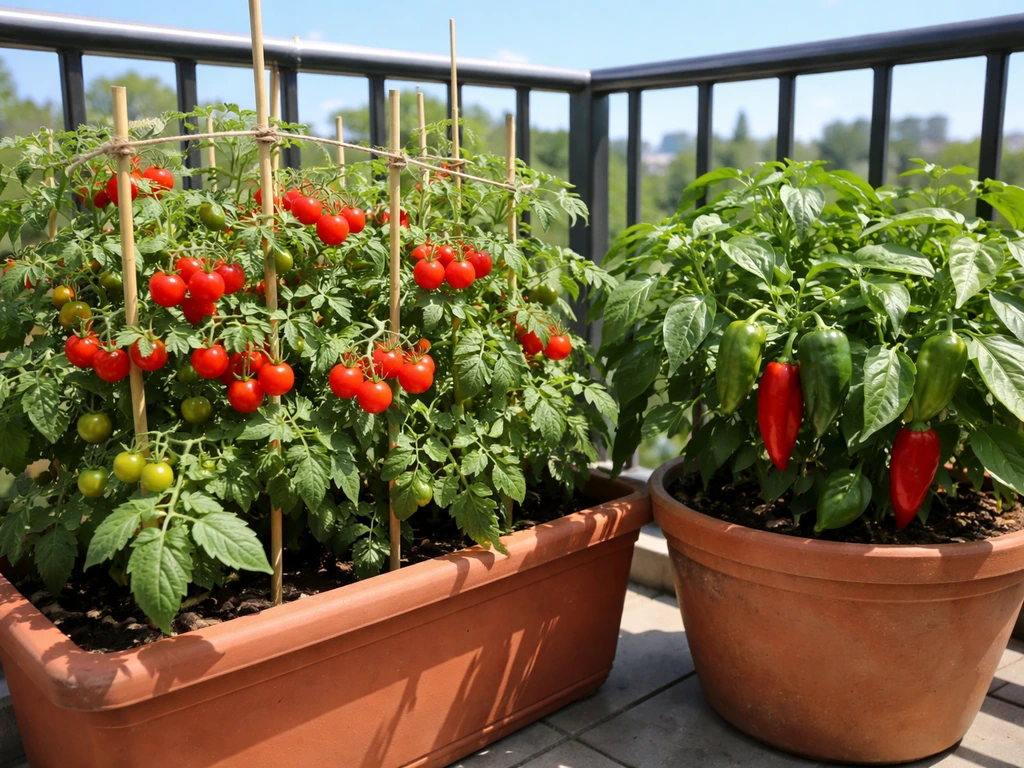
- Tomatoes (especially compact cherry varieties like 'Tumbling Tom' or 'Patio')
- Peppers (sweet or hot, both do extremely well in containers)
- Basil, rosemary, and thyme (love heat and direct sun)
- Petunias, marigolds, and zinnias for colour with minimal fuss
- Lavender (drought-tolerant once established, fantastic in a sunny spot)
- Strawberries in hanging baskets or window boxes
- Dwarf sunflowers in deep pots
Partial sun or partial shade (2 to 6 hours)
- Lettuce, spinach, and arugula (actually prefer some afternoon shade in summer)
- Chives and parsley
- Impatiens and begonias for flowers
- Fuchsia in hanging baskets
- Mint (keep it contained, it spreads aggressively even in pots)
- Kale and Swiss chard
Shade (under 2 hours of direct sun)
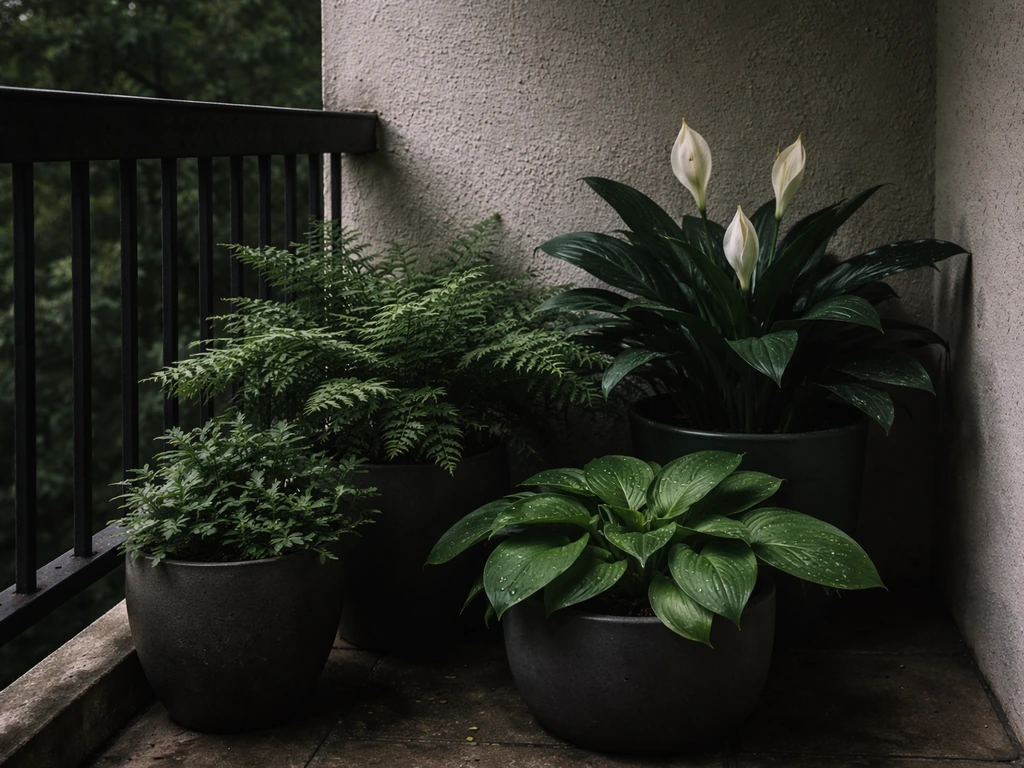
Shady balconies have more options than people expect. Ferns, hostas, and peace lilies are beautiful and genuinely thrive in low light. For food, you're mostly limited to salad greens and herbs like chives and Vietnamese coriander. If your balcony faces north or sits under a deep overhang, read the dedicated guide on the best plants to grow on a shady balcony for more targeted picks.
Best balcony planters and how to set them up
Container size directly controls what you can grow. Bigger is almost always better on a balcony, but you do need to match the container to the plant's root depth. Here's a practical breakdown:
| Container Size | Volume | Best for |
|---|---|---|
| Small pot (6–8 in) | Under 2 gallons | Herbs (basil, thyme, chives), strawberries, succulents |
| Medium pot (10–14 in) | 2–5 gallons | Peppers, lettuce, arugula, compact flowers |
| Large pot (16–20 in) | 5–15 gallons | Tomatoes (compact varieties), kale, dwarf citrus |
| Window box (24–36 in long) | 4–8 gallons | Mixed herbs, trailing flowers, lettuce rows |
| Raised planter box (deep) | 15–30+ gallons | Root vegetables, larger tomatoes, climbing beans |
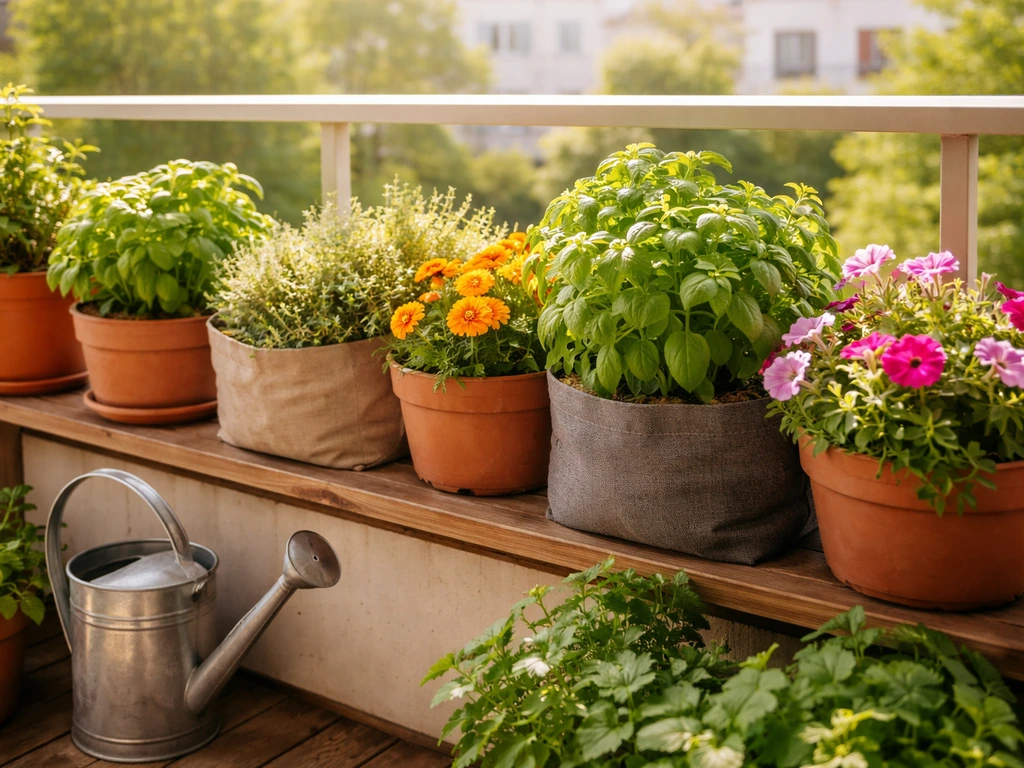
Material matters more on a balcony than in a garden. Terracotta looks great but dries out fast and is heavy. Lightweight plastic or fabric grow bags are your best friends when weight and water retention are concerns. Self-watering containers are genuinely useful if you travel or forget to water, since they hold a reservoir that roots draw from as needed. Whatever you use, drainage holes are non-negotiable. If a pot doesn't drain, roots rot.
Balcony railings open up vertical space. Railing planters, hook-hung baskets, and tiered plant stands let you grow far more than your floor space suggests. If you want to go further with vertical growing, the same logic applies to plants you'd grow up a pergola: climbers and trailing varieties make efficient use of height and look great doing it.
Top picks for every goal: edibles, herbs, flowers, and easy options
Edible plants (vegetables)
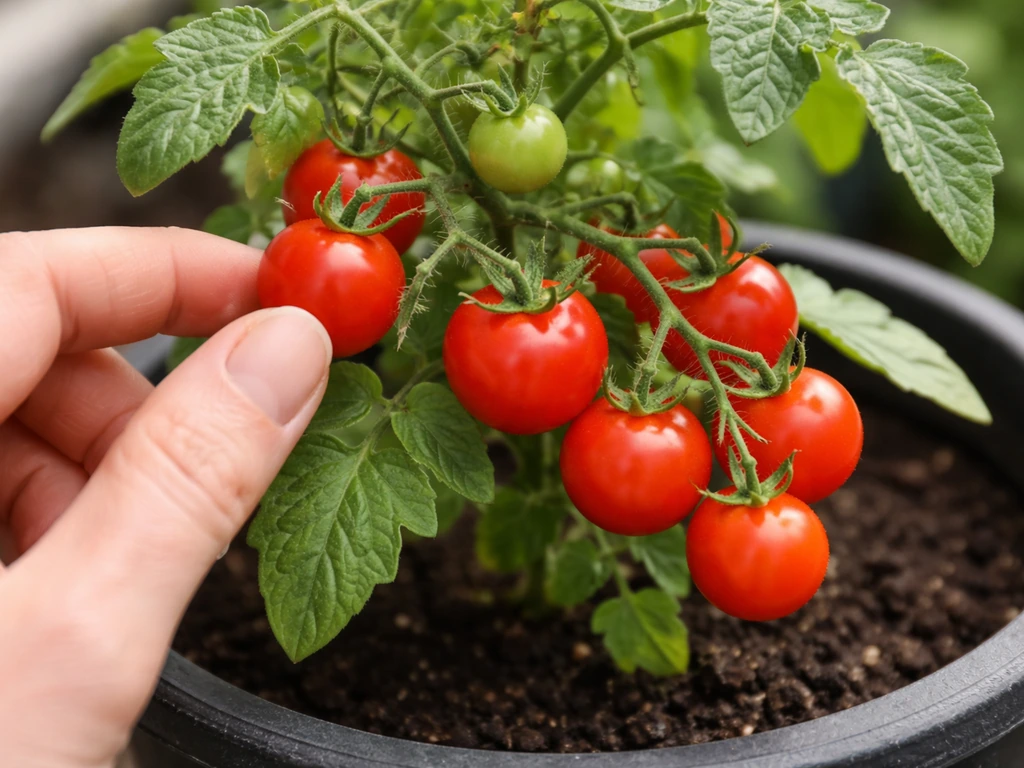
Cherry tomatoes are the undisputed champion of balcony food growing. 'Tumbling Tom', 'Patio', and 'Tiny Tim' are all bred for containers. Give them a 10 to 15 litre pot, full sun, and consistent watering and they'll produce all summer. Peppers are almost as reliable: one plant in a 5-gallon pot can give you more peppers than you can eat. Salad greens (lettuce, spinach, arugula, mizuna) are the fastest-return crop, ready to harvest in 30 to 45 days and tolerant of partial shade, which makes them ideal for balconies that don't get full afternoon sun.
Herbs
Herbs are the single highest-value balcony crop for most people. Basil, rosemary, thyme, oregano, and chives all grow well in small pots. Keep basil separate as it needs more water than woody herbs like rosemary and thyme, which prefer to dry out between waterings. Mint is useful but keep it in its own pot or it'll take over everything around it. Parsley and cilantro are good in partial shade and produce more before bolting if they're not in full sun all day.
Flowers for colour and pollinators
Petunias are the workhorse of balcony flowers: sun-loving, long-blooming, and available in every colour. Deadhead them every week or so and they'll flower from spring through to first frost. Marigolds are worth growing near your edibles because they genuinely help deter aphids and whitefly. For shaded spots, begonias and impatiens deliver months of colour with very little effort. Lavender does double duty as a beautiful plant and a pollinator magnet, and if you're curious about what pairs well with it in a more structured outdoor setting, the same varieties work well as plants grown on an arbor structure for coverage and scent.
Low-maintenance 'set and forget' options
If you travel often or just want something that survives neglect, focus on drought-tolerant plants. Succulents and sedums are the obvious choice for sunny balconies. Lavender, rosemary, and ornamental grasses also tolerate dry spells well once established. For partial shade, hardy ferns and cast iron plant (Aspidistra) genuinely live up to their names. Snake plant and ZZ plant work in pots outdoors during warm months and can come inside for winter.
What to plant now, and what to plan for later
It's mid-April 2026, which puts you in a sweet spot across most of the northern hemisphere. Here's how to think about timing based on your climate:
| Climate / Zone | Plant now (April) | Start planning for (May–June) | Save for late summer / fall |
|---|---|---|---|
| Zones 9–11 (warm/tropical) | Tomatoes, peppers, basil, herbs, most flowers | Heat-tolerant varieties, sweet potato vine | Cool-season greens for fall, brassicas |
| Zones 7–8 (mild) | Herbs, lettuce, peas, flowers, early tomatoes | Tomatoes (if not already), peppers, zucchini | Kale, spinach, root vegetables |
| Zones 5–6 (temperate) | Lettuce, radishes, herbs (indoors if frost risk) | Tomatoes, peppers, basil after last frost | Second sowing of greens, garlic in pots |
| Zones 3–4 (cold) | Start seeds indoors, cold-hardy greens outdoors | Most tender crops after frost-free date | Perennial herbs, overwintered garlic |
If you're in zones 5 to 7, the general last frost window is late April to mid-May depending on your exact location. Don't rush tomatoes and peppers outside before nights stay reliably above 10°C (50°F). Basil in particular will sulk and turn yellow if it gets a cold night below that threshold. Lettuce, on the other hand, can go out now and actually prefers the cooler weather of spring over the heat of July.
One useful trick: use your balcony as a hardening-off station. Start seeds on a sunny windowsill, then move the seedlings outside for a few hours a day over a week before committing them to full outdoor life. It makes a real difference to survival rates.
Container care basics: watering, feeding, pruning, and pests
Watering
Containers dry out much faster than garden soil, and balcony wind accelerates that. In summer, most balcony pots need watering every 1 to 2 days, sometimes daily in heat above 30°C (86°F) or on exposed upper floors. Stick your finger 2 cm into the soil: if it's dry, water thoroughly until it drains from the bottom. Surface-only watering is one of the most common mistakes. Shallow watering encourages roots to stay near the surface where they dry out fastest.
Feeding
Nutrients wash out of containers every time you water, so regular feeding is essential in a way that in-ground gardening rarely requires. A liquid balanced fertiliser (like a 10-10-10 or tomato feed) applied every 2 weeks during the growing season keeps most plants performing well. For heavy feeders like tomatoes and peppers, weekly feeding once they start flowering pays off in bigger harvests. Herbs on the other hand prefer lean conditions: over-fertilising basil or rosemary makes them grow fast but taste weak.
Pruning and harvesting
With edibles, harvesting is pruning. Pinching basil regularly to prevent flowering keeps it bushy and productive for months. Deadheading flowers (removing spent blooms) extends the flowering season dramatically for petunias and marigolds. For tomatoes in containers, remove suckers (the shoots that grow in the joint between stem and branch) to keep the plant manageable and direct energy into fruit. Compact determinate varieties need less of this than indeterminate types.
Common pests and how to handle them
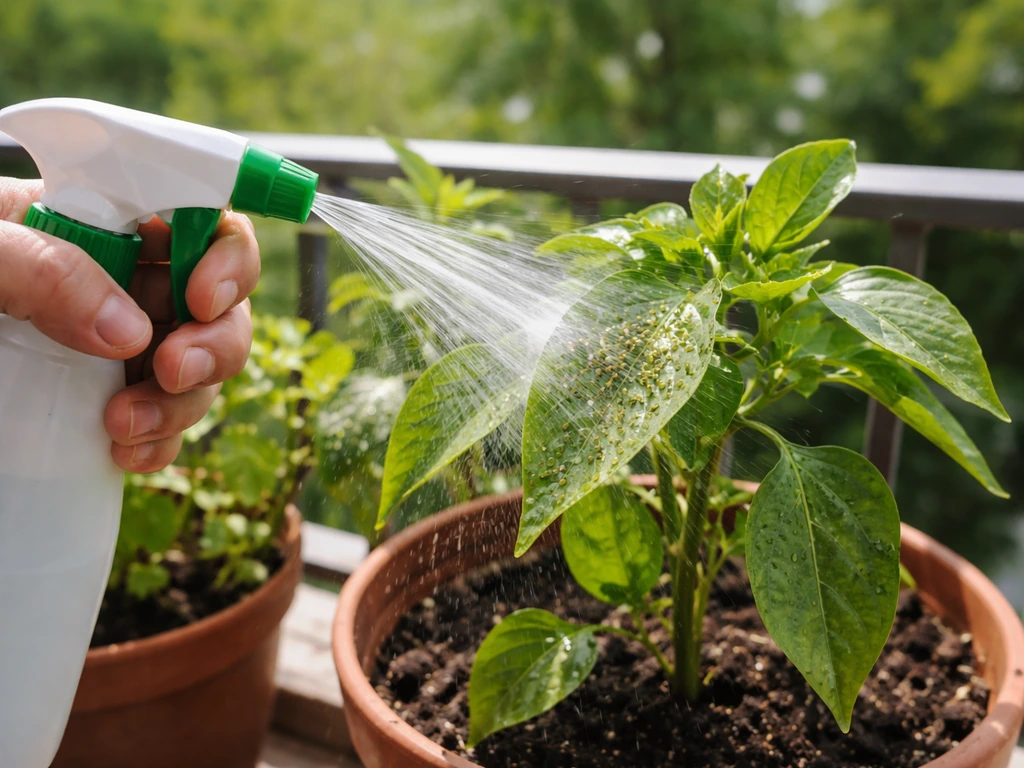
Aphids are the most common balcony pest. A strong blast of water knocks them off, and they rarely recover from it. Repeat every few days if they return. Fungus gnats appear when soil stays too wet, so letting the top inch of soil dry between waterings usually solves the problem. Spider mites love hot and dry conditions (especially on balconies). Raising humidity around the plant or using insecticidal soap deals with them quickly. Whitefly on tomatoes and peppers can be controlled with yellow sticky traps, which are inexpensive and chemical-free.
How to choose the right plant mix for your space
The practical way to build a balcony garden is to start with what you actually use or enjoy and layer from there. Here's a simple beginner-friendly framework:
- Pick one edible you cook with every week (basil, cherry tomatoes, chillies, or lettuce are the best starting points).
- Add one herb you'd otherwise buy from a shop (chives, parsley, and thyme all thrive in small pots with almost zero attention).
- Choose one flowering plant for colour and to attract pollinators if you're growing food (marigolds or petunias are the safest bets).
- If you have a shaded corner, add one low-maintenance green like lettuce or a fern to use the space.
- Resist buying more than you have containers and time for in year one. Three to five pots done well beats ten pots that struggle.
A sunny south-facing balcony with 4 to 6 pots could easily support: one large pot of cherry tomatoes, two medium pots of herbs (basil plus thyme or rosemary), one window box of mixed lettuce for cutting, and one hanging basket of petunias or strawberries. That's a genuinely productive and attractive setup that won't overwhelm you with maintenance.
If your outdoor space is larger or includes a ground-level patio, the plant choices shift slightly because wind exposure is usually lower and you have more floor space. The guide on what you can grow on a patio covers that scenario in detail, including which plants benefit most from being at ground level.
Balconies with overhead pergola-style structures or deep railings give you the option to grow climbers. Climbing beans, sweet peas, and nasturtiums all do well vertically and make the most of limited floor space. For rooftop gardens and elevated terraces where wind and sun are both more intense, the recommendations shift toward tougher varieties. If you're working with one of those spaces, both the guide on best plants to grow on a rooftop and the one covering best plants to grow on a terrace will give you more relevant picks. For more space-specific choices, also use this guide to find the best plants to grow on a terrace.
For gardeners with a ground-level patio adjacent to the balcony, or those expanding their setup, the article on the best plants to grow on a patio is a natural next step. And if you're thinking about adding a trellis or arch to your balcony for climbers, the options covered in the guide to plants to grow on a garden arch translate well to balcony railings and vertical structures.
The bottom line: match your plants to your light, protect them from wind, feed them regularly because containers can't hold nutrients on their own, and start smaller than you think you need to. A few plants that thrive will teach you more than a crowded balcony of stressed ones. Once you get one season under your belt, you'll know exactly what to scale up.
FAQ
What’s the best way to choose plants if my balcony sun changes a lot during the day?
Treat your balcony as different “zones” rather than one overall score. If one corner gets 6+ hours and another only 2 to 3, put full-sun plants (tomatoes, most flowers, basil) in the hot zone and move partial shade plants (lettuce, cilantro, impatiens) to the cooler edge. Measure on two clear days and pick the lower sun reading for any plant that hates inconsistency.
Can I grow plants on a balcony that only gets morning sun?
Yes, many edibles and ornamentals do well with morning light plus afternoon shade. Lettuce, arugula, chives, parsley (partial shade types), and begonias handle this well. If you grow tomatoes or basil, you’ll likely need more than 4 to 6 hours and you should avoid windy corners where heat loss is fast.
How big should my pots be for successful balcony gardening?
Use root depth as your guide, and size up for anything fruiting or fast-growing. Tomatoes generally do best with 10 to 15 litre containers, peppers around 5 gallons, and herbs usually tolerate smaller pots. If you are unsure, choose one size larger than the label, because balcony conditions dry out containers quickly and small pots force daily watering.
What’s the most common mistake that kills balcony plants even when I picked the “right” plant?
Overlooking drainage and watering depth. Always confirm drainage holes are present and unobstructed, then water until excess runs out (not just a splash on the surface). Surface-only watering encourages shallow roots, which then dry out and stress plants, especially in wind-exposed upper floors.
How often should I fertilize balcony plants, and can I overdo it?
A practical schedule is every 2 weeks with a balanced liquid feed during active growth, and switch to more frequent feeding for heavy fruiters once they start flowering. Herbs are the exception, they prefer lighter feeding, so if basil or rosemary becomes lush but weaker in flavor or drops leaves, cut back and use a lower dose.
Do I need to bring my balcony plants inside for winter?
It depends on your hardiness and the plant type. Perennials may survive outdoors only if they are hardy in your zone and protected from wind and freezing container soil. For borderline plants or anything in small pots, move containers to a sheltered spot, wrap pots for insulation, or bring them indoors before temperatures drop below freezing for extended periods.
Is it okay to grow mint on a balcony?
Yes, but keep it contained. Mint spreads aggressively in containers, so use a dedicated pot (or an in-ground style barrier in a larger container) and avoid mixing it with slower herbs like thyme or rosemary.
Why are my balcony tomatoes flowering but not producing fruit?
Common causes are inconsistent watering and temperature dips. Ensure you water deeply and regularly (letting the soil go too dry can disrupt fruit set), and keep tomatoes out until nights stay safely warm, since cold nights can delay or reduce flowering into fruiting.
How do I prevent tipping and root stress in windy balconies?
Use heavier or wider containers, place them closer to the wall for wind protection, and consider adding a saucer or base that stabilizes the pot. Choose compact, sturdy varieties when possible, tie trellised plants gently, and check soil moisture more often because wind-driven drying happens quickly.
What should I do if pests show up on my balcony plants?
Start with the least aggressive option. For aphids, rinse with a strong spray and repeat every few days if needed. If you see persistent issues and plants are in consistently wet soil, adjust watering to let the top inch dry to reduce fungus gnat risk. For spider mites in hot, dry weather, raise humidity around plants (without soaking soil) or use insecticidal soap.
How can I build a low-maintenance balcony plant setup for beginners?
Pick a tight “core” set that matches your sun and requires similar care frequency. A simple approach is one larger anchor container (tomatoes or a flowering plant), two herb pots, one fast salad container, plus one hanging basket. This avoids the common problem of mixing plants that need very different watering and feeding schedules.
What should I plant for a balcony gardener who travels often?
Prioritize drought-tolerant plants and containers that reduce missed-water damage. Succulents, sedums, lavender, and ornamental grasses work better when watering gets irregular. If you want edible options, consider self-watering containers, but still verify drainage and use plants that can handle intermittent dryness rather than delicate shade lovers.
Next Article
Best Small Plants to Grow Indoors: Easy Picks by Light
Compact indoor plants by light, easy care and watering, plus herbs and shelf picks for every season