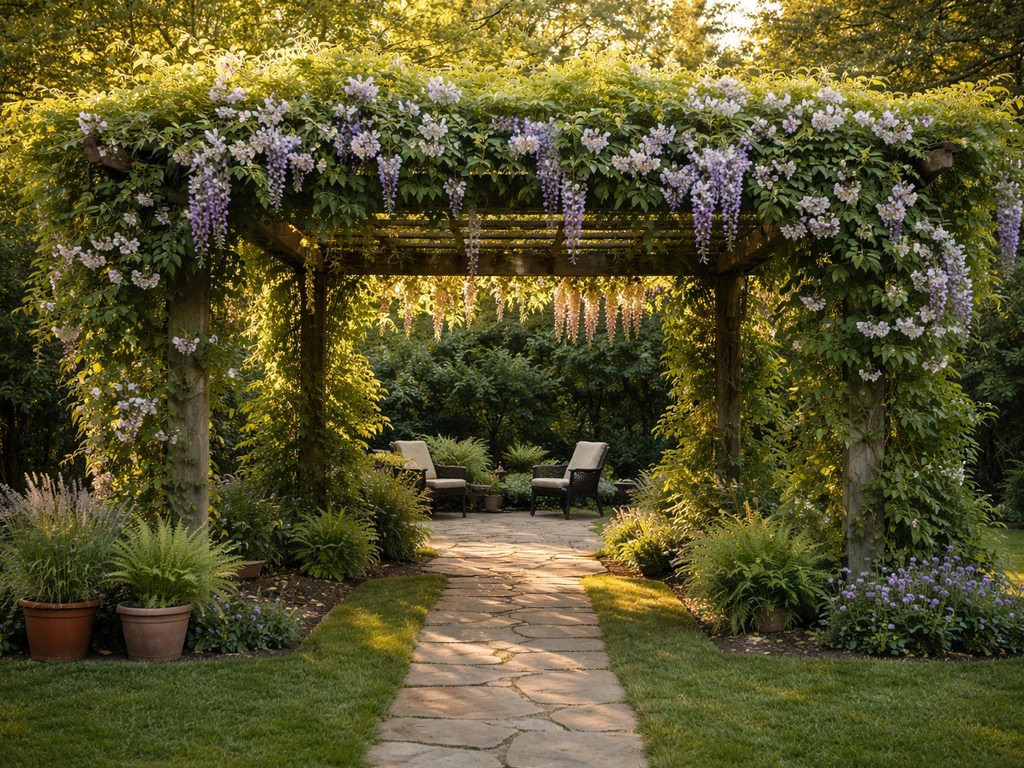
The most reliable plants to grow on a garden arch are climbing roses, clematis, and honeysuckle for flowers; ivy or evergreen clematis for year-round cover; and climbing beans or kiwi vines if you want food. Which one is right for you depends on how much sun the arch gets, how cold your winters are, and how much time you want to spend managing it. Pick the wrong one and you'll spend years wrestling with a plant that doesn't suit the spot. Pick the right one and a garden arch can look extraordinary within a single growing season.
Best Plants to Grow on a Garden Arch: Options by Sun, Zone
Rachel Hartley
22 May 2026
How to choose plants for an arch
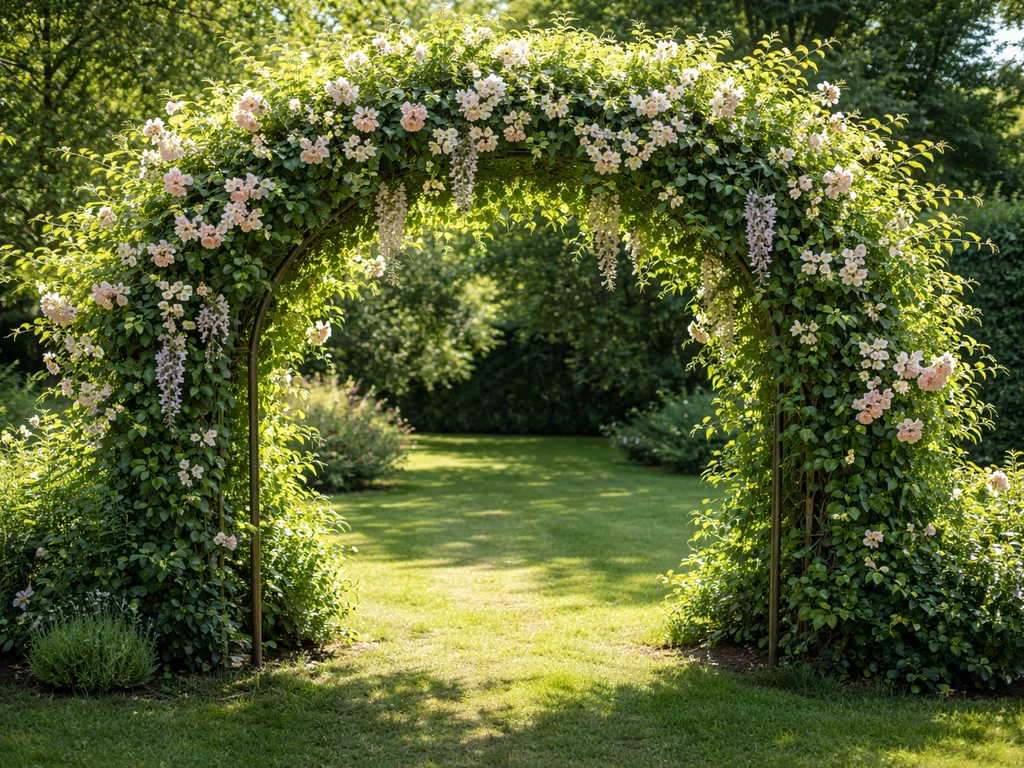
Before you buy anything, check four things: sun exposure, the arch's size and material strength, your climate zone, and how much you're willing to prune. These factors cut your options in half and point you toward something that will actually work.
Sun and shade
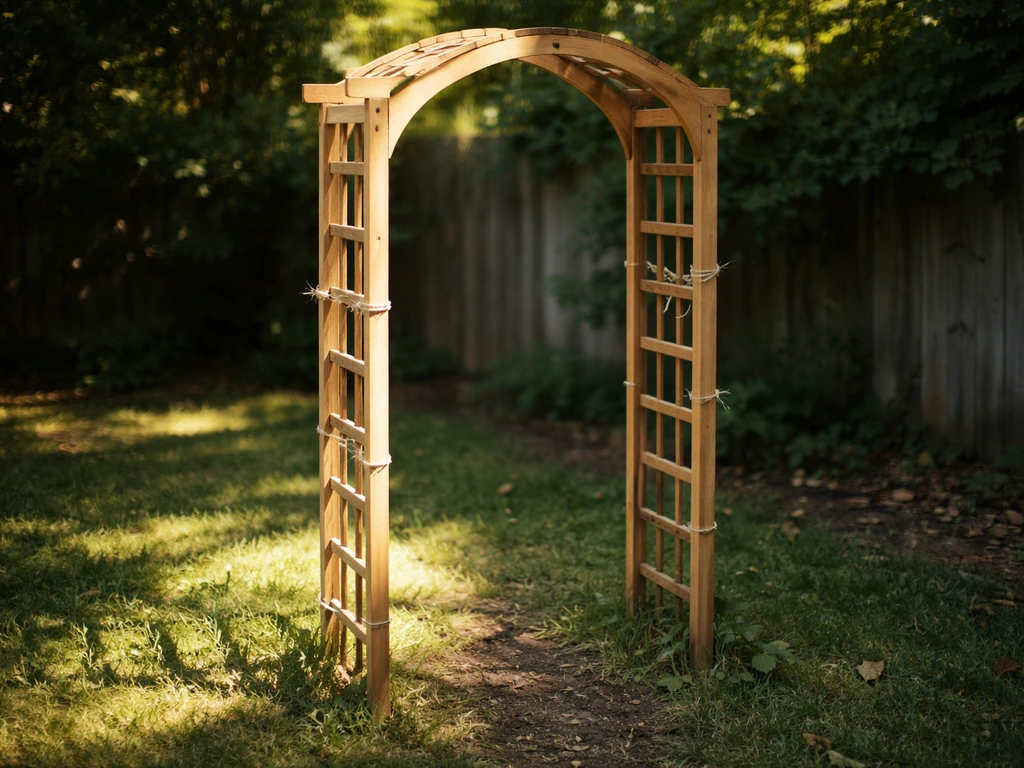
Most of the showiest climbers, including roses and most clematis varieties, want at least 6 hours of direct sun. If your arch is in a shady spot, you'll need to lean toward shade-tolerant options like hydrangea petiolaris (climbing hydrangea), certain honeysuckles, or ivy. Part-shade arches (3 to 5 hours of sun) work well for many clematis varieties, especially the large-flowered hybrids, as long as you keep their roots cool and moist.
Space and structure strength
A wooden or metal garden arch is typically quite narrow, anywhere from 4 to 6 feet wide, with upright posts. That's excellent for twining climbers and plants you can train and tie. It's not ideal for wisteria unless your arch is seriously heavy-duty metal, because wisteria stems become thick woody trunks that can crush lightweight arches over time. If you want big coverage fast on a standard arch, stick with rose, clematis, or annual climbers. If your setup is more of a large pergola structure, the plant palette opens up considerably, similar to what works on a pergola, but a standard arch needs a plant you can control. If you’re planning a larger pergola instead of a narrow arch, the best plants to grow up a pergola can give you faster, more dramatic coverage.
Climate and hardiness zone
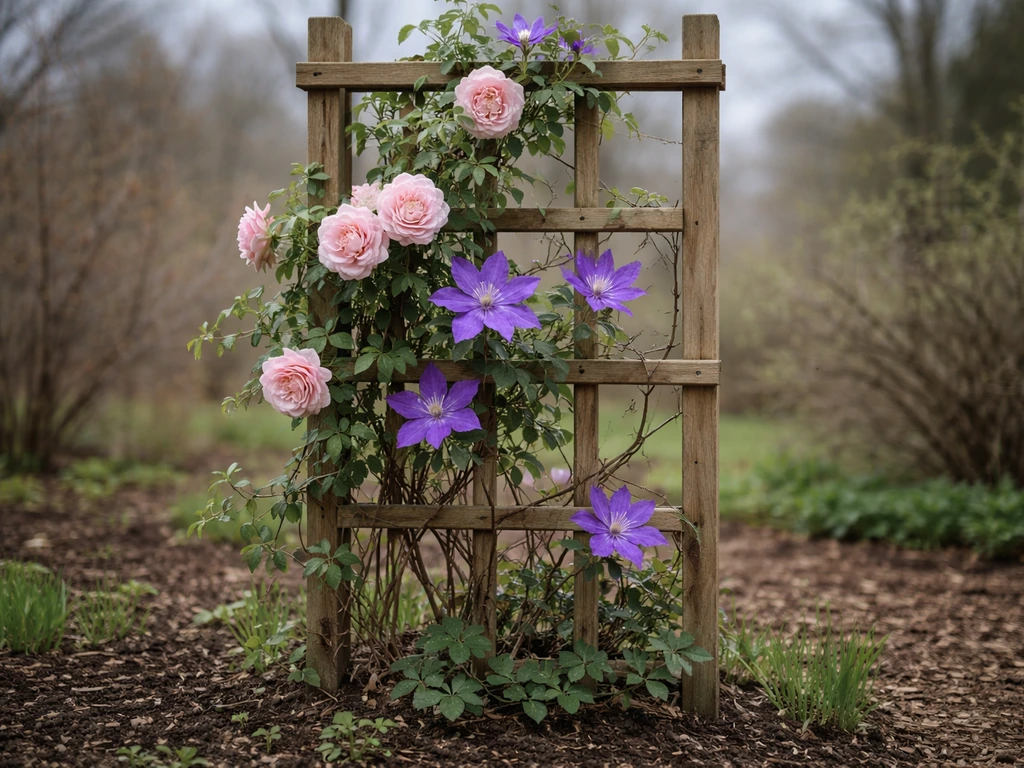
In USDA zones 4 to 7 (much of the northern US and UK), climbing roses, clematis, and honeysuckle are your workhorses. In zones 8 to 10 (the US South, California, coastal areas), you can add bougainvillea, passion flower, and star jasmine to the list. If you're in the UK, the RHS's guidance maps well: most of the plants in this article are fully hardy across Britain, though some will need protection in a hard frost. Always check the hardiness rating before you buy.
Training style matters
Some climbers self-cling or twine on their own (clematis, honeysuckle, sweet peas). Others, like climbing roses, don't actually climb at all on their own: they need you to tie them to the arch regularly or the canes just flop outward. Know whether you're buying a true climber or a plant that needs your help to look intentional.
Best flowering climbers for a garden arch
These are the plants people picture when they imagine a blooming arch. They're all reliably rewarding, but each has its own personality.
Clematis
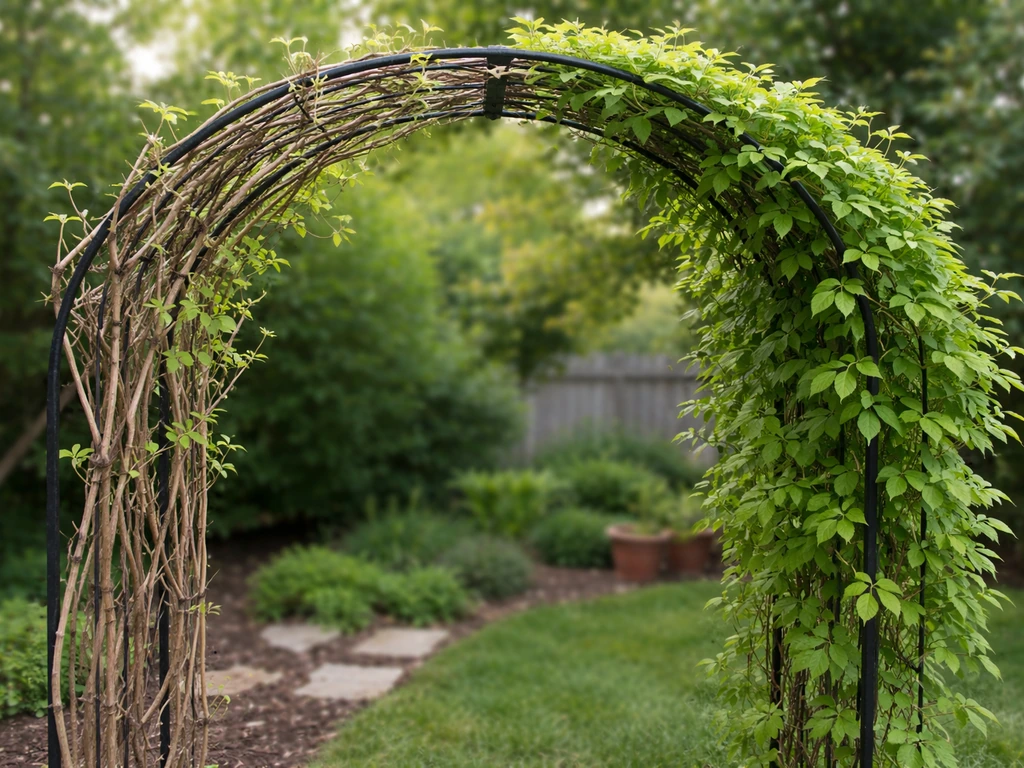
Clematis is probably the single best all-around choice for a garden arch. There are varieties for sun, part shade, spring bloom, summer bloom, and autumn bloom, and many grow 6 to 12 feet, which is exactly the size range a standard arch needs. The RHS recommends planting your clematis so the base of the plant sits about 30 to 45cm (12 to 18 inches) away from the base of the arch, not jammed right up against it. This is especially important on arches against walls where the soil dries out fast underneath overhangs. The RHS and blank" rel="noopener noreferrer">Penn State Extension both emphasize keeping clematis roots cool: plant them in a hole that's at least 2 to 3 times wider than the rootball and mulch the base heavily to retain moisture. If your arch is in full sun, shade the root zone with a low-growing perennial or a layer of flat stones.
Pruning group matters a lot with clematis. Group 1 varieties (early bloomers like Clematis montana) flower on old wood, so you only prune lightly after flowering. For pruning, University of Delaware Extension groups clematis into pruning groups and gives group-specific timing, including “only prune after flowering” for some groups and cut-back-after-flowering for others Group 1 varieties (early bloomers like Clematis montana) flower on old wood, so you only prune lightly after flowering.. Group 3 varieties (summer and autumn bloomers like 'Jackmanii') flower on the current season's growth, which means you cut them hard back to about 30cm (12 inches) in late winter and they reward you with a flush of new growth and blooms. Group 2 varieties are a mix and can be a bit more fiddly. For an arch, a Group 3 variety is the most forgiving and easiest to keep tidy.
Climbing roses
A rose-covered arch is one of the great garden classics, and it's genuinely achievable. Choose a variety labeled as a 'climbing rose' rather than a 'rambling rose': ramblers bloom once and produce enormous amounts of growth that's difficult to manage on a small arch. Good climbing rose varieties for arches include 'New Dawn' (pale pink, repeat-flowering, very vigorous), 'Compassion' (salmon-apricot, fragrant, excellent repeat bloom), and 'Golden Showers' (yellow, upright habit, manageable size). Plant in full sun and plan to tie in new canes every few weeks through the growing season. Roses need annual pruning and some pest management for blackspot and aphids, so they're not a hands-off choice.
Honeysuckle
Honeysuckle (Lonicera) is one of the fastest-covering and most fragrant options you can put on an arch. Lonicera periclymenum 'Serotina' (late Dutch honeysuckle) produces deep red and cream flowers from midsummer into autumn and twines on its own without much help. It tolerates part shade better than most climbers. The main gotcha: honeysuckle can get powdery mildew in hot, dry summers, especially in shadier spots. Keep the base moist and give it decent airflow.
Sweet peas (annual, fast-fill option)
If your arch is new or bare and you want color this season, sweet peas are the answer. They're annuals, so you replant each year, but they grow fast (fully covered arch by midsummer from a spring sowing), smell incredible, and come in every color imaginable. They're great for filling in while a perennial climber like clematis or rose is getting established. Sow in autumn or early spring and give them something to twine up: wire, netting, or a trellis panel between the arch uprights.
Best evergreen and year-round cover for arches
If you want the arch to look structural and purposeful in winter as well as summer, you need at least one evergreen or semi-evergreen climber. This is especially important if the arch is a key visual feature or marks an entrance to a garden area.
Ivy (Hedera)
Ivy is underrated. It's fully evergreen, extremely tough, tolerates deep shade, and can completely cover an arch within two to three years. The concern people have is that it takes over, and it can if you ignore it. But on a managed arch, it's easy to keep trimmed. Choose a small-leaved variety like Hedera helix 'Glacier' or 'Goldchild' for a neater look. Ivy is particularly useful on shaded arches where almost nothing else will give you consistent year-round cover. If your arch is on a balcony or terrace and you want privacy and greenery regardless of season, ivy is hard to beat.
Evergreen clematis (Clematis armandii)
Clematis armandii is the evergreen clematis, and it's spectacular. It keeps its glossy dark green leaves all year and produces fragrant white flowers in early spring. It can reach 15 to 20 feet, so it's better on a large or sturdy arch. It's hardy to about USDA zone 7 (or RHS H4 in the UK), so if you're in a cold northern climate it may need a sheltered spot. Plant it on an arch against a warm wall for best results.
Star jasmine (Trachelospermum jasminoides)
In zones 8 and above, star jasmine is an excellent evergreen choice. It produces masses of small white fragrant flowers in summer, twines easily up an arch, stays neat with light trimming, and looks attractive year-round. In cooler climates (UK zone H3 or colder), it needs a sheltered sunny spot and may lose some leaves in a hard winter.
Best edible vines for an arch
An arch doesn't have to be purely ornamental. Some of the most productive food plants are climbing vines, and a food-producing arch is one of the most efficient uses of vertical space in a garden or on a patio. If you have a patio, the best plants to grow are often climbing vines that make efficient use of vertical space and are easy to maintain food-producing arch.
Runner beans and climbing French beans
Runner beans are the simplest edible arch plant you can grow. They're annuals, they grow fast (up to 10 feet in a season), they produce abundantly, and the flowers are attractive too (traditionally red, but also white and pink varieties available). Sow after your last frost date directly in the ground at the base of the arch. They need something to twine up, so weave string or netting between the arch posts if the arch itself doesn't offer enough grip. Climbing French beans do the same job with a slightly more compact habit and work well in warmer climates.
Kiwi vine (Actinidia)
For something more permanent, a hardy kiwi vine (Actinidia arguta, not the full-sized kiwi) is a genuinely impressive edible arch plant. Hardy kiwi produces small, grape-sized, sweet fruits and is cold-hardy down to USDA zone 4. It's vigorous (so prune it annually), and you'll need a male and a female plant to get fruit, or a self-fertile variety like 'Issai'. It takes two to three years to start fruiting but will produce for decades.
Nasturtiums and edible sweet peas
Nasturtiums are an easy annual option: the flowers and leaves are edible and the plants scramble cheerfully over a low arch. They're not true climbers but can be trained through the structure. Edible sweet peas (the pea plant, Pisum sativum) are another annual that covers an arch quickly and produces food. Sow early (February or March in the UK, or as soon as the ground can be worked in cold US climates) for the best harvest before summer heat shuts them down.
Low-maintenance vs high-maintenance picks
This is where honest expectations matter. Some of the most beautiful arch plants are genuinely demanding. Others are almost foolproof. Here's a direct comparison.
| Plant | Maintenance Level | Growth Speed | Evergreen? | Best For |
|---|---|---|---|---|
| Clematis (Group 3) | Low-medium | Fast (covers in 1-2 years) | No | Flowers, most climates |
| Climbing rose | High | Medium (2-3 years to establish) | No | Classic look, fragrance |
| Honeysuckle | Low | Fast (covers in 1-2 years) | Semi-evergreen | Shade tolerance, fragrance |
| Ivy | Low | Medium-fast | Yes | Year-round cover, shade |
| Sweet peas (annual) | Low (but replant yearly) | Very fast (one season) | No | Quick color, fragrance |
| Star jasmine | Low | Medium | Yes | Warm climates, fragrance |
| Runner beans (annual) | Low | Very fast (one season) | No | Edible, ornamental flowers |
| Hardy kiwi | Medium | Slow to fruit (2-3 yrs) | No | Long-term edible harvest |
| Clematis armandii | Low-medium | Medium-fast | Yes | Year-round structure, spring flowers |
If you want the lowest possible effort, honeysuckle or a Group 3 clematis is the answer. Both establish quickly, look great with minimal fuss, and don't need complex pruning knowledge. Climbing roses are the highest-maintenance option on this list: they need tying in multiple times a year, annual pruning of both main canes and side shoots, and regular feeding and pest management. They're worth it if you love them, but go in with open eyes.
On growth speed: if you need the arch covered fast (say, you're planting it this May and want coverage by August), annual climbers are your best bet. Sweet peas sown in March will be at the top of a 6-foot arch by July. Runner beans planted after your last frost will do the same. For perennial coverage, honeysuckle and clematis are the fastest-establishing options, typically giving you meaningful coverage by the end of their first full growing season and a fully clothed arch by year two.
Planting, training, and maintenance tips for a thriving arch
Planting correctly
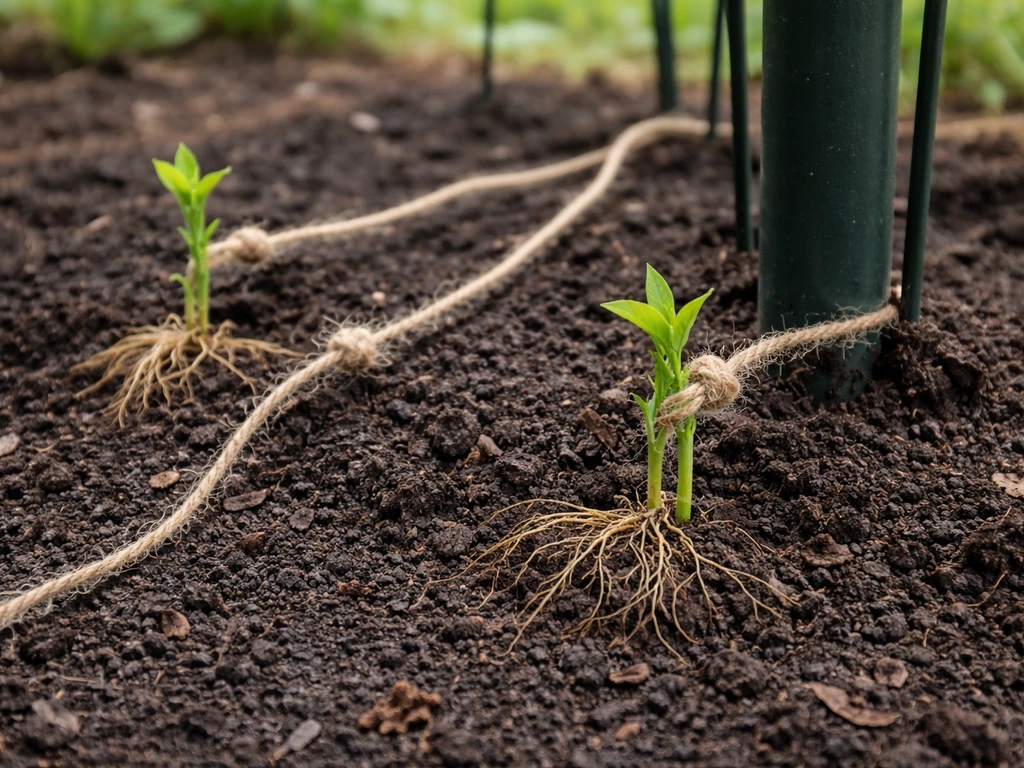
Don't plant right at the foot of the arch posts. The soil there is often compacted and dry. For climbers going up an arch post, plant 30 to 45cm (12 to 18 inches) out from the base, then guide the stems toward the structure with a bamboo cane angled toward the arch. Dig the planting hole at least 2 to 3 times wider than the rootball and improve the soil with compost before backfilling. For clematis specifically, plant the crown slightly deeper than it was in the pot (about 5 to 8cm or 2 to 3 inches deeper) to protect against clematis wilt. Mulch 5 to 8cm deep around the base of all climbers to retain moisture and suppress weeds, keeping the mulch slightly away from the stem itself.
Training the growth
The goal with an arch is to get growth going up both sides evenly, then across the top. As stems grow, tie them in loosely with soft garden twine or silicone plant ties. Don't wait until canes are long and stiff: check weekly during the growing season and guide new growth while it's still flexible. For roses, fan the canes outward and upward along the arch structure rather than letting them grow straight up, as horizontal or angled canes produce far more flowering side shoots than vertical ones. For twining plants like clematis and honeysuckle, you mainly need to guide the initial stems toward the arch; once they find something to grip, they'll do the rest.
Watering and feeding
Water deeply but infrequently during the establishment year, aiming to soak the root zone once or twice a week rather than shallow daily watering. After the first full year, most established climbers on an arch in the ground need little extra watering except in prolonged dry spells. Feed flowering climbers with a balanced fertilizer in spring, then switch to a high-potassium feed (like tomato fertilizer) from late spring to encourage flowers rather than just foliage. Roses benefit from a dedicated rose fertilizer. Avoid high-nitrogen feeds after midsummer, as they push soft growth that's vulnerable to frost.
Pruning: keep it simple
For clematis, check your pruning group when you buy. Group 3 (the most common and easiest) gets cut back hard to about 30cm from the ground in late winter, every year. Group 1 (Clematis montana and others) gets a light tidy after flowering in late spring. For roses, deadhead spent blooms through summer to encourage repeat flowering, and do a main structural prune in late winter or early spring. For honeysuckle, cut back by a third after the main flush of flowers. For ivy and evergreens, trim to shape once or twice a year with shears.
Winter protection
In zones 6 and colder, wrap the base of marginally hardy plants (like star jasmine or passion flower) with horticultural fleece in November. For container-grown climbers on a patio arch, move the pots to a sheltered spot or wrap the pots in bubble wrap to protect the roots. Hardy climbers like clematis and roses generally don't need protection in zones 5 and above, but a layer of mulch over the root zone in autumn is always worth doing to insulate against hard freezes.
Realistic timelines
- Year 1: Focus on root establishment. Most perennial climbers will put on modest top growth. Plant annuals (sweet peas, beans) alongside to fill the gap with color.
- Year 2: Expect meaningful coverage on most arches. Clematis and honeysuckle should reach the top. Roses will have substantial cane structure but may still be patchy.
- Year 3 and beyond: Full coverage on most arches. Annual pruning keeps everything in shape and encourages the best flowering.
If you're planting an arch in an exposed or challenging spot, the same principle applies as with balcony or rooftop planting: always choose a plant that's rated one hardiness zone hardier than your actual zone. It gives you a real buffer against unexpected hard winters and exposed conditions, and it means your arch plant performs well even in a tough year. Rooftop planters and roof conditions often change the rules, so choose plants specifically suited to rooftops best plants to grow on rooftop.
FAQ
Can I grow more than one climber on the same garden arch without it turning into a tangled mess?
Yes, but choose partners with compatible growth strength and different bloom times. For example, pair a predictable structure plant like ivy or evergreen clematis with a flowering climber (clematis or honeysuckle) so one is always providing coverage. Keep the planting distance to the recommended offset from the posts, and assign separate training positions early, using distinct twine lines so stems do not braid together.
How do I choose between a fast-cover plant and a long-term plant for an arch?
Decide based on your time horizon. If you need coverage quickly in the first season, annuals like sweet peas or runner beans can perform, or you can “fill in” while perennials establish. If you want the arch to look complete for years with less annual replanting, prioritize clematis (Group 3 if you want easiest pruning) or honeysuckle, then avoid switching plants every year.
What’s the easiest training method for an arch if I don’t want to tie canes every week?
Start with a plant that grips naturally, then limit tying to early guidance. Clematis and honeysuckle typically self-grip after you point the first stems toward the frame, so you mostly guide at the start. With roses, you will usually need more frequent tying because their canes do not reliably cling, so plan on regular checks during active growth.
Is it better to plant clematis closer to the arch for more flowers?
Usually no. Even though it feels logical to place the crown right against the structure, clematis performs better when the base is set slightly away from the arch. That spacing improves airflow and reduces drying at the base, and it helps prevent issues like weak growth around walls where conditions are drier.
What should I do if my clematis flowers poorly even though it grows leaves?
First confirm the pruning group, because pruning at the wrong time is the most common cause. Group 3 types need a hard cut back in late winter, Group 1 needs only light cleanup after flowering, and Group 2 is mixed. Also ensure the roots are kept cool and consistently moist, since heat-stressed roots can reduce bloom even when foliage looks healthy.
How much direct sun does a shade-tolerant arch plant actually need?
“Part shade” usually means a mix, roughly 3 to 5 hours of direct sun. If you get dappled light all day but little direct sun, growth can be slower and flowering may drop. In those conditions, lean toward evergreen options like ivy or evergreen clematis, and expect fewer blooms compared to a fully sunny arch.
Can I grow wisteria on a standard garden arch?
Only if the arch is extremely heavy-duty and well anchored. Standard lightweight arches often cannot handle wisteria’s thick woody trunks over time, and they can be forced out of alignment. If your arch is metal, thick-gauge, and securely bolted, you can consider it, but otherwise choose plants that are easier to control on a 4 to 6 foot arch frame.
What’s the best way to prevent disease in honeysuckle, especially powdery mildew?
Focus on airflow and base moisture rather than heavy watering at the surface. Honeysuckle can develop powdery mildew in hot, dry summers, particularly in shadier spots where airflow is limited. Space plants if you are combining climbers, avoid overcrowding the crown, and keep the root zone consistently moist so the plant does not stress and become more susceptible.
Do I need to prune an arch plant the same way every year?
Not necessarily, but you should follow the plant’s flowering habit. Clematis pruning depends on the group, roses need both deadheading during the season and a main structural prune in late winter or early spring, honeysuckle benefits from a cut-back after the main flush, and ivy and evergreens are shaped once or twice yearly. If you prune “by schedule” without checking the plant type, you can accidentally reduce blooms.
How do I protect arch plants in cold winters without smothering them?
Use light insulation targeted to roots and crowns, not full wrapping that traps excessive moisture. For borderline plants, wrap bases with horticultural fleece in November, and for container climbers move pots to a sheltered spot first. For in-ground climbers in cold-ish zones, a thick mulch layer over the root zone in autumn helps most, and overly dense wrapping can increase rot risk if winter weather is wet.
What’s the most common mistake when planting climbers on an arch?
Planting too close to the posts and creating stressed, dry conditions right where the plant tries to establish. The practical fix is to offset the planting location away from compacted, dry bases, then dig a wider hole than the rootball, and mulch at the base to retain moisture. For clematis, you also want the crown slightly deeper than it was in the pot to reduce wilting risk.
Will an arch plant work as a patio container solution, or do I need to use ground planting?
Both can work, but containers require more consistent watering and often more frequent feeding. For container-grown climbers, stabilize the pot against wind, and in cold periods move it to a sheltered area or wrap the container to protect roots. Choose smaller, manageable cultivars and be prepared to water more regularly than you would for in-ground arches.
Next Article
Best Plants to Grow Up a Pergola: Top Picks by Goal
Best plants to grow up a pergola with climate-ready picks plus training, spacing, care, and pruning tips.