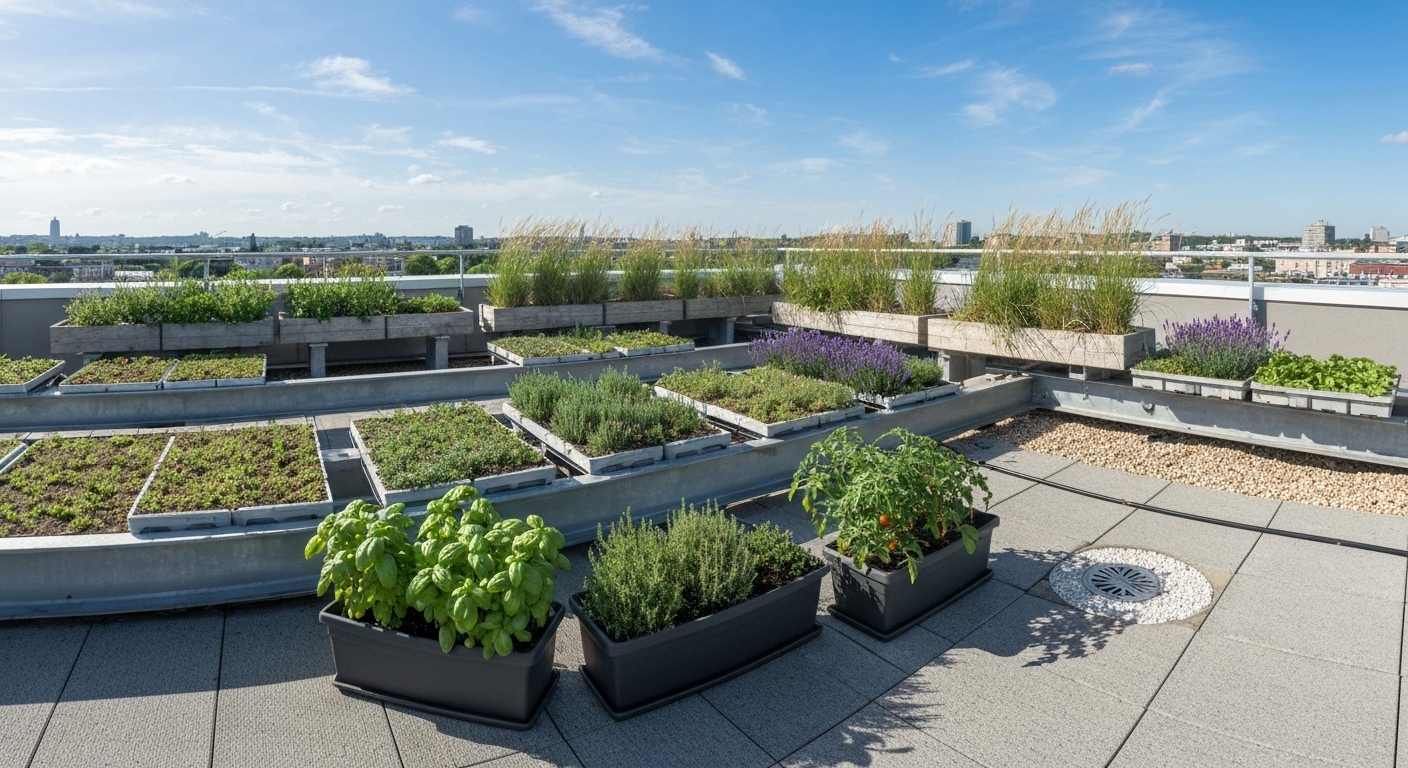
The best plants to grow on a rooftop are sedums, culinary herbs, salad greens, dwarf tomatoes, lavender, and native drought-tolerant perennials, but the right pick depends on three things you need to know before you buy a single pot: how much weight your roof can carry, how much sun and wind it gets, and how deep a substrate or container you can realistically use. Get those three factors sorted, and choosing plants becomes straightforward. Skip them, and you can end up with a roof leak, a dead garden, or a structural problem.
Best Plants to Grow on Rooftop: Setup, Picks & Care Checklist
Rachel Hartley
10 Aug 2026
Who this guide is for and how to use it
This guide covers the full rooftop growing spectrum: a single container of cherry tomatoes on a flat urban roof, a terrace lined with raised beds and herb pots, and a proper modular or built-up green roof system. Whether you are an apartment dweller with access to a shared roof deck, a homeowner planning something more ambitious, or a gardener somewhere in between, the sections below are designed to be used in order the first time through, then referred back to as a checklist. The safety and structure sections come before the plant picks deliberately. That is not bureaucratic caution; it is the sequence that keeps a rooftop garden from becoming an expensive repair job.
If you have grown on a balcony or terrace before, a lot of what you know transfers directly, though rooftops tend to be windier, sunnier, and less forgiving on irrigation than sheltered outdoor spaces. The core plant-selection logic is the same: match the plant to the actual conditions, not the conditions you wish you had.
Quick picks: best rooftop plants by purpose
These are the plants that consistently perform well in rooftop conditions across a wide range of climates. For terrace planters, consult our list of the best plants to grow on a terrace for plant suggestions matched to container depth and exposure. All of them tolerate high light exposure and intermittent drought better than average, and all work in containers or modular systems. Use this as a starting shortlist, then narrow it down using the decision framework in the next section. If you want more container-friendly ideas for smaller outdoor spaces, see our guide on what can I grow on my patio. If you also need recommendations for climbing and espaliered species, see our guide to the best plants to grow up a pergola. For similar recommendations tailored to smaller outdoor spaces, see our guide to the best plants to grow on patio.
Food crops
- Lettuce and salad greens (cut-and-come-again varieties): fast, shallow-rooted, productive in 15–20 cm containers, ideal for spring and autumn when rooftop temperatures are not extreme
- Radishes: ready in 25–30 days, need only 15 cm depth, great for filling gaps between slower crops
- Dwarf or patio tomatoes (e.g., Tumbling Tom, Balcony, Tiny Tim): genuinely productive in 20–30 L containers with at least 30 cm depth; full sun essential
- Peppers (sweet or chilli): slower than tomatoes but more drought-tolerant once established; 20 L containers work well
- Strawberries: shallow-rooted, productive in hanging baskets or 15–20 cm depth containers, tolerate exposed conditions
- Culinary herbs (basil, thyme, rosemary, oregano, chives, mint in its own pot): most thrive in 15–20 cm containers, handle wind and full sun, and are genuinely useful
Medicinal and wellness plants
- Lavender (Lavandula angustifolia): drought-tolerant, fragrant, proven in exposed positions, prefers well-drained mineral-rich mixes
- Echinacea (coneflower): deep-rooted perennial that needs at least 20–25 cm substrate; good for semi-intensive systems
- Lemon balm: vigorous, low-maintenance, does well in 20 cm+ containers; keep it contained or it will spread
- Calendula: easy annual, flowers prolifically, edible and medicinal, handles moderate wind
Pollinator-friendly plants
- Sedum (stonecrop) species: the workhorse of extensive green roofs, genuinely attractive to bees and butterflies in late summer, survives on 5–15 cm substrate
- Native wildflowers (e.g., black-eyed Susan, prairie coneflower, native asters depending on region): excellent for pollinators and adapted to local climate stress
- Thyme: low-growing, flowering, and genuinely useful in the kitchen while feeding bees
- Alliums (ornamental or edible): tall, architectural, loved by bees, reasonable wind tolerance
Ornamental plants
- Ornamental grasses (e.g., Festuca glauca, Carex): lightweight, low-maintenance, movement in wind looks intentional rather than stressed
- Sempervivum (houseleeks): virtually indestructible in shallow substrates, architectural rosettes, wide colour range
- Agapanthus: striking blue flowers, reasonably wind-tolerant, good in large containers
- Creeping phlox: low-growing mat, excellent spring colour, tolerates shallow substrates and exposed conditions
- Climbing roses or clematis (for railings and trellises): need deeper containers (30+ cm) and anchor points, but add strong vertical interest
Match your plant choices to your roof's actual constraints
Before committing to a plant list, run through these five factors. They determine more about what will thrive than any other variable, including your gardening skill level.
Load capacity
The International Building Code sets a minimum uniform roof live load of 20 pounds per square foot (roughly 97 kg/m²) for unoccupied landscaped roofs, but that number is a minimum floor, not a green light. Actual capacity depends on your specific building structure. Extensive green-roof systems (shallow sedum mats) run about 80–180 kg/m² when saturated. Semi-intensive systems (deeper substrate, perennials and small shrubs) reach 150–350 kg/m². Intensive systems (deep substrate, small trees, lawn areas) regularly exceed 350 kg/m². You must use saturated wet weights in your calculations, not dry weights, because that is what the roof carries after rain. Containers filled with water-retentive potting mix and a mature plant can easily hit 30–50 kg each. Cluster several together and the point load matters. Get an engineer to check your specific structure before you install anything more than a few lightweight containers.
Sun and shade
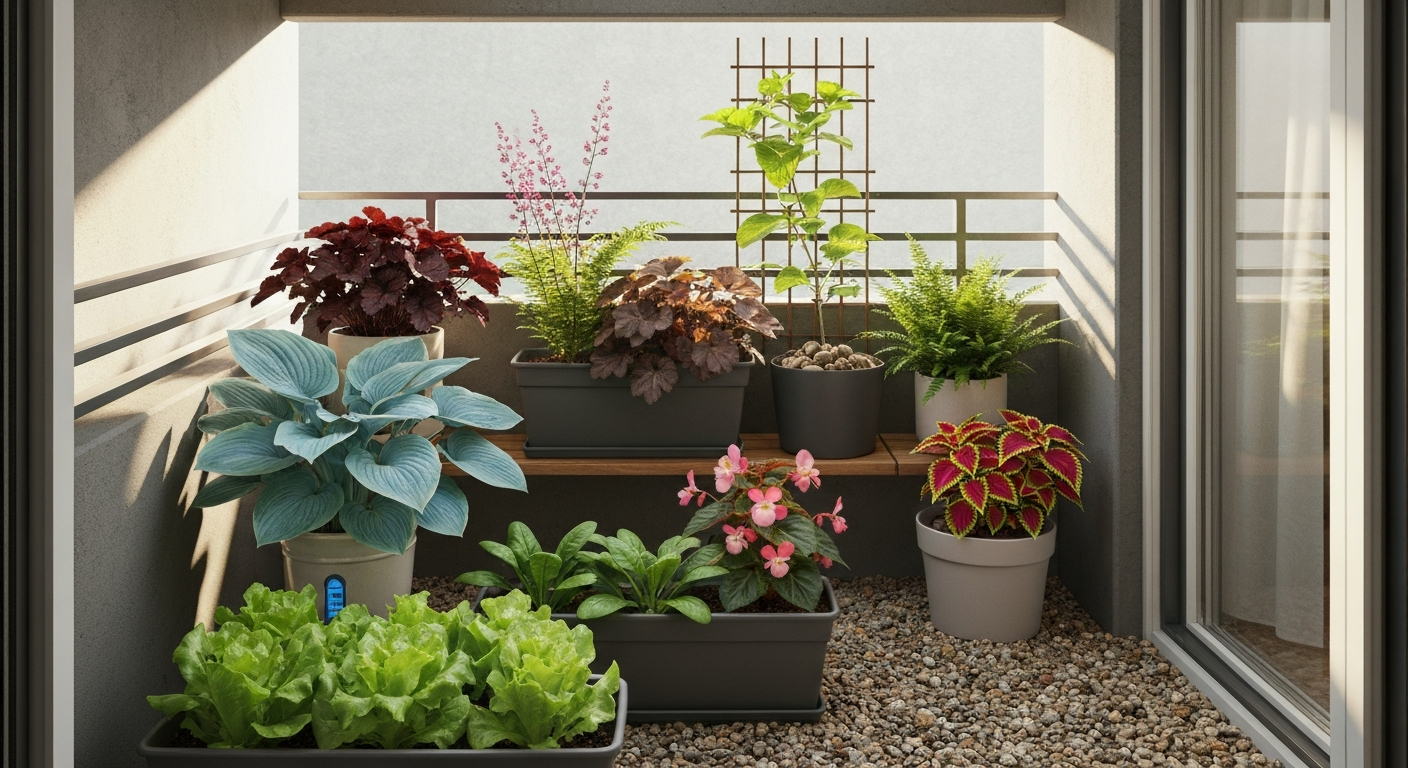
Most rooftops get more sun than you expect, especially in summer. Six or more hours of direct sun is common, which suits tomatoes, peppers, herbs, and sedums perfectly. If your roof is partially shaded by a taller neighbouring building or a rooftop structure for part of the day, salad greens, mint, and ferns handle it better. Full shade on a rooftop is rare but not impossible; if that is your situation, the plant list narrows considerably and you are better off focusing on shade-tolerant ferns, hostas in containers, and trailing ivy. For more shade-specific options, see our guide to the best plants to grow on shady balcony.
Wind exposure
Wind is the factor most rooftop gardeners underestimate. It shreds large leaves, desiccates soil faster than you think, and physically tips over containers. Low-growing, compact plants (sedums, thyme, sempervivum, ornamental grasses) handle wind far better than tall leafy ones. If you want taller plants like tomatoes or sunflowers, plan for windbreak screens, strong cane supports, and more frequent watering. On very exposed rooftops in coastal or high-rise urban environments, extensive sedum-based systems and low ornamental grasses are genuinely your most reliable options.
Roof type and substrate depth
Flat or low-slope roofs (1–5 degrees) suit built-up systems and level container arrangements. Pitches above 10 degrees need retaining boards or specially designed angled tray systems. Substrate depth is the single biggest driver of what you can grow: sedums and mosses are fine at 5–10 cm; herbs and annuals need 15–20 cm; productive vegetables want 25–30 cm minimum; shrubs and climbers need 30–40 cm or more. See our guide to the best plants to grow on a garden arch for climber recommendations and planting tips. Containers let you sidestep built-up substrate requirements but add point load, so position them over structural supports where possible.
Seasonality and climate zone
Rooftop temperatures swing harder than ground-level temperatures. In summer, dark roof membranes and reflected heat can push substrate temperatures well above air temperature, which stresses roots in shallow containers. In winter, containers freeze through completely because they have no ground insulation. In USDA zones 5 and below, move tender perennials indoors before first frost, and insulate containers with bubble wrap or burlap if leaving them out. In hot climates (zones 9–11), the main summer challenge is heat and irrigation management rather than cold. In all climates, spring and autumn are the most reliable planting windows for new rooftop installations because temperatures are moderate and root establishment is easier. In August in Texas or Arizona, for example, you would hold off on planting anything new until late September and focus instead on irrigation and shade cloth for anything already established.
| Condition | Best plant types | Minimum substrate/container depth | Notes |
|---|---|---|---|
| Full sun, high wind, shallow substrate (5–10 cm) | Sedum spp., Sempervivum, creeping thyme, moss | 5–10 cm | Ideal for extensive green-roof systems; lowest weight |
| Full sun, moderate wind, medium depth (15–20 cm) | Herbs, lettuce, radishes, lavender, ornamental grasses | 15–20 cm | Works well for container gardens and semi-intensive trays |
| Full sun, sheltered, deeper substrate (25–30 cm) | Dwarf tomatoes, peppers, strawberries, echinacea, alliums | 25–30 cm | Needs irrigation; check load capacity carefully |
| Partial shade, medium depth | Salad greens, mint, ferns, lemon balm, hostas | 15–25 cm | Use on shaded sections of the roof only |
| Exposed to strong wind, any depth | Low ornamental grasses, sedums, sempervivum, thyme | 5–20 cm | Avoid tall plants without substantial windbreak infrastructure |
Safety first: structure, railings, access, and permits
This section is not optional. Skipping structural review is the most common and most expensive mistake in rooftop gardening. Here is what to check and in what order.
- Get a structural engineer to assess your roof's load capacity before installing any planted system heavier than a few small containers. Use saturated (wet) weights in the calculations, not dry weights from product spec sheets.
- Check local building codes and planning regulations. Many municipalities require permits for rooftop structures, railings, green-roof systems, or any addition that changes drainage patterns. Some require landlord or body corporate approval even for container gardens.
- Confirm railing height and load rating. Most jurisdictions require roof guardrails of at least 42 inches (107 cm) for accessible rooftops. Never lean heavy containers against railings without confirming they are rated for that load.
- Plan safe access. A roof garden you can only reach through a hatch with a vertical ladder is not practical for regular watering, maintenance, and harvest. If the access is poor, factor that into your irrigation automation plans.
- Check your building insurance policy. Some policies are voided by rooftop modifications not disclosed to the insurer. A quick written confirmation can save a very expensive argument later.
- Call a professional roofer or roofing contractor to inspect the existing membrane before you install anything. A hidden existing leak becomes a catastrophic problem once substrate and containers are on top of it.
Waterproofing and root barriers: the layers that protect your roof
The waterproof membrane is the most critical component of any rooftop garden, and it is also the one most likely to be damaged during installation if you are not careful. The standard build-up from roof deck upward goes: structural deck, vapour control layer (where needed), insulation, waterproof membrane, protection course, root barrier, drainage layer, filter fabric, growing substrate, vegetation. Each layer has a specific job and they need to be compatible with each other.
The waterproof membrane should be water-tested (flooded or electronically tested) before any growing media goes on top of it. Once substrate is installed, finding a membrane leak is slow and expensive. The NRCA recommends testing before installation and specifying that the membrane and root barrier come from compatible manufacturers, ideally under a single warranty. Some membranes (modified bitumen, certain EPDM products) have built-in root-resistant layers; others require a separate root barrier.
The root barrier sits directly on or is integrated into the membrane. Its job is to stop aggressive roots (particularly from perennials, shrubs, and climbers) from penetrating the waterproofing over time. Even sedum roots, which seem innocuous, can exploit micro-cracks in membranes over a 10–20 year timeframe. Acceptable root-barrier materials include copper-foil laminates, polyethylene sheet (minimum 0.5 mm), and polypropylene drainage composites with root-retardant additives. For container gardens, root intrusion into the roof is not a concern as long as containers have solid bases and no drainage holes that contact the membrane directly.
Drainage, runoff control, and rainwater capture
Drainage is where a lot of DIY rooftop gardens go wrong. Pooled water on a roof adds enormous weight very quickly (1 cm of standing water over 10 m² is 100 kg), accelerates membrane degradation, and drowns plant roots. The roof must drain freely and quickly.
For built-up green-roof systems, drainage layers are typically geocomposite drainage mats or modular drainage boards, topped by a non-woven filter fabric that allows water through while keeping substrate particles out of the drainage layer. These need to be specified with compression strength ratings appropriate to the expected saturated load above them. Roof slope matters: a minimum 1–2% slope toward drains is standard practice. Roof drains and overflows must be kept clear of substrate and accessible for maintenance, which means installing them with protective gravel or inspection access points around the drain head.
For container gardens, individual containers must have drainage holes and should sit on feet or spacers so water can escape freely beneath them. Never let containers sit in standing water or directly block roof drains. Group drainage from multiple containers toward a common point and route it to the roof drain, not off the roof edge where it can damage facades or neighbouring properties.
Rainwater capture on a rooftop is genuinely worth considering if you have the structural capacity and the local regulations permit it. A 250–500 L collection tank fed from roof runoff can meaningfully reduce irrigation water needs through summer. Connect it with a simple tap and gravity-fed drip irrigation for the most reliable low-tech setup. If you are in a jurisdiction with water restrictions, check that rooftop rainwater harvesting is permitted before installing any collection system.
Substrate depth and soil mixes for rooftop growing
Do not use ordinary garden soil on a roof. Ever. It compacts, retains too much water when saturated (adding enormous weight), drains poorly, and degrades quickly in the temperature and UV exposure of a rooftop environment. Rooftop growing media are specifically engineered to be lightweight, free-draining, and durable.
Green-roof substrates are typically mineral-dominant mixes: expanded clay (LECA), expanded shale, pumice, scoria (volcanic rock), or recycled mineral aggregate make up 80–95% of the volume. A small organic fraction of 5–20% by volume (composted bark, green compost, or biochar) adds nutrient and water retention without the weight and compaction problems of soil. The FLL and GRO guidelines are the internationally used references for specifying these mixes, and they set minimum substrate depths for different vegetation types.
| Plant type | Minimum substrate depth (GRO guidelines) | Typical system type | Weight when saturated (approx.) |
|---|---|---|---|
| Sedum mats, mosses | 60 mm (6 cm) | Extensive | 70–140 kg/m² |
| Herbaceous perennials, ornamental grasses | 80–150 mm (8–15 cm) | Extensive to semi-intensive | 120–200 kg/m² |
| Culinary herbs, annuals | 150–200 mm (15–20 cm) | Semi-intensive | 150–250 kg/m² |
| Small shrubs, lavender | 200–300 mm (20–30 cm) | Semi-intensive to intensive | 200–350 kg/m² |
| Small trees, climbing plants | 300–400+ mm (30–40+ cm) | Intensive | 350+ kg/m² |
For container gardens, use a high-quality peat-free potting mix rather than green-roof substrate. University extension research consistently recommends containers of at least 30 cm depth for most vegetables, and 20–30 L volume for productive tomato or pepper plants. Smaller containers dry out too fast on a hot, exposed rooftop and cause heat stress to roots. Add perlite (10–20% by volume) to any standard potting mix to improve drainage and reduce weight slightly. Top-dressing with a light gravel mulch reduces evaporation without adding significant weight.
Shallow-substrate strategies
If your roof can only handle a shallow build-up (under 10 cm), do not despair. Sedum mats, sempervivum, creeping thyme, and native drought-tolerant mosses are all genuinely attractive and ecologically valuable at 5–10 cm depth. Pre-grown sedum mats installed over 60 mm of substrate are one of the most weight-efficient ways to green a roof. They establish quickly, need almost no irrigation once rooted (in climates with any summer rainfall), and provide real stormwater attenuation and insulation benefits. If you add a few deeper container pockets within a shallow mat system, you can grow herbs and annuals in those specific spots without committing the whole roof to deeper substrate.
Containers vs modular green-roof systems: what actually works better
The choice between containers and a modular or built-up green-roof system comes down to how much of the roof you want to cover, your budget, structural constraints, and how permanent you want the installation to be. Here is an honest comparison.
| Factor | Container garden | Modular tray system | Built-up green-roof system |
|---|---|---|---|
| Installation complexity | Low: place and plant | Medium: click-together modules, simple but still needs drainage review | High: multiple specified layers, professional installation recommended |
| Cost per m² | Low to medium (depending on container quality) | Medium to high (modules cost more per m² than built-up) | Medium (lower material cost but higher installation labour) |
| Weight | Variable; point loads; can be heavy per container | Moderate; fairly even distribution | Lowest per m² for extensive systems; heavier for intensive |
| Substrate customisation | Full: choose any mix per container | Limited: modules come with set media depth | Full: specify exact mix and depth |
| Stormwater performance | Low to moderate: limited storage | Moderate: some retention in modules | Best: engineered drainage and retention layers |
| Plant diversity possible | Very high: any depth in any container | Moderate: limited by module depth (typically 10–15 cm) | Highest: depth can be varied across zones |
| Reversibility | Fully reversible | Mostly reversible: lift and remove modules | Essentially permanent once installed |
| Maintenance access | Easy: containers are moveable | Easy: individual modules replaceable | Requires more planning; fixed areas |
| Best for | Vegetables, herbs, seasonal crops, small rooftops | Quick greening of larger areas, rental properties, budget-conscious projects | Long-term green-roof projects, stormwater goals, building insulation benefits |
My practical recommendation: start with containers if this is your first rooftop garden. They let you experiment with plant types and positions without committing to a permanent installation, and they keep your options open if you need to move them for roof maintenance. Move to a modular or built-up system when you are confident about your roof's capacity and you want to cover a larger area with lower ongoing maintenance. Modular tray systems are a good middle ground: faster to install than built-up systems and more flexible than containers, but do check that the system you choose has independently tested load and drainage data, not just marketing specs. GRO Code 2021, notes on modules vs built‑up systems states that modular/pre‑grown tray systems are marketed as lighter, faster to install, and easier to replace but typically cost more per square metre and offer less long‑term substrate customization and stormwater storage than engineered built‑up systems GRO Code 2021 — notes on modules vs built‑up systems.
Seasonal planting and maintenance schedule
Rooftop gardens reward consistent, light maintenance more than occasional intensive sessions. Here is a practical seasonal guide for temperate climates (zones 5–8); adjust the timing earlier in warmer zones and later in cooler ones.
| Season | Key tasks | What to plant |
|---|---|---|
| Late winter / early spring (Feb–Mar, zones 6–8) | Check membrane flashings after winter; clear drains; inspect containers for frost damage; top-dress substrate with slow-release fertiliser | Start seeds indoors: tomatoes, peppers, herbs. Direct sow salad greens and radishes in mild zones. |
| Spring (Apr–May) | Install new containers or modules; set up irrigation if using drip systems; apply windbreak screens if needed | Transplant tomatoes and peppers once frost risk passes; direct sow lettuce, herbs, nasturtiums; install sedum mats |
| Early summer (Jun) | Check irrigation frequency as temperatures rise; stake tall plants; watch for aphids and powdery mildew in warm humid areas | Succession sow salad greens; plant second round of herbs; add pollinator annuals (calendula, cornflower) |
| High summer (Jul–Aug) | Increase watering frequency; apply liquid feed every 2–3 weeks for containers; harvest regularly to keep plants productive; shade cloth for lettuce if temps exceed 28°C | Sow quick crops for autumn (radishes, spinach, chard) from mid-August |
| Autumn (Sep–Oct) | Reduce watering as temps drop; collect seeds; begin removing frost-tender annuals; divide and repot perennials if needed | Plant spring bulbs in containers; sow overwintering salad greens (spinach, kale) under fleece |
| Winter (Nov–Jan) | Insulate containers in cold zones; move tender plants indoors; clear dead plant material; inspect drainage for blockages; check membrane condition | No planting outdoors in zones 5–7; grow microgreens or herbs indoors from rooftop-harvested seeds |
Fertilising containers
Container plants on rooftops exhaust nutrients faster than ground-planted equivalents because regular watering leaches nutrients through the drainage holes. For food crops, use a balanced slow-release granular fertiliser at planting and supplement with a liquid tomato-type feed (high potassium) every two to three weeks during the fruiting season. For ornamental and green-roof plants, a single slow-release top-dressing in spring is usually enough. Avoid high-nitrogen feeds on sedum and succulent mixes: they push lush soft growth that is more vulnerable to wind and drought stress.
Common problems and how to avoid them
- Plants wilting by midday in summer: almost always underwatering or too-small containers. Upsize containers and add drip irrigation on a timer.
- Sedum mats browning in patches: usually drought stress from broken irrigation or summer heat. Most sedum recovers once watered; dead patches can be filled with new plugs.
- Tomatoes cracking: irregular watering followed by heavy rain or irrigation. Keep soil moisture consistent with mulch and regular watering schedules.
- Containers being blown over: wind is the culprit. Move heavy containers to positions near structural walls or balustrades; add ballast (decorative gravel on top of soil) to lighter containers.
- Root rot in ornamentals: overwatering combined with poor drainage. Elevate containers, confirm drainage holes are clear, and switch to a more mineral substrate mix.
- Membrane damage during installation: never drag heavy containers across the membrane; use protective boards or rubber matting under all container bases and foot traffic routes.
What to plant right now (August 2026)
In the northern hemisphere, August is a transitional month on the rooftop. High summer heat is either peaking or just beginning to ease depending on your location. In hot climates (zones 8–11), avoid planting anything new that is not heat-hardened; focus on keeping established plants irrigated and harvested. In cooler temperate zones (zones 5–7), mid to late August is ideal for sowing fast autumn crops: spinach, kale, chard, radishes, and pak choi. These will establish before the first frost and give you a productive rooftop well into October or November. Spring bulbs (tulips, alliums, narcissus) can go into containers from mid-August onward in zones 5–7 for outstanding spring colour. In the southern hemisphere, August is the end of winter and the start of spring; you should be starting tomatoes and peppers indoors now and direct-sowing salad greens on mild days.
Sustainability additions worth considering
Beyond rainwater capture (covered in the drainage section), a few other additions make rooftop gardens more sustainable without significantly increasing maintenance. Native drought-tolerant plants reduce irrigation needs substantially once established and support local pollinator populations far better than exotic ornamentals. A small bee hotel or insect habitat mounted on a windbreak screen adds biodiversity value without any weight or planting area commitment. Using peat-free substrate and recycled mineral aggregate in your growing mix reduces the carbon footprint of the installation. If you are covering a significant roof area, the stormwater attenuation and building insulation benefits of even an extensive green-roof system are real and measurable, and worth documenting if your building is seeking any kind of sustainability certification.
FAQ
What are the safest first steps before planning a rooftop garden?
Check roof load capacity with a structural engineer (use saturated/wet weights for media and containers). Review local building codes and permitting (IBC minimums are a baseline; local rules may be stricter). Inspect waterproofing and flashing; do water‑testing of membranes or hire a roofer. Decide whether you’ll use containers, modular trays, or a built‑up green‑roof system — each has different weight, drainage and permitting implications.
How do I choose between containers, modular trays, and a built‑up green roof?
Containers: simplest and lowest upfront risk; easy to change/replace; ideal for rented terraces and small projects. Modular/tray systems: faster install, lighter than equivalent built‑up systems, good for medium areas and retrofits; costlier per m². Built‑up systems: custom substrate depths, best for long‑term stormwater and biodiversity benefits; heavier and needs full design (waterproofing, drainage, root barrier). Match choice to roof structural capacity, budget, permanence desired, and maintenance commitment.
What substrate depths should I plan for different planting goals?
Follow international guidance: extensive (green roof) 5–15 cm for low mats like sedum and moss; herbaceous mixes and small perennials typically 8–15+ cm; semi‑intensive 15–30+ cm for greater species mix including grasses and larger perennials; shrubs/trees need 20–40+ cm (often much deeper for trees). For containers, follow crop‑specific depth: salad greens 10–15 cm, dwarf tomatoes/peppers 30–45 cm, large vegetables 30–60+ cm.
Which plants are best for very shallow substrates or extensive green roofs?
Drought‑tolerant, mat‑forming species: sedum and other succulents, low native forbs adapted to thin soils, mosses in shaded moist areas. Choose plants with shallow roots, low nutrient needs, and high heat/wind tolerance.
What are good plant choices for full sun exposed roofs (hot, windy)?
Drought‑tolerant herbs and ornamentals: sedums, lavender, rosemary, thyme, santolina; hardy ornamental grasses and native prairie forbs; salad greens and heat‑tolerant dwarf tomatoes in larger, insulated containers. Select proven cultivars adapted to your climate zone and expect more frequent irrigation for containers.
What should I plant on a shady rooftop or balcony?
Shade‑tolerant ornamentals and edibles: ferns, hostas (in cooler climates), heuchera, lungwort, shade‑tolerant herbs like mint and chives, leafy greens (lettuce, spinach, Asian greens) in containers. Avoid sedum-dominant mixes in deep shade — they perform poorly.
Next Article
Best Plants to Grow on Shady Balcony: Top Picks & Care
Best plants to grow on shady balcony: top shade‑tolerant ornamentals, edibles & climbers, plus container, care & design