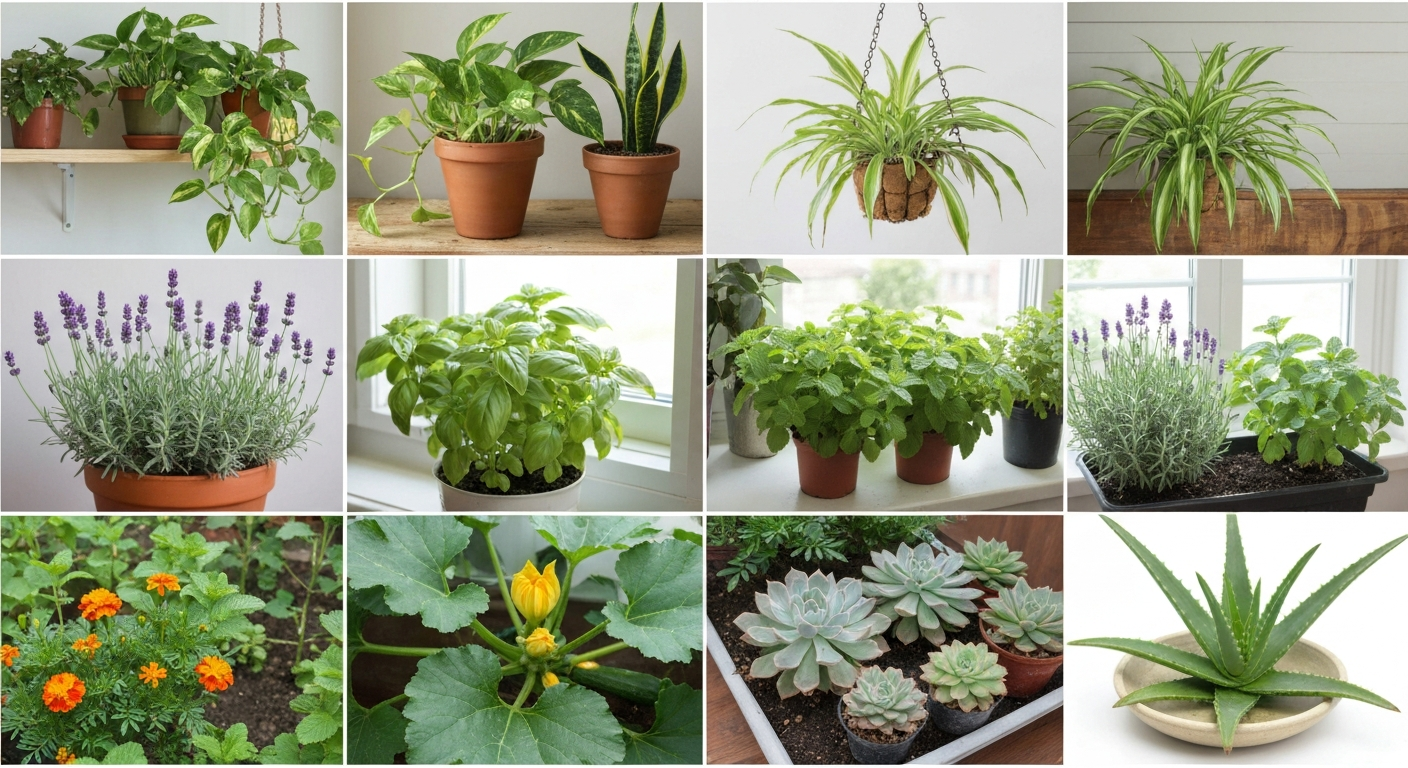
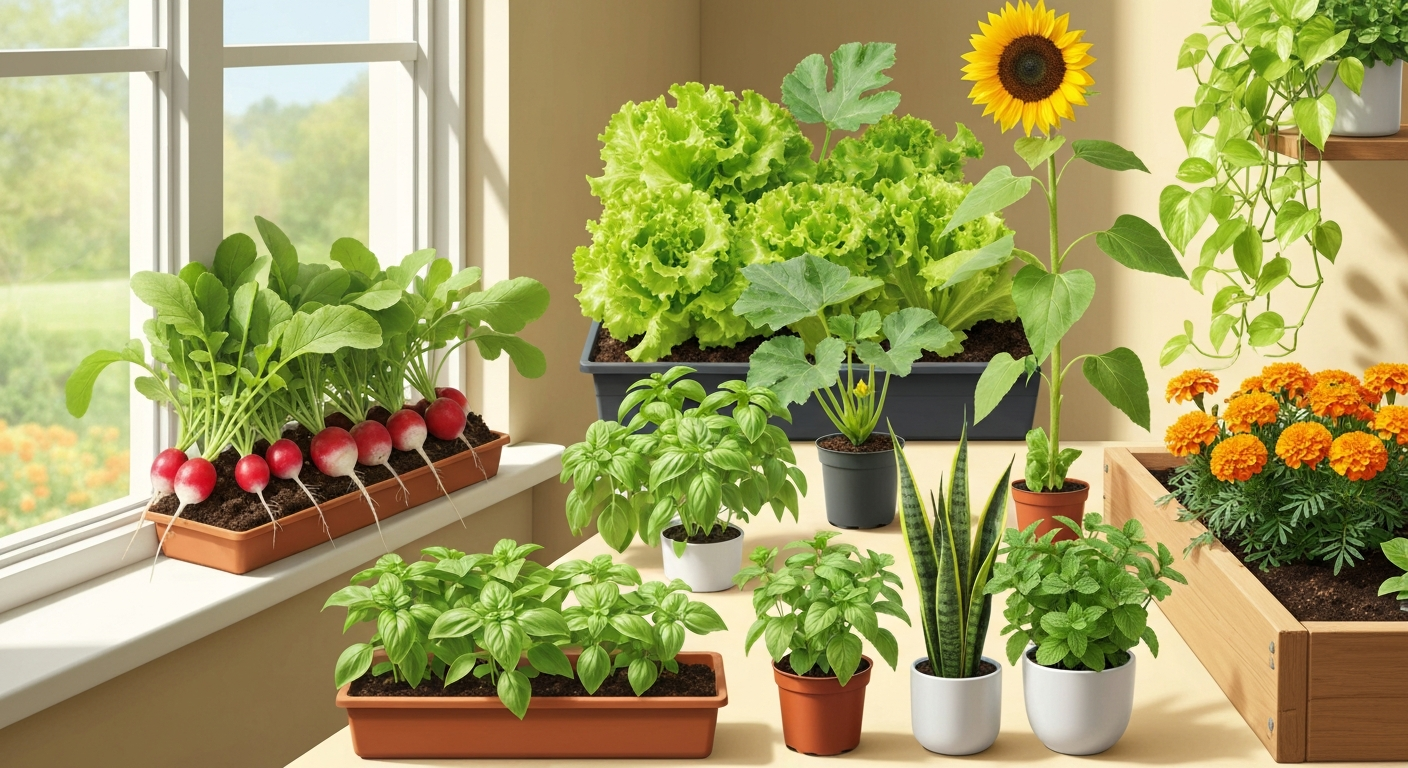
The easiest plants to grow are radishes, lettuce, zucchini, green beans, basil, sunflowers, marigolds, pothos, snake plants, and mint. Each one tolerates beginner mistakes, grows in a wide range of climates, and gives you visible results fast. The right pick for you depends on where you are, what month it is, and whether you're working with a pot, a raised bed, or actual ground. This guide walks through all of that so you leave with a short list matched to your actual situation, not a generic catalog.
Which Plants Grow Easily: Best Picks by Climate, Season
Rachel Hartley
9 Aug 2026
Decide What to Grow Right Now
Before you buy a single seed packet, answer four quick questions: What do you want from the plant (food, fragrance, looks, or a useful herb)? How much space do you have (a windowsill, a balcony pot, a raised bed, or open ground)? How much time can you realistically give it each week? And what is today's date relative to your local frost calendar? The answers collapse a 500-plant list down to maybe five solid options, and that's where you should start.
Right now it's August 2026. In most of the continental US that means you're either in peak summer or starting to think about a fall garden. In USDA zones 3-5 (northern states), your warm-season window is closing; cool-season crops like lettuce, spinach, and radishes are your fast wins for the next 6-8 weeks. In zones 7-10 (South, Southwest, coastal California), you still have weeks of warm weather, and a fall sowing of beans or squash is very doable. In zone 6 (the mid-Atlantic, Midwest transition belt), you're right on the edge: get cool-season seeds in the ground now if you want a harvest before October frosts arrive.
- Goal: food fast — radishes, lettuce, green beans, or cherry tomatoes (if still warm enough)
- Goal: low-effort outdoor color — marigolds, zinnias, sunflowers in warm zones; ornamental kale in cool zones
- Goal: fragrance — lavender, sweet alyssum, or chocolate mint in containers
- Goal: zero-fuss indoors — pothos, snake plant, or ZZ plant in any light level
- Space is a single pot — herbs, lettuce, or a compact cherry tomato variety
- Space is a raised bed or yard — beans, zucchini, or a cut-flower mix
Choose Easy Plants by Climate and Microclimate
The 2023 USDA Plant Hardiness Zone Map divides the US into zones based on average annual minimum winter temperatures, each spanning 10°F. It's the most reliable starting point for matching perennial plants to a location, but the USDA itself is clear that the map isn't the only tool: microclimates matter enormously. A fence on the south side of your yard, a nearby concrete wall, or being at the bottom of a slope can shift your effective growing conditions by a full zone in either direction. Urban gardeners in particular often garden in conditions one zone warmer than their official designation thanks to heat islands from pavement and buildings.
For easy plants, here's the practical climate shortcut: cool-season plants (lettuce, spinach, peas, kale) thrive in zones 3-7 during spring and fall and in zones 8-11 during winter. Warm-season plants (beans, squash, basil, zucchini) go in after your last frost date and come out before your first fall freeze. Tropical plants (pothos, snake plant, peace lily) stay indoors in zones 7 and below or come outside for summer only. Mediterranean plants (lavender, rosemary, thyme) love zones 7-10 in-ground and survive container winters if you give them good drainage.
| USDA Zone | Climate Character | Easiest Outdoor Picks | When to Plant (Northern Hemisphere) |
|---|---|---|---|
| 3-4 | Short summers, cold winters (MN, ND, northern MT) | Radishes, lettuce, kale, marigolds, sunflowers | May-Jul sow; Aug-Sep cool crops |
| 5-6 | Moderate seasons (OH, PA, central Midwest) | Zucchini, beans, lettuce, basil, zinnias | Apr-May warm crops; Aug-Sep cool crops |
| 7-8 | Mild winters, hot summers (VA, TN, PNW, NM) | Tomatoes, basil, beans, lavender, zinnias | Mar-Apr warm crops; Sep-Oct cool crops |
| 9-10 | Long warm seasons (CA, AZ, FL, TX coasts) | Beans, herbs, lettuce (winter), sweet alyssum | Year-round with seasonal rotation |
| 11+ | Tropical (south FL, Hawaii) | Tropical herbs, sweet potato, basil year-round | Year-round; shade from peak heat |
Choose Easy Plants by Season and Timing
NOAA publishes historical frost-date normals based on decades of climate data, and your local last-spring-frost and first-fall-frost dates are the two numbers every gardener should know before sowing a single seed. You can look them up by zip code through the NOAA National Centers for Environmental Information or through most university extension websites. Once you have those dates, timing becomes mechanical: cool-season crops go in 4-6 weeks before the last spring frost or 6-8 weeks before the first fall frost; warm-season crops go in after the last spring frost when soil has warmed to at least 60°F.
For a quick August reference in 2026: if your first fall frost is mid-October (common in zones 5-6), you have about 10 weeks, which is exactly enough time for a lettuce succession, two rounds of radishes, and a final bean harvest if you're in a warm microclimate. If your first frost is late November (zones 7-8), you have 15+ weeks, which opens the door to a full cool-season garden including kale, spinach, carrots, and brassicas.
- Find your first and last frost dates (NOAA NCEI or local extension)
- Count back from first fall frost: 6 weeks = sow lettuce, radishes, spinach now
- Count forward from last spring frost: sow warm crops (beans, squash, basil) after that date
- For containers on a balcony, add 2 weeks of flexibility since pots warm and cool faster than soil
- Build in succession sowing every 2-3 weeks for lettuce and radishes to spread your harvest
Top 10 Easy Plants to Grow
This list is based on consistent beginner success across a wide range of climates, growing methods, and experience levels. These are plants that forgive irregular watering, tolerate average soil, and deliver visible results without much fuss. Every one of these has been vetted across university extension trial data and widely used beginner guides. See our Top 10 easy plants to grow for a quick, ready-made list you can start with today.
| Plant | Why It's Easy | Ideal Conditions | Days to First Result |
|---|---|---|---|
| Radish | Fastest edible crop; tolerates part shade; tiny footprint | Cool temps, loose soil, full sun to part shade | 20-35 days to harvest |
| Leaf Lettuce | Cut-and-come-again; sow directly; cool tolerant | Part shade OK; consistent moisture; 45-75°F | 30-50 days to first cut |
| Zucchini / Summer Squash | Huge yields from one plant; minimal care | Full sun, warm soil, room to spread | 50-55 days to harvest |
| Green Beans (bush) | Direct sow, no staking needed, reliable germination | Warm soil, full sun, decent drainage | 50-65 days to harvest |
| Basil | Fast from seed or transplant; fragrant; container-friendly | Full sun, warm temps above 60°F, regular water | 3-4 weeks to first pinch |
| Sunflower | Near-foolproof germination; drought tolerant once established | Full sun, any soil, direct sow after frost | 60-80 days to bloom |
| Marigold | Pest deterrent, heat tolerant, blooms all season | Full sun, average soil, moderate water | 6-8 weeks to first bloom |
| Pothos | Thrives in low light; near-indestructible indoors | Indirect light, infrequent watering, any pot | Grows year-round; vines in weeks |
| Snake Plant (Sansevieria) | Tolerates neglect, drought, and low light better than almost any houseplant | Low to bright indirect light; water every 2-4 weeks | Slow but essentially unkillable |
| Mint | Vigorous growth; container keeps it from spreading; harvest constantly | Part shade OK; moist soil; any zone in a pot | Harvestable within 4-6 weeks of planting |
Easy Edible Plants for Every Gardener
If you want food, the best edibles to start with are the ones that give you something to harvest fast and don't require much infrastructure. Radishes are the gold standard here: Cornell Cooperative Extension and the University of Maryland both confirm most varieties are ready in 20-35 days, making them the single fastest edible crop you can grow. Cornell Cooperative Extension's blank" rel="noopener noreferrer">Growing Radishes (Cornell Cooperative Extension PDF) notes most garden radish varieties mature in roughly 20–35 days and are reliably direct‑sown in spring and fall. University of Maryland Extension notes typical radish days‑to‑maturity of about 25–35 days and that radishes tolerate full sun to part shade, making them a useful quick‑turnover crop and interplant for succession planting blank" rel="noopener noreferrer">Growing Radishes in a Home Garden (University of Maryland Extension). Lettuce follows close behind at 30-50 days for leaf varieties, and you can keep cutting the same plant for weeks. Beans are the easiest warm-season crop: direct-sow bush bean varieties after your last frost, water consistently, and you'll be harvesting in 50-65 days. Cherry tomatoes are slightly more involved but still beginner-friendly; look for determinate varieties in the 50-70 day range from transplant, not seed.
For containers specifically, Penn State Extension recommends that a single tomato plant needs roughly a 20-inch-wide (15-20+ gallon) container, while peppers and eggplant do fine in 12-14 inch (5-10 gallon) pots. Lettuce, radishes, and herbs can thrive in anything 6-8 inches deep. If you're on a balcony or patio, a single large pot with a cherry tomato, a medium pot with basil, and a window box of lettuce will give you a working kitchen garden with less than 10 square feet of space.
- Radishes: perfect for filling gaps; sow between slower crops; harvest in 3-5 weeks
- Leaf lettuce: window boxes, shallow containers, or raised beds; sow every 2-3 weeks for continuous harvest
- Bush beans: direct-sow in raised beds or large pots after last frost; 'Provider' and 'Blue Lake' are reliable varieties
- Zucchini: one plant per 4x4 foot raised bed section; 'Patio Star' or 'Bush Baby' for containers
- Cherry tomatoes: 'Tumbling Tom' for hanging baskets; 'Sun Gold' and 'Sweet Million' for containers and beds
- Peas: a natural fall/spring crop in zones 4-7; direct-sow 4-6 weeks before last frost; snap peas need minimal staking
Easy Medicinal and Kitchen Herb Plants
Herbs are one of the highest-return categories for small-space gardeners. You get usable harvests quickly, most of them smell great, and several have well-documented culinary and medicinal properties. The easiest ones to keep alive are also the most useful.
Mint is the most forgiving herb you can grow, but always put it in a container because it spreads aggressively underground and will colonize your entire garden bed within a season. Peppermint and spearmint are both used for tea, digestion, and flavoring; chocolate mint is a novelty worth trying and smells exactly as advertised. Basil thrives in full sun and warm temperatures, prefers consistent moisture, and goes from transplant to kitchen use in about three to four weeks. Lemon balm is a close relative of mint with a citrus scent and calming properties traditionally used in teas; it's nearly as vigorous as mint and best confined to a pot. Chamomile is easy to grow from seed directly sown in spring, self-seeds reliably, and the dried flowers make a classic calming tea. Thyme and rosemary are Mediterranean natives that prefer dry conditions and excellent drainage; once established, they need almost no water and survive heat that would kill most herbs. Echinacea (coneflower) is a native perennial with well-documented immune-support uses; it's also beautiful, attracts pollinators, and comes back every year in zones 3-9.
| Herb | Primary Use | Light | Water Needs | Container Friendly |
|---|---|---|---|---|
| Basil | Cooking, pesto, caprese | Full sun | Regular; don't let dry out | Yes (6+ inch pot) |
| Mint (all types) | Tea, cooking, digestion | Part shade OK | Keep moist | Yes (essential; contains spread) |
| Lemon balm | Tea, calming, flavoring | Part shade OK | Moderate | Yes (contains spread) |
| Thyme | Cooking, mild antiseptic | Full sun | Low once established | Yes |
| Rosemary | Cooking, memory support | Full sun | Low; excellent drainage | Yes (12+ inch pot) |
| Chamomile | Tea, calming, mild anti-inflammatory | Full sun to part shade | Moderate | Yes |
| Echinacea (coneflower) | Immune support, pollinator plant | Full sun | Low once established | Large containers only |
Best Smelling Plants to Grow Outdoors
Fragrant outdoor plants are one of the most underrated categories in a beginner's garden. The payoff is immediate, they're mostly low-care, and they make your outdoor space genuinely pleasant to spend time in. The best approach is to plant fragrant options near seating areas, along pathways where you brush past them, or under windows that open in summer. For specific plant suggestions and placement tips, see the guide to best smelling plants to grow outdoors.
Lavender is the most popular fragrant shrub for home gardens, and for good reason: it's drought-tolerant once established, attracts pollinators, and its scent is intense even from a few feet away. English lavender ('Hidcote' and 'Munstead') is the hardiest choice, surviving down to zone 5. Sweet alyssum is a compact annual that smells like honey and flowers nonstop from spring until hard frost; it's brilliant for edging beds, spilling out of window boxes, and filling in around vegetables. Chocolate mint (mentioned earlier) doubles as a fragrant container plant you can place beside a seating area for a surprising cocoa-like scent. Nicotiana (flowering tobacco) releases its strongest fragrance in the evening and grows easily from seed in most zones. Dianthus (pinks or carnations) produces a classic clove-like scent and blooms reliably in cooler weather. For shrubs, lilac is a zone 3-7 standout that needs little care after establishment and fills a garden with scent every spring. Mock orange (Philadelphus) is similarly low-care and produces intense orange-blossom fragrance in early summer.
- Near seating areas: lavender, chocolate mint in pots, nicotiana, dianthus
- Along pathways (brush-past fragrance): thyme, sweet alyssum, creeping rosemary
- Under windows: mock orange shrub, sweet alyssum in window boxes, climbing jasmine in zones 7+
- Back of border or screen planting: lilac (zones 3-7), sweet shrub (Calycanthus, zones 4-9)
Low-Light and Low-Maintenance Houseplants
If your apartment or room gets limited natural light, the honest advice is to skip most flowering houseplants and stick to foliage species bred for shade tolerance. The plants below are not just 'can survive low light'; they actively thrive in it and will look good for years with minimal intervention.
Pothos is the single most forgiving houseplant available. It tolerates low light, drought, irregular feeding, and neglect that would kill most plants. It trails beautifully from shelves and hanging baskets and is one of the best plants for purifying indoor air. Snake plant (Sansevieria trifasciata) is even more drought-tolerant and grows in some of the darkest spots in a home; water it every two to four weeks and essentially forget it. ZZ plant (Zamioculcas zamiifolia) stores water in its rhizomes and can go weeks without water; its glossy leaves look polished with zero effort. Peace lily is a rare low-light plant that also flowers; it prefers indirect light and consistent moisture and is one of the few beginner-friendly blooming houseplants. Cast iron plant lives up to its name and handles cold drafts, low light, and dry soil. For a bit more visual interest, Chinese evergreen (Aglaonema) comes in dozens of patterned varieties and tolerates dim rooms well.
| Plant | Minimum Light | Watering Frequency | Best For |
|---|---|---|---|
| Pothos | Low indirect | Every 7-14 days | Trailing, shelves, hanging baskets |
| Snake Plant | Very low to bright indirect | Every 2-4 weeks | Corners, low-traffic spots |
| ZZ Plant | Low indirect | Every 2-4 weeks | Modern décor, drought-prone keepers |
| Peace Lily | Low to medium indirect | Weekly | Flowering low-light plant |
| Cast Iron Plant | Very low | Every 1-2 weeks | Dark hallways, dim offices |
| Chinese Evergreen | Low to medium indirect | Every 7-10 days | Color and pattern in dim rooms |
Decorative Low-Care Ornamentals for Massing and Containers
If your goal is outdoor color with minimal effort, choose annuals and perennials that bloom for long periods without regular deadheading, fertilizing, or drama. Marigolds are the classic choice: heat-tolerant, pest-deterrent (they repel aphids and nematodes near vegetable beds), available in compact forms for containers, and they bloom from planting until the first hard frost. Zinnias are arguably the easiest cut flower to grow from seed; direct-sow after last frost in full sun, thin to 6-12 inches apart, and you'll have blooms in 6-8 weeks that last all summer. Black-eyed Susan (Rudbeckia) is a native perennial that comes back every year in zones 3-9, needs no staking, tolerates dry conditions, and seeds itself generously. Sedum (stonecrop) is the best low-care succulent for outdoor containers and sunny borders; it stores water in its leaves, handles drought and heat, and produces clusters of star-shaped flowers in late summer. For shade and part shade, impatiens are the reliable choice in containers and mass plantings, though they need consistent moisture. Hostas are near-indestructible shade perennials; once planted, they come back bigger every year with no care beyond occasional division.
Balcony Pots and Window Boxes: Best Plant Choices and Combos
Balcony and window box gardening is about working within tight volume constraints. Most window boxes are 6-8 inches deep, which limits you to shallow-rooted plants: lettuce, herbs, trailing annuals like sweet alyssum and lobelia, and compact succulents. Balcony pots give you more options depending on size. A 12-inch pot handles herbs, dwarf peppers, or compact flowers. A 16-inch pot works for a bush tomato variety or a large herb collection. A 20-inch or larger pot (15+ gallons) is needed for a full-size cherry tomato plant or a small zucchini variety.
The 'thriller, filler, spiller' formula works well for ornamental balcony containers: one tall, dramatic plant (thriller, such as a small ornamental grass or upright salvia), one bushy plant that fills the middle (filler, such as compact marigold or basil), and one trailing plant that drapes over the edge (spiller, such as sweet alyssum, trailing petunia, or nasturtium). For edible balcony combos, try a cherry tomato as the thriller with basil as the filler and trailing nasturtiums as the spiller. The nasturtiums are edible too, which is a nice bonus.
- Window boxes (6-8 inches deep): lettuce, herbs, sweet alyssum, lobelia, pansies, dwarf marigolds
- 12-inch pots: basil, parsley, mint (contained), dwarf pepper, compact petunia
- 16-inch pots: larger herb combos, dwarf tomatoes like 'Tumbling Tom', echinacea
- 20-inch+ pots (15+ gallons): cherry tomato, bush bean, compact zucchini
- Best edible combo: cherry tomato + basil + nasturtium in a 20-inch pot
- Best ornamental combo: upright salvia + marigold + trailing sweet alyssum
Raised Beds and Larger Containers: Best Crops, Soil, and Spacing
A 4x8 foot raised bed is the most productive small gardening footprint available. Fill it with a quality blend of roughly 60% topsoil, 30% compost, and 10% perlite or coarse sand for drainage. Avoid using straight garden soil in raised beds or containers; it compacts and drains poorly. The Penn State Extension recommendation for containers applies here too: lightweight, well-aerated mix lets roots expand freely and prevents the waterlogging that kills more easy-to-grow plants than almost anything else.
For a 4x8 raised bed in summer, a practical layout is: two zucchini plants at one end (they need about 3x3 feet each), a row of beans down one side (bush beans spaced 4-6 inches apart), and then lettuce and radishes filling the remaining space. Lettuce and radishes are done before the zucchini gets large, so you can succession-sow them in the gaps that open up. For a full raised bed ornamental planting, mass black-eyed Susans and sedum at the back (perennials that come back), with zinnias and marigolds in front for summer color. This combination is low-water once established and essentially care-free after the first month.
In-Ground and Yard Planting: Hardy Choices by Region
If you have actual ground to plant in, the easiest wins are native or locally adapted plants that don't need much supplemental water or feeding once established. For the Northeast and Midwest (zones 4-6), black-eyed Susans, coneflower, hostas, and daylilies are the easiest perennials; add lilac for fragrance and serviceberry for a multi-purpose shrub. For the Southeast and Gulf Coast (zones 7-9), crepe myrtle is the quintessential easy-care ornamental tree; pentas and salvia bloom all summer with little water; native beautyberry is striking in fall and needs no care. For the Pacific Northwest (zones 7-9 with wet winters and dry summers), lavender, rosemary, and drought-adapted ornamental grasses thrive once established. For the Desert Southwest (zones 9-11), look at native and adapted plants: desert marigold, agave, lantana, and Texas sage are all extremely easy and drought-hardy.
For in-ground vegetable gardens, the principle is the same: choose varieties adapted to your region's season length. University extension planting calendars (available from Minnesota Extension, University of Florida IFAS, Penn State Extension, and similar programs) give you specific sow and transplant windows based on your actual frost dates and typical summer temperatures. These are the most reliable local resources available, far more accurate than generic seed-packet instructions written for average conditions.
Basic Planting and Low-Maintenance Care Routines
Most plants fail because of three things: wrong light, wrong watering, and poor soil drainage. Get those three right and almost every plant on this list will succeed. Light requirements are non-negotiable: a plant labeled 'full sun' needs 6 or more hours of direct sun per day, and moving it to a spot that gets 3 hours will cut its productivity in half. Partial shade means 3-6 hours. Low light means indirect brightness with no direct sun. Matching the plant to the actual light in your space is step one.
Watering mistakes kill more plants than drought does. Overwatering, specifically keeping the soil constantly wet rather than allowing it to partially dry between waterings, causes root rot that kills plants from the bottom up. The rule is simple: stick your finger an inch into the soil. If it feels damp, wait. If it feels dry, water thoroughly until water drains from the bottom. For most outdoor containers in summer heat, that means watering every 1-2 days. For houseplants in indirect light, it's every 7-14 days depending on the plant. For established in-ground perennials, weekly deep watering is usually enough.
- Soil: use quality potting mix for containers; never plain garden soil in pots
- Drainage: every container must have drainage holes; no exceptions
- Repotting: leave the rootball about 1 inch below the pot rim when repotting
- Feeding: a slow-release granular fertilizer applied at planting covers most needs for the season; liquid fertilizer every 2-3 weeks boosts container vegetables and heavy-blooming annuals
- Pests: check leaf undersides weekly; most problems are caught early with a simple spray of water or diluted neem oil solution
- Pruning and pinching: pinch basil flower spikes before they open to extend harvest; deadhead annuals like zinnias and marigolds to extend blooming
Fast-Win Timelines: What You'll See in 2 Weeks, 2 Months, and the Full Season
One of the most common beginner frustrations is not knowing whether something is working. Here's what realistic progress looks like for the easiest plants across three checkpoints.
| Plant | 2 Weeks | 2 Months | End of First Season |
|---|---|---|---|
| Radish | Germination in 3-7 days; small seedlings visible | First harvest done; second succession ready | Multiple harvests; bed ready for next crop |
| Leaf Lettuce | Germination in 7-10 days; seedlings emerging | First cuts happening; regrowth cycling | 3-4 harvests per plant before bolting |
| Zucchini | Seeds up in 7-10 days; rapid leaf growth | First fruits forming; harvest beginning | Dozens of fruits; may need cutting back |
| Bush Beans | Germination in 5-10 days; first true leaves | Harvest beginning; pods forming rapidly | 2-3 flushes of harvest; 50-70 days total |
| Basil (transplant) | Established; new leaf growth visible | Regular harvesting; bushy growth | Large plant; dozens of harvests; sets seed in fall |
| Sunflower | Germination in 7-14 days; seedling vigorous | Strong stalk; bud forming in tall varieties | Full bloom; seeds forming for birds or harvest |
| Marigold (transplant) | Established; new buds forming | Full bloom; continuous flowers | Non-stop color until first hard frost |
| Pothos (indoor) | New leaf unfolding | Several new leaves; vines lengthening | Significantly larger; may need first trim |
| Snake Plant (indoor) | No visible change typical | Possible new leaf emerging | 1-3 new leaves; healthy and stable |
Troubleshooting and Quick Fixes
When something goes wrong, it's almost always one of four issues: not enough light, too much or too little water, soil problems, or the wrong plant for the season. The fastest diagnostic is to look at the leaves. Yellow leaves on a houseplant usually mean overwatering or low light. Yellow leaves on an outdoor vegetable can mean nitrogen deficiency, overwatering, or root disease from poor drainage. Pale, stretched, or leggy growth means insufficient light: the plant is reaching for more. Brown leaf tips or edges usually mean low humidity (common for houseplants in winter), salt buildup in container soil, or inconsistent watering. Wilting in full sun during afternoon heat is normal for some plants (zucchini often does this); wilting in the morning means the plant genuinely needs water or has a root problem.
For pests: aphids cluster on new growth and leaf undersides; a strong spray of water removes most of them. Fungus gnats in houseplant soil mean you're overwatering; let soil dry out more between waterings and the population collapses. Powdery mildew on squash and cucumbers is common in late summer; it doesn't usually kill the plant but reduces yield. Improve air circulation and reduce leaf wetness by watering at the base, not overhead. When a plant simply isn't performing despite correct care, the most honest fix is to replace it with something better suited to your specific space, not to spend more time troubleshooting. Not every plant belongs in every location.
How to Choose Varieties, Buy Seeds or Starts, and Two Simple Tests
Variety choice matters more than most beginners realize. Two plants labeled 'tomato' or 'zucchini' can have dramatically different days-to-maturity, disease resistance, and suitability for containers. When choosing a variety, look for three things: days to maturity (match it to your season length), disease resistance codes on the label (V, F, N on tomatoes indicate resistance to common problems), and whether it's described as compact, determinate, or container-friendly if you're growing in a pot. For beans, 'Provider' and 'Blue Lake 274' are both widely adapted and reliable. For cherry tomatoes, 'Sun Gold', 'Juliet', and 'Sweet Million' have excellent track records in university variety trials.
For seeds specifically, the Old Farmer's Almanac and most cooperative extension guides recommend two simple tests before sowing old or questionable seeds. The float test (drop seeds in water; sinkers germinate better than floaters) works for larger seeds like beans and peas. The germination test works for any seed: place 10 seeds on a damp paper towel, fold it over, seal in a plastic bag, and leave in a warm spot for the number of days listed on the packet. Count how many sprout. If fewer than 5 out of 10 germinate (below 50%), buy fresh seed. Buying transplants (starts) from a nursery is a legitimate shortcut that skips germination entirely and is the right call for tomatoes, peppers, and eggplant in any zone with a shorter season.
Next Steps and Where to Go From Here
The best next step depends on what you've decided to grow. If you've landed on edibles, your most valuable resources are regional planting calendars from your nearest land-grant university extension (search '[your state] extension vegetable planting calendar') and the crop-specific pages on Best Plants Guide for detailed variety and timing guides. If you're planning an outdoor ornamental garden, the Best Plants Guide regional sections cover zone-by-zone perennial and annual recommendations matched to climate and season. If you're starting with houseplants, the low-maintenance indoor plant guides here can help you match the right species to your specific light levels and lifestyle.
If you want to go deeper on outdoor planting, the guides on best easy to grow outdoor plants and what are easy plants to grow outside cover specific species in more detail by growing location. For a focused list of species and tips by planting location, see the guide on what are easy plants to grow outside. For detailed, region-specific recommendations, see our guide to the best plants to grow outside. For fragrant garden planning, the best smelling plants to grow outdoors guide expands on fragrant shrubs, perennials, and annuals with placement advice. And if you're looking for a curated shortlist to bookmark, the top 10 easy plants to grow and good easy plants to grow guides give you vetted lists organized for quick reference. Start with one or two plants from this article, get them growing, and add more once you have a feel for the rhythm of your specific space.
FAQ
Quick answer: which plants grow easily for beginners and busy gardeners?
Fast, forgiving choices are radishes, lettuce (leaf/cut-and-come-again), bush beans, cherry tomatoes (determinate or patio varieties), basil, mint, chives, nasturtiums, zucchini (summer squash), Swiss chard, and snake plant (Sansevieria) for low-light indoors. These species tolerate variable care, have short time-to-harvest (where edible), and work in containers or beds with minimal fuss.
How should I pick easy plants for my climate and hardiness zone?
Start with your USDA hardiness zone and a broad climate type (temperate, Mediterranean, continental, subtropical/tropical). Use the zone map as a guide for perennials and expect annuals/vegetables to follow frost dates. Then refine by microclimate: south-facing, sheltered spots are warmer; cold pockets (low spots, open fields) are cooler. Choose species rated for your zone (perennial lists) or plant annuals within your local last-frost/first-frost windows. When unsure, pick varieties labeled 'cold-tolerant', 'heat-tolerant', or 'for containers' and consult regional planting pages (see Best Plants Guide regional and seasonal calendars).
Which easy plants are best for food/edible goals by skill level and season?
Beginner/fast wins: radishes (20–35 days; direct-sow spring/fall), leaf lettuce (30–50 days; cool-season, sow every 2–3 weeks), bush beans (50–70 days; direct-sow after last frost), cherry tomatoes (50–70 days; transplants after frost), basil (40–70 days; start after frost, good in pots), zucchini (50–60 days; large yields, needs space), spinach (30–45 days; cool-season). For containers: dwarf tomatoes (patio/dwarf determinate), bush beans, herbs (basil, chives, mint in separate pots), salad mixes and radishes. Choose varieties with short days-to-maturity if your season is short.
Which easy plants are best for medicinal or multi-use herb gardens?
Easy, multi-use herbs: mint (cold-mild climates; invasive—grow in pots), chamomile (German for tea; small pots or beds), lemon balm (soothing tea; pot recommended), calendula (skin salves; simple annual), thyme (drought-tolerant, perennial in many zones), and plantain (broadleaf plantain, wild medicinal; tolerant in disturbed spots). These tolerate modest care and can be harvested multiple times. Start with transplants or seeds in spring/summer; mint and lemon balm are excellent container choices to control spread.
Which fragrant outdoor plants are low-care and reliable?
Fragrant, easy outdoor options: lavender (Mediterranean climates, well-draining soil), jasmine (warm climates or container-trained in cool areas), rosemary (sunny, drought-tolerant once established), lemon balm and scented geraniums (containers), gardenia (warm, acidic soil; more fussy but rewarding), and mock orange (shrub; fragrant blooms). Choose sun-loving, well-drained species for best scent performance; in humid/poor-drainage sites, prioritize rosemary alternatives like thyme.
What are the best low-light houseplants for minimal care?
Top low-light, low-maintenance houseplants: snake plant (Sansevieria/Dracaena trifasciata), pothos (Epipremnum aureum), ZZ plant (Zamioculcas zamiifolia), philodendron (heartleaf), and cast-iron plant (Aspidistra). Use a well-draining indoor potting mix, water sparingly (allow top 1–2 inches to dry), and provide indirect light. Repot every 1–2 years or when rootbound.
Next Article
Top 10 Easy Plants to Grow: Fast, Low-Care Picks for Any Space
Top 10 easy plants to grow: beginner-friendly, apartment and outdoor picks with care tips, seasonal & regional choices.