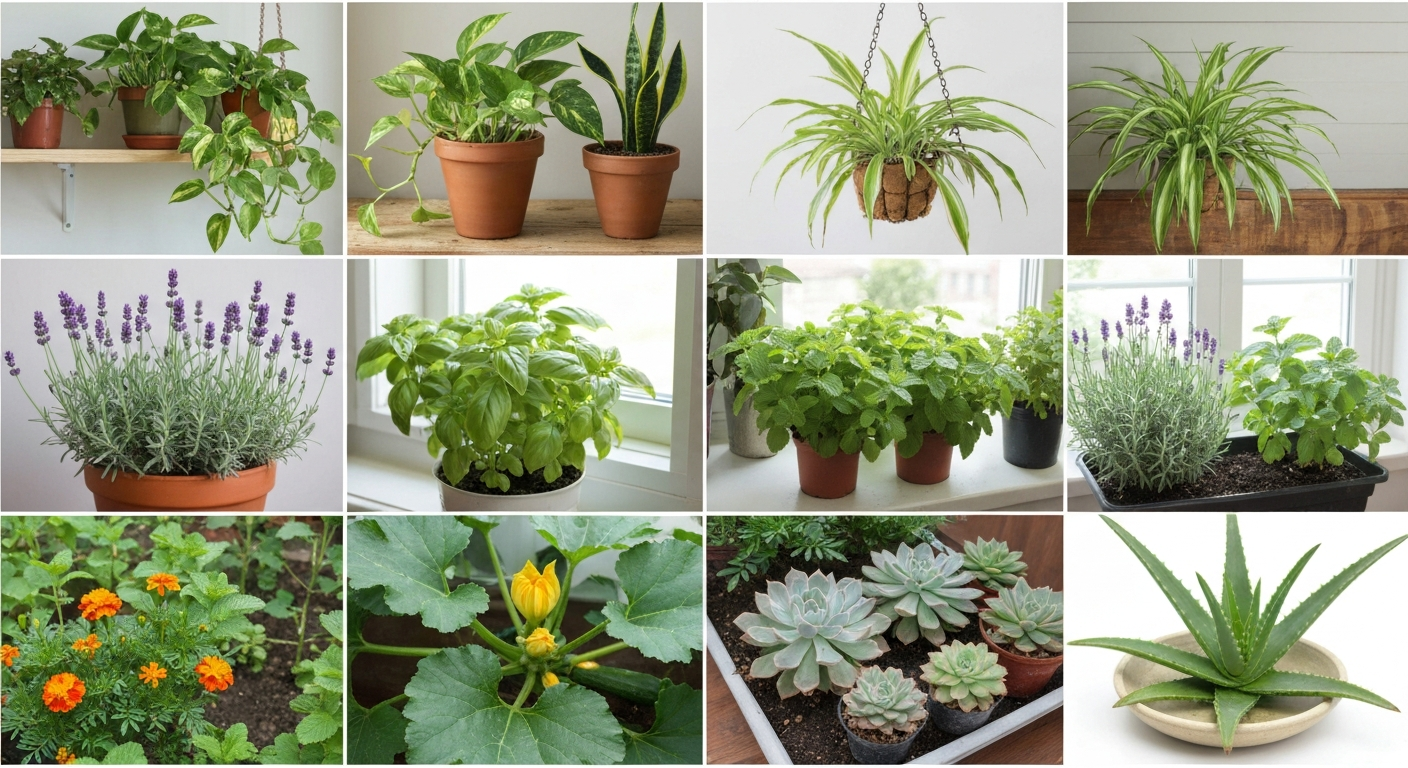
The easiest plants to grow are pothos, snake plant, spider plant, lavender, basil, mint, marigolds, zucchini, succulents, and aloe vera. Missouri Botanical Garden's 'Top 10 houseplants' offers a similar curated list of easy, beginner-friendly indoor plants. These ten cover every major situation: low-light apartments, sunny patios, edible gardens, drought-prone yards, and container setups with barely any room to spare. Most need watering once or twice a week at most, forgive missed waterings, and reward even neglectful growers with healthy growth.
Top 10 Easy Plants to Grow: Fast, Low-Care Picks for Any Space
Rachel Hartley
16 Jul 2026
Quick-answer: the top 10 at a glance
- Pothos (Epipremnum aureum) — low-light indoor trailing vine, nearly indestructible
- Snake plant (Dracaena trifasciata) — ultra-tolerant upright houseplant, thrives on neglect
- Spider plant (Chlorophytum comosum) — fast-spreading indoor/patio plant, great for hanging baskets
- Lavender (Lavandula angustifolia) — fragrant outdoor perennial, drought-tolerant once established
- Basil (Ocimum basilicum) — fast-growing edible herb, ideal for sunny windowsills or summer beds
- Mint (Mentha spp.) — vigorous edible herb, best kept in containers to control spreading
- Marigolds (Tagetes spp.) — cheerful annual, heat-tolerant, doubles as a pest deterrent
- Zucchini (Cucurbita pepo) — high-yield summer vegetable, reliable even for first-timers
- Succulents (Echeveria, Sedum, and similar) — drought-adapted, compact, perfect for containers
- Aloe vera (Aloe barbadensis miller) — functional houseplant, minimal water, useful gel
How to use this guide
This guide is built for three types of growers: apartment dwellers with a windowsill or balcony, beginners setting up their first outdoor bed or container garden, and regional gardeners who want to match plants to their climate and current season. If you are in USDA Zone 5 in Chicago with a north-facing apartment window, your list looks very different from someone in Phoenix (Zone 9b) with a south-facing patio. Before picking a plant, ask yourself four things: How much direct sun does my space actually get each day? How often can I realistically water? Do I want food, fragrance, or just green? And am I growing in the ground, a raised bed, or a pot? Every profile below answers those four questions directly, so you can match the plant to your real situation rather than an ideal one.
On timing: if you are reading this in July, warm-season edibles like basil, zucchini, and mint are in full swing across most of the U.S. right now, but you are running out of runway in northern states (Zone 5-6) for direct-sown zucchini. In the South and Southwest (Zone 8-10), the brutal heat of July and August actually makes low-water ornamentals like lavender, succulents, and marigolds your best outdoor bets. Houseplants like pothos, snake plants, and spider plants ignore the calendar entirely, which is exactly why they are on this list.
Comparison table: all 10 plants side by side
| Plant | Sun need | Water frequency | Indoor/Outdoor | Container-friendly | Scented/Edible | USDA Hardiness | Time to maturity/display |
|---|---|---|---|---|---|---|---|
| Pothos | Low to bright indirect | Every 1–2 weeks | Indoor (can go outside in shade, zones 10–12) | Yes, any pot | Neither | Zones 10–12 outdoors; houseplant everywhere | Established in 4–6 weeks |
| Snake plant | Low to bright indirect | Every 2–6 weeks | Indoor; outside zones 9–11 | Yes, any pot | Neither (ASPCA: toxic to pets) | Zones 9–11 outdoors | Slow grower; display-ready from purchase |
| Spider plant | Bright indirect to partial shade | Weekly in growing season | Indoor or patio (zones 9–11) | Yes, hanging basket ideal | Neither (non-toxic) | Zones 9–11 outdoors | Produces offsets in 3–4 months |
| Lavender | Full sun (6+ hrs) | Every 1–2 weeks once established | Outdoor; indoor possible with grow light | Yes, 12"+ pot | Strongly scented | Zones 5–8 (Hidcote); some to zone 4 | Blooms year 1 from transplant; peak year 2 |
| Basil | Full sun (6+ hrs) | Every 2–3 days in heat | Outdoor or sunny indoor windowsill | Yes, 8–10" pot minimum | Edible, lightly scented | Annual everywhere; frost-sensitive | Ready to harvest in 3–4 weeks from transplant |
| Mint | Partial to full sun | Every 2–3 days | Outdoor or indoor; container strongly advised | Yes — must be contained | Edible, strongly scented | Zones 3–9 depending on species | Harvest in 4–6 weeks from transplant |
| Marigolds | Full sun (6+ hrs) | Weekly | Outdoor; patio containers | Yes, 6–10" pot | Mildly scented; edible petals | Annual everywhere; hardy to light frost | Bloom 6–8 weeks from seed; 2–3 from transplant |
| Zucchini | Full sun (6+ hrs) | Every 2–3 days | Outdoor; large containers (5+ gal) | Yes, but needs space | Edible | Annual; plant after last frost | First harvest 50–65 days from transplant |
| Succulents | Bright indirect to full sun | Every 2–4 weeks | Indoor or outdoor (varies by species) | Yes, shallow wide pots | Neither | Varies: Sedum to zone 3; Echeveria zones 9–11 | Display-ready immediately; fills out in months |
| Aloe vera | Bright indirect to full sun | Every 2–3 weeks | Indoor; outdoor zones 9–12 | Yes, terracotta preferred | Functional (gel); mildly toxic if ingested | Zones 9–12 outdoors | Gel-ready leaves in 6–8 months on mature plant |
What each plant profile includes
Each of the profiles below follows the same structure so you can scan and compare quickly. You will find a plain-language description of what the plant actually does and why it made this list, followed by its best use (apartment, edible garden, fragrant border, or drought-tolerant site), container suitability with a minimum pot size, sunlight category using the standard extension-program definitions (full sun = 6-plus hours direct light, partial sun = 4–6 hours, partial shade = 2–4 hours, shade = under 2 hours), watering frequency, hardiness zone range based on the 2023 USDA Plant Hardiness Zone Map, time to maturity or first harvest, and a short step-by-step care routine that focuses on what to do rather than what not to do. Where a plant has a known toxicity issue for pets or children, that is flagged using ASPCA data.
Pothos (Epipremnum aureum)
Pothos is the plant I recommend to anyone who has killed every other houseplant they have tried. It tolerates low light, dry air, irregular watering, and small pots without complaint. The trailing vines look great on a shelf or in a hanging basket, grow quickly enough that you see weekly progress, and propagate so easily from stem cuttings that you will have plants to give away within a few months. One honest caveat: pothos is listed by the ASPCA as toxic to cats and dogs, so keep it out of reach if you have curious pets.
Pothos at a glance
- Best use: apartments, low-light offices, hanging baskets, shelves
- Container: any pot with drainage; 6–8" to start, up to 10" for a mature plant
- Sunlight: low to bright indirect light; avoid direct afternoon sun (scorches leaves)
- Water: allow the top inch of soil to dry out between waterings, roughly every 1–2 weeks
- Hardiness: houseplant in all U.S. zones; outdoor perennial only in zones 10–12
- Time to established: 4–6 weeks from a cutting; immediately display-worthy from a nursery pot
- Pet safety: toxic to cats and dogs (ASPCA)
Planting and care steps for pothos
- Choose a pot with at least one drainage hole. Fill it with a well-draining potting mix (standard indoor potting mix with some perlite added works well; avoid garden soil in containers, which compacts and holds too much water).
- Plant your cutting or nursery start so the roots are covered and the crown sits at soil level. Press the mix down gently to eliminate air pockets.
- Place the pot in a spot with indirect light. A few feet from an east- or north-facing window is ideal; it will still grow under fluorescent office lighting.
- Water thoroughly until water drains from the bottom, then do not water again until the top inch of soil feels dry. In winter, you may only need to water every two weeks.
- Feed once a month in spring and summer with a balanced liquid houseplant fertilizer diluted to half strength. Skip feeding in fall and winter.
- Trim long vines back to your preferred length anytime. Cut just below a leaf node and root the trimmed piece in a glass of water for new plants.
- Wipe leaves with a damp cloth every few weeks to remove dust, which visibly improves growth by letting more light reach the leaf surface.
Snake plant (Dracaena trifasciata, formerly Sansevieria)
The snake plant earns its place on every beginner list because it actively wants to be left alone. It stores water in its thick leaves, making it more tolerant of forgotten waterings than almost any other common houseplant. It also thrives in the low-light corners where most plants slowly die, making it one of the few options for north-facing windows or dim hallways. Growth is slow, which means it will not outgrow its pot quickly or need frequent repotting. Note the ASPCA lists it as toxic to cats and dogs, so place it accordingly.
Snake plant at a glance
- Best use: low-light rooms, offices, bedrooms, neglect-prone households
- Container: terracotta or any pot with drainage; do not oversize the pot as excess soil stays wet too long
- Sunlight: tolerates low light; grows faster in bright indirect light; avoid prolonged direct midday sun
- Water: every 2–6 weeks; let soil dry out completely between waterings; water even less in winter
- Hardiness: houseplant everywhere; outdoors in zones 9–11
- Time to established: display-ready immediately from purchase; slow incremental growth over months
- Pet safety: toxic to cats and dogs (ASPCA)
Planting and care steps for snake plant
- Use a pot just slightly larger than the root ball, with drainage holes. A terracotta pot is ideal because it lets soil dry out faster, which suits this plant's preference for dry conditions.
- Fill with a fast-draining potting mix. A cactus and succulent mix works well, or add one part perlite to two parts standard potting mix to improve drainage.
- Set the plant so the base of the leaves sits slightly above the soil surface. Firm the mix around the roots.
- Place in any indoor spot. It will survive in a low-light corner but will grow noticeably faster in bright indirect light near a window.
- Water deeply, then do not water again until the soil is completely dry all the way through. In summer this might be every two to three weeks; in winter, once a month is often enough.
- Fertilize once in spring and once in early summer with a diluted balanced fertilizer. Do not fertilize in fall or winter.
- Repot only when roots start growing out of the drainage holes, usually every two to three years. The plant tolerates being root-bound and often does better slightly pot-bound than in a much larger container.
Spider plant (Chlorophytum comosum)
Spider plants are one of the fastest-rewarding plants on this list. Within a few months of getting one, you will see long arching stems shooting out with tiny plantlets (called spiderettes or offsets) dangling from them, which you can pot up and give away. They are genuinely non-toxic to pets and children, which makes them the safest choice on this list for pet-heavy households. Spider plants tolerate a wide range of conditions but do best in bright indirect light and consistent watering, which is why they rank slightly below pothos and snake plants for outright neglect tolerance.
Spider plant at a glance
- Best use: hanging baskets, patio containers, well-lit indoor spaces, pet-friendly homes
- Container: 6–8" hanging basket or pot with drainage; the slightly root-bound state encourages offsets
- Sunlight: bright indirect to partial shade; outdoor in partial shade (2–4 hours); avoid harsh direct sun
- Water: weekly during spring and summer; reduce to every 10–14 days in fall and winter
- Hardiness: houseplant everywhere; outdoor perennial in zones 9–11
- Time to established: offsets appear within 3–4 months on a happy plant
- Pet safety: non-toxic to cats and dogs (ASPCA)
Planting and care steps for spider plant
- Choose a hanging basket or a standard pot with drainage holes. A 6–8" pot is right for a single plant. Fill with standard well-draining indoor potting mix.
- Plant the root ball so the crown sits just at or slightly above soil level. Spider plants have thick, fleshy roots that can rot if buried too deeply.
- Hang or place near a bright window. East-facing windows are ideal; north-facing works but growth will be slower and you may see fewer offsets.
- Water thoroughly and consistently. Spider plants prefer evenly moist (not soggy) soil in summer. Stick a finger about an inch into the soil; if it feels dry, water it.
- Feed monthly from spring through early fall with a balanced liquid fertilizer at half strength. Overfeeding causes brown leaf tips, so less is more here.
- When offsets appear on long stems, you can leave them hanging (they look great in a basket) or snip them off and pot them in moist potting mix to root new plants.
- Watch for brown leaf tips, which are usually caused by fluoride in tap water or dry air. Switching to filtered or collected rainwater and misting occasionally will help.
Lavender, basil, mint, marigolds, zucchini, succulents, and aloe: the rest of the top 10
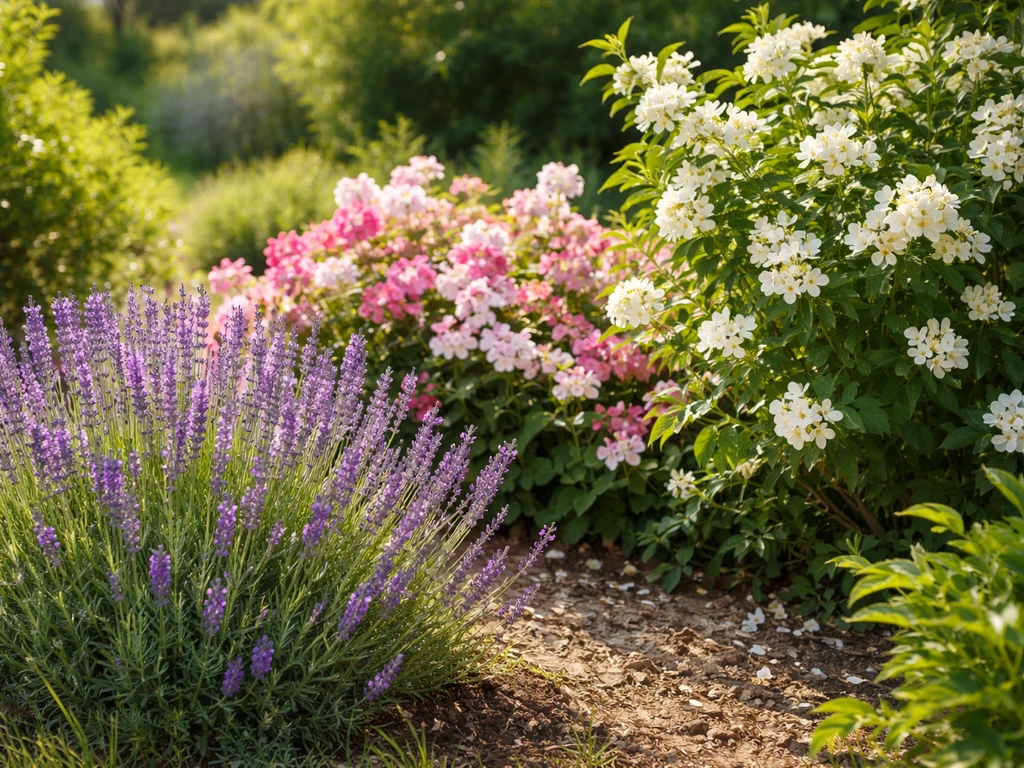
The remaining seven plants on the list each excel in a specific situation. For a quick list of simple outdoor options and straightforward growing tips, see what are easy plants to grow outside. Lavender is the standout choice if you want a fragrant, low-water outdoor perennial. It needs full sun (6 or more hours a day), excellent drainage, and very little water once established, making it ideal for dry climates in zones 5–8. 'Hidcote' and 'Munstead' are the most cold-hardy cultivars, reliably reaching down to zone 5. If fragrant borders are your goal, lavender pairs naturally with other easy-care drought-tolerant plants, and you may also want to explore recommendations for the best smelling plants to grow outdoors for a fuller fragrant garden plan.
Basil is the single most rewarding edible on this list for warm-season growing. In mid-July across most of the U.S., you can put transplants in the ground or in an 8–10" pot right now and be harvesting leaves in three to four weeks. It needs full sun and consistent moisture. The main failure mode is letting it flower (bolt): once basil sets flowers, the leaves turn bitter. Pinch flower buds off as soon as you see them and the plant keeps producing through September. In northern zones (5–6), start thinking about a final big harvest before the first frost, typically mid-September to October.
Mint is similarly fast and edible, but it earns a strong warning: plant it in the ground and it will take over your entire bed within a season. Always grow mint in a container. A 10–12" pot on a patio or a buried container (pot sunk into the ground to contain roots) keeps it productive and manageable. Zones 3–9 can grow mint as a perennial; it will die back in winter and return in spring.
Marigolds are the easiest outdoor annual on this list. Drop seeds or transplants into any sunny spot after the last frost date in your area, water once a week, and they bloom continuously until frost. They are also a genuinely functional garden plant: the scent deters aphids and some nematodes, making them useful companions for tomatoes, peppers, and zucchini. Edible petals are a bonus if you grow the Tagetes tenuifolia (signet marigold) varieties.
Zucchini is the plant that surprises new vegetable gardeners with how much it produces. One or two plants is genuinely enough for most families. It needs full sun, consistent watering (deep watering every two to three days rather than shallow daily watering), and space: plan for plants that spread 3–4 feet. In a container, use at least a 5-gallon pot and a compact variety like 'Patio Star' or 'Bush Baby'. Days to first harvest run 50–65 days from transplant depending on the variety. In northern states, with a July planting of transplants, you are realistically harvesting in September, right before first frost in zones 5–6.
Succulents are the right pick if you want low-maintenance, drought-tolerant container plants for a sunny windowsill, porch, or patio. The important thing to get right is drainage: succulents die from overwatering far more often than from underwatering. Use a cactus and succulent mix, a pot with drainage holes, and water only when the soil is completely dry. Hardiness varies widely by genus: Sedum and Sempervivum handle winters down to zone 3, while Echeveria is frost-sensitive and needs to come indoors below zone 9.
Aloe vera closes the list as both ornamental and functional. The clear gel inside the thick leaves has well-documented soothing properties for minor burns and skin irritation. It thrives in bright light, needs watering only every two to three weeks, and is nearly as neglect-tolerant as the snake plant. One practical note: while the gel is widely used topically, aloe vera is mildly toxic if ingested by pets or people, so the same placement caution applies as with pothos and snake plants.
Picking the right plant for your situation
Rather than picking the 'best' plant in general, match the plant to your actual constraints. The table below maps common grower situations to the best options from this list. For a quick reference, see which plants grow easily to match your situation. For more choices tailored specifically to outdoor sites, see our guide to the best easy to grow outdoor plants.
| Your situation | Best picks from the top 10 | Why |
|---|---|---|
| Apartment, low light, no outdoor space | Pothos, snake plant, spider plant | All three handle low light and dry indoor air; spider plant is safest for pet households |
| Sunny balcony or patio, container growing | Lavender, succulents, marigolds, basil | All do well in containers with good drainage and at least 6 hrs of sun |
| First outdoor garden bed, summer planting | Marigolds, zucchini, basil | All are fast-growing warm-season plants that reward beginners with quick results |
| Drought-prone yard or hot dry climate (zones 8–10) | Lavender, succulents, aloe vera, marigolds | All tolerate dry conditions and heat once established |
| Edible herbs in small space | Basil, mint (in a container) | Both produce heavily in small pots; mint requires containment |
| Pet-friendly household | Spider plant, marigolds, basil, mint, zucchini, succulents | Non-toxic or low-risk options; avoid pothos, snake plant, and aloe near pets |
| Cold-climate perennial (zones 3–5) | Mint, marigolds (annual), Sedum succulents | These handle cold; lavender works in zones 5–8 with the right cultivar |
Common beginner problems and how to fix them
Most beginner plant failures come down to three things: overwatering, wrong light, and using the wrong soil mix for containers. Overwatering is the single most common killer. If your plant's leaves are yellowing, mushy at the base, or dropping off, check the soil first: if it is wet and has been wet for more than a week, you are overwatering. The fix is to let the soil dry out completely before the next watering and, if roots have started to rot, to unpot the plant, trim any black or mushy roots, and repot into fresh dry mix.
Wrong light causes slower, more gradual decline. Etiolation (stems stretching toward a light source, leaves getting smaller and paler) tells you the plant needs more light. Scorched, bleached, or crispy patches on leaves usually mean too much direct sun. Move the plant and give it two to three weeks to adjust before concluding the new spot is wrong.
For container growers: never use garden soil in a pot. It compacts over time, holds water, and can introduce pests and soil-borne pathogens. Always use a potting mix designed for containers, and if you are growing succulents or aloe, either use a cactus-specific mix or blend standard potting mix with about 50% perlite to improve drainage.
Common pests on these plants and simple fixes
| Pest | Plants most affected | Signs | Simple fix |
|---|---|---|---|
| Fungus gnats | Pothos, spider plant, basil (overwatered soil) | Tiny flies near soil surface; larvae in wet soil | Let soil dry out more between waterings; use a layer of sand on the soil surface |
| Mealybugs | Succulents, aloe, pothos, snake plant | White cottony clusters at leaf joints or under leaves | Dab with 70% isopropyl alcohol on a cotton swab; isolate plant immediately |
| Spider mites | Basil, marigolds, succulents in dry indoor air | Fine webbing; stippled, dull leaves | Increase humidity; spray plant with water; use insecticidal soap if severe |
| Aphids | Basil, marigolds, mint | Clusters of small soft insects on new growth; sticky residue | Blast off with a strong water spray; introduce ladybugs outdoors; insecticidal soap indoors |
| Scale | Aloe, snake plant | Brown bumps on leaves or stems; sticky residue | Scrape off manually; treat with horticultural oil or isopropyl alcohol |
A note on edible plant safety
For the edibles on this list (basil, mint, and zucchini), basic food-safety habits matter even in a home garden. Rinse herbs and vegetables under cool running water before eating. Do not apply pesticides or fertilizers to edible plants within the label's pre-harvest interval, and always check the product label for food-crop safety. Keep harvest tools clean, and store fresh herbs wrapped in damp paper towel in the fridge for up to a week, or freeze chopped basil and mint in ice cube trays with a little water or oil for longer-term storage.
Where to buy and what to look for
For houseplants (pothos, snake plant, spider plant, aloe, succulents), local nurseries and garden centers almost always carry reliable, healthy stock. Buying locally lets you inspect the roots and foliage before purchase and avoids the shipping stress that online plant orders sometimes cause. For edible seeds and transplants (basil, mint, marigolds, zucchini), national seed companies like Burpee, Johnny's Selected Seeds, and Baker Creek Heirloom Seeds all ship to most U.S. addresses and list days-to-maturity on every variety page, which makes it easy to check whether a particular cultivar will fit your remaining growing season. For lavender specifically, buying named cultivars ('Hidcote', 'Munstead', 'Phenomenal') from a specialist nursery gives you certainty about cold hardiness and fragrance intensity that generic lavender starts at big-box stores do not.
If you want to go deeper on any of these plants for specific settings, the site has guides covering the best plants to grow outside for regional outdoor planning, easy outdoor plants for container patios, and fragrant border designs for gardeners who want to build on the lavender and mint picks from this list. For writing meta descriptions and snippet-optimized copy, follow Google's guidance in blank" rel="noopener noreferrer">How to Write Meta Descriptions | Google Search Central. Whether you are starting with a single pothos on a bookshelf or planning a whole edible patio garden, the right plant for your exact situation exists: you just need to match it to your light, water, space, and season. For a quick starter list, see our guide to good easy plants to grow.
FAQ
What primary authoritative sources should I consult to verify species names, native status and distribution for candidate plants?
Use the USDA PLANTS Database as the baseline for accepted scientific/common names, native/non-native status and U.S. distribution. Cross-check with state university/extension species pages and botanical garden profiles (e.g., Missouri Botanical Garden) for additional nomenclature and regional notes.
How do I assign accurate hardiness ranges and zone-based planting advice for U.S. readers?
Reference the 2023 USDA Plant Hardiness Zone Map for official zone boundaries. Combine that with state extension hardiness guidance and local county extension pages to translate zones into practical planting windows and survival expectations.
Where should I get region- and ZIP/frost-date–specific planting windows and timing (sow, transplant, harvest)?
Use local university/extension planting calendars and county extension pages (e.g., OSU, UMD, UConn) as primary sources. For specific frost dates use local extension or NOAA climate tools and then state the recommended sow/transplant timing relative to last/first frost days.
What’s the best source for time-to-maturity (days to harvest) and variety-level details?
Use seed-company and catalog variety pages (Burpee, Johnny’s, High Mowing, Baker Creek, Seed Savers) and authoritative variety databases (e.g., Cornell VegVariety). Cite days-to-maturity exactly as given by the variety page and note whether it’s from sowing or transplanting.
How should I define light requirements in the guide to align with extension standards?
Adopt the standard light categories from university Master Gardener guides (UC ANR): Full sun = 6+ hours/day, Partial sun = ~4–6 hrs, Partial shade = ~2–4 hrs, Shade = <2 hrs. Mention local DLI nuance for indoor growers where relevant.
What references should I use for container media, potting mixes and container-size guidance?
Cite university extension guidance (UC ANR, OSU, other state extensions) that warn against garden soil in pots and give soilless potting mix recipes. Use extension/container-factsheets for minimum pot volumes and depths per crop type.
Next Article
Best Smelling Plants to Grow Outdoors: A Practical Guide
Curated outdoor plants with strong fragrance by season, light, and container vs ground, plus care tips and troubleshooti