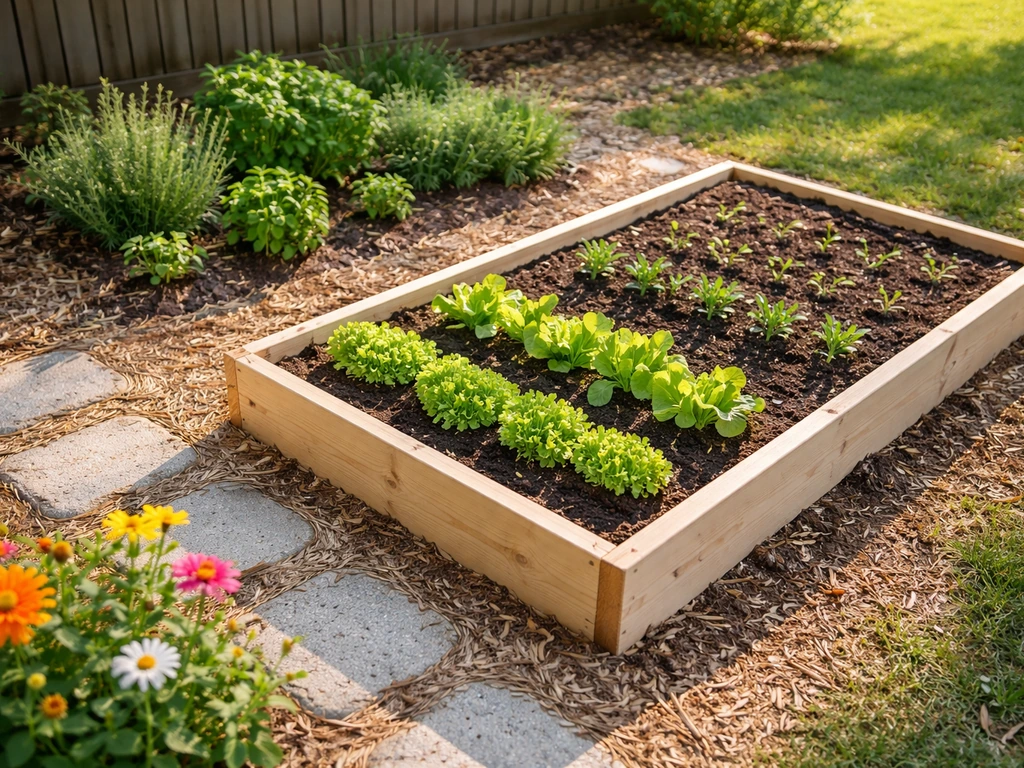
The easiest plants to grow are the ones matched to where you actually live and what you can realistically provide: the right amount of light, water, and space. For indoors with low light, start with pothos or a snake plant. For outdoor beds in most of the US this time of year (mid-May), marigolds, zinnias, and lantana are nearly foolproof. If you are mainly looking for what to plant outside, focus on warm-season annuals and drought-tolerant perennials that match your zone easy plants to grow outside. If you want food fast, radishes are ready in as little as 28 days and grow fine in a pot on a balcony. That's the short version. Below is the longer one, broken out by situation so you can find exactly what fits yours. This lines up well with a quick guide like the top 10 easy plants to grow for beginners.
Good Easy Plants to Grow: Easy Picks for Any Season
How to pick truly "easy" plants for your space and climate
"Easy" means different things depending on where you are and what you're working with. The University of Illinois Extension’s “Easy-Care Native Plants” PDF groups plant guidance by whether each species tolerates heat, drought, and poor soils, making it easier for beginners to choose low-maintenance options easy-care native plants are grouped by whether they tolerate heat, drought, and poor soils. A plant that's effortless in coastal California can be dead by February in Minnesota. Before you buy anything, get clear on four things: your growing location (indoors vs. outdoors), your light conditions, your watering habits, and your USDA hardiness zone if you're planting outdoors.
The USDA Plant Hardiness Zone Map is the standard starting point for outdoor perennials. It tells you how cold your winters get, which determines whether a plant survives year after year or dies off. You can look up your zone by zip code in about 30 seconds on the USDA website. USDA’s Plant Hardiness Zone Map is maintained by USDA and is used to match plants to the temperatures your area typically experiences blank" rel="noopener noreferrer">look up your zone by zip code in about 30 seconds on the USDA website. For annuals and vegetables, zone matters less because they complete their life cycle in one season anyway.
The other big filter is site fit: how wet or dry is your spot naturally? University of Delaware Extension puts it simply: match moisture-loving plants to wet or poorly drained sites, and drought-tolerant plants to hotter, sunnier areas. Fighting a site's natural conditions is one of the biggest reasons "easy" plants fail. A drought-tolerant sedum will rot in a low spot that holds water. A moisture-loving fern will crisp up on a hot south-facing slope.
- Indoors or outdoors? This narrows your list immediately.
- How much direct sun does your spot get per day? Count hours honestly: under 2 is low light, 2-4 is medium, 4+ is full or partial sun.
- How often will you realistically water? If you're forgetful, go drought-tolerant. If you travel often, succulents and snake plants are your friends.
- What's your USDA hardiness zone? Matters most for perennials you want to come back every year.
- Container or in-ground? Containers dry out faster and need different soil (more on that below).
Best beginner-friendly houseplants (low light, low maintenance)
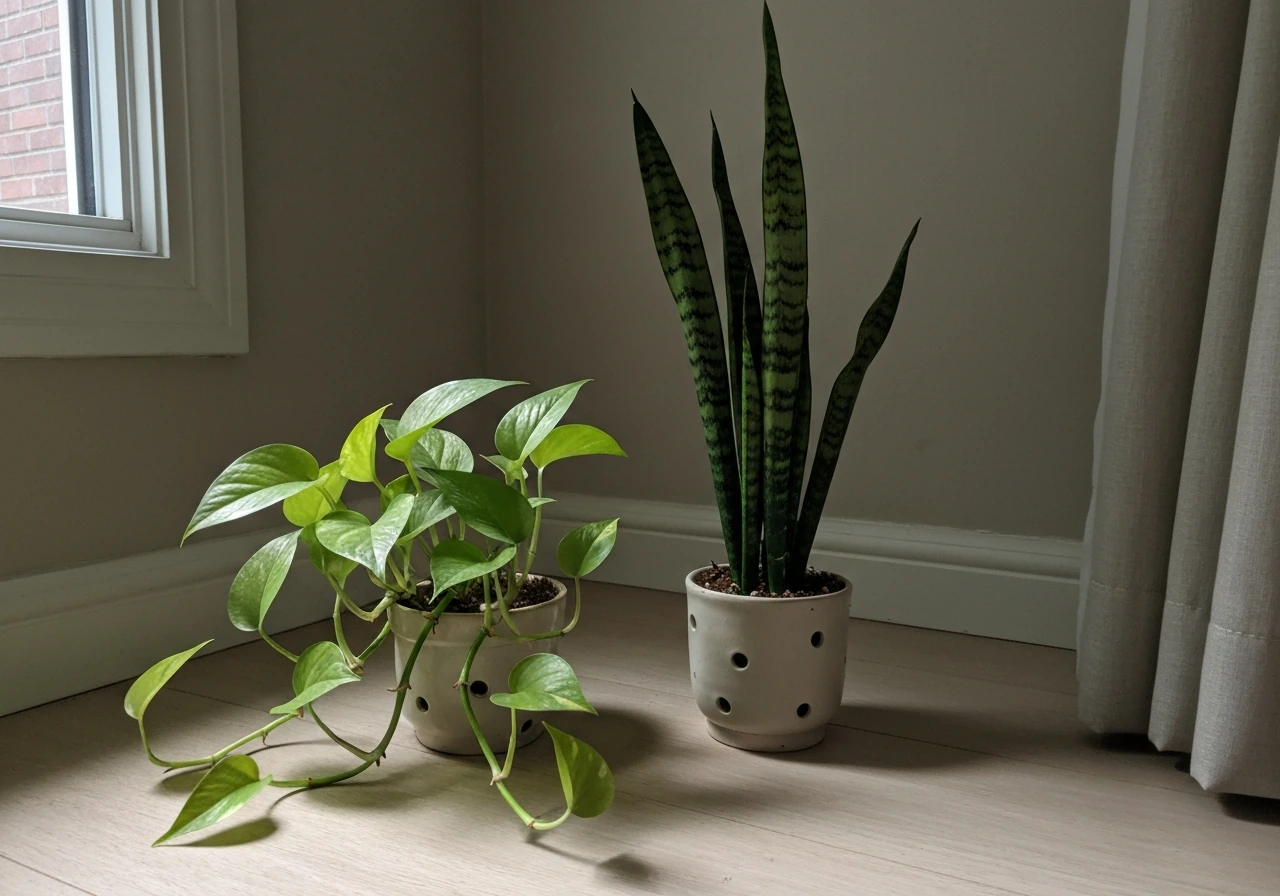
Most houseplants that get labeled "easy" are foliage plants rather than flowering ones, and that's intentional. Flowering houseplants need more light and more precise care. If you want something that stays alive, looks good, and doesn't demand much from you, stick with foliage first.
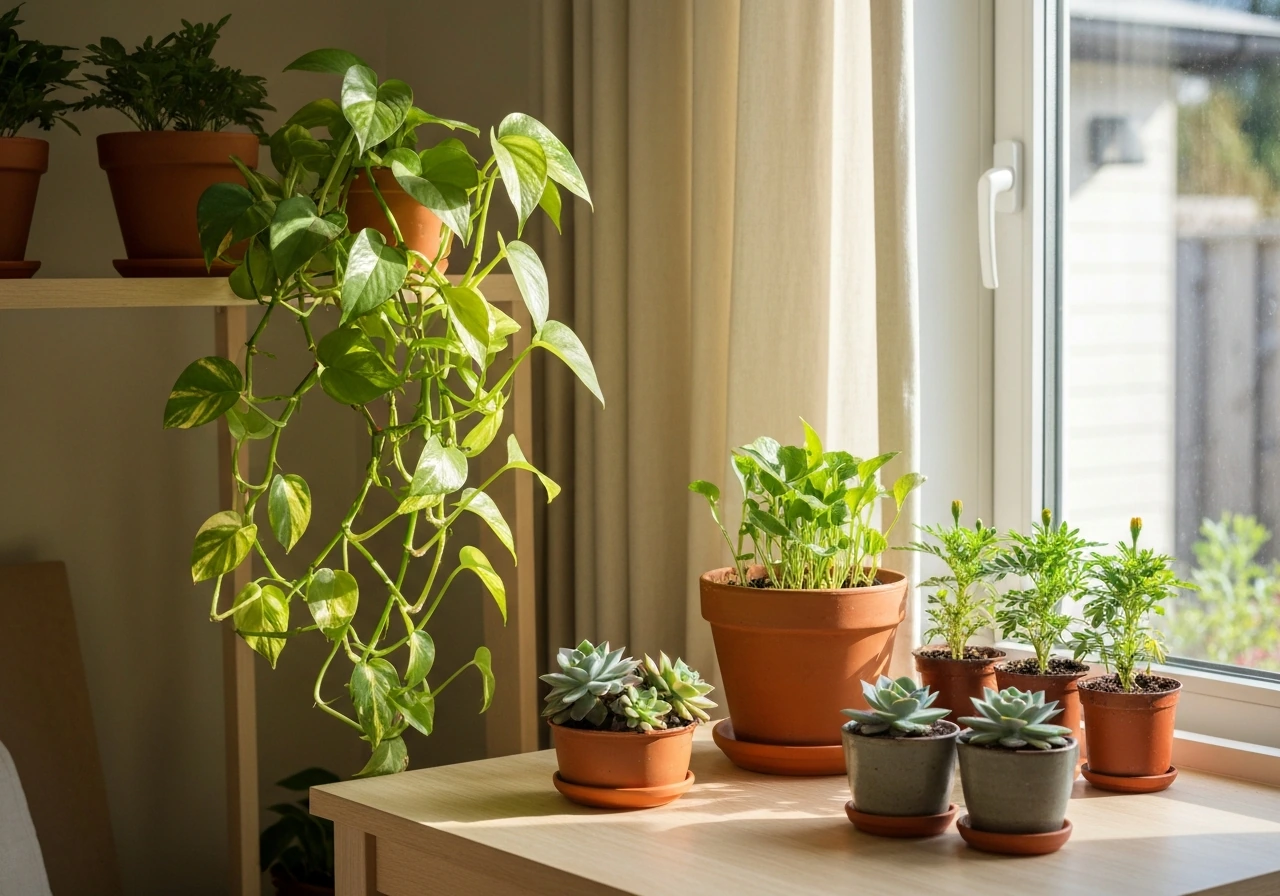
Pothos is probably the single most forgiving houseplant you can own. Penn State Extension calls it "common, versatile, hardy, and very easy-to-grow," and it can survive in low light for quite a while. The one caveat: if you keep it in very dim conditions long-term, the variegation (the lighter streaks in the leaves) fades and the plant gets leggy. It won't die, but it won't look its best. Give it a spot with indirect light from a window and it will trail or climb happily with almost no attention.
Snake plant (Dracaena trifasciata, formerly Sansevieria) is the other beginner staple. University of Maryland Extension notes it tolerates low light better than almost any other houseplant and is very long-lived. It also handles dry indoor air and infrequent watering well. If you're the type who waters every two to three weeks and forgets in between, a snake plant will outlast you. Cacti and succulents fall into the same category: very easy to grow as long as you resist the urge to overwater them.
Kalanchoe is worth mentioning if you want occasional color indoors. University of Maryland Extension notes it handles dry indoor air well, which most apartments have in winter. It blooms in clusters of small flowers and, once the blooms are done, it goes back to being a simple succulent-type foliage plant.
The single biggest killer of indoor houseplants is overwatering, not underwatering. University of Maryland Extension is direct about this: watering on a calendar schedule is not the right approach. Instead, check the soil moisture and the weight of the pot. If the top inch of soil is still damp, wait. If the pot feels heavy, wait. Only water when the medium is dry enough that the pot feels noticeably lighter. This one habit change saves more houseplants than anything else.
| Plant | Light Tolerance | Watering Needs | Best For |
|---|---|---|---|
| Pothos | Low to medium indirect | Allow to dry between waterings | Shelves, trailing, hanging baskets |
| Snake plant | Low to bright indirect | Very infrequent (every 2-4 weeks) | Corners, low-light rooms |
| Kalanchoe | Bright indirect | Low, drought-tolerant | Windowsills, occasional color |
| Cacti/Succulents | Bright direct or indirect | Very low, drought-tolerant | Sunny windowsills, minimal care |
| ZZ plant | Low to medium indirect | Infrequent, drought-tolerant | Low-light rooms, neglect-tolerant |
Best easy outdoor plants for common growing zones and seasons
It's mid-May right now, which puts most of the continental US squarely in planting season for warm-season annuals and perennials. Frost risk is past or nearly past for zones 5 through 9. If you're in zone 3 or 4, wait another week or two to be safe, especially at night.
For flowering annuals that just work, lantana is a top pick. University of Minnesota Extension calls it "fairly low maintenance" and notes it grows well in both garden beds and containers. It's heat-loving, handles dry spells better than most, and blooms from now until frost with minimal deadheading. One practical tip from UMN: water the soil, not the plant itself, to reduce the risk of mildew. Vinca (periwinkle) is another UMN-recommended option: heat-loving and fairly drought tolerant once established, with the same forgiving watering habits.
For perennials that come back every year with almost no input, sedum and catmint are both excellent low-effort choices. Illinois Extension notes sedum is drought tolerant and hardy to Zone 3, meaning it survives brutal winters without any special protection. Catmint (Nepeta) is listed by Illinois Extension as low-maintenance and perennial, and it's a pollinator magnet that blooms in waves through the season if you cut it back after the first flush.
If you're in the northern Midwest and want a reliable early-spring shrub that practically plants itself, forsythia is worth considering. UMN Extension calls it easy due to its adaptability and rates it hardy across USDA zones 3b through 8. It blooms before anything else in spring, which gives it major visual payoff for almost no effort.
Iowa State University Extension has a whole list of easy-to-grow perennials specifically chosen for heat and drought tolerance in Midwest climates, which is a good reference if you're in that region and want more options beyond what's here.
Fast-growing and low-effort edible plants (containers and garden beds)
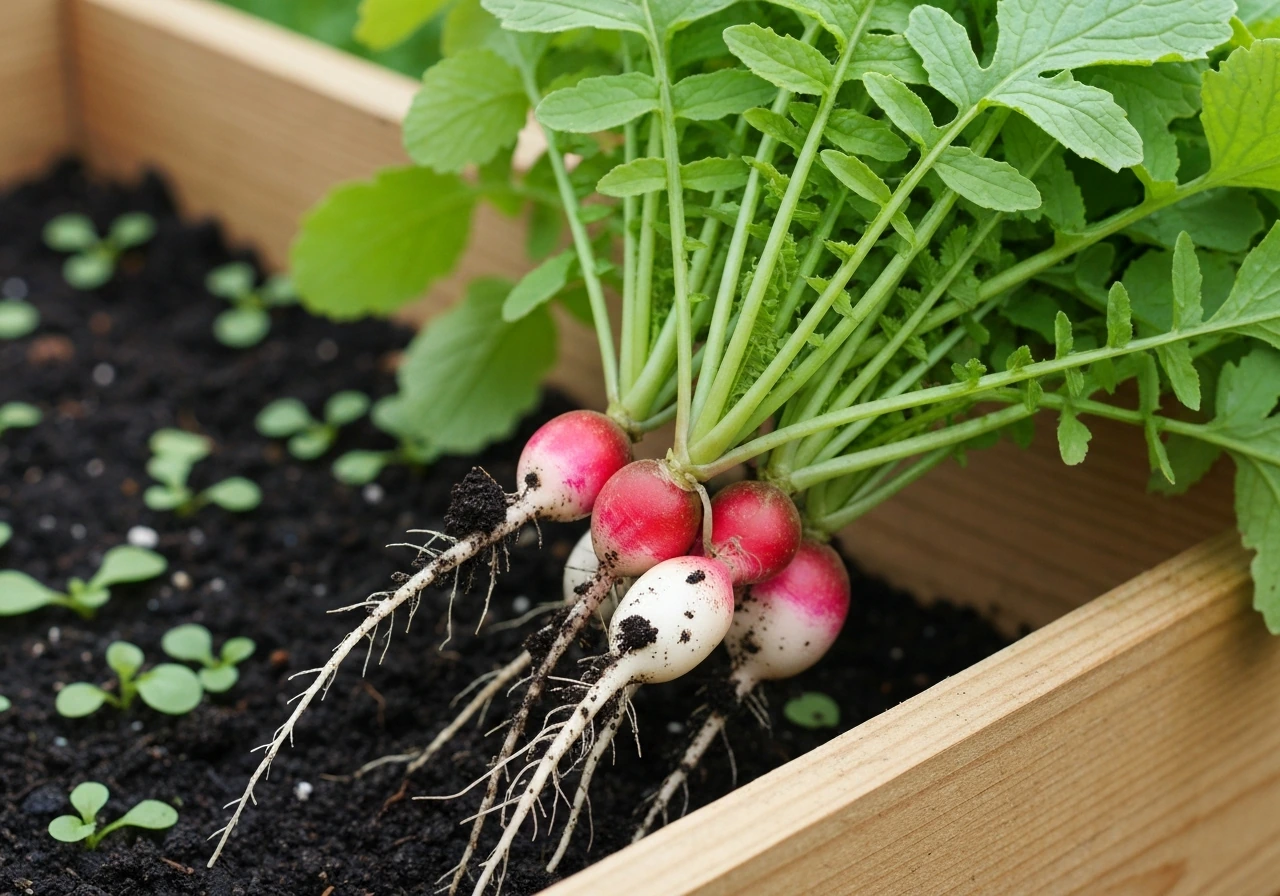
If you want food and you want it fast, radishes are the most satisfying beginner vegetable you can grow. Illinois Extension describes them as a "cool-season, fast-maturing, easy-to-grow vegetable," and the numbers back that up: OSU Extension puts days to maturity at 28 to 40 days from seed. That means you could direct-sow radishes this week and be harvesting by mid-June. They work in garden beds and in containers as shallow as 6 to 8 inches deep. The only trick is checking them regularly once they start maturing because they get pithy and hollow if left too long.
For warm-season edibles you can start right now, bush beans, zucchini, and cherry tomatoes are the classic beginner trio. Bush beans are direct-sown (no transplanting needed), produce heavily in a short window, and need almost no staking. Zucchini is famous for overproducing with almost no effort. Cherry tomatoes like 'Sungold' or 'Sweet Million' are more forgiving of irregular watering than large beefsteak types and start producing earlier.
Herbs are underrated for beginner growers because they're useful, small, and mostly very low-maintenance. Basil, chives, and mint are good starting points. One important note on mint: grow it in a container, not directly in the ground, because it spreads aggressively and will take over a bed within one or two seasons.
For containers specifically, the soil you use matters a lot. NC State Extension is clear that container "soil" is really a manufactured medium, not garden soil, and it needs large particles and good pore space for drainage. Never fill a pot with garden soil or topsoil straight from the ground: it compacts in containers and suffocates roots. Use a quality bagged potting mix, and if drainage still seems slow, add a small amount of perlite. Illinois Extension suggests a mix approach using peat moss or perlite to improve drainage and aeration.
Easy flowering and foliage plants for low-worry curb appeal
If aesthetics are the goal and you don't want to think about your plants much after planting, focus on a combination of one reliable annual for color and one or two established perennials for structure. That combination gives you something blooming now plus a foundation that returns on its own every year.
Marigolds are the workhorse annual for curb appeal. They're heat-tolerant, bloom continuously, resist most pests, and come in a range of sizes from compact edging types to knee-high statement plants. Zinnias are similar in effort level but give you a wider range of colors and attract butterflies. Both are direct-sow or transplant-ready right now in most zones.
For low-effort perennial structure, catmint and sedum are the same plants mentioned in the outdoor section above, for good reason: they do double duty as both functional and attractive. Catmint's soft lavender-blue spikes look polished without any fuss. Sedum's succulent foliage looks good all season and the fall flower clusters add late-season interest. Both need almost no watering once established and come back reliably year after year in most zones.
Ornamental grasses are worth adding to this category if you have a larger space. They provide movement and texture, need almost no maintenance, and are extremely drought-tolerant once established. Little Bluestem and Karl Foerster feather reed grass are two reliable ones that stay in bounds (unlike some grasses that spread aggressively).
If you're thinking about easy outdoor plants more broadly, including fragrant options or the best picks specifically for outdoor beds and containers, those topics connect naturally with the edible and flowering categories covered here. If you're also aiming for scent, look for the best smelling plants to grow outdoors so your garden offers strong fragrance without extra effort easy outdoor plants more broadly.
Planting and care basics that make any "easy" plant succeed
Even the most forgiving plant has a failure mode. Here's how to avoid the common ones.
Watering: less is usually more
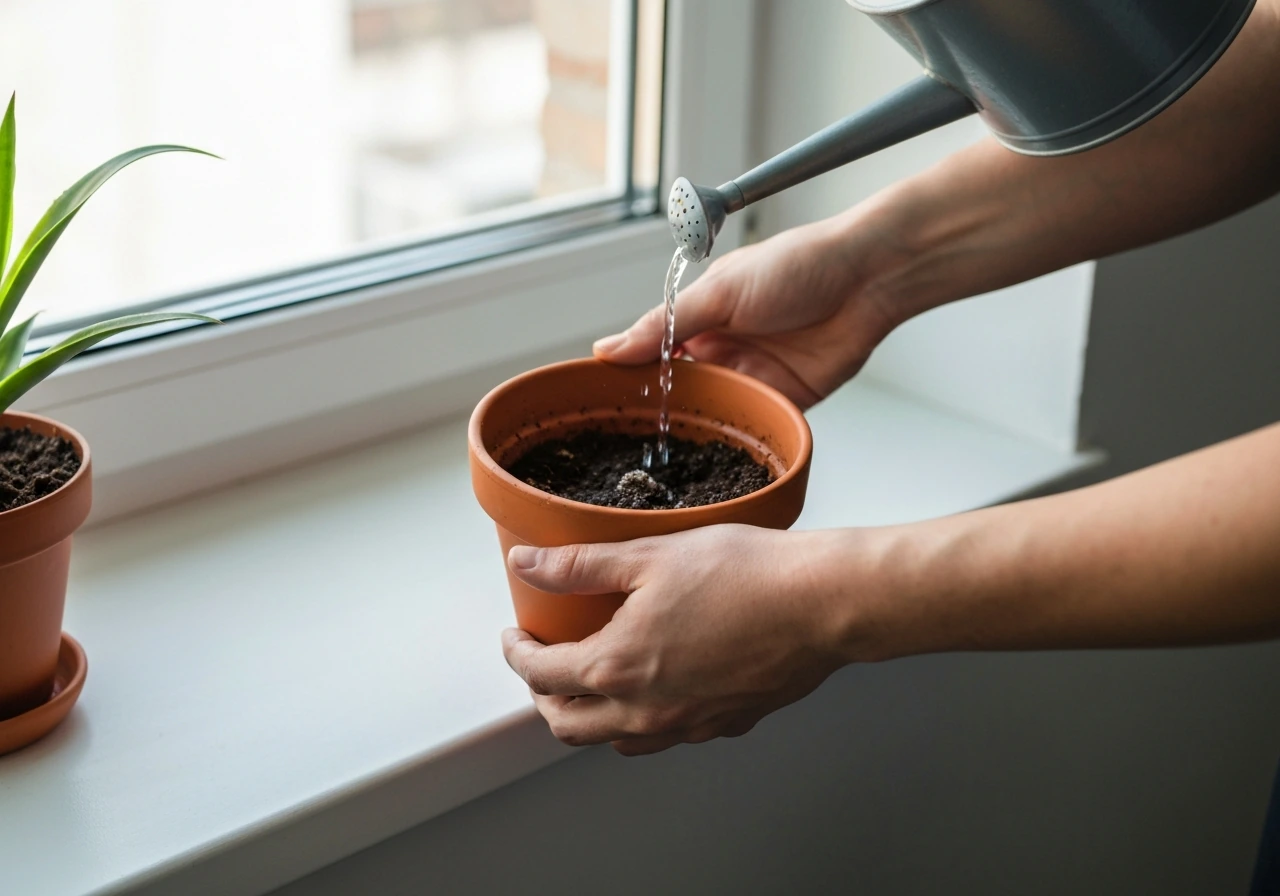
Overwatering is the number one killer of both houseplants and container plants. The right approach is to check conditions rather than follow a schedule. For containers, lift the pot: if it feels heavy, the soil is still wet. For outdoor plants in beds, stick your finger an inch into the soil. If it's still damp, skip watering. Outdoors, most established perennials and drought-tolerant annuals need watering only during extended dry spells (roughly 10 or more days without rain).
Light: match the plant to the spot, not the other way around
University of Maryland Extension emphasizes paying close attention to a plant's light requirement before buying. This is especially true indoors, where a plant that needs medium light will slowly decline in a dark corner, and a sun-loving herb will get leggy and weak near a north-facing window. Outdoors, the same rule applies: shade plants in full sun will scorch, and sun plants in shade will get weak and disease-prone. Check the tag before you plant and take the light requirement seriously.
Soil and containers: get this right from the start
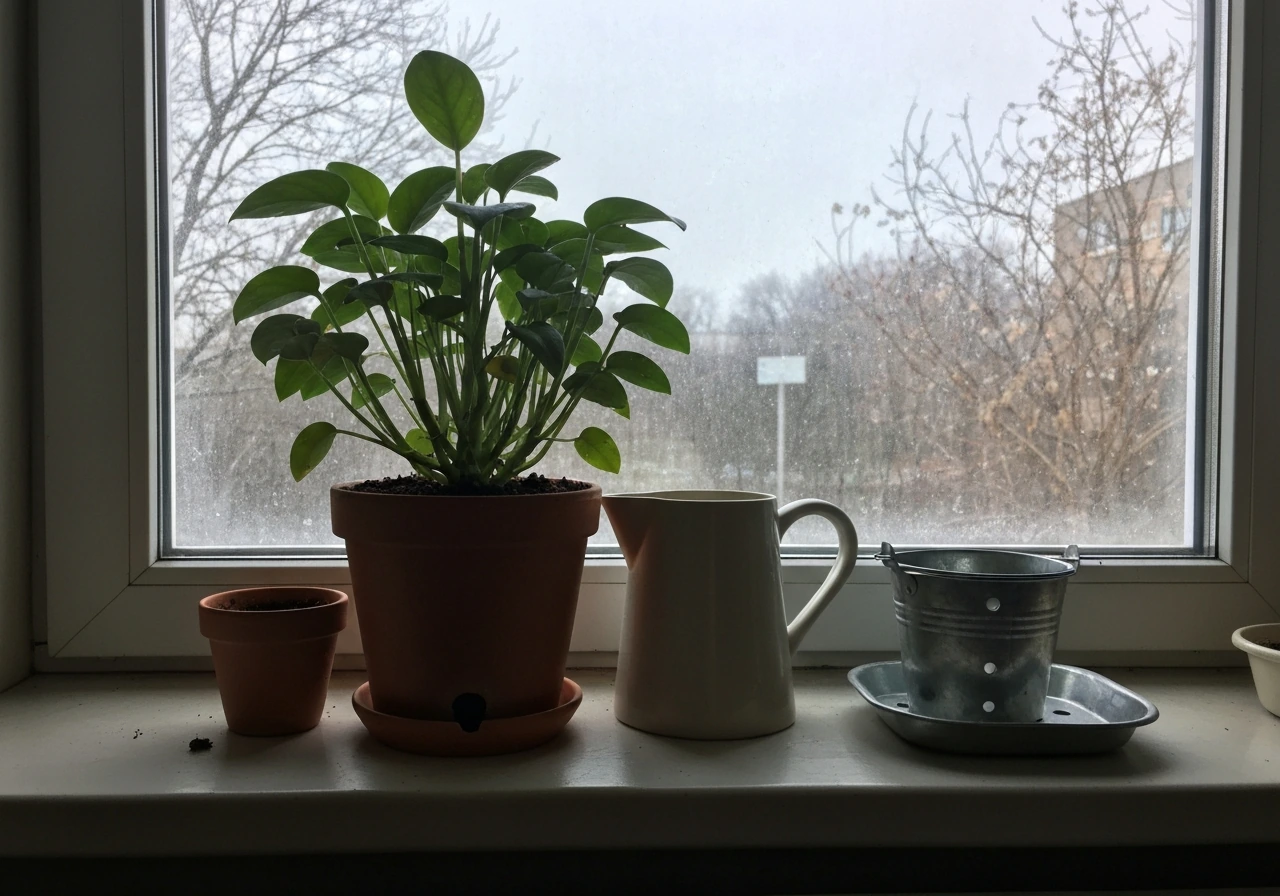
For containers, always use a purpose-made potting mix, not garden soil. Garden soil compacts in pots and blocks drainage. Make sure every container has at least one drainage hole. If you're using a decorative pot without drainage, Illinois Extension recommends a double-pot system: grow the plant in a plain nursery pot with drainage, then set that inside the decorative one. This prevents the plant from sitting in pooled water at the bottom, which causes root rot.
Pests: catch them early
The most common houseplant pests are aphids and spider mites. University of Nebraska Extension recommends checking the undersides of leaves regularly (that's where both pests hide) and treating with insecticidal soap spray once a week until the infestation is gone. Neem oil and horticultural oil are other options, but make sure to get thorough coverage on all leaf surfaces. The key with pest control is catching the problem early when populations are small, before they spread to other plants.
Your starting plan based on conditions right now
Here's how to put this into action today, depending on your situation:
- Indoors with low light: Buy a pothos or snake plant. Put it near a window with indirect light. Water only when the soil is dry and the pot feels light. That's genuinely it.
- Outdoors in zones 5-9, mid-May: Plant lantana, marigolds, or zinnias in a sunny spot now. Add one or two sedum or catmint plants for perennial structure. Water them in well and then step back.
- Small space or balcony container garden: Get a bag of potting mix, a container with drainage holes, and sow radish seeds this week for the fastest payoff. Add a cherry tomato transplant in a 5-gallon pot for summer fruit.
- Want food with minimal effort: Direct-sow bush beans and radishes now. Add a pot of basil (keep it in a sunny windowsill or outdoors). Check radishes at 28 days.
- Want curb appeal with low maintenance: Plant one flat of marigolds or lantana for color now, and put in two or three catmint or sedum plants nearby for perennial structure that comes back next year on its own.
The best approach is to start with one or two plants you're genuinely interested in, get them established, and expand from there. The gardeners who struggle most are the ones who plant twelve things at once and can't keep up. Pick your category, use the right soil and light, water based on conditions rather than a schedule, and you'll have plants that actually thrive. For quick results, look for which plants grow easily in your specific light and watering conditions plants that actually thrive.
FAQ
What are the good easy plants to grow if I have almost no sun indoors?
Choose low-light foliage first (pothos, snake plant). Also rotate the pot every 1 to 2 weeks so the plant gets even exposure, and avoid “supplementing” with direct midday sun since most indoor low-light plants can scorch quickly when suddenly moved outdoors.
How do I tell whether my plant is getting too little light or just being overwatered?
Low light usually causes slow growth, pale or faded foliage, and leggy stems, the soil can stay damp but the plant does not “wake up.” Overwatering tends to produce yellowing that comes with consistently wet soil and a heavy pot. Use the finger or pot-weight check before watering, then adjust light if new growth remains weak after 3 to 4 weeks.
Are there good easy plants to grow for beginners who tend to forget to water?
Yes, focus on drought-tolerant houseplants and outdoor drought-tolerant picks. In containers, let the top few inches dry before watering, and consider self-watering planters for busy weeks. For outdoor beds, water deeply during long dry spells, rather than daily light sprinkling, to encourage deeper roots.
What soil mistakes make “easy plants” fail, especially in containers?
The biggest one is using garden soil or topsoil in a pot. It compacts, drains poorly, and roots suffocate. Always use a quality potting mix, verify drainage holes, and if water pools on the surface or the pot stays heavy for many days, add perlite or switch mixes rather than watering less on a calendar.
How often should I water a pothos or snake plant if I’m not on a schedule?
For pothos and snake plants, water only after the medium dries enough that the pot feels noticeably lighter. As a practical rule, wait until the top inch is dry (pothos) and often longer for snake plants, since they tolerate longer dry intervals. If your home is humid or cool, expect longer gaps between waterings.
Can I grow herbs like basil, chives, or mint indoors and still keep them “easy”?
Yes, but basil needs brighter light than chives or mint. Mint will spread if grown outdoors in ground, but indoors you can keep it easy in a pot. For the easiest indoor harvest, start with chives first, then add basil once you have a sunny window, and pinch tops regularly to encourage bushy growth.
What’s the easiest mistake to avoid with radishes as they mature?
Don’t leave them in the ground after they’re ready. Once radishes get overripe, they become woody, hollow, and less flavorful. Check daily or every other day around the labeled days to maturity, especially in warm weather.
How do I prevent root rot when using decorative pots?
Use a drainage inner container (nursery pot) and let it drain fully before putting it into a decorative cachepot. If the decorative pot has no drainage, the plant will sit in pooled water and rot roots even if you water “carefully.” Empty any runoff promptly after watering.
What’s a simple way to choose plants that match my site moisture?
Do a quick “water behavior” check. After a heavy watering or rain, observe how long it takes the area to drain. If it stays soggy for a long time, choose moisture-tolerant plants and avoid drought-tolerant ones there. If it dries fast and bakes in sun, drought-tolerant plants are typically the low-effort choice.
For outdoor easy plants, do I need to worry about my USDA zone?
It depends on plant type. Zone matters a lot for perennials and shrubs you want to survive winter. It matters less for annuals and most vegetables because they complete their lifecycle in one season, but planting time still matters (cool-season vs warm-season).
If my winters are cold, what’s the easiest perennial strategy?
Pick perennials that are rated for your zone (or colder) and group plants with similar water needs. For extra reliability, choose plants that tolerate both cold and wet winters, since soggy soil can kill even “hardy” plants. Avoid adding heavy mulch right over crowns, unless the plant explicitly benefits from it.
How do I handle pests on easy plants without causing more problems?
Check leaf undersides weekly and treat early. Insecticidal soap works best when applied thoroughly to all leaf surfaces, and it can be safer than harsher sprays when used correctly. Avoid spraying in direct hot sun, and test on a small section first if your plant is stressed.
Is it better to start with one plant or several when I want good easy plants to grow?
Start with one or two and learn your “normal” conditions. If you add too many at once, you lose track of what needs more light, less water, or a different potting mix. Once the first plants thrive for a full growing cycle, you can confidently expand.
What Are Easy Plants to Grow Outside? Beginner Guide
Choose easy outdoor plants fast with zone, sun, soil, and season tips plus beginner steps for vegetables, herbs, flowers