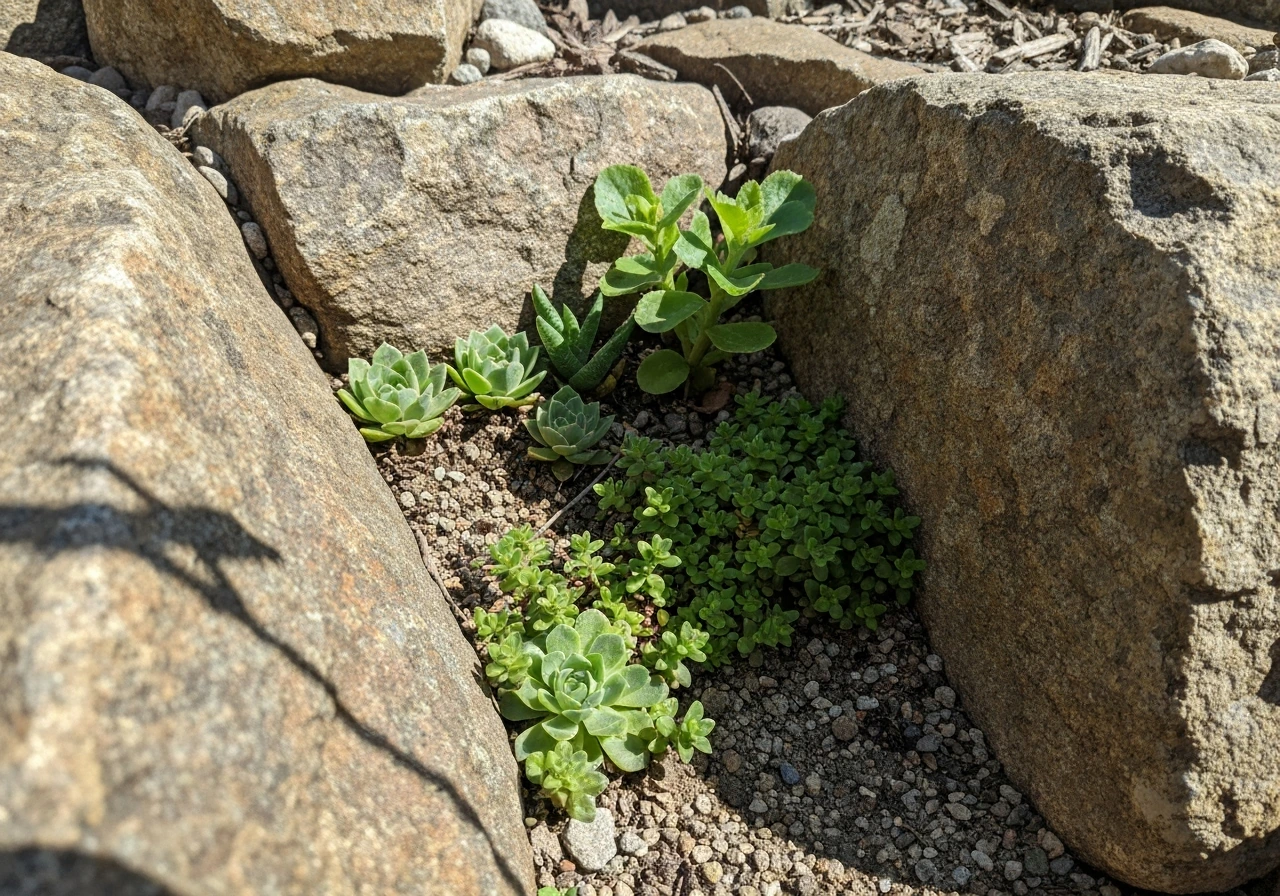
The best plants to grow between rocks are ones that actually prefer the conditions rocks create: sharp drainage, lean soil, and temperature swings. Sedums, thyme, creeping phlox, aubrieta, and armeria are the workhorses for sunny dry gaps. For shadier spots with a bit more moisture, try saxifrages, mossy stonecrop, or epimedium. Campanula saxifraga handles the in-between zones where you get sun but the soil stays moist.
Best Plants to Grow Between Rocks: Picks and Care Guide
Rachel Hartley
3 Jun 2026
Campanula saxifraga (stone bellflower) is described by NC State Extension as preferring full sun to partial shade and moist, well-drained soils, making it a good match for moist but drained rock-garden conditions.
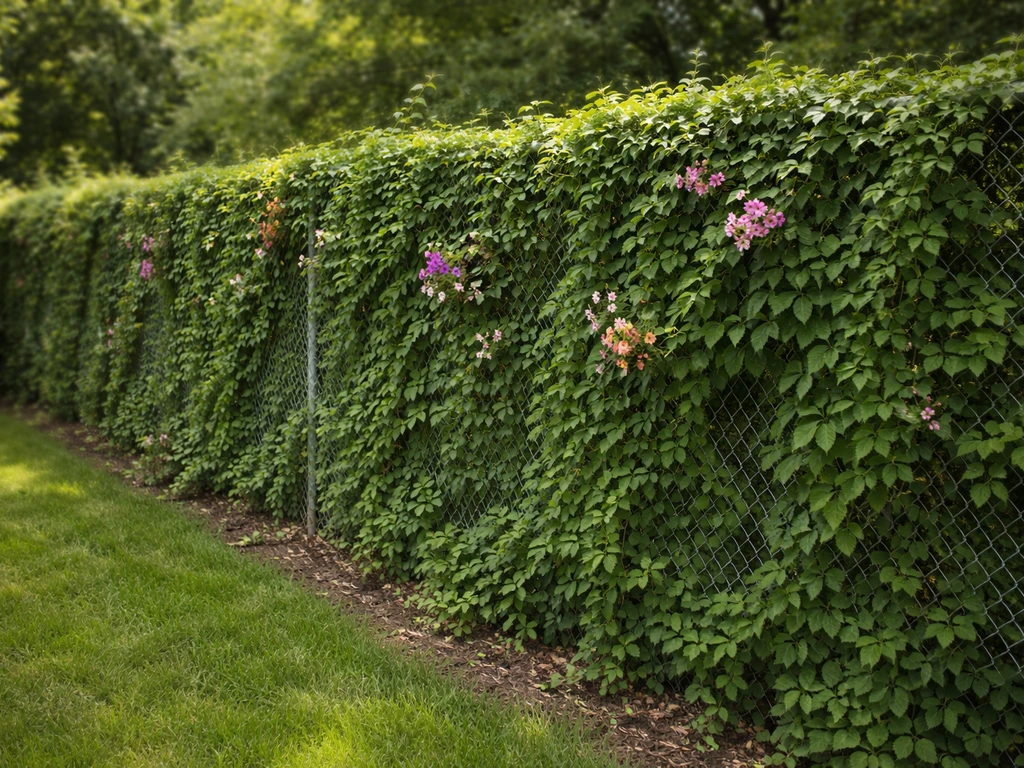
The trick is matching the plant to your specific gap, not just buying what looks good at the nursery and hoping for the best. If you're aiming for the best plants to grow on a chain link fence, use the same approach: match each plant to your light, drainage, and available moisture best plants to grow on chain link fence.
How to read your rock gap before you buy anything
Before you spend a dollar on plants, spend 20 minutes observing your space across different times of day. Rock environments are surprisingly varied, and a plant that thrives two feet away might rot in your exact spot. Here's what to check.
Sun and reflected heat
South- and west-facing rock faces can get brutal, especially in summer. Light-colored granite or pale limestone reflects heat upward and fries low-growing plants that aren't truly drought-adapted. Count the actual hours of direct sun your gap gets on a clear day. Under 3 hours is shade, 3 to 6 is partial, over 6 is full sun. Then consider whether those rocks are dark-colored and heat-absorbing, which pushes you toward the most heat-tolerant choices even in partial sun.
How water moves (or doesn't)
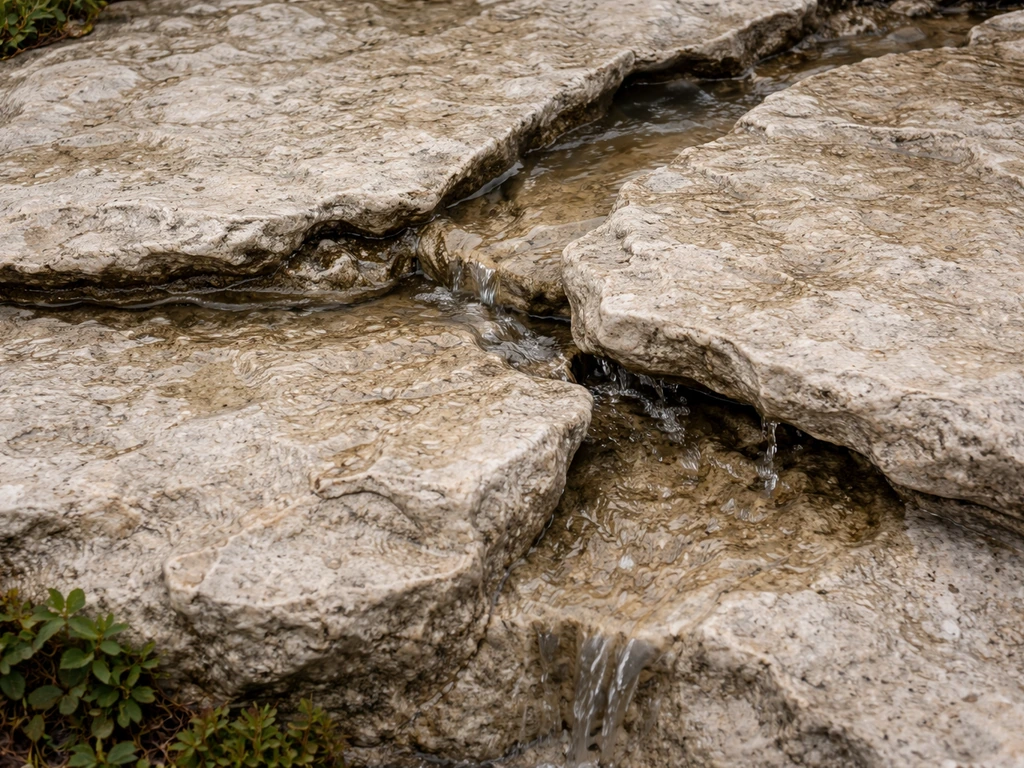
Watch your gap during and after a hard rain. Does water sheet off quickly, pool for a few minutes and drain, or sit there for more than an hour? True crevices in vertical or angled rock drain almost instantly. Horizontal gaps between flat-laid stones can hold moisture much longer. Retaining walls drain from the face but may trap water in the backfill behind them. If water sits more than 30 to 45 minutes, you're in moisture-tolerant territory and need to choose plants accordingly, or fix the drainage first.
How much soil is actually there
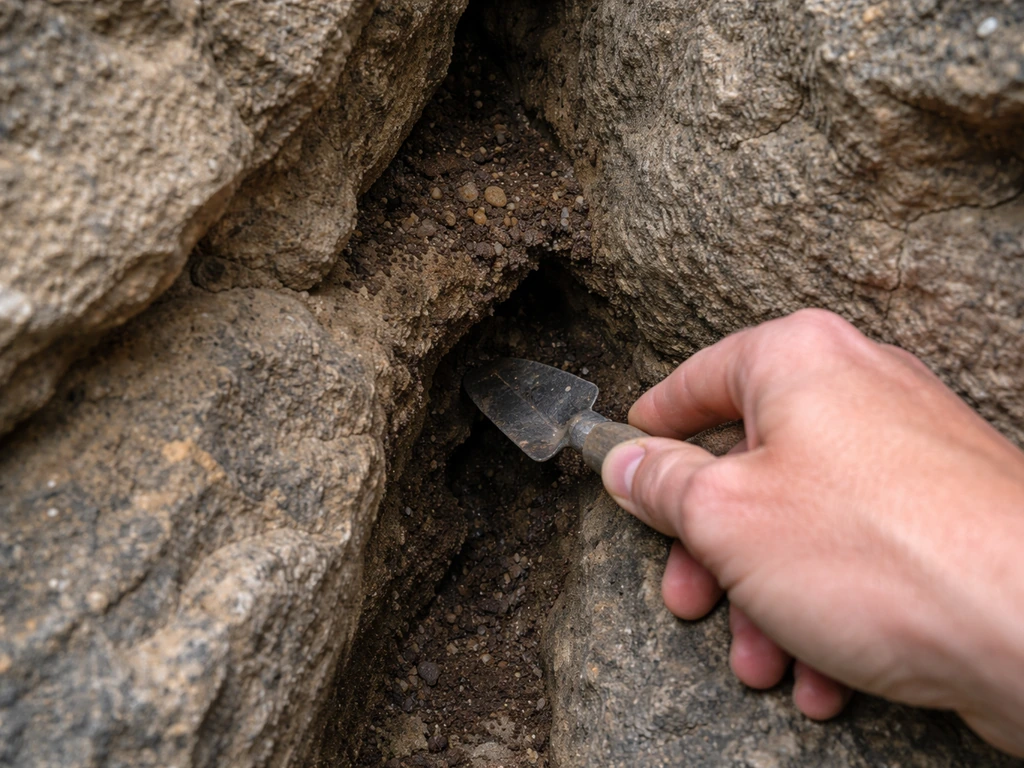
Reach your hand or a trowel into the gap and see what you're working with. A true crevice might have 2 to 4 inches of gritty soil or accumulated debris. A gap in a dry-stacked retaining wall might have 6 to 12 inches of backfill behind it. A pocket between boulders in a yard could have nearly normal garden soil depth. This matters enormously: crevice specialists like sempervivum can live in almost nothing, while plants like creeping phlox need at least 4 to 6 inches of amended soil to root properly.
Airflow and frost pockets
Rock gaps at the base of a slope or in enclosed areas can trap cold air in late spring and early fall, creating frost pockets that kill plants a full zone more tender than your regional rating. Conversely, a south-facing crevice can push plants two weeks earlier in spring and keep them growing later in fall. If your rock space is exposed to wind, that speeds soil drying and stresses plants in summer. Factor both into your picks.
Best plants for different light and conditions
Here's a practical breakdown organized by what your gap actually offers. If you want a similar approach for a home-entry feature, the best plants to grow around mailbox also depend on sun exposure and drainage in the same way. These are proven performers, not aspirational picks that need coddling.
| Plant | Light | Moisture | Soil Depth Needed | Notes |
|---|---|---|---|---|
| Sedum (stonecrop) | Full sun | Dry to moderate | 2–4 in | Excellent crevice plant; susceptible to powdery mildew in humid, crowded conditions |
| Sempervivum (hens and chicks) | Full sun | Very dry | 1–3 in | Thrives in almost no soil; perfect for true narrow crevices |
| Creeping thyme | Full sun | Dry | 3–5 in | Releases scent when walked on; excellent between stepping stones |
| Creeping phlox (Phlox subulata) | Full to partial sun | Moderate | 4–6 in | Spring bloomer; cascades beautifully over rock faces |
| Aubrieta | Full to partial sun | Moderate, well-drained | 4–6 in | Early spring color; trim hard after bloom to stay compact |
| Armeria (sea thrift) | Full sun | Dry to moderate | 4–6 in | Tolerates coastal wind and salt; tidy mounded habit |
| Campanula saxifraga | Full sun to partial shade | Moist, well-drained | 4–6 in | For gaps that stay a bit wetter; charming bell flowers |
| Saxifraga (mossy types) | Partial to full shade | Moderate, well-drained | 3–5 in | Great for shaded north-facing rock walls |
| Epimedium | Partial to full shade | Moderate to dry | 5–8 in | One of the toughest shade-tolerant groundcovers for rock edges |
| Alyssum saxatile (basket of gold) | Full sun | Dry | 4–6 in | Vivid yellow spring bloomer; cascades over walls |
| Dianthus (alpine pinks) | Full sun | Dry, well-drained | 4–6 in | Fragrant; stays compact between stones |
One honest note on sedums: they're fantastic but not bulletproof. In humid climates where air circulation between rocks is poor, powdery mildew can be a real problem. If you're in the Southeast or Pacific Northwest and you've had mildew issues on other plants, space your sedums generously and avoid planting them flush against rock faces where air can't move. Choosing resistant varieties like 'Angelina' or 'Dragon's Blood' helps too.
Dry crevices vs. soil pockets: what changes
This is the most important distinction in rock gardening, and it's often glossed over. A dry crevice and a soil-filled pocket between boulders are essentially different growing environments that call for completely different plants and planting strategies.
True dry crevices
These are the tight gaps in a dry-stacked wall, between slabs on a path, or in a natural rock outcrop where soil is sparse, drainage is instant, and roots have to follow rock fractures to find moisture. Sempervivum, small sedums, and woolly thyme are your best bets here. These plants have evolved (or been selected) to pull moisture from rock surfaces and air humidity rather than bulk soil.
Don't try to stuff compost into these gaps; it holds too much moisture, reduces oxygen around roots, and causes rot. Great drainage is the non-negotiable rule here. Instead, use a thin layer of poultry grit or fine gravel as top dressing to anchor small transplants and stabilize the gap surface while roots establish.
Soil pockets and retaining wall backfill
Here you have more options. A 6-inch-deep pocket between boulders with decent soil can support creeping phlox, armeria, dianthus, campanula, and even some ornamental grasses or small herbs. The soil should still be well-drained (more on how to amend it below), but you can work with something closer to a normal planting mix. Plants in these spots need proper spacing so their crowns don't touch rock permanently and trap moisture at the base, which is a common rot trigger.
How to actually plant between rocks
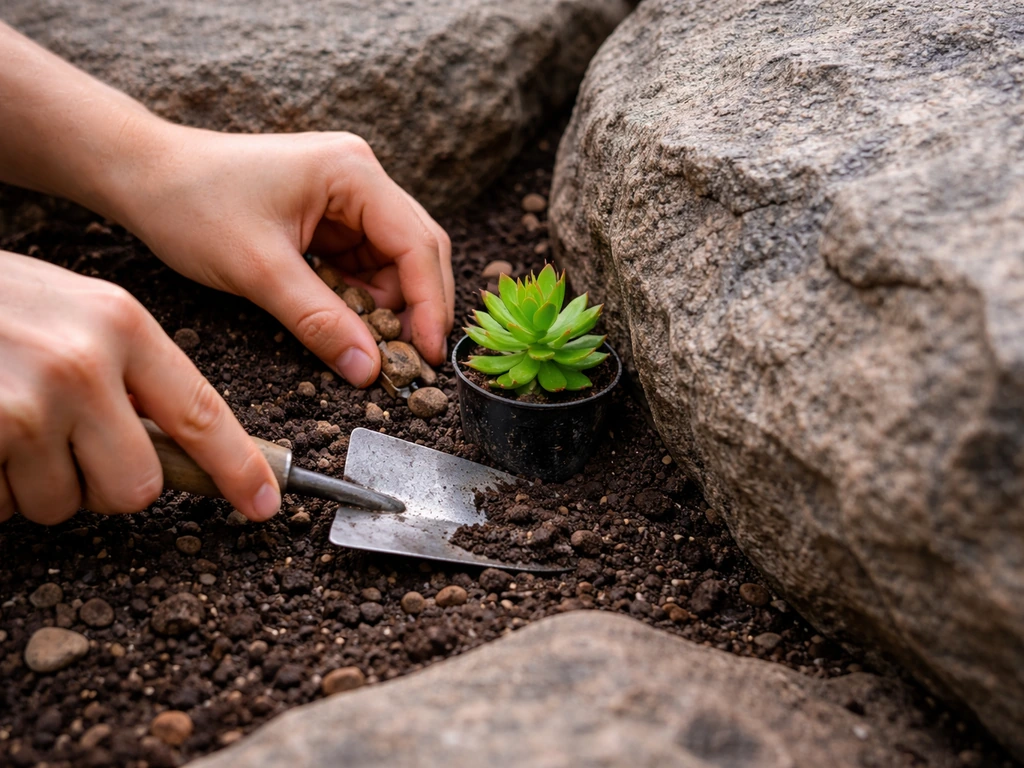
Planting between rocks takes a bit more care than dropping something in open ground. LECA can also be a great option when you want the benefits of fast drainage without heavy soil in your rock-garden-style planting best plants to grow in LECA. The goal is to get the roots anchored, the crown sitting correctly, and the soil stable enough that it doesn't wash out in the first hard rain.
- Clear the gap: remove old soil, debris, and any weeds or moss you don't want. If you're working a crevice, use a narrow trowel, old knife, or chopstick to dig out as much dead matter as you can without dislodging the rocks.
- Fill gaps with a lean mix: for crevices, use a blend of roughly 50% coarse grit or pea gravel, 40% loam, and 10% compost. For deeper soil pockets, you can go up to 25% compost but keep grit content high. Avoid standard bagged potting soil alone; it holds too much water and compacts over time.
- Check your plant depth before you plant: the crown (where roots meet stem) should sit at or very slightly above the soil surface, never buried against rock. Buried crowns rot.
- Anchor the root ball: for tight crevices, you may need to bare-root the plant slightly (gently shake off some potting mix) to thread roots into the gap. Work gently. Don't force a large root ball into a small space.
- Firm soil around roots: use your fingers or a narrow tool to press soil in around the roots and eliminate air pockets. This is more important in rock gaps than in open beds because roots can't expand sideways easily to find contact with soil.
- Top-dress immediately: apply a 1- to 2-inch layer of grit, coarse gravel, or stone chips around each plant, keeping it off the crown. This stabilizes the soil surface, prevents washout during rain, slows weed germination, and reflects heat away from the root zone.
- Water in thoroughly: water slowly and deeply right after planting so water reaches the root zone. Do not skip this step even if rain is coming, as rain doesn't always penetrate a freshly disturbed narrow gap the way a direct pour does.
Spacing depends on the plant and your goals. For groundcover plants like creeping thyme or sedum that you want to fill in, 6 to 9 inches apart is typical. For specimen plants in individual gaps like armeria or aubrieta, one plant per gap is usually right. The goal isn't to crowd them immediately; rock-gap plants spread on their own timetable and don't like competition while establishing.
Soil and drainage strategies that actually work
The single most common failure in rock gardening is soil that looks fine but drains poorly. Either organic matter was added without enough grit to compensate, or the existing fill behind a wall is heavy clay. Here's how to fix it.
The right grit-to-organic ratio
When filling or amending soil in rock gaps, dig grit into the top 4 inches of the mix at a rate that gives you a noticeably gritty texture when you squeeze a handful. A 5 cm (about 2-inch) layer of grit worked into the top 10 cm of soil is a practical benchmark from alpine growers. Poultry grit (granite grit) works well and is cheap. Horticultural grit, perlite, and coarse sand are also good. Avoid fine builders' sand; it fills pore spaces without improving drainage the way coarse material does.
Organic matter: how much is too much
Organic matter is useful for moisture retention in the driest gaps, but high organic content holds water around roots and reduces oxygen in the soil, which leads to rot and root death. For most rock-gap plants, keep compost under 15 to 20% of your total mix volume. The exception is shaded woodland spots where you want something like saxifrages or epimedium: a mix of screened leaf mold or fine compost blended with coarse sand or grit gives them the moisture they need without waterlogging.
Dealing with poor existing drainage
If you're planting into gaps in an existing retaining wall or raised rock bed where the backfill is heavy, your best option is to excavate what you can from the planting gap and replace it with a leaner mix rather than trying to amend clay in place. Even a 6-inch column of well-draining mix above poor-draining backfill will give most rock plants enough of a root zone to succeed. French drain or coarse gravel backfill at the base of retaining walls helps enormously if you're building new.
Keeping your rock planting going year to year
Rock gardens are lower maintenance than most beds, but they're not zero maintenance. The main jobs are watering during establishment, occasional weeding, and managing plant spread.
Watering rhythm by season
For the first 4 to 6 weeks after planting, water once or twice a week with enough water to wet the root zone, even if the plants look fine. Rock gaps dry out faster than open beds and newly installed plants haven't had time to chase moisture through rock fractures yet. Don't water to the point of saturation; aim for moist but not wet at root depth. After establishment, most rock-gap plants need little supplemental water except during genuine drought. In summer heat waves (think August in Texas or a dry July in the Pacific Northwest), check every few days and water if the soil at root depth is bone dry. In spring and fall, natural rainfall usually handles it.
Mulching without smothering
Don't use standard wood chip or bark mulch between rock-gap plants. It holds too much moisture against crowns, encourages slugs, and looks wrong. Stick with stone chips, coarse gravel, or grit as your mulch layer. A light top-up of grit each spring keeps the surface tidy and maintains drainage. For shaded woodland spots with saxifrages or epimedium, a very thin layer of fine leaf mold around (not on) the crowns works well in fall. For rock-garden and crevice plantings, NARGS advises mulching the surface lightly with chips or stone fragments, while shaded woodland plants can be grown in screened leaf mold or peat moss mixed with grit or coarse sand very thin layer of fine leaf mold.
Weeding strategy
Weeds are harder to remove once they root into rock gaps, so get them early when they're small. A grit or stone chip top-dressing significantly reduces germination. Hand-pull weeds rather than using a hoe, which can dislodge your planted rock plants. Annual weeds that blow in as seed are the main problem; once your desirable plants cover the gaps, they crowd most annuals out naturally.
Trimming and division
Creeping phlox and aubrieta benefit from a hard trim right after they finish flowering in spring, cutting back by about a third. This keeps them dense and prevents them from flopping open and rotting at the center. Sedums and sempervivums rarely need trimming but do produce offsets that crowd themselves over 2 to 3 years. Pull or divide congested clumps every few years in spring or early fall, replanting individual rosettes with fresh grit mix. Thyme benefits from a light shearing in midsummer to stay from getting woody.
Quick starter plans you can shop for today
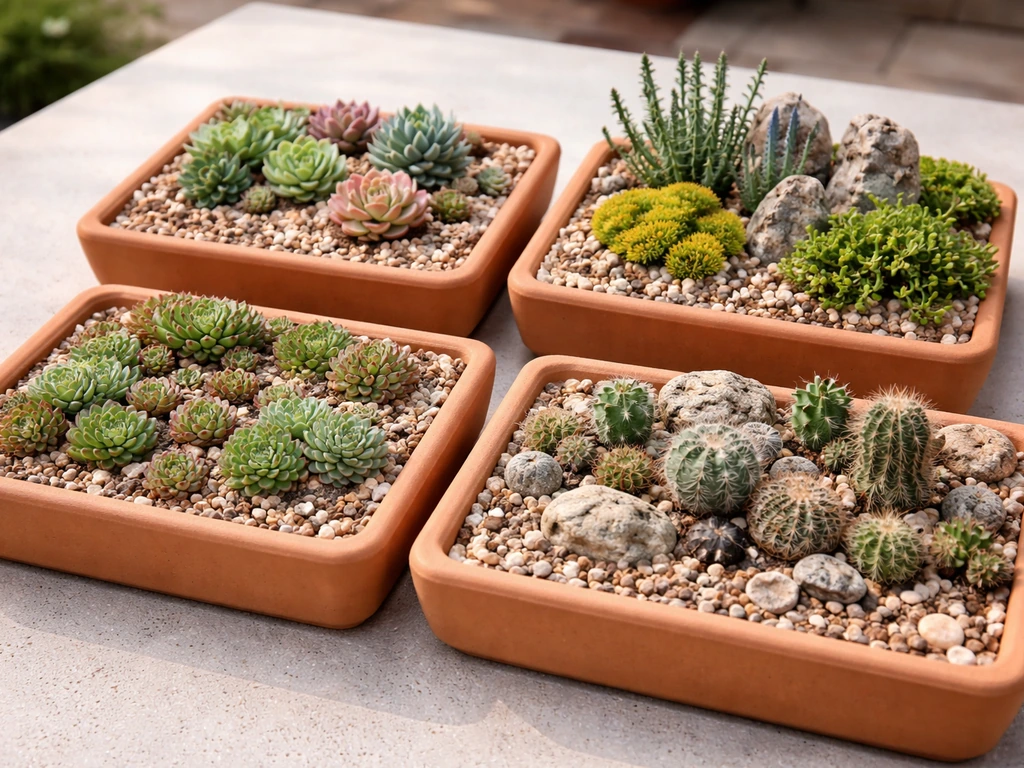
Here are four ready-to-use planting combinations based on different goals. If you want a vertical focal point, research the best plants to grow up an obelisk and choose species that match your light and moisture conditions. Each one is designed to work together in the same rock gap space with compatible needs.
Low-maintenance sunny rockery
This is the easiest possible starting point for a dry, sunny gap or dry-stacked wall. Plant sempervivum in the tightest crevices, 'Angelina' sedum in slightly deeper gaps, and armeria at the wider planting pockets or wall tops. All three want almost no water once established, no fertilizer, and minimal attention beyond an annual grit top-dressing. This combo works in zones 4 through 9 with almost no adjustment.
Pollinator-friendly rock garden
Bees and butterflies visit rock gardens heavily in spring and early summer. For a pollinator-focused planting, combine creeping thyme (bees love it), aubrieta or creeping phlox for early spring color, campanula saxifraga for mid-season blooms, and armeria sea thrift for a long season of pink pom-pom flowers. All four tolerate sunny, well-drained rock gaps and bloom at slightly different times, giving you a long pollinator window from April through July.
Groundcover carpet for gaps between stepping stones or pavers
If your goal is to cover the soil between stepping stones or flat-laid rocks in a path, creeping thyme and woolly thyme are the top picks. They tolerate light foot traffic, fill gaps quickly, stay low enough not to trip anyone, and smell wonderful. Add some Mazus reptans for shaded or moister sections between stones. Space at 6 inches apart for quicker coverage. This situation is similar to what you'd choose when thinking about plants for fences or flat structural surfaces: you want something that spreads to cover, not mound to obstruct.
Edible and useful plants for rock gaps
A few edible and culinary herbs genuinely thrive in rock gaps. Creeping thyme is the obvious one (fully edible, great in cooking). Chives work well in deeper soil pockets between boulders or in retaining wall gaps with 6-plus inches of amended soil. They tolerate some drought and come back reliably each spring. Alpine strawberries (Fragaria vesca) are excellent in partially shaded rock pockets with a bit more organic matter; they produce small flavorful berries all summer and spread steadily. Avoid Mediterranean herbs like rosemary or lavender in true crevices unless you're in a climate with mild winters, as their woody base needs more soil mass to survive hard freezes.
Shaded woodland rock pocket
For the north-facing wall, gaps under deciduous trees, or shaded boulder groupings, combine mossy saxifrage, epimedium, and a small fern like Asplenium trichomanes (maidenhair spleenwort). Use a mix heavier in screened leaf mold and coarse sand rather than pure grit mix, and top-dress with small stone fragments rather than coarse gravel. These plants want consistent moisture without waterlogging and won't survive the same dry heat that sempervivum handles with ease.
One last practical note: if you're buying plants in June, check what's available as small plugs or 4-inch pots rather than large containers. Smaller transplants establish better in tight rock gaps because you can work the root ball into the space without forcing it. They catch up fast once roots hit rock-mineral soil. Shop local if possible; a plant already acclimated to your regional conditions will outperform a mail-order plant that spent a week in a box every single time.
FAQ
How do I tell if a rock gap is too shallow for a plant like creeping phlox?
Dig down and measure the true root depth you have (not just the visible opening). If you cannot consistently provide at least 4 to 6 inches of workable soil depth, phlox will often crown rot or stall, so switch to true crevice specialists (like sempervivum or small sedums) or pick only plants sized for shallow pockets.
Should I water rock-garden plants differently than regular perennials?
Yes, especially during the first month. Water to wet the root zone but do not saturate, then let it dry back enough that the gap is not continually damp for 24 to 48 hours. A simple way to check is to probe 2 to 3 inches down a few hours after watering, if it feels wet or cool for a long time, you are overwatering.
Can I use compost or potting mix to help plants succeed in poor rock gaps?
Only in limited amounts. High organic mixes hold water around crowns and reduce oxygen, which is a common rot trigger in rock crevices. If you amend at all, keep organic content roughly under 15 to 20% of the total mix volume, and increase grit or coarse sand to keep the mix gritty when squeezed.
What’s the best way to stop soil from washing out after heavy rain?
Anchor the plants and the surface. Use a gritty top dressing (poultry grit or fine gravel) and, if the gap is sloped, ensure the planting hole is backfilled with the same lean mix so it drains evenly. If water is channeling behind the plant and carving paths, you may need to add a thin layer of gravel to redirect flow before the next storm.
Is it okay to plant directly against the rock face, or should I leave space around the crown?
Leave space so the crown is not packed tight into a wall. Crowns trapped in a moist pocket against rock are more prone to rot, especially after rain. A small gap of grit around the crown improves airflow and drainage, and it also makes it easier to pull weeds later without disturbing roots.
Why do my sedums get mildew between rocks, even though drainage looks good?
In humid weather, poor airflow can be the limiting factor, not drainage. If plants are too tightly packed or placed flush against heat-trapping rock surfaces, mildew risk rises. Fix it by spacing more than you think you need, avoiding crowded mats, and keeping the rock face sides clearer so air can move through the gap.
What should I use as mulch between rocks if I want weed control but minimal moisture retention?
Use mineral mulch, grit, or stone chips rather than bark or wood chips. If you still want a top layer for cleanliness, a light spring top-up of grit maintains drainage. For shaded spots, a very thin leaf-mold layer can work, but keep it off crowns so it does not smother plants.
How do I choose plants for an area that stays wet most of the year?
Treat it as a different category than a dry crevice. If water sits more than about 30 to 45 minutes after rain, prioritize moisture-tolerant species (for example, mossy stonecrop, saxifrages, epimedium, or campanula saxifraga) and consider improving drainage first rather than forcing dry-gap plants to survive.
Are frost pockets really a problem between rocks, and how can I protect tender plants?
Yes, enclosed or slope-base rock areas can trap cold air and kill plants that are usually hardy in open beds. If winters are marginal, place less-tender plants higher on the rock groupings, reduce standing moisture in fall, and consider temporary protection during cold snaps (like a breathable cover) rather than planting only by regional hardiness ratings.
What’s the most common mistake when filling wall or bed gaps behind retaining walls?
Trying to amend heavy backfill in place without removing the worst soil. If the backfill is clay, it often stays waterlogged and overwhelms your amendments. The more reliable approach is to excavate the planting pocket as much as possible and replace it with a lean, gritty mix, or improve drainage at the base (for new builds).
How many plants should I put in one rock gap, and how do I avoid overcrowding too early?
For most specimen-style rock-gap plants, use one plant per individual gap (armeria, aubrieta). For spreading groundcovers that you want to fill in, space around 6 to 9 inches apart. Crowding immediately can trap moisture at crowns, so it is better to let plants expand on their own timetable.
Should I buy smaller plugs or larger containers for rock gaps, especially in early summer?
Smaller transplants often perform better in tight gaps. Plugs and 4-inch pots let you work the root ball into the space without forcing it, which reduces crown damage. They also recover faster once roots reach the lean rock-mineral soil.
Can I grow edible herbs in rock crevices, and which ones fail in the tightest spots?
Yes, but match soil depth. Creeping thyme is usually reliable in dry gaps, while chives often need deeper pockets (6 inches or more) with enough amended soil. Avoid Mediterranean woody herbs in true crevices unless your winter is mild and the root zone has enough depth to buffer freeze damage.
Next Article
Best Plants to Grow on a Chain Link Fence: Quick Guide
Best plants for chain link fences: privacy vines, flowers, evergreen climbers, and edibles by season and climate.