The best plant to grow on a fence depends on three things: what your fence is made of, how much sun the spot gets, and what you actually want (privacy, flowers, food, or just something that fills the gap without much fuss). For a sunny wood or metal fence where you want fast coverage, climbing roses or clematis are hard to beat. For chain-link with full sun, a twining vine like scarlet runner bean or native trumpet vine handles the mesh naturally. For shade, climbing hydrangea is the go-to. If you'd rather have shrubs along the fence line than things climbing it, arborvitae, forsythia, and viburnum all give you dense, low-maintenance coverage without needing any training.
Best Plant to Grow on a Fence: Top Picks by Type
Rachel Hartley
26 Apr 2026
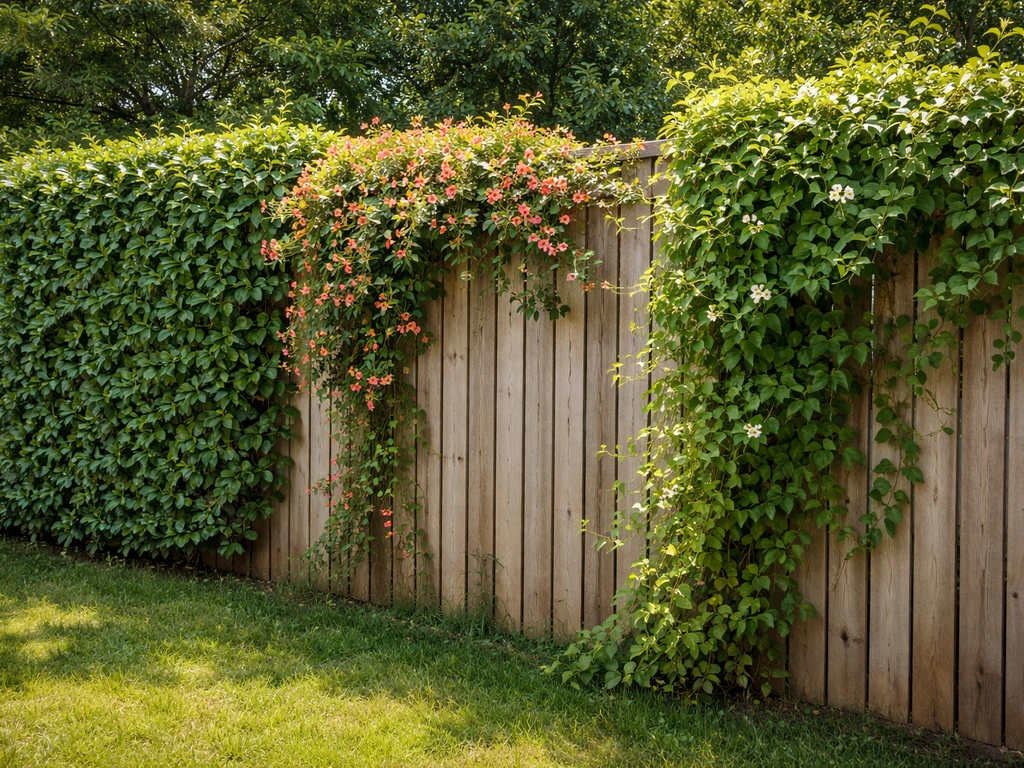
Top fence-growing picks by purpose

Privacy
For fast, tall privacy, Green Giant arborvitae (Thuja plicata 'Green Giant') is the most popular choice and honestly for good reason. It grows up to 3 feet per year until it reaches maturity, stays dense year-round, and is hardy in zones 5–7. Plant a row along your fence and within 3–4 years you have a living wall. If you want something that actually climbs the fence structure itself, native American wisteria or Virginia creeper will blanket a fence quickly, though Virginia creeper needs a firm hand to keep it from taking over everything nearby.
Flowers

Clematis is the classic flowering climber for fences. It has tendrils that wrap around supports, so it needs a trellis or wire on a smooth fence, but it'll weave itself through chain-link with almost no help. For big, bold blooms on a shadier fence, climbing hydrangea (Hydrangea anomala subsp. Climbing hydrangea is somewhat slow to establish and also slow to begin flowering after transplanting, but it can grow in sun or shade and typically reaches about 60 to 80 feet climbing hydrangea (Hydrangea anomala subsp. petiolaris) is stunning once established. petiolaris) is stunning once established. Fair warning: it's slow for the first two to three years, then takes off. Roses trained as climbers (not the bushy shrub kind) are another excellent option for sunny fences and give you color from late spring through fall.
Edible
Pole beans, cucumbers, and scarlet runner beans all climb a fence enthusiastically and give you a harvest. Kiwi vines (especially 'Arctic Beauty' for cold climates) will cover a sturdy fence and produce fruit once you have both a male and female plant. Grape vines are a longer-term investment but give you permanent woody structure, beautiful foliage, and fruit once they're established. Just make sure your fence is strong enough to hold the eventual weight.
Low-maintenance
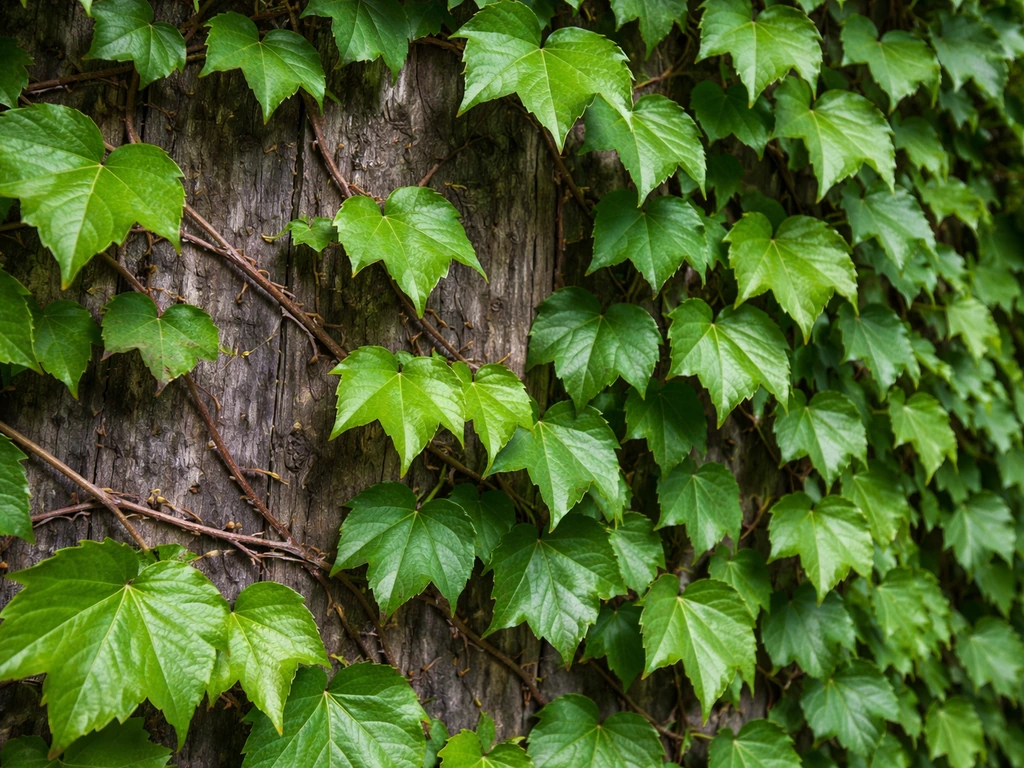
Boston ivy is about as close to zero-effort as fence coverage gets. It's a self-clinging climber, meaning it adheres directly to surfaces without you tying it to anything. It covers quickly, turns brilliant red in fall, and drops leaves in winter so the fence isn't stressed by wind load year-round. Forsythia planted along a fence line doesn't climb, but it fills space fast, tolerates neglect, and puts on a show every spring. Both are solid picks if you don't want to think much about maintenance.
Fence type and growing conditions
Fence material changes which plants actually work, not just which ones look nice in a catalog photo. Here's how to match your plant to your fence and conditions.
| Fence type | Best climber match | Watch out for |
|---|---|---|
| Wood (board/privacy) | Climbing hydrangea, climbing roses, clematis with wire added | Self-clinging vines can trap moisture behind them, causing rot over time |
| Chain-link | Clematis, trumpet vine, beans, cucumber, Virginia creeper | Twining vines wrap mesh naturally; self-clingers have nothing to grab |
| Metal/wrought iron (open) | Clematis, roses, jasmine trained through rails | Metal heats up intensely in summer; roots need mulching to stay cool |
| Vinyl/smooth fence | Nothing self-clings well; add wire or trellis for any climber | Most vines struggle without added structure on smooth surfaces |
Sun, shade, and wind
Full sun (6-plus hours) opens up the widest range of options: roses, clematis, wisteria, trumpet vine, passionfruit, and most fruiting climbers all thrive. Part shade (3–6 hours) suits clematis (especially the large-flowered hybrids), climbing hydrangea, and Virginia creeper. Deep shade is climbing hydrangea's territory almost exclusively among the climbers. For shrubs in shade, try aucuba, viburnum, or native serviceberry along the fence line.
Wind is a real problem people underestimate. A fence that catches a lot of wind will batter soft-stemmed climbers and dry out the soil fast. In windy spots, stick with shrubs on the windward side and save the delicate climbers for the sheltered face. If you're in a genuinely exposed coastal or open-country location, native shrubs like rugosa rose or native hawthorn handle punishment better than most exotic climbers.
Climbers vs fence-edge shrubs: picking the right growth habit
The first decision to make is whether you want something that grows up the fence or something that grows beside it. If you’re set on an obelisk centerpiece, plan for a strong support and choose climbers or twining vines that can wrap tightly as they grow something that grows up the fence. Climbers use the fence as a scaffold and fill vertical space efficiently. Fence-edge shrubs stay in front of or beside the fence and create a layered, planted look without touching the structure.
Climbers fall into three practical categories. Self-clinging climbers like Boston ivy and climbing hydrangea use adhesive pads or aerial rootlets to stick directly to a surface, no trellis needed. Twining climbers like clematis and akebia use tendrils or twisting stems to wrap around supports. These work great on chain-link but need wires or a trellis on solid fences. Tendril climbers like sweet peas and cucumbers have thread-like tendrils that grab thin supports, so they need mesh or wire that's thin enough for the tendril to coil around (something thicker than a finger and the tendril often can't grip it).
Fence-edge shrubs are often the better call if your fence is a privacy fence you actually want to protect, if you want year-round structure, or if you just want something that doesn't require any training. Think of them as the anchor layer: plant a row of arborvitae or viburnum along the fence, and the fence basically disappears behind them.
Planting and training your fence plants
How far from the fence and how far apart
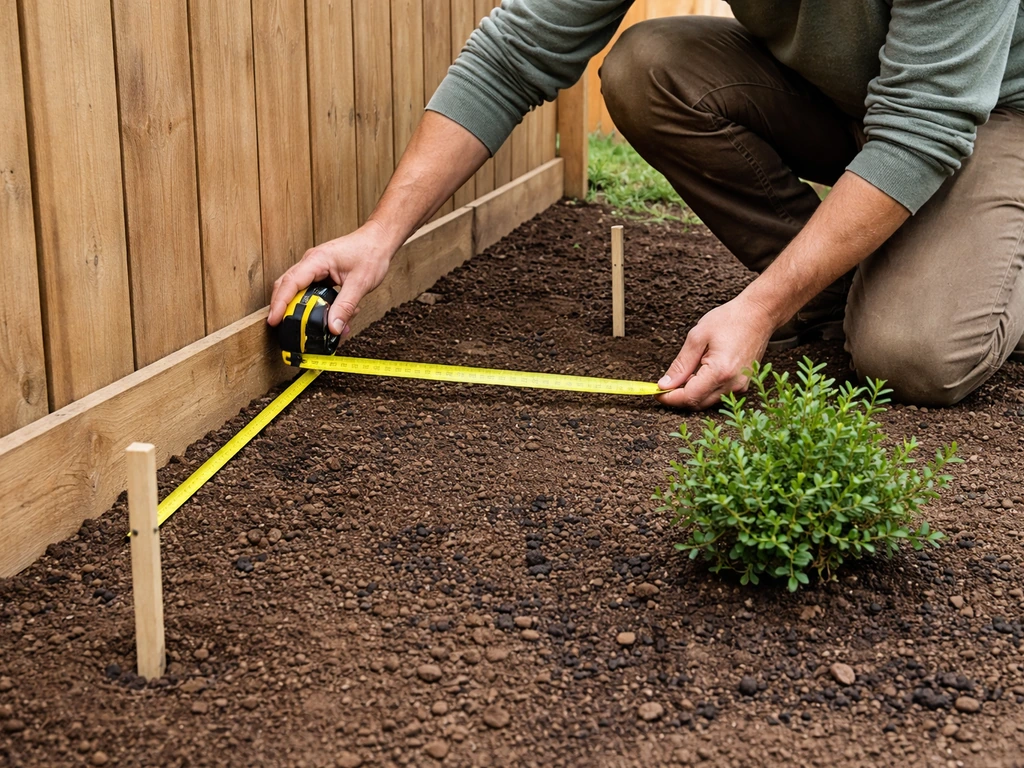
For shrubs, plant at a distance from the fence equal to roughly half the plant's mature width plus about a foot. So a viburnum that grows 6 feet wide should sit about 4 feet from the fence. This gives roots room to spread (established shrub roots typically extend 1.5 to 3.5 times the width of the plant) and keeps stems from being pressed against the fence. For climbers, you can plant as close as 12–18 inches from the fence, but don't plant right up against a solid wood fence where drainage is poor and moisture can accumulate.
For living fence rows with shrubs, space plants at their mature width for a more open hedge over time, or closer (two-thirds of mature width) for faster barrier formation. Staggered double rows close the gaps faster than a single row and create better depth and wind resistance, but they do need more maintenance during establishment.
Planting hole and soil prep
Dig your hole twice as wide as the container but no deeper than the container's height. This is especially important for vines and climbing shrubs: going too deep is one of the most common reasons newly planted climbers fail. Loosen the soil in the surrounding area so roots can spread outward easily. Mix in compost if your soil is heavy clay or very sandy. Add a couple of inches of mulch over the root zone after planting, but keep it a few inches away from the stem.
Training climbers onto the fence
For twining climbers on a solid fence, run horizontal wires every 12–18 inches up the fence before you plant. Use vine eyes or screw-in hooks to hold the wire about an inch off the fence surface. This gap matters: it lets air circulate and lets the plant actually wrap around something. Weave new growth through the wires loosely as it extends, and tie in any stems that aren't grabbing on with soft plant ties or strips of fabric. Never use wire ties directly on stems. For chain-link, you mostly just guide the first few stems in the right direction and the plant figures out the rest.
Watering
For the first one to two weeks after planting, water daily. After that, dial back based on conditions, watering deeply when the top 6–9 inches of soil in the root zone are dry. Deep and infrequent beats shallow and frequent for getting roots to go down. Fence spots often have drier soil because the fence itself sheds rain to one side, and a solid fence can block rainfall entirely on the sheltered side. Check moisture more often than you would in an open bed, especially in the first season.
Seasonal planting plan
Right now, in late April 2026, you're in prime planting season across most of the country. The danger of frost has passed in zones 6 and warmer, and soil is workable and warming up. This is the best window of the year to get climbers and fence shrubs in the ground.
- Zones 6–9 (now, late April): Plant clematis, climbing roses, trumpet vine, Boston ivy, arborvitae, viburnum, and annual climbers like scarlet runner bean and cucumbers. Get them in the ground this week if you can.
- Zones 4–5 (now to mid-May): Last frost risk may linger in colder spots. Hold off on frost-tender annual vines until mid-May. Hardy perennial climbers and shrubs (clematis, climbing hydrangea, arborvitae) can go in now.
- Zone 3 and colder: Wait until late May for most planting. Focus on super-hardy options: native Virginia creeper, climbing hydrangea (zones 4–8 hardy), and cold-tough shrubs like rugosa rose.
- Fall planting (October, most zones): Deciduous shrubs and perennial climbers establish well in fall. Avoid planting broadleaf and narrow-leaf evergreens like arborvitae in fall in cold climates, especially zones 5 and colder, where they won't have enough time to root before freeze-up.
If you're in a genuinely cold climate (Maine, northern Minnesota, high-altitude Colorado), err toward spring planting for anything evergreen. Fall planting works well in milder zones but carries real establishment risk if you wait too late in the season.
Plants that look great next to and along a fence
A single climber on a fence can look a bit lonely, especially when it's young. Building a layered planting along the fence line makes the whole area look intentional and fills in gaps during the years the climber is getting established. If you want the best plants to grow around a mailbox, look for varieties that match your sun and also stay manageable near foot traffic and mail pickup along the fence line.
The most reliable approach is to anchor the fence bed with a medium shrub every 4–6 feet, then fill in between with lower perennials and bulbs. For a sunny fence, try this combination: climbing roses on the fence itself, with a dwarf spirea or salvia at the base, and spring bulbs (tulips or alliums) in front for early-season interest. For a shaded fence, pair climbing hydrangea on the structure with hostas and astilbe at ground level.
Some specific combinations that reliably work together along a fence line:
- Clematis climbing the fence + ornamental grasses at the base: the grasses hide the clematis's bare lower stems (which is a common clematis problem) and look good even in winter.
- Arborvitae row + perennial black-eyed Susans in front: classic, low-effort, works in zones 4–7.
- Virginia creeper on fence + native ferns beneath: great for shaded, naturalistic settings and nearly zero maintenance once established.
- Climbing rose on fence + lavender at the base: a traditional pairing that works in zones 5–8, smells great, and both plants love the same dry, sunny conditions.
- Trumpet vine on chain-link + coneflowers (Echinacea) in front: a native combination that attracts pollinators and handles heat and drought well.
Keep a layer of mulch 2–3 inches deep across the fence bed, kept clear of stems, and that bed will need very little intervention beyond an annual tidy-up and occasional feeding. If you're thinking about growing plants along a chain-link fence specifically, the approach differs a bit from solid fences because you have the mesh to work with from the start. When it comes to growing in LECA, choose plants that tolerate a water-and-air cycle and provide enough light for steady growth chain-link fence specifically. Similarly, if you're looking at a narrow spot between rocks or paving near the fence, the plant selection changes considerably based on root space. If you’re aiming for the best plants to grow between rocks, focus on species that handle tight root space and fast-draining crevices.
Quick-start checklist
- Identify your fence type (wood, chain-link, metal, vinyl) and note how much sun it gets at the planting spot.
- Decide if you want something to climb the fence, grow beside it, or both.
- Pick your plant based on purpose (privacy, flowers, edible, low-maintenance) using the lists above.
- Add wires or trellis to a solid fence before planting if you're using a twining or tendril climber.
- Dig your hole twice as wide as the container, no deeper, and amend with compost if needed.
- Plant at the right distance from the fence (12–18 inches for climbers, half mature width plus a foot for shrubs).
- Water daily for the first two weeks, then deeply whenever the top 6–9 inches of soil dry out.
- Mulch the root zone 2–3 inches deep and check the fence-side soil more often than an open bed.
- Guide new growth toward the fence and loosely tie in any stems not grabbing on their own.
FAQ
What’s the best plant to grow on a fence in a very windy area?
Choose a hardy fence plant that matches the amount of sun on the actual side you want it on, then give it a windbreak first. In very windy yards, prioritize dense shrubs like arborvitae, viburnum, or hawthorn on the windward side, and save climbers for the sheltered face. Also avoid planting in low spots where winter winds dump and dry the soil, these areas can kill newer root systems even when temperatures look survivable.
Will climbing plants damage my fence, and how can I prevent it?
If you want to keep the fence from getting damaged and you do not want maintenance tying and training, use a fence-edge shrub strategy. For a solid fence, plants that spread by roots rather than clinging to the structure (like viburnum or serviceberry) are usually safer than self-clinging climbers. If you still want a climber, choose one with a slow early growth habit and install a simple trellis separate from the fence so the plant can be removed or replaced without stressing the fence.
How should I water plants on a fence if rainfall runs off and the bed dries out?
Yes, but the key is to match the irrigation reality. Many fence beds dry out faster because the fence sheds rain on one side and blocks it on the other, so plan for a soaker hose or drip line. Keep watering deep and infrequent once roots establish, and only mulch over the root zone, not against the stem or crown. In hot weather, check moisture at 6–9 inches down, the top layer can dry while deeper roots still have moisture.
Do I need to install a trellis or wires before planting?
For chain-link, you can usually plant climbers directly, but for solid fences you generally need a structure that provides something to grab. Clematis and many twining vines need a trellis or horizontal wires on the fence face, and they fail more often when they are planted too deep or when there is nothing for tendrils to wrap. If you plan to buy only one item, buy the support system first, then choose the plant.
Can I plant a climber directly next to a solid wood fence board?
Avoid planting vines right up against wood boards. Even though climbers can tolerate close placement, the sheltered side of a solid fence often stays wetter than the exposed yard, which increases rot risk near the base. Leave a small gap, roughly 12–18 inches for climbers, so air can circulate and roots can spread outward into real soil.
How close should fence shrubs be to each other for privacy?
Use the plant’s mature width to decide spacing, then decide whether you want a fast barrier or long-term fullness. For shrubs forming a hedge, planting around two-thirds of mature width speeds up screening but increases early maintenance because plants meet sooner and compete more. For a calmer, lower-maintenance hedge, plant around the mature width, you will just get slower coverage as the plants fill in.
Why is my fence plant not growing fast even though it’s the right species?
If you are growing a vine for quick coverage, expect the “fast” part to start later for most flowering climbers. Hydrangea and clematis often look slow in the first 2 to 3 years because they are building root systems, while some others like certain runners climb quickly. If you need privacy sooner than that, combine an evergreen shrub row for immediate structure with the climber as a secondary layer.
What’s the best approach for fence plants near a mailbox so they don’t interfere with mail access?
Go by the location of the mailbox and the direction your arm reaches while handling mail. Many climbers can tangle with packages or scrape when you open the box, so prioritize plants that stay on the fence side away from foot traffic. A common approach is a climber up the fence above head height, paired with a smaller, tidy plant at the base so the area near the sidewalk remains clear.
Which fence plants are easiest to control in small yards?
In a small yard, the biggest mistake is choosing a vine that becomes unmanageable even if it looked perfect in photos. Start with either a controlled climber on a dedicated support or compact shrubs sized for your space, then prune with a plan. If you are worried about spread, choose varieties known for moderate growth, and avoid aggressive self-spreading options unless you can commit to regular trimming and root control.
What should I do if the soil near my fence is shallow or drains too fast?
If you’re dealing with a slope, shallow soil, or tight root space near a fence bed, prioritize plants that tolerate fast drainage and won’t require frequent reworking. Combine looser soil at planting time with a thick mulch layer to stabilize moisture, and consider raised bed approaches if the root zone stays waterlogged. Also confirm the fence height and wind exposure so you do not put a heavy mature vine where it can pull on supports.
Next Article
Best Plants to Grow in LECA: Quick Picks and How to Start
Best plants for LECA with criteria, quick picks, and step-by-step setup to start and troubleshoot indoors.