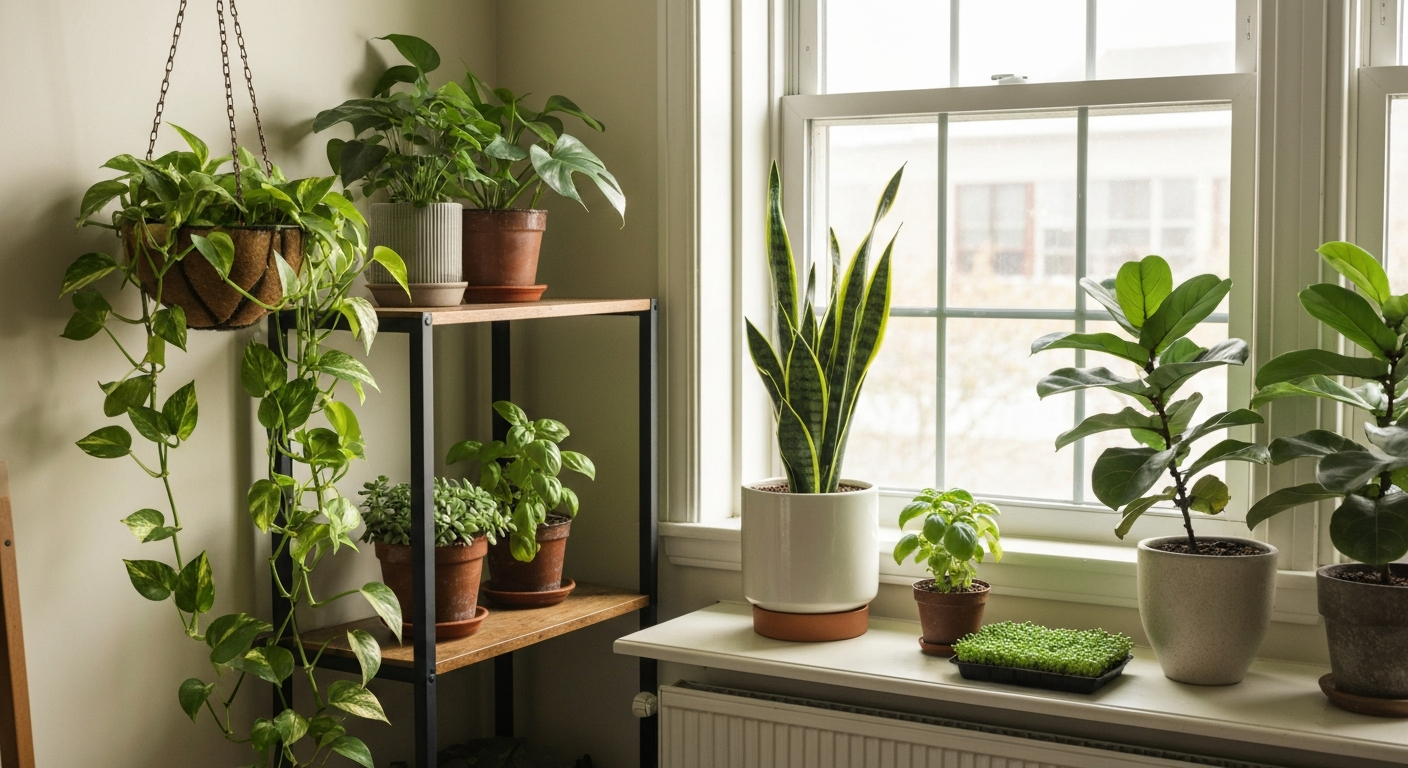
Monstera, pothos (from cuttings), philodendron, snake plants, ZZ plants, orchids, alocasia, spider plants, hoya, jade, and peperomia are among the most reliably successful plants in LECA. These are your safest bets because they tolerate the consistently moist, well-oxygenated root zone that LECA semi-hydroponics provides, and most of them transition without too much drama. If you want a one-word shortcut: tropicals with chunky or aerial root systems almost always do well; succulents and cacti almost never do.
Best Plants to Grow in LECA: Quick Picks and How to Start
Rachel Hartley
24 Apr 2026
Which plants usually thrive in LECA
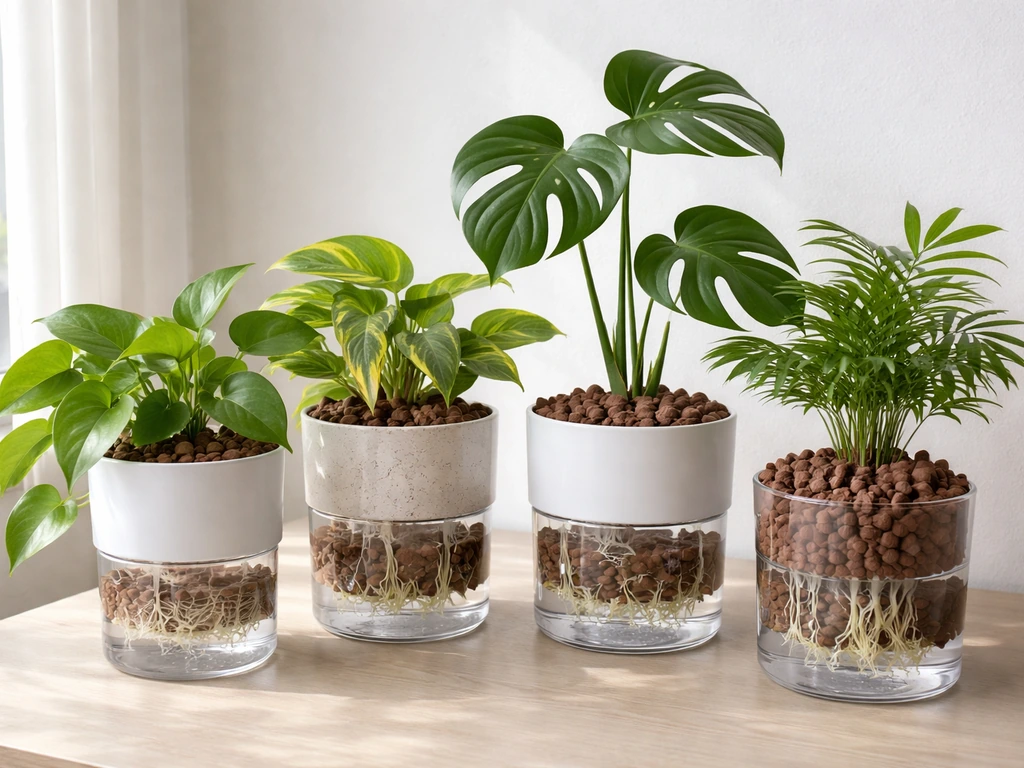
The sweet spot for LECA is tropical houseplants that naturally grow in environments with good airflow around their roots. Think jungle floor plants and epiphytes: they're already adapted to root conditions that swing between wet and relatively airy, which is exactly what LECA semi-hydroponics replicates. The porous clay pellets wick moisture up from a small reservoir at the bottom while keeping the upper root zone oxygenated. Plants that evolved in that kind of environment take to it quickly.
Monsteras are probably the single best example. They have thick, forgiving roots that adapt fast, and they reward you with noticeably faster growth once established. Philodendrons (heartleaf, Brasil, gloriosum) are equally easy. Snake plants and ZZ plants are almost indestructible in LECA because they're naturally drought-tolerant and handle the occasional oversight without punishing you. Orchids, especially phalaenopsis, are a surprising win: their chunky aerial roots are basically designed for an open, airy medium, and LECA mimics bark mix conditions while being far more consistent.
- Monstera (deliciosa, adansonii, Thai Constellation)
- Philodendron (heartleaf, Brasil, gloriosum, micans)
- Pothos — from cuttings only, not soil-rooted plants
- Snake plant (Sansevieria / Dracaena trifasciata)
- ZZ plant (Zamioculcas zamiifolia)
- Orchid (Phalaenopsis and other epiphytic types)
- Alocasia (polly, dragon scale, zebrina)
- Spider plant (Chlorophytum comosum)
- Hoya (carnosa, kerrii, pubicalyx)
- Jade plant (Crassula ovata) — with caution, keep reservoir low
- Peperomia (obtusifolia, caperata, watermelon)
- Pothos from water-rooted cuttings
Can all plants grow in LECA? What to expect and what to avoid
Technically you can attempt almost any plant in LECA, and some growers do exactly that. But "technically possible" and "actually worth the hassle" are very different things. The honest answer is that plants needing a dry dormant period, or those adapted to very dry, gritty soil, will struggle consistently in semi-hydroponics because the reservoir keeps the root zone moisture level higher than those plants want, even at its lowest setting.
Cacti and most succulents are the main plants to avoid. They need their roots to dry out fully between waterings, and the continuous wicking action of LECA works against that. Desert plants like aloes, agaves, and haworthias are borderline: some growers make it work by keeping the reservoir nearly empty and flushing infrequently, but you're fighting the system rather than using it. Skip them unless you're experimenting deliberately.
The other category to approach carefully is plants with very fine, hair-like feeder roots. Hoyas are often recommended for LECA (and they do grow well long-term), but transitioning an established soil hoya is genuinely tedious because cleaning fine roots without damaging them takes patience. The same applies to ferns: they can survive in LECA but need very consistent moisture and don't tolerate the air gap between the crown and the reservoir drying out. Herbs and annual vegetables are possible but rarely practical indoors compared to other hydro setups.
One important thing about pothos specifically: don't just lift a soil-grown pothos out of its pot and plop it in LECA. Soil roots do not adapt well to semi-hydroponics. Take cuttings, root them in water first until you have a solid water-root system, then move to LECA. That small detour makes a huge difference in survival rate.
| Plant type | LECA suitability | Main reason |
|---|---|---|
| Tropical aroids (monstera, philodendron, alocasia) | Excellent | Chunky roots, high humidity tolerance, adapt fast |
| Epiphytic orchids (phalaenopsis) | Excellent | Aerial roots love open, airy medium with moisture wicking |
| Snake plant, ZZ plant | Very good | Tolerate moisture variation, drought-forgiving |
| Hoya, peperomia, spider plant | Good (easier from cuttings) | Fine roots need careful transition; long-term growers |
| Ferns, calathea | Moderate | Need very consistent moisture; less forgiving of air gap drying |
| Cacti, most succulents | Poor | Require dry dormancy; reservoir keeps roots too wet |
| Desert herbs (rosemary, thyme) | Poor | Need dry-out cycles; LECA stays too consistently moist |
How to choose the best LECA plants for your space and season
Your light situation matters more than almost anything else. LECA doesn't change how much light a plant needs, it only changes how it gets water and nutrients. If you have a bright south or west window (or a dedicated grow light), you can grow almost any of the plants on the list above and they'll thrive. In lower light, stick to the naturally shade-tolerant options: pothos (cuttings), ZZ plants, snake plants, and heartleaf philodendrons. Don't try to push a monstera thai constellation in a dim corner and blame the LECA when it struggles.
For apartment growers or anyone with limited space, smaller plants in LECA actually transition more successfully than large established ones. A 4-inch philodendron cutting in LECA will outpace a stressed 10-inch soil plant that took weeks to adjust. This makes LECA genuinely beginner-friendly if you start small and with the right species.
Season matters too, even indoors. Spring and early summer (right now, in late April 2026) is the ideal time to transition plants to LECA. Plants are in active growth, which means they push new roots faster and recover from transition stress more quickly. Avoid transitioning in the dead of winter if you can, especially for tropicals, because slow root growth in low light and cool temperatures makes the adjustment period drag on and increases rot risk.
If you're growing outdoors on a patio or balcony in a warm climate, LECA works well for container plants in warm months (roughly May through September in most of North America), but you'll need to water and top up the reservoir more frequently in heat. Outdoor LECA containers also get more algae pressure from sunlight hitting the sides, so container choice matters more outside than in.
Top plant picks by type
Aroids (the easiest wins)

Monsteras, philodendrons, and alocasias are the workhorses of LECA growing. Their roots are thick and relatively easy to clean during transition, they push new water-adapted roots quickly, and they visually reward you fast with new growth. Monstera deliciosa and heartleaf philodendron are the most forgiving for first-timers. Alocasias are spectacular in LECA and actually show fewer of the dramatic drooping episodes they're notorious for in soil, because the moisture level is more consistent.
Pothos and trailing plants (from cuttings)
Don't skip pothos just because soil roots don't adapt well. Take stem cuttings with at least two nodes, root them in plain water for two to four weeks until you have a 1-2 inch root system, then move directly to LECA. To grow the best plants to grow up an obelisk, choose climbers and trailing types that want good airflow and consistent moisture around the roots. Golden pothos, marble queen, and neon all do great this way. The same approach works for heartleaf philodendron, tradescantia, and spider plant pups.
Orchids (surprisingly easy)
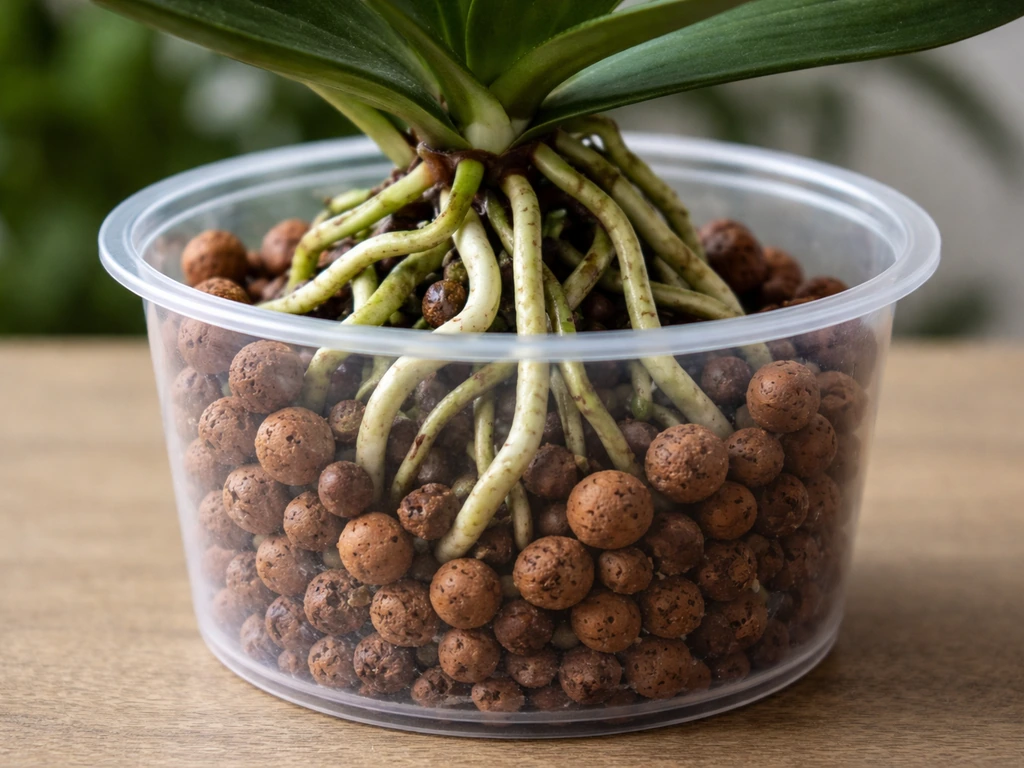
Phalaenopsis orchids in LECA are genuinely low maintenance once established. Remove all the bark mix from the roots (gently), let the roots air-dry for a few hours so they're pliable not brittle, then nestle them into LECA in a clear pot so you can watch the root color. Green or silver-green roots with a tinge of white at the tips mean the plant is hydrated and happy. Keep the reservoir very shallow for orchids, around 1/4 inch, because their roots need more air contact than most aroids.
Snake plants and ZZ plants (low-light, low-effort)
These are the plants to choose if you want LECA growing with minimal fuss. When you are choosing plants for the gaps between rocks outdoors, focus on species that can handle good airflow around the roots and fast drainage. If you want the best plants to grow on a chain link fence, look for sturdy climbers and trailing types that can handle sun and airflow These are the plants to choose. If you also want a related option for vertical outdoor spaces, the best plant to grow on fence often overlaps with sturdy climbers and trailing types that handle sun and airflow. Both tolerate lower light, both handle inconsistent top-ups, and both have root systems that transition without much complaint. For ZZ plants, the rhizomes (those chunky potato-like storage roots) stay in the upper LECA zone where it's drier, which is exactly what they prefer. Keep the reservoir at the lower end of the range for these, maybe 1/4 of the total container depth rather than 1/3.
Hoyas and peperomias (intermediate)
Both do well in LECA long-term, but the transition from soil requires more care than aroids. For hoyas, clean those fine roots as gently as possible under lukewarm water and accept that some will die back. New roots will push from the nodes within a few weeks. Peperomias are actually quite easy once you start them from leaf or stem cuttings directly in LECA rather than transitioning soil plants.
How to transition and set up plants in LECA

- Soak your dry LECA in water for at least 24 hours before use. This pre-charges the pellets and removes dust. Rinse them a few times until the water runs clear.
- Remove the plant from its current pot and shake or rinse off as much soil as possible. For fine-rooted plants, hold the roots under a gentle stream of lukewarm water and work the soil free with your fingers. Don't rush this step because leftover soil in LECA leads to bacterial issues.
- Inspect the roots and trim any soft, brown, or mushy sections. Healthy roots should be white, tan, or light beige. For pothos and other plants with soil-adapted roots, this is the step where you decide whether to transition the whole plant (riskier) or take cuttings and start fresh (usually better).
- Choose a container with drainage holes or a pot-in-pot setup. The inner pot holds the plant and LECA; the outer pot holds the reservoir. Opaque containers reduce algae. Clear inner pots are useful for monitoring roots during the first few weeks.
- Add a layer of pre-soaked LECA to the bottom of the inner pot, set the plant in place, then fill around the roots with more LECA. The plant's crown and base of the stem should sit well above where the water line will be, at least 1 to 2 inches above the reservoir level. This gap is important: it prevents stem and crown rot.
- For the first week or two, skip the reservoir entirely. Instead, rinse or shower the plant with water every one to two days and let it drain fully. This gentle approach encourages roots to grow downward searching for moisture rather than sitting in standing water before they've adapted. It also reduces transition stress.
- Once you see new growth or the plant looks settled (usually after 2-4 weeks), start maintaining a reservoir at about 1/4 to 1/3 of the total LECA volume in the container. Top up with nutrient solution when the reservoir runs dry, and let it hit empty for a day before refilling. That wet-dry cycle keeps roots getting enough oxygen.
- Use a diluted hydroponic nutrient solution. Start at roughly 1/4 strength (around EC 0.4 or less). Full-strength nutrients are too intense for recently transitioned plants and can burn new roots. Gradually increase to half strength as the plant establishes over the following month or two.
One more thing on water: tap water is fine for most plants in LECA but can cause mineral salt buildup faster than filtered or rainwater. If you're in a hard-water area, you'll notice white crust on the pellets within a few weeks. That's salt accumulation and it needs to be flushed out regularly. More on that in the troubleshooting section below.
Troubleshooting common LECA problems
Root rot
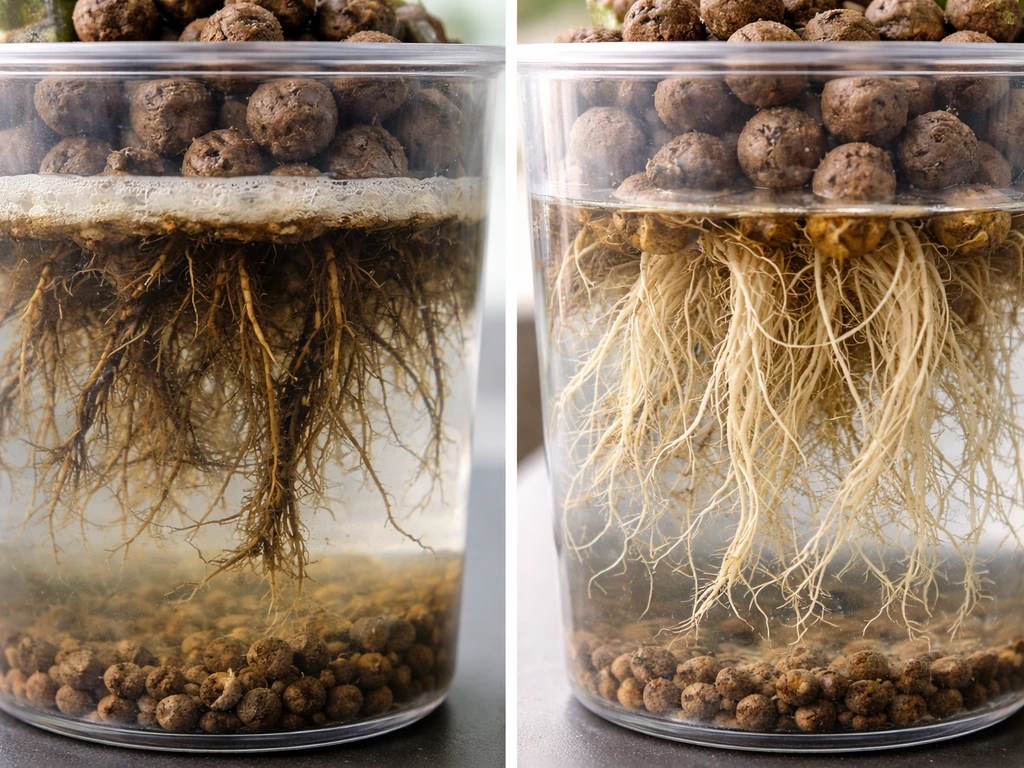
Root rot in LECA usually means one of two things: the reservoir level is too high (roots are sitting submerged with no air gap), or the nutrient solution has gone stagnant and is growing anaerobic bacteria. Slimy, brown, or foul-smelling roots are the telltale signs. To fix it, pull the plant out, cut away all the damaged roots back to healthy white tissue, rinse the LECA thoroughly, and restart with a lower reservoir level. Make sure you're letting the reservoir run dry between top-ups rather than keeping it perpetually full. Going forward, change or fully flush the nutrient solution every four to six weeks rather than just topping it up. Stagnant solution is where the trouble starts.
Algae growth
Green slime or algae coating the inside of the container or the LECA surface means light is reaching the reservoir. The fix is simple: switch to an opaque outer pot that blocks light from hitting the water. If you're using a clear pot for root monitoring (which is useful during the first few weeks), wrap the outside in foil or dark tape, or swap it out once the plant is established. Regular flushing every four to six weeks also disrupts algae cycles before they take hold. Algae itself isn't immediately deadly to the plant, but it competes for oxygen in the root zone, which creates conditions that favor the same anaerobic bacteria that cause root rot.
Salt buildup and nutrient issues
White or yellowish crust on the LECA or around the pot rim is mineral salt accumulation. Left unchecked it raises the EC (salt concentration) in the root zone to levels that burn roots and block nutrient uptake. The fix is a regular flush: every four to six weeks, run plain pH-adjusted water (target pH 5.5 to 6.0) through the LECA several times until it drains clear, then refill with fresh nutrient solution at the correct strength. If you're using tap water and seeing heavy buildup quickly, switch to filtered or reverse-osmosis water, or at least mix it 50/50 with tap.
Yellowing leaves or slow growth after transition
Some leaf yellowing in the first two to four weeks of transition is normal. The plant is trading its soil root system for a new water-adapted one, and some older leaves get sacrificed in the process. If yellowing continues past the four-week mark, check three things in order: nutrient strength (too weak or too strong), reservoir level (too high causes oxygen deprivation, too low means roots are hunting for moisture), and light (LECA doesn't fix insufficient light, it just removes soil as a variable). Most long-term growth stalls in LECA come down to either light or nutrient solution quality rather than the medium itself.
Roots not growing down into the reservoir
If your plant has been in LECA for a month and roots still haven't reached toward the reservoir, try lowering the water level even further and making sure the plant is getting adequate light and warmth to drive root growth. The capillary wicking action should draw roots downward naturally, but roots need an active growth signal. Spring and summer are when this happens fastest, which is another reason this time of year is ideal for transitioning plants to LECA.
FAQ
Can I put an orchid or aroids directly into LECA if I wash the roots well, or do I still need time to recover in between?
For most plants, a full wash and immediate move to LECA is fine, but give higher-stress plants a short recovery window first. After cleaning, let roots air-dry just until they’re no longer wet on the surface (not until they’re crispy), then pot into LECA. This reduces the chance of rot while the roots switch to the new oxygen and moisture pattern.
How do I tell the difference between normal transition yellowing and a true nutrient or rot problem?
Normal transition yellowing usually happens on older leaves and stays limited to a small portion of the canopy within the first 2 to 4 weeks. If you see soft, dark, slimy roots, a foul smell, or progressive yellowing plus stalling growth after week 4, treat it as either reservoir/oxygen trouble or nutrient imbalance rather than routine adjustment.
What water level should I start with for a brand-new transition in LECA?
Start conservatively. Place the bottom of the pot and the LECA so the reservoir is only lightly contacting the lowest roots, then move up slowly if the plant looks dry or does not root. For many beginners, staying toward the low end of the reservoir guidance prevents early oxygen deprivation and reduces rot risk.
Do I need to use fertilizer in LECA right away?
Typically, wait until you have clear signs of active adjustment, then feed consistently rather than constantly topping up with the same old solution. When you do start feeding, aim for moderate strength first, because new roots are more sensitive to salt. If you already see crusting on pellets, pause and flush before increasing nutrients.
How often should I flush LECA, and what does “flush” mean in practice?
Flush every 4 to 6 weeks as a maintenance cycle. Practically, run plain, pH-adjusted water through the LECA several times until drainage runs clear, then discard that runoff and refill with fresh nutrient solution at your intended strength.
Is it okay to keep the reservoir full to prevent the plant from drying out?
Usually no. Keeping the reservoir perpetually full defeats the main benefit of LECA, which is oxygenation in the upper root zone. Full-reservoir setups are one of the fastest ways to trigger root rot, especially if your nutrient solution also sits too long.
What should I do if I see algae even after switching to a darker outer pot?
First confirm the reservoir zone is truly light-blocked (not just partially covered). Then reduce light hitting the container sides and keep to the flush schedule, since algae cycles are helped by stagnation and light exposure. If algae keeps returning quickly, you likely have light leaks around the pot edges.
How do I prevent mineral buildup if my water is very hard?
If crust forms quickly, switch from straight tap to filtered or reverse-osmosis water, or use a 50/50 mix with tap at minimum. Always follow with regular flushing so salts do not accumulate to a level that can burn roots and block nutrient uptake.
What if my ZZ plant or snake plant looks fine but growth is slow for months?
In LECA, slow growth often means the plant is in a low-light or cool spot rather than a LECA problem. Move it closer to brighter indirect light (or under a grow light) and keep warmth consistent, because roots still need an active growth signal to extend toward the reservoir.
Can I grow succulents or cactus in LECA if I keep the reservoir almost empty?
They are still the highest-risk category for LECA. If you experiment, keep reservoir contact extremely minimal and flush infrequently, but expect that you are working against LECA’s wicking behavior. For reliable results, it’s better to choose drought-tolerant tropicals for your first runs.
Do spider plant pups and tradescantia cuttings need rooting in water before LECA?
They do not always need a water-root phase. Spider pups and some tradescantia cuttings can go into LECA after a fresh cut, but if you want faster, more predictable establishment, rooting first in plain water until you have a short root length helps reduce early losses.
Why did my heartleaf philodendron cutting wilt after moving to LECA, and how long should I wait before changing anything?
A mild wilt shortly after transition can happen as the plant switches from soil uptake to water-root behavior, especially if the roots were disturbed. Reassess after about 2 weeks under stable bright light and correct reservoir level. If wilting worsens or the plant smells bad, pull it promptly and check roots for rot rather than waiting longer.
What’s the safest first plant to try if I have low light indoors and I’m nervous about root rot?
Start with a low-light-tolerant choice that is more forgiving of occasional imperfections. In practice, pothos (from cuttings) and ZZ plants are common beginner picks because they handle adjustment and missed top-ups better than fussy species.
Next Article
Best Pot Plants to Grow Indoors: Practical Guide for Apartments
Best pot plants to grow indoors: apartment-friendly picks with light, pot, watering, difficulty and seasonal tips.