
The best plants to grow around a mailbox are low-growing, tough, and drought-tolerant ones that won't block the carrier's path or outgrow their space in two seasons. For most homeowners, that means perennials like coreopsis, black-eyed Susan, or daylilies for flowers; compact shrubs like dwarf spirea or 'Tom's Compact' summersweet for structure; and groundcovers like creeping phlox or lilyturf for filling edges. The exact right pick depends on your sun exposure, climate zone, and whether you're dealing with road salt in winter, but that short list covers most situations and gives you something to work from immediately. These same principles also help you choose the best plants to grow between rocks.
Best Plants to Grow Around Mailbox: Easy, Low-Maintenance Picks
Rachel Hartley
28 Jun 2026
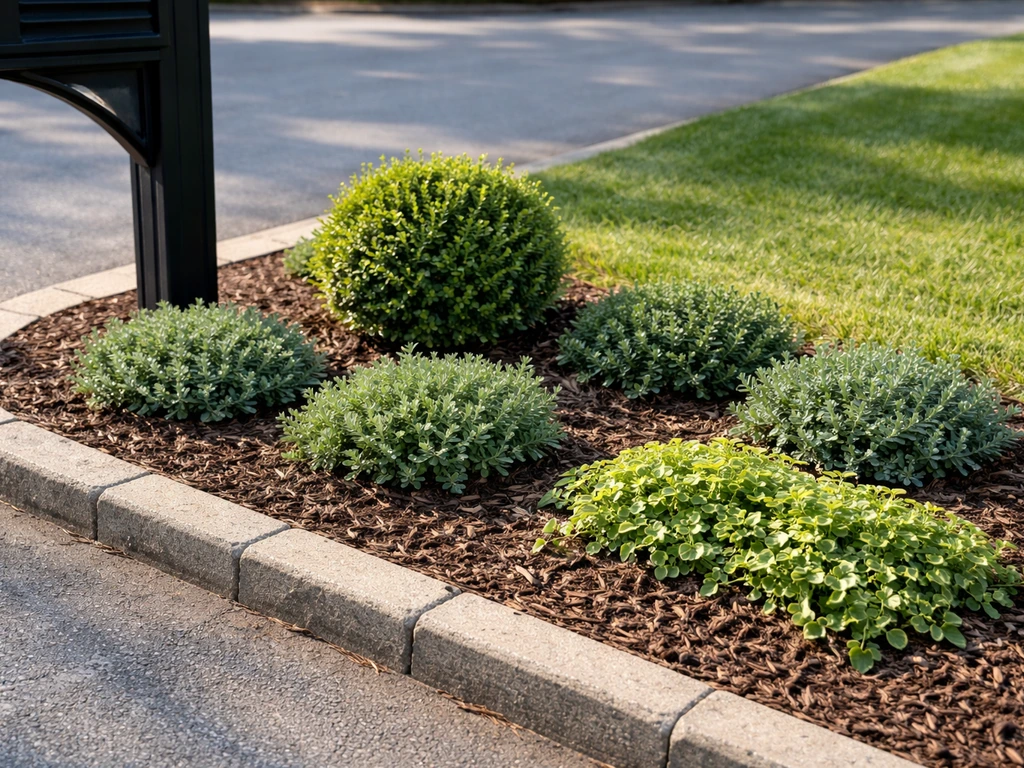
Check these mailbox-side conditions before you plant anything
Mailbox beds are genuinely tricky spots. They're often in full sun, surrounded by compacted soil and pavement heat, exposed to wind coming off the road, and in colder climates they take a beating from road salt every winter. Before picking plants, spend five minutes sizing up what you're actually working with.
Sun and wind
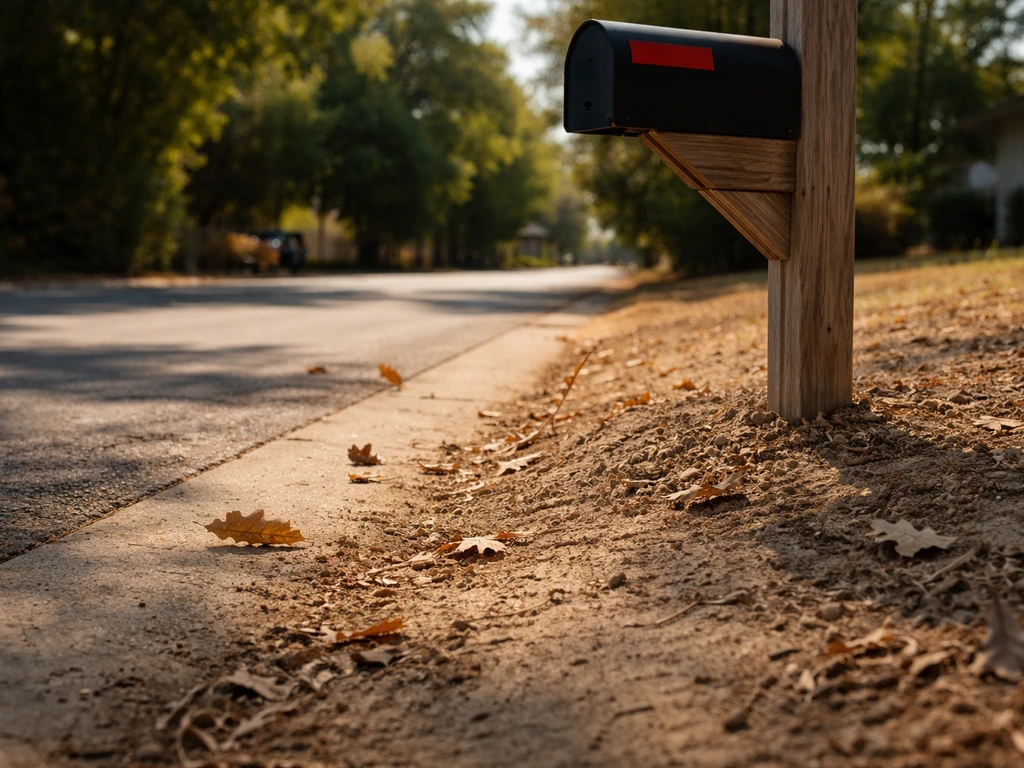
Most mailboxes sit at the street, which usually means full sun (6+ hours a day) with little shelter from wind. That combination dries soil out faster than you'd expect, especially in summer. Note which direction your mailbox faces, a south or west-facing bed will be noticeably hotter and drier than one that gets afternoon shade from a tree or the house.
Soil and drainage
Soil near driveways and road edges tends to be compacted, rocky, or backfilled with construction debris. Do a quick percolation test before planting: dig a hole about 12 inches deep, fill it with water, and time how long it takes to drain completely. If it drains slower than 1 inch per hour, you've got heavy clay or serious compaction and need to amend before planting. Drainage of 1 to 3 inches per hour is close to ideal for most garden plants. If it drains faster than that, your soil is sandy and you'll need to water more frequently and add organic matter to help retain moisture.
Road salt exposure
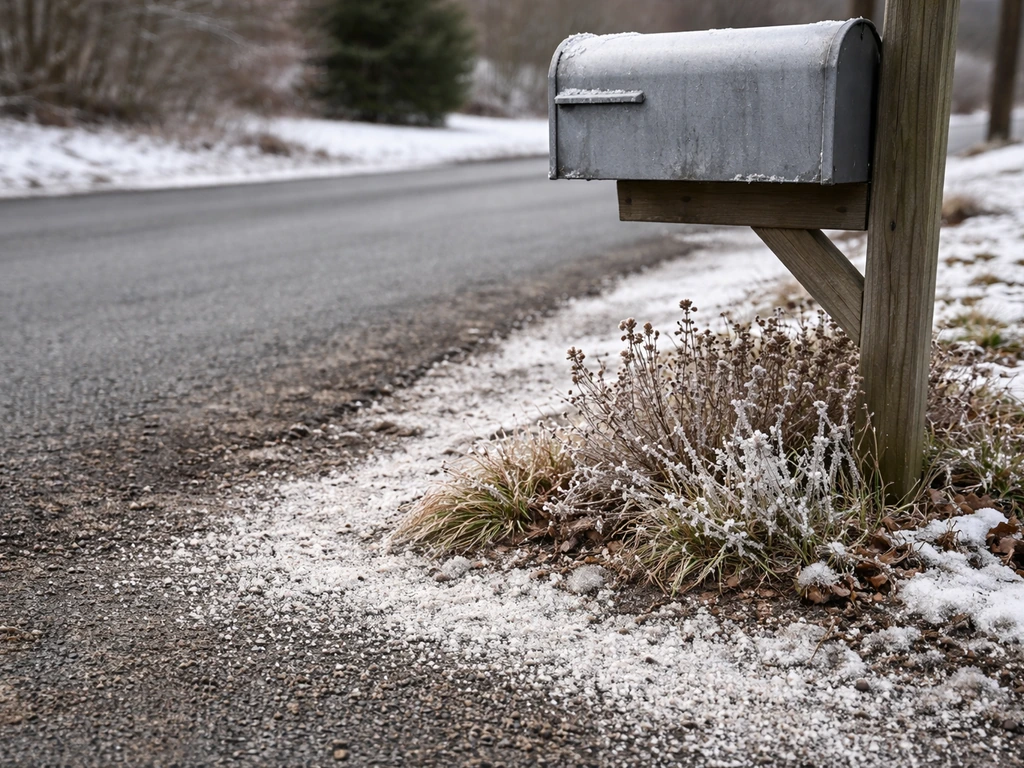
If you live anywhere that gets winter road salt, take this seriously. Salt spray from passing vehicles can travel hundreds of feet from the road and accumulates most on the road-facing side of your planting. It damages leaves, stems, roots, and buds, and it kills plants that aren't adapted to it. In high-salt areas, stick to salt-tolerant species (listed below) and consider a temporary burlap barrier on the road-facing side during winter.
Plant picks by what you actually want
Low-maintenance curb appeal
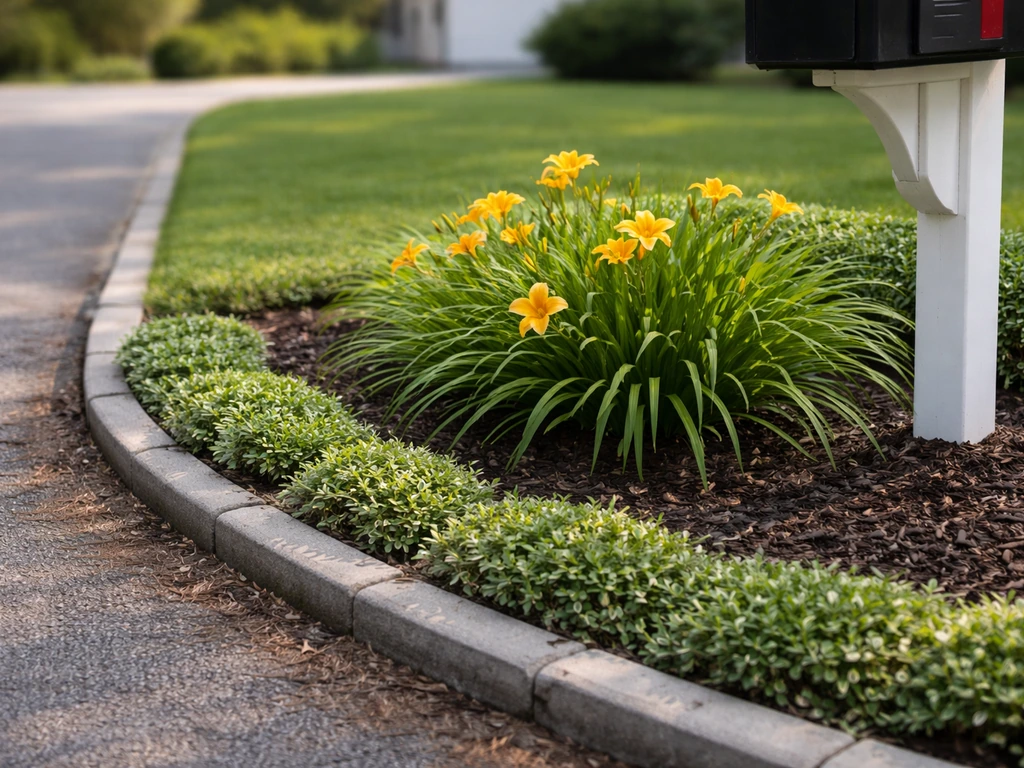
If your main goal is a tidy, attractive bed that practically takes care of itself, lean on tough perennials and a compact shrub or two. These reliably look great without much intervention:
- Daylilies (Hemerocallis): nearly indestructible, tolerate drought and partial shade, bloom mid-summer. Dwarf cultivars like 'Stella de Oro' stay around 12–18 inches tall — perfect for not overwhelming the mailbox.
- Black-eyed Susan (Rudbeckia fulgida): bright yellow-orange blooms from July through September, tolerates heat and drought, comes back reliably year after year. Stays 18–24 inches tall.
- Dwarf spirea (Spiraea japonica, compact cultivars like 'Little Princess' or 'Goldmound'): mounding shrubs that top out around 2–3 feet, covered in pink or yellow flowers in early summer, require almost no pruning to stay tidy.
- Creeping phlox (Phlox subulata): a low groundcover (under 6 inches) that explodes in spring color, then becomes a neat evergreen mat the rest of the year. Great for sloping edges and gravel areas.
- Lilyturf (Liriope muscari): grass-like groundcover that handles drought, part shade, and road-edge conditions better than almost anything. Stays 12–18 inches and produces purple flower spikes in late summer.
Pollinator and flower-forward plantings
If you want the bed to buzz with bees and butterflies and put on a real show, choose plants with long bloom windows and different bloom times so something is always going. The salt-tolerant perennials from Penn State Extension also happen to be excellent pollinator plants:
- Coreopsis (tickseed): blooms from late spring through fall if deadheaded, gold or yellow flowers, extremely drought-tolerant. Compact varieties stay under 18 inches.
- Blanket flower (Gaillardia): red-orange daisy-like flowers, heat-loving, blooms heavily through summer and into fall. Stays 12–18 inches in most cultivars.
- Yarrow (Achillea millefolium): flat-topped flower clusters from June through August, feathery foliage, tolerates poor dry soil, salt, and heat. Stays 18–24 inches.
- Butterfly weed (Asclepias tuberosa): a native milkweed with bright orange flowers beloved by monarchs. Deep taproot means it's drought-tough once established but slow to emerge in spring. Keep it toward the back since it can reach 24 inches.
- Salvia (compact varieties like 'Caradonna' or little-leaf sage): long bloom spikes, loved by bees and hummingbirds, handles heat and drought. Annual pruning keeps it tidy and compact around 18–24 inches.
- Summersweet 'Tom's Compact' (Clethra alnifolia): a compact shrub at 3–4 feet with fragrant white flowers in July–August that pollinators absolutely love. Handles moist or average soil and part shade.
A little more privacy or structure
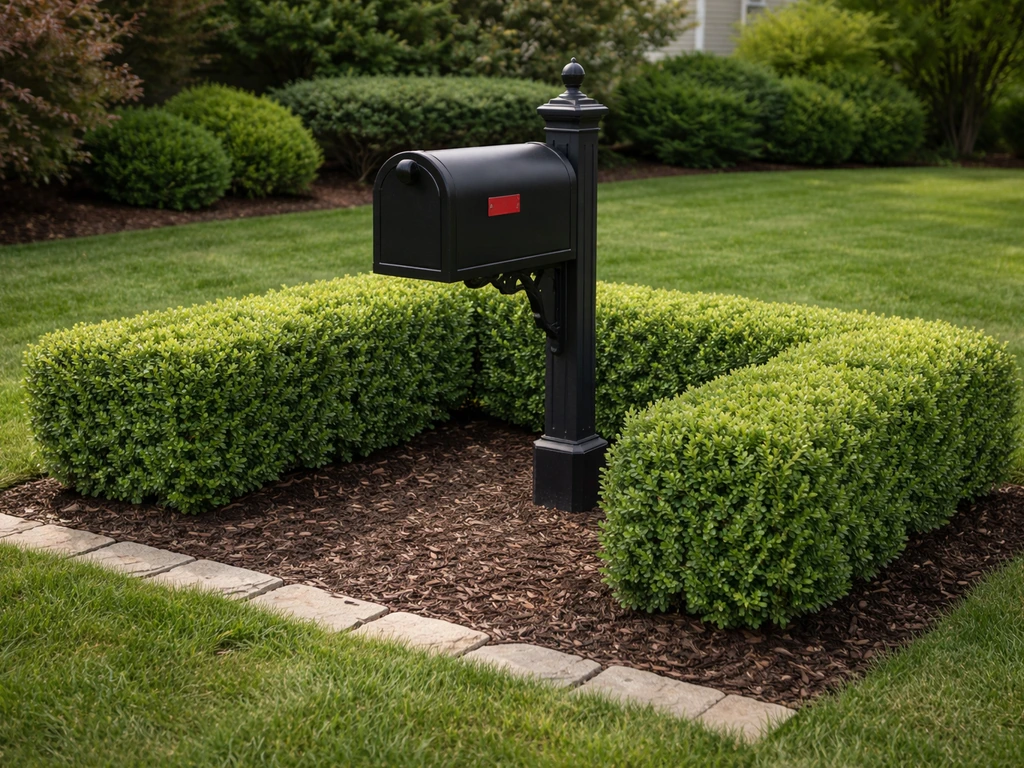
If you want the mailbox area to feel like a more defined garden feature rather than just a patch of flowers, a compact shrub as a backdrop adds a lot. Dwarf boxwood (Buxus 'Chicagoland Green' or 'Baby Gem') creates a tidy year-round structure but needs protection from salt spray. Knock Out roses are another strong pick, they're disease-resistant, rebloom all season, and stay manageable at 3–4 feet with light pruning. For something taller but still mailbox-appropriate, ornamental grasses like 'Karl Foerster' feather reed grass (3–4 feet in flower) add vertical interest without spreading aggressively. Just make sure any taller plants go behind the mailbox, not in front of it where they'd block carrier access.
Best picks by season and climate
Your USDA Hardiness Zone tells you what survives winter, but the full picture at a mailbox includes wind, sun, salt exposure, and soil type, so zone alone isn't the whole story. USDA ARS also emphasizes that wind, soil type, soil moisture, humidity, pollution, snow, and winter sunshine can strongly influence whether plants survive, which is why hardiness zones alone do not capture mailbox microclimates wind, soil moisture, humidity, pollution, snow, and winter sunshine. Here's how to think about plant choices by where you live:
| Climate/Region | Best perennials | Best compact shrubs | Notes |
|---|---|---|---|
| Cold climates (Zones 4–5, upper Midwest, New England) | Coreopsis, black-eyed Susan, daylily, creeping phlox | Dwarf spirea, Clethra 'Tom's Compact', Knock Out rose | Prioritize salt tolerance; protect road-facing side with burlap in winter |
| Moderate climates (Zones 6–7, mid-Atlantic, Pacific NW, parts of the South) | Blanket flower, salvia, yarrow, lilyturf | Dwarf boxwood, spirea, ornamental grasses | Wide range of options; focus on drought tolerance for summer heat |
| Hot and dry climates (Zones 8–10, Southwest, Texas, California) | Butterfly weed, yarrow, drought-tolerant salvia, agapanthus | Rosemary (as shrub), dwarf crape myrtle, rockrose | Drought tolerance is the top priority; avoid plants needing regular water |
| Humid South (Zones 8–9, Gulf Coast, Southeast) | Daylily, blanket flower, liriope, muhly grass | Knock Out rose, dwarf gardenia, compact loropetalum | Heat and humidity tolerance matters; watch for fungal issues in overcrowded plantings |
For spring planting (which is ideal in most zones), get perennials in the ground 4–6 weeks before your region's summer heat peaks so they have time to establish roots. Fall planting works equally well for shrubs and perennials in Zones 5 and warmer, cooler temps and fall rains help root establishment before winter. In Zones 4 and colder, spring is safer for most plants. Container planting gives you flexibility to delay until conditions improve, and it's a great option if you're uncertain about soil drainage or want to test a look before committing.
How to design the bed without creating problems
The single most important rule: keep the carrier's path clear. USPS requires an unobstructed approach to the mailbox, whether it's street-side or mounted on your house. That means no plants creeping across the path, no tall shrubs blocking visibility from the street, and no anything that makes it awkward to reach the box and pull mail out cleanly. Keep the front and sides of the mailbox clear and plant behind and to the sides.
Spacing and layers
Work in layers: a taller background element (a compact shrub or ornamental grass, 3–4 feet), medium-height perennials in the middle (18–24 inches), and a low groundcover or edging plant at the front (under 12 inches). This gives depth and looks intentional even when it's a small bed. For a typical mailbox post bed, you're usually working with a footprint of about 4 feet wide and 3–4 feet deep, enough for one compact shrub, two or three mid-height perennials, and a front edging plant.
Controlling spread
Some plants spread aggressively once established. Yarrow and blanket flower can self-seed; daylilies spread by root clumps. This isn't a problem unless your bed is tiny or directly adjacent to a path. Installing a simple plastic or metal edging strip around the bed perimeter keeps creepers in check without ongoing effort. Avoid mint, common goldenrod, or running bamboo anywhere near a mailbox, they'll take over the surrounding area within a couple of seasons.
How to prep and plant the bed
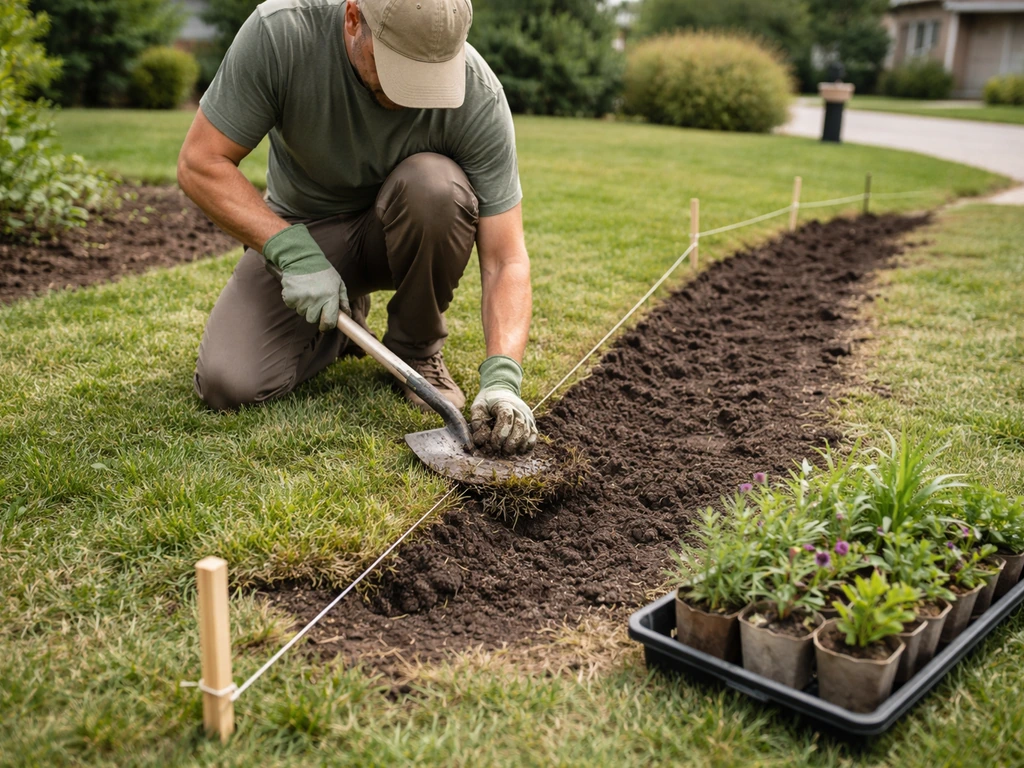
- Mark out your bed boundaries and remove existing grass or weeds. A flat spade works well for sod removal. If the area is heavily compacted, loosen the soil 8–12 inches deep with a fork or tiller.
- Do the drainage test described earlier. If drainage is under 1 inch per hour, mix in 2–4 inches of compost to improve structure and drainage. Sandy soils benefit from compost too — it helps retain moisture.
- Install edging around the perimeter. Metal edging stays in place longest; plastic is cheaper and easier to install. This keeps mulch in and grass out.
- Plant your tallest element first (the shrub or background grass), positioning it at the rear or side of the bed — not in front of the mailbox opening. Leave room for mature spread: read the plant tag and give it the full recommended spacing.
- Add your mid-height perennials, spacing them according to their mature width. Most 18–24 inch perennials need about 18 inches of spacing center to center. They'll fill in within a season or two.
- Plant groundcovers or edging plants at the front, 8–12 inches apart for most species.
- Water everything in thoroughly right after planting, then apply 3 inches of mulch (shredded hardwood or bark chips work well) across the entire bed. Keep mulch 2–3 inches away from plant stems and the mailbox post to prevent rot.
- For the first two weeks, check soil moisture daily and water deeply if the top 6 inches are dry. After that, water weekly during the first growing season whenever rain doesn't do the job. Newly planted shrubs can use water roughly equal to one-quarter to one-third the volume of their original nursery container per watering session.
Year-round care without it becoming a part-time job
Once established (usually after the first full growing season), the plants on this list are genuinely low-maintenance. If you want a different growing method with excellent drainage control, the best plants to grow in leca can be a great option for exposed spots. Here's what a realistic care calendar looks like: When watering newly planted shrubs, UMN Extension recommends applying enough water to soak about blank" rel="noopener noreferrer">one-quarter to one-third of the volume of the purchased container, supporting proper establishment as roots expand over time.
- Spring: Cut back ornamental grasses and dead perennial stems from last year to about 3–4 inches. Divide overcrowded clumps of daylilies or coreopsis every 3–4 years to keep them vigorous. Top up mulch to maintain a 3-inch layer.
- Early summer: Deadhead coreopsis, blanket flower, and salvia to extend blooming. This takes 10 minutes every couple of weeks and dramatically increases how long they flower.
- Late summer/fall: Let seed heads on black-eyed Susan and butterfly weed stand — birds eat the seeds and it reduces the need to replant. Cut back spent flower stalks on other perennials after they brown.
- Winter (cold climates): Apply a loose layer of straw or extra mulch around marginally hardy plants after the ground freezes. This isn't about warmth — it prevents freeze-thaw heaving that pushes shallow-rooted plants out of the ground. In salt zones, put up a burlap screen on the road-facing side of the bed by late November.
- Annual pruning: Compact shrubs like spirea and Knock Out roses benefit from a hard cutback in early spring (down to about 6–12 inches). This keeps them from getting leggy and produces more flowers. Clethra and boxwood need lighter shaping — just trim after flowering to maintain size.
What to avoid and common mistakes that kill mailbox plantings
More mailbox gardens fail from bad plant choices than from neglect. Here's what gets people into trouble: If you're wondering what works best on chain link fencing, the same principles can help you choose strong, well-behaved plants for that tighter space best plants to grow on a chain link fence.
- Planting anything that gets taller than 3–4 feet directly in front of the mailbox. This obstructs the carrier's sightline and access, and if it blocks collection, you may get a complaint from your post office.
- Choosing plants without checking mature size. A rose or viburnum that says 'compact' on the tag can still hit 5–6 feet. Read the mature height spec on the plant label, not just the nursery size.
- Ignoring road salt in winter climates. Planting salt-sensitive shrubs like arborvitae or boxwood directly adjacent to the road in a Zone 5 or colder climate is a slow death sentence. Use salt-tolerant alternatives or protect them aggressively.
- Over-mulching. Piling mulch 5–6 inches deep smothers roots and restricts water flow. Stick to 3–4 inches maximum and keep it away from plant stems.
- Skipping edging. Without a border, grass and weeds invade from the lawn within weeks, and the bed looks messy year-round.
- Planting running or aggressive spreaders. Common mint, regular goldenrod, English ivy, and ornamental grasses with rhizomes (like ribbon grass) will spread beyond the bed and into your lawn or pathway within a season.
- Watering too shallowly after planting. Brief daily sprinkles encourage shallow root development. Deep, less-frequent watering (wetting the top 6 inches) builds deeper root systems that handle drought better.
- Attaching planters or decorations to the mailbox itself. USPS standards prohibit accessories that project beyond the front face of the mailbox or interfere with mail being pulled out cleanly. Keep decorative elements in the ground bed, not mounted on the box.
One last thing worth mentioning: the same principles that make a good mailbox garden, right-sized plants for a confined spot, tough enough for exposure, and designed not to block access, apply whenever you're planting along a boundary or structure. If you've also been thinking about what to grow along a fence line or between rocks in a similar exposed area, a lot of these same tough perennials and compact shrubs translate well to those situations too. If you're figuring out the best plant to grow on a fence, focus on options that handle sun, wind, and dry soil without growing too wide.
FAQ
What’s the safest plant height and placement so I don’t block the mail carrier’s approach?
If your mailbox is on a corner or near a driveway, prioritize plants that stay low on the road-facing edge (under 12 inches at maturity) and place everything taller behind the post. Use edging to prevent runners from creeping toward the approach lane, and avoid any plant that produces long canes or arching stems that can fall into the path after windstorms.
Do salt-tolerant plants still need extra protection near the road?
Even salt-tolerant plants can struggle if they are planted too close to the curb where salt spray is strongest. Leave extra space on the road-facing side and consider a temporary burlap windbreak during the coldest months. Also rinse leaves with clean water after heavy salt events when temperatures allow, since salt residue can build up on foliage.
How do I decide how many plants to use in a small mailbox bed?
Choose one “anchor” plant for the back (compact shrub or upright grass) and then match the rest to your desired maintenance level. For example, add low groundcover only where you can see it clearly, since it will require the most attention if it starts spreading into areas you want to keep clear.
What should I do if my mailbox area has poor drainage but I still want to plant perennials?
If your percolation test shows very slow drainage, don’t skip soil amendment. Improve the top 10 to 12 inches with compost and, if compaction is severe, regrade slightly so water moves away from the base of the plants. You can also plant in raised mounds behind the front edging to keep crown rot risk lower in winter.
Can I start plants in containers first, and what’s the best time to transplant?
Yes, but timing matters. In most climates, spring planting helps perennials establish before harsh summer heat, while fall planting can work for many shrubs in Zones 5 and warmer. If you use containers first, keep them watered regularly the first season, then transplant when roots are established and the soil is workable.
What’s the simplest way to stop aggressive spread in a mailbox bed?
A simple edging strip works best when it extends fully around the bed and is installed before plants get large, so roots and runners meet a barrier early. For narrow mailbox footprints, consider shorter edging segments with a tight join so gaps don’t become escape routes for creeping plants.
How can I tell what’s going wrong if my mailbox plants don’t thrive?
Look for problems that correlate with the conditions you identified: leaf burn and browning on the road-facing side (salt or wind), persistent wilting in full sun (dry soil), and patchy growth near compacted driveway edges. Corrective action usually means relocating marginal plants farther from the salt side, amending soil where drainage is slow, and adding a thicker mulch layer at the right depth.
What if I need low maintenance, but the mailbox bed is near a sidewalk or entry path?
If your mailbox is close to a walkway, keep groundcover in the bed interior and use a lower, non-creeping edging at the border instead. Avoid plants that form dense clumps that snag shoes, and maintain a clear 1 to 2 foot buffer on the side where you most often step while reaching for mail.
How do I create a natural-looking design without adding more work?
For a more natural look, repeat the same 1 or 2 species in small drifts rather than mixing many single specimens. This also makes care easier because watering and bloom timing are aligned, and you can more confidently manage salt exposure and spread in one plant type at a time.
Next Article
Best Plants to Grow Up an Obelisk: Top Picks by Season
Season-by-season picks and step-by-step training tips for the best plants to grow on an obelisk in containers or garden
