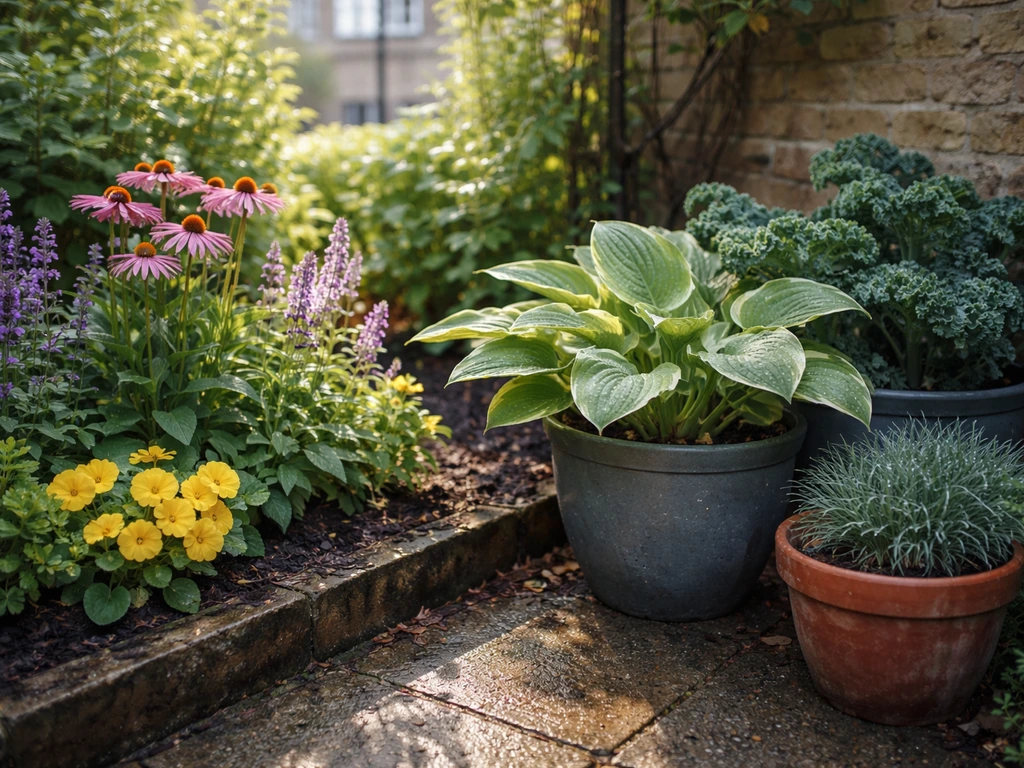
The best plants to grow in a home garden depend almost entirely on your goal, your space, and your season. For food, you rarely go wrong starting with cherry tomatoes, cut-and-come-again lettuce, courgettes, and a pot of basil. For colour and pollinators, lavender, echinacea, and hardy geraniums do the heavy lifting with minimal fuss. For medicine or the kitchen apothecary, thyme, chamomile, and lemon balm are nearly indestructible. But the real skill is matching plant to place, and that's what this guide does: it walks you through a decision framework, then gives curated lists with specific cultivars, planting timings, container sizes, and honest notes on what actually works in temperate and urban gardens.
Best Plants to Grow in Home Garden: Top Picks & How-To
Rachel Hartley
30 Jul 2026
How to decide what to grow: a 5-step checklist
Before you buy a single seed packet, run through these five filters. Skipping them is why most gardeners end up with a glut of something they don't eat and a failure with something they actually wanted. Each step narrows the list and makes the rest of the article much more useful.
Step 1: What's your goal?
Are you growing for food, for beauty, for wildlife, or to make a corner of a balcony feel green? Your goal determines almost every other choice. Food growers need to think about yield per square metre and days to harvest. Ornamental growers need to think about seasonal colour and repeat performance. Wildlife gardeners need nectar-rich and seed-bearing species. Being honest about your actual goal saves enormous effort.
Step 2: How much space do you have?
Space isn't just floor area. It's vertical room, light exposure, and access to water. A south-facing 1m x 2m raised bed gets more usable growing hours than a shaded 10m border. Measure your space, note which direction it faces, and clock how many hours of direct sun it gets in midsummer. Six or more hours of direct sun is the threshold for most fruiting vegetables; leafy crops and herbs tolerate three to four hours.
Step 3: What's your season right now?
This article is being read in late July 2026. In London and temperate UK gardens, that means the main sowing window for warm-season crops like tomatoes and courgettes has passed, but there's a prime opportunity for successional salad sowings, French beans for a late harvest, and starting brassicas and oriental greens for autumn. In hotter climates like southern Spain or Texas, late July is often a pause before a second growing season begins in August or September. Know your last spring frost date and your first autumn frost date. For sheltered London locations, the last spring frost is typically in late March to mid-April; the first autumn frost usually arrives in October or November. Met Office 1991–2020 location-specific long‑term averages for Northolt (London) report monthly minimum temperatures and days of air frost, supporting that last spring frosts in sheltered London often occur in late March–mid‑April (Northolt Location-specific long-term averages - Met Office).
Step 4: How much time can you commit?
Some plants are high-maintenance (cordon tomatoes need weekly side-shooting, feeding, and tying in). Others are almost self-sufficient (thyme, perennial kale, established rhubarb). If you can only garden at weekends, build your list around plants that tolerate a few days of neglect. Courgettes and chard are forgiving. Basil and seedlings in small pots are not.
Step 5: What's your skill level and tolerance for failure?
Beginners get the fastest wins from cut-and-come-again salads, radishes, courgettes, and herbs like mint, chives, and thyme. Intermediate growers can take on cordon tomatoes, climbing beans, and overwintering brassicas. Advanced growers who want a challenge can try melons, artichokes from seed, or grafted aubergines outdoors. Starting with easy wins builds confidence and gives you a productive garden while you learn. There's no shame in growing mostly lettuce in year one.
The decision flow in brief
- Set your goal: food, beauty, wildlife, or a mix.
- Measure your space and log your daily sun hours.
- Find your current season and nearest frost dates.
- Be honest about the time you can spend each week.
- Match your skill level to the plants' demands, then use the sections below to build your list.
Best plants for food: vegetables, fruit and culinary herbs
Food growing is where most home gardeners start, and rightly so. The return on a small productive patch in terms of freshness, flavour, and cost per harvest is genuinely hard to beat. Below are the most reliable and rewarding choices for a temperate UK garden, with specific cultivars that have a track record of performing well.
Tomatoes
'Gardener's Delight' is probably the single most proven tomato for UK home gardens. It holds an RHS Award of Garden Merit, produces long trusses of flavour-packed cherry fruits, and copes well with the variable UK summer. Transplant spacing is 60 cm. It grows as a cordon to 1 to 1.5 m and suits both greenhouse growing and sheltered outdoor spots in London and the South-East. The RHS has been running small-fruited tomato trials at multiple gardens (ongoing in 2026), and 'Gardener's Delight' continues to be a benchmark for flavour and yield. Sow indoors in late March, transplant after the last frost risk has passed (mid to late May in London), and expect first fruits in July or August. Other strong picks include 'Sweet Million' (very disease-tolerant cherry), 'Tigerella' (striking striped fruits, good outdoor flavour), and 'Tumbling Tom Red' (a compact cascading variety perfect for hanging baskets and small pots).
Courgettes and squash
'Black Beauty' courgette is the classic, producing dark-skinned fruits over a long season from July onward. 'Patio Star' is a compact bush type suited to larger containers and small beds. Sow courgettes direct outside after the last frost or start them indoors in April for a head start. One or two plants is usually enough for a family unless you really like courgette. For smaller spaces, 'Sunburst' patty pan squash takes up less lateral room and is equally productive. The main failure mode is planting out too early into cold soil, which stunts growth. Wait until the soil temperature is at least 12°C.
Salad leaves and cut-and-come-again crops
Cut-and-come-again salad mixes are the single best crop for beginners. Sow a short row or a container every two to three weeks from March through August for continuous harvests. 'Salad Bowl' (red and green forms) and 'Lollo Rossa' lettuce are heat-tolerant and slow to bolt. For a mix, 'Saladisi' from Thompson and Morgan gives a ready-blended cut-and-come-again combination with high germination rates. Rocket (Eruca sativa) germinates in days and is ready to cut in under four weeks. Oriental leaves such as 'Mizuna' and 'Red Giant' mustard extend the season into autumn and early winter in sheltered spots. In hot spells, loose-leaf types outperform headed lettuces, which bolt quickly.
Climbing and dwarf beans
French beans and runner beans are high-value crops for the space they occupy. 'Cobra' French bean (climbing) is a long-season, prolific producer with AGM recognition. 'Hestia' runner bean is a dwarf, container-suitable variety bred specifically for small spaces. Sow beans direct outside in late May to early June once soil is warm, or start in pots indoors from mid-May. Keep picking regularly or production slows down. The main pest is black bean aphid, which can be dealt with by pinching out the soft growing tip once the plant is established, which removes the preferred feeding site.
Brassicas
'Cavolo Nero' (Tuscan kale) is one of the most productive and low-maintenance brassicas for temperate gardens. Sow in June or July for an autumn and winter harvest that runs all the way through to February or March. It tolerates hard frosts and actually improves in flavour after cold. 'Red Russian' kale is slightly more tender but similarly prolific and prettier in the garden. For quick brassica satisfaction, 'Napoli' or 'Pixie' calabrese gives heads in around 60 to 70 days from transplant. The main pest problem is cabbage white butterfly caterpillar, and the only reliable defence is fine mesh netting over the plants from the moment they go in. No amount of companion planting fully replaces a physical barrier for brassicas.
Soft fruit
Strawberries are the most accessible soft fruit for home gardens and containers. 'Elsanta' is the supermarket standard, but 'Mara des Bois' has far superior flavour and produces over a long season from June to October. 'Honeoye' is an early, heavy-cropping variety good for cooler gardens. Alpine strawberries ('Alexandria') will produce tiny, intensely sweet fruits in partial shade, making them useful for edging shaded borders. Raspberries like 'Autumn Bliss' (autumn-fruiting, AGM) are excellent for low-effort fruit production: prune all canes to the ground in February, and the plant does the rest. 'Malling Jewel' is a reliable summer variety with AGM standing.
Culinary herbs for the kitchen
The most used culinary herbs, roughly in order of kitchen usefulness, are basil, flat-leaf parsley, thyme, rosemary, chives, and coriander. Basil ('Genovese' for classic Italian flavour, 'Thai Basil' for Asian dishes) is the most demanding, needing warmth, full sun, and protection from cold. Parsley 'Gigante d'Italia' germinates slowly but produces large, productive plants. Thyme 'Silver Posie' and common thyme (Thymus vulgaris) are hardy and largely maintenance-free once established. Coriander runs to seed quickly in heat; sow it in spring and autumn rather than midsummer, or choose the bolt-resistant 'Calypso' variety.
Best plants for medicinal and kitchen herbs
Medicinal and wellness herbs overlap heavily with culinary ones, but this category includes some plants grown primarily for their therapeutic or aromatic properties. All the picks below are straightforward to grow in UK temperate conditions, hardy enough to survive winter outdoors, and genuinely useful.
| Herb | Best Cultivar | Primary Use | Growing Notes |
|---|---|---|---|
| Lavender | Lavandula angustifolia 'Hidcote' | Relaxation, sleep, skin | Full sun, well-drained soil, prune after flowering. Hardy to -15°C. AGM. |
| Chamomile | Matricaria chamomilla (German) | Sleep, digestion, skin | Sow direct in spring. Self-seeds freely. Harvest flowers at full open. |
| Lemon balm | Melissa officinalis 'Aurea' | Anxiety, digestion, flavouring | Semi-shade tolerant. Can spread; grow in a pot to contain it. |
| Echinacea | Echinacea purpurea 'Magnus' | Immune support, pollinators | Full sun, well-drained. Perennial; takes 2 years to reach full flowering. |
| Mint | Mentha x piperita (peppermint) | Digestion, flavouring, repellent | Invasive; always grow in a container. Tolerates semi-shade. |
| Calendula | Calendula officinalis 'Indian Prince' | Skin healing, anti-inflammatory | Direct sow in spring or autumn. Easy annual, self-seeds freely. |
| St John's Wort | Hypericum perforatum | Mood, nerve tonic | Full sun to part shade. Hardy perennial. Check interactions before use. |
| Thyme | Thymus vulgaris | Respiratory, antimicrobial, culinary | Full sun, gritty soil, drought-tolerant once established. Hardy. |
A few practical notes on growing these. Lemon balm and mint are enthusiastic spreaders; containing them in pots sunk into the ground is the standard fix. Calendula is one of the most useful plants in any home garden: it self-seeds, provides continuous colour from May through October, attracts hoverflies and bees, and its petals are anti-inflammatory in topical preparations. German chamomile (Matricaria chamomilla) is distinct from Roman chamomile (Chamaemelum nobile), which is a perennial lawn substitute but less potent for teas. For medicinal use, harvest chamomile flowers when they are fully open on a dry day, and dry them quickly at low heat to preserve the active compounds.
Best ornamentals, pollinator-friendly and wildlife plants
If your goal is a beautiful garden that also supports bees, butterflies, and birds, the two objectives align more than most people realise. Many of the most attractive perennials are also the most wildlife-friendly. The key principle is to choose plants with accessible flower structures: complex double flowers that look spectacular often have little accessible pollen or nectar. Native and near-native species consistently outperform exotics for UK wildlife.
Perennials for pollinators
- Lavandula angustifolia 'Hidcote': compact, intensely fragrant, one of the top-rated plants for bumblebees. Place at front of a sunny border or in a terracotta pot.
- Echinacea purpurea 'Magnus': large, flat-petalled daisies that are easy for bees to access. Goldfinches eat the seed heads in autumn if you leave them standing.
- Salvia nemorosa 'Caradonna': deep purple spikes from May through July, beloved by bumblebees. Cut back hard after first flowering for a second flush.
- Agastache 'Blue Fortune': anise-scented, long-flowering, very attractive to honeybees and bumblebees. Tolerates drought once established.
- Verbena bonariensis: tall, airy structure with tiny purple flowers that last from July to October. Self-seeds prolifically; cut back the previous year's stems in March.
- Nepeta 'Six Hills Giant' (catmint): ground-covering, pale blue flowers loved by bees. Trim back by half after the first flowering to get a second flush.
Annuals and biennials for colour and wildlife
- Calendula officinalis: direct sow any time from March to September. Provides colour and supports hoverflies that predate aphids.
- Borage (Borago officinalis): self-seeds freely, flowers from June onward. One of the highest nectar-producing plants you can grow and edible too.
- Sweet peas (Lathyrus odoratus 'Matucana'): fragrant, attracts bumblebees. Train on a wigwam of canes in a border or large container.
- Sunflower 'Russian Giant' or 'Velvet Queen': sow direct after frosts. Provides seeds for finches in autumn; plant at the back of a border.
- Foxglove (Digitalis purpurea): biennial, sow in June for flowers the following year. Essential for long-tongued bumblebees.
Shrubs and climbers for structure and wildlife
Buddleja davidii 'Black Knight' is the classic butterfly bush, but it can become invasive; deadhead promptly and consider the sterile cultivar 'Buzz Midnight' for smaller spaces. Lonicera periclymenum 'Serotina' (late Dutch honeysuckle) is an excellent native-origin climber for fences and arches, scented in the evening and popular with moths and long-tongued bumblebees. For berries and winter bird food, Cotoneaster horizontalis is nearly indestructible and produces masses of red berries; it can be trained flat against a north-facing wall, making it useful in challenging spots.
Best plants for raised beds
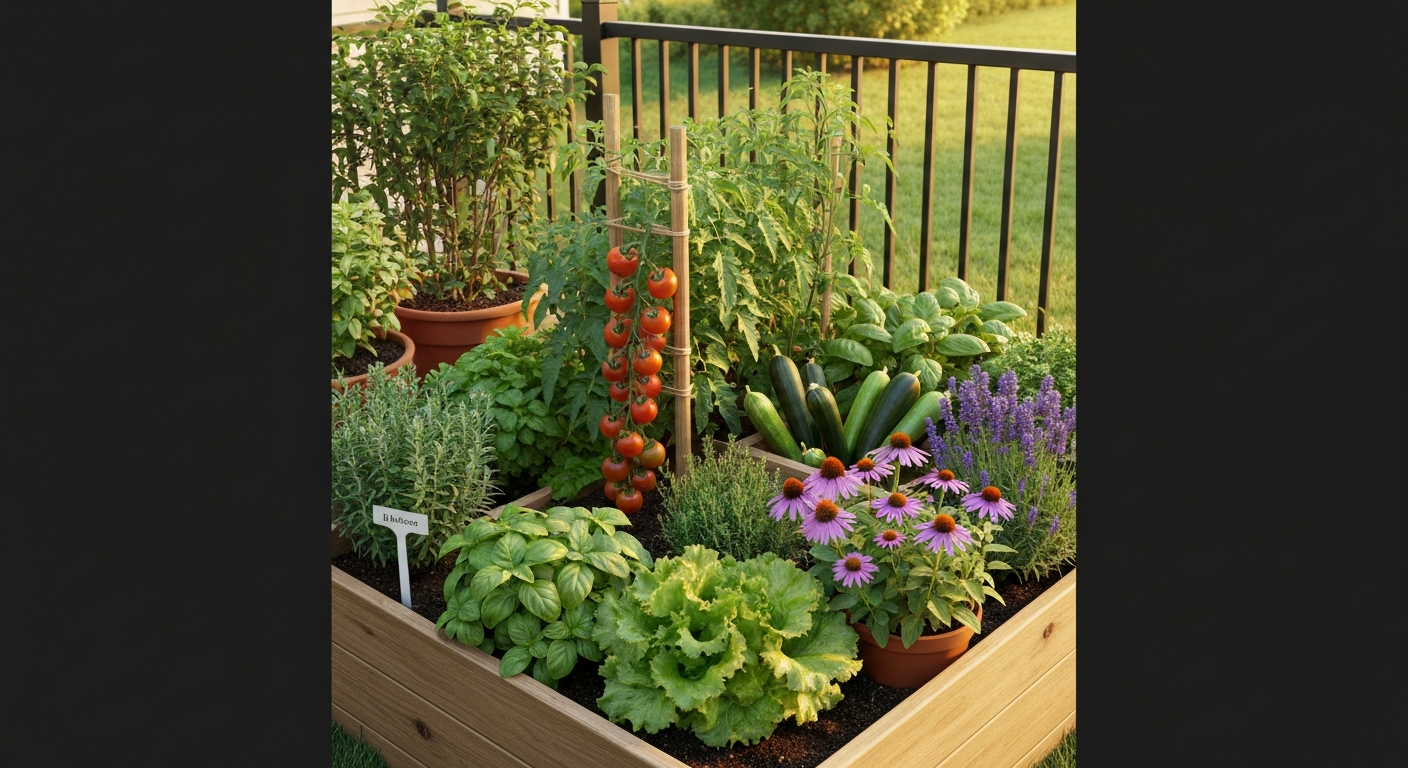
Raised beds change the game for home food production. Improved drainage, warmer soil in spring, and the ability to fill with quality growing medium mean you can grow almost any vegetable without worrying about your native soil type. The key decisions are bed depth, fill material, and timing.
Sizing and depth
Aim for a width of no more than 1.2 m so you can reach the centre from either side without stepping in. Length is flexible. Depth is where most beginners under-invest. Shallow leafy crops and herbs need a minimum of 15 to 20 cm of growing medium. Most vegetables including tomatoes, peppers, courgettes, and climbing beans need at least 25 to 30 cm. Root crops like parsnips and long-rooted carrots ('Autumn King 2') benefit from 35 to 45 cm. If you're building on a hard surface like a patio, use at least 30 cm of quality mix. Deeper beds hold moisture better and allow deeper root systems, which means more drought resilience and higher yields.
Substrate for raised beds
The standard approach is to fill with a blend of topsoil (around 50%), garden compost or well-rotted manure (around 30%), and a drainage amendment such as horticultural grit or perlite (around 20%). Avoid using heavy clay subsoil or builders' sand. For a peat-free system (which is increasingly standard in the UK), replace any peat-based compost with coir-based compost or a bark and wood-fibre blend. Refreshing the top 5 to 10 cm with fresh compost each spring replaces nutrients removed by the previous year's crops and maintains the loose, open structure that raised beds are known for.
Recommended crops and planting timings
| Crop | Cultivar | Sow/Plant (London/temperate) | Harvest Window | Notes |
|---|---|---|---|---|
| Tomato (cordon) | 'Gardener's Delight' | Sow March indoors; transplant late May | July–October | 60 cm spacing; needs side-shooting weekly |
| Courgette | 'Black Beauty' | Sow April indoors or May direct | July–September | 1 plant per 60 cm sq; very productive |
| Climbing French bean | 'Cobra' | Direct sow late May–June | July–September | Support with 1.8 m canes; keep picked |
| Calabrese | 'Ironman F1' | Sow April–May; transplant May–June | July–September | Plant through mesh to deter cabbage white |
| Kale | 'Cavolo Nero' | Sow June–July; transplant July–August | October–March | Very hardy; pick outer leaves first |
| Carrot | 'Autumn King 2' | Sow direct March–June | August–November | 35+ cm depth; thin to 5–8 cm |
| Beetroot | 'Boltardy' | Sow direct March–July | June–October | Bolt-resistant; cluster sow 10 cm apart |
| Salad mix | 'Saladisi' or 'Salad Bowl' | Sow March–August every 2–3 weeks | Year-round (under fleece in winter) | Cut 2–3 cm above base; leave to regrow |
Succession planting is the single most effective technique for maintaining productivity in a raised bed. As soon as one crop finishes, pull it and replant. When the last of your summer tomatoes come out in October, that's space for overwintering spinach or a green manure like field beans that fixes nitrogen and improves the bed for spring. If you're planning raised beds for the first time, the guidance on best plants to grow in raised beds goes into more detail on bed design and multi-season planting schedules.
Companion planting and pest management in raised beds
Companion planting in raised beds is genuinely useful as one layer of an integrated approach, but keep expectations realistic. A UK glasshouse trial (published in PLOS ONE) demonstrated that French marigolds (Tagetes patula) reduced glasshouse whitefly on tomatoes via volatile compounds including limonene, and this is a well-supported pairing. Plant Tagetes 'Disco Orange' at the base of tomato plants and around the edges of your bed. However, companion planting alone won't solve a heavy aphid infestation; it works best as a preventive measure combined with regular monitoring and physical removal of pests. Check the undersides of leaves weekly. Encourage natural predators by growing nectar plants nearby: calendula, phacelia, and sweet alyssum all attract hoverflies and parasitic wasps.
Best plants for garden boxes and small beds
Garden boxes (typically 60 to 120 cm long, 30 to 60 cm wide) require compact cultivars and an emphasis on crops with high yield per square centimetre. The same principles apply to narrow border beds against a fence or house wall. The key is to think vertically and to grow crops that mature quickly enough to allow two or three successions per season. For specific recommendations and compact cultivar lists, see our guide to best plants to grow in garden box.
Best compact cultivars for garden boxes
- Tomato 'Tumbling Tom Red' or 'Tumbling Tom Yellow': cascading habit, no side-shooting required. Ideal for deep window boxes and the front edge of a garden box.
- Lettuce 'Little Gem': compact, upright cos type that takes up only 15 cm of space per plant. Sow successionally every three weeks from March to August.
- Radish 'French Breakfast 3': ready in 25 to 30 days from sowing, making it the fastest edible crop you can grow. Use it to fill gaps between slower crops.
- Beetroot 'Red Ace F1': compact root with excellent flavour; sow in clusters and thin to 10 cm apart for roots, or leave unthinned for baby beet leaves.
- Dwarf French bean 'Speedy': bush habit, no support needed, produces beans in around 50 days. Ideal for a 30 cm deep garden box.
- Spring onion 'White Lisbon': sow direct in short rows every three weeks from March to August. Ready in six to eight weeks; extremely space-efficient.
- Chard 'Bright Lights': ornamental and edible; colourful stems add visual interest and you can pick outer leaves continuously for months.
- Basil 'Genovese' (pot-grown): a 15 cm pot on a sunny windowsill or in a warm garden box provides steady kitchen harvests through summer.
Spacing and quick timelines
The rule with garden boxes is to plant more densely than standard seed-packet spacing suggests, because you're harvesting frequently rather than waiting for full maturity. Lettuce can go in at 10 to 12 cm for cut-and-come-again rather than the 30 cm recommended for hearted types. Radishes slot into every 3 cm gap. Herbs like chives, parsley, and thyme can share a 30 cm square area happily. What kills garden boxes is neglect during a hot week: small volumes of growing medium dry out fast. Check moisture daily in summer and consider a layer of 2 cm of compost mulch to slow evaporation.
Best plants for containers, balcony gardens and urban settings
Container gardening is where urban and balcony growers get to compete directly with garden owners, and modern container culture is genuinely capable of producing serious amounts of food and beauty from a small footprint. The main constraints to work around are container volume (which determines root space and water-holding capacity), substrate quality, and the intensity of sun exposure on reflective urban surfaces.
Container sizing guide
| Crop / Plant | Minimum Container Size | Preferred Size | Notes |
|---|---|---|---|
| Herbs (basil, chives, parsley) | 1–2 L | 3–5 L | Group herb pots close together to retain humidity |
| Lettuce / salad mix | 5 L | 8–10 L | Use shallow troughs for cut-and-come-again |
| Radishes / spring onions | 5 L (20 cm depth) | 8 L | Quick turnaround; ideal for succession planting |
| Dwarf French beans ('Hestia') | 10 L | 15 L | One plant per 15 L; minimal support needed |
| Tomato (bush/compact: 'Tumbling Tom') | 10 L | 15 L | Trailing type; no side-shooting needed |
| Tomato (cordon: 'Gardener's Delight') | 15–19 L | 20–25 L | One plant per pot; stake firmly; weekly feeding |
| Pepper / chilli ('Apache') | 10 L | 15 L | Compact and heavy cropping; very container-suited |
| Strawberry | 5–8 L per plant | 1 × 30 cm hanging basket | 5 plants in a 30 cm basket works well |
| Courgette (compact: 'Patio Star') | 30–40 L | 40+ L | Needs large volume; water daily in warm weather |
| Lavender / ornamental herbs | 5–10 L | 10–15 L | Excellent drainage essential; terracotta ideal |
Substrate and watering for containers
Standard garden soil is unsuitable for containers; it compacts, drains poorly, and rapidly becomes waterlogged. Use a purpose-mixed substrate built from three functional elements: a moisture-retentive base (coconut coir or peat-free compost), a drainage and aeration component (perlite or horticultural grit at around 20 to 25% of the mix volume), and organic fertility (well-rotted compost or slow-release organic fertiliser). In the UK, the major suppliers including RHS, Thompson and Morgan, and Westland now stock peat-free container mixes as standard, and most perform well for both edibles and ornamentals. For fruiting vegetables in containers, start liquid feeding with a balanced feed once the first flowers appear, then switch to a high-potash tomato feed weekly through the cropping period.
The most common failure mode in container gardening is underwatering, and it happens faster than most people expect. A 15 L container in full sun in July needs watering daily, sometimes twice. Stick your finger 2 cm into the compost: if it's dry at that depth, water thoroughly until it drains from the bottom. Self-watering containers with reservoirs are genuinely useful for busy urban gardeners and dramatically reduce the risk of drought stress. For balcony gardens where weight is a concern, replace perlite with vermiculite (lighter) and choose fabric grow bags rather than ceramic or stone pots.
Urban-specific considerations
Cities run several degrees warmer than surrounding countryside (the urban heat island effect), which is a genuine advantage for growing heat-loving crops. London balconies can reliably ripen outdoor tomatoes and chillies that would struggle in rural Hertfordshire. Reflected heat from masonry walls creates microclimates where Mediterranean herbs (rosemary, thyme, sage, oregano) thrive with almost no care. The flip side is that urban pollution and limited soil depth can stress plants; keep up with feeding, choose compact disease-resistant cultivars, and monitor for pests more actively than you would in a ground-level garden. If you're looking at growing food in a city context specifically, there's more on that in resources covering what plants can people grow in cities. See the guide what plants can people grow in cities for detailed urban-specific plant lists and practical tips. For a broader overview of options and plant lists, see our guide on what plants to grow in garden. For a London-focused plant list and timing advice, see our guide to the best plants to grow in London.
Best plants for very small spaces and vertical gardening
A balcony, a courtyard, or even a well-lit internal wall can be genuinely productive with the right plants and training systems. Vertical growing multiplies your effective growing area without requiring any additional floor space, which matters enormously in flats and narrow gardens. For plant suggestions and layout ideas, see our guide on what plants grow in small spaces.
Dwarf and compact cultivars for tight spaces
- 'Tumbling Tom Red' tomato: genuinely compact at 30 to 40 cm, cascades over the edge of containers, no pruning or support needed.
- 'Hestia' runner bean: dwarf bush form reaching only 40 to 45 cm, produces red and white flowers and full-sized beans. Perfect for a 15 L pot on a balcony.
- 'Tom Thumb' lettuce: tiny, compact cos-type heading lettuce. Space 15 cm apart in a shallow trough and cut whole heads.
- 'Totem' tomato: bred specifically for container culture, stays under 60 cm, determinate habit so it sets and ripens all fruit at once.
- Strawberry 'Toscana' F1: compact, everbearing, produces red flowers and fruits continuously from May to October. Works in hanging baskets, wall planters, or stacked tower pots.
- Chilli 'Apache' F1: ultra-compact (40 to 50 cm), extremely prolific, and thrives in a 10 L pot. Overwintered indoors, it becomes a long-lived perennial.
- Spinach 'Medania': upright, bolt-resistant, and highly productive in shallow containers of 10 to 15 cm depth. Cut-and-come-again from March to June.
- Herbs collectively (thyme, chives, oregano, mint in separate pots): dense, low-growing, and ideal for filling the vertical tiers of a shelf or staircase planter.
Vertical training systems
The most practical vertical systems for home gardeners are wall-mounted planter pockets, tiered shelf units, trellis-trained climbing crops, and repurposed pallet frames. For balconies specifically, wall-mounted fabric pocket planters (typically 30 to 60 pockets per panel) are lightweight and allow you to grow herbs, strawberries, and salad leaves in a 1 to 2 m square wall space. The limitation is that individual pocket volume is small (often 1 to 2 L), so these work best for shallow-rooted crops and herbs rather than fruiting vegetables.
For trellis-trained crops, climbing French beans and sweet peas are the most productive choices for small-space vertical culture. A 1.8 m bamboo wigwam in a 40 L container will produce beans from three or four plants and effectively uses otherwise dead vertical space. Cucumbers can be trained up a trellis on a sunny south-facing wall and are more productive per square metre than any other fruiting crop in a warm UK summer. 'Spacemaster' cucumber is a compact bush form that suits smaller containers; 'Femspot F1' is an all-female, disease-resistant variety that performs extremely well outdoors in sheltered London gardens from late June through September.
Layout examples for balconies and courtyards
A typical 2 m x 3 m south-facing balcony can comfortably accommodate: two 20 L containers with cordon tomatoes or cucumbers trained up the balcony railing; one 40 L container with a courgette or three climbing beans on a wigwam; two 15 L containers with chillies or compact peppers; three 10 L pots with herbs (basil, thyme, chives); and one wall-mounted pocket planter running four to five tiers of salads and alpine strawberries. That's a functional kitchen garden on what most people would consider an unusable space. For small gardens more broadly, you'll find dedicated guidance on what plants grow in small spaces and best plants to grow in small gardens that goes deeper on design and layout.
Pests, problems and how to stay ahead of them
A practical integrated pest management approach for home gardens comes down to four actions: observe regularly, act early, prefer non-chemical solutions first, and keep the garden as diverse as possible. The UC IPM framework provides the standard model: monitor plants weekly, understand what threshold of damage is actually worth treating, use cultural controls (removing affected leaves, improving spacing to reduce humidity) and biological controls (encouraging predators) before reaching for any spray.
The most common problems and what to do
| Problem | Crops Affected | First Response | If It Persists |
|---|---|---|---|
| Aphids (blackfly, greenfly) | Beans, tomatoes, roses | Pinch out affected tips; blast with water; attract hoverflies with calendula | Soft soap spray (insecticidal soap); check for ant colonies farming aphids |
| Cabbage white caterpillar | All brassicas | Fit fine mesh netting immediately on planting | Hand-pick eggs and caterpillars; use Bacillus thuringiensis (BT) spray |
| Slugs and snails | Lettuce, seedlings, hostas | Copper tape around containers; evening patrol with a torch | Ferric phosphate pellets (wildlife-safe); encourage hedgehogs and ground beetles |
| Tomato blight (Phytophthora) | Tomatoes, potatoes | Remove affected leaves promptly; improve airflow | Choose resistant varieties ('Crimson Crush'); grow under cover |
| Powdery mildew | Courgettes, cucumbers, peas | Improve airflow; avoid wetting leaves; remove affected material | Diluted sodium bicarbonate spray (1 tsp per litre) as a preventive |
| Vine weevil | Container plants, strawberries | Check compost when repotting for white C-shaped larvae | Nematode drench (Steinernema kraussei) in late summer |
| Whitefly (glasshouse) | Tomatoes, cucumbers under cover | Introduce Encarsia formosa biological control; plant Tagetes alongside | Yellow sticky traps to monitor; insecticidal soap if populations peak |
The single most effective thing you can do for pest management costs nothing: walk around your garden every morning and look closely at your plants. Most pest problems are easy to resolve if caught at ten aphids; they're a nightmare at ten thousand. Keep the growing area tidy, remove dead plant material promptly, and vary what you grow from year to year (crop rotation) to avoid building up soil-borne disease reservoirs.
Planting calendar snapshot: London and temperate UK
This calendar covers a full year starting from January for a London or South-East England garden. Adjust by two to four weeks later for northern England and Scotland, or two weeks earlier for the warmest coastal locations. The last spring air frost in sheltered London locations typically occurs before mid-April, meaning outdoor transplanting of tender crops is generally safe from mid to late May.
| Month | Sow Indoors | Sow / Plant Outdoors | Key Tasks |
|---|---|---|---|
| January–February | Chillies, aubergines, early tomatoes | — | Order seeds; prepare beds; clean pots |
| March | Tomatoes, peppers, basil, leeks | Broad beans, peas, salad mix, onion sets | Start hardening off early sowings |
| April | Courgettes, squash, cucumbers, French beans | Potatoes, beetroot, carrots, lettuce, herbs | Last frost risk; protect tender seedlings with fleece |
| May | — | Courgette, squash, beans (from mid-May) | Harden off tomatoes; prepare containers; net brassicas |
| June | Kale, cavolo nero, calabrese for autumn | Tomatoes and courgettes out; climbing beans | First side-shooting of tomatoes; start feeding fruiting crops |
| July | Oriental leaves, winter salads | French beans for late crop; autumn brassicas | Succession sow salads; water containers daily; pick courgettes small |
| August | Spring cabbages, overwintering onions | Turnips, winter radishes, lamb's lettuce | Keep tomatoes fed; note first blight signs |
| September–October | — | Garlic cloves, overwintering broad beans | Clear summer crops; plant bulbs; cover tender herbs |
| November–December | — | Plant bare-root soft fruit; garlic | Mulch beds; clean and store equipment; plan next year |
Quick-win plants for complete beginners
If you are brand new to home growing and want guaranteed results in your first season, start with these. They are fast, forgiving, and produce something genuinely satisfying to eat or look at within weeks.
- Radishes: sow direct in any container or bed. 'French Breakfast 3' is ready in 25 days. Nothing teaches the mechanics of sowing and growing faster.
- Cut-and-come-again salad: 'Saladisi' blend or similar. Sow into a window box. You'll be cutting leaves in three to four weeks.
- Cherry tomatoes ('Tumbling Tom' or 'Gardener's Delight' in a large pot): easier than most people think if you remember to water and feed weekly.
- Courgette ('Black Beauty' direct-sown in late May): practically indestructible; the main risk is forgetting to pick and ending up with a marrow.
- Chives: sow or buy a pot. Nearly impossible to kill, regrows after every harvest, and tolerates partial shade.
- Nasturtiums (Tropaeolum majus): direct sow from May in any pot or gap. Edible flowers, self-sufficient, and attractive to pollinators.
From these six, you can build an understanding of watering, feeding, spacing, and harvesting that transfers to everything else in the garden. Add complexity gradually rather than trying to grow twenty different things in year one. And if any of the above guides leave you wanting to go deeper into a specific growing method, the detailed breakdowns for raised beds, garden boxes, small spaces, and London and temperate gardens are all worth exploring as natural next steps from here.
FAQ
What are the best overall plants to grow in a home garden if my goal is food (maximum yield per m²)?
Top reliable food choices for home gardens: - Leafy greens (lettuce 'Little Gem', winter lettuce mixes) — fast, cut-and-come-again, multiple harvests in small area. - Cherry tomatoes (e.g. 'Gardener’s Delight') — high yield from a single plant, good for containers. - Bush beans ('Provider', 'Contender') — compact, productive, fix nitrogen. - Salad radish and spring onion mixes — very fast (weeks) to harvest and good succession crops. - Potatoes (early varieties like 'Maris Peer' / 'Charlotte' for salad) — high calorie yield per m² in bags or trenches. Why these: short times-to-harvest, high harvest frequency, or high caloric/volume yield. For cultivar choices, prioritise local trial winners (RHS Recommended/AGM) and supplier specs for days-to-maturity and spacing.
Which plants are best if my goal is medicine/utility (herbs and simple remedies)?
Top medicinal/utility plants for small gardens: - Lavender (Lavandula angustifolia cultivars like 'Hidcote') — calming oil, pollinator habitat, low maintenance. - Chamomile (Matricaria recutita) — soothing tea, easy from seed. - Mint (Mentha spp., e.g., 'Peppermint') — vigorous; keep in a container to contain spread. - Calendula (Calendula officinalis) — wound-healing salves, edible petals. - Lemon balm (Melissa officinalis) — calming tea, attracts pollinators. Choose disease-resistant, well-documented cultivars; grow mint and lemon balm in separate pots to avoid invasion.
What are best ornamentals for small/urban gardens or balconies?
Resilient ornamentals suited to small spaces: - Pelargoniums/zonal geraniums ('Attar of Roses') — bright, drought-tolerant in pots. - Fuchsias (trailing types for baskets) — shade-tolerant, long flowering. - Dwarf shrubs (e.g., Hebe, dwarf Escallonia) — year-round structure in patio containers. - Salvias and nepeta — long flowering and pollinator-friendly. - Mixed planters: combine one structural plant + one trailing + one filler (e.g., small shrub + bacopa + lobelia). Pick cultivars recommended by RHS or local nurseries for London/temperate conditions.
Which plants are best for containers, balconies and very small spaces?
Best container choices and cultivar guidance: - Dwarf/bush tomatoes (e.g., determinate patio types or 'Gardener’s Delight' in large pots) — pick container-specific cultivars. - Peppers (compact varieties) — 15–20 L pots. - Salad mixes, cut-and-come-again lettuces — 3–5 L pots or window boxes. - Herbs (basil, parsley, chives) — 1–3 L pots. - Strawberries (alfresco/patio cultivars like 'Malling Centenary' or 'Cambridge Favourite') — hanging baskets or 5–10 L containers. Match cultivars to container culture (supplier notes typically list 'patio' or 'bush' types). Use dwarf habits where available.
What container and raised-bed sizes and substrate recipes should I use for different crops?
Sizing rules (practical, extension-backed): - Herbs/annuals: 1–3 L pots. - Cut-and-come-again salad mixes: 5–10 L. - Peppers/chilies: 10–15 L. - Patio/small tomato: 15–20 L (≈4–5 US gallons). - Full-size indeterminate tomato or potato bag: 20+ L (ideally 30–40 L). Raised-bed depth guidance: - Shallow greens/herbs: 15–20 cm. - Most vegetables (tomato, pepper, beans): 25–30 cm. - Root crops/long-season fruiters: 30–45+ cm. Substrate recipe (three functional components): - Moisture-retentive: coir or peat substitute. - Drainage/air: perlite or coarse grit. - Organic fertility: well-matured compost + slow-release organic feed. Typical mix: 40% coir, 30% compost, 20% horticultural grit/perlite, 10% loam or garden composted material; adjust for crop and avoid waterlogging. Use peat-free mixes if possible (RHS guidance).
How should I time sowing and planting for a London/temperate spring/summer season?
General London/temperate calendar (use local microclimate and Met Office averages to fine-tune): - Jan–Feb: plan, order seeds, start chill-requiring crops (onion seed / shallot sets sometimes earlier in mild spots). - Feb–Mar: sow broad beans outdoors in sheltered sites; start early tomatoes, peppers, and aubergines under glass. - Mar–Apr: sow peas, carrots (in drills), beetroot outdoors when soil workable; start courgettes indoors late April. - Late April–mid May: transplant tender seedlings outdoors after last-frost risk is passed in most sheltered London sites; harden off for 7–14 days. - May–Aug: successive sowings of salad leaves, radishes every 2–3 weeks; main season for tomatoes/peppers. - Aug–Sep: sow overwintering broad beans/greens and fast-maturing second salads for autumn. Local note: in sheltered London locations average last air frost commonly occurs before the end of April, but check your microclimate and use fleece/cloches for protection.
Next Article
Best Plants to Grow in London: Easy Picks for Any Space
Best plants to grow in London: easy container and in-ground picks for sun, shade, frost and damp conditions with a 4 to