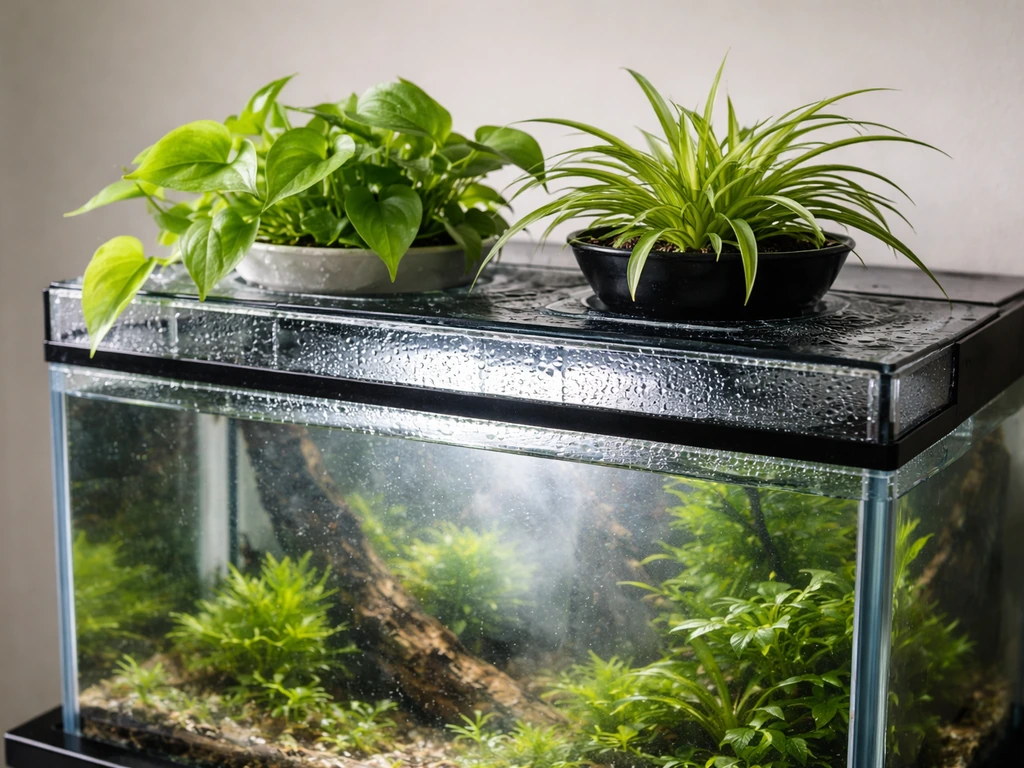
The best plants to grow out of an aquarium are the ones that already live a double life. Many aquatic plants are naturally "emersed" growers, meaning they can keep their roots wet while their stems and leaves reach above the waterline into open air. Pothos, Anubias, Java fern, Cryptocoryne, and Bacopa are the top picks because they handle both worlds without drama. On the flip side, if you want lush fully submerged plants inside the tank, Amazon swords, Vallisneria, and Ludwigia repens are hard to beat for beginners. This guide covers both scenarios, how to choose between them, and exactly how to move plants from one world to the other without losing them.
Best Plants to Grow Out of Aquarium and In Tanks
Rachel Hartley
16 Apr 2026
Wet feet vs. true emersed growth: how to choose the right plants
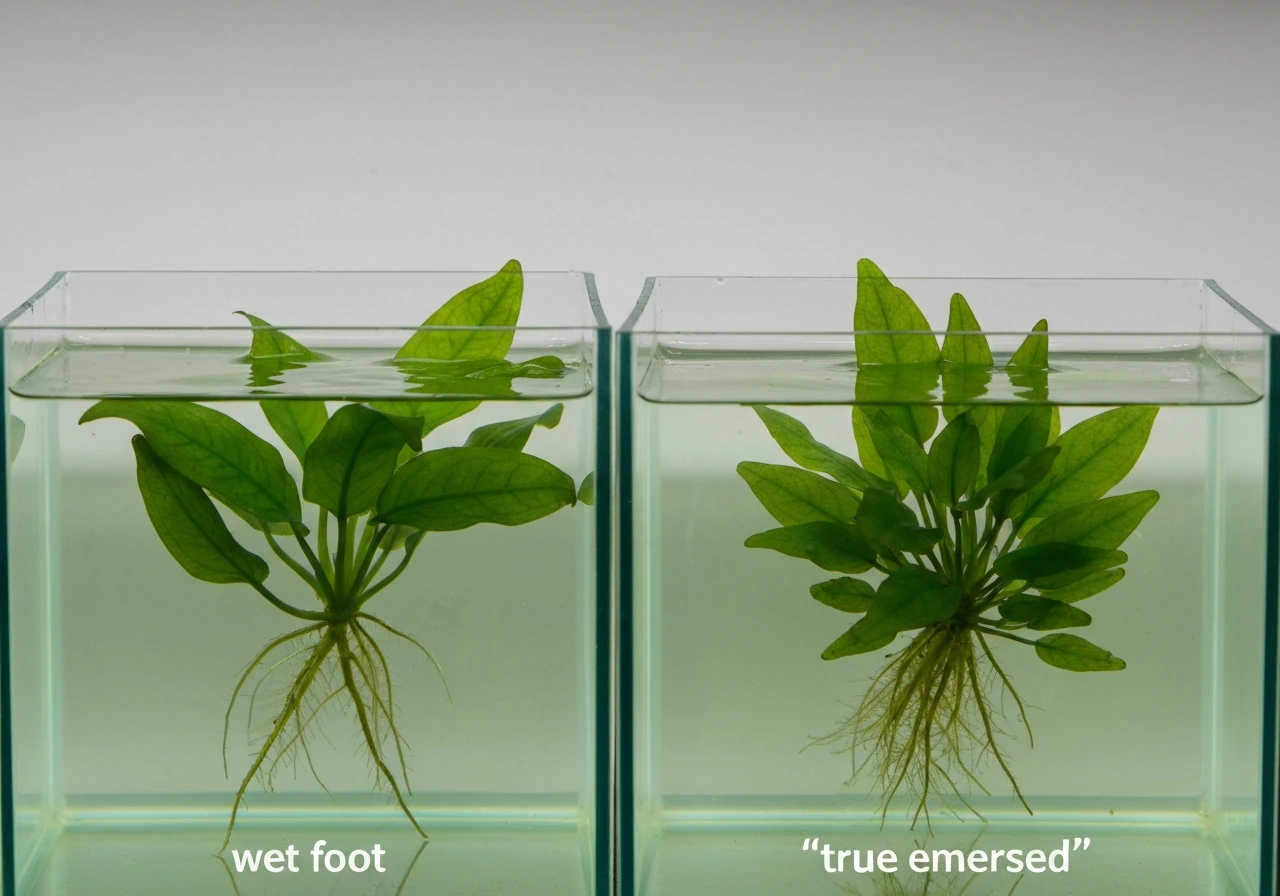
Before you pick a plant, decide what setup you actually have. "Growing out of the aquarium" means two different things depending on who you ask. The first is "wet feet" growing, where the roots or base sit in water (or very wet substrate) and the plant extends out of the tank at the rim or waterline. Pothos stuffed into a HOB filter is the classic example. The second is true emersed growing, where the plant is potted in soil or gravel above the tank, misted or watered regularly, but not sitting in water constantly. Think paludarium shelves or a windowsill setup where you use the tank's humidity to your advantage.
Choosing between these comes down to three things: how much humidity your space has, how much light hits the area above your tank, and what you want the plant to do (decorative, food-producing, or just biological filtration). In a dry apartment in January, a true emersed shelf setup will need daily misting or a humidity tent. A wet-feet trailing plant like Pothos hanging over the rim is much more forgiving. If you are already exploring the best plants to grow in containers, you will find a lot of overlap with emersed aquatic setups because the core principle is the same: match the plant's moisture needs to what your container and environment can actually deliver.
Light is the real bottleneck
Most aquarium hoods and tanks sit in spots that get less light than you think. If your tank is against an interior wall with only an LED hood above it, the emersed zone above that tank might get as little as 50 to 100 foot-candles of ambient light. Low-light plants like Pothos, Anubias, and peace lilies will manage. If you are near a south-facing window (in the Northern Hemisphere), you have enough light to run Bacopa, Hygrophila, or even herbs like mint emersed above the tank. In April and moving into summer, a south or west window gives you real growing energy. In December in Minnesota, that same window might not cut it without a supplemental grow light.
Best aquarium plants that thrive outside the tank (emersed picks)
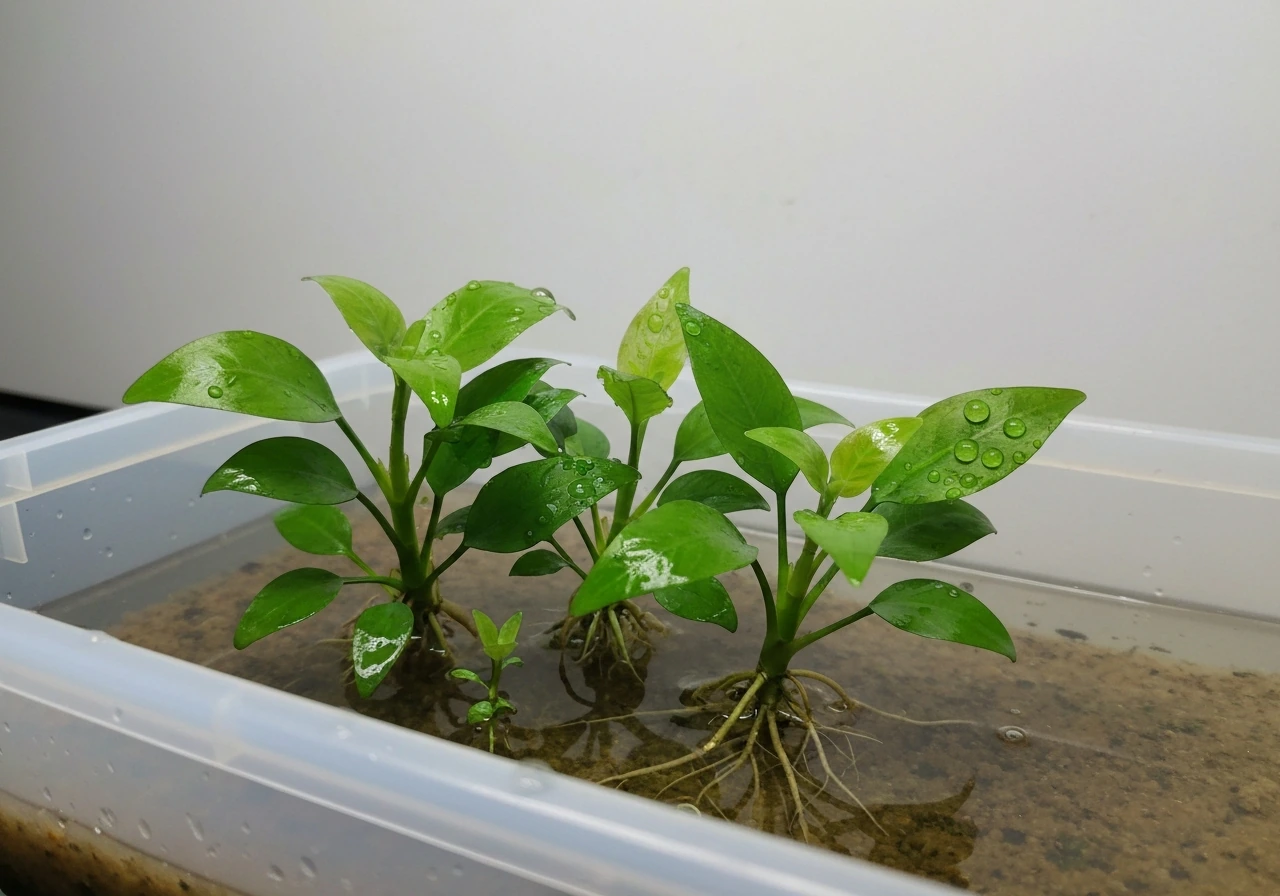
These are the plants that genuinely prefer or easily tolerate growing out of the water. Most of them are sold as aquarium plants but are actually farmed emersed by commercial growers, so transitioning them back to emersed life is not a shock at all.
| Plant | Setup type | Light needed | Humidity needs | Beginner rating |
|---|---|---|---|---|
| Pothos (Epipremnum aureum) | Wet feet, trailing over rim | Low to medium | Low (tolerates dry air) | Easiest |
| Anubias | Emersed or wet feet | Low to medium | Medium | Very easy |
| Cryptocoryne (Crypt) | Emersed in moist soil | Low to medium | Medium-high | Easy |
| Bacopa monnieri | Emersed in moist gravel or soil | Medium to high | Medium | Easy |
| Hygrophila polysperma | Emersed stem plant | Medium to high | Medium | Easy |
| Java fern (Microsorum pteropus) | Wet feet, attached to hardscape | Low | Medium | Very easy |
| Peace lily (Spathiphyllum) | Wet feet or emersed | Low to medium | Medium | Easy |
| Ludwigia repens | Emersed stem plant | Medium to high | Medium | Moderate |
Pothos is the hands-down starter pick. Drop the roots into a HOB filter or hang them into the tank water, and the plant pulls nitrates directly out of the water while growing bushy vines above. It handles low humidity, low light, and neglect. Anubias is similarly bulletproof. Attach it to driftwood at the waterline and let the rhizome and leaves sit above the surface. It grows slowly but never really fails unless you bury the rhizome. Crypts are interesting because they are one of the few plants that actively prefer emersed life once established: their emersed leaves are thick, broad, and often more colorful than their submerged counterparts.
If you want something that produces more mass quickly, Bacopa and Hygrophila are your best bets. Both grow fast emersed in moist substrate near a bright window, and you can trim and replant cuttings back into the tank. Ludwigia repens grown emersed near a south window will turn a deep red-orange, which looks spectacular draped over a paludarium edge. For ideas on how to structure a larger soil-based setup above your tank, the guide on the best plants to grow in tubs has useful principles for managing wet-soil containers at scale.
Best fully submersed aquarium plants (inside the tank)
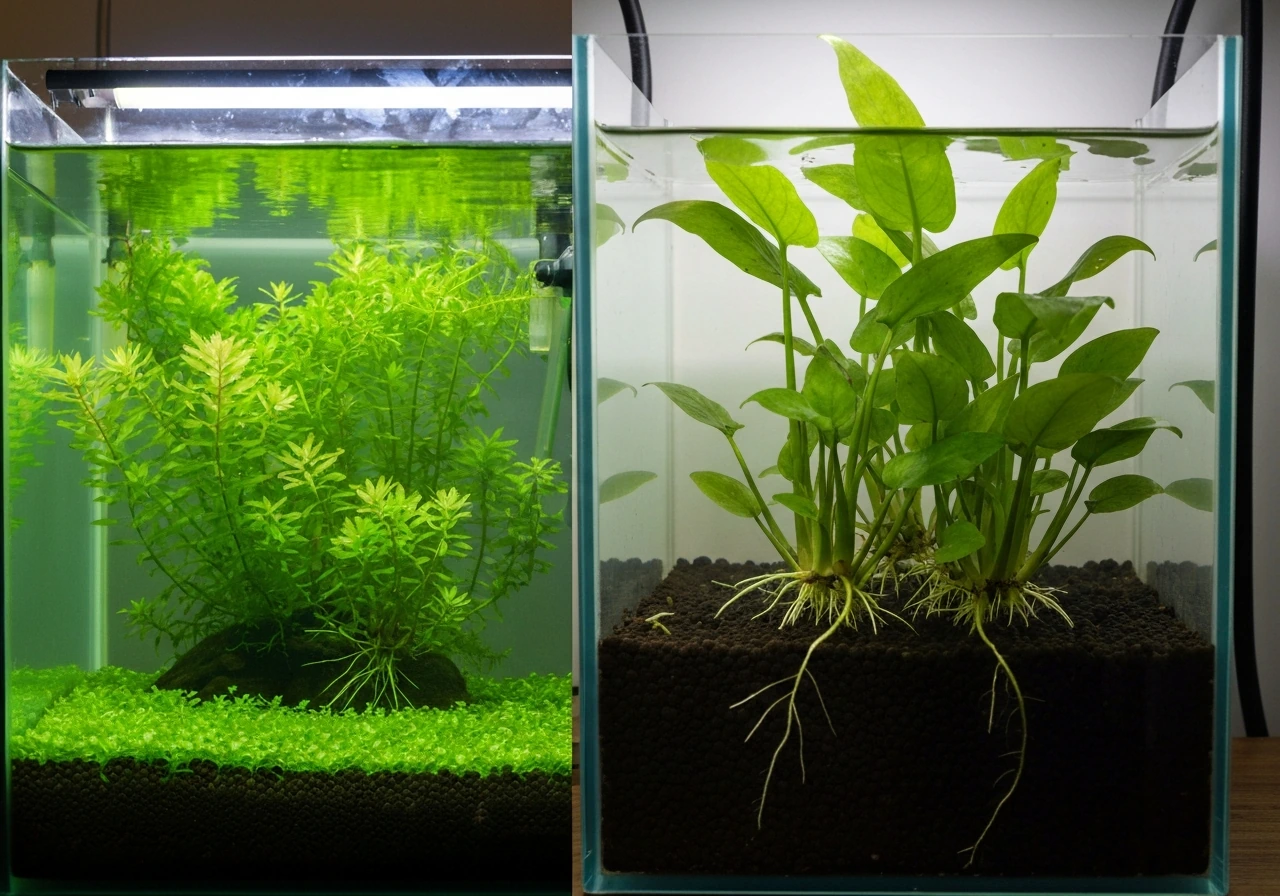
If your goal is a planted aquarium rather than an above-tank garden, these are the submersed picks that actually work for most hobbyists. The key thing to know: nearly all aquarium plants sold at pet stores are farmed emersed, which means when you put them in your tank, they will go through a conversion period where the old emersed leaves die back and new submerged leaves grow in. This is normal, not a sign the plant is dying.
- Amazon sword (Echinodorus grisebachii): A classic mid-to-background plant for tanks 20 gallons and up. Needs root tabs in the substrate to thrive. Growth slows in low light but it survives.
- Vallisneria (Val): Fast-growing grass-like plant that spreads via runners. Great for backgrounds. Tolerates a wide pH range but dislikes soft, acidic water.
- Java moss: No substrate needed, ties to hardscape, extremely low light tolerant. Perfect for breeding tanks or shrimp tanks.
- Water wisteria (Hygrophila difformis): One of the fastest growers in a planted tank. Handles medium light and gives your tank that lush look quickly.
- Dwarf sagittaria: A grass-like foreground plant that stays short and spreads via runners. Much easier than glossostigma or HC Cuba for carpets.
- Hornwort (Ceratophyllum demersum): Fast-growing, free-floating or loosely anchored. Excellent algae competition plant. Very forgiving of bad water conditions.
- Cryptocoryne wendtii: One of the most reliable Crypt species for submersed growing. Available in green, brown, and red forms.
For a 10-gallon beginner tank, the easiest combination is Java moss on hardscape, Cryptocoryne wendtii in the midground, and Vallisneria in the back. These three together need minimal fertilizer (a root tab every few months for the Crypt and Val), handle moderate light from a standard LED, and bounce back from beginner mistakes. For a 20-gallon or larger tank, add an Amazon sword as a centerpiece and water wisteria for fast-growing volume.
Moving plants from inside the tank to outside it (step by step)
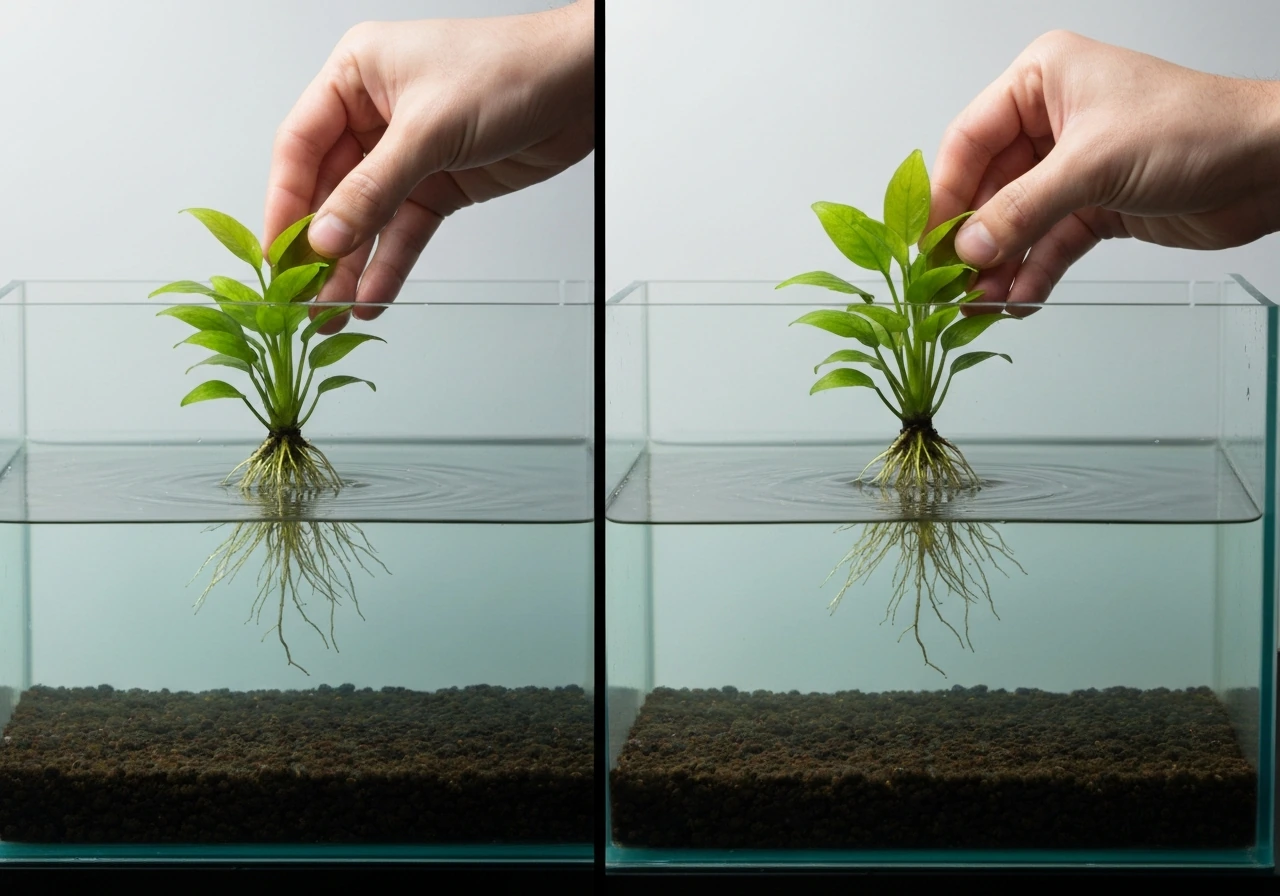
This is where most people get tripped up. The transition from submersed to emersed is actually pretty straightforward if you do it gradually. Plants that were grown submersed will drop their underwater leaves and push new emersed-form leaves, which are usually thicker and more rigid. Do not panic when the old leaves yellow and melt. That is the plant converting, not dying.
- Pick a healthy plant with good roots. Trim off any already-yellowing or soft leaves before you move it. Starting with a clean plant prevents rot from carrying over.
- Prepare a container with moist substrate. For most aquatic plants transitioning to emersed, a mix of aquarium gravel or sand over a thin layer of aquatic soil works well. The substrate should be damp but not flooded.
- Place the container near or above the tank where it gets humidity from the water surface. A tank lid or plastic wrap loosely draped over the pot for the first two weeks helps maintain the high humidity (70-90%) the plant needs while its leaf form changes.
- Mist the leaves once or twice daily for the first two weeks. You are keeping the new growth from desiccating while the roots establish.
- After two to three weeks, reduce misting gradually and start letting the plant adjust to ambient humidity. If you are near a window, introduce it to more light slowly over another week.
- Trim the last of the old submersed leaves once new emersed leaves are clearly growing. The plant has completed its conversion at this point.
- Fertilize lightly once new growth is established: a dilute liquid fertilizer at half the recommended dose every one to two weeks is plenty.
The whole conversion typically takes three to six weeks depending on the plant species and conditions. Crypts and Anubias are the slowest converters. Bacopa, Hygrophila, and Ludwigia are the fastest, often pushing new emersed leaves within ten days. If you are setting this up on a budget, a 5-gallon bucket with drainage holes punched in the bottom makes a surprisingly effective emersed planter. The article on the best plants to grow in 5 gallon buckets covers how to set up that kind of container for high-moisture plants specifically.
Caring for aquarium plants once they are out of the tank
Light
Emersed aquatic plants generally want more light than their submersed versions because they no longer have the water diffusing and scattering light around them. Low-light species like Anubias and Java fern will manage in a bright room without direct sun. Medium and high-light species (Bacopa, Hygrophila, Ludwigia) need a south or west window, or a dedicated grow light running 10 to 12 hours per day.
Right now in mid-April 2026, a south-facing window in most of the continental US is giving you 6 to 8 hours of direct sun, which is solid for most emersed aquatic plants. By June, that same window might be too intense for shade-loving species like Anubias, so be ready to pull those back or diffuse with a sheer curtain.
Humidity and watering
Aim for 60 to 80% relative humidity for most emersed aquatic plants during the establishment phase. After they are fully adapted (six to eight weeks in), many of them tolerate 40 to 50% humidity fine, which is typical indoor air in spring and fall. In summer in a dry climate like Arizona or inland California, you may need to mist daily or keep the plants grouped together to create a more humid microclimate. Water the substrate when the top inch feels barely damp, not dry. These plants want moist roots but they will rot if you keep the substrate waterlogged with no drainage.
Fertilizing
Emersed aquatic plants are not heavy feeders, but they do need nutrients once they are no longer pulling dissolved minerals from tank water. A balanced liquid fertilizer at half-strength every two weeks during active growth (spring and summer) is usually enough. If leaves start yellowing between the veins (interveinal chlorosis), that is usually an iron or magnesium deficiency. Add a small amount of chelated iron fertilizer or a magnesium sulfate (Epsom salt) drench at one teaspoon per gallon of water. Avoid high-nitrogen fertilizers that push leafy growth fast but make stems weak and prone to rotting at the base.
What goes wrong and how to fix it
Plant melting
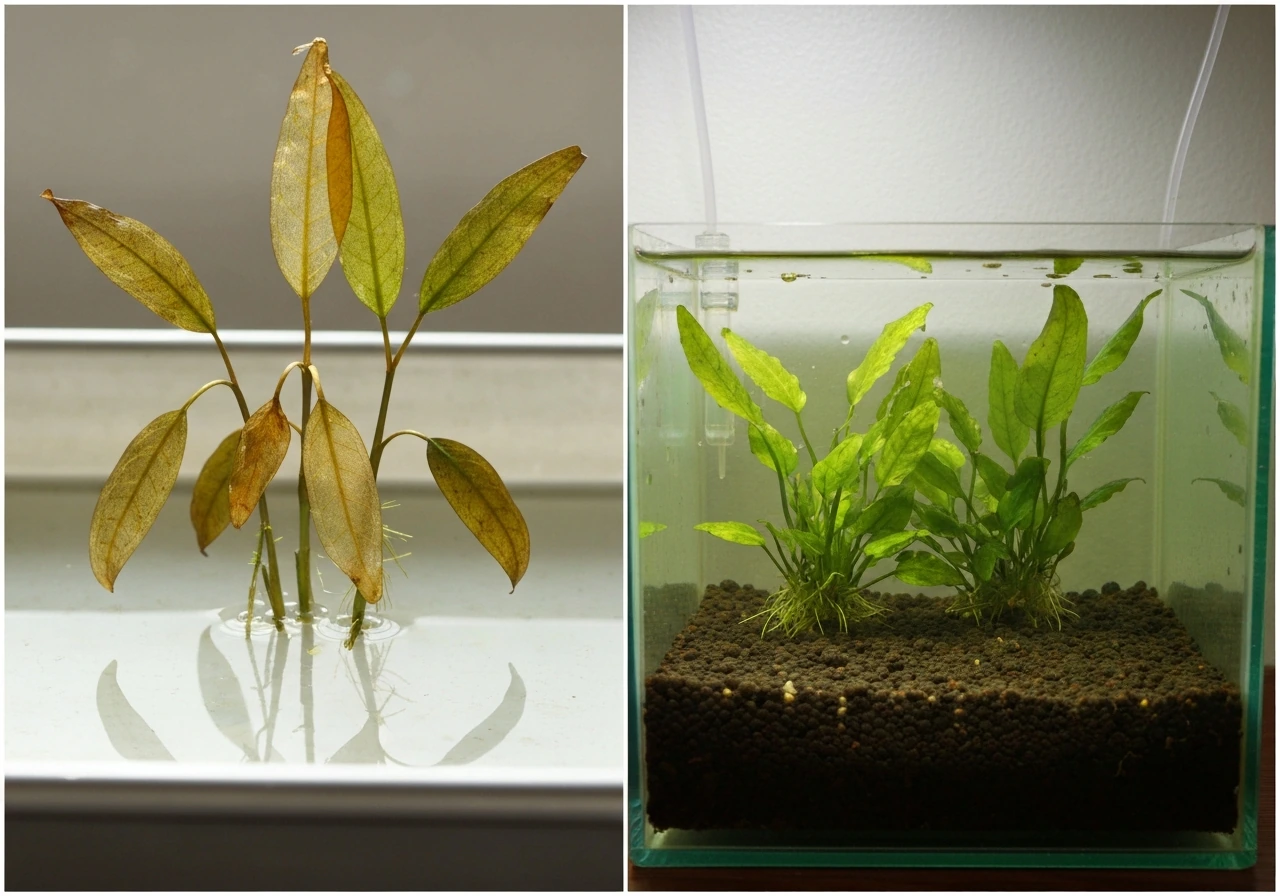
Melting is the most alarming thing beginners see and the least actually dangerous. When aquatic plants shift between emersed and submersed forms, they drop the old leaves and grow new ones suited to the new environment. The old leaves go soft, transparent, or brown and fall off. This is a conversion process, not a death spiral.
The fix is to trim the melting leaves cleanly, make sure the plant has good light and some nutrients, and wait. New growth is the signal that the plant has successfully converted. [Crypts are famous for this: the thick emersed leaves melt completely when put underwater, but within three to six weeks, new thin submersed leaves emerge from the rhizome. ](https://www.
aquariumcoop. com/blogs/faqs/how-to-plant-crypts) If you are seeing melting on a plant you just moved out of the tank (submersed to emersed), the same process happens in reverse.
Root and stem rot
Rot happens when the substrate stays permanently waterlogged without oxygen. The fix is drainage. If your emersed container has no drainage holes, add them. If you are using a wet-feet setup (roots trailing into tank water), make sure the stem above the waterline has airflow and is not sitting in a pool of stagnant water. Remove any soft, brown stem sections with clean scissors and dust the cut end with powdered cinnamon or activated charcoal, which both have mild antifungal properties. Replant the healthy top portion.
Algae
If algae is appearing on your emersed plant leaves, you almost certainly have too much light combined with standing water on the leaf surface. Reduce misting frequency, improve airflow around the leaves, and dial back light duration by one to two hours. Algae on the substrate surface in a paludarium or wet setup is common but mostly cosmetic. A small amount of hydrogen peroxide (3% pharmacy grade, diluted to 1 part per 10 parts water) sprayed directly on algae patches will knock it back without harming the plant.
Slow or stalled growth
If your plant has not melted but also is not growing after four to six weeks, the usual culprits are insufficient light, temperatures below 65°F (18°C), or nutrient deficiency. Check light duration first. Then check overnight temperature near the tank, especially if it sits near a drafty window in April or May. Most aquatic plants want substrate temperatures of 68 to 78°F. If light and temperature are fine, try a dilute dose of liquid fertilizer and give it another two to three weeks.
Setting up your first emersed system: what to buy and how to start
You do not need much to get started. A basic emersed setup above or beside an aquarium can be built for under $30 with plants you may already own or can take cuttings from.
- Container: A clear plastic storage bin with drainage holes drilled in the bottom, or a terracotta pot on a humidity tray. Anything from 1 quart to 5 gallons works depending on how many plants you want.
- Substrate: Aquarium gravel or sand on top of a 1-inch layer of aquatic plant soil or even regular potting mix. The key is that it drains but holds moisture.
- Plants to start with: Pothos cuttings (free from almost anyone who keeps them), Anubias (widely available at pet stores for $5 to $15), or Bacopa cuttings taken from your aquarium.
- Humidity management: A loose plastic bag or plastic wrap tent over the container for the first two weeks, then remove it gradually.
- Light: A south or west window from mid-April through September in most of the US. Outside that season, a basic two-bulb T5 or LED grow light on a timer set to 12 hours does the job.
- Fertilizer: Any balanced liquid fertilizer (10-10-10 or similar) used at half the label rate every two weeks once plants are established.
For propagation, stem plants like Bacopa, Hygrophila, and Ludwigia are the easiest: cut a 4 to 6 inch stem just below a node, strip the bottom two sets of leaves, and push it into moist substrate. It will root within one to two weeks. Rosette plants like Crypts and Amazon swords propagate via runners or offsets, which you separate from the mother plant once they have at least three leaves of their own. Anubias propagates by cutting the rhizome, making sure each section has at least two leaves and some roots.
If you want to go bigger with the concept, a paludarium (part aquarium, part terrarium) is the natural next step. The hardscape and planting principles for the best plants to grow on top of an aquarium apply directly to that kind of build, since you are working with the same humid microclimate above the waterline. For climbing or trailing plants like Pothos or Monstera varieties that you want to train up a moss pole above the tank, the advice in the guide on the best climbing plants to grow in containers covers vertical structure and support systems well.
Realistic timeline
| Timeframe | What to expect |
|---|---|
| Days 1 to 7 | Plant settles in. Some older leaves may yellow. Keep humidity high, do not fertilize yet. |
| Days 7 to 21 | Melting of old leaves (if converting from submersed). New growth buds may appear at the base or nodes. |
| Weeks 3 to 5 | First clear new emersed leaves emerge. Start reducing humidity tent. Begin light fertilizing. |
| Weeks 6 to 8 | Plant is established in emersed form. Remove humidity tent fully. Increase light gradually if needed. |
| Month 3 onward | Active growth phase. Ready for propagation. Start a second container or pot up into a larger container. |
If you find yourself wanting to expand beyond aquarium-adjacent setups into a broader outdoor or patio container system, the same moisture-tolerant plants work beautifully in larger containers. The roundup of the best plants to grow in buckets has some useful crossover picks for anyone who wants to move their emersed aquatic plants outside once nighttime temperatures stay reliably above 55°F, which in most of the US happens from May onward. Just remember that outdoor conditions, especially direct afternoon sun and wind, dry plants out much faster than an indoor setup, so you will need to water more frequently and possibly shade the plants during the hottest part of the day.
The core takeaway is this: aquatic plants are far more versatile than most people realize. The line between an aquarium plant and a houseplant or patio plant is blurry for dozens of species. Once you understand that melting is a transition, not a failure, and that emersed growth just needs moisture, humidity, and light rather than a tank full of water, the whole system gets much simpler. Start with Pothos or Anubias, watch the process, and you will be propagating and expanding within a couple of months.
FAQ
Can I grow “out of the aquarium” without any misting, tent, or grow light?
Yes, but only if you can keep the roots consistently wet and the plant itself has good airflow. For wet-feet setups, use stable water contact at the root base (for example, roots in a HOB return or a shallow water tray), and keep the portion above the waterline dry enough that it is not constantly sitting in stagnant droplets, which can trigger rot and algae.
How deep should I plant Anubias or other rhizome plants when growing them emersed?
Do not bury the rhizome, but you can plant the base roots and attach the rhizome correctly. For Anubias, the rhizome and leaf bases must stay exposed to air, and if you cover them with heavy substrate they often stall or rot while submerged.
What’s the best way to acclimate these plants to strong direct sunlight (for example, a south or west window)?
After most transitions, you can switch gradually from full sun to shade if you see stress. A simple rule is to start with bright light but no intense midday rays for 1 to 2 weeks, then increase exposure in small steps. If leaves bleach, develop brown patches, or you see crispy edges, back off and improve airflow or reduce direct sun.
Is humidity equally important for wet-feet setups and true emersed growth?
Use a humidity target based on the setup type. Wet-feet plants (roots in water) usually tolerate lower humidity, while true emersed plants benefit from 60 to 80% during establishment. If you are unsure, watch for slow new growth after 2 to 3 weeks, then increase misting or use a small clear dome temporarily.
If my emersed plant is yellowing, how can I tell deficiency from normal conversion melting?
Some nutrient issues show up differently depending on what part you are growing. If interveinal chlorosis appears on emersed leaves, that points more toward iron or magnesium deficiency, not a “plant is melting” issue. Correct with a chelated iron or a light magnesium supplement, then wait, because new leaves will be the ones that improve.
My emersed leaves get algae spots. What should I change first?
Treat algae as a light and wetness problem first. If algae forms mainly on leaf surfaces, reduce misting frequency so droplets do not sit on leaves, increase airflow, and shorten light by 1 to 2 hours. If algae persists, spot-treat only the patches and pause any heavy foliar wetting.
Can emersed plants rot even if I’m misting regularly?
Often yes, especially in warm rooms with poor airflow. Counter it by improving ventilation near the plants (fans on low, not blasting them), keeping containers drained, and avoiding overwatering until the top inch is nearly dry. If stems turn soft and smell, remove affected sections immediately and re-cut above healthy tissue.
My plant didn’t melt and it’s not growing. What are the most common causes besides low light?
If a plant has not melted but also has no new emersed growth after 4 to 6 weeks, temperature is the first thing to sanity-check. Aim for substrate or root-zone temperatures roughly in the 68 to 78°F range, and pay attention to drafty windows at night, because the air can cool the root zone even when the room feels warm.
Any tips to make stem cuttings root faster in an emersed planter?
For stem cuttings, remove leaves that would stay below the moist substrate level, otherwise they can decay before roots form. For faster rooting, keep the cuttings consistently moist, not waterlogged, and use a small piece of moist medium that gives contact along the stripped node area.
How do I avoid over-fertilizing when moving plants out of the tank?
Over-fertilizing is a common mistake. Since emersed plants are no longer relying on tank water minerals, they still need some nutrition, but at reduced strength, and with spacing between feedings. If you see very dark green growth with soft stems or recurring leaf problems, pause fertilizer and focus on light, drainage, and consistent moisture.
Can I take these emersed aquarium-adjacent plants outside in summer, and when should I do it?
You usually can, but timing and placement matter. If you want to move to outdoors, wait until nights stay consistently above about 55°F, then acclimate over 7 to 10 days to increasing sun exposure. Protect from afternoon wind and direct harsh sun initially, because emersed plants dry out much faster outdoors.
Next Article
Best Plants to Grow on Top of Aquarium: Top Picks
Top plants for growing on aquarium lids and ledges, with setup tips for light, humidity, splash control, and easy care.