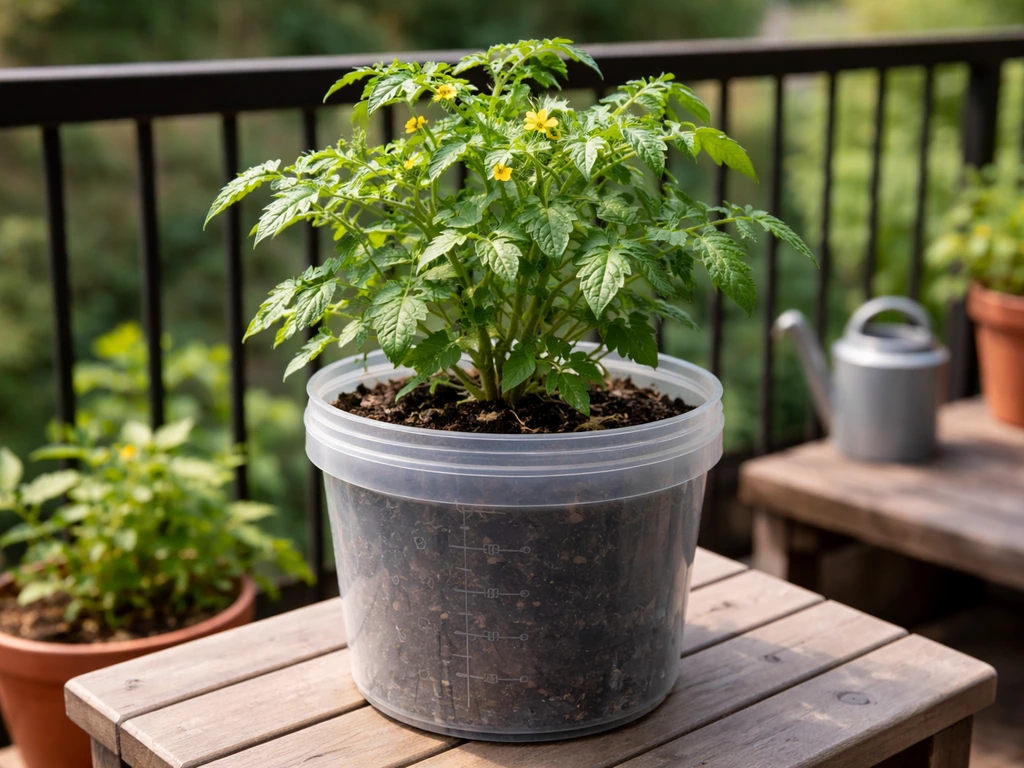
Yes, you can grow a seriously productive and beautiful garden in nothing but buckets. Tomatoes, herbs, strawberries, peppers, lettuce, <a data-article-id="D19B531D-E03E-4258-99B2-FAC666BD07A8">petunias, and more</a> all thrive in containers when you match the plant to the right bucket size, use proper soil, and keep up with watering. The trick is knowing which plants are genuinely bucket-friendly versus which ones will disappoint you, and that comes down to a few simple rules around root space, drainage, and picking the right variety for your climate right now.
Best Plants to Grow in Buckets: Seasonal Picks by Zone
Rachel Hartley
19 Apr 2026
How to choose the right bucket setup
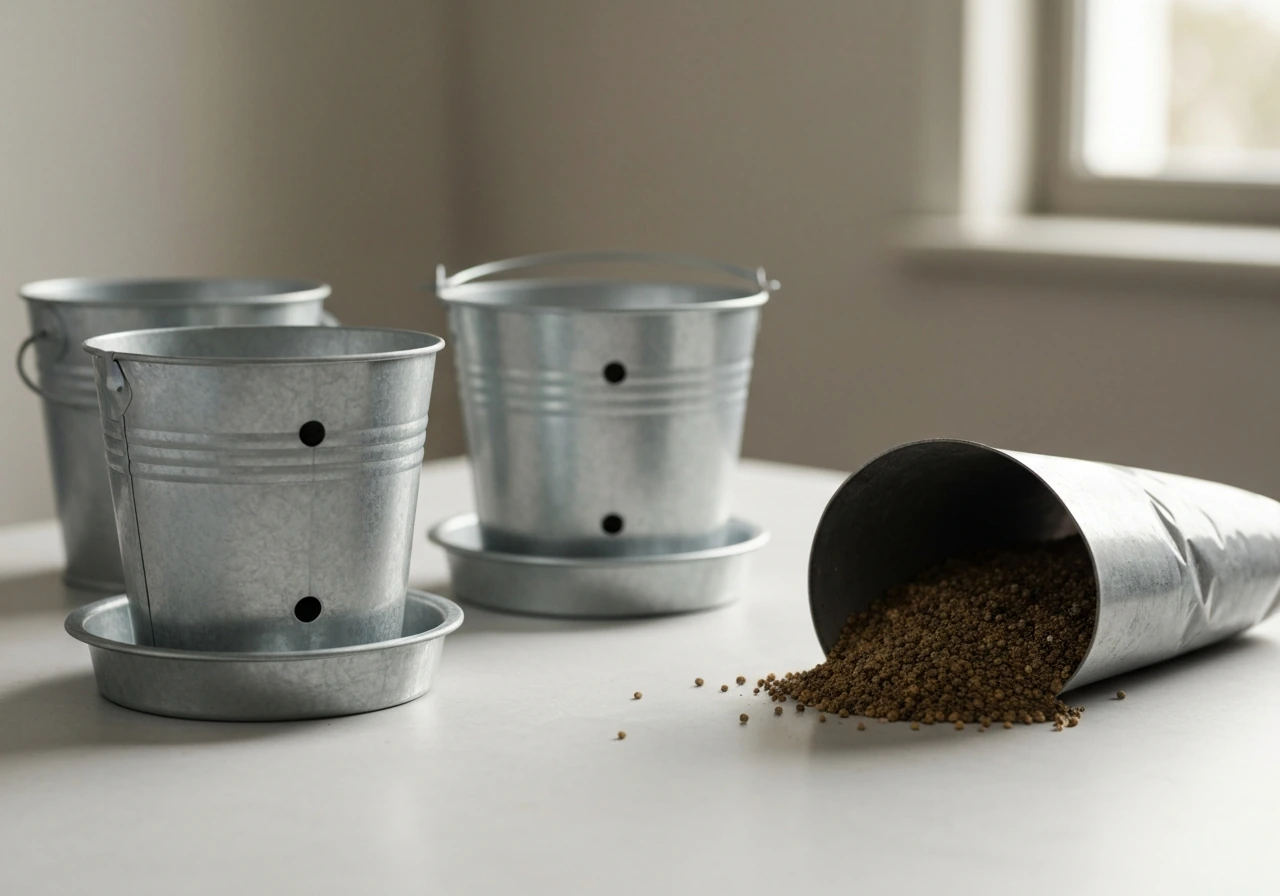
Bucket size is the single biggest factor in whether your plant thrives or just survives. The root system needs enough room to support the top growth, and if you crowd roots, you cap your yield before you even start. A good rule of thumb from extension research: leaf lettuce and spinach can work in a 1-gallon container, a single pepper or eggplant needs about 2 to 3 gallons (at least 16 inches deep), and a tomato needs a minimum of 4 to 5 gallons with at least 20 inches of depth. For dwarf fruit trees, you're looking at 25 to 30 gallons. If you're shopping by diameter rather than volume, here's a quick conversion to keep handy.
| Container Diameter | Approximate Volume | Good for |
|---|---|---|
| 10 inches | ~3 gallons | Herbs, lettuce, spinach |
| 12 inches | ~5 gallons | Peppers, eggplant, cherry tomatoes |
| 14 inches | ~7 gallons | Bush beans, larger herbs, kale |
| 16 inches | ~10 gallons | Compact tomatoes, strawberries, dwarf peppers |
| 18 inches | ~15 gallons | Larger tomatoes, cucumbers (bush), small shrubs |
| 24 inches | ~25 gallons | Dwarf fruit trees, climbing vegetables |
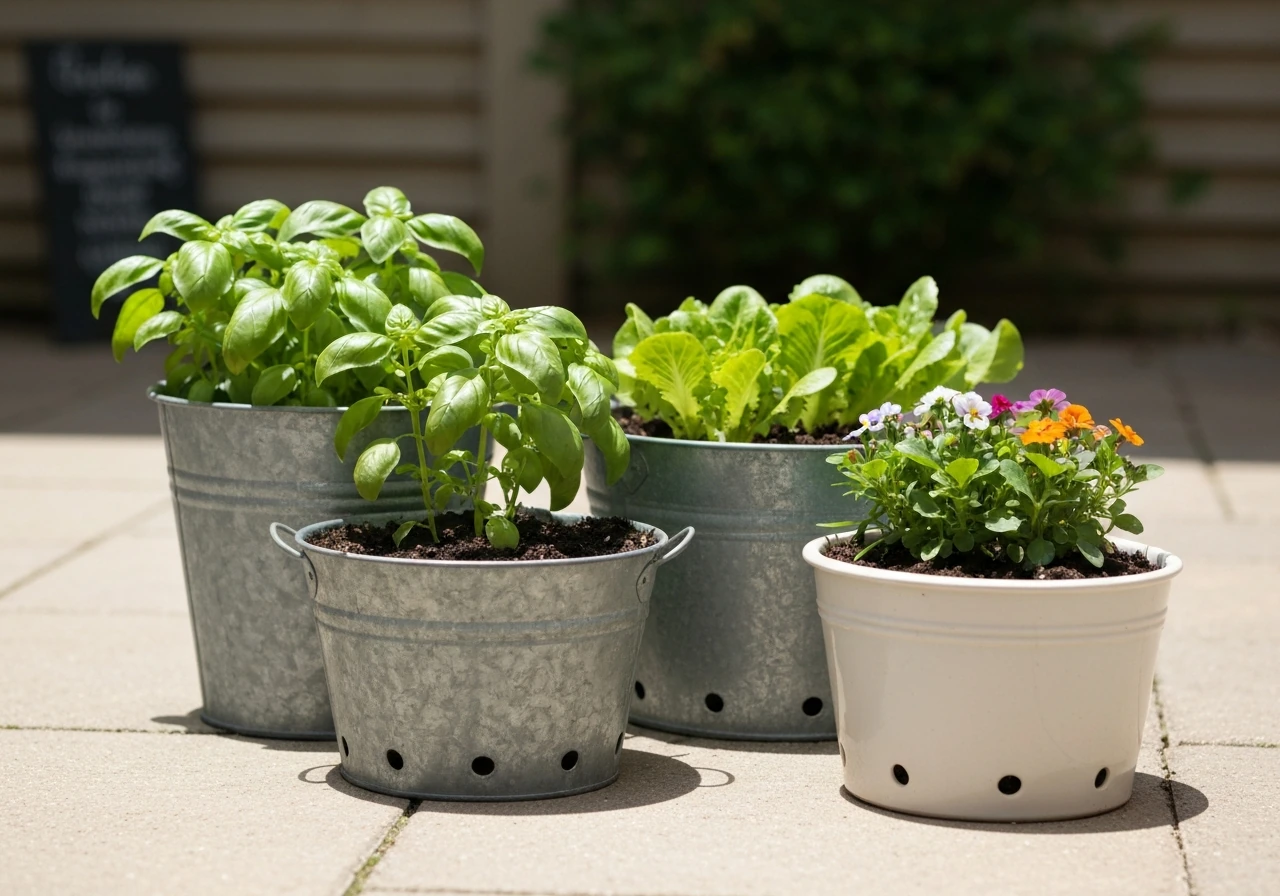
Drainage is non-negotiable. Every bucket needs holes in the bottom, full stop. If water pools at the bottom, roots suffocate and rot sets in fast. Standard 5-gallon buckets work great for most vegetables, but drill at least three to five holes in the base if they didn't come pre-drilled. Set the bucket on pot feet or a few bricks so water can actually escape.
Never use garden soil or heavy potting soil in buckets. The NC State Extension Gardener Handbook explains that bucket potting soil is typically a soilless mix made from ingredients such as perlite, pine bark, sand, sphagnum peat moss, and vermiculite Never use garden soil or heavy potting soil in buckets.. It compacts quickly, kills aeration, and suffocates roots. Instead, use a quality potting mix or make your own: roughly half sphagnum peat moss (or coco coir) mixed with half perlite or vermiculite. That combination holds enough moisture while keeping things loose and well-aerated. UC ANR and Penn State Extension both back this blend for exactly that reason. You can also buy a bagged premium potting mix and cut it with 20 to 30 percent perlite if it feels dense out of the bag.
Best beginner-friendly bucket plants
If you're new to bucket gardening, start with plants that are genuinely forgiving. These won't punish you for slightly imperfect watering or a week of neglect.
- Mint: Nearly impossible to kill, grows aggressively, and actually does better in a bucket than in the ground since the container keeps it from taking over. Use a 1 to 2-gallon pot. Water when the top inch of soil dries.
- Chives: A 6 to 8-inch container is plenty. Snip the tops and they regrow. Full sun or part shade, minimal feeding needed.
- Leaf lettuce: Matures in as little as 50 days (varieties like 'Red Salad Bowl'). A 1-gallon container works for one plant; a 12-inch pot gives you a cut-and-come-again patch. Cool weather only.
- Cherry tomatoes (determinate varieties): Much more forgiving in containers than large beefsteak types. 'Tumbling Tom,' 'Patio,' and 'Bush Early Girl' stay compact. A 5-gallon bucket is the sweet spot.
- Petunias: One of the most reliable flowering bucket plants you can grow. Full sun, regular deadheading, and they'll bloom all season. Excellent for beginners who want color without complexity.
- Bush beans: A 7 to 10-gallon container, direct sow seeds, and you'll have beans in 50 to 60 days. No staking, no fuss.
The pattern here is: choose compact or dwarf varieties, use an appropriately sized container, and give them enough sun. Most beginner failures come from stuffing a plant into too-small a bucket or placing it somewhere that gets less sun than it needs.
Best edible plants for buckets
Herbs
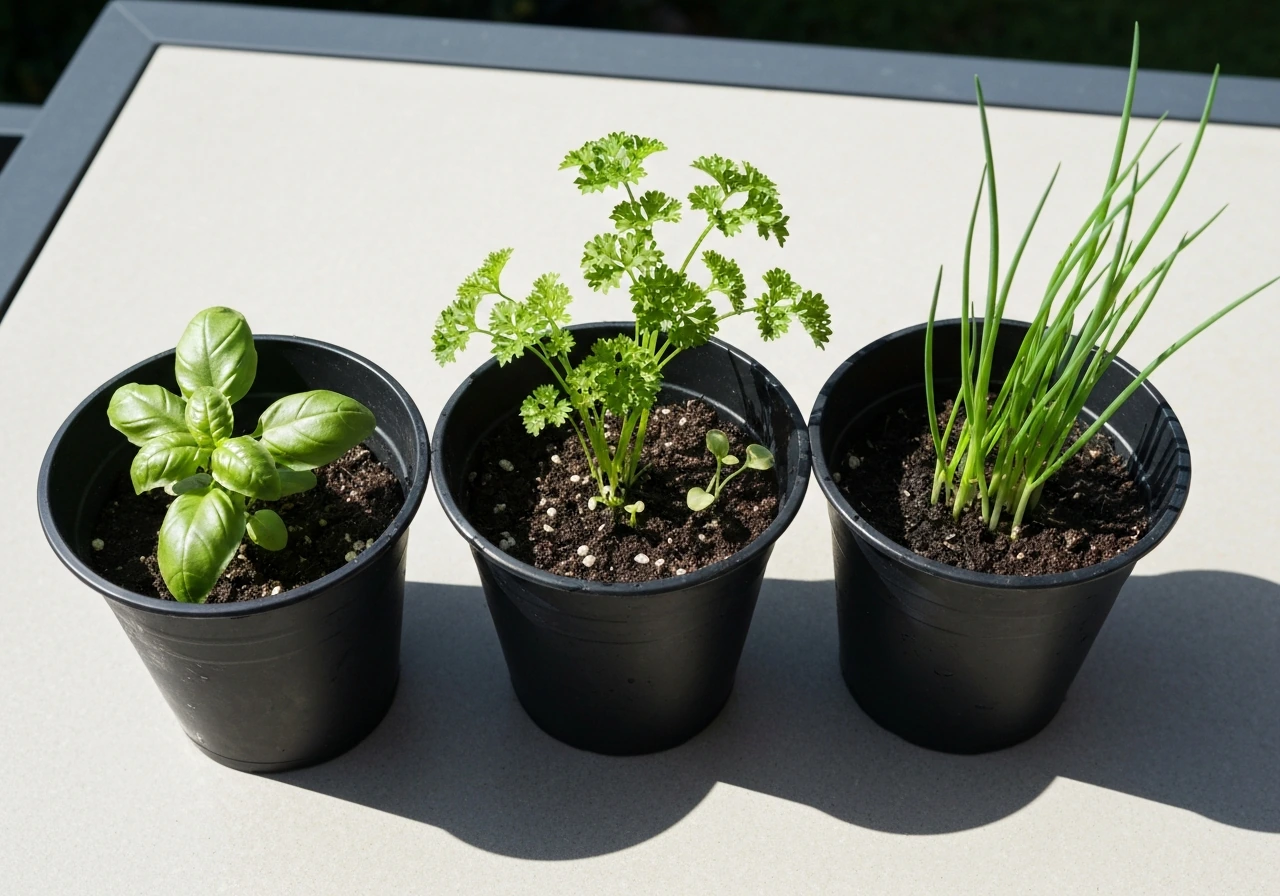
Herbs are the most practical bucket plants you can grow, especially if you're limited on space. The key insight from UF/IFAS research is that even herbs have different water preferences you should respect: thyme, rosemary, and sage want well-drained soil and prefer to dry out slightly between waterings, while parsley, chervil, and mint like consistently damp soil. Grouping similar herbs together in the same bucket avoids a watering conflict. Basil wants warmth, full sun, and regular harvesting to prevent flowering.
Leafy greens
Lettuce, spinach, arugula, and kale are all bucket-friendly, but they're cool-season crops. They perform best in spring and fall (or year-round in mild climates like coastal California or Florida's winter season). A 12-inch wide container gives you enough room for a cut-and-come-again patch of mixed greens. Expect 50 to 70 days to maturity depending on variety and temperature.
Fruiting vegetables
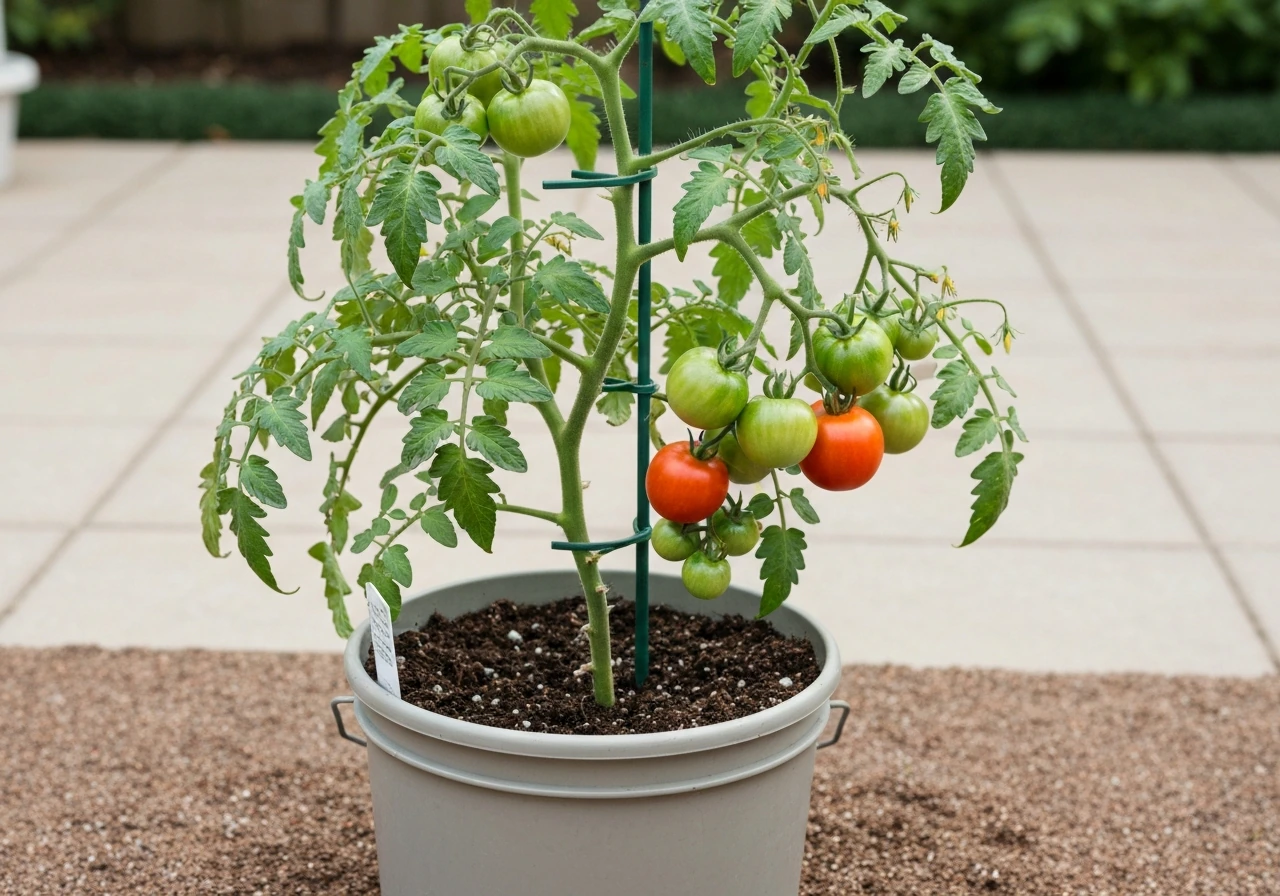
Tomatoes, peppers, and eggplant are the heavy hitters of bucket growing, and they're absolutely doable if you use the right container size. For tomatoes, stick to determinate or compact varieties and use a 5-gallon bucket minimum (UF/IFAS specifically recommends this as the practical sweet spot). Indeterminate tomatoes get too large and will underperform in typical bucket setups. For peppers and eggplant, 3 to 5 gallons works well. Make sure these are in full sun, at least 6 to 8 hours per day, or fruiting will disappoint.
Strawberries
Strawberries are one of the best-suited fruits for bucket growing. Iowa State Extension recommends day-neutral and everbearing varieties for containers because they produce fruit throughout the summer rather than just once. Everbearing types give you two main flushes: one around June and another when temperatures cool in late summer. Pick berries when they're uniformly red for best flavor. A 5-gallon bucket easily holds two to three plants.
Best flowers and color for bucket gardens
If aesthetics matter as much as yield, these are the flowering plants that deliver the most visual payoff in buckets over a long season.
- Petunias: A workhorse for bucket color. Full sun, heat-tolerant, and series like 'Opera Supreme' bloom reliably without constant deadheading. Remove faded flowers regularly to keep plants putting out new blooms.
- Marigolds: Compact varieties like 'Bonanza' or 'Durango' sit perfectly in 6 to 8-inch containers and bloom from late spring through frost. They also deter some common pests.
- Calibrachoa (million bells): Trails beautifully over the edges of larger buckets and blooms non-stop. No deadheading needed. Full sun to part shade.
- Geraniums: Reliable in full sun, tolerate some drought once established, and come in a wide color range. 6 to 8-inch containers work fine for single plants.
- Impatiens: If your bucket spot gets more shade than sun, impatiens are the go-to. They stay compact and provide dense color in spots where other flowers struggle.
- Zinnias: Heat lovers that explode with color in summer. Direct sow into a 10 to 12-inch bucket in full sun after your last frost date.
For the longest-lasting display, combine a thriller (a tall, bold plant like a large petunia or geranium), a filler (something compact and bushy like calibrachoa), and a spiller (a trailing plant like sweet potato vine) in one larger 15 to 25-gallon bucket. This combination works across most climates from late spring through fall.
What to grow right now based on your climate
It's mid-April 2026. Where you are in the US makes a huge difference in what you should be planting in buckets today.
| Region / Climate | Plant now in buckets | What to hold off on |
|---|---|---|
| USDA Zones 3–4 (Upper Midwest, Northern Plains) | Lettuce, spinach, chives, pansies, kale — cold-tolerant crops only. Last frost likely still weeks away. | Tomatoes, peppers, basil — wait until late May or June |
| Zones 5–6 (Midwest, Mid-Atlantic, Pacific NW) | Lettuce, herbs (cilantro, parsley, chives), peas, snapdragons. Start tomatoes/peppers indoors now if you haven't. | Direct-sow warm-season crops outdoors. Hold 2 to 4 more weeks. |
| Zones 7–8 (Southeast, Southern Plains, Pacific Coast) | Tomatoes, peppers, basil, cucumbers, summer flowers (zinnias, marigolds, petunias) are all fair game now. | Heavy heat crops like melons may be better started in May in the upper part of this range. |
| Zones 9–10 (Southern California, Gulf Coast, South Florida) | Already prime time for tomatoes, peppers, eggplant, herbs, and warm-season flowers. In south Florida, focus on heat-tolerant crops; cool-season greens are winding down. | Cool-season greens like lettuce — they'll bolt fast in rising heat. Shift to heat-tolerant options. |
| Zone 11+ / Tropical (Hawaii, far South Florida) | Year-round growing. Focus on tropical herbs (lemongrass, Thai basil), sweet potatoes, peppers. | Standard cool-season crops struggle — grow them with shade cloth or in the 'cooler' months (Nov–Feb). |
The general principle: cool-season crops (lettuce, spinach, kale, peas, herbs like cilantro and parsley) want soil temperatures between 45°F and 65°F, so you can push them earlier in spring and revisit them in fall. Warm-season crops (tomatoes, peppers, basil, cucumbers, zinnias) need soil temps above 60°F and air temps consistently above 50°F at night before going outside. Getting this timing right is one of the highest-leverage things you can do for your bucket garden.
If you're in a warmer region like Florida, UF/IFAS publishes monthly planting calendars by county that are worth bookmarking since the timing windows shift significantly even within the state. For cooler climates like Utah, USU Extension recommends mid-March to mid-April as the window for the first cool-season outdoor plantings, which means right now you're in the last of that prime window for cool crops before transitioning to warm-season planting.
Simple care routine to keep bucket plants healthy
Watering
There is no universal watering schedule for bucket plants, and anyone who gives you one is oversimplifying. How often you need to water depends on the season, how much sun the bucket gets, what's growing in it, the container size, and the potting mix composition. The practical method: stick your finger an inch into the soil. If it's dry, water. If it's still damp, wait. Water until it runs freely out of the drainage holes, so moisture reaches all the way down. WVU Extension recommends checking every single day during warm weather, especially for smaller buckets, which dry out faster than you'd expect.
One nuance worth knowing: early in the season, your bucket holds water longer because the plant's root system is small and not yet drawing much. As the season progresses and roots fill the container, it dries out much faster. Adjust your habits accordingly rather than watering on a fixed schedule.
Feeding
Bucket plants need more feeding than in-ground plants because every watering flushes nutrients out of the container. You have two good options: a slow-release granular fertilizer worked into the potting mix at planting (it releases small amounts over weeks and is low-maintenance), or a diluted liquid fertilizer applied every one to two weeks during the growing season. Both approaches work well. UMN Extension recommends soluble fertilizers specifically because nutrients deplete fast in container systems. For edibles, look for a balanced formula (something like 10-10-10 or a tomato-specific blend for fruiting crops). For flowers, a higher middle number (phosphorus) promotes blooming.
Pruning and training
For tomatoes, pinch off suckers (the shoots that develop in the joint between stem and branch) to keep the plant manageable in a bucket. For flowers like petunias, remove faded blooms to direct energy toward new flowers rather than seed production. Herbs like basil, mint, and cilantro benefit from regular harvesting: cut stems back to just above a leaf node and the plant responds by getting bushier rather than bolting. If you're growing a climbing plant like a pole bean or a vining cucumber in a larger bucket, add a small trellis or stake from the start. If you want a climbing option, the best climbing plants to grow in containers can help you maximize vertical space while keeping care manageable.
Pest management
The most common container pests are aphids, spider mites, whiteflies, and fungus gnats. Check the undersides of leaves every week or so, because that's where most of these hang out. Aphids and whiteflies can usually be knocked back with a strong spray of water or insecticidal soap. Spider mites (tiny, often causing stippled or bronzed leaves) thrive in hot, dry conditions, so keeping plants well-watered helps prevent them. Fungus gnats are a sign of overwatering or chronically wet soil: they lay eggs in moist potting media, and larvae damage roots. The fix is letting the top inch of soil dry out between waterings. If slugs are an issue (they can climb bucket walls), a beer trap (a shallow container buried near the bucket filled with cheap beer) works well for monitoring and reduction.
Common bucket-growing mistakes and how to fix them
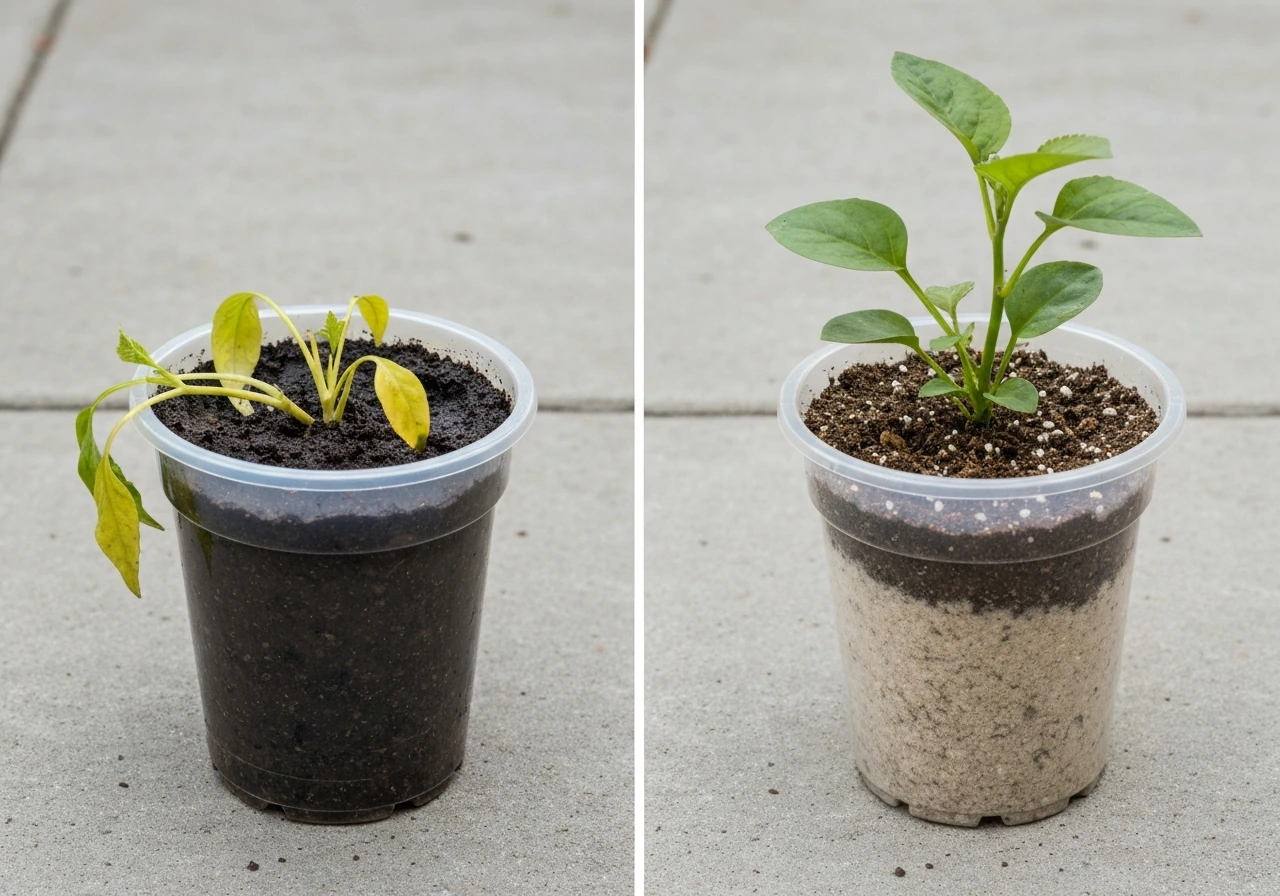
- Overwatering: This is the most common killer. Symptoms are yellowing leaves, browning of lower foliage, and mushy stems or blackened roots. Fix: Let the soil dry out, improve drainage, and if roots are already rotted, you may need to repot into fresh dry mix. Never water on a schedule without checking soil moisture first.
- Container too small: If your plant looks stunted, stops producing, or wilts immediately after watering, root crowding is likely. Fix: Move up to a larger bucket, loosen the root ball gently, and repot. Add fresh potting mix around the roots.
- Wrong soil: Heavy or fine-textured potting soil compacts over time and suffocates roots. If water sits on the surface and drains slowly, the mix is too dense. Fix: Repot using a lighter mix with added perlite.
- Not enough light: Leggy, pale plants with poor yields usually aren't getting enough sun. Most fruiting vegetables and flowering plants need 6 to 8 hours of direct sun. Fix: Move the bucket (one real advantage containers have over garden beds) to a sunnier spot.
- Nutrient deficiency: Yellowing leaves on older growth often signals nitrogen deficiency; purple tinges can indicate phosphorus shortage. In buckets, this happens faster than in-ground because watering leaches nutrients. Fix: Start a consistent feeding routine, liquid fertilizer every 1 to 2 weeks, or top-dress with a slow-release granule.
- No drainage holes: Sounds obvious, but it happens, especially with decorative buckets. If water has nowhere to go, roots will rot within days in warm weather. Fix: Drill or punch holes immediately, at least 3 to 5 holes in the base.
- Wrong variety for the season: Planting heat-loving crops too early or cool-season crops too late guarantees poor results. Match your plant choice to your current USDA zone and the time of year. This is the most avoidable mistake and the most rewarding to get right.
Where to go from here
If you're just getting started, pick two or three plants from the beginner-friendly list, get appropriately sized 5-gallon buckets, fill them with a peat-perlite potting mix, and place them where they'll get the most sun you have available. That alone puts you ahead of most first-time bucket gardeners. Once you've got the basics dialed in, you can expand into larger setups, try fruiting vegetables, or mix edibles and flowers in the same container for a setup that's both productive and beautiful. Once you are comfortable with 5-gallon bucket basics, you can also use these recommendations to narrow down the best plants to grow in 5 gallon buckets for your space and climate. If you want to go bigger than buckets, the best plants to grow in tubs are a great next step best plants to grow in 5 gallon buckets. If you also keep an aquarium, you can even draw from the best plants to grow out of aquarium for certain container setups. If you also keep an aquarium, it can help to look at the best plants to grow on top of aquarium as a related container option, since similar size and moisture constraints apply.
It's also worth knowing that not all containers are created equal when it comes to plant needs. If you're curious about how bucket growing compares to broader container options or want to try specific setups like 5-gallon buckets or large tub planters, there's a lot of nuance to explore in those directions as well. The fundamentals covered here, the right size, proper drainage, good soil, correct timing, and consistent care, apply across all of them.
FAQ
Can I reuse old buckets or containers for the best plants to grow in buckets?
Yes, but only if you add drainage and refresh the soil. Use buckets with bottom holes, set them on pot feet, and in very hot summers expect faster drying than you would in standard plastic. If the bucket is previously used for chemicals, food oils, or yard products, don’t reuse it unless you can confirm it was food-safe and thoroughly cleaned.
What if I want to use self-watering buckets, will that change which plants do best?
A true self-watering reservoir can reduce missed watering, but it still does not replace the need for fast-draining potting mix. If the system keeps the root zone constantly wet, adjust with a chunkier mix (more perlite) and check for fungus gnat activity, since larvae thrive in persistently moist media.
Is bucket diameter or depth more important for different plants to grow in buckets?
For edibles, aim to avoid root restriction rather than chasing the biggest number. If you must compromise, prioritize depth for fruiting crops like peppers and eggplant (they need more vertical root space). For shallow-root greens, width matters more, so a wider, shorter container works better than a tall one.
How do I tell whether my bucket plants need more water or more fertilizer?
Most bucket failures show up as nutrient depletion that looks like “not enough sun” or “drying out.” If you see pale leaves despite regular watering, switch from slow-release alone to a diluted soluble fertilizer every 1 to 2 weeks, and make sure you’re feeding after the plant is actively growing, not right at transplant.
Why does watering frequency change over the season in bucket gardens?
It depends on your climate and how full the container is. Early in the season, smaller root systems mean the mix stays moist longer, so you may be able to water less often. Once roots fill the bucket and temperatures rise, drying accelerates, so keep doing the finger test instead of following a calendar.
Can I mix garden soil with potting mix to save money?
Avoid it, especially for tomatoes, peppers, and eggplant. Heavy soil holds water and compacts, which can suffocate roots even if the bucket has drainage holes. If you already have heavy soil in a bucket, the practical fix is to empty and replant with fresh potting mix rather than trying to “fix” it by watering less.
What harvesting approach works best for lettuce and spinach in buckets?
For cool-season greens, harvest outer leaves and leave the center growing point intact, this keeps production steady for a longer window. For lettuce, repeated cut-and-come-again picking works best when you keep soil evenly moist, not soggy, to prevent bitterness and bolting.
Can mint be planted with other bucket herbs?
If you’re growing mint, keep it in its own bucket. It spreads aggressively through runners and will outcompete parsley, chervil, and basil even if you’re grouping herbs. In a shared bucket, you also risk watering conflicts because mint prefers more consistently damp soil.
What are the quickest signs I’m overwatering my bucket plants?
Watch for pale, yellowing lower leaves with slow growth, and check the undersides of leaves for pests. Fungus gnats are the clearest clue of chronically wet potting media. When you see that, let the top inch dry before watering again, then improve airflow and sunlight if possible.
How can I prevent lettuce or kale from bolting in hot weather?
When a plant bolts, it’s usually a temperature and stress response. For cool crops in buckets, reduce stress by keeping the mix evenly moist (using the finger test to avoid extremes) and consider partial afternoon shade in the hottest part of the day.
Will pruning make a too-small bucket workable for tomatoes?
For tomatoes, if you want predictable bucket performance, choose compact or determinate types and use a cage or stake from day one. If your plant becomes too large, pruning alone cannot fully solve root crowding, the bucket size sets the ceiling for yield.
If I grow flowering plants alongside vegetables in buckets, how do I ensure fruit sets?
Yes, but you need a plan for pollination and spacing. Most balcony planters do not receive enough consistent insect activity, so if flowers aren’t setting fruit, gently shake the plant daily or consider hand-pollinating (especially for peppers and strawberries). Also avoid overcrowding, which reduces airflow and flower access.
Any practical tips for placing bucket gardens on balconies or patios?
If you’re on a patio, protect buckets from heat buildup and wind desiccation. Light-colored buckets or reflective surfaces can reduce overheating, and placing buckets where they get sun but have shelter from strong afternoon gusts can dramatically lower watering stress for herbs.
Next Article
Best Plants to Grow in 5 Gallon Buckets
Top plants for 5-gallon buckets plus light, soil, watering, and feeding tips for fast, reliable container harvests.