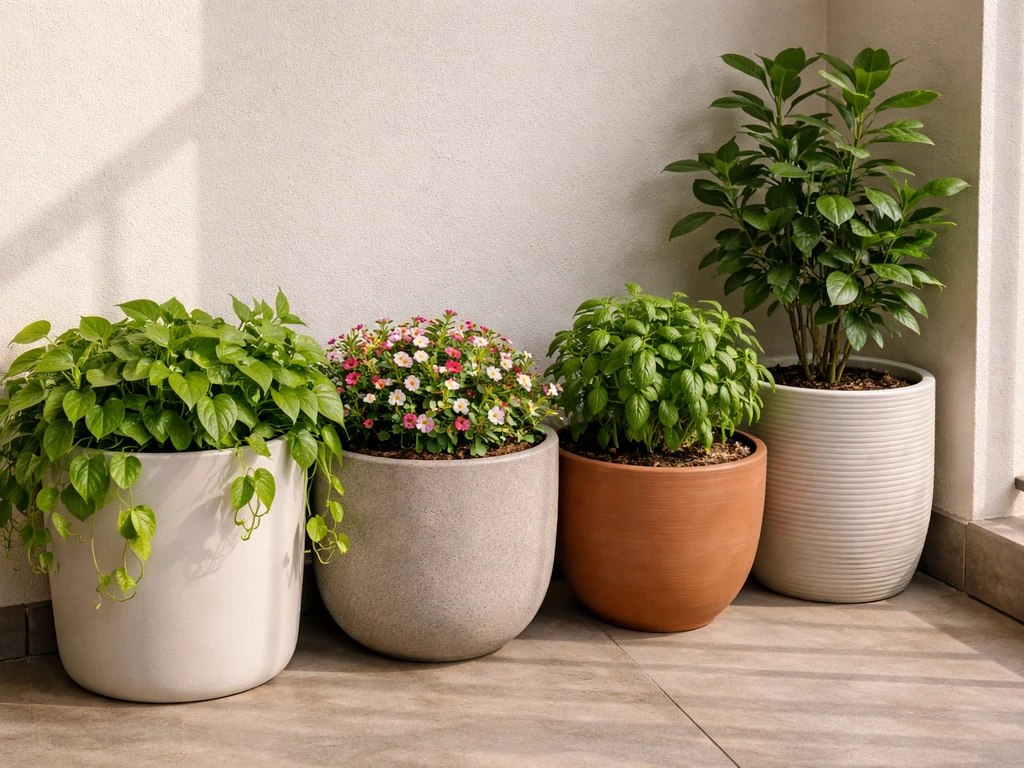
The best plants to grow on top of an aquarium are ones that genuinely like humidity, tolerate low to moderate indirect light, and can live comfortably in a shallow pot or tray without constant attention. Think pothos, peace lily, Boston fern, lucky bamboo, spider plant, Chinese evergreen, and certain orchids. Each of those will not just survive up there but actually do better than they would in a drier room, because an aquarium constantly releases moisture into the air directly below them. The key is matching the plant to your specific tank conditions rather than grabbing whatever looks nice at the garden center.
Best Plants to Grow on Top of Aquarium: Top Picks
Rachel Hartley
9 Apr 2026
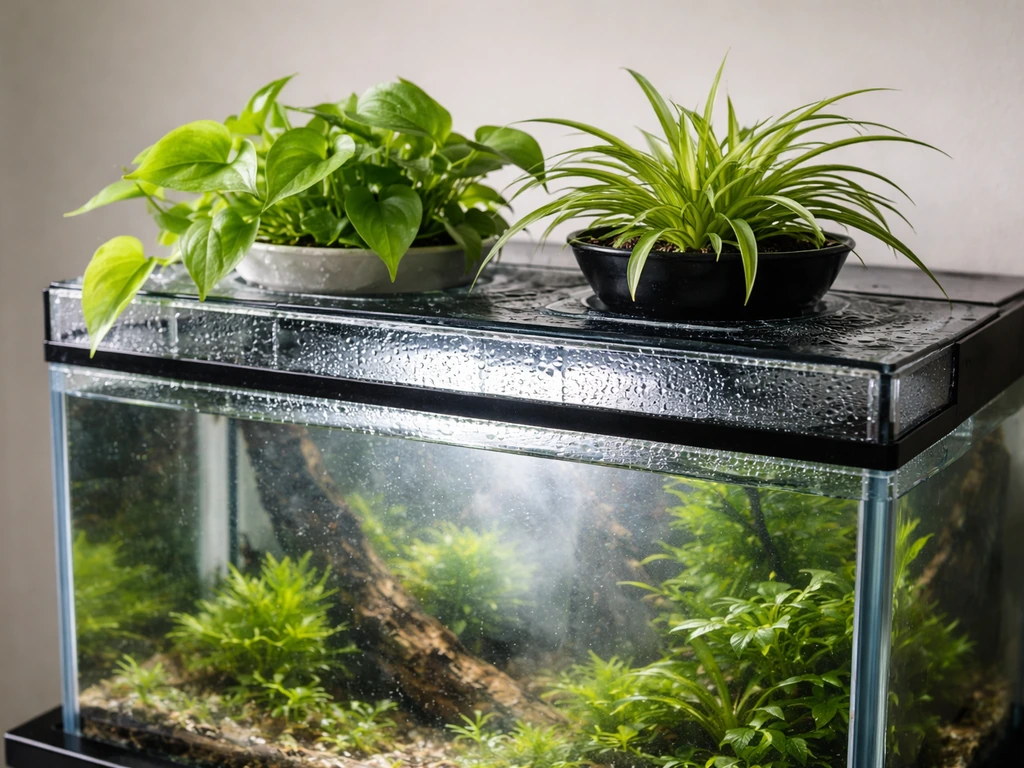
How to tell what will actually work on your tank top
Before you buy anything, spend five minutes assessing the spot. Four things determine whether a plant will thrive up there or slowly die: available light, surface space and depth, ambient moisture from the tank, and how much splash or drip the area gets.
Light: measure it before you guess
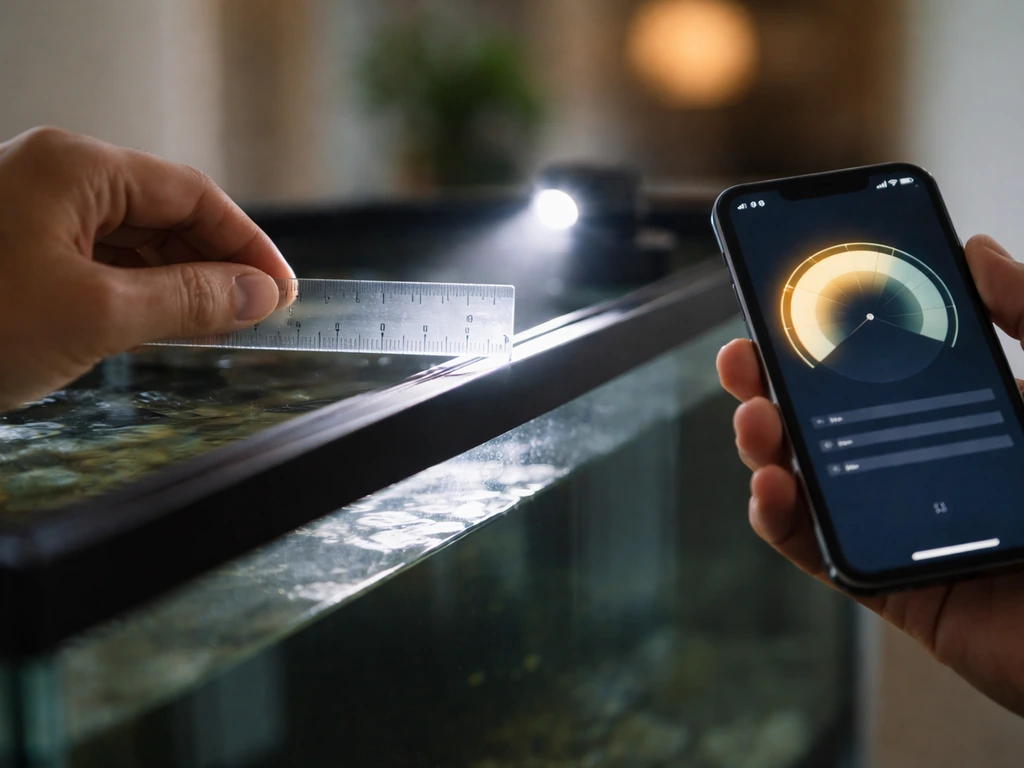
Most people underestimate how dark the top of an aquarium actually is, especially if the tank light points down into the water rather than up toward the room. The free Photone app (available on iOS and Android) can measure your light in lux or PPFD (µmol/m²/s) right at the spot where you plan to place plants. The Photone light meter app can measure PPFD ("PAR"), DLI, lux, and other light metrics using your phone’s camera sensor [Photone app](https://play. google.
com/store/apps/details? hl=en_AU&id=io. lightray. photone).
Hold your phone at the height where the plant's leaves will sit and aim the sensor toward the foliage angle, not at a nearby window, so you get a reading that reflects what the plant canopy actually receives. A reading above 1,000 lux means you have a decent range of options. Below 500 lux and you are in true low-light territory, where only the most shade-tolerant species will hang on.
If you have a planted aquarium, you may already know your tank's light intensity. Aquarium lighting guidelines suggest PAR values of 30 to 60 µmol/m²/s for most planted tanks, and above 60 for high-demand carpeting plants. A powerful aquarium grow light often throws some light upward and to the sides, which can supplement the plants sitting on top of the tank, but it is rarely enough on its own unless you add a small directed bulb aimed at the surface plants.
Space, depth, and the splash zone
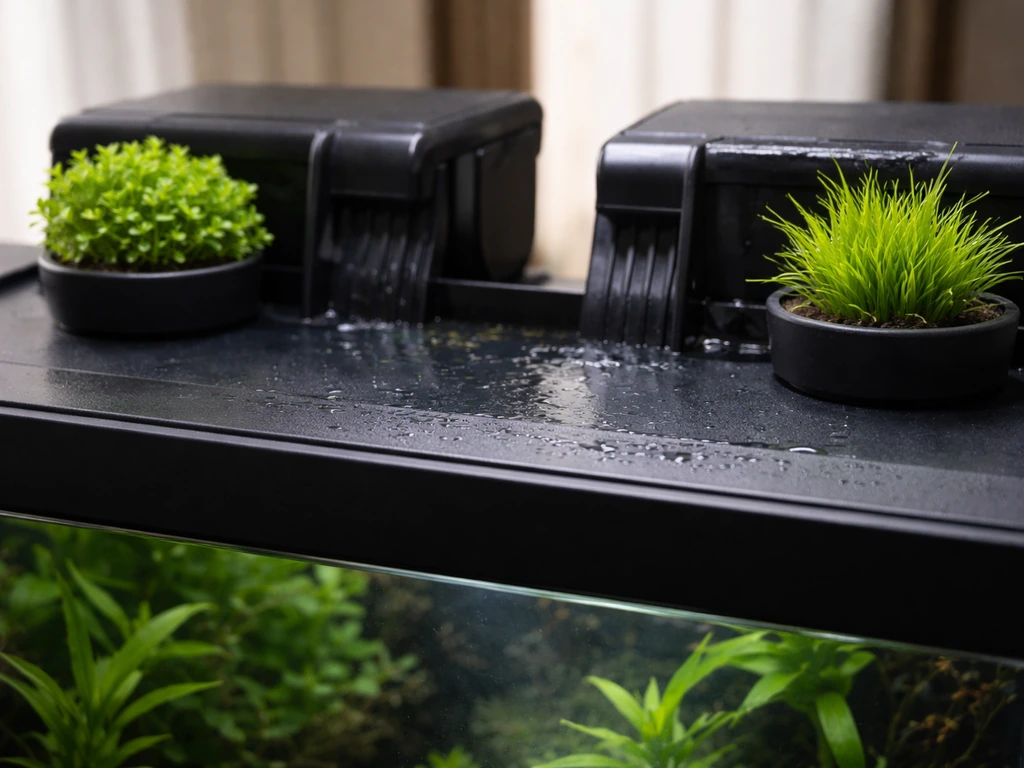
A standard aquarium lid gives you a narrow strip, often just 2 to 4 inches of usable flat surface on each side of any filter housing. That limits you to compact pots or long, shallow trays. Shallow-rooted plants win here. If your tank is rimless or has a wider lip, or if you have a stand with a shelf above the tank, your options open up considerably. Also pay attention to where water splashes during water changes or from a surface-agitating filter. Plants sitting directly in that zone need to tolerate periodic wet leaves, but as a general rule you want to minimize prolonged wet foliage because it will not readily dry and can invite rot or fungal issues.
Moisture and airflow
An aquarium surface, especially an open-top or loosely lidded tank, pumps humidity into the air above it constantly. That is a huge advantage for tropical humidity-lovers like ferns, orchids, and peace lilies. But if your home runs dry HVAC in winter (common in most of the US from November through March), that humidity boost may be the main reason anything survives up there at all. Conversely, filter outflow and any air pump generate airflow near the tank rim, which helps prevent the stagnant, wet-air conditions that cause fungal rot on foliage.
The best plants for the top of an aquarium
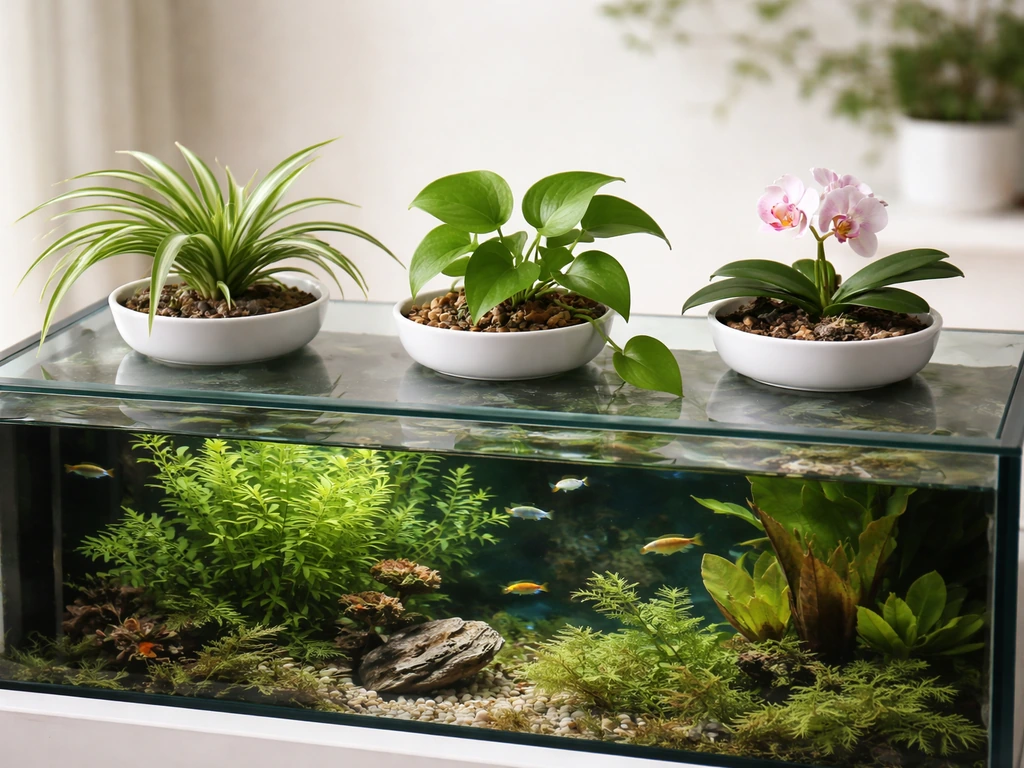
Here are the species that consistently perform well in this exact setup, ranked roughly from easiest to more involved. Each one has a clear reason it belongs on this list.
Easiest picks
- Spider plant (Chlorophytum comosum): nearly indestructible, handles low light and humidity swings, shallow-rooted, and safe for pets. One of the best choices if you have kids or cats around the tank.
- Lucky bamboo (Dracaena sanderiana): grows in just water or a thin layer of pebbles, which makes it perfect for a spot with minimal pot depth. Keep it out of direct light from the tank lamp and it will last for years.
- Chinese evergreen (Aglaonema): tolerates low light better than almost anything else on this list, adapts to high ambient humidity, and its compact growth habit means it won't crowd a narrow lid. Keep it away from cold drafts in winter.
- Heartleaf philodendron: grows fast in high humidity, handles low to medium light, and spills attractively over a tank edge. Important note: philodendron is toxic to dogs and cats, so skip it if pets have access to the area.
Mid-level picks
- Pothos (Epipremnum aureum): thrives in humidity and low light, trails beautifully over a tank, and is genuinely hard to kill. The only catch is that pothos is toxic to cats and dogs if ingested, so it only makes the list for pet-free households or tanks where animals can't reach the plants.
- Boston fern (Nephrolepis exaltata): one of the best-looking options for a tank top, loves the humidity, and is non-toxic to both dogs and cats according to the ASPCA. It needs medium indirect light and consistent moisture, so it is a step up in care but very rewarding.
- Peace lily (Spathiphyllum): thrives in low light and high humidity, which makes it a near-perfect fit for this environment. However, peace lily is toxic to both dogs and cats, so this is a pets-free-zone plant only.
- Nerve plant (Fittonia): tiny, colorful, and loves the exact humid microclimate an aquarium creates. It wilts dramatically when dry but bounces back fast. Works best in a small pot or tray where it won't dry out between checks.
Higher-maintenance but impressive picks
- Mini orchids (Phalaenopsis or Dendrobium): the humidity from the tank is exactly what orchids crave, and a good aquarium light supplement can push them into bloom. They need proper airflow around their roots and a bark-based mix, not regular potting soil.
- Tillandsia (air plants): no soil needed, just airflow and occasional misting. They look striking hanging or resting on a tank rim and actually pull moisture from the air the tank produces. The challenge is making sure they dry out between mistings; stagnant wet air causes rot.
- Mosses in a small tray: Java moss or cushion moss stays small, looks natural next to a tank, and thrives with the humidity. It needs almost no soil depth but does want indirect light.
Low-maintenance vs. high-maintenance: which style fits your life
Not everyone wants to fuss. If you are already maintaining a tank, you know that aquarium upkeep takes time, and adding demanding plants on top is a recipe for neglect. Be honest with yourself about how much time you have.
| Plant | Care Level | Light Need | Pet Safe? | Best For |
|---|---|---|---|---|
| Spider plant | Low | Low–medium | Yes | Beginners, pet owners |
| Lucky bamboo | Low | Low–medium | Mostly (varies) | Minimalists, small spaces |
| Chinese evergreen | Low | Low | No (toxic) | Low-light tanks, no pets |
| Boston fern | Medium | Medium indirect | Yes | Pet-friendly setups |
| Pothos | Low–medium | Low–high | No (toxic) | No-pet households |
| Peace lily | Medium | Low–medium | No (toxic) | No-pet households |
| Nerve plant | Medium | Low–medium | Yes | Humid tanks, small pots |
| Mini orchid | Medium–high | Medium–high | Yes | Experienced growers |
| Tillandsia (air plant) | Medium | Medium indirect | Yes | Unique, soil-free setups |
| Moss tray | Low | Low–medium | Yes | Natural-look aquascapes |
If you are newer to houseplants or already stretched on time, spider plant, lucky bamboo, and Chinese evergreen are the right call. They are forgiving, compact, and genuinely suited to a tank-top environment. If you enjoy plant care and want something more rewarding, a Boston fern or a mini orchid in a bark mix gives you a visually striking result. The same instinct that leads someone to explore growing plants in containers generally applies here: match the plant to the specific constraints of the spot, not to your wish list.
Setting them up safely: pots, trays, and water management
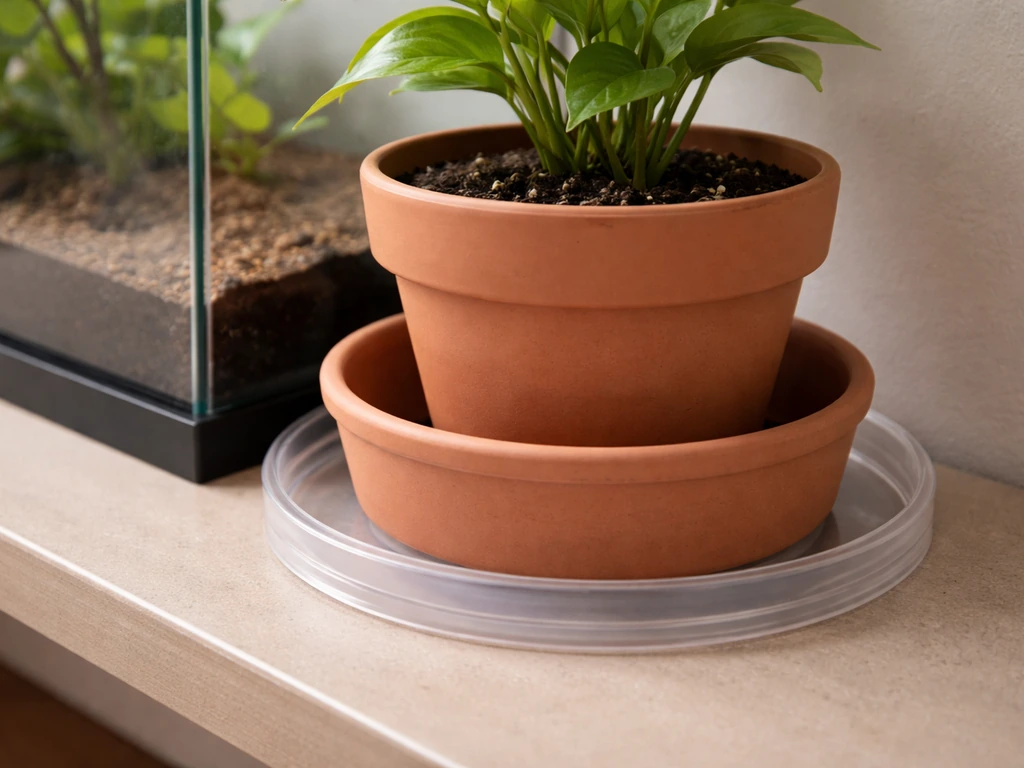
The biggest practical challenge is stopping water from dripping into the aquarium. Even a small amount of potting mix or fertilizer-laced water falling into the tank can stress fish or spike nutrient levels and cause algae blooms. Here is how to manage it.
Containers and barriers
Use pots with drainage holes set inside a sealed drip tray. The tray catches any overflow and prevents it from reaching the tank. Silicone drip trays or solid-bottom ceramic saucers work well. Avoid plastic trays that flex and tip. If space is very tight, self-watering inserts (a pot with a bottom reservoir) reduce how often you need to water while keeping the outer surface dry. For a narrower lid, a long, shallow planter tray (the kind used for propagation) lined with a thin layer of perlite or LECA works well and gives shallow-rooted plants exactly what they need.
Some setups use a wicking system, where a non-degrading wick sits in the bottom of the pot and draws water upward into the root zone by capillary action rather than letting it drain downward. Mossari states that each planter includes a built-in wick that sits inside the bottom of the pot and extends into the aquarium water wick sits in the bottom of the pot. This is the approach used by aquarium-mounted planter systems like Mossari's bracket setup: water moves up through the wick from a reservoir rather than trickling down and into the tank. It is worth noting that this kind of passive wicking system works poorly for succulents and cacti, which need completely dry roots between waterings.
What to put under the pots
Even with drip trays, condensation from the outside of a humid pot can leave residue on glass tank lids or wood stands. A thin silicone mat or a folded rubber shelf liner under each pot protects the surface and prevents sliding during water changes. If your stand has a shelf directly above the tank, consider attaching a shallow tray to the shelf with double-sided foam tape to contain any accidental spills.
Soil choices
Standard potting mix holds too much water in this environment and can turn anaerobic if it stays consistently wet. A mix of two parts regular potting soil, one part perlite, and one part orchid bark gives better drainage and airflow to roots while still retaining enough moisture for tropical species. For ferns specifically, a peat-free mix with coir works well. Plan to refresh your soil or substrate every 6 to 12 months, since compaction and salt buildup from tap water degrade it faster in humid, warm conditions near a tank.
Maintenance checklist
Once the plants are in place, the routine is simple if you stay consistent. Here is what to actually do and when.
Watering
Do not water on a rigid schedule. Instead, check the soil with your finger every few days and water only when the top inch is dry. The ambient humidity from the tank means these plants almost always need less water than you think. This is the same principle that applies in enclosed plantings: watering should respond to actual soil condition, not the calendar. Overwatering is the number-one killer in this setup. If your drip tray has standing water in it after 30 minutes, empty it so roots are not sitting in a puddle.
Trimming and tidying
Trim dead or yellowing leaves immediately. On a tank top, fallen leaf material can drop into the water and decompose, raising ammonia levels and stressing fish. Check weekly during the first month until you learn how fast each plant grows. Trailing plants like pothos and spider plant may need monthly trimming to keep them from hanging into the tank. If you are growing something with a climbing habit, you can train it up a small moss pole or bamboo stake positioned at the back of the tank, similar to what works well for climbing plants in containers.
Pests
Fungus gnats are the most common pest in this environment because the consistently moist air and soil near a tank is exactly what they love. Letting the top inch of soil dry out between waterings is the best prevention. If you already have them, yellow sticky traps near the pots catch adults, and a top dressing of coarse sand or LECA over the soil disrupts their egg-laying cycle. Avoid spraying neem oil or pesticide solutions near an open or loosely lidded tank; the drift can harm fish and invertebrates.
Seasonal adjustments
In winter, indoor heating drops relative humidity sharply, and even the tank's moisture output may not fully compensate, especially if your tank is tightly lidded. This is when ferns and nerve plants show their first signs of stress: brown leaf tips and dropped leaves. A small ultrasonic humidifier near the tank can bridge the gap from roughly November through March in most US climates.
In summer, growth speeds up and you may need to water more frequently, trim more often, and watch for spider mites, which thrive in warm, dry air if your AC runs heavily. If you are also growing food plants or flowering herbs in other spots around your home, the seasonal logic for those is similar to what you would apply to any container planting in tubs: more water and more trimming in peak growing months.
Common mistakes that kill these plants (and your fish)
Overwatering
This kills more tank-top plants than anything else. People assume that because they are near water, the plants must want more water. The opposite is often true: the ambient humidity reduces how fast the soil dries out, so you end up watering a plant that is already saturated. Stick your finger in the soil. If it is moist more than an inch down, leave it alone.
Wrong light assumptions
Assuming the aquarium light is doing double duty for the plants on top almost always leads to disappointment. Aquarium lights point down into the water. Even a bright reef or planted-tank light produces very little usable light for plants sitting on the lid surface. Measure before you plant, and consider adding a small LED grow bulb on a timer directed at your tank-top plants if your natural light is limited. This matters especially if your tank is in an interior room or a basement.
Putting toxic plants where pets can reach them
Pothos (Epipremnum aureum), philodendron, and peace lily are all genuinely toxic to dogs and cats. Pothos contains insoluble calcium oxalates that cause mouth and stomach irritation, drooling, and vomiting if ingested. Peace lily causes similar effects and is listed as toxic to both dogs and cats by the ASPCA. If your cat likes to jump on or near the tank (and most cats absolutely will), stick to spider plant, Boston fern, tillandsia, nerve plant, or moss. These are safer choices in a pet household.
Using soil that causes algae or contaminates the water
Regular potting mixes often contain slow-release fertilizers. If those wash into your tank during watering or overflow, they spike phosphates and nitrates in the water and trigger algae blooms. Use unfertilized mixes (check the bag) or inert substrate for any pot sitting directly above the tank. Fertilize your plants sparingly with a diluted liquid fertilizer applied carefully to the soil, never sprayed on foliage near an open tank.
Picking plants that need more space or deeper roots
Plants that want deep root runs, like tomatoes, large tropical aroids, or anything you would grow in a standard bucket garden, are simply the wrong choice for a tank top. The same goes for anything that grows wide and fast. You want plants that stay compact, grow slowly, and tolerate the shallow pot depth that the tank surface allows. If you find yourself drawn to bigger, bolder plants for a tank-adjacent setup, consider what works for a 5-gallon bucket planting instead, positioned beside or behind the tank on the stand where there is more room.
What about plants growing out of the water, not just on top?
There is a related but different setup: plants that root inside the aquarium water and grow their stems and leaves out through the surface or over the rim. That approach involves emergent aquatic plants and semi-aquatic species, and it has its own set of rules around root rot, water chemistry, and species selection. If that sounds more like what you are after, the guidance on plants that grow out of an aquarium covers that setup directly. The two approaches are complementary: some people run aquatic emergent plants inside the tank while also decorating the top surface with terrestrial tropicals in pots.
Your actual next steps
Measure your light first, then pick one or two plants from the easy column that match your pet situation and your honest time budget. Get shallow pots with drainage, set them in sealed drip trays, use a low-fertilizer or unfertilized mix cut with perlite, and check the soil moisture twice a week for the first month until you get a feel for how quickly it dries. Trim anything that hangs toward the water during every weekly tank maintenance session. That is genuinely all the setup this requires to get it working.
If this sparks a broader interest in creative container planting around your home, the same practical selection logic applies whether you are working with a tank top, a windowsill, a balcony rail planter, or anything in between. The guides on container plant selection and on creative options like growing plants in tubs are worth a look once you have the tank top dialed in.
FAQ
Can I grow plants on the aquarium lid if I have frequent splashes or heavy water change splatter?
Yes, but choose species that can handle “wet feet” briefly and keep the pot outer surface from holding liquid. Use a sealed drip tray and a mix with extra drainage (potting mix plus perlite, or bark-based blends). After water changes, inspect the tray after 30 minutes, empty any standing water, and dry any wet foliage residue so it does not stay soggy long enough to invite rot.
My tank-top plant is yellowing and looks droopy. How do I tell if it is too much water versus too little light?
If you see yellowing that starts at the lower leaves, mushy stems, or a consistently wet soil surface, it is usually overwatering rather than lack of humidity. Switch to soil checks (top inch dry), empty drip trays if they hold water after half an hour, and ensure your substrate drains well by increasing perlite or switching to a bark/perlite blend for orchids and ferns.
What fertilizer can I use safely if the pot sits directly above my aquarium?
Skip standing fertilizers and slow-release pellets in anything sitting directly above the tank. If you fertilize, use an unfertilized or inert substrate setup, then apply a diluted liquid fertilizer at soil level only, and wipe up any drips immediately. Also flush the pot carefully during a scheduled maintenance window only if your containment tray fully prevents runoff from reaching the aquarium.
Do I really need drainage holes if the humidity is already high on top of the tank?
Drainage holes are non-negotiable for most tank-top plants, but “leak-proof” containment matters just as much. Use a sealed drip tray that cannot flex or tip, and add a secondary barrier under the tray (a silicone mat or shelf liner) to catch condensation or micro drips. This prevents both nutrient transfer and wood damage under stands.
How do I prevent plants like pothos or spider plant from dropping leaves into the aquarium?
If the plant keeps falling into or over the rim zone, you risk both leaf debris in the tank and excess wetting from splash. Trim on a schedule tied to growth during the first month, position pots so leaves do not reach the waterline, and for trailing plants use shorter pots or clip back frequently rather than letting vines drape into the splash area.
If my aquarium is well-lit for fish, will that light be enough for plants on top without extra grow lighting?
Yes, but do it deliberately. Measure your light at plant canopy height, then add a small directed LED grow light for the lid plants on a timer. Aim the light so it reaches the foliage angle, and expect aquarium lights alone to under-deliver for many common houseplants.
What types of plants should I avoid because they require too much root depth or space for a lid setup?
For tank-top setups, aim for compact growth and shallow root volume, usually shallow trays or pots rather than tall containers. Plants like pothos and peace lily can work in shallow containers, but anything that wants deep rooting or spreads rapidly tends to become unstable, dries unevenly, or forces you into repotting too often above the aquarium.
Can I use a wicking system on top of an aquarium, and are there plants that should not be wicked?
If you are using a wicking pot, it only works when water is fed upward from a reservoir without dripping down into the aquarium. Avoid the wick approach for succulents and cacti because they require dry intervals. Even for humidity-lovers, monitor the wick system for leaks or overflow in the reservoir so it does not become a constant drip source.
My tank-top plants get fungus gnats. What is the fastest way to control them without harming the fish?
In most homes, fungus gnats peak when the potting mix stays damp at the top inch. Let the top inch dry before watering, add a coarse top dressing like LECA or coarse sand, and use sticky traps positioned close to the soil surface. If the issue persists, consider switching to a chunkier, faster-draining substrate so the surface does not remain continuously moist.
How can I estimate light if I do not want to use a light meter app?
Measure at the spot where the plant leaves will sit and include the angle, because light can be very different at lid height versus the room. If you cannot measure, a practical rule is to assume interior rooms and basements are dim unless you see strong daylight reaching the lid, then plan on a directed LED.
What should I do about condensation and water residue on the tank lid or stand?
Condensation is normal, but residue on glass and wood should be managed. Add a thin protective barrier under each pot, ensure your drip tray catches overflow, and wipe any water droplets from the lid or stand after heavy condensation periods. If you live in a very dry winter, you may need humidity support, but too much water on the outside can still cause moldy residues.
Are any popular tank-top plants safe around cats and dogs?
Yes, especially with pet-owning households, but the safest path is to assume any plant may be chewed or mouthed. Use pet-tolerant choices like spider plant, Boston fern, tillandsia, nerve plant, or moss, and avoid common toxic options like pothos and peace lily even if they are “tempting” because they tolerate humidity well.
What are the first troubleshooting steps if my tank-top plants fail after a few weeks?
If your plants are not thriving, the quickest diagnostic steps are: confirm light at canopy height, verify that the soil is not staying wet (finger test), inspect the drip tray for standing water after 30 minutes, and check whether leaf surfaces stay wet for long. Correct one variable at a time so you can identify what actually fixed the problem.
Next Article
Best Plants to Grow in Containers: Easy Pairings and Care
Best container plants for patios and balconies, with easy pairings plus sizing, soil, light, and watering care tips by s