A 5-gallon bucket is one of the most capable containers in the home garden. It holds enough soil to support tomatoes, peppers, cucumbers, herbs, and a surprising range of flowering plants, and it costs almost nothing to set up. The plants that do best in them are ones with moderate root depth needs, reasonable water tolerance, and a growth habit that doesn't demand more horizontal space than the bucket's roughly 12-inch diameter provides.
Best Plants to Grow in 5 Gallon Buckets
Rachel Hartley
17 Apr 2026
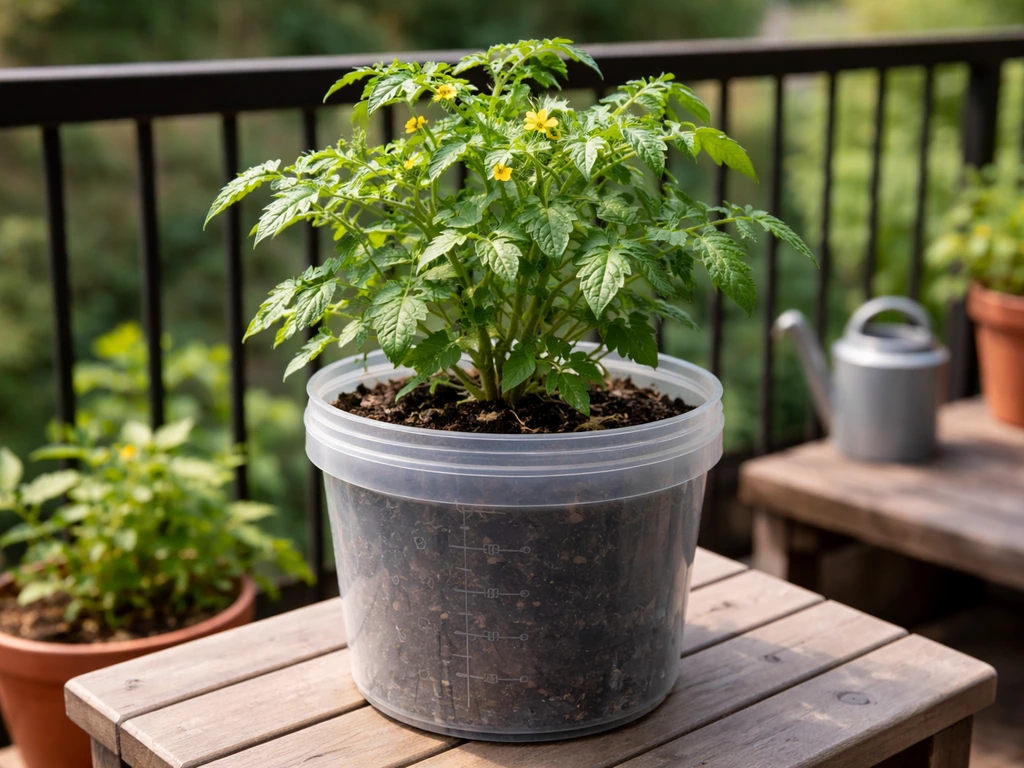
Here's the short answer: tomatoes (compact or dwarf varieties), peppers, herbs like basil and parsley, bush beans, cucumbers on a small trellis, and flowering annuals like marigolds and geraniums are all reliable performers. The longer answer depends on your light situation, your climate, and what you actually want out of the bucket.
Best plant picks for 5-gallon buckets
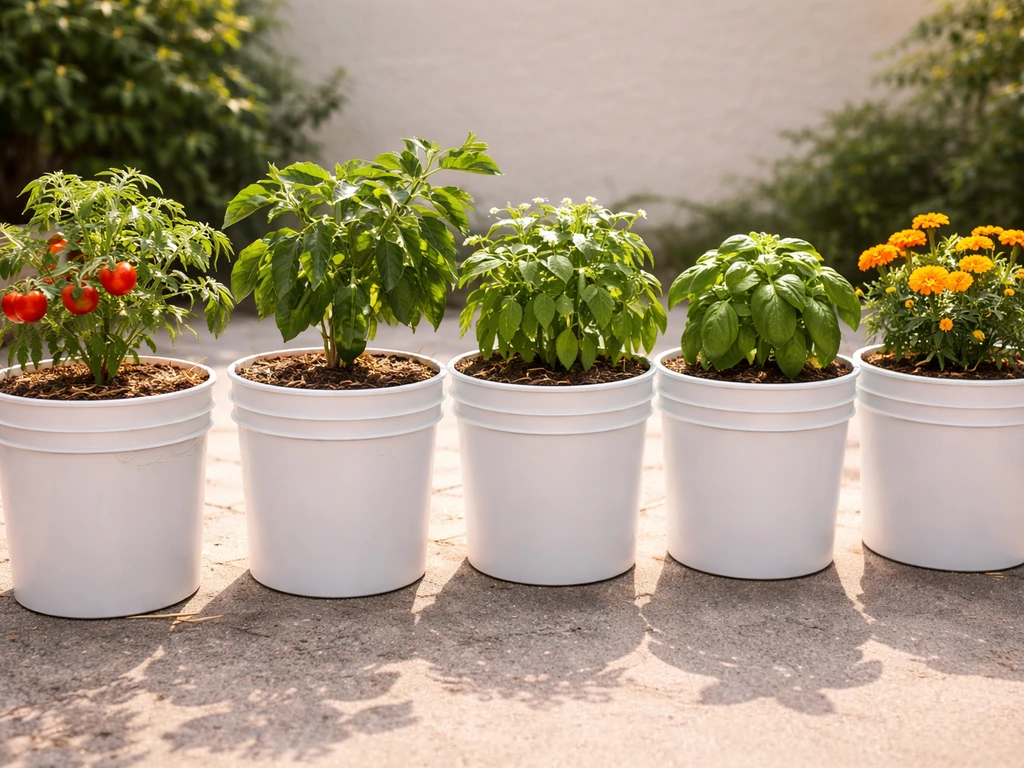
These are the plants that consistently deliver in a 5-gallon bucket without requiring heroic effort. Whether you're working a balcony, a driveway, or a small patio, any of these will reward you if the setup is right.
| Plant | Category | Sun Needed | One Plant Per Bucket? | Notes |
|---|---|---|---|---|
| Tomato (dwarf/patio) | Vegetable | 6-8 hrs full sun | Yes, one plant | Needs support stake; water consistently |
| Pepper (sweet or hot) | Vegetable | 6+ hrs full sun | One, maybe two if compact | Handles heat well; great in buckets |
| Cucumber (bush type) | Vegetable | 6-8 hrs full sun | One plant | Add a small cage or trellis |
| Bush beans | Vegetable | 6+ hrs | 4-6 plants | Fast producers; replant after harvest |
| Basil | Herb | 6+ hrs | 2-3 plants | Pinch flowers for continuous harvest |
| Parsley / Cilantro | Herb | 4-6 hrs (tolerates partial shade) | 3-4 plants | Great for shadier spots |
| Lettuce / Spinach | Leafy green | 3-5 hrs | 5-6 plants | Cool-season crop; bolt in summer heat |
| Marigold | Flower/Ornamental | Full sun preferred | 3-4 plants | Pest-repellent bonus near edibles |
| Geranium (Pelargonium) | Flower/Ornamental | Full to partial sun | 2-3 plants | Long blooming; easy to overwinter |
If you want a broader look at what works across container sizes and types, the guide on best plants to grow in containers covers the full range from small pots to large planters and helps you match plant ambition to what you actually have on hand.
How to choose plants based on your goal
Your goal changes everything. A balcony grower in an apartment who wants dinner herbs needs a completely different setup than someone trying to produce tomatoes all summer. Break it down by what you're trying to get out of the bucket.
If you want food crops
Go for tomatoes, peppers, cucumbers, or bush beans if you have strong direct sun (6 or more hours). These are fruiting crops and they need that energy to set fruit. One compact tomato plant per bucket, one pepper per bucket, one cucumber per bucket. For greens and salads, lettuce and spinach can get by with less light and work well in spring and fall when temperatures are cooler. The 5-gallon size is genuinely the minimum for tomatoes and peppers, and going bigger only helps, but a 5-gallon bucket absolutely works if you manage water and feed consistently.
If you want herbs
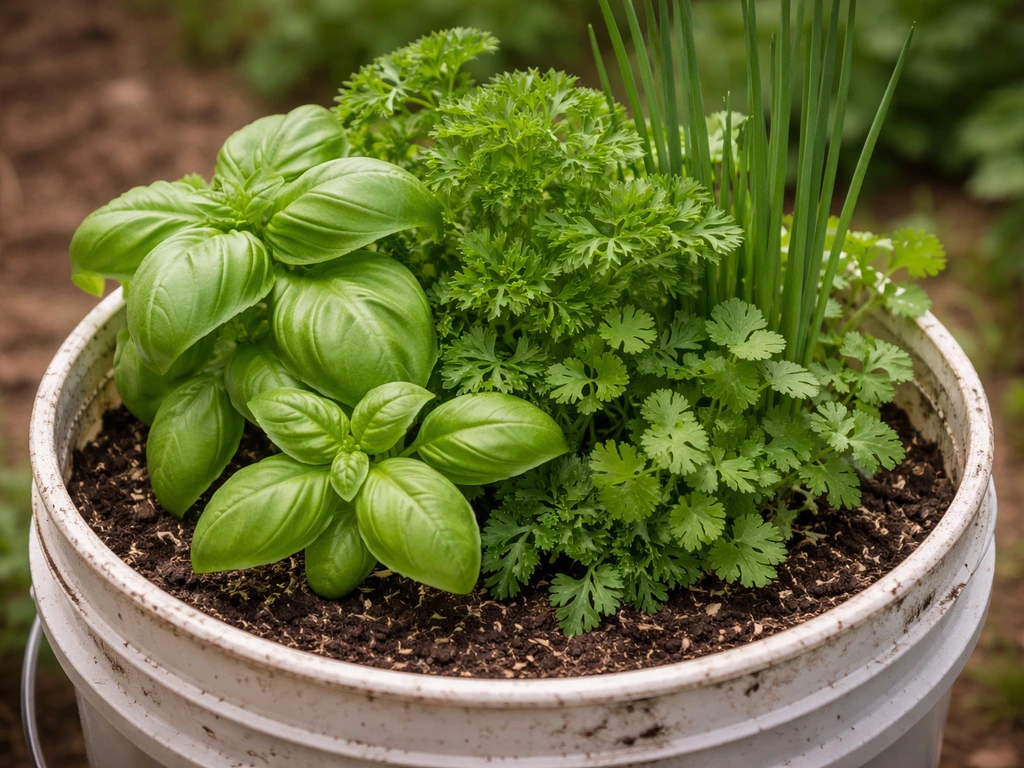
Herbs are among the best values in a 5-gallon bucket. Basil, parsley, cilantro, chives, and oregano all do well. You can grow a small herb community in one bucket, though some herbs (like mint) prefer their own space because they spread aggressively. Basil loves heat and full sun. Cilantro bolts quickly in summer, so it's better as a cool-season herb or in a partially shaded spot. For a more extensive look at options depending on your setup, the article on best plants to grow in buckets covers additional plant families that translate well to bucket gardening.
If you want flowers or aesthetics
Marigolds, geraniums, petunias, and calibrachoa are all strong bucket performers. They fill in quickly, bloom heavily through summer, and can tolerate the warmth that buckets tend to amplify compared to in-ground beds. If you're going for a more dramatic vertical display, some trailing or climbing flowering varieties can work with a bit of support. The guide on best climbing plants to grow in containers is worth checking if you want upward-growing ornamentals in a bucket setup.
Light, heat, and climate: matching plants to your actual conditions
This is where most bucket-gardening advice goes vague when it should be specific. The plant choices on your balcony in Seattle look different from those on a south-facing driveway in Phoenix in July, and they should.
Fruiting vegetables like tomatoes, peppers, cucumbers, and eggplant need at least 6 hours of direct sunlight per day. Leafy crops like lettuce and spinach can get by with 3-5 hours and actually prefer the cooler conditions that partial shade provides. If you're working with limited light, skip the tomatoes and lean into herbs and greens. They'll outperform a struggling tomato plant every time.
Seasonality matters as much as sunlight. In most of the U.S., buckets let you start earlier in spring (they warm up faster than ground soil) and keep going a bit later into fall. For summer heat, peppers and sweet potatoes thrive. In early spring or fall in cooler climates, lettuce, spinach, and parsley are your friends. Midsummer in a place like Texas or Arizona is brutal for anything in a dark-colored bucket, because the root zone can cook. Light-colored buckets or bucket covers help a lot in hot climates.
For those in colder regions with short growing seasons, one underrated trick is moving the buckets indoors or into a garage once temperatures drop in fall. Overwintering a pepper or geranium in a bucket extends its productive life significantly. One technique recommended by extension sources is to heel container plants into the ground after they go dormant in fall, which insulates the root zone from freeze-thaw cycles and keeps the plant alive for the next season.
Setting up the bucket to actually work
The right plant in the wrong bucket setup will still fail. Here's how to get the container basics right.
Drainage first
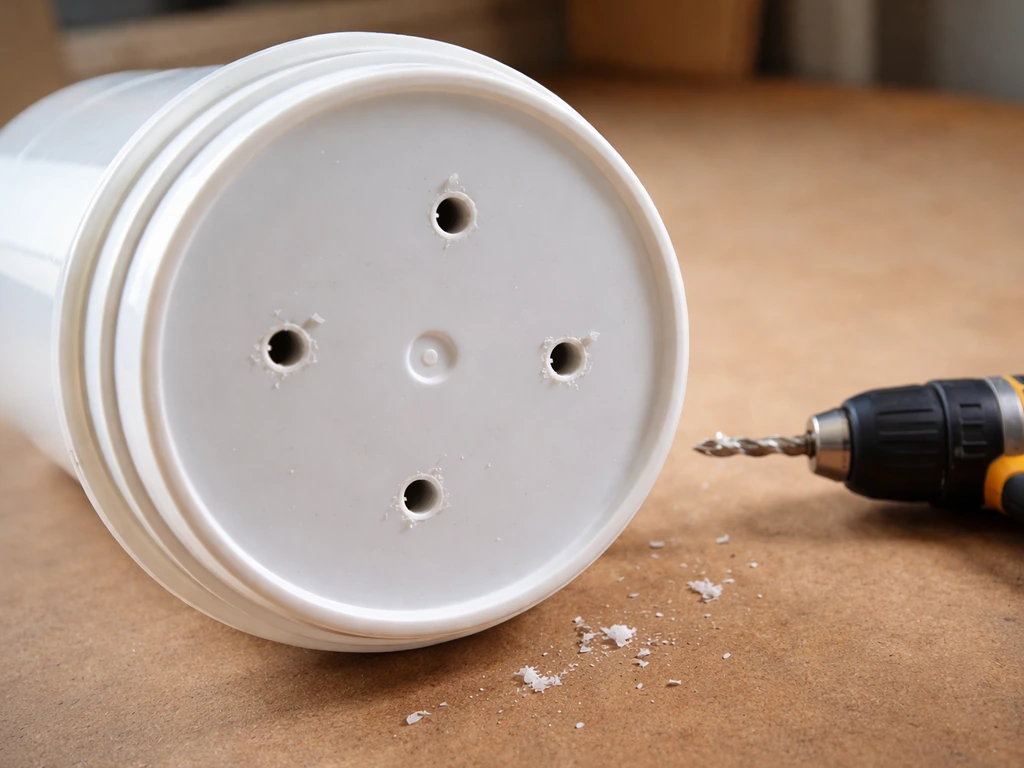
Drill 4-6 holes in the bottom of the bucket, at least 1/4 to 1/2 inch in diameter. Seriously, don't skip this. Waterlogged roots kill plants faster than almost anything else. If you're setting the bucket on a surface where drainage will be an issue, elevate it slightly on bricks or a plant stand to let water escape freely.
Soil: use potting mix, not garden soil
Regular garden or field soil compacts in containers, drains poorly, and can introduce disease. Use an all-purpose potting mix that already contains perlite or vermiculite for aeration and drainage. These lightweight materials also help with water retention between waterings without creating a soggy root zone. If your potting mix doesn't already include them, mix in a handful of perlite per bucket. Avoid anything labeled "topsoil" or "garden soil" for containers.
Fertilizer approach
Start with a slow-release granular fertilizer mixed into the potting soil at planting time. A good slow-release formula has at least one-third of its nitrogen in water-insoluble or slowly available form, which means it won't all flush out after the first few waterings. That said, frequent watering does leach nutrients from containers over time, so supplement with a water-soluble fertilizer every 2-3 weeks once plants are actively growing. For tomatoes, a calcium-rich fertilizer or occasional calcium supplement at the soil level (not foliar sprays, which don't actually fix blossom end rot once it's already happening) helps prevent the most frustrating tomato problem in buckets.
Watering in buckets
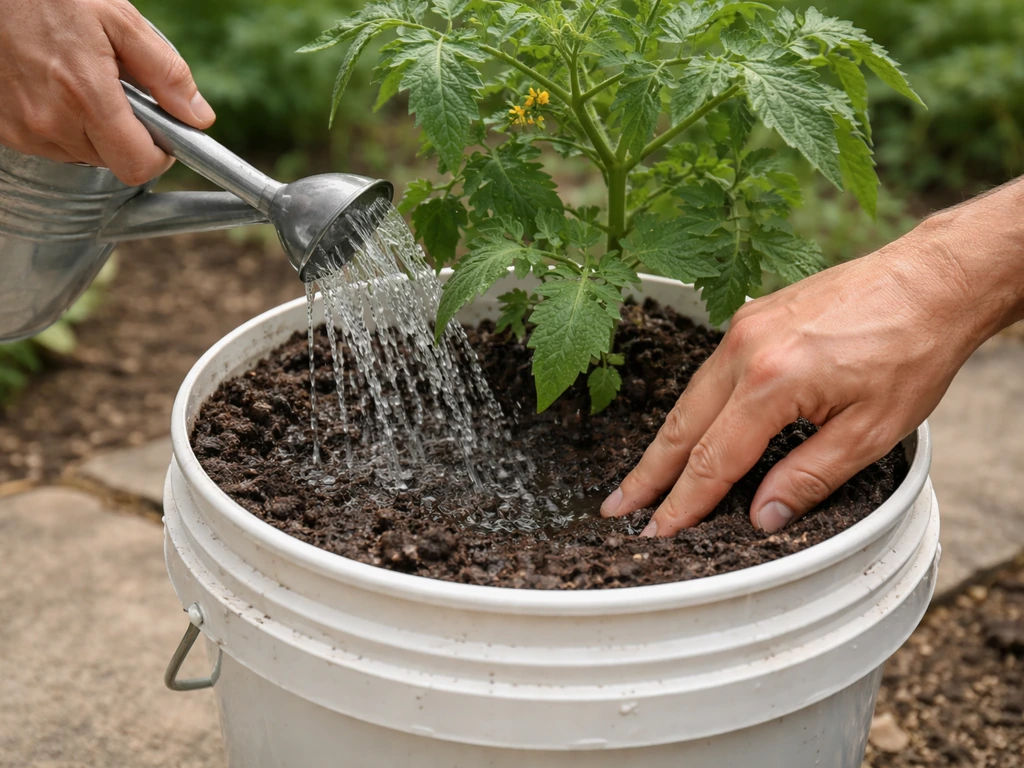
This is the part that surprises first-timers: 5-gallon buckets dry out fast. In summer heat, a tomato plant may need water once or even twice a day. Stick your finger 2 inches into the soil; if it's dry, water thoroughly until it runs freely out the drainage holes. Inconsistent watering causes issues beyond just wilting.
The University of Maryland Extension notes that inconsistent watering encourages blossom end rot in tomatoes by affecting calcium uptake, and mature tomato plants may need about 2 to 3 gallons of water per week In tomatoes, inconsistent watering can drive blossom end rot. In tomatoes, it's the main driver of blossom end rot because calcium uptake depends on steady water movement through the plant.
Consistent moisture is not optional; it's the core management task.
Best edible options: herbs and vegetables that actually deliver
Here's a more detailed look at the edible crops that work reliably in a 5-gallon bucket, including realistic expectations.
Tomatoes
A 5-gallon bucket is the minimum you want for tomatoes, and it works best with compact or patio varieties like Tumbling Tom, Patio, Bush Early Girl, or Celebrity rather than indeterminate giants. One plant per bucket. Plan on staking or caging early because by midsummer these plants get heavy. Expect fruit in 60-80 days from transplant depending on variety. Water deeply and consistently, targeting roughly 1 inch equivalent per week as a baseline and adjusting up for heat. Blossom end rot is the most common problem; fix it with consistent watering and calcium in the soil, not sprays.
Peppers
Peppers are arguably the best fruiting vegetable for 5-gallon buckets. They're more heat-tolerant than tomatoes, less demanding about water consistency, and they produce prolifically in containers. One plant per bucket for standard-size pepper varieties. Sweet bell peppers, banana peppers, jalapeños, and habaneros all work. Expect first harvest 60-90 days from transplant. They can even overwinter indoors in mild climates and re-produce the following year.
Cucumbers
Cucumbers need more water than peppers but produce quickly (50-60 days from transplant). One bush-type cucumber plant per bucket, with a small cage or trellis. Varieties like Bush Pickle or Spacemaster are made for this. They're vigorous, so keep up with watering in heat. Pick cucumbers frequently or the plant slows fruit production.
Bush beans
Bush beans are one of the fastest, lowest-maintenance crops in a bucket. Plant 4-6 seeds per 5-gallon bucket, direct sow (they don't transplant well), and you'll have beans in 50-60 days. Unlike pole beans, they don't need staking. After the main harvest flush is done, pull the plants and start a new batch for a second crop in the same season.
Herbs
Basil, parsley, cilantro, chives, and oregano all do extremely well in 5-gallon buckets. You can grow 2-4 herb plants together in one bucket. Basil prefers its own bucket if you're growing a lot of it. Pinch flower buds on basil as soon as they appear to keep leaves coming. Parsley and chives are nearly foolproof and tolerate partial shade better than most herbs.
Lettuce and salad greens
Lettuce, spinach, arugula, and kale are excellent cool-season bucket crops. They can handle partial shade and are ideal for spring and fall in most climates. Plant 5-6 loose-leaf lettuce plants per 5-gallon bucket. Once temperatures consistently exceed 80-85°F, they bolt and turn bitter. Plan accordingly: start them early in spring or wait until late summer to plant for fall harvest.
Best flowering and ornamental options for buckets
Not every bucket needs to be a food producer. Ornamentals in buckets offer flexibility, color, and for some plants, pest-management benefits when placed near edibles.
Marigolds are one of the highest-value bucket ornamentals because they do double duty: they bloom prolifically all season and repel certain pests when placed near tomatoes and peppers. Plant 3-4 per bucket in full sun. Expect blooms within 6-8 weeks of transplant and continuous color through first frost.
Geraniums (Pelargonium) are reliable, heat-tolerant performers that bloom from spring through fall and tolerate some neglect. They work in full sun or partial shade. Two to three plants per bucket look full and lush by midsummer. They can be brought indoors for winter, making them a multi-year investment.
Petunias and calibrachoa (million bells) trail nicely over the edges of buckets and produce an almost absurd amount of bloom for minimal care. They prefer full sun but will tolerate a few hours of afternoon shade. Deadheading spent blooms keeps them producing, though some newer varieties are self-cleaning.
If you've got a larger tub or want to pair bucket gardening with other container styles, it's worth knowing how various plants behave in slightly bigger setups. The article on best plants to grow in tubs is a natural next step if you want to scale up your ornamental or edible container garden.
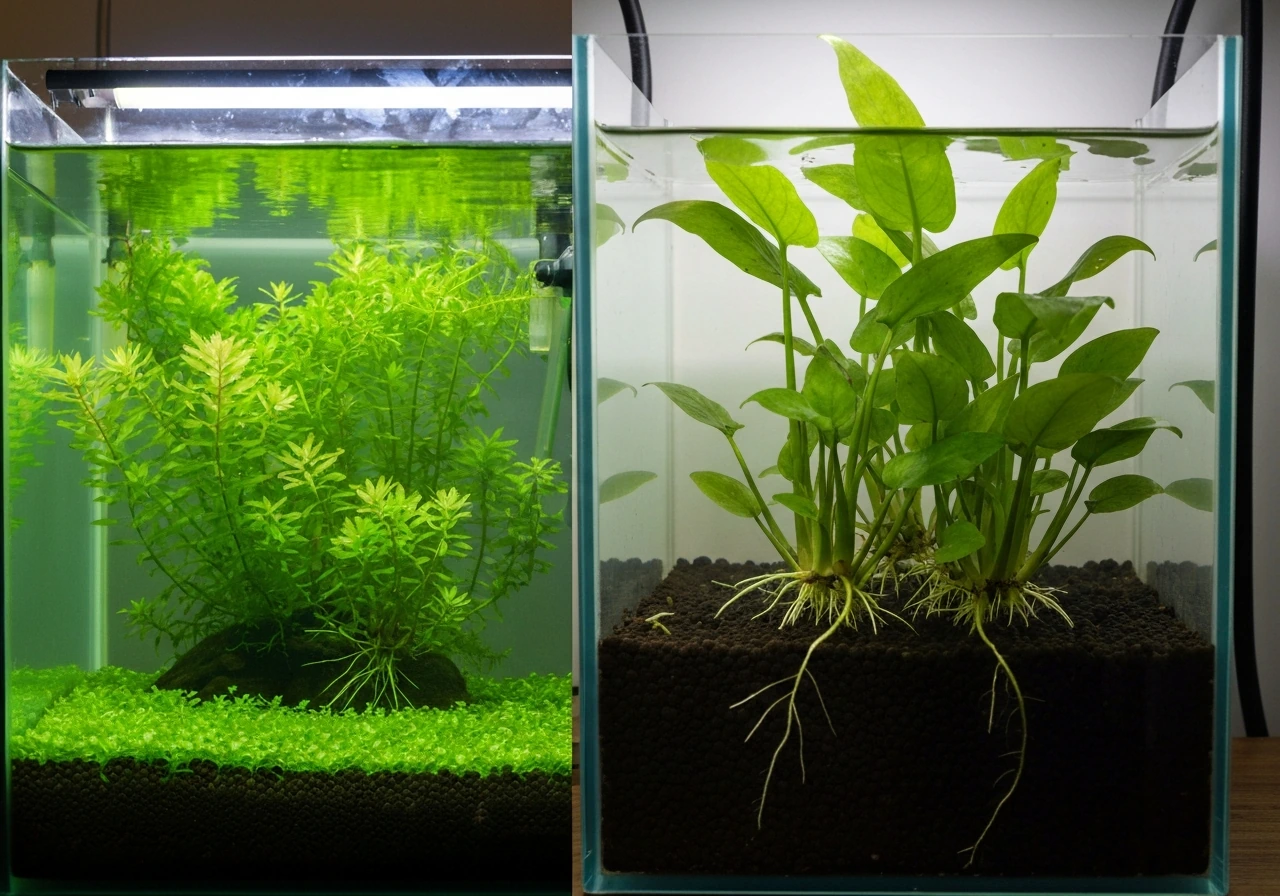
For something more experimental, some gardeners use buckets as part of hybrid water-gardening setups. If that's a direction you're curious about, the guides on best plants to grow on top of aquarium and best plants to grow out of aquarium cover how plant-water integration works in practice.
Maintenance, harvest expectations, and what goes wrong
What to expect week by week
The first 2-3 weeks after planting are mostly about establishment. Water regularly, don't over-fertilize young transplants, and don't panic if growth looks slow. Once roots settle in, growth accelerates. Most herbs are harvest-ready in 3-4 weeks from a healthy transplant. Bush beans produce in about 7-8 weeks from seed. Peppers and tomatoes take 8-12 weeks from transplant to first ripe fruit depending on variety and weather.
Common problems and how to fix them
- Wilting in the morning or evening: This is almost always underwatering in a bucket. Check moisture 2 inches down and water if dry. If soil is wet and the plant is still wilting, you may have root rot from poor drainage, which usually means starting over with better drainage holes.
- Blossom end rot on tomatoes: Dark, sunken patches on the bottom of fruit. Caused by calcium not reaching the fruit, usually driven by inconsistent watering. Fix by maintaining even soil moisture. Foliar sprays won't reverse rot that's already happened, but consistent watering prevents new fruit from developing the problem.
- Yellowing leaves (bottom of plant first): Classic nitrogen deficiency from nutrient leaching in a frequently watered container. Supplement with water-soluble fertilizer. If the pattern is irregular or includes purple tints, check for phosphorus issues.
- Leggy, stretching plants: Not enough light. Move the bucket to a sunnier location or switch to a more shade-tolerant plant like parsley or lettuce.
- Powdery white coating on leaves: Powdery mildew. Most common on cucumbers, squash, and beans. Improve air circulation around the bucket by moving it to a more open spot and removing overcrowded foliage. Avoid wetting leaves when watering.
- Aphids or whiteflies: Common on peppers and basil. Knock them off with a strong stream of water or use insecticidal soap. A nearby bucket of marigolds helps deter them.
- Roots circling at the bottom of the bucket: The plant is root-bound. Either move it up to a larger container or accept reduced productivity. This is a natural endpoint for the growing season in a 5-gallon bucket.
Overwintering and extending the season
One genuine advantage of bucket gardening is mobility. Before your first hard frost, move cold-sensitive plants like peppers and geraniums indoors to a bright window or garage. They'll go semi-dormant but can be revived in spring for another productive season. In colder climates, perennial bucket plants that have gone dormant can be heeled into the ground (bucket and all) to insulate the root zone from freeze damage through winter, then dug back up and brought out in spring.
The bottom line for 5-gallon buckets: start with one of the proven picks from the table above, get the soil and drainage right before you plant, water consistently (especially in heat), and don't wait too long to start feeding with a liquid fertilizer once plants are established. Pick the plant that matches your light situation and your season, and a 5-gallon bucket will give you genuine harvests or real blooms without needing a big garden to back it up.
FAQ
Can I reuse old 5-gallon bucket soil, or should I start fresh every season?
Start fresh when possible. Even if plants look healthy, old potting mix can carry disease spores and depleted nutrients. If you must reuse it, remove debris, screen out compacted clumps, then blend with fresh potting mix and add a small amount of slow-release fertilizer, but expect lower performance in heavy feeders like tomatoes and peppers.
Are plastic buckets safe for food or edible plants, and what should I avoid?
Food-safe is ideal, but more important is that the bucket is clean and not chemically treated. Avoid buckets that held unknown chemicals, solvents, or pesticides. If it’s a food-grade bucket, still rinse thoroughly, then ensure proper drainage and use potting mix rather than any residue from previous uses.
How many plants can I fit in one 5-gallon bucket without them competing?
Most fruiting plants want one per bucket (one compact tomato, one pepper, one cucumber on a small trellis). For herbs, you can combine, typically 2 to 4 plants per bucket, but basil usually does better as a single plant. For leafy greens, aim for about 5 to 6 loose-leaf plants per bucket, and thin if they crowd.
What’s the best way to water 5-gallon buckets when I’m busy and can’t water daily?
Use a consistent moisture approach rather than letting it fully dry. Options include adding a layer of mulch on top, using a moisture-wicking system (self-watering bucket inserts or a wick to a reservoir), or setting a simple schedule during hot weeks. In peak summer, even short gaps can increase blossom end rot risk for tomatoes.
Do I need to drill drainage holes in every bucket, even if the bucket already has some holes?
Yes, ensure you have enough holes for fast runoff. Aim for 4 to 6 holes, and keep hole diameter large enough to prevent clogging (roughly 1/4 to 1/2 inch). If water pools on top, add more holes or elevate the bucket so excess water can escape from the container surface.
What potting mix should I buy if I can’t find one labeled specifically for containers?
Choose an all-purpose potting mix meant for containers, and confirm it includes aeration like perlite or vermiculite. Avoid “topsoil” and “garden soil,” since they compact and can suffocate roots. If the mix seems dense, mix in perlite until it feels lighter and crumbly.
Why are my tomato fruits getting blossom end rot even though I fertilize?
Fertilizer alone usually won’t fix it. Blossom end rot is typically driven by inconsistent watering that disrupts calcium movement in the plant. Keep moisture steady (don’t let the bucket dry out completely), and use a calcium source in the soil rather than relying on foliar sprays once fruit symptoms appear.
How do I prevent cucumbers from getting bitter or stopping production?
Bitter cucumbers and slow production often come from irregular watering or letting fruit sit too long. Keep soil evenly moist, trellis if possible to improve airflow, and pick cucumbers frequently as they size up. If heat spikes, provide partial afternoon shade when you can.
Should I grow lettuce and spinach in spring or fall in a 5-gallon bucket?
Both work, but fall often produces the most reliable harvest in many regions because temperatures stay moderate longer. If your area hits 80 to 85°F consistently in spring, lettuce and spinach may bolt and turn bitter, so starting earlier or planning a late-summer planting for fall is a safer bet.
Is it worth growing eggplant in a 5-gallon bucket, and what changes compared with tomatoes?
Yes, but only if you can meet the light and water needs. Eggplant is also a full sun, fruiting crop, and it benefits from stable moisture like tomatoes. Consider using one plant per bucket, start with a larger potting mix volume than you might for leafy greens, and watch for heat stress since buckets warm quickly.
Can I overwinter peppers and geraniums in buckets, and how do I do it without stressing the plant?
Move them before the first hard frost to a bright window or a cool garage where temperatures stay above freezing. Expect semi-dormancy, water sparingly but don’t let the soil fully bone dry. In spring, gradually increase light and resume a light feeding schedule once you see new growth.
Next Article
Best Plants to Grow Out of Aquarium and In Tanks
Best emersed and aquarium plants, plus step-by-step transition, care changes, and troubleshooting for faster success.