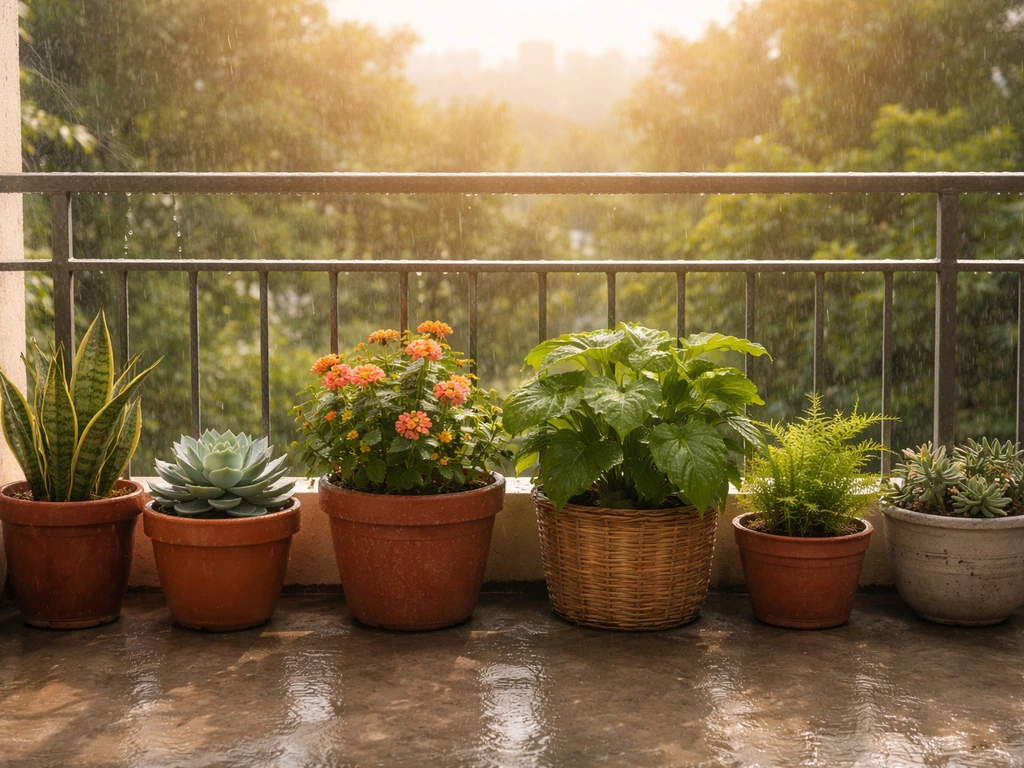
The plants most reliably worth growing for money right now are culinary herbs, microgreens, cut flowers (especially zinnias and sunflowers), and propagated starts or perennial divisions. Those four categories consistently deliver the combination of fast turnover, low input cost, and strong local buyer demand that actually produces profit at small scale. Beyond that core list, your best picks depend on three things: where you live, how much space you have, and where you plan to sell. A gardener with a balcony in Portland growing basil for a farmers market is in a completely different position than someone with a half-acre in Georgia who wants to supply a florist. This guide walks through both scenarios and everything in between.
Best Plants to Grow to Make Money: A Practical Guide
Rachel Hartley
9 Jul 2026
Choose your money-making goals and sales channels first
The plants you grow should follow the channel you sell through, not the other way around. Each sales channel rewards different things: volume, freshness, visual appeal, or rarity. Before you plant a single seed, decide which channel fits your life right now.
| Sales Channel | Best Plant Types | What Buyers Pay For | Realistic Starting Scale |
|---|---|---|---|
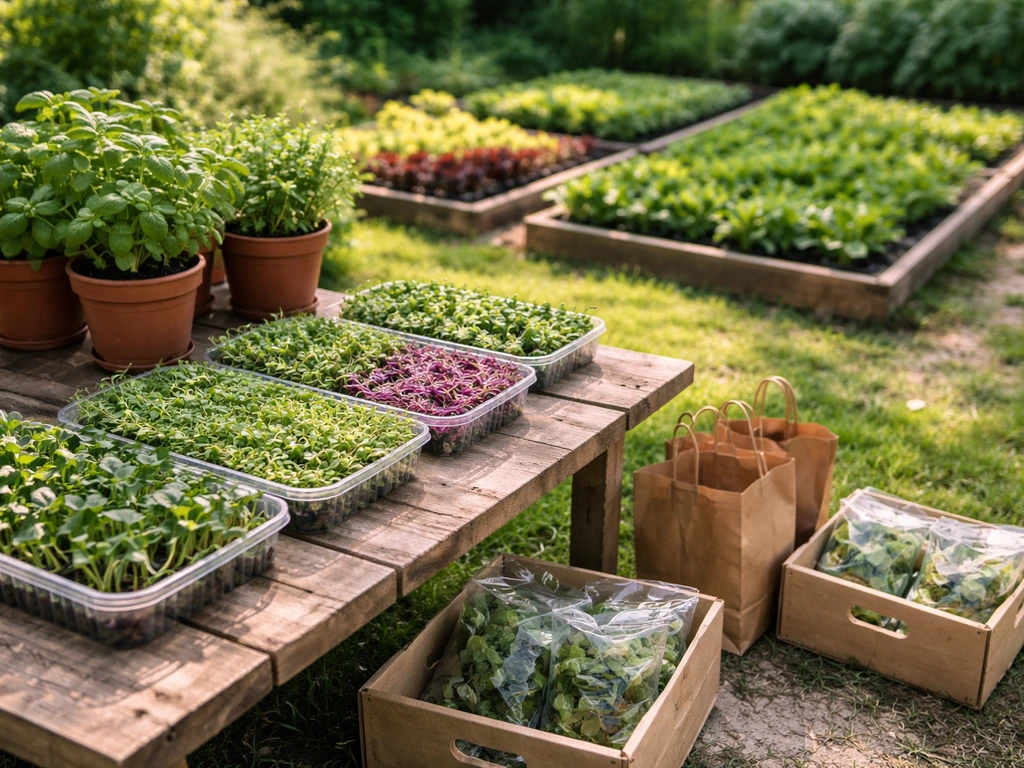
| Farmers market | Herbs, cut flowers, starts, specialty greens | Freshness, presentation, variety | 4–8 ft table, 20–40 SKUs |
| Roadside stand / farm stand | Herbs, tomatoes, cucumbers, flowers, berries | Convenience, seasonal appeal | 1–2 raised beds or containers |
| CSA / subscription box | Mixed greens, herbs, edible flowers, specialty veg | Reliability, weekly variety | Enough to fill 5–20 boxes/week |
| Local florists / event florists | Cut foliage, mixed bunches, filler flowers | Consistent quality, stem count per bunch | Dedicated 100–200 sq ft flower patch |
| Herb shops / restaurants / co-ops | Fresh culinary and medicinal herbs, lemongrass | Volume, food-grade handling, reliability | Multiple plants per variety, staggered harvest |
| Online / local delivery (direct DM) | Microgreens, starts, specialty items | Novelty, health appeal, convenience | Trays or small batches, repeat customers |
| Wholesale / produce distributor | High-volume crops, standard grade/size | Consistency, volume, certifications | Much larger; not ideal for beginners |
Farmers markets and direct-to-consumer channels (your own stand, Instagram DMs, local Facebook groups) give you the highest per-unit margin because you cut out the middleman. Wholesale pays less per stem or bunch but moves volume. Most beginners do best starting with farmers markets or direct local sales, then layering in wholesale once they have reliable production. SARE's small-farm guidance frames this well: direct marketing channels are where you build margin, and wholesale is a scaling decision that comes later.
Pick plants that actually fit your climate and growing season
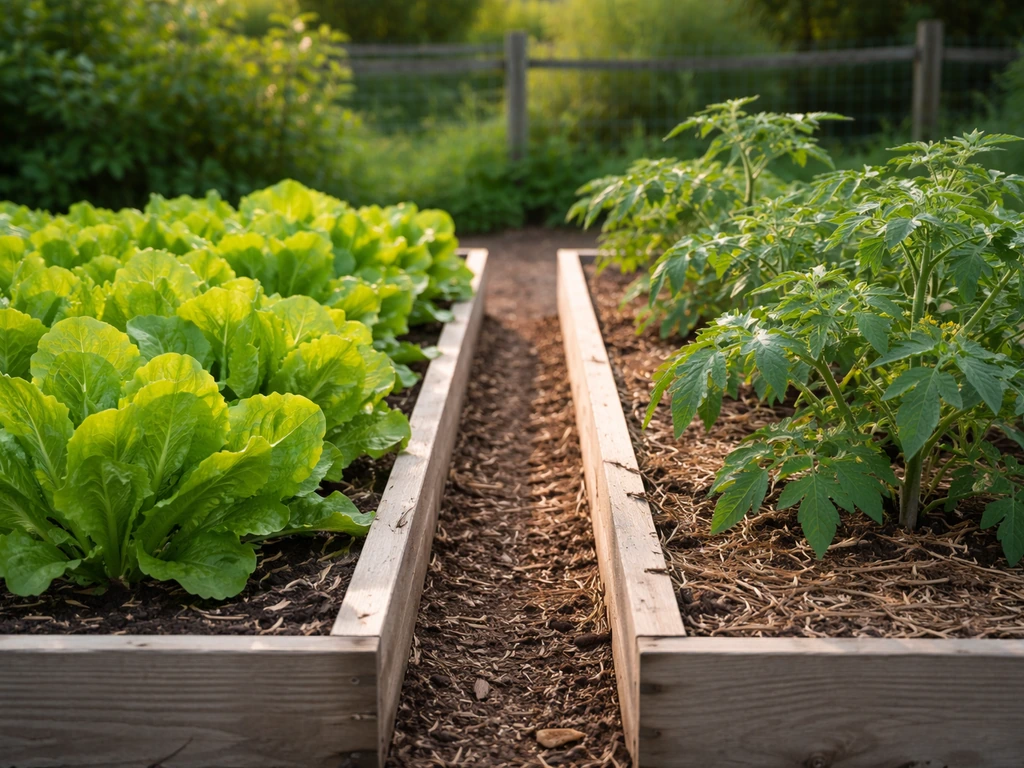
The fastest way to lose money in the garden is planting something that won't finish before your first frost or something that fries out in a July heat wave. Start by looking up your USDA hardiness zone (based on average annual minimum winter temperatures) and your local frost dates. Then match those to your crop's days to maturity (DTM), which you'll find on any seed packet or catalog. UConn Extension recommends using frost dates and the variety's days to maturity to make sure it fits between your spring and fall benchmarks, or planning for season extension blank" rel="noopener noreferrer">frost dates and days to maturity.
Virginia Tech Extension's approach is straightforward: count backward from your average first fall frost date using the variety's DTM. If your frost date is October 10 and a crop takes 70 days, you need to be in the ground by around August 1. Oregon State University's Croptime tool refines this further using degree-day models, which are more accurate than calendar math alone, especially in climates where temperatures swing a lot. Oregon State University's Croptime tool refines this further using degree-day models, which are a related way to figure out where money plants grow best in your conditions. For most beginner growers, frost-date math gets you 90% of the way there.
A few practical climate rules: cool-season crops (lettuce, spinach, cilantro, arugula) make money in spring and fall almost everywhere and can be year-round in mild coastal climates like Central California or the Pacific Northwest. Many of the best profitable plants to grow in India are herbs, salad greens, and other fast-turnaround crops suited to local season and market demand cool-season crops. Warm-season crops (basil, zinnias, peppers, tomatoes) need warm nights and full sun to produce at volume. Perennial herbs like thyme, oregano, and lemon balm come back every year in zones 5 and up, which means lower replanting costs and faster harvests each season. If you're in the Deep South or Southwest, your spring selling window is earlier (February to April), and your fall window becomes more important than it is for northern growers.
Best money plants for small spaces and containers
Limited space is not a dealbreaker. Microgreens, herbs, lettuce, and strawberries are all legitimately profitable in containers, on balconies, or under grow lights indoors. The key is matching the crop to its real space and light requirements.
Microgreens
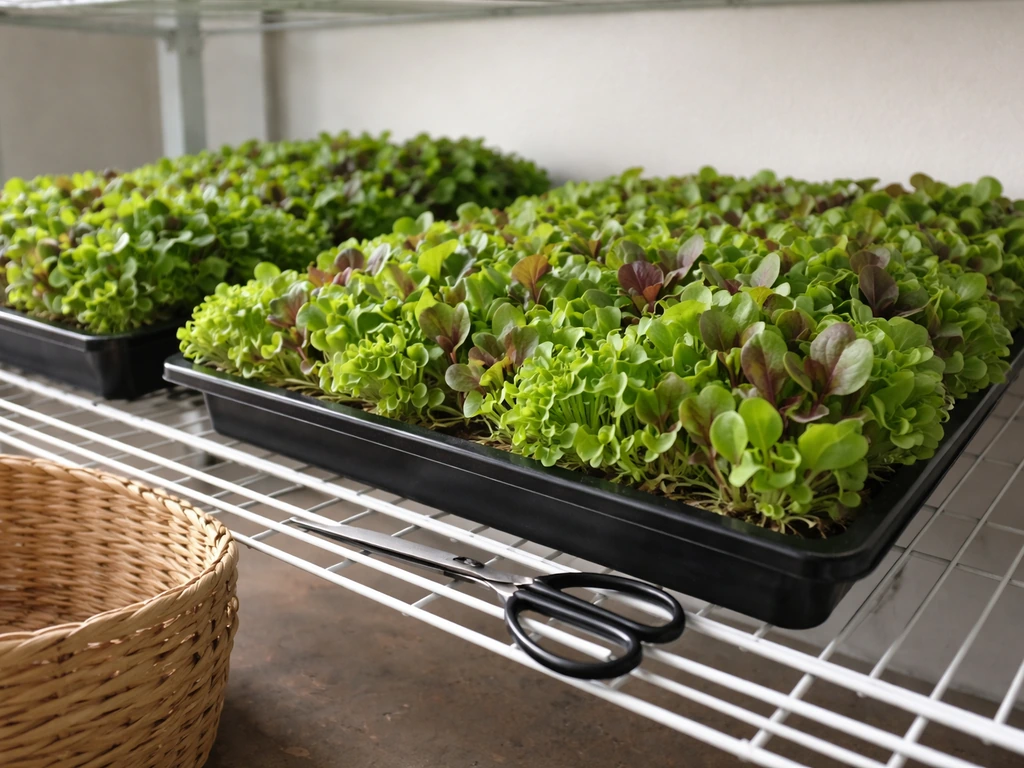
Microgreens are the fastest cash crop you can grow indoors. UC Master Gardener guidance puts harvest at roughly 2 to 4 weeks, which means you can be selling within a month of starting. They grow best around 70°F and will slow down below 50°F. The biggest beginner mistake is overwatering: if your growing media is too wet or too cold, seeds rot before they sprout. Use a food-grade tray, a quality seed-starting mix or coconut coir mat, and water from the bottom when possible. Sunflower, pea shoots, radish, and broccoli microgreens consistently sell at farmers markets and through direct local sales at $3 to $6 per 2-oz clamshell. Because you're growing in rotation, you can keep a near-constant supply going with just a few trays and a grow light.
Lettuce and salad greens
Lettuce is a cool-season crop that can go from seed to harvest in as few as 45 days and needs only 6 to 9 inches of container depth, making it ideal for balconies, windowsills, or shallow raised beds. UC ANR notes it works well in containers, and UC Master Gardeners in Sonoma County point out that with variety selection and management you can harvest salad greens 12 months a year in mild climates. The profitability lever is cut-and-come-again harvesting: take the outer leaves, leave the center, and a single plant keeps producing for weeks. The risk is bolting in heat, which makes leaves bitter and unsellable. Harvest before the plant sends up a flower stalk.
Container strawberries
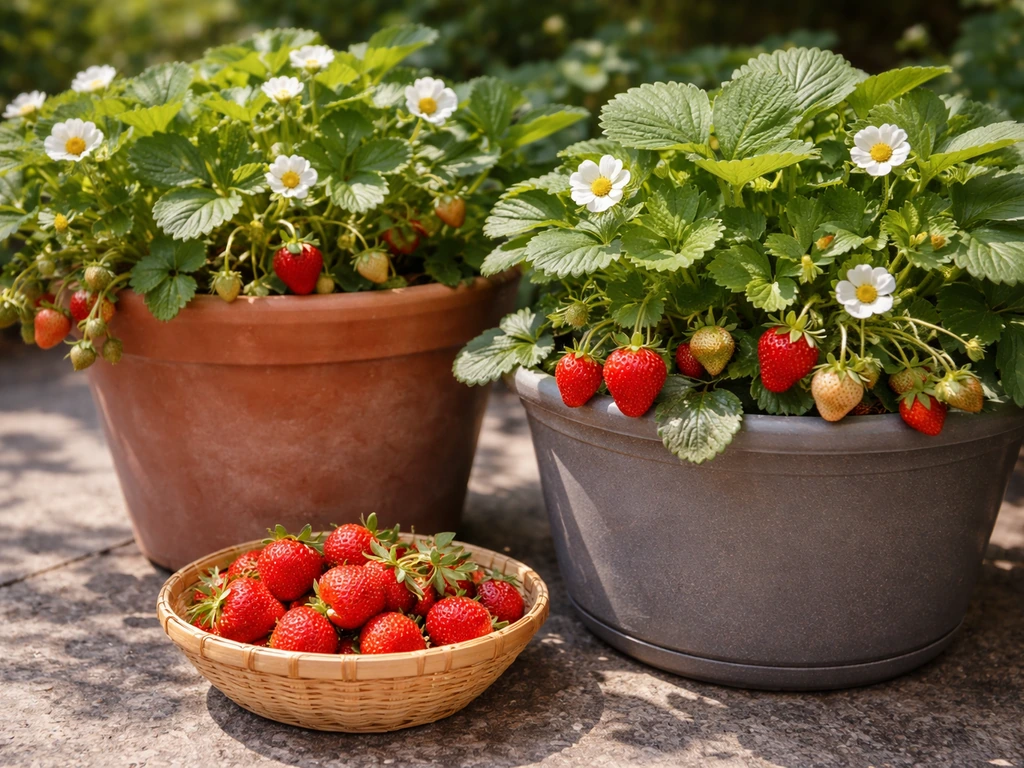
Day-neutral strawberry varieties produce fruit in flushes every few weeks rather than one big spring harvest, which matters a lot for consistent market inventory. Iowa State Extension confirms this multi-flush behavior, and OSU's Central Oregon research shows day-neutrals handle cool growing conditions well. Use hanging baskets or strawberry pots to maximize yield per square foot. The trade-off is that containers dry out fast, so you'll need to water more often than in-ground beds.
Potted herb starts
Growing herbs in 4-inch or 1-gallon pots to sell as starts, rather than selling cut herbs by the bunch, can actually yield more per plant. Buyers pay $4 to $8 for a potted basil or rosemary plant they can use at home over time. Start seeds indoors 4 to 6 weeks before your last frost, pot up as they grow, and sell starts at spring markets. This is one of the lower-labor options for container growers.
Best money plants for outdoor gardens (in-ground and raised beds)
With real ground space, you can scale up what you grow and add crops that don't do well in containers. The highest-return options per square foot in an outdoor garden are specialty herbs, cut flowers, and high-value vegetables like cherry tomatoes, shishito peppers, and specialty greens. In-ground beds have lower watering costs and can support larger perennial plants, while raised beds give you better drainage and soil control.
- Basil (annual): Fast-growing, high demand, harvests multiple times per season. One 4x8 bed can yield several pounds per week in peak summer. Direct-market price at farmers markets typically ranges $2 to $4 per bunch.
- Specialty tomatoes (cherry and heirloom): Higher retail price than standard tomatoes; buyers at markets pay a premium for unusual varieties. Labor-intensive but high yield per bed. Transplants take 6 to 8 weeks to start indoors before transplanting after last frost.
- Shishito and specialty peppers: Low-competition at most local markets, buyers pay $4 to $6 per half-pound bag. Need a long warm season; start indoors 8 to 10 weeks before transplant date.
- Lemongrass: A single clump can produce multiple harvestable stalks per season once established. UC ANR recommends harvesting no more than one-third of a clump at a time and waiting until stalks are about half an inch in diameter. Sells to restaurants, herb shops, and Asian grocery customers.
- Garlic: Plant in fall, harvest the following summer (around June or July depending on zone). Low maintenance and stores well, giving you more flexibility on when to sell. Specialty hardneck varieties command $2 to $4 per bulb at markets.
- Zucchini and summer squash: Fast production, but price per unit is low. Only worth growing if you have excess space and a reliable outlet (CSA boxes, restaurant accounts) that takes volume.
- Edible flowers (nasturtium, borage, calendula): Sold to restaurants, bakeries, and upscale market buyers at high prices per small container. Low competition crop most beginners overlook.
Herbs and specialty crops with reliable local demand
Culinary herbs are among the most reliably profitable crops because input costs are low, buyers are consistent, and fresh herbs move quickly at markets and restaurants. The key is selling fresh: UC Davis postharvest research notes that fresh herbs have variable respiration and ethylene sensitivity, which means handling and speed-to-buyer directly affect quality and therefore your reputation. Harvest herbs in the morning when oils are highest, and sell or deliver within 24 to 48 hours for maximum quality. The University of Nevada, Reno Extension similarly advises harvesting culinary herbs when the oil and flavor are at peak, which lines up with the early flowering or just-before-flowering maturity window harvesting when flavor oil content is at its peak. University of Nevada Reno Extension recommends harvesting when flavor oil content is at its peak, typically just before or at early flowering stage.
The herbs with the most consistent local buyer demand across most of the U.S. are basil, cilantro, flat-leaf parsley, chives, dill, and mint. Specialty herbs that can command premium prices include lemon verbena, Thai basil, shiso, epazote, lovage, and culinary lavender. If you have a local herb shop, co-op, or restaurant willing to buy regularly, medicinal and tea herbs like lemon balm, tulsi (holy basil), chamomile, and echinacea are worth adding. USDA AMS wholesale herb reports (like the Baltimore terminal market data) show price ranges by variety and grade that give you a benchmark for negotiating with local buyers.
One underrated specialty crop: lemongrass. A single established clump in zones 8 to 11 (or grown as an annual in cooler zones) produces harvestable stalks repeatedly throughout the season. It sells to cooks, tea drinkers, and restaurants, and has almost no competition at most local markets. In cooler zones, grow it in a large container and bring it inside over winter to reuse the same plant for years.
Cut flowers and foliage: what sells and how to manage harvests
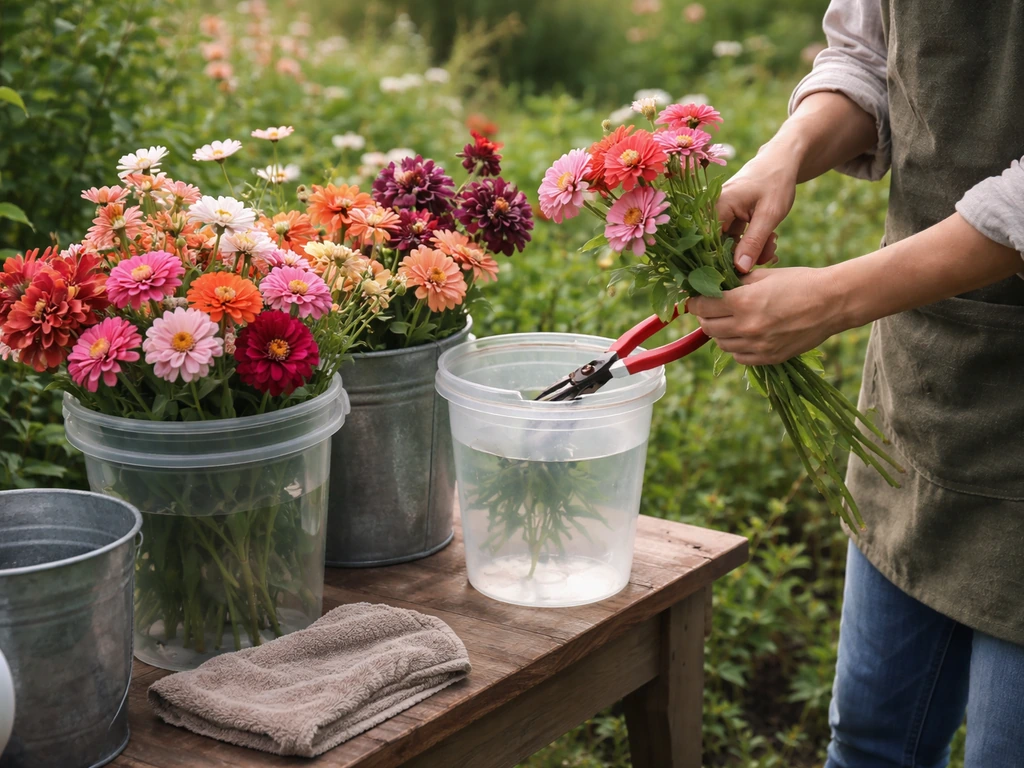
Cut flowers have some of the highest per-square-foot returns in the home garden, but they also have the shortest shelf life and the most handling risk. UMass Amherst CAFE research estimates that improper postharvest handling accounts for 20 to 30% of cut flower marketing losses. That's a big number, and it comes down to a few specific steps you can control.
Harvest flowers in the early morning when stems are fully hydrated. Get them into clean, cool water immediately after cutting. UMass CAFE recommends acidified water (pH 3.5 to 5.0) with a biocide and a small amount of sugar as a flower food. Field heat is the enemy: cool your flowers down as fast as possible after harvest. Mississippi State University Extension's zinnia guidance is a good model to follow for any summer annual: harvest when fully developed, place immediately in flower food with 1% sugar, and store at 38 to 42°F for up to 7 days.
Best cut flowers for beginners
- Zinnias: Easy to grow from seed, heat-tolerant, and very popular at markets. One of the best ROI flowers for beginner growers. Direct-sow after last frost or start indoors 4 weeks early.
- Sunflowers: Fast (50 to 60 days), dramatic visual appeal, and easy to bunch and sell. Succession-plant every 2 weeks for continuous harvest.
- Celosia: Long vase life, unique texture, and strong demand from florists and market buyers. University of Maryland Extension notes that reducing humidity approaching harvest improves quality and reduces disease risk.
- Lisianthus: More challenging to grow but commands high prices from florists ($2 to $4 per stem wholesale). Worth attempting if you have a florist buyer lined up.
- Strawflower: Dried or fresh, extremely long shelf life (weeks to months dried), good for markets and craft buyers.
- Snapdragons: Cool-season flower that sells well in spring and fall markets when summer annuals haven't started yet. Great for filling inventory gaps.
Foliage crops that florists actually buy
Foliage is underestimated. Florists constantly need filler greenery, and locally grown foliage is often hard to source. Eucalyptus is one of the most sought-after, but it's only viable outdoors in zones 8 and warmer. UC Davis postharvest research recommends harvesting mature leaves for best vase performance. In cooler zones, alternatives include dusty miller, lamb's ear, hosta leaves, ferns, and ornamental grasses. If you're pursuing florist accounts, a steady supply of three to five foliage types can be just as valuable as flowers.
Propagation, starts, and nursery plants: turning one plant into inventory
Selling plant starts is one of the most capital-efficient things a home grower can do. You're essentially converting seed (pennies) or cuttings (free) into $4 to $12 retail products. The mechanics are simple: propagate from cuttings, division, or runners, and sell the results as transplants in spring and early summer when buyers are looking for garden starts.
Virginia Tech Extension explains the main propagation methods: stem cuttings (take a 3 to 5 inch cutting, remove lower leaves, dip in rooting hormone, and keep moist until roots form), division (split an established perennial clump when dormant or just before new growth), and runners or stolons. Strawberries are the classic example of runner propagation: a single mother plant produces multiple daughter plants you can root and pot up to sell. University of Connecticut extension confirms strawberries are commonly propagated this way, and it's as simple as pinning a runner to a pot of soil until roots form, then cutting it free.
The best plants to propagate and sell as starts, because they're always in demand and easy to root, include rosemary, lavender, lemon balm, bee balm, salvia, sedum, hostas, and ornamental grasses. Tomato and pepper starts are perennial bestsellers at spring markets, and the timing works well: tomatoes need 6 to 8 weeks from sowing to transplant size (per UNH Extension guidance), and peppers need 8 to 10 weeks. Start them under lights in late winter, pot up as they grow, and you're ready for the spring market rush.
Virginia Tech's division guidance notes that perennials divided when dormant or in fall (so they establish before the ground freezes) come back stronger the following spring. If you have existing perennial beds, you may already have free inventory: hostas, daylilies, coneflowers, and ornamental grasses all divide easily and sell consistently at spring markets for $5 to $15 per division.
Practical start plan: how to estimate profit, test demand, and sell this season
Here is how to go from zero to selling this season without overcommitting. The goal in your first year is to test, not to maximize. Start small enough that a bad outcome doesn't cost you much, and build from what actually sells.
Step 1: Estimate your basic profit potential
For each crop you're considering, run a simple back-of-envelope calculation. Inputs are your seed or plant cost, growing media or soil amendment cost, containers or bed infrastructure (amortized over multiple seasons), and your time at a realistic hourly rate. Farmers market pricing guides suggest valuing your labor at $20 to $30 per hour when calculating minimum viable pricing. Iowa State Extension's marketing cost toolkit reminds you to include packaging, labeling, and delivery mileage, which beginners almost always forget. Compare your total cost to the realistic market price for that crop in your area, then estimate yield. For example: a single 10x10 zinnia patch can yield 200 to 400 stems per harvest cycle. At $0.75 to $1.50 per stem in a mixed bunch, that's real money from a small footprint.
Step 2: Test demand before you scale
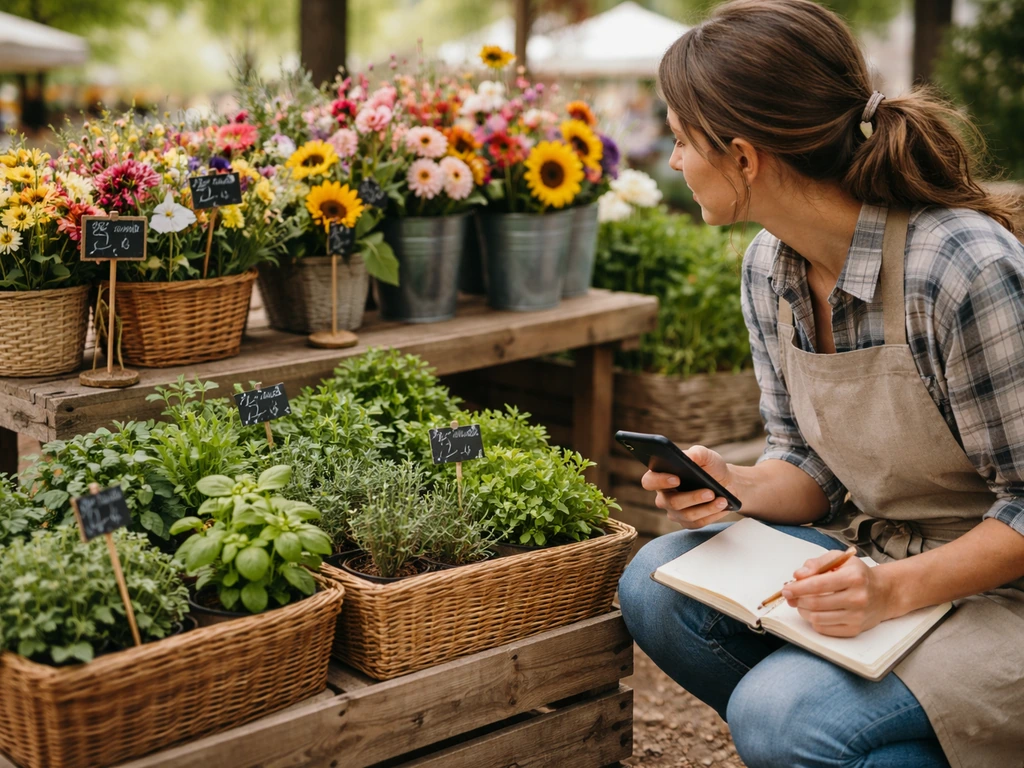
Before you plant 200 feet of cut flowers or 50 herb starts, find out if people in your area will actually buy them. Visit your local farmers market and observe what's selling and at what prices. Ask vendors what moves fastest. Post in a local Facebook gardening group or neighborhood app that you have fresh herbs, starts, or flowers available, and see who responds. If you get three to five interested buyers from a simple post, you have enough demand signal to justify a small planting. If you're targeting florists or restaurants, call or email two to three local businesses and ask if they source locally and what they look for. Getting even one account confirmed before you plant changes your whole planning calculus.
Step 3: Choose your starter crops based on your situation
| Your Situation | Start With | Why |
|---|---|---|
| Indoor / apartment, no outdoor space | Microgreens, potted herb starts | Fastest turnaround, low input cost, direct-sell to neighbors or online |
| Small balcony or patio | Container herbs, lettuce, day-neutral strawberries | Easy to manage, multiple harvests, high per-plant value |
| Backyard with 1–2 raised beds | Herbs (basil, cilantro, parsley), zinnias, tomato/pepper starts | Mix of fresh product and starts gives you two revenue streams |
| Larger yard or small plot (400+ sq ft) | Cut flower patch, herb rows, propagation area | Enough scale for florist accounts or consistent market table |
| Rural property with in-ground space | Garlic, specialty vegetables, perennial herb beds, cut flower fields | Lower cost per unit at scale, storage crops add flexibility |
Step 4: Plant, track, and sell your first batch
- Pick two or three crops maximum for your first season. Trying to grow ten different things at once leads to scattered attention and mixed results.
- Plant in quantities you can actually sell: 20 to 30 herb starts, two to three microgreen trays per week, or one 4x8 cut flower bed is enough to test a market table.
- Keep a simple log: what you planted, when, what it cost, what you harvested, and what you sold it for. Cornell Cooperative Extension offers farm analysis workbooks for tracking income and expenses, and even a basic spreadsheet works fine.
- Set your prices to cover costs plus your time. If your bunched herbs cost $1.50 to produce and take 20 minutes of your time at $20/hour, your floor price is $8.17. Price at $10 and test from there.
- Sell your first batch. Attend a market, post online, or deliver to a neighbor. Get real feedback on what people will pay and what they want more of.
- After your first selling season, review what sold fastest, what had the best margin, and what you actually enjoyed growing. Double down on those crops next season.
The same decision framework applies whether you're growing on a balcony or a half-acre. Start with what fits your space and season, sell through the channel that matches your scale, and let real sales data (not just enthusiasm for a crop) guide what you expand into. If your goal is the best plants to grow to save money, start by choosing crops that match your space, finish on time, and sell well through your channel. If you're curious about growing for profit in a specific region, or want to compare saving money by growing your own food versus selling to others, those angles are worth exploring separately since the math and plant choices shift quite a bit by location and goal.
FAQ
Can I make money selling the same plant in multiple forms, like herbs as bunches and also as potted starts?
Yes, but only if you match the product format to what buyers expect. For cut herbs, farmers markets often want bunches, while restaurants may want consistent weights (for example, a set number of grams per delivery). For starts, buyers usually want labeled varieties and healthy root systems, so use a pot size and rooting stage that makes plants easy to transplant without stressing.
How do I know if I’m growing the right plants for profit, or if my real problem is selling them?
Plan around your weakest bottleneck, not your favorite crop. Many growers can produce faster than they can sell, so track “harvest-to-sold” time for each item. If basil, lettuce, or microgreens routinely sit unsold for more than a day, switch to shorter harvest intervals, smaller batches, or a different sales channel.
What’s the safest way to schedule planting so I don’t miss the market window?
Start with your frost dates, then add a buffer for germination delays and heat spikes. If a crop needs 70 days, don’t aim for the exact last-sow date, aim to have harvest finished before the first frost window plus 7 to 14 days. Also account for “spring gap” weeks, when demand is high for starts but some plants are not yet ready.
Should I focus on high-volume herbs or high-price specialty herbs first?
Common mistake number one is assuming all herbs price the same. Basil usually sells faster than more niche herbs, while specialty herbs may sell fewer units but at higher per-unit pricing. Before scaling, test both volume crops (basil, cilantro) and premium-but-slower crops (lavender, shiso) so you don’t end up with unsold inventory.
What changes if I want to sell to florists or restaurants instead of at farmers markets?
Wholesale is usually about consistency, not just supply. If you want wholesale accounts, standardize grade (size, maturity, stem length, leaf condition), set a regular delivery day, and plan for rejects (a few percent of stems or bunches will not meet the buyer’s standard). Start with direct sales first, then only offer wholesale when you can reliably hit the same spec week after week.
How do I handle timing when my crop matures all at once?
Use a simple target for each crop: harvest more frequently but smaller, then measure what sells. For cut flowers and herbs, shorter shelf life means smaller batches and faster rotation. For lettuce or microgreens, consecutive plantings (staggered every 7 to 14 days) smooth demand so you are not selling only peak-quality days.
What are the most common postharvest mistakes that quietly erase profit?
Postharvest temperature control is often the difference between “sell out” and “discounted.” For cut flowers, keep stems cool immediately, use clean water, and avoid leaving them in a warm car or uncooled staging area. For herbs, harvest at the best oil timing and move quickly to buyers or refrigeration, since quality drops faster than many new growers expect.
Are day-neutral strawberries still a good money crop if I can’t water every day?
Not always. Day-neutral strawberries can be profitable in containers, but they dry out faster and can require more frequent watering and consistent feeding for steady fruit flushes. If you cannot water daily during hot periods, a ground bed or a smaller number of container plants may be safer for maintaining inventory.
How should I price potted herb or flower starts differently from bare seedlings?
Yes, but pricing must reflect labor and the buyer’s convenience. Potted starts tend to sell best when they are ready to transplant, not just when they are “alive.” Use the right pot size, remove dead leaves, and include simple plant care info on tags, then price higher than bare seedlings because buyers are paying for reduced hassle and higher success rates.
What’s the most effective way to use propagation so it actually lowers my risk in year one?
Yes, reuse can be a profit lever for perennials and propagated plants. Division and runner plants let you turn existing stock into multiple sellable units, but only if you keep plants healthy through establishment. Separate “production plants” from “sale-ready inventory,” so you are not forced to sell everything at once.
What’s a realistic first-year strategy if I want to avoid overcommitting?
Start with one to two crops and build a repeatable workflow before adding more. A practical approach is to run a small batch trial for each crop, then keep only the top seller(s) based on actual demand signals from your market or buyer outreach. If you add too many crops early, you spread labor across items that may peak at different times.
Next Article
Best Plants to Grow in Chennai: Seasonal Picks and Care
Best plants to grow in Chennai with seasonal picks, heat and rain-tolerant options, and easy care tips for balcony, terr