
The best plants to grow and sell depend on two things: what you can actually grow given your space, light, and climate, and what buyers near you are willing to pay for. If you skip either filter, you end up with a garage full of plants nobody wants or a beautiful crop that dies before it sells. The fastest path to reliable income from plants is to match a high-demand, easy-to-propagate or fast-maturing plant to your exact setup, whether that's a sunny windowsill, a small patio, or a half-acre yard. This guide walks through exactly that, from choosing the right plants through to pricing and selling them.
Best Plants to Grow and Sell: Seasonal, Small-Space Picks
Rachel Hartley
4 May 2026
How to choose the best plants for your situation
"Best" is useless without two filters: your growing conditions and your local market. A plant that sells brilliantly at a Portland farmers market might sit unsold in Phoenix, and a greenhouse-grown orchid makes no sense if you're working from a north-facing apartment. Before you pick a single plant, run it through these two lenses.
Filter 1: Your growing conditions
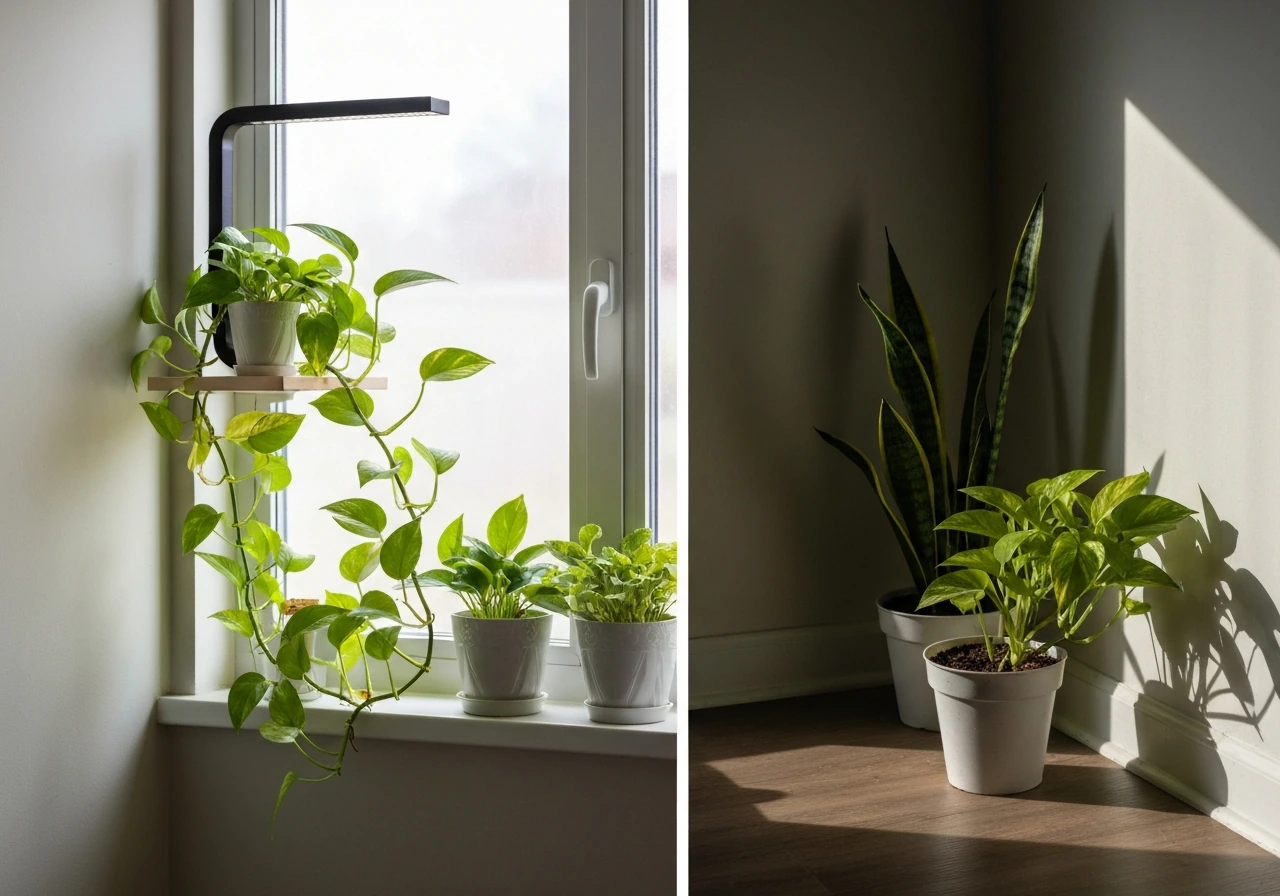
- Light: Is your space getting 6+ hours of direct sun, or is it shady and indirect? Low-light spaces need shade-tolerant plants like pothos or snake plants. Sun-demanding crops like basil need at least 6 to 8 hours of bright light daily, whether from a south-facing window or grow lights.
- Space: Container growing on a balcony limits root depth and volume but works fine for herbs, cuttings, and small houseplants. A backyard or raised bed opens up seasonal vegetables, perennials, and larger starts.
- Climate and zone: Your USDA hardiness zone tells you which perennials survive your winters, but it doesn't account for summer heat or rainfall. Think about your full season, not just frost dates.
- Timeline: Some plants take 6 weeks from cutting to salable size. Others take a full season. Match your choice to how quickly you need returns.
Filter 2: What buyers in your area actually want
Walk your local farmers market, check Facebook Marketplace plant listings, and browse Etsy plant shops in your region. Look at what's selling consistently, not just what looks cool. Herb starts, low-maintenance houseplants, and seasonal vegetables are perennial winners almost everywhere. Rare tropicals sell well in warmer cities with an active plant-enthusiast community. The intersection of "easy for you to grow" and "sought after locally" is where your best profit lives.
Best plants to grow and sell from home
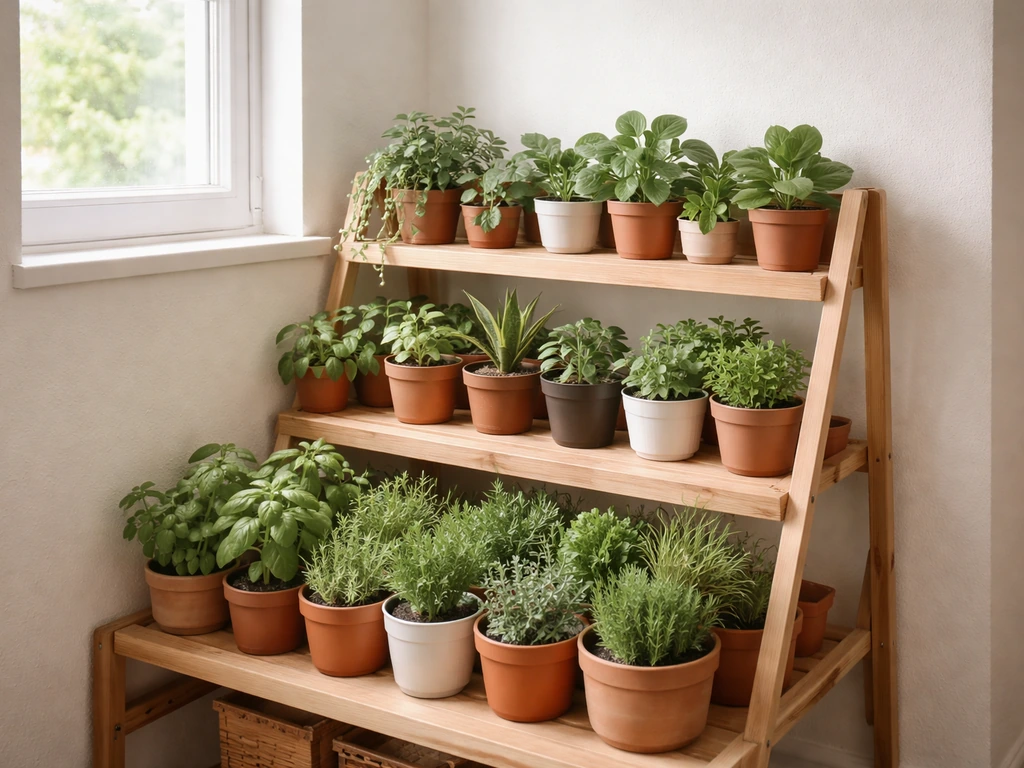
If you're working from an apartment, a small yard, or a spare room, these are the plants that consistently move in small-space setups. They don't require a greenhouse, a tractor, or a commercial operation. They require good light (or a grow light), basic potting mix, and consistency.
| Plant | Space needed | Light requirement | Why it sells |
|---|---|---|---|
| Pothos | Any container, even small pots | Low to medium indirect light | Extremely popular, propagates fast, nearly impossible to kill |
| Snake plant (Sansevieria) | Small to medium containers | Low to bright indirect | Top seller for offices and beginners, high perceived value |
| Spider plant | Hanging baskets or small pots | Medium indirect | Produces offshoots (spiderettes) constantly, low effort |
| Basil | 4-inch pots or larger | 6–8 hours bright light | Fast-growing, high demand at markets and from restaurants |
| Mint | Containers (keep it contained) | Partial to full sun | Propagates from cuttings easily, steady demand year-round |
| Coleus | Small containers, indoor or patio | Bright indirect to partial sun | Striking foliage, roots from cuttings in 1–2 weeks |
| Succulent varieties | Small pots, 2–4 inch | Bright indirect to full sun | High margin, low water needs, great for markets and Etsy |
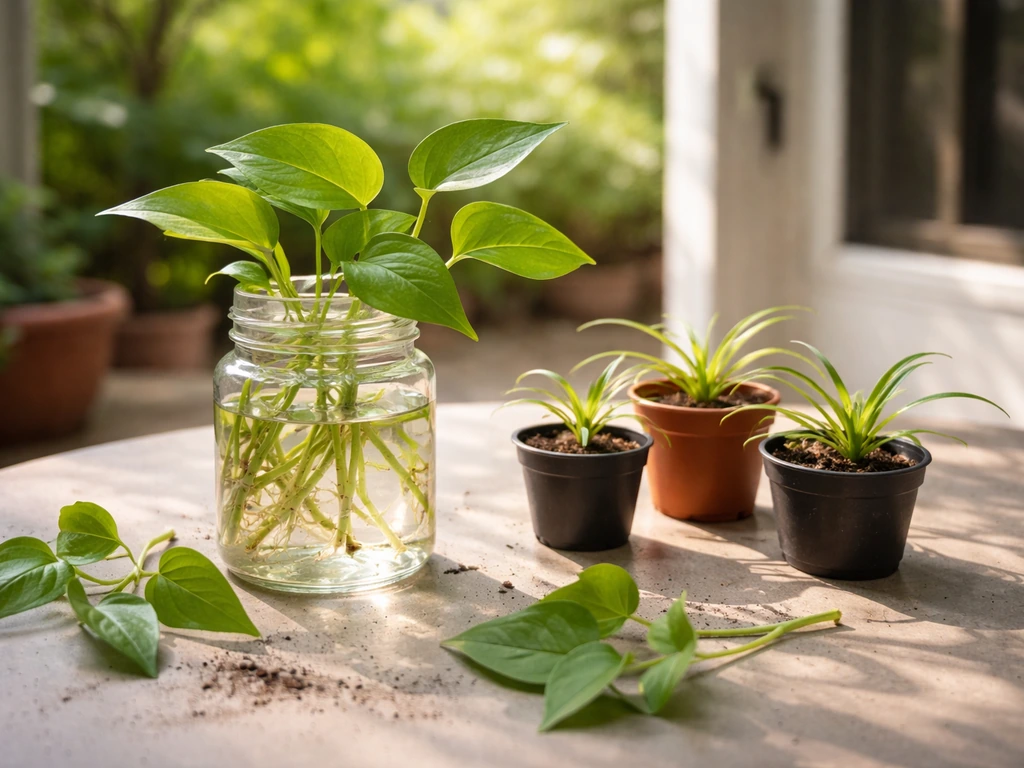
Pothos is particularly worth highlighting for apartment growers. A single mature plant can produce dozens of cuttings per year. Cuttings root in water in 3 to 6 weeks, depending on temperature and humidity. You can run a constant production cycle with almost no cost beyond potting mix and pots.
What to grow and sell by season
Timing is everything if you sell at markets or to local buyers. The mistake most new plant sellers make is starting too late and showing up with nothing ready. Work backwards from when you want to sell, not forwards from when you feel like planting.
Right now (spring into early summer)
If you're reading this in May 2026, you're in prime time for herb starts, vegetable seedlings, and cool-season greens in most of the country. Basil should be started indoors 6 to 8 weeks before your last frost date, so if you haven't started seeds yet, pick up transplants from a wholesaler and pot them up for resale. Spinach and lettuce can go directly into containers or beds now in cooler zones and will be ready to harvest in 40 to 60 days. In warmer zones (8 and above), focus on heat-tolerant herbs like Thai basil, rosemary, and lemongrass instead, because cool-season greens will bolt fast once temperatures climb.
Next (summer)
Summer is houseplant and tropical season for sellers. Pothos, snake plants, and spider plants sell consistently at outdoor markets when buyers are already out shopping. Start propagating cuttings now so you have well-rooted, potted plants ready in 6 to 10 weeks. Herb starts like basil, mint, and lemon balm also move fast mid-summer as people start cooking outdoors. If you're in the Southeast or Southwest, this is also when heat-loving ornamentals like coleus and caladiums sell well.
Later (fall and winter planning)
Fall is the window for cool-season crops again: spinach, kale starts, and lettuce seedlings. Spinach can be started 6 to 8 weeks before your first expected frost, and it actually improves in flavor after a light frost, which is a real selling point. Winter is indoor-plant season. Holiday-adjacent plants like kalanchoe, amaryllis, and rosemary topiaries sell well in November and December. Start propagating kalanchoe now, since stem or leaf cuttings take 4 to 5 weeks to root, and you'll want established plants well before the holiday rush.
Fast-turnaround plants that are easy to sell
If you need income quickly, prioritize plants that go from cutting or seed to salable in 6 weeks or less. Here's an honest breakdown of what's actually fast versus what just gets marketed as easy.
| Plant | Time to salable | Starting method | Difficulty |
|---|---|---|---|
| Pothos | 3–6 weeks (cutting to rooted) | Stem cuttings in water | Very easy |
| Coleus | 1–2 weeks to root, 2–4 more to fill out | Stem cuttings | Easy |
| Mint | 2–3 weeks to root | Stem cuttings in water or soil | Easy |
| Spider plant | 3–5 weeks (offshoot already has roots) | Separate spiderettes | Easy |
| Basil | 6–8 weeks from seed, or pot up nursery transplants | Seed or division | Moderate |
| Lettuce/spinach | 40–60 days from seed | Direct sow or starts | Easy in cool weather |
| Kalanchoe | 4–5 weeks to root | Stem or leaf cuttings | Easy to moderate |
The trap with "fast" plants is scaling. Coleus roots in two weeks, but then you need another 3 to 4 weeks in a pot before it looks worth buying. Build that time into your planning. A plant that looks thin and leggy won't sell at a good price no matter how fast it rooted.
Plants that sell well as starter plants and propagations
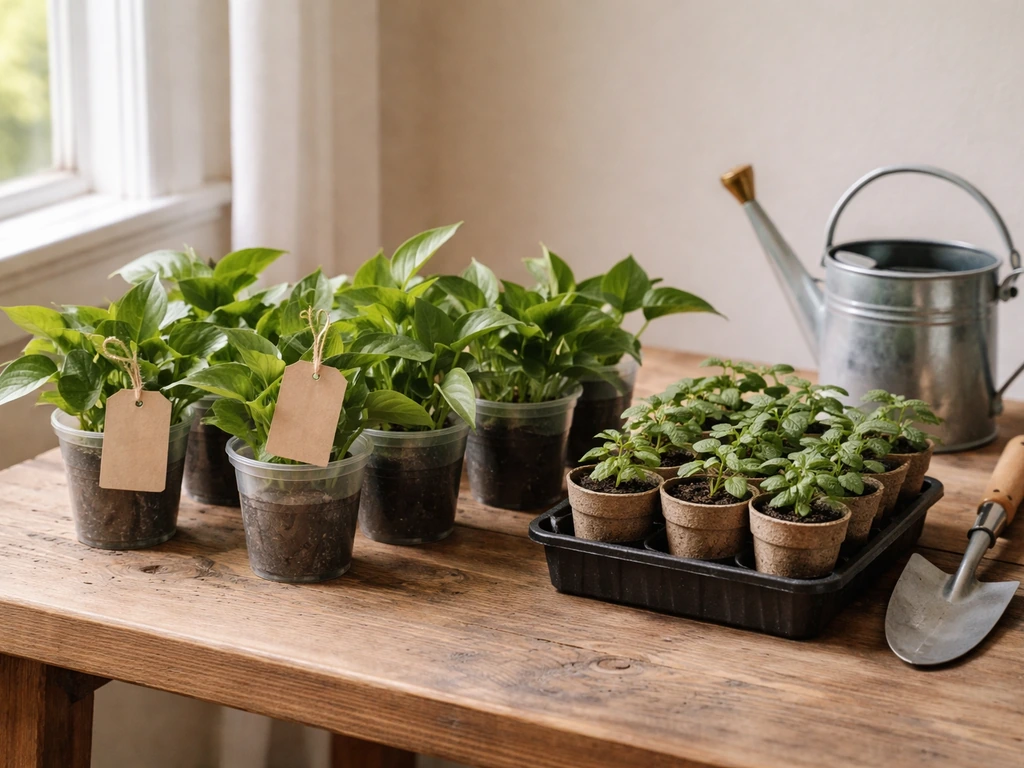
Selling propagations, cuttings, and seedlings is the most accessible entry point for home growers because you don't need a big grow space and your startup cost is almost zero once you have a mother plant. The format matters though: a rooted cutting in a clean 4-inch pot with a handwritten label looks like a product. A bare cutting in a zip-lock bag looks like a garage sale. Presentation is part of what you're selling.
- Pothos varieties (golden, marble queen, neon): Wildly popular for starter plants. Take 4 to 6 inch stem cuttings with at least one node, root in water, and pot up once roots are an inch or two long.
- Snake plant divisions: Divide a large plant into 2 to 4 sections with roots attached. Each division potted up in fresh mix looks like a full plant immediately.
- Spider plant spiderettes: The offshoots hang off the mother plant already partially rooted in many cases. Separate them, pot them up, and they establish quickly.
- Succulent leaf and stem propagations: Slow (several weeks to months for leaf props), but the individual plant cost is nearly zero and buyers love variety packs.
- Herb seedlings in cell packs: Basil, cilantro, and dill started in plug trays and sold as 6-packs are classic market staples. Bundle them attractively and price them competitively against garden centers.
- Lavender and rosemary cuttings: These take longer to establish (6 to 12 weeks) but command higher prices. Better for sellers with a steady rotation rather than a quick first crop.
Herbs and edibles with strong local resale potential
Fresh culinary herbs are one of the most reliable categories for local selling, especially at farmers markets and to restaurants. Basil, mint, cilantro, chives, and Italian parsley move consistently. The key is understanding when they work and when they don't, because not every herb is sellable in every season or every climate.
Herbs that work almost everywhere
- Basil: High demand, but needs warmth and 6 to 8 hours of light. Sells as potted starts, cut bunches, or plants. Don't try to grow it in a low-light apartment without a grow light.
- Mint: Almost impossible to kill, propagates from cuttings in 2 to 3 weeks, and has year-round demand from tea drinkers, cooks, and cocktail enthusiasts. Keep it in containers so it doesn't take over.
- Chives: Perennial in most zones, divides easily, and the edible flowers are an extra selling point at spring markets.
- Parsley: Biennial, grows easily from seed, and sells as potted starts or cut bunches. Flat-leaf (Italian) tends to sell better than curly to culinary buyers.
- Rosemary: Slower to establish, but once you have a large plant it propagates indefinitely. Great as a potted start or as a cut herb bundle.
When edible plant sales get more complex
If you're selling potted herb starts (plants in pots for the buyer to grow at home), regulations are generally minimal in most states. In Washington State, for example, herb plant starts including basil, lavender, and rosemary don't require a nursery license. If you're selling cut, washed, or packaged fresh herbs as a food product, the rules can shift: some states distinguish between potted starts and ready-to-eat produce, and the FDA's FSMA Produce Safety Rule can apply to farms above certain sales thresholds (blank" rel="noopener noreferrer">generally $25,000 in average annual produce sales). Under 21 CFR § 112.4, the Produce Safety Rule generally defines a “covered farm” as one whose average annual monetary value of produce sold during the previous three-year period exceeds $25,000, using a rolling basis adjusted for inflation blank" rel="noopener noreferrer">FDA's FSMA Produce Safety Rule can apply to farms above certain sales thresholds (generally $25,000 in average annual produce sales). Most small home operations fall well below that, but it's worth checking your state's department of agriculture guidance. Selling potted starts is almost always the simpler regulatory path compared to cut and packaged herbs.
Matching your growing method to your buyers
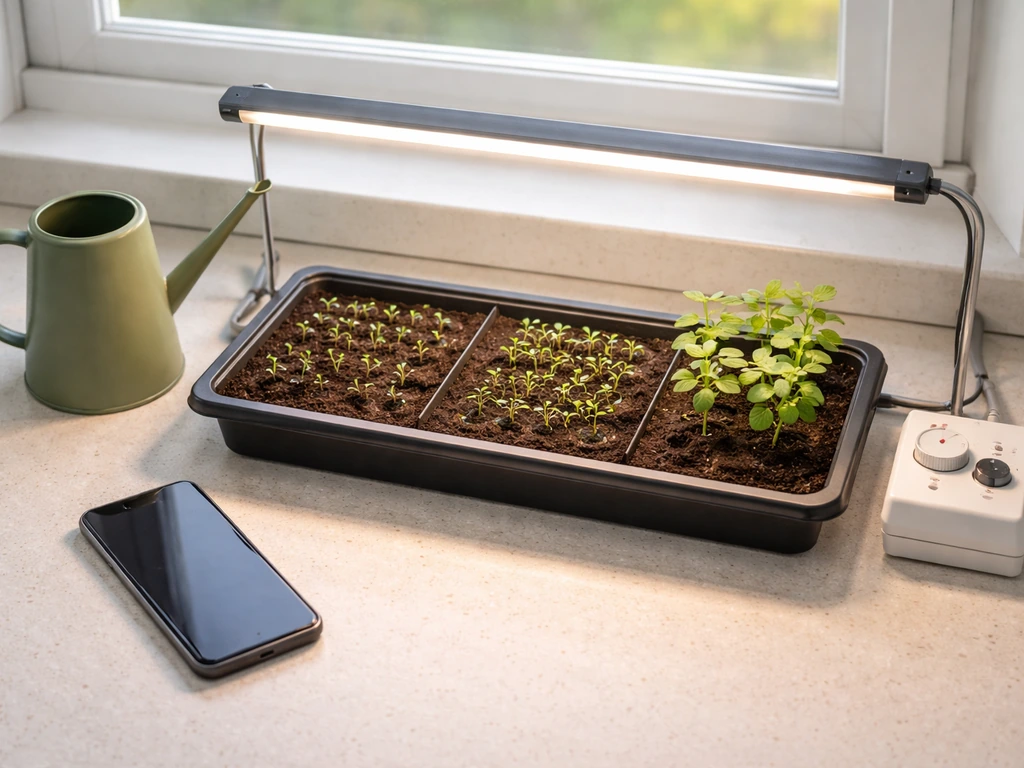
Where and how you grow determines who you can realistically sell to. Here's how the three main setups map to buyer types.
| Growing method | Best plant categories | Best sales channels | Buyer profile |
|---|---|---|---|
| Indoor (windowsill, grow lights) | Houseplants, herb starts, cuttings/propagations | Etsy, Facebook Marketplace, local pickup, plant swaps | Plant enthusiasts, apartment dwellers, gift buyers |
| Outdoor/small yard (containers, raised beds) | Herb starts, vegetable seedlings, annuals, perennials | Farmers markets, roadside stand, community boards | Home cooks, gardeners, market shoppers |
| Greenhouse or cold frame | Extended-season crops, tropicals, perennial starts | Farmers markets, CSA, wholesale to nurseries/restaurants | Serious gardeners, restaurants, nurseries |
If you're purely indoors, lean hard into the houseplant and propagation market. Etsy has a strong buyer base for rare pothos varieties, succulent collections, and rooted cuttings of trending plants. The shipping logistics are more involved (and APHIS has guidelines on moving plants across state lines), but the customer reach is national. If you want to stay local only, farmers markets and Facebook Marketplace are your best bet and require the least regulatory overhead.
A simple plan to price, package, and sell
Getting your first batch of plants grown is only half the job. Here's how to actually turn them into sales.
Pricing
A common mistake is pricing based on your cost of materials alone. Price based on what the market will bear, adjusted for your presentation quality. Check what local nurseries charge for the same plant size and aim to come in 20 to 30 percent below, or match their price but offer something extra (a care card, a handwritten label, a prettier pot). A rooted pothos cutting in a clean 4-inch pot should realistically retail for $5 to $12 depending on your area. A full, bushy 6-inch snake plant can go for $15 to $25. A flat of 6 herb starts should undercut the garden center slightly at $4 to $6 per pack.
Packaging and presentation
- Use clean pots with drainage holes. Dirty or cracked pots immediately drop perceived value.
- Add a simple handwritten or printed label with the plant name and one or two care tips. Buyers love feeling like they know what they're doing.
- Group plants by category at markets: herbs together, houseplants together, flowering plants together. It helps buyers shop and makes you look organized.
- For online sales, clear photos in natural light on a clean background do most of the selling for you. Show the roots if you're selling rooted cuttings.
Ethical and safety considerations
A few things to keep in mind before you scale up. First, only sell plants that are healthy and pest-free. A plant with spider mites or root rot isn't just a bad product, it can spread problems to your buyer's entire collection. Check every plant carefully before it leaves your hands. Second, don't sell plants that are invasive in your region, even if they're easy to propagate. Check your state's noxious weed list. Third, if you're growing edibles to sell as food (not as potted starts), understand your state's cottage food or produce safety rules. Most small home operations are below federal FSMA thresholds, but your state may have its own framework. When in doubt, sell potted starts rather than cut produce, it's almost always the simpler regulatory path.
Your first 6 weeks: a starter action plan
- Assess your light honestly. South or west-facing window with 5+ hours of sun: you can grow herbs and sun-loving houseplants. Less light than that: start with pothos, snake plants, or spider plants.
- Pick 2 to 3 plants maximum. Don't try to grow 10 things at once. Master a small lineup, then expand.
- Source mother plants or seeds this week. A $12 pothos from a big-box store can become 20 cuttings over a season. A $6 basil plant from the grocery store can be potted up and divided.
- Start cuttings or seeds in the next 7 days. The sooner you start, the sooner you have sellable material.
- Set up your sales channel. Create a Facebook Marketplace listing, claim an Etsy shop name, or sign up for a local farmers market waitlist now, not after your plants are ready.
- Price your first batch conservatively and ask for feedback. Your first sales will teach you more than any guide.
Growing plants for profit isn't complicated, but it does reward consistency over ambition. A tight lineup of three reliable plants, priced well and presented cleanly, will outsell a chaotic spread of 20 species every time. Start small, learn your local market, and scale what actually sells. If you want to dig deeper into maximizing returns on specific crops, the topic of best profitable plants to grow and what sells best by region are worth exploring as you build your rotation. In Chennai, choosing the best plants to grow in Chennai comes down to matching heat and humidity with what local buyers actually want year-round. If you want to cut your costs while still turning a profit, focus on the best plants to grow to save money for your space and local demand. If you are wondering where do money plants grow best for consistent growth, focus on bright indirect light and warm, humid conditions. To help you choose the best plant to grow for profit, focus on what grows well in your conditions and what buyers in your area consistently pay for best profitable plants.
FAQ
How do I figure out what my local buyers will actually pay, not just what sells online?
Do a 2 to 3 week “price audit” in your exact selling channels. Record posted prices for the same plant size and format (for example, rooted cutting in a 4-inch pot, not a 2-inch plug). Then check whether listings get marked as sold or get repeatedly relisted. Your target price should land slightly below the most common local price for items that are actually moving.
What’s the best way to start selling if I don’t have a “mother plant” yet?
Choose one starter category that can quickly bootstrap. If you can get even a single healthy mother plant of a fast-propagating species, you can build inventory for cuttings and repot sales. If you have no mother plants at all, start with plants you can buy as transplants or starter plants, pot them up, and immediately resell only when they meet your quality standard (no leggy growth, no pest signs).
How do I avoid selling plants that will die quickly after purchase?
Match your sale format to buyer skill. Sell rooted cuttings or potted starts (with labeled light and watering guidance) instead of bare cuttings when your buyers are likely beginners. For higher-risk plants like finicky ornamentals, only sell when roots are well-established and the plant has been acclimated to typical indoor or patio conditions for at least 1 to 2 weeks.
What should I do if my plants look healthy at home but customers complain they arrived stressed?
Improve packing and transit time. Use snug, clean pots with a stable liner so soil does not crumble, and prevent leaves from rubbing. If shipping, use a heat or cold buffering plan (simple insulated packaging is often better than rushing a shipment through questionable weather). Also, include a care card that tells customers exactly what light to provide for the first 7 to 14 days.
Can I sell in my region if a plant is easy to propagate but might be invasive?
Don’t rely on “easy” or “popular.” Check your state or county noxious weed and invasive lists for both the plant and any close relatives, because lookalikes can still be regulated. If you are unsure, skip it or switch to a non-invasive substitute that has similar buyer appeal (for example, choose a comparable houseplant with the same growth habit).
Do I need a nursery license to sell potted plants or herb starts?
It depends on your state, the plant type, and whether you are selling plants only or also selling food products. Potted herb starts are often treated more lightly than packaged or cut edible products, but you still need to confirm with your state department of agriculture. If you plan to scale, verify licensing before your first high-sales month rather than after you exceed informal expectations.
What documentation should I keep for selling edibles or cut herbs?
Keep basic production records that match your operation size, especially if you ever sell as a food product. Track what you grew, dates of harvest, packaging method, storage conditions, and where supplies came from. Even when you are under federal thresholds, states can require their own food safety framework, and clean records make inspections or complaints much easier to handle.
How do I prevent pests before plants leave my hands?
Use a simple pre-sale routine: inspect both leaf surfaces and the undersides, check nodes and stems for eggs or webbing, and examine the pot for signs of fungus or unhealthy roots. Isolate any suspect plants for a short “quarantine” period, and do not mix newly propagated material with established plants until you confirm it is clean.
What’s the best product format to bring to a farmers market?
Offer “ready to place” items. Rooted cuttings in clean small pots, or compact, bushy potted starts, generally convert better than bare cuttings because buyers can immediately place the plant and see what they are getting. For bundles, label clearly (variety and grow notes) and keep inventory visually consistent so customers can compare quickly.
How should I price if my plant is smaller than what local nurseries sell?
Price by both size and confidence. If you can’t match a local nursery’s pot size, offset with an added value reason customers can verify, such as a stronger root system, a fuller canopy, or a care card. As a practical rule, anchor your price to the closest local equivalent by pot size and adjust down if your plant is smaller or less developed, not just down based on your input costs.
What do I do if “fast-growing” plants become leggy before they look sellable?
Plan for the “after rooting” phase. Some plants root quickly but need additional potting time to fill out. Schedule propagation earlier than your first sale date, and only sell once the plant meets a simple visual threshold you set in advance (for example, enough leaves or branching to look like a finished product).
Should I focus on one or three plants, or sell a wide variety to test demand?
For most beginners, start with a tight lineup because it reduces waste and makes quality consistent. If you want variety, test with small batches of new species only after your core three are already selling reliably. A wide menu also makes pest control and watering routines harder, and customers notice inconsistency.
How can I reduce unsold inventory if demand changes week to week?
Sell in batches with a “harvest window” and stop early when quality drops. Since different plants have different maturity timelines, use a calendar that aligns production with your market schedule. If items are not moving after 1 to 2 market dates, lower the price only when plants remain healthy and presentable, or switch to a different format (for example, potting up well-rooted material instead of leaving it in a smaller propagation stage).
What’s the easiest path to scaling without losing quality?
Scale production of what you can standardize. Build a repeatable process for propagation, potting, and pre-sale inspection. If you expand, add capacity to your existing winners first, then introduce one new plant at a time only when you can maintain pest-free, sellable appearance consistently. A larger volume with the same quality beats a bigger variety with uneven results.
Next Article
Best Plant to Grow for Profit: Top Picks by Season
Seasonal picks for the best plant to grow for profit, with ROI, timelines, and a step-by-step trial plan.
