The best shrubs to grow against a wall are ones matched to your specific conditions, not a generic shortlist. For a sunny, south-facing wall, go with pyracantha, ceanothus, or a dwarf buddleia. For partial shade, try Hydrangea anomala petiolaris, Garrya elliptica, or a compact viburnum. For tight spaces, boxwood, Itea virginica 'Little Henry', or a trained espalier forsythia will work without swallowing the whole bed.
Best Shrubs to Grow Against a Wall: Pick Your Match

Rachel Hartley
22 Jun 2026
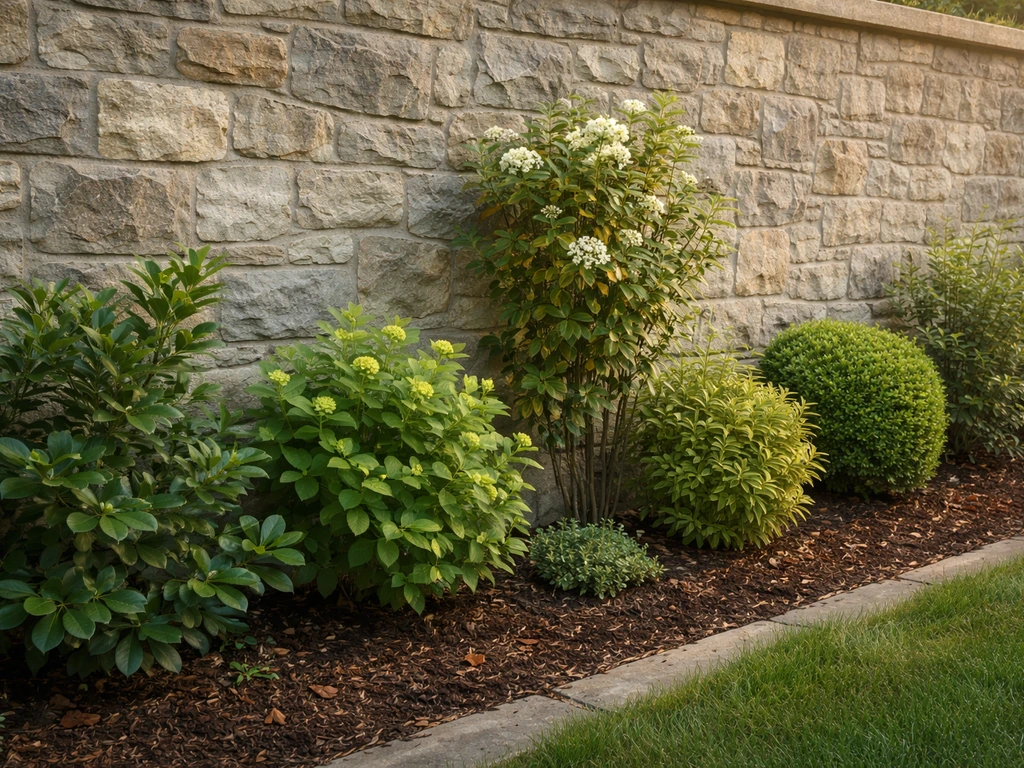
The wall itself changes the microclimate enough that a shrub that struggles in the open garden can absolutely thrive when it gets that reflected warmth, shelter from wind, and extra drainage, but the same conditions can also stress plants that need cool, moist roots. Get the match right and these are some of the lowest-maintenance plantings you can make.
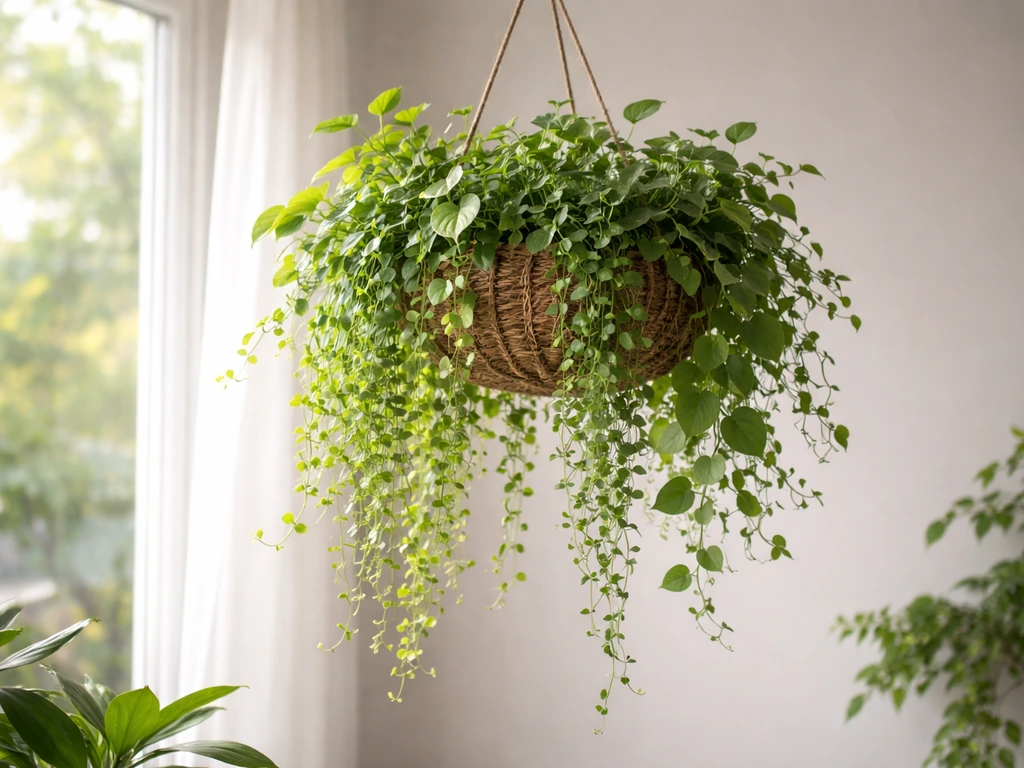
If you are wondering what to grow in hanging planters instead, choose trailing varieties and match them to your light and watering routine.
How to choose shrubs for a wall
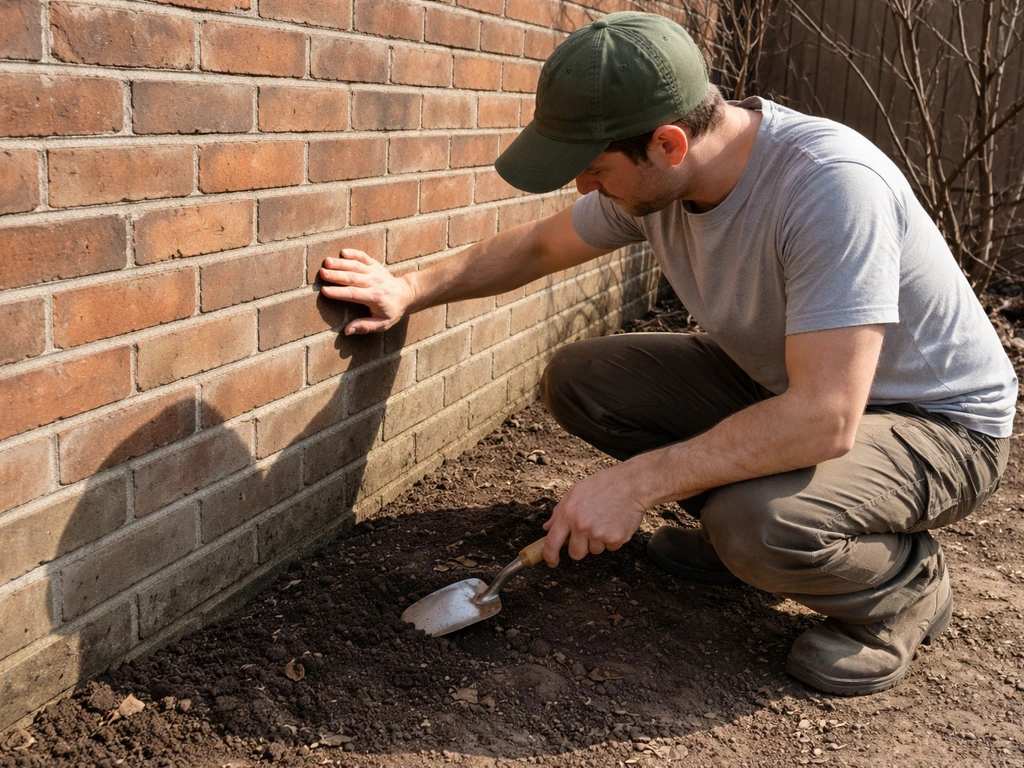
Before you pick a single plant, look at the wall itself. South and west-facing walls in most climates are significantly warmer and drier than open ground. The masonry or brick absorbs heat during the day and radiates it back at night, which is great for marginally tender shrubs but brutal for anything that wants consistent moisture. North and east-facing walls are shadier and cooler, which opens up different plant options. Also pay attention to whether there's an overhang, walls under roof eaves stay dramatically drier than walls that get natural rainfall.
Soil at the base of walls is often compacted, full of rubble left over from construction, and much drier than you'd expect. Amend it generously before planting and plan to water more often during the first two years. Root establishment takes time: for most shrubs, you're looking at at least two full growing seasons before they're genuinely self-sufficient, and during that window, establishment watering makes or breaks the plant.
Space planning matters more than most people expect. A useful rule: place a shrub no closer to the wall than half its mature width. So if a shrub matures at 6 feet wide, keep it at least 3 feet from the wall face. That gap does two things: it prevents the canopy from sitting flush against the surface (which traps moisture and encourages disease), and it gives you working room for training, pruning, and maintenance. Keeping a few inches of airflow between plant and wall is one of the easiest ways to avoid powdery mildew down the line.
Root behavior is a common worry, but it's worth keeping in perspective. blank" rel="noopener noreferrer">Research consistently shows that shrub and tree roots very rarely cause structural damage to solid walls, roots tend to grow toward a foundation and then travel parallel to it rather than pushing through. The real risk comes if there's already a crack or void that collects moisture, which roots will exploit. For most compact shrubs, blank" rel="noopener noreferrer">solid roots barriers or simply choosing non-invasive species removes this as a concern entirely. Avoid anything with notoriously aggressive roots (like willows or bamboo) near walls and you'll be fine.
Best wall shrubs for sunny spots
A sunny wall is one of the most productive spots in any garden. The reflected heat lets you push one or even two hardiness zones with marginally tender shrubs, and many of the showiest flowering shrubs genuinely love the extra warmth. These are the ones consistently worth planting:
- Pyracantha (Firethorn): incredibly tough, takes hard training against a wall, and delivers white flowers in late spring followed by months of bright orange or red berries. Evergreen, wildlife-friendly, and tolerates the dry soil at wall bases better than almost anything else.
- Ceanothus (California lilac): the wall protection is almost essential in colder climates because it takes the edge off frost. Smothered in intense blue flowers in late spring. Give it lean, well-drained soil — don't over-fertilize or over-water.
- Mockorange (Philadelphus spp.): one of the most powerfully fragrant flowering shrubs you can grow. Prefers sun and moist, well-drained soil with a pH between 4.0 and 7.0. Mature height varies widely by cultivar from 2 to 10 feet, so choose the right cultivar for your space. Avoid planting in spots with poor drainage.
- Buddleia (compact cultivars): fast-growing, excellent for pollinators, and blooms on new wood so an annual hard cut in early spring keeps it in check. Look for 'Blue Chip' or 'Lo and Behold' series if space is limited.
- Fremontodendron (flannel bush): spectacular, with huge golden-yellow flowers all summer. Needs sharp drainage and absolutely no summer watering once established. A south or west wall suits it perfectly.
- Forsythia: one of the first shrubs to flower in spring. Trains well as an informal espalier, and the wall heat advances flowering by a couple of weeks compared to open-ground specimens.
Best wall shrubs for partial shade spots
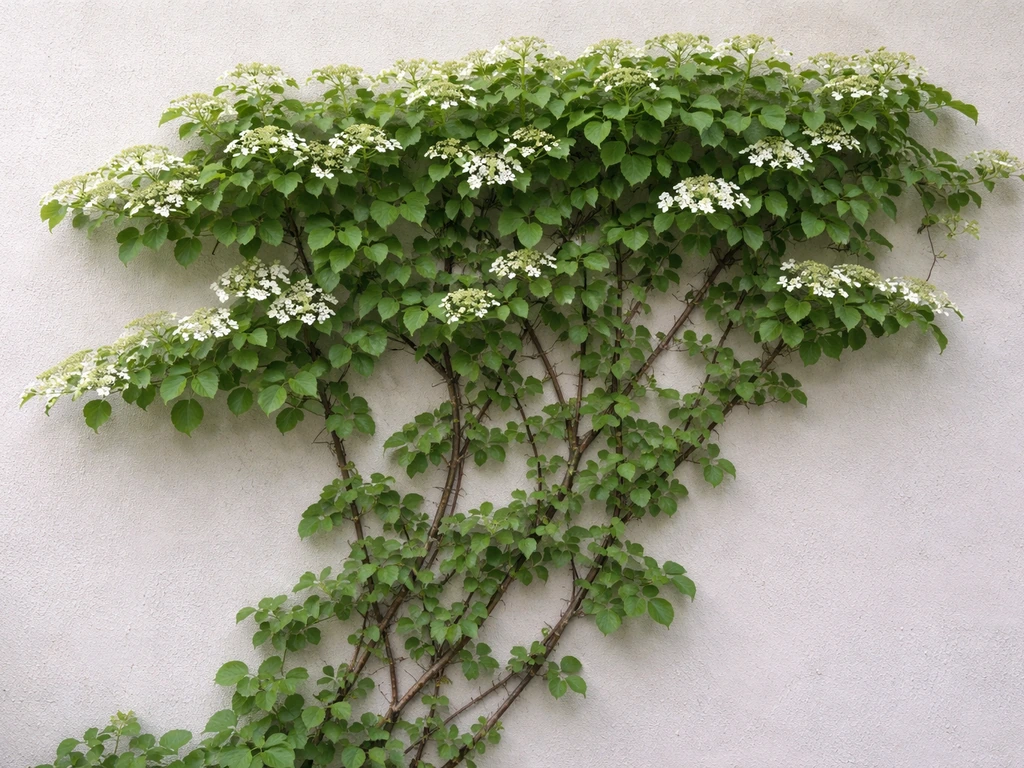
North and east-facing walls are genuinely tricky, shadier, cooler, and often wind-funneled. But there are shrubs that prefer exactly these conditions, and once established they tend to be remarkably low-maintenance.
- Hydrangea anomala subsp. petiolaris (climbing hydrangea): technically a climber, but it builds a woody framework over years and behaves exactly like a wall shrub. Self-clinging, takes deep shade, and the lacecap flowerheads in summer are worth every bit of the wait. It's slow for the first couple of years, then takes off.
- Garrya elliptica: an underused evergreen that absolutely shines on a cold north-facing wall. The long silvery-grey catkins from January through March are genuinely dramatic in the depths of winter when almost nothing else is interesting.
- Viburnum tinus: reliable evergreen, white flowers from late autumn into spring, followed by metallic blue berries. Tolerates shade, handles clay soil better than most, and grows to a manageable 6–10 feet. Keep spacing generous to improve airflow — viburnum is susceptible to powdery mildew in shaded, poorly ventilated spots.
- Camellia japonica or C. x williamsii: with a sheltered east-facing wall providing morning sun but protection from the hottest afternoon heat, camellias are genuinely spectacular. They need acidic soil (pH 5.5–6.5), so check before planting.
- Itea virginica (Virginia sweetspire): fragrant white flowers in summer, exceptional autumn colour, and tolerates both shade and moist soils. Compact cultivars stay under 4 feet and work beautifully in tighter beds.
- Mahonia: bold architectural leaves, fragrant yellow flowers in winter, and full shade tolerance. 'Charity' or 'Winter Sun' both work well trained loosely against a wall.
Best wall shrubs for small spaces
Narrow beds and tight clearances are the reality for most suburban walls, especially around house foundations and boundary walls with paving. The key is either choosing genuinely compact species or committing to training a larger shrub into a flat, space-efficient shape. Both work well if you're honest with yourself about how much pruning time you actually have. If you want a wall-friendly setup without digging a full bed, wall planters can be a great alternative planting a shrub.
- Boxwood (Buxus): the classic compact choice. Slow-growing, takes any amount of shaping, and can be kept as narrow as 12 inches wide with annual clipping. Soil pH matters — boxwood prefers neutral to slightly alkaline soil, so don't plant it next to acid-loving plants. Great for formal walls and foundation plantings.
- Itea virginica 'Little Henry': stays around 3 feet tall and wide, fragrant, and needs almost no maintenance once established. An easy win for anyone who wants something more interesting than boxwood.
- Compact pyracantha trained as espalier: by fixing horizontal wires to the wall and tying in branches as they grow, you can keep pyracantha to 12–18 inches of depth while covering 6–8 feet of wall height. Labor up front, almost no ongoing width management.
- Cotoneaster horizontalis (herringbone cotoneaster): naturally grows in a flat, fan-like pattern that presses against a wall without any training. Tiny white flowers, long-lasting red berries, and turns crimson in autumn. One of the most self-sufficient small-space wall shrubs there is.
- Escallonia compact cultivars ('Red Elf', 'Apple Blossom'): evergreen, flowering from summer into autumn, and naturally tidy enough that minimal pruning keeps them at 3–4 feet. Excellent in coastal and mild climates.
- Spiraea japonica dwarf cultivars: 'Little Princess' or 'Goldflame' stay under 3 feet and are happy in a narrow bed with average soil. Easy, unfussy, and reliably tidy.
If you're working with a very shallow bed (under 18 inches deep) and want something in a container rather than in the ground, this connects to a completely different approach, growing in wall planters or railing planters opens up a range of compact, seasonal options that work on a vertical surface rather than at the base of one. If you're using railing planters, focus on compact, fast-draining plants and keep an eye on how much sun the rail reflects during the day.
Evergreen vs deciduous wall shrubs
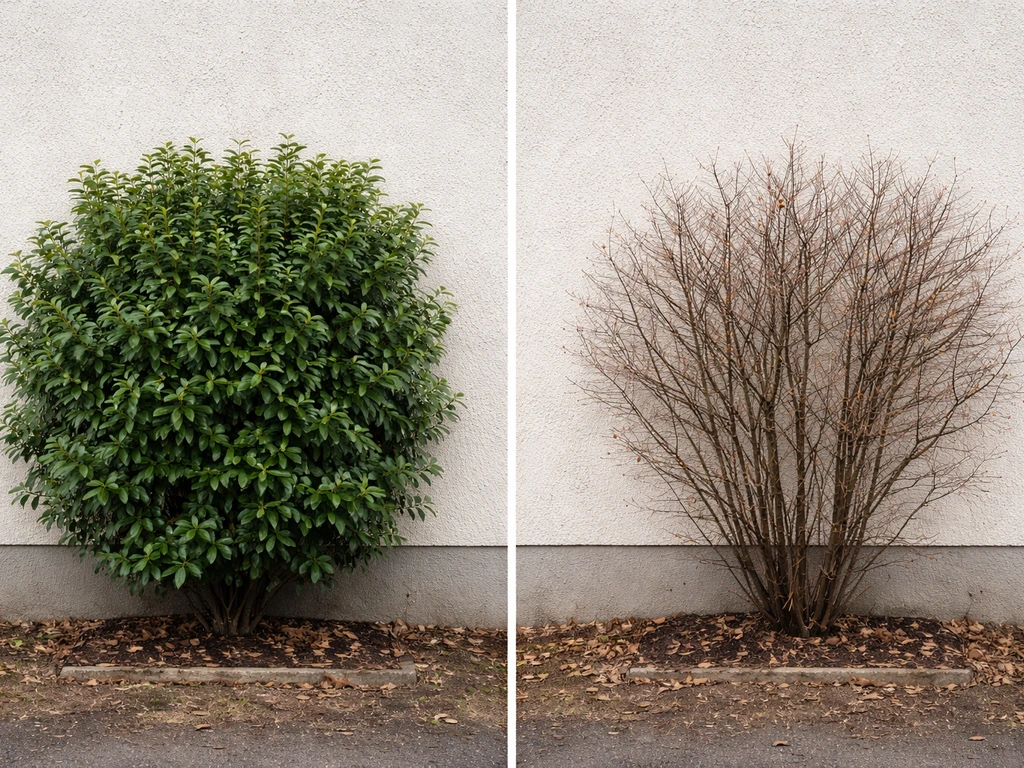
This is one of the most practically important decisions you'll make, and it comes down to what you want the wall to look like from October through March. Evergreens give you year-round screening, structure, and color, which matters most for boundary walls facing neighbors or walls that frame a view. Deciduous shrubs give you more dramatic seasonal interest, better flowers, better autumn color, often better fragrance, but leave a bare wall or skeleton of stems for several months.
| Feature | Evergreen wall shrubs | Deciduous wall shrubs |
|---|---|---|
| Winter appearance | Full foliage, structural screening | Bare stems or sparse structure |
| Flower interest | Moderate (some exceptions like camellia) | Often exceptional — forsythia, mockorange, buddleia |
| Fragrance options | Limited (Mahonia, Viburnum tinus) | Excellent — mockorange, buddleia, sweetspire |
| Autumn color | Minimal | Often dramatic — itea, cotoneaster, forsythia |
| Privacy screening | Year-round | Summer/growing season only |
| Maintenance | Generally less tidy pruning needed | Timing matters (old wood vs new wood) |
| Best examples | Pyracantha, boxwood, camellia, garrya, viburnum tinus | Forsythia, mockorange, buddleia, hydrangea, itea |
If you need year-round privacy or the wall is a focal point in winter, lean evergreen. If the wall is at the back of a garden you mostly see in summer, and you want maximum seasonal drama, a deciduous shrub will give you more payoff per square foot. Mixing one of each in a longer bed is a legitimate strategy, an evergreen anchor at one end and a deciduous showstopper in the middle works very well.
Flowering, privacy, and fragrance options
Walls concentrate and channel scent in a way that open-garden beds rarely do. A single mockorange planted against a warm wall on the south side of a house will fill a seating area with fragrance every evening for three weeks in June, the wall traps the scent rather than letting it disperse. If fragrance is a goal, this is genuinely the best spot in your garden to maximize it.
For privacy screening on a wall, the combination of height and density matters more than any individual species. Pyracantha trained vertically on wires can reach 10–12 feet while staying under 2 feet deep. Viburnum tinus builds a solid screen to 8 feet without much attention. For faster coverage, escallonia in mild climates or a deciduous native like Aronia (chokeberry) can fill a gap quickly and then be maintained at the desired height.
For pure flowering impact, a south-facing wall in June is the time to plant ceanothus, which delivers a blue flower show unmatched by almost anything else at that scale. For late summer, buddleia compact cultivars or Abelia x grandiflora keep the wall interesting when many other shrubs have finished. For winter interest, nothing beats Garrya elliptica's catkins on a north wall or Viburnum tinus's white flower clusters starting in November.
Season-by-season planting and care
Spring (March to May)
This is the best planting window for most wall shrubs, especially those going against a warm, south-facing wall. Soil temperatures are rising, roots will establish quickly, and the plant has a full growing season ahead of it before the first cold spell. Prep the bed well before planting: dig in a generous amount of organic matter (the soil at wall bases is often impoverished), and if drainage is poor, raise the bed slightly or add grit.
Space plants using the half-mature-width rule as a minimum guide from the wall face. After planting, water in with a volume roughly equal to a quarter to a third of the container volume, then apply a 3-inch layer of organic mulch in a wide circle around the plant, keeping the mulch clear of the stem. Fix wall wires or a trellis framework now if you're planning to train the shrub.
Summer (June to August)
Walls, especially brick or stone south-facing ones, dramatically increase drought stress in summer. Check soil moisture every few days for newly planted shrubs in the first season, more often during heat waves. Established shrubs are more forgiving, but wall-base soil dries out faster than open ground, so don't assume established plants are fine just because it rained last week. Tie in any new growth on trained shrubs before it gets woody and hard to bend.
Prune spring-flowering shrubs like mockorange and forsythia after flowering has finished but before they set buds for next year, if you prune too late, you'll cut off next season's blooms. Buddleia and other summer-bloomers that flower on new wood can be lightly shaped now if they're getting too leggy.
Autumn (September to November)
Autumn is a good secondary planting window for hardy, deciduous shrubs, the soil is still warm from summer but air temperatures are cooling, which reduces stress on newly planted roots. Avoid planting marginally tender shrubs like ceanothus or fremontodendron in autumn in cold climates; wait until spring. Mulch all wall plantings before the first frost to insulate roots and reduce moisture loss over winter. Hold off on any significant pruning until late winter, cutting into tender or borderline-hardy shrubs in autumn can expose them to cold damage.
Winter (December to February)
Late winter, just before growth resumes, is the ideal time to do rejuvenation pruning on overgrown shrubs. For summer-flowering shrubs that bloom on current-season growth (buddleia, abelia, late-flowering ceanothus), a hard cut back in late February or early March encourages vigorous new growth that will flower well. For deciduous shrubs with powdery mildew history, prune dense or crossing branches now to improve airflow, opening up the canopy is one of the most effective cultural controls for mildew and it's much easier to see the branch structure when the leaves are off.
Common problems and how to fix them
Drought stress and heat scorch
This is the most common wall shrub failure mode and it's almost always preventable. South and west walls reflect heat and dry out soil faster than any other garden position. The fix is combination: deep preparation at planting (organic matter holds moisture), a thick mulch layer maintained every year, and consistent watering during establishment for at least the first two full growing seasons. Once a shrub shows drought stress (wilting, leaf curl, premature leaf drop), water deeply and immediately, shallow, frequent watering encourages surface roots that are more vulnerable. A slow trickle for 30–45 minutes is more effective than a quick surface soak.
Powdery mildew
Powdery mildew is the disease most likely to affect wall shrubs, especially on shaded walls with little air movement. The spores thrive in humid, still air, exactly the microclimate that forms between a dense shrub and a wall. Prevention is much more effective than treatment. Keep plants pruned so there's airflow between the canopy and the wall surface. Avoid overhead watering, which raises humidity. Place susceptible plants (viburnum, mockorange, euonymus) in the sunniest, most open spot available rather than in a corner or under an overhang. If mildew appears, prune out the worst-affected growth promptly and improve airflow by thinning overcrowded stems. Winter pruning to open up the structure is one of the most effective long-term controls.
Aphids and scale insects
Aphids colonize soft new growth in spring and early summer and are common on buddleia, viburnum, and pyracantha. A strong jet of water knocks them back effectively for light infestations. For heavier infestations, insecticidal soap or horticultural oil applied on contact works well, the key is thorough coverage of all affected surfaces, including the undersides of leaves. Scale insects appear as hard, waxy bumps on stems, most often on camellias and euonymus. Horticultural oil in late winter or early spring, before new growth hardens, is the most effective treatment.
Shrubs outgrowing the space or reaching gutters
Growth toward gutters and eaves is a genuine issue if you're training a large, vigorous shrub on a house wall rather than a boundary wall. Pyracantha, wisteria, and climbing hydrangea can all reach gutters within 5–8 years if not managed. The solution is an annual maintenance tie-in and trim in late summer or autumn, cutting growth back to a bud or lateral shoot below the gutter line. Don't wait until the growth has worked into the gutter itself, because woody stems that have grown into a gutter are much harder to remove without damage. Set a reminder to check wall shrubs every August.
Root and wall damage
For compact ornamental shrubs, root damage to solid walls is rarely a real problem. Roots tend to grow alongside a foundation rather than through it. The risk increases if there's already a crack or void that holds moisture. Keep large, fast-growing shrubs (anything that will mature over 10 feet wide) away from old or compromised walls, and use the half-mature-width spacing rule as your guide. If you're genuinely worried about a wall with existing cracks, install a root barrier membrane when planting and choose naturally slow-growing species.
Pick your scenario: quick recommendation guide
Here's the fastest way to find your best option based on your wall situation:
| Your situation | Best first choice | Alternative |
|---|---|---|
| Sunny wall, want flowers | Ceanothus | Pyracantha or forsythia (espalier) |
| Sunny wall, want fragrance | Mockorange (Philadelphus) | Compact buddleia |
| Shaded wall, want structure | Garrya elliptica | Viburnum tinus |
| Shaded wall, want flowers | Hydrangea anomala petiolaris | Camellia (east wall) |
| Small or narrow space | Cotoneaster horizontalis | Boxwood or Itea 'Little Henry' |
| Year-round privacy screen | Pyracantha (trained) | Viburnum tinus |
| Winter interest | Garrya elliptica | Viburnum tinus or mahonia |
| Low maintenance, any wall | Cotoneaster horizontalis | Itea virginica |
Before you buy anything, walk your wall at different times of day and note where the sun hits and for how long, check whether soil at the base drains freely after rain, and measure the bed depth so you can apply the half-mature-width spacing rule. Those three checks take ten minutes and will save you from the most common planting mistakes. From there, any of the shrubs above will give you a strong start.
FAQ
How much sun does a wall need for flowering shrubs to perform well?
Think in terms of hours of direct sun on the leaves, not the sun on the wall surface. Many of the best performers for south and west walls need at least about 4 to 6 hours of direct light to sustain heavy flowering, while partial-shade wall shrubs can handle dappled light. If your wall is bright but shaded by a fence top or eaves, you may be closer to partial shade than you think.
Should I plant against a wall if the bed is mostly rubble or poor drainage?
Yes, but only if you treat it as a soil-building project. Break up compacted material to workable depth, mix in organic matter, and improve drainage (raised bed or added grit) before planting. Skip this step and you often get drought stress in summer plus root decline after wet weather, even if the wall is “warm” year-round.
What distance should I leave between a trained shrub and the wall, especially for dense screens?
Use the half-mature-width spacing rule as a baseline, even when you are training. For trained plants, the practical goal is airflow between canopies and the wall face, so include a consistent gap you can reach for tying, trimming, and removing dead growth. If you are training a thick vertical screen, expect more pruning to maintain that airflow.
Can I rely on rainfall once shrubs are established against a wall?
Usually no, because wall-base soil dries faster than open beds. After establishment, check moisture at root depth, not just at the surface. A simple approach is to test 4 to 6 inches down with a finger or probe during dry spells, and water deeply only when it’s drying there.
Why do my wall shrubs get leaf drop or wilting even when the weather isn’t extremely hot?
It’s often “reflected heat plus shallow moisture.” The wall warms the root zone, and compaction at the base limits infiltration, so the plant loses moisture quickly between waterings. The fix is to water slowly enough to soak deeper (not a quick surface splash), and keep mulch in place to reduce temperature swings.
What is the best mulch type and how far should I keep it from the shrub stem?
Use a 3-inch layer of organic mulch and keep it clear of the stem by at least a few inches to prevent rot and reduce habitat for pests. Maintain the layer annually, because wall plantings often dry out faster and mulch break-down reduces moisture retention. Avoid piling mulch right against the canopy, it increases mildew conditions.
How do I prevent powdery mildew on shaded wall shrubs without resorting to sprays?
Prioritize airflow and sun where possible. Thin dense growth, remove the worst-affected shoots promptly, and avoid overhead watering that increases humidity around leaves. If the wall is shaded by an overhang, consider training more vertically or pruning to open the structure earlier in the season.
Are aphids, scale, and mildew worse on specific wall shrubs?
Yes, certain choices are more pest-prone in the wall microclimate. Aphids commonly appear on soft new growth of pyracantha, buddleia, and viburnum, while scale often shows up as waxy bumps on stems of plants like euonymus or camellia. Early intervention matters most, rinse aphids off with a strong jet for light infestations, and apply horticultural oil around the dormant-to-early-spring window for scale.
What if the wall is near gutters, can I still grow a vigorous wall plant?
You can, but plan on annual management. For shrubs or climbers that will reach gutters, tie and trim growth in late summer or autumn below the gutter line and set a reminder to inspect each August. Waiting until stems are already inside gutters makes removal harder and increases the chance of damage.
How do I handle wall cracks if I’m worried about root issues?
Treat existing cracks or voids that collect moisture as the real risk point. If the wall is already compromised, keep large fast-growing shrubs away and use the spacing rule. For added reassurance, consider installing a root barrier membrane when planting, especially for anything that could mature over 10 feet wide.
When should I prune wall shrubs to avoid losing next season’s flowers?
Match pruning timing to the plant’s flowering habit. Spring-flowering shrubs should be pruned after flowering and before they set buds, while summer bloomers on new wood can usually be cut back in late winter to early spring (late Feb to early March). If you’re unsure, don’t prune immediately after a flush of bloom, instead wait until you can see new buds forming.
What is the most common mistake people make when planting shrubs against walls?
Underwatering early and under-preparing the wall-base soil. Compact or rubble-heavy soil combined with quick, shallow watering causes shallow root establishment and drought stress. Deep prep, generous organic matter, mulch, and consistent establishment watering for at least two full growing seasons are the usual “make or break” factors.
Next Article
What to Grow in Hanging Planters: Best Plants by Light
Pick the best hanging-planter plants by light, trailing style, and season, with easy care tips and watering mix advice.