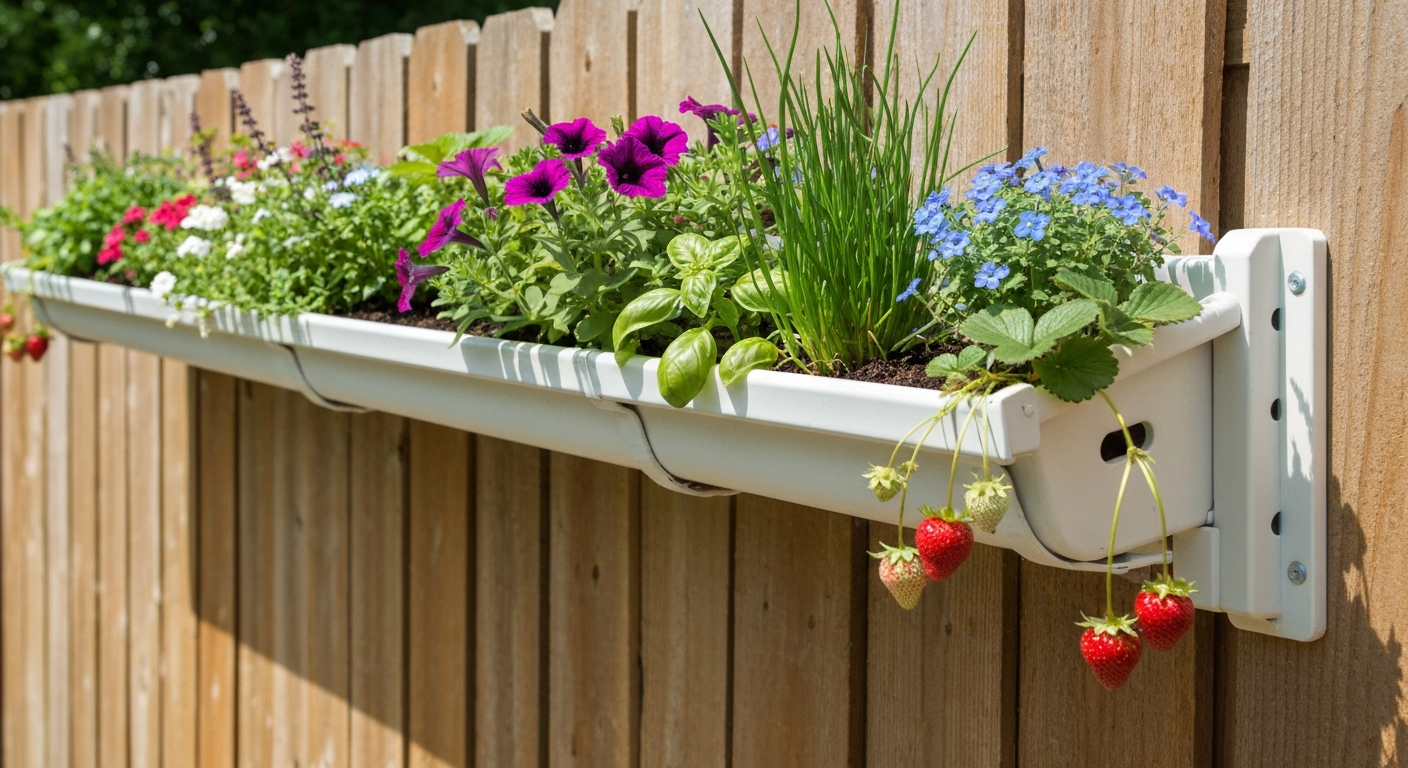
Yes, gutters make genuinely useful planters, and the best plants for them are shallow-rooted, lightweight, and tolerant of fast-draining or occasionally dry conditions. Trailing ornamentals like petunias, calibrachoa, and bacopa are the easiest wins in almost any climate. Compact herbs (chives, parsley, basil), everbearing strawberries, lettuce mixes, sedums, and sempervivums all perform reliably once you match variety to your light, moisture, and season. The key constraint is root depth: most gutter profiles give you 3 to 5 inches of growing space, so deep-rooted crops are out. Everything else comes down to choosing the right setup for your climate, anchoring the weight safely, and staying on top of watering in summer.
Best Plants to Grow in Gutters: Guide for Every Climate

Rachel Hartley
4 Aug 2026
Are gutters actually good planters? What you need to know upfront
Rain gutters have been repurposed as garden planters for years, and the appeal is obvious: they are long, narrow, cheap to buy as new sections, and work perfectly as a horizontal shelf for plants against a fence, wall, balcony railing, or shed. You can mount a single 6-foot run as a balcony herb garden, stack three tiers on a fence for vertical salad growing, or line the fascia of a garage with flowering trailing plants for instant curb appeal.
The benefits are real. Gutter planters use dead vertical space, keep roots off the ground (useful for renters or people with contaminated soil), are portable when made in sections, and drain well if set up correctly. Their shallow profile also means they warm up fast in spring, which can give you a week or two head start on herbs and greens compared to in-ground beds.
But there are hard limitations too. The shallow volume dries out quickly in heat, so plants are vulnerable to drought stress without regular watering or automated irrigation. Root space is tight, so crops that need deep soil (tomatoes, carrots, beans) simply won't work. Weight is a real concern if you're mounting on a fence or existing roof fascia: saturated potting mix is far heavier than dry mix, and a long run of waterlogged soil can damage a gutter bracket or pull fascia boards off a house. And if you're growing edibles in or near existing metal rain gutters on your roof, the material the gutter is made from matters for food safety, which I'll cover in the setup section.
Site and season factors that shape your plant choices
Sun, shade, and exposure
This is the single biggest variable. A gutter fixed to a south-facing fence in full sun in Arizona needs completely different plants than one bolted to a shady north-facing balcony wall in Seattle. Before you buy anything, clock the actual hours of direct sunlight your site receives at the current season: under 2 hours is deep shade, 2 to 4 hours is part shade, and 6 or more is full sun. Wind matters too. A rooftop or elevated fence run can be surprisingly brutal in late summer, and exposed positions desiccate shallow media much faster than sheltered spots. In those windy sites, wind-tolerant plants like calibrachoa, diascia, and sedums outperform anything with big soft leaves.
Climate region and USDA hardiness
Your USDA hardiness zone tells you the coldest winter temperatures your plants need to survive, but for gutter planters the zone matters less than your seasonal window. A gutter planter exposed to full winter frost is essentially an uninsulated container with almost no soil buffer, so roots freeze far faster than they would in the ground. In USDA zones 6 and below, most perennials grown in exposed gutters need to be either treated as annuals, moved inside, or heavily mulched for winter. In zones 9 and above, the bigger seasonal threat is summer heat and drought, not cold. Mediterranean climates (California coast, parts of the Pacific Northwest) have mild, wet winters and hot, dry summers, which favors Mediterranean herbs, drought-tolerant annuals, and succulents. Humid subtropical climates (Southeast U.S., coastal Southeast Asia) support lush trailing tropicals but also bring fungal diseases, so airflow in the planter matters. Arid and continental climates (interior West, Midwest) see extreme temperature swings and often low humidity, making drought-tolerant and deep-rooted plants harder to maintain in shallow gutters.
Seasonal timing
Because gutters have almost no thermal mass, they track air temperature closely. In cool-temperate regions, plant out after the last frost date and plan to swap in fall plantings (pansies, ornamental kale, cool herbs) by early September. In the humid South, cool-season crops like lettuce and cilantro go in gutters in fall and winter, not summer. In August in Texas, your gutter planter will need watering once or even twice a day in direct sun unless you have a drip system, and heat-sensitive plants like basil will bolt or fry. Understanding this timing saves a lot of dead plants.
How to decide what to grow: matching your goal to the right plants
The purpose question is where a lot of people get stuck. Here's how I think about it: start with your light conditions and climate, then pick the purpose that excites you. Growing food in a sunny spot? Herbs and strawberries are your best bet. Want something beautiful with almost no effort? Trailing ornamentals or succulents. Trying to help pollinators? Plant calibrachoa, alyssum, or a compact salvia. Want a medicinal corner? Thyme, chamomile, and lemon balm all do well in shallow containers.
- Trailing ornamentals (petunia, calibrachoa, bacopa, lobelia): best for visual impact, long flowering season, and easy seasonal swaps
- Pollinator-friendly plants (alyssum, calibrachoa, compact salvia, marigolds): work in sun to part shade, attract bees and butterflies with minimal effort
- Edibles and herbs (lettuce, chives, parsley, basil, cilantro, compact strawberries): great for balcony gardeners who want fresh food; need well-drained, uncontaminated soil and clean water sources
- Succulents and stonecrops (sedum, sempervivum, echeveria): ideal for hot, dry, or low-maintenance sites; minimal watering once established
- Low-maintenance fillers (creeping jenny, ajuga, ivy, vinca): cover ground fast, tolerate neglect, and spill over edges attractively
- Medicinal herbs (thyme, chamomile, lemon balm, lavender in larger gutters): small footprints, aromatic, dual-purpose for cooking and herbal use
The best plants to grow in gutters, organized by conditions
Full sun conditions
In full sun (6 or more hours of direct light), you have the most options but also the highest drought risk. Trailing petunias and calibrachoa are the gold standard: they flower prolifically all season, tolerate heat if watered adequately, and cascade beautifully over the gutter edge. Portulaca (moss rose) thrives in hot, dry conditions and is almost indestructible. Compact marigolds work well too, adding color while deterring some pests. For edibles, basil loves full sun and shallow heat but needs consistent moisture. Cherry tomatoes will technically grow in a gutter, but in my experience the root restriction causes blossom drop and stress unless you're watering twice daily, so I'd stick to herbs. Everbearing strawberries in compact varieties like 'Seascape' or 'Albion' are a well-loved choice for sun-exposed gutter systems and handle the shallow media better than most fruiting crops.
Part shade (2 to 5 hours of sun)
Part shade opens the door to some excellent plants that would fry in a south-facing position. Lobelia trails beautifully and blooms in shades of blue, violet, and white. Impatiens are a classic for shadier spots. Bacopa (Sutera) is low-growing, covered in tiny flowers all season, and handles part shade well. For edibles, lettuce mixes and loose-leaf varieties genuinely prefer part shade in summer, as they bolt much more slowly. Parsley and chives both tolerate reduced light and are practical additions to a part-shade balcony gutter. Ferns and small hostas can work decoratively in shadier gutter runs, though hostas need a deeper gutter (6 inches minimum) to avoid stressing in the limited soil volume.
Full shade (under 2 hours of direct sun)
Full shade is the hardest condition for gutter planters because most flowering plants need at least some direct light. Your best options are foliage plants: creeping jenny (Lysimachia nummularia) grows fast and has attractive chartreuse leaves. Ajuga reptans spreads well and has interesting leaf color. Ivy and small vinca varieties tolerate full shade but can become invasive in some regions, so check your local weed lists. Honestly, in deep shade, a gutter planter is a better candidate for moss gardening or small ferns than for trying to force flowering plants.
Wet vs. dry conditions
If your gutter is in a consistently moist position (east-facing in a rainy climate, or under the drip line of a roof), lean toward plants that don't mind wet feet: lobelia, bacopa, creeping jenny, and mint all handle more moisture than drought-tolerant types. If you're in a dry or unirrigated setup, succulents and stonecrops are by far the most forgiving. Sedum album, Sedum rupestre ('Angelina'), and various sempervivum cultivars survive weeks without water in shallow media and are tough enough for rooftop exposure. Portulaca is another dry-site standout for sun.
By climate region
| Climate Region | Top Plant Picks | Notes |
|---|---|---|
| Cool Temperate (Pacific NW, NE U.S., UK) | Lobelia, bacopa, lettuce, chives, pansies, sempervivum | Long cool growing season; swap to pansies/ornamental kale in fall; protect exposed gutters from hard frost |
| Mediterranean (CA coast, SW Europe) | Calibrachoa, thyme, lavender (small varieties), portulaca, sedum, strawberries | Hot dry summers demand drip irrigation or succulents; cool wet winters suit herbs planted in fall |
| Humid Subtropical (SE U.S., coastal Asia) | Petunia, impatiens, basil, marigold, sweet potato vine, begonia | Summer heat and humidity favor tropicals; use fall/winter for lettuce and cilantro; ensure good airflow to reduce fungal issues |
| Arid/Continental (interior West, Great Plains) | Portulaca, sedum, sempervivum, marigold, chives, compact salvia | Extreme temperature swings and low humidity; automated drip irrigation is almost mandatory; avoid large-leafed or moisture-loving plants |
Setting up your gutter planter: materials, weight, drainage, and safety
Choosing gutter type and size
For dedicated planter gutters (ones you're buying new, not repurposing from your roof drainage system), vinyl and aluminum sections from a hardware store are the easiest starting point. A standard 5-inch K-style gutter holds roughly 1.2 gallons of media per linear foot, and a 6-inch profile holds close to 2 gallons per foot. The 6-inch gives roots more room and dries out less quickly, which I prefer for edibles and herbs. Vinyl is lightweight, doesn't leach metals, and is the best choice if you're growing edibles. Aluminum is fine for ornamentals but can leach small amounts of metals over time. Avoid galvanized steel gutters for edible production: leaching studies have found galvanized steel releases high zinc concentrations, and where lead solder was used on older gutters, lead is a concern too. Laboratory leaching tests of common drainage materials find galvanized steel emits the highest zinc (and sometimes lead where present), while plastic and aluminum leach much less, so researchers generally recommend avoiding galvanized or uncoated metal contact with edible production or installing inert liners between soil and metal surfaces Laboratory leaching tests of common drainage materials find galvanized steel emits the highest zinc (and sometimes lead where present), while plastic and aluminum leach much less, so researchers generally recommend avoiding galvanized or uncoated metal contact with edible production or installing inert liners between soil and metal surfaces.. Copper gutters also release copper into the soil. For ornamentals, these risks are much less relevant, and you can use any material you have available.
Liners and drainage
Drill drainage holes every 6 to 8 inches along the bottom of the gutter section before you fill it. Without holes, you will have waterlogged roots within days of rain. Use a 1/8-inch or 3/16-inch drill bit and clean out the burrs. To stop soil washing out through the holes, lay a strip of geotextile or a cut-up piece of landscape fabric inside before you add your mix. If you're using a metal gutter for edibles, line the inside with a food-safe inert liner (a strip of thick HDPE plastic sheeting works) to prevent any contact between the soil and the metal. Fit endcaps securely and, if the gutter is installed at a slight pitch (1/16 to 1/8 inch per foot is enough), any excess water drains toward one end rather than pooling.
Soil mixes
Never fill gutter planters with garden soil. Potting Mixes for Certified Organic Production (NCAT) recommends using lightweight, well‑draining soilless mixes (peat or coir plus perlite/vermiculite and compost) and warns against using untreated garden soil in shallow containers. It compacts, gets waterlogged, and in a shallow container it can dry into a brick in summer. Use a lightweight soilless mix: a good recipe is roughly equal parts coco coir (or peat), perlite, and well-finished compost by volume. This keeps the weight down, drains freely, and holds enough moisture and nutrients to support the plant through the season. You can buy premixed lightweight potting mix from any garden center. For succulents, swap a portion of the perlite out for coarse grit or pumice. For edibles, choose an organic potting mix with no added synthetic wetting agents, especially if you're concerned about what goes onto your food. One important note: saturated potting mix weighs significantly more than dry mix. Water density is 62.4 lb per cubic foot, and a fully soaked mix in a long gutter run adds up fast. Always calculate the saturated weight when deciding how to mount or anchor a planter.
Mounting, anchoring, and weight limits
This is where I see the most mistakes. A 6-foot gutter section filled with saturated soil and plants can easily weigh 20 to 30 pounds or more. Mount to structural members (fence posts, wall studs, deck framing) using gutter brackets or heavy-duty L-brackets rated for the load, not just into cladding or fence panels. If you're stacking multiple tiers on a fence, space the tiers at least 12 inches apart vertically so lower plants get light. Do not attach planter gutters to the fascia boards of your house's actual roof drainage system: this adds weight to boards that aren't engineered for planter loads and risks damaging your real gutter system, causing water ingress and rot. If you want a rooftop setup, consult a structural engineer or contractor to confirm your roof edge can handle the load.
Irrigation options
For short single-tier runs (under 6 feet), hand watering with a watering can or hose works fine, though you'll need to be consistent. For longer runs or stacked systems, a low-flow drip line with 0.5 to 1.0 GPH micro-emitters spaced every 12 to 18 inches is the most reliable solution. Set it on a short automated cycle rather than one long soak: two or three short cycles per day in peak summer heat prevents runoff and keeps the shallow media from drying out between cycles. Self-watering wicking inserts are available for some gutter configurations and are a great low-maintenance option for balcony planters where you don't want to rig up a drip system.
How to install a gutter planter: step-by-step
- Measure the mounting location and cut your gutter section to length using a hacksaw or tin snips; deburr cut edges with a file
- Fit endcaps (glued or snapped) on both ends; seal with waterproof silicone caulk around the inside joint
- Drill drainage holes every 6 to 8 inches along the bottom using a 3/16-inch drill bit
- Line the inside with geotextile fabric or a strip of landscape cloth to keep soil from washing out through the holes; if using metal for edibles, add a food-safe plastic liner first
- Mount gutter brackets to your fence posts, wall studs, or deck framing at the intended height; set a very slight downward pitch (about 1/16 inch per foot) toward your planned drainage end
- Hang the gutter section on the brackets and confirm it is secure at the rated load
- Fill with lightweight soilless potting mix to about 1 inch below the top rim
- Transplant seedlings or plug plants, spacing according to the mature spread of each variety (compact herbs: 4 to 6 inches apart; trailing annuals: 6 to 8 inches apart; strawberries: 8 to 10 inches apart)
- Water thoroughly until water drains from the drainage holes; check that drainage is flowing and not pooling
- In the first week, water daily and check for settling; add a small top-dressing of mix if the level drops significantly after watering; stake any taller plants if needed
Season-by-season care
Spring and summer: watering, feeding, and managing heat
Once temperatures are consistently above 50°F and frost risk has passed, water gutter planters whenever the top inch of mix feels dry to the touch. In full sun during summer, this may mean daily or twice-daily watering for non-succulent plants. A balanced slow-release granular fertilizer worked into the surface at planting, then a dilute liquid feed (half-strength balanced fertilizer) every two weeks through summer, keeps nutrients up in a mix that can't hold as much reserve fertility as a large raised bed. For flowering annuals, deadhead spent blooms every few days to extend the flowering season. For herbs, pinch out flower heads as they form to keep the plant producing foliage.
Pruning and training trailing plants
Trailing varieties like petunia and calibrachoa can get leggy by midsummer. Cut them back by a third in late July or early August (in the Northern Hemisphere), water well, and give a light feed: they'll flush back with new growth and flowers for a strong finish to the season. Strawberry runners that form along the edge can be pinched off if you want to keep energy in the parent plants, or allowed to root into a small pot of mix placed below if you want more plants.
Fall: transitioning and preparing for cooler months
In cooler climates, use September to swap summer annuals for cool-season plants: pansies, violas, ornamental kale, and small snapdragons tolerate light frost and extend the visual season well into November or December. Reduce watering frequency as temperatures drop and plants slow their growth. Stop liquid feeding by early fall so plants harden off rather than putting on soft new growth before frost.
Winter: protecting plants and the gutter itself
In USDA zones 6 and below, any exposed gutter planter will freeze solid in a hard winter. Remove tender plants before the first hard frost and either compost the spent mix or store it in a bag for next year if it's still in good condition. Perennials that you want to overwinter (sedums, sempervivums) can often survive in place in milder zones but need protection in colder ones: move the whole gutter section to an unheated garage or shed if possible, or wrap with horticultural fleece. The gutter itself (especially vinyl) can crack in a hard freeze if left waterlogged; empty and dry it if leaving it in place over winter.
Pest and disease prevention
Good airflow is your first line of defense: avoid overcrowding plants in the limited gutter space, and don't let spent leaves sit in the mix where they can harbor mold. Aphids and fungus gnats are the most common pests in shallow container systems. For aphids, a strong blast of water knocks most off, and weekly sprays of dilute insecticidal soap handle persistent infestations. Fungus gnats thrive in consistently wet, organic-rich mixes: let the surface dry out slightly between waterings and use yellow sticky traps to monitor populations. For powdery mildew on herbs or ornamentals, a dilute baking soda spray (1 teaspoon per quart of water with a drop of dish soap) applied every week is an effective organic control.
Troubleshooting: what goes wrong and how to fix it
Clogging and debris buildup
If you've installed planter gutters near or on your actual roof drainage system, falling leaves and debris can clog the drainage holes. Check and clear the holes every few weeks during leaf fall, and consider a coarser mesh liner rather than fine fabric if clogging is chronic. Dedicated standalone planter gutters (mounted on fences or walls, not integrated with roof drainage) have less of this problem but still benefit from a seasonal cleanout.
Root-bound plants and compacted mix
After one full season, some plants will have filled every inch of the gutter with roots. Annuals are simply removed and replaced each season, which solves this automatically. For perennials or strawberries in a permanent setup, divide and replant every one to two years, refreshing the mix at the same time. Compacted mix that has lost its drainage can be partially replaced: remove plants, shake off old mix, add fresh potting mix, and replant. Signs of compaction are slow drainage, moss growing on the surface, and plants that look stressed despite adequate watering.
Waterlogging and salt buildup
If water isn't draining freely, check that the holes haven't clogged and that the gutter has a slight pitch. Salt accumulation from fertilizer or hard water shows up as white crusty deposits on the mix surface and can cause leaf edge burn on sensitive plants. Flush the planter thoroughly with plain water every month or so to leach out salt buildup, and reduce fertilizer frequency if the problem is recurrent.
Nutrient deficiencies
Yellowing between leaf veins usually signals iron or magnesium deficiency, which is common in shallow, fast-draining mixes where nutrients leach quickly. A dilute feed with a balanced liquid fertilizer that includes micronutrients usually corrects it within a week or two. General yellowing of older leaves that progresses upward is typically nitrogen deficiency: increase feeding frequency slightly for the remainder of the growing season.
When to move on to a different system
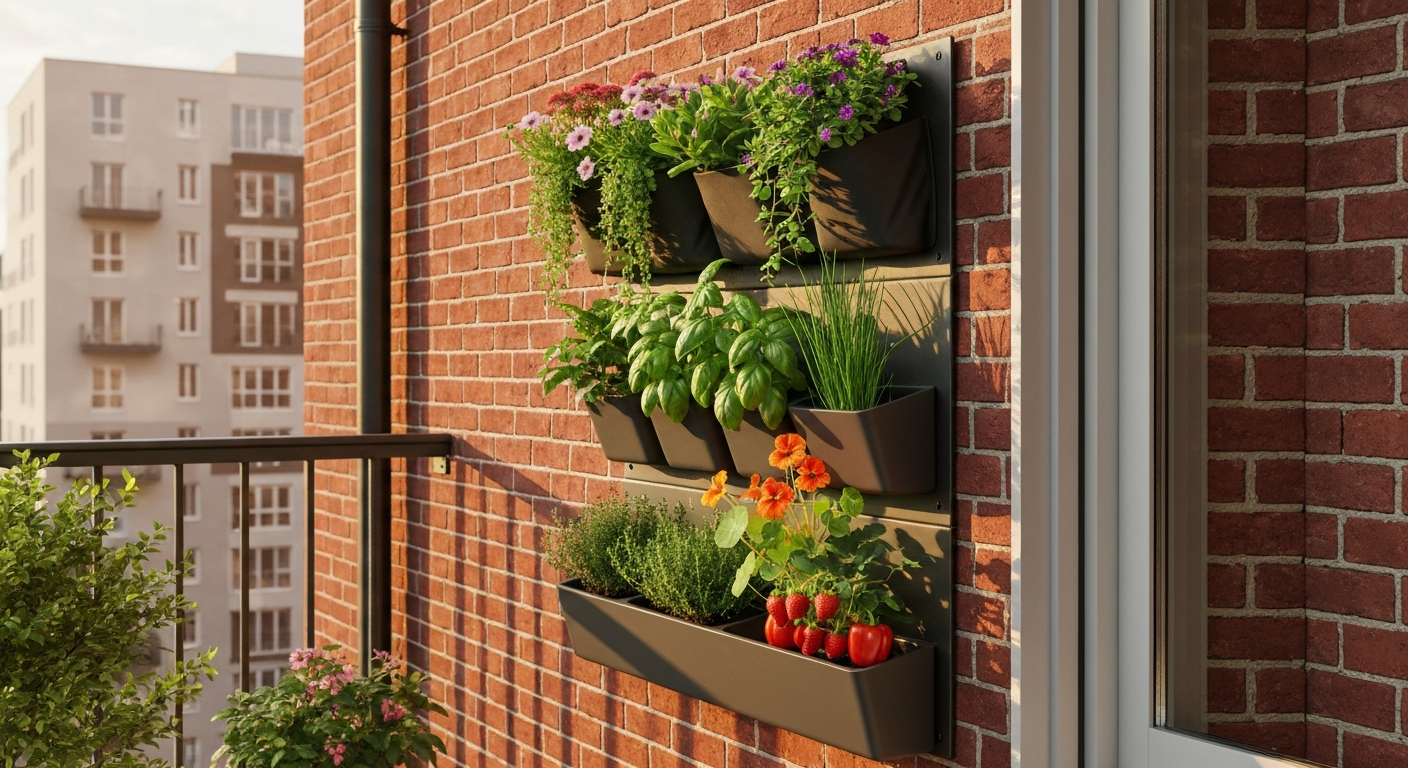
Gutters aren't the right solution for everything. If you want to grow anything with roots deeper than about 5 inches (tomatoes, peppers, root vegetables, large shrubs), a deeper container, raised bed, or in-ground planting is a better fit. If you're struggling with persistent drying-out despite daily watering, longer window boxes or deeper railing planters give more soil volume per plant and a bigger moisture reserve. Wall planters and vertical pocket systems suit similar situations where mounting space is limited but you need more depth. For suggestions on appropriate shallow-depth species and layouts, see our guide on what to grow in wall planters. And if you have a blank fence and want larger shrubby growth, that's really a question of shrubs grown against a wall rather than a container planting.
Ready-made gutter planting plans for different climates and spaces
These combinations are designed to go in together, look good from the start, and need similar care. Each is based on a single 6-foot section of 6-inch K-style vinyl gutter in a dedicated planter setup.
Cool temperate (Pacific Northwest, New England, UK): spring/summer combo
- 3x lobelia (blue or white) for trailing coverage
- 2x bacopa for fine-textured filler and continuous small flowers
- 2x chives for edible interest and pollinator value
- 1x creeping Jenny to spill over the front edge
- Fertilize every two weeks with a balanced liquid feed; deadhead spent lobelia to extend flowering through October
Mediterranean (California, SW Europe): dry summer combo
- 4x portulaca (mixed colors) for heat and drought tolerance
- 2x compact thyme (Thymus serpyllum) as low aromatic filler
- 2x sedum 'Angelina' for golden trailing texture
- Install low-flow drip line or prepare to hand-water daily in July and August; no feeding needed beyond a slow-release granule at planting
Humid subtropical (Southeast U.S., coastal Southeast Asia): summer/fall combo
- 3x trailing petunia (heat-tolerant varieties such as Wave or Easy Wave series)
- 2x compact marigold for pest deterrence and color
- 2x basil (sweet or Thai) in the sunniest section
- 1x sweet potato vine (Ipomoea batatas ornamental) for lush foliage
- Ensure drainage holes are clear; high humidity increases fungal risk — apply dilute neem oil spray monthly as a preventive
Arid/Continental (interior West, Great Plains): low-water combo
- 4x mixed sempervivum (hens and chicks) for near-zero water needs
- 2x compact sedum (S. album or S. spurium)
- 1x portulaca for seasonal color
- Use a gritty succulent mix (50% coco coir, 50% coarse perlite or grit); water deeply once per week and let fully dry between waterings; no liquid feed needed
Balcony herb kit (any climate, part sun)
- 2x parsley (flat-leaf or curly)
- 2x chives
- 1x compact basil (in the warmest, sunniest section of the gutter)
- 1x creeping thyme at the trailing end
- Use vinyl gutter with food-safe liner; avoid roof runoff irrigation; water when the top half-inch of mix is dry; harvest regularly to prevent bolting
Townhouse fence: three-tier stacked visual display
Mount three 6-foot gutter sections horizontally on a fence at heights of roughly 18 inches, 36 inches, and 54 inches. In full sun: top tier with trailing petunias (they'll cascade down), middle tier with compact calibrachoa in contrasting colors, bottom tier with creeping jenny and alyssum. This creates a layered waterfall effect. All three tiers share similar care requirements: regular watering via a simple drip manifold, a fortnightly liquid feed, and a midsummer cutback. Similar vertical setups work well for what you'd grow in railing planters or wall planters, though those systems typically offer more depth per container. For guidance on suitable varieties and combinations for similar shallow, suspended containers, see what to grow in hanging planters.
Full gutter-bed along a shed wall
A 12 to 20-foot continuous gutter section mounted at waist height on a shed wall gives enough linear space for a dedicated salad garden. Plant alternating sections with cut-and-come-again lettuce varieties, a central clump of chives, and compact parsley at each end. This works best in part shade (a shed wall in dappled light is ideal for lettuce in summer), with a drip line set to run two short cycles daily. Refresh the mix in each section once per season and rotate crops to prevent any one section from becoming depleted.
FAQ
Are gutters suitable as planters and what are common uses for gutter planters?
Yes—gutters can be effective shallow linear planters when set up intentionally. Common uses: balcony/window-rail boxes and short run planters for herbs and salad greens; decorative trailing annuals and groundcovers on walls; continuous shallow beds for low-growing ornamentals; stacked or modular gutter systems for vertical edible production (strawberries, salad mixes). Benefits: makes use of narrow space, is lightweight when using soilless mixes, and creates mobile/replaceable planting runs. Limitations: very shallow rooting depth, faster drying, higher maintenance, and potential contamination from roof/gutter materials if used for edible crops.
How do site and season factors determine which plants will work in gutter planters?
Select plants by five key factors: (1) Light—full sun (6+ hours), part shade (3–6 hours), or full shade (≤3 hours); choose sun‑tolerant species for exposed gutters. (2) Moisture—gutters dry fast; choose drought‑tolerant or moisture‑loving species depending on irrigation and rainfall. (3) Root depth—shallow-rooted plants (0–6") perform best. (4) Climate/hardiness—match plants to your USDA zone or local climate region (cool temperate, Mediterranean, humid subtropical, arid/continental). (5) Seasonality—early spring and fall are best for cool-season crops; heat-sensitive plants need shade or irrigation in hot summers; winterize or move tender plants in freezing climates. Use these together to pick species and irrigation schedules appropriate to your location and season.
Which ornamental trailing plants are best for gutters by light and moisture conditions?
Full sun + moderate moisture: calibrachoa, trailing petunia, bacopa, diascia. Full sun + dry: lantana (dwarf), osteospermum (compact), low sedums for a hot, dry exposure. Part shade/moderate moisture: ivy geranium (Pelargonium peltatum), lobelia (cool seasons), impatiens (shade tolerant varieties). Shade and moist: coleus (shallow cultivars), ferns (small species) in deeper gutter inserts. Choose compact/trailing cultivars labeled for window boxes/rail planters for best fit.
What pollinator‑friendly plants grow well in gutters?
Choose nectar- and pollen-rich, shallow‑rooted varieties: full sun—calendula, alyssum, dwarf salvias, bee balm cultivars (compact); part shade—borage (edge planting), native penstemon (dwarf), Nepeta (catmint) in containers. Include a mix of annuals and perennials with staggered bloom to support pollinators across the season; avoid systemic insecticides.
Can I grow edibles and herbs in gutters safely? What are the precautions?
Yes, with precautions. Best edible choices are shallow-rooted herbs and greens (chives, parsley, basil, lettuce mixes, dwarf strawberries). Precautions: avoid direct contact between edible tissue and unlined metal gutters (galvanized or copper) because of metal leaching; use inert liners (food-grade HDPE liner, thick plastic tray) or dedicate plastic/fiberglass gutters; use washed, low-contaminant potting mixes; don’t irrigate solely with untreated roof runoff unless you’ve tested for metals/microbes; harvest and wash produce thoroughly. If gutter material or runoff quality is unknown, favor ornamentals/pollinator plants instead of edibles.
Which succulents and low‑maintenance species suit gutter planters?
Succulents are excellent for hot, dry, sunny gutters with excellent drainage. Good options: low mat-forming sedums, sempervivum (hens and chicks), small echeveria or portulaca (moss rose). Use a gritty, fast‑draining mix and minimal irrigation; avoid overwatering. For low-maintenance ornamentals, choose drought-tolerant trailing lantana, verbena (compact), or ornamental grasses in deeper gutter inserts.
Next Article
What to Grow in Wall Planters: Light‑wise Picks & Plans for Every Zone
What to grow in wall planters: light‑aware picks, mounting, watering, seasonal care & troubleshooting.