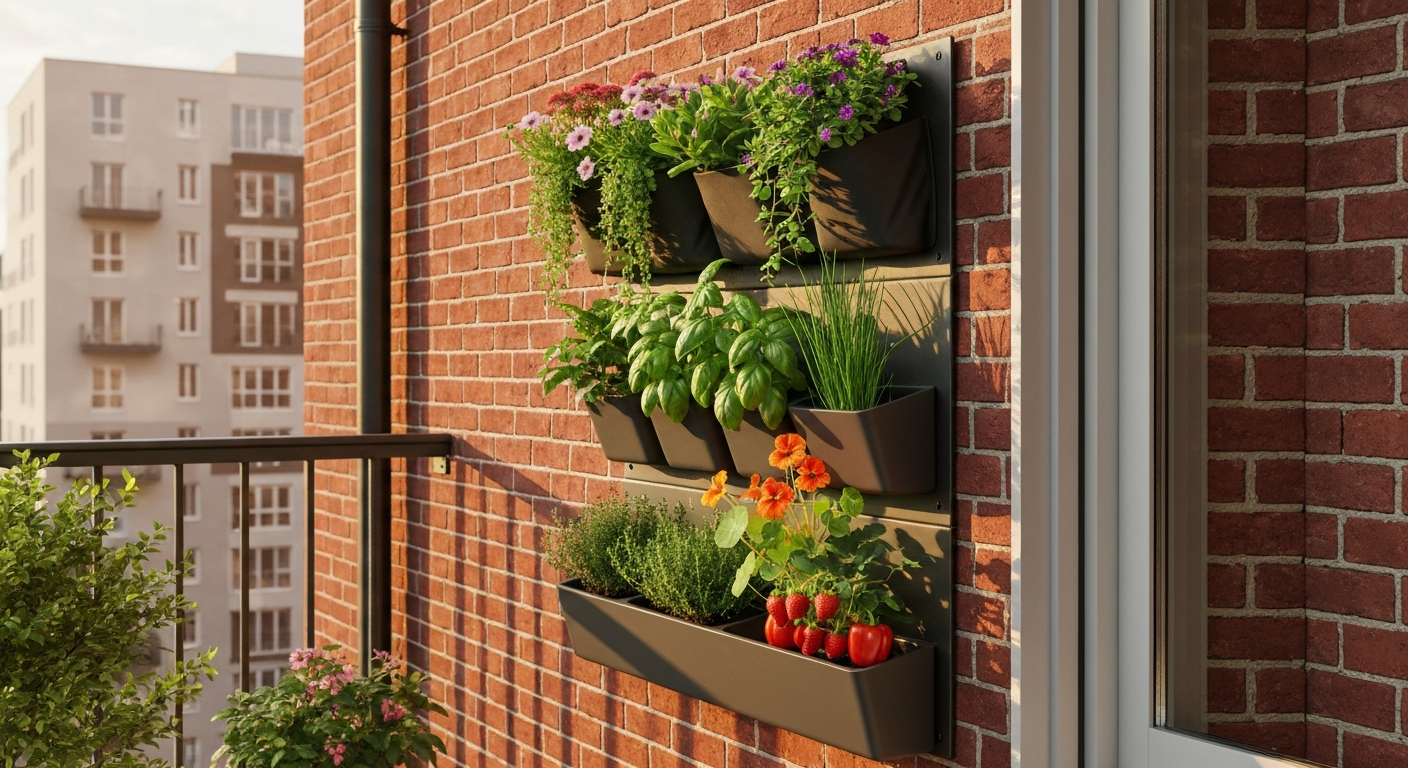
Wall planters work best when you match the plant to three things: how much light that wall actually gets, how deep the planter is, and what you want from it (food, medicine, or something beautiful). In a shallow 4-inch pocket you can grow trailing nasturtiums, thyme, or lettuce. In a deep 10-inch trough you can add strawberries, compact peppers, or a full herb collection. Get those three decisions right and almost any wall, from a Brooklyn apartment balcony to a Texas garden fence, becomes productive growing space.
What to Grow in Wall Planters: Light‑wise Picks & Plans for Every Zone
Rachel Hartley
19 Jul 2026
Who this guide is for and what wall planters can actually do
If you've got a wall and not much floor, this is for you. Wall planters are one of the most versatile growing formats around, they suit apartment balconies, courtyard fences, kitchen walls near a window, garden sheds, garage walls, and full outdoor structures. They're genuinely useful for apartment dwellers who want fresh herbs without giving up counter space, for home gardeners who want to extend a small plot vertically, and for anyone who's looked at a blank wall and thought it could be doing more work.
Beyond fresh food, wall planters handle medicinal herbs (calendula, lemon balm, lavender), pollinator-friendly ornamentals (trailing lobelia, bacopa, million bells), and structural statement plantings equally well. The wall itself becomes part of the growing system: south- and west-facing masonry walls absorb and radiate heat, extending the effective season for warm-season crops. North-facing walls create the cooler, shadier conditions that lettuces and ferns prefer. Understanding that microclimate effect, the RHS calls it the 'wall-side border' effect, is one of the biggest advantages wall planters have over freestanding containers.
Quick decision path: five questions before you buy a single plant
Running through these five questions before anything else saves money and dead plants. Each one narrows your plant list significantly.
- Assess your light. Stand at the wall at 10am, noon, and 3pm on a clear day and count the hours of direct sun. More than 6 hours = full sun. 3–6 hours = part sun/part shade. Under 3 hours = shade. If you want to be precise, a DLI (Daily Light Integral) meter gives you a usable light value in mol·m⁻²·day⁻¹ — full-sun crops need 20–30 DLI, herbs and salad greens do well at 10–20 DLI, and shade-tolerant ornamentals manage on 5–10 DLI.
- Read your microclimate. A south-facing brick wall in July radiates heat at night — great for basil and peppers, bad for lettuce. A north-facing wall under an overhang stays cool and damp — ideal for ferns and mint. Wind exposure matters too: a windy wall dries out pockets fast and can snap tall stems.
- Measure planter depth. This single number limits your plant list more than anything else. Under 4 inches: trailing ornamentals and shallow-rooted herbs only. 6–8 inches: most leafy greens, annual herbs, lettuces, pansies. 10–12 inches: strawberries, deeper-rooted perennial herbs, compact root vegetables. 12 inches and more: compact fruiting plants, dwarf peppers, some tomatoes.
- Check watering access. Wall planters dry out roughly twice as fast as ground beds. Can you reach the wall easily with a watering can or hose? Is a drip line feasible? If you can't water consistently — at least every other day in summer heat — choose drought-tolerant plants (sedums, thyme, trailing rosemary) or invest in a self-watering planter system.
- Define your goal. Food production (herbs, salad, compact fruit), medicinal plants (lavender, calendula, lemon balm, echinacea), or purely ornamental (trailing petunias, lobelia, calibrachoa, ivy)? Your goal determines which plant families to focus on and what soil mix, fertilizer type, and harvest schedule you'll need.
What to grow where: plants by light, depth, and goal
The table below cuts through the guesswork. Every plant here has been selected for realistic container performance, not just 'can survive' but 'will actually thrive and produce' in wall planter conditions.
| Plant | Light | Min. Depth | Goal | Notes |
|---|---|---|---|---|
| Basil | Full sun | 6 in (15 cm) | Edible | Needs warmth and consistent moisture; pinch flowers to extend harvest |
| Thyme | Full sun | 4 in (10 cm) | Edible / Medicinal | Drought-tolerant once established; good in shallow pockets |
| Oregano | Full sun | 4 in (10 cm) | Edible / Medicinal | Very forgiving; trails attractively over pocket edges |
| Chives | Full to part sun | 6 in (15 cm) | Edible | Hardy perennial; divide every 2–3 years |
| Parsley | Part sun | 6 in (15 cm) | Edible / Medicinal | Biennial; resow annually for best production |
| Mint | Part sun to shade | 6 in (15 cm) | Edible / Medicinal | Invasive in ground — wall planter is perfect containment |
| Lemon balm | Part sun to shade | 6 in (15 cm) | Medicinal | Calming herb; shade-tolerant and productive |
| Lettuce / Salad mix | Part sun | 6 in (15 cm) | Edible | Bolt-prone in full summer sun; ideal for spring and fall |
| Strawberries (day-neutral) | Full sun | 10 in (25 cm) | Edible | OSU recommends day-neutral varieties in 10–18 in deep containers |
| Compact / dwarf pepper | Full sun | 12 in (30 cm) | Edible | Needs 5+ gal equivalent volume; south-facing wall ideal |
| Calendula | Full sun | 6 in (15 cm) | Medicinal / Ornamental | Easy from seed; petals edible and anti-inflammatory |
| Lavender (compact) | Full sun | 8 in (20 cm) | Medicinal / Ornamental | Prefers lean, well-drained mix; avoid overwatering |
| Nasturtium (trailing) | Full to part sun | 4 in (10 cm) | Ornamental / Edible | Flowers and leaves edible; thrives in poor, shallow soil |
| Trailing lobelia | Part sun | 4 in (10 cm) | Ornamental | Cool-season performer; flags in midsummer heat |
| Calibrachoa / Million bells | Full sun | 4 in (10 cm) | Ornamental | Self-cleaning, long-season; very drought-tolerant once established |
| Bacopa | Part sun to shade | 4 in (10 cm) | Ornamental | Ideal for shaded walls; stays compact and tidy |
| Fern (compact varieties) | Shade | 6 in (15 cm) | Ornamental | Keep consistently moist; great for north-facing walls |
| Sedum / Stonecrop | Full sun | 3 in (8 cm) | Ornamental | Extremely drought-tolerant; perfect for shallowest pockets |
| Cilantro | Part sun | 6 in (15 cm) | Edible | Bolts fast in heat; grow in spring/fall or provide afternoon shade |
Low-maintenance picks if you just want something that won't die
If time is tight, focus on thyme, oregano, chives, calibrachoa, and sedum. All five tolerate irregular watering, survive a bit of neglect, and look decent through most of the season. Sedums in shallow felt pockets are practically indestructible in full sun. Chives will come back year after year with almost zero intervention. Calibrachoa keeps flowering for months without deadheading.
Choosing the right planter type and size
Not all wall planters are built the same, and the type you choose determines what you can grow before you've spent a penny on soil or plants. Here are the three main categories you'll encounter.
Shallow felt or fabric pockets
These are the multi-pocket fabric panels you see everywhere online. Pockets are typically 3–5 inches deep and hold about a quart of mix each. They're lightweight, cheap, and attach easily to most surfaces. The downside is rapid drying, fabric breathes from all sides, so in hot weather you may need to water daily. Stick to succulents, trailing ornamentals, shallow-rooted herbs like thyme and oregano, and lettuces in cooler seasons. Avoid basil or any moisture-hungry crop in these unless you can water very consistently.
Modular vertical systems (interlocking panels)
These are the more serious setups: rigid plastic or metal modules that click together and mount on a bracket rail. Individual cells are usually 6–10 inches deep and hold 1–3 gallons of mix. They're excellent for herbs, salad greens, strawberries, and compact ornamentals. Many are compatible with drip irrigation fittings, which makes them genuinely manageable at scale. The upfront cost is higher, but the lifespan and plant performance justify it for any serious edible wall.
Troughs and deep wall-mounted boxes
A wall-mounted trough or window box with 10–14 inches of depth is the most versatile option for food production. At this depth, you can grow strawberries, compact fruiting peppers, rosemary, and even a dwarf tomato if the variety is right (look for 'Tumbling Tom' or 'Patio' types). NC State Extension guidelines confirm that most fruiting crops need at least 12 inches of growing medium and 5 gallons of volume to perform reliably. Deep boxes also buffer temperature swings better than shallow pockets, which matters for root health in hot climates.
| Planter Type | Typical Depth | Best For | Main Drawback |
|---|---|---|---|
| Felt / fabric pockets | 3–5 in (8–13 cm) | Succulents, trailing herbs, ornamentals | Dries out very fast; limited plant range |
| Modular interlocking panels | 6–10 in (15–25 cm) | Herbs, salad greens, strawberries | Higher upfront cost |
| Wall troughs / deep boxes | 10–14 in (25–35 cm) | Fruiting crops, perennial herbs, strawberries | Heavier when planted; requires robust mounting |
Weight, mounting points and what your wall can actually hold
This is the section most people skip, which is why you occasionally see a wall planter full of wet soil pull a chunk of siding off a house. Wet potting mix weighs roughly 50–70 lb per cubic foot (800–1,100 kg/m³). A modest 3-foot trough that's 10 inches deep and 8 inches wide holds about 0.14 cubic feet of mix, that's around 8–10 lb of wet soil, plus the planter itself, plus water in a reservoir. A full modular vertical system with 12 large cells can easily reach 80–120 lb when saturated. You need to know what's behind your wall and what your fasteners can hold.
Estimating total planted weight
- Calculate planter volume in cubic feet (length × width × depth, all in feet)
- Multiply by 60 lb to get a conservative wet-soil estimate
- Add the weight of the empty planter (check product specs)
- Add 5–10% for water in a full reservoir if the planter has one
- That total is the load each mounting bracket must support — divide by the number of brackets to get load per fixing point
Matching fastenings to wall type
Wood stud walls (typical North American siding): locate studs with a stud finder and drive 3-inch structural screws directly into the framing. Avoid fixing solely into drywall, plywood sheathing, or vinyl siding without hitting a stud, none of these can reliably hold dynamic loads. For heavier systems, use a horizontal mounting rail that spans two or more studs.
Brick and masonry: use wedge anchors or sleeve anchors rated for the load. Drill with a masonry bit into the mortar joint (not the brick face) where possible, mortar is easier to repair and easier to drill cleanly. Simpson Strong-Tie and Hilti both publish anchor load tables with allowable tension and shear values for their fasteners in masonry; always apply a minimum safety factor of 3:1 (so a 40 lb load needs a fastener rated for at least 120 lb). For any load over 150 lb total, or any situation where the wall is load-bearing in a structural sense, consult a structural engineer or contractor.
Concrete: adhesive anchors or expansion anchors work well here. Follow the manufacturer's cure time for adhesive anchors before loading. Keep edge distances at least 4 anchor diameters from any corner or edge of the slab.
Soil, drainage and potting mixes for wall planters
Never use garden soil in a wall planter. Garden soil compacts, stays waterlogged, and becomes a brick-like mass in a container. You want a soilless mix, and the standard is some variation of the Cornell peat-lite formula: peat moss or coconut coir, perlite, and a small amount of compost or slow-release fertilizer. Coir is a good peat alternative, but note that it needs a lime adjustment (coir is slightly acidic and has lower cation exchange capacity than peat).
A practical DIY mix for most wall planter herbs and edibles: 50% coir or peat, 30% perlite, 20% mature compost. NCAT/ATTRA research on organic soilless mixes recommends keeping compost below 30–40% by volume to prevent compaction and nutrient imbalances, going higher tends to create a dense, anaerobic mix that suffocates roots. For tested peat‑free recipes and specific guidance on limiting compost in professional soilless mixes, see Potting Mixes for Certified Organic Production – NCAT. For drought-tolerant ornamentals and Mediterranean herbs (lavender, thyme, oregano), reduce the compost fraction and increase perlite to 40%, which improves drainage and discourages root rot.
Drainage: the thing most people get wrong
Every wall planter needs drainage holes. Colorado State Extension is explicit about this: do not rely on non-porous pots without drainage holes. The folk remedy of adding a layer of gravel or rocks at the bottom does not help drainage, it actually raises the saturated zone upward (a phenomenon called a perched water table) and can make root rot worse. Instead, line the base of fabric pockets with landscape fabric to hold mix in while water drains freely, and make sure any rigid planter has holes every 6 inches or so along the bottom edge. If you're mounting planters on a finished wall, add a drip edge or splash tray to protect the surface below.
Moisture-retentive amendments for shallow pockets
In very shallow felt pockets that dry out quickly, adding 10–15% horticultural vermiculite (not perlite) to your mix helps retain a bit more moisture between waterings without causing waterlogging. Biochar at 5–10% by volume is another option that improves moisture buffering and has some evidence for long-term soil health benefits. Water-retaining gel crystals (polyacrylamide) are widely sold but have a mixed track record, they can swell excessively and push mix out of pockets, and long-term degradation concerns make them a second-choice option.
Step-by-step installation and mounting guide
- Choose your wall and mark the location. Hold the empty planter against the wall at height and check for comfortable harvesting reach (ideally below shoulder height for edibles). Use a spirit level to mark a horizontal line for the mounting rail or bracket positions.
- Check what's behind the wall. Locate studs, avoid drilling near electrical conduit or plumbing. In masonry walls, use a battery-powered stud finder set to deep-scan mode, or simply tap to find hollow vs. solid zones.
- Pre-drill fixing points. For masonry, use a hammer drill with a correctly sized masonry bit for your anchor type. Clear all dust from the hole before inserting the anchor.
- Install the mounting hardware. For most modular systems, this means a horizontal rail at the correct height. Torque screws to manufacturer spec — overtightening in masonry can crack the anchor zone.
- Attach a drip edge or waterproof backing if the wall surface is painted, clad, or made of wood. A simple strip of metal flashing or a rubber drip lip under the planter base prevents moisture staining and rot.
- Fill planters with pre-moistened potting mix to within 1 inch of the rim. Pre-moistening the mix before filling prevents the hydrophobic dry-mix problem, where dry peat or coir sheds water rather than absorbing it.
- Hang the planters on the mounted brackets and check all fixings under load before planting. Gently tug the planter downward — any play or creaking means the mounting needs revisiting.
- Add plants or seeds, water in gently, and step back to check spacing. Most herbs and ornamentals in wall planters look better at a density of one plant per 4–6 inches for a full, cascading look within 4–6 weeks.
Irrigation and feeding options
Watering wall planters by hand every day gets old fast, especially in summer. The good news is there are several low-cost ways to automate or reduce that workload significantly.
Self-watering and reservoir systems
Self-watering planters with a sub-irrigation reservoir are the easiest upgrade for apartment walls and balconies. Washington State University's container gardening guidance notes that reservoir systems reduce watering frequency substantially, but they must include overflow protection, a reservoir that can't drain during heavy rain will keep roots permanently saturated. For a typical 5-gallon equivalent planter in warm weather, aim for a reservoir of about 1–1.5 gallons. In peak summer this might last 2–3 days; in spring and fall, 5–7 days is realistic.
Drip irrigation for larger systems
A simple drip system with a hose-end timer is the most practical solution for modular vertical setups with 6 or more cells. The key design rules: use a pressure regulator (most wall planter drip kits run at 15–25 psi, not the 40–60 psi of a typical hose line), install a filter upstream of the emitters (75–150 mesh is standard for most drip emitters), and group plants with similar water needs on the same zone. Rain Bird's 0.5 GPH emitters work well for individual herb pockets; use 1.0 GPH emitters for strawberries or fruiting plants in deeper cells. Run times will vary, a starting point for herbs in summer heat is 5–10 minutes twice daily, adjusted by checking moisture with your finger 2 inches into the mix.
Seasonal watering schedule
| Season / Climate | Watering Frequency (manual) | Drip Run Time Guide | Notes |
|---|---|---|---|
| Cool spring (under 60°F / 15°C) | Every 2–3 days | 5 min once daily | Check before watering; overwatering is the bigger risk |
| Warm spring / mild fall (60–75°F / 15–24°C) | Every 1–2 days | 5–8 min once daily | Ramp up as temperatures rise |
| Hot summer (75–95°F / 24–35°C) | Daily, sometimes twice | 8–12 min twice daily | Felt pockets may need twice-daily in full sun |
| Hot, arid summer (90°F+ / 32°C+ in dry climates) | Twice daily | 10–15 min twice daily | Mulch top of planter with coir chips to slow evaporation |
| Winter (above freezing, mild climates) | Every 5–10 days | 3–5 min every 3 days | Check regularly; planters can still dry out on warm days |
Feeding: what, how much, and when
Wall planters get nutrients flushed out faster than in-ground beds. For edible herbs and salad greens, a balanced slow-release fertilizer (10-10-10 or similar) worked into the potting mix at planting handles the first 6–8 weeks. After that, switch to a diluted liquid fertilizer every 2–3 weeks through the growing season, half-strength balanced liquid for leafy crops, half-strength higher-phosphorus formula (like a 5-10-5) for flowering and fruiting plants. For purely ornamental planters, a slow-release granule applied every 90 days is usually sufficient. Ease off feeding 4–6 weeks before first expected frost to let the plants harden off naturally.
Maintenance, timing and planting calendar
The nice thing about wall planters is that each pocket or cell is essentially its own mini-garden, so you can swap plants in and out seasonally without disturbing the rest. That makes succession planting very practical.
Planting calendar by season
| Season | Cooler Climates (short summers) | Mild / Temperate Climates | Hot / Long-Season Climates |
|---|---|---|---|
| Early spring | Pansies, lettuce, chives, parsley; start herbs indoors | Lettuce, parsley, cilantro, pansies, violas outside | Tomatoes and peppers can go out; plant basil after last frost |
| Late spring | Transplant basil and tender herbs after last frost | Basil, nasturtiums, calibrachoa, strawberries | Transition to heat-tolerant herbs; add calibrachoa and vinca |
| Summer | Peak season for herbs, salad, strawberries, ornamentals | Deadhead ornamentals; succession-sow salad; harvest herbs | Shade lettuce or replace with heat-tolerant options; water daily |
| Early fall | Bring tender plants indoors or take cuttings | Replant with pansies, kale, ornamental cabbage | Plant cool-season crops again: lettuce, cilantro, parsley |
| Late fall / winter | Overwinter perennial herbs with insulation | Protect pots from hard frost; reduce watering | Mild-winter areas: grow herbs through winter with minimal care |
Succession planting for continuous harvests and flower display
The simplest succession strategy: as one plant finishes, pull it and replace it with the next season's candidate. For edibles, stagger lettuce sowings every 3 weeks from early spring through early summer to avoid a single glut. In summer, swap spent spring lettuces for basil, then replace basil in early fall with a cool-season mix or pansies. For ornamentals, the trick is layering long-season plants (calibrachoa, bacopa) with short-burst performers (lobelia, trailing verbena) so when the lobelia fades in midsummer heat, the calibrachoa is already filling in.
Overwintering: a quick checklist by climate type
- Mild winters (rarely below 28°F / -2°C): Leave hardy perennial herbs (thyme, chives, oregano) in place. Reduce watering. Replace summer annuals with winter-interest ornamentals or cool-season edibles. Insulate pots with bubble wrap or hessian if a hard frost is forecast.
- Moderate winters (below 20°F / -7°C regularly): Remove tender perennials (rosemary in most climates, some lavender varieties). Overwinter in an unheated garage or shed. Hardy herbs can stay if planters are protected from freeze-thaw cycles — repeated freezing cracks ceramic and terracotta planters, so bring those indoors.
- Cold winters (below 0°F / -18°C): Take cuttings of any herbs worth saving. Empty felt pockets and store them. Take rigid planters down and overwinter in a sheltered location. Drain and store drip lines — flush lines, remove and store above-ground pressure regulators and filters, and if leaving poly tubing in place, blow lines clear with low-pressure air (no more than 50 psi, one zone at a time).
- For all climates: Replace potting mix fully or partially in at least every second year — mix breaks down, loses structure, and develops salt buildup from irrigation and fertilizers.
Pruning and feeding schedule by plant type
| Plant Type | Pruning / Deadheading | Feeding Cadence | Key Timing Notes |
|---|---|---|---|
| Annual herbs (basil, cilantro) | Pinch flower buds as they form to extend leaf production | Liquid feed every 2–3 weeks | Cilantro bolts fast in heat — resow every 3 weeks |
| Perennial herbs (thyme, oregano, chives) | Cut back by one-third after main flush; divide chives every 2–3 years | Slow-release at planting; light liquid feed monthly | Cut back hard in early spring to stimulate fresh growth |
| Ornamentals (calibrachoa, lobelia, bacopa) | Self-cleaning or light deadhead every 2–3 weeks | Slow-release at planting; liquid feed every 3–4 weeks | Cut leggy plants back by half in midsummer to refresh |
| Compact fruits (strawberries) | Remove runners unless propagating; remove old foliage in fall | Higher-potassium feed once flowering starts | Day-neutral varieties fruit spring through fall; remove in year 3–4 |
| Medicinal herbs (lavender, calendula) | Deadhead calendula continuously; prune lavender after first bloom | Light feeding only — rich soil reduces oil content | Replace lavender every 3–4 years as it gets woody |
Troubleshooting common problems
Poor growth or yellowing leaves
The most common cause is insufficient light, not too little watering, not wrong soil. Go back to your light assessment and be honest. A wall that gets two hours of sun in the morning is a shade wall, regardless of what it looks like when you're standing inside looking out. Second cause: the potting mix has broken down or become salt-crusted from fertilizers. If you've been in the same mix for two seasons, replace it. Third: root bound plants in shallow pockets, if the mix is shot through with roots and dries out within hours of watering, it's time to up-pot or replace the plant.
Overwatering and root rot
Wall planters with poor drainage or no drainage holes are the main culprits. Pull the plant, if the roots are brown, mushy, and smell bad, that's root rot. Remove all affected root material, let the mix dry slightly, and check that drainage holes aren't blocked. In self-watering reservoirs, overflow ports can get clogged, clear them after heavy rain. Lavender and other Mediterranean herbs are particularly prone to root rot in mixes that stay wet; if you're losing these, shift to the higher-perlite mix described above.
Pests: aphids, fungus gnats and spider mites
- Aphids: most common on basil, nasturtiums and young herbs in spring. Knock off with a sharp water spray; introduce or encourage ladybirds/ladybugs. Neem oil spray works well but avoid applying in full sun or to edibles close to harvest.
- Fungus gnats: larvae in overwatered mix. Let the top inch dry out between waterings. Yellow sticky traps catch adults. Bacillus thuringiensis var. israelensis (BTi) applied to the mix surface kills larvae effectively.
- Spider mites: hot, dry conditions on mint, basil and ornamentals. Increase humidity around the planter, spray undersides of leaves with water or insecticidal soap. Mites thrive when plants are stressed from underwatering.
- Vine weevil: notched leaf edges and wilting in spite of adequate water are warning signs. Check for c-shaped white larvae in the mix. Biological control with nematodes (Steinernema kraussei) is effective when soil temperature is above 40°F (5°C).
Water problems: drying too fast or not draining fast enough
If shallow felt pockets are drying out twice daily even with regular watering, you have three options: switch to a modular rigid planter with more volume, switch to drought-tolerant plants (sedums, thyme, trailing rosemary), or add a drip system. Drying out that fast in summer heat is normal for felt pockets and not a fixable problem through watering alone. Conversely, if a planter stays soggy for days after watering, the mix has compacted or the drainage holes are blocked, check both before assuming the plant is the problem.
When wall planters aren't the right tool
Wall planters excel at herbs, salad crops, ornamentals, and compact fruits. But there are situations where a different approach works better. If you want perennial climbers or large flowering shrubs against a wall, planting directly at the wall base in a prepared bed, with espaliered fruit trees, climbing roses, or wall-trained hydrangeas, will produce far better results than any planter. That approach is worth exploring separately, particularly for gardeners with mature walls and decent soil who want multi-year structure.
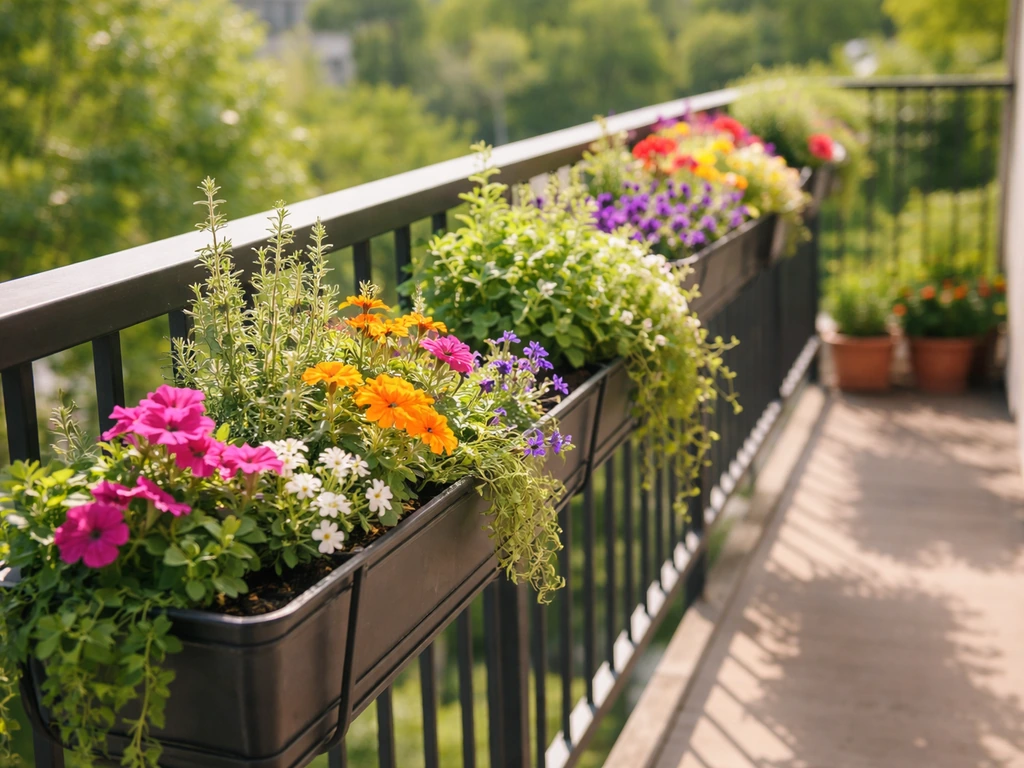
If you're working with roof gutters or eaves and want a very lean, shallow planting system, gutter-style planters offer an interesting alternative for herbs and salad greens. For a quick guide to the best plants to grow in gutters, see our recommended species for shallow, lean gutter-style planters. And if your outdoor space is a balcony railing rather than a wall, railing planters that straddle the rail are a smarter fit than wall-mounted systems, they're removable, need no drilling, and can be repositioned to follow the sun. For guidance on which herbs, salad greens, and compact ornamentals do best in railing planters, see our section on what to grow in railing planters. Hanging planters attached to wall hooks are another option for trailing ornamentals and strawberries when you don't want to commit to a full modular system.
The five most practical wall planter setups, ranked
Based on real-world performance across different wall types, climates, and skill levels, here's how the main approaches stack up:
- Modular rigid vertical system with drip irrigation: highest initial cost, but the most reliable production and least daily effort. Best for anyone serious about edibles or a dedicated herb wall.
- Deep wall-mounted trough (10–14 in) with hand watering: the workhorse option. Versatile, reasonably priced, and capable of growing anything from strawberries to full herb collections.
- Self-watering wall planter with reservoir: best for apartment balconies and anyone who travels or forgets to water. The overflow protection requirement is worth checking before buying.
- Felt pocket panel: best value for ornamentals and drought-tolerant herbs in mild climates. Accept the daily watering requirement or fit a drip line.
- Individual wall-mounted pots (3–5 inch brackets): the most flexible layout — mix and match plants, move them around, replace one at a time. Ideal for a kitchen wall herb collection or a single decorative feature.
FAQ
How do I decide what to grow in a wall planter for my apartment or garden wall?
Follow a quick decision path: 1) Measure usable light (briefly: bright southern exposure = full sun; 3–6 hours = part sun; <3 hours or north-facing = shade). For precise work, use Daily Light Integral (DLI) or a light meter. 2) Check planter depth/volume (see below) and your USDA hardiness zone for perennial choices. 3) Pick a goal: edibles (herbs, salad greens, compact fruit), medicinal herbs, trailing/ornamental, or low‑maintenance screening. 4) Match plant lists to the light and depth you measured. 5) Confirm mount, weight limits and irrigation options before planting. For deeper dives on measuring light and zones, see: USDA plant hardiness and DLI guide (internal: Light & Zone tools).
What plants perform best in full sun vertical/wall planters? (full sun = ~6+ hours)
Full sun, shallow to deep boxes: - Shallow pockets (6–8 in / 15–20 cm): thyme, oregano, creeping rosemary, dwarf marigolds, calendula. - Deeper boxes (10–12+ in / 25–30+ cm): basil, sage, parsley, chives, dwarf peppers, compact tomatoes (determinate/ patio types), strawberries (day‑neutral compact cultivars). - Edible focus: salad greens will tolerate sun if soil is kept cool/moist. For fruiting crops expect ≥12 in depth and 3–5+ gallons container volume. Choose heat‑tolerant cultivars and add mulch to reduce surface evaporation.
What are the best plants for part sun/part shade (3–6 hours) wall planters?
Part sun options (3–6 hours): - Herbs & edibles: cilantro, parsley, chives, mint (contain mint), baby lettuces and arugula. - Ornamentals: begonias (tuberous/ wax), nasturtiums, fuchsias (in protected sites). - Medicinals: lemon balm, gotu kola (moist sites), calendula tolerates part sun. Use 8–12 in depth for most herbs/greens; deeper for good root development if you want productive harvests.
What grows well in shade or north‑facing wall planters (<3 hours light)?
Shade/sheltered walls: - Low‑light ornamentals — ferns, ivy, heuchera (coral bells), hosta varieties suitable for containers, trailing pulmonaria. - Edible options are limited: leafy Asian greens (mizuna, some mustards) and herbs like mint and sorrel tolerate low light but will be slower. - Medicinals: comfrey (deep pot), plantain, and some mints. Prioritize moisture‑retentive mix and species adapted to lower DLI; avoid expecting heavy fruiting.
How do planter depth and volume affect plant selection?
Use minimal recommended depths: - Shallow pockets: 6–8 in (15–20 cm) — good for small herbs, succulents, annual flowers. - Medium boxes: 10–12 in (25–30 cm) — most herbs, salad greens, strawberries. - Deep boxes/containers: 12–18+ in (30–45+ cm) and larger volumes (3–5+ gallons) — compact peppers, determinate tomatoes, larger perennials and small shrubs. Deeper containers reduce overheating/drying, improve root growth and crop reliability. Match cultivar root habits to available depth.
Can I grow edible herbs and salad greens in wall planters year‑round? What's the timing?
Yes, with season‑aware choices and succession: - Spring/Fall (cool seasons): lettuce, arugula, spinach, cilantro, parsley, chives. - Summer (warm): basil, oregano, thyme, rosemary, and heat‑tolerant greens like New Zealand spinach. - Winter (mild zones or protected walls): overwinter chives, parsley, rosemary; use frost cloth or move modular planters indoors. Stagger sowings every 2–3 weeks for continuous harvest in annual crops. Check your zone for frost dates and choose cold‑tolerant varieties accordingly.
Next Article
What to Grow in Railing Planters: Easy Picks by Sun and Season
Quick, practical picks for railing planters by sun and season, with setup tips for wind, depth, and watering.