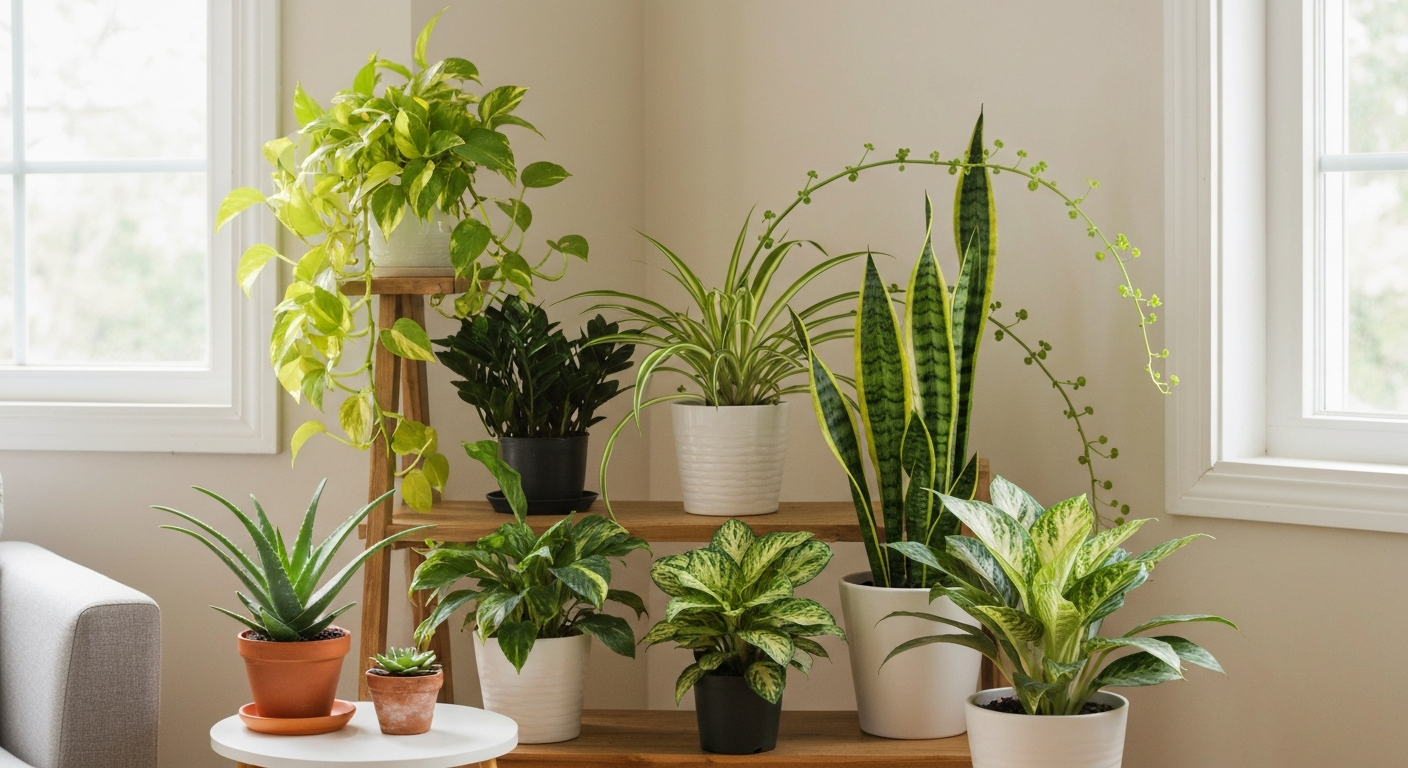
Most houseplants can share a container or a windowsill shelf as long as they agree on three things: how much light they get, how often the soil dries out, and how much humidity they need. The University of Missouri Extension recommends grouping houseplants by matching light and watering needs Caring for Houseplants | University of Missouri Extension. Pair a pothos with a peperomia in a bright east window and both will thrive. Pair a succulent with a Boston fern in the same pot and one of them will rot or wilt within a few weeks. The core rule is simple: match plants within the same category for light, water, and humidity, and you can mix almost anything else, including growth habit, color, texture, and size.
What House Plants Can Grow Together: Easy Pairings Guide
Rachel Hartley
5 Aug 2026
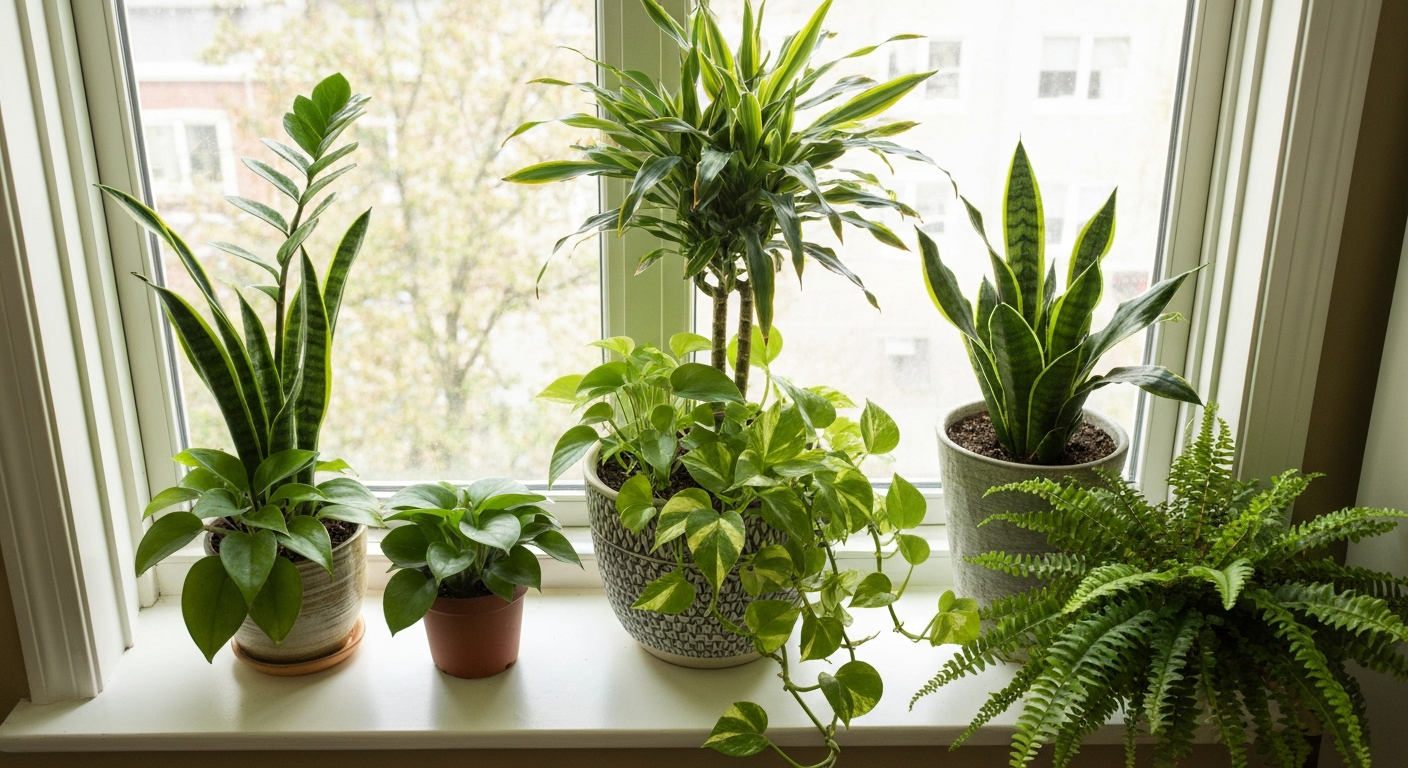
Who this guide is for
Whether you have a 600-square-foot apartment with one decent south-facing window, a narrow balcony that gets afternoon shade, or a full windowsill in a humid bathroom, this guide gives you a tested process for picking plants that genuinely work together in your specific space. I've written it for apartment dwellers who want one beautiful mixed pot, for windowsill growers with limited real estate and limited time, and for regional gardeners who know their indoor conditions shift by season and want to plan accordingly. You do not need to be an expert. You need honest information about your light and your watering habits, and a starting list of compatible plants.
Quick compatibility rules at a glance
Before you buy a single plant, run through these four axes. If two plants sit in the same category (or one step apart) on every axis, they are compatible enough to share a container or a tight shelf grouping.
| Axis | Low / Drought end | Middle ground | High / Moisture end | Mixing rule |
|---|---|---|---|---|
| Light | Low: 25–100 fc (deep room, north window) | Medium/bright indirect: 100–1,000 fc (east, filtered south) | High: >1,000 fc (south/west window, full sun) | Match within one step; never pair low + high |
| Water | Drought-tolerant (let soil dry fully) | Moderate (water when top 1–2 in. dry) | Moisture-loving (keep evenly moist) | Match exact category in shared pots |
| Humidity | Low: 20–40% RH (typical heated/cooled room) | Moderate: 40–60% RH (standard kitchen or bathroom) | High: >60% RH (bathrooms, terrariums) | Adjacent categories are fine; never pair cactus + fern |
| Mature size/habit | Small/compact (under 12 in.) | Medium upright (1–3 ft) | Large/fast-growing (3 ft+) | Pair thrillers with fillers and spillers; avoid one plant shading another |
A note on measuring light: skip the guesswork. Download a free light meter app on your phone (Lux Meter or similar) and hold it where the pot will sit at the brightest point of the day. A north-facing apartment window in January might only hit 50–80 fc, which rules out most succulents but is fine for pothos, ZZ plant, and cast iron plant. A south-facing window in August can easily exceed 2,000 fc with direct sun, which would burn a fern. Knowing your actual foot-candle reading takes two minutes and saves you from buying the wrong plants.
Match plants to your real conditions
Your window direction and seasonal angle matter more than any label on a plant tag. Here is how to read your space honestly before you buy anything.
Reading your windows and balcony
- North-facing windows: typically 25–150 fc year-round. Reliable for true low-light plants: ZZ plant, cast iron plant, and low-light pothos. Not reliable for anything labeled 'bright indirect' unless you're in a southern state where sun angles are higher.
- East-facing windows: 200–600 fc in morning, dropping through the day. The sweet spot for bright-indirect plants: pothos, spider plant, peperomia, small ferns, peace lily. Most compatible pairs live here.
- South-facing windows: 1,000–3,000+ fc at midday (especially June through August). Use a sheer curtain to filter it down to 400–800 fc for tropicals. Without a curtain, this window suits succulents, cacti, and herbs.
- West-facing windows: strong afternoon light, often harsh in summer. Similar to south but with more heat stress in July and August, especially in the Sun Belt. Works for trailing succulents and snake plant.
- Balconies with shade cloth or an overhang: treat as a filtered south or east exposure depending on orientation. Measure fc in the actual spot where the pot will sit.
Seasonal shifts to plan around
Light levels drop by 30–50% from summer to winter in most of the northern US and UK. A spot that supported a peperomia and a fern in July might not give the fern enough light in December. In the Pacific Northwest, indoor light in January can be persistently low even near south windows. In the Southeast, winter light is often adequate but summer humidity means most indoor plants are already at or above their preferred RH. If you're setting up a mixed pot in late summer (early August as you read this), plan for the light to drop in 6–8 weeks and choose plants with at least moderate low-light tolerance, or supplement with a grow light on a timer.
Step-by-step pairing process
- Pick a goal. Decide what you want: a decorative mixed pot for a shelf, a trailing basket for a bathroom, a small edible herb cluster on the kitchen counter, or a low-maintenance grouping that forgives irregular watering.
- Assess your conditions. Measure your light in fc at the planting location. Note your typical humidity (a cheap hygrometer works fine) and how regularly you actually water — be honest. If you forget for two weeks, you need drought-tolerant plants.
- Shortlist candidates. From the lists and combos later in this guide, pick 3–4 plants that fall in the same light, water, and humidity category as your measured conditions.
- Check for toxicity. If you have cats, dogs, or young children, cross-reference every shortlisted plant with the ASPCA toxic plant list before you buy. The pet-safe section of this guide gives ready swaps.
- Test before committing. Buy one of each in a small size. Grow them separately for 2–3 weeks in the same location to confirm they're both adapting. If one drops leaves or shows stress, that plant doesn't suit your conditions — swap it out before planting together.
- Commit and plant. Once both test plants look stable, follow the container and planting instructions below to combine them. Label each plant with its watering schedule so you don't accidentally treat the whole pot like its thirstiest member.
Container and soil guidance for multi-plant pots
Pot size and drainage
For two to three houseplants sharing a container, a pot with a diameter of at least 10–12 inches gives enough root space without creating a large dead zone of soil that stays wet between waterings. Every shared pot must have at least one drainage hole. If you love a decorative cachepot with no drainage, use it as a sleeve around a plain nursery pot and empty the sleeve after each watering. A pot that holds standing water is the fastest way to kill compatible plants that would otherwise thrive together.
Soil mixes for different pairings
There is no single all-purpose mix that works well for all mixed pots, because the plants have different drainage needs. Use the mix that matches the most drought-sensitive plant in the combo, then water to the schedule of the thirstiest. A practical general-purpose houseplant mix for moderate-water tropicals (pothos, peperomia, spider plant, peace lily) is roughly 40% peat or coconut coir, 20% composted bark, 20% perlite, and 20% vermiculite. Potting Mixes for Certified Organic Production (NRAES/Cornell recipes summary) offers tested soilless recipes and practical ratios, for example, 1:1 peat:perlite for seed/plug mixes and a 40% peat/20% bark/20% vermiculite/20% perlite blend for all‑purpose container media. Pre-wet coir before using, as it repels water when completely dry. For drought-tolerant pairings like snake plant with ZZ plant, lean the mix toward 50% perlite and coarse sand with 50% coir or bark for fast drainage. If you are in the UK, John Innes No. 2 is a reliable loam-based base for established mixed pots because the loam fraction buffers moisture and nutrients through the growing season.
Root barriers and layering
Fast-growing plants like pothos and spider plant will colonize the pot and crowd out slower companions within a growing season. To slow this, you can plant the aggressive grower in its own small nursery pot sunk into the shared container, so its roots are contained but its foliage merges visually with the others. This also makes it easy to pull one plant for repotting without disturbing the whole arrangement. It is not always necessary, but in pots smaller than 12 inches with a known fast grower, it is a practical precaution.
Planting and layout for shared containers
Follow the thriller-filler-spiller framework for any mixed decorative pot. The thriller is a taller, structural plant with visual impact placed toward the back or center. The filler is one or two mid-height, bushy plants that fill the middle zone. The spiller trails over the edge. This approach also enforces size and habit compatibility because you're deliberately choosing plants with different vertical profiles that don't shade one another.
- Add a 1-inch layer of coarse gravel or pot shards at the base for drainage (optional but helpful in deep pots without a saucer riser).
- Fill the pot about one-third full with your pre-moistened soil mix.
- Position the thriller plant first, slightly back from center, and backfill around its root ball to hold it in place.
- Nestle the filler plant(s) to the side of the thriller, leaving at least 2–3 inches between root balls to avoid immediate competition.
- Place the spiller at the front edge with its trailing stems pointing outward over the pot rim.
- Fill all gaps with soil mix to just below the pot rim (leave about 1 inch of headspace for watering).
- Firm gently around each plant to eliminate air pockets, water thoroughly until it drains from the bottom, and place in its intended light position immediately.
Watering strategies for mixed pots and shared spaces
The single biggest mistake in mixed pots is watering the whole container on the schedule of one plant. If you pair a spider plant (moderate water) with a succulent (drought-tolerant), the succulent will rot within months because you're keeping the soil too moist for it. The safest approach: only pair plants with identical or near-identical water needs in the same pot. In separate pots grouped together on a shelf or tray, you can mix water needs freely as long as each pot drains independently.
Practical watering techniques
- Use the finger test as a baseline: push your index finger 1–2 inches into the soil. If it feels moist, wait. If it feels dry at that depth, water thoroughly.
- For drought-tolerant pots (ZZ + snake plant): let the top 2–3 inches dry completely before watering, then water until it drains. In a typical heated home in August, this might be every 10–14 days.
- For moderate-water pots (pothos + peperomia + spider plant): water when the top 1–2 inches dry out. In a warm room in summer, this is roughly every 5–7 days.
- For moisture-loving groupings (ferns, peace lily, calathea): check every 2–3 days during summer. These plants prefer consistently moist (not waterlogged) soil.
- Bottom watering is useful for dense mixed pots: set the pot in a shallow tray of water for 20–30 minutes, then remove it. This saturates the root zone without waterlogging the surface, which helps ferns without encouraging surface mold.
- A cheap moisture meter (around $10) removes all guesswork, especially for beginners or anyone with erratic watering habits.
Humidity and microclimate hacks for balconies, bathrooms, and rooms
Grouping plants together naturally raises local humidity through transpiration, which is one of the simplest and most effective hacks for humidity-loving species. A cluster of 4–6 pots on a tray filled with pebbles and water (with pot bottoms sitting above the water line) can raise the immediate humidity around those plants by 10–20% RH without any extra equipment. Do not mist foliage directly in low-airflow spaces as this encourages fungal disease, especially on fuzzy-leaved plants like African violet. Misting is acceptable for ferns and tropical aroids in well-ventilated rooms.
- Bathroom windowsills: natural humidity from showers suits ferns, peace lily, pothos, and spider plant. Just confirm there is enough light, because many bathrooms have frosted or small windows.
- Kitchen: humidity from cooking helps moderate-humidity plants. An east-facing kitchen window is one of the best spots in the average apartment for a mixed tropical pot.
- Balcony in summer: outdoor humidity varies by region. In the Southeast US in August, outdoor humidity is already 70–80% RH most mornings, which is ideal for ferns but can cause fungal problems in crowded succulents. In dry climates (Denver, Phoenix), even balcony plants benefit from a humidity tray.
- Terrariums and glass enclosures: effective for creating high-humidity microclimates for ferns and mosses, but only use plants with the same humidity need inside them. Mixing cacti and ferns in a closed terrarium is a classic failure.
- Mini greenhouses (portable shelf greenhouses): useful for apartments in winter to buffer the humidity drop that comes with running central heat, which can push indoor RH below 20% in January.
Size, growth management and long-term upkeep
The mixed pot you plant in August will not look the same in February, and that is not necessarily a failure. Fast growers like pothos and spider plant will outpace compact fillers like peperomia within one growing season. You need a plan for managing that.
- Pruning: trim fast-growing trailers back to the pot rim every 4–6 weeks during the growing season to prevent them from shading and crowding slower companions. Pothos can be cut back hard and will resprout from any node.
- Root crowding: check for root crowding annually in early spring, right before the main growing season. If roots are circling the pot or emerging from drainage holes, size up by 1–2 inches in diameter or divide the planting.
- Repotting schedule: most mixed tropical pots benefit from repotting or refreshing the top layer of soil annually. Snake plant and ZZ plant in dry mixes can go 2–3 years between full repots.
- Dividing aggressive plants: spider plant produces offshoots (spiderettes) continuously and can take over a shared pot. Snip offshoots at the connecting runner once they have 3–4 leaves and pot them separately, or compost them.
- Soil refresh: if repotting is not needed, top-dress with 1–2 inches of fresh potting mix in spring to replenish nutrients. Add a slow-release granular fertilizer at this point rather than mid-season liquid feeding for low-maintenance pots.
Ready-made 3-plant combos with planting instructions
Each combo below follows the thriller-filler-spiller pattern, shares compatible light, water, and humidity needs, and includes a note on who it is for and how to plant it right now.
Combo 1: The Low-Maintenance Apartment Pot (tolerates neglect)
Snake plant (thriller) + ZZ plant (filler) + pothos (spiller). Why it works: all three tolerate low-to-medium light, drought, and average household humidity. They share a 'let the soil dry out' watering schedule and can handle irregular attention. Use a 10-inch pot with a fast-draining mix (50% coir, 30% perlite, 20% bark). Plant the snake plant at the back, the ZZ plant to the side, and trail the pothos over the front edge. Water when the top 2 inches are completely dry, roughly every 10–14 days in a warm room. Note: both snake plant and pothos are toxic to cats and dogs. For a pet-safe version, see the swaps in the next section.
Combo 2: The Bright-Window Aesthetic Pot (visual impact)
Dracaena (thriller, compact cultivar) + peperomia (filler, 2–3 varieties for texture contrast) + spider plant (spiller). Why it works: all three prefer bright indirect light (200–600 fc), moderate watering, and average home humidity. The peperomia's compact, shallow roots don't compete aggressively. The spider plant trails attractively and is non-toxic to pets, making this combo family-friendly with one small note on the dracaena (mildly toxic, worth checking your specific species). Use a 12-inch pot with a general-purpose mix (40% coir, 20% bark, 20% perlite, 20% vermiculite). Water when the top 1–2 inches dry. Place in an east or filtered south window. Trim spider plant runners monthly to keep the arrangement balanced.
Combo 3: The Kitchen Herb Edible Pot (food/edible)
Basil (thriller) + thyme (filler) + trailing rosemary or trailing mint in a separate inner pot to control spread (spiller). Why it works: all three are sun-lovers (bright direct to bright indirect, >600 fc), prefer moderate-to-frequent watering with fast drainage, and appreciate the extra humidity that comes from a kitchen setting. Use a 12-inch terracotta pot (terracotta wicks moisture evenly, which helps prevent basil root rot). Basil goes center-back. Thyme goes to the side. Rosemary or mint goes at the front edge. Important: mint spreads aggressively through rhizomes, so plant it in a 4-inch nursery pot sunk into the shared container. Water when the top inch dries out. In summer (right now in early August), feed every two weeks with a balanced liquid fertilizer for edibles.
Combo 4: The Medicinal/Wellness Pot
Aloe vera (thriller/filler) + lavender (filler, in a bright spot) + lemon balm (spiller). Why it works: aloe and lavender both prefer bright light and well-drained, slightly dry conditions. Lemon balm is more moisture-tolerant but adapts to moderate watering. This combo works best on a south or west windowsill with at least 4–6 hours of direct sun. Use a sandy, fast-draining mix (similar to the succulent mix above). Aloe provides topical gel, lavender offers calming scent, and lemon balm can be used in teas. Note: lavender in a pot requires very good drainage and full sun indoors; this combo needs a genuinely bright window to succeed. Do not attempt it in a north-facing apartment room.
Combo 5: The Bathroom Humidity Lovers Pot
Boston fern (thriller) + peace lily (filler) + pothos (spiller). Why it works: all three love humidity above 50% RH and bright-to-medium indirect light. A bathroom window (even a small one) with regular shower humidity is an excellent location. The fern needs the most consistent moisture, the peace lily close behind, and the pothos is more forgiving. Water when the top inch of soil dries. Use a standard tropical potting mix with good moisture retention (heavier on coir or peat, with 20% perlite for drainage). This combo is not pet-safe as-is: pothos is toxic. See the swap in the next section.
Pet-safe and cat-safe alternatives and swaps
Pothos and snake plant are two of the most popular houseplants and both are toxic to cats and dogs, primarily through calcium oxalate crystals or saponins that cause oral irritation, drooling, and vomiting. ZZ plant is also toxic. If your cat has free access to your plants, here are direct swaps that maintain the same growth habits and care profiles. For another relevant comparison, see easy to grow houseplants that are safe for cats.
| Toxic plant | Toxic to | Pet-safe swap | Same role in combo | Notes |
|---|---|---|---|---|
| Pothos (Epipremnum aureum) | Cats and dogs | Spider plant (Chlorophytum comosum) | Trailing spiller | Non-toxic per ASPCA; similar care needs and trailing habit |
| Snake plant (Dracaena trifasciata) | Cats and dogs | Areca palm (small pot) or calathea | Upright thriller | Calathea needs higher humidity; areca palm needs bright indirect light |
| ZZ plant (Zamioculcas zamiifolia) | Cats and dogs | Cast iron plant (Aspidistra elatior) | Compact upright filler | Cast iron plant is non-toxic and extremely low-light tolerant |
| Peace lily (Spathiphyllum) | Cats and dogs | Prayer plant (Maranta leuconeura) | Mid-height filler | Prayer plant is non-toxic, prefers similar humidity and indirect light |
| Dracaena (most species) | Cats and dogs | Boston fern or parlor palm | Structural upright | Boston fern is non-toxic; parlor palm is also non-toxic and easy to grow |
The best fully pet-safe combo for low-maintenance apartment growers is spider plant (spiller) + calathea (filler) + parlor palm (thriller). All three are on the ASPCA non-toxic list, tolerate medium indirect light, and prefer moderate watering. If you have cats that chew plants, this trio is the lowest-risk choice available.
Short plant lists by light and skill level
Low-light easy growers (25–150 fc, north windows or dim rooms)
- ZZ plant: drought-tolerant, almost indestructible, slow-growing — pairs well with cast iron plant
- Cast iron plant: genuinely thrives in dim light, very drought-tolerant once established
- Pothos: low-light tolerant, fast-growing, excellent spiller — check pet safety
- Chinese evergreen (Aglaonema): tolerates low light, moderate water, comes in many colors for visual contrast
Bright indirect picks (200–800 fc, east or filtered south windows)
- Spider plant: forgiving, non-toxic, excellent trailer, moderate water
- Peperomia (multiple species): compact, shallow roots, low-to-moderate water, great filler
- Peace lily: tolerates lower light in this range, moisture-loving, air-purifying
- Boston fern: needs consistent moisture and humidity, beautiful thriller in a hanging basket
- Calathea: striking foliage, pet-safe, needs higher humidity and indirect light
Succulents and sun lovers (>800 fc, south/west windows or grow lights)
- Aloe vera: drought-tolerant, useful, fast-draining soil required
- Echeveria: rosette-forming, pairs with other succulents easily, many colors and textures
- Haworthia: tolerates slightly lower light than most succulents, compact size
- Sedum (trailing types): excellent spiller in mixed succulent pots
Trailing and hanging plants (versatile spillers)
- Spider plant: non-toxic, moderate water, bright-to-medium light
- String of hearts (Ceropegia woodii): drought-tolerant, bright indirect light, delicate but fast-growing
- Heartleaf philodendron: similar care to pothos, moderate water, low-to-bright indirect
- Burro's tail sedum: drought-tolerant, bright light, fragile leaves so handle minimally
Common houseplants: a quick comparison
| Plant | Light need | Water need | Preferred humidity | Mature size (indoor) | Pet-safe? |
|---|---|---|---|---|---|
| Pothos (Epipremnum aureum) | Low to bright indirect (50–600 fc) | Moderate (top 1–2 in. dry) | Moderate (40–60% RH) | Trails 6–10 ft | No (toxic to cats and dogs) |
| Snake plant (Dracaena trifasciata) | Low to bright indirect (50–800 fc) | Drought-tolerant (fully dry between) | Low to moderate (20–50% RH) | 1–3 ft upright | No (toxic to cats and dogs) |
| ZZ plant (Zamioculcas zamiifolia) | Low to bright indirect (50–600 fc) | Drought-tolerant (fully dry between) | Low to moderate (20–60% RH) | 2–3 ft upright | No (toxic to cats and dogs) |
| Spider plant (Chlorophytum comosum) | Medium to bright indirect (100–600 fc) | Moderate (evenly moist to slightly dry) | Moderate (40–60% RH) | 12–18 in. + trailing spiderettes | Yes (non-toxic per ASPCA) |
| Peperomia (selected species) | Medium to bright indirect (100–500 fc) | Moderate (top 1/3 dry) | Low to moderate (30–60% RH) | 6–12 in. compact | Generally yes (check species) |
| Boston fern (Nephrolepis exaltata) | Bright indirect (200–600 fc) | High (consistently moist) | High (>60% RH preferred) | 2–3 ft spreading | Yes (non-toxic per ASPCA) |
| Peace lily (Spathiphyllum) | Low to medium indirect (50–400 fc) | High (evenly moist) | Moderate to high (50–70% RH) | 1–3 ft upright | No (toxic to cats and dogs) |
| Aloe vera | Bright to full sun (>600 fc) | Drought-tolerant (fully dry between) | Low (20–40% RH) | 1–2 ft rosette | No (toxic to cats and dogs) |
| Calathea (selected species) | Medium indirect (100–400 fc) | Moderate (top 1 in. dry) | High (>60% RH preferred) | 1–2 ft upright | Yes (non-toxic per ASPCA) |
| Cast iron plant (Aspidistra elatior) | Low (25–150 fc) | Drought-tolerant to moderate | Low to moderate (20–50% RH) | 2–3 ft upright | Yes (non-toxic per ASPCA) |
Seasonal care and troubleshooting
How care changes by season
In the Northern Hemisphere, most houseplants slow down significantly from October through February. During this period, reduce watering frequency by 30–50% for most plants, stop fertilizing, and avoid repotting, which stresses plants during their rest period. Light levels drop and central heating lowers humidity, so moisture-loving plants like ferns will need more attention (not more water, but more humidity support). In summer, right around now in early August, most tropicals are actively growing and can handle more frequent watering and monthly liquid feeding.
| Season | Watering | Feeding | Humidity | Light | Key action |
|---|---|---|---|---|---|
| Spring (Mar–May) | Resume regular schedule as growth resumes | Begin monthly balanced liquid feed | Monitor as heat comes on indoors | Increasing rapidly, adjust sheer curtains | Good time to repot and divide overgrown pots |
| Summer (Jun–Aug) | Most frequent, check every 3–5 days in warm rooms | Bi-weekly for actively growing plants | Often adequate outdoors; use pebble trays indoors | Strongest light, filter south-facing windows | Watch for pests (fungus gnats, spider mites); trim fast growers |
| Autumn (Sep–Nov) | Begin tapering off as growth slows | Taper to monthly, then stop by November | Drops as heating kicks in; add humidity trays | Light dropping, move sun-lovers closer to windows | Last chance to repot before dormancy |
| Winter (Dec–Feb) | Minimal; let soil dry more between waterings | None for most houseplants | Lowest; supplement with pebble trays or humidifier | Lowest of the year; consider a grow light | Watch for overwatering, which kills more plants in winter than any other cause |
Common problems in mixed pots and quick fixes
- One plant wilting while others look fine: usually a root competition or overwatering issue. Check whether the wilting plant's roots are being crowded. If the soil is wet, you are watering too frequently for that plant's tolerance.
- Yellowing leaves on all plants in the pot: almost always overwatering or waterlogged soil from insufficient drainage. Check the drainage hole is clear. Let the pot dry completely, then repot into fresh, drier mix if roots look brown or mushy.
- Leggy, stretched growth toward the light (etiolation): not enough light. Move the pot closer to the window or add a grow light. This is especially common in winter.
- White crusty deposits on soil surface: mineral buildup from tap water or fertilizer salts. Flush the pot with distilled or rain water until water runs clear from the bottom, then allow to dry normally.
- Fungus gnats (tiny flies around soil): overwatering is the primary cause. Let the top 2 inches dry completely between waterings. Top-dress with a thin layer of horticultural sand or fine gravel to disrupt their breeding cycle.
- One plant growing much faster than its companion and crowding it: prune the fast grower back regularly or sink it into an inner pot to contain the roots, as described in the container section.
Shopping and buying tips for mixed-plant projects
August is actually a good time to buy houseplants. Nurseries have strong stock from the main growing season, plants are actively growing so they recover from transplant stress quickly, and you have several months of good light before the winter slowdown. Here is what to look for and what to avoid.
- Look for compact, bushy growth with no bare or leggy stems — stretched stems indicate the plant was grown in insufficient light at the nursery and may struggle to adjust.
- Check under the leaves for spider mites (fine webbing), scale insects (brown bumps on stems), or mealybugs (white cottony clusters). Never buy a plant with active pests; they will spread to everything else in your home.
- Inspect the soil. Wet, smelly soil on a 'drought-tolerant' plant like a snake plant or succulent is a warning sign the nursery has been overwatering. Pass on that specimen.
- For online/mail-order plants: order during mild weather, not during heat waves (above 90°F) or cold snaps (below 40°F). Stress during shipping compounds transplant shock. Avoid mail-ordering ferns unless the seller ships in humidity-retaining packaging.
- Buy the smallest size that already looks healthy and established. A 4-inch pot of a healthy peperomia will outperform a stressed 6-inch pot within 2 months in good conditions.
- For a mixed pot project, buy all your plants at the same time from the same source if possible, so they are coming from the same humidity and temperature conditions and will acclimate together.
- Best value timing: late summer clearance sales at garden centers (right around now in August) often yield healthy tropicals at reduced prices as retailers make room. These plants are usually fine — they are not being discounted because they are unhealthy, but because the busy spring/summer selling season is ending.
Your do-it-now checklist and 30-day timeline
Here is a complete, actionable sequence you can start today for planting a mixed pot or windowsill grouping.
Materials you need
- 10–12 inch pot with drainage hole
- Potting mix appropriate to your plant combo (see soil section)
- 3 compatible plants (thriller, filler, spiller)
- A light meter app on your phone
- Watering can with a narrow spout
- A small trowel or spoon for planting
- A cheap hygrometer if you are targeting humidity-sensitive plants
- Optional: slow-release granular fertilizer for the soil mix
Day-by-day and week-by-week steps
- Day 1: Measure light at your chosen location using a phone app at the brightest time of day. Confirm your space is low, medium, or bright indirect before buying anything.
- Day 1–2: Choose your combo from this guide (or build your own using the compatibility rules). Check pet safety. Write down the names of the three plants you want.
- Day 2–3: Buy plants. Inspect each one at the nursery. Bring them home, place them in your target location without planting, and let them acclimate for 24–48 hours.
- Day 3–5: If all three plants look stable and not stressed, prepare your pot, pre-moisten your soil mix, and plant following the layout instructions above.
- Day 5–7: Water thoroughly once after planting. Then do not water again until the appropriate dryness test is met for your plants. Resist the urge to check daily.
- Week 2: Check each plant individually, not the pot as a whole. Is each one showing normal growth or holding steady? Any drooping or yellowing? Adjust placement if light seems wrong.
- Week 3–4: If all plants look healthy, water on the correct schedule for the second time. Begin monthly feeding with a balanced liquid fertilizer if plants are showing new growth.
- Day 30: Take a photo and compare to Day 1. Note which plant is growing fastest and whether it is competing with the others. Trim if needed. Plan your first repotting check for spring.
Photo and image suggestions for editors
The following shot list covers the key visual moments in this article and supports reader comprehension of the planting process.
- Overhead (flat lay) shot of a finished mixed pot using the thriller-filler-spiller layout, labeled with each plant's name and role
- Phone light meter app in use near a window, showing a foot-candle or lux reading, with the window and natural light visible in background
- Before-and-after of a single pot: bare soil with three root balls laid out side by side, then the finished planted pot
- Close-up of soil layers showing drainage gravel at base, potting mix, and the root ball of one plant being placed
- Detail shot of the moisture finger-test: finger pressed 1–2 inches into soil, dry versus visibly moist soil comparison
- Pebble humidity tray beneath a group of pots on a windowsill, showing water level below pot base
- Pet-safe label or ASPCA-style 'safe' tag prop next to a spider plant or calathea in a pot, for the pet-safe section
- Balcony grouping shot: 3–4 pots clustered together on a balcony railing shelf, showing a range of plant heights
- Seasonal comparison: the same windowsill in summer light versus a winter setting with lower light and a small grow light supplement
Where to go next
Once your mixed pot is planted and stable, there are a few natural next steps depending on what you want to learn. If you are just starting out and want a broader list of reliable species to draw from, a guide to the best houseplants to grow will expand your options well beyond the core pairings here. If you found a specific trio that worked and want to explore the concept of 3-plant combinations in more depth, there is a dedicated guide on what 3 plants grow well together that goes deeper into trio dynamics and themed combinations. For deeper trio dynamics and themed combinations, see the dedicated guide on what 3 plants grow well together (destination id: edd5db12-52c9-4297-a609-09c06e134f07). For those building a collection from scratch, a guide to common easy to grow houseplants gives you a vetted starting roster organized by difficulty. And if pet safety is your primary concern, a guide to easy to grow houseplants that are safe for cats walks through a full curated list of confirmed non-toxic species with care profiles for each. For a broader list, see common easy to grow houseplants for quick-start picks and simple care notes.
Safety reminders and responsible planting notes
Always verify toxicity information directly with the ASPCA toxic plant list or Pet Poison Helpline before introducing any plant to a home with cats, dogs, or young children. Plant toxicity data in general guides (including this one) can lag behind updated veterinary guidance, and individual species within a genus can vary. The ASPCA list is free, searchable, and updated regularly. If you are not certain, assume the plant is unsafe until you have confirmed otherwise.
A second note on regional caveats: the light, temperature, and humidity ranges in this guide reflect typical North American and UK indoor growing conditions. If you are in a subtropical or tropical climate (Florida, Hawaii, Southeast Asia) your indoor conditions are materially different, particularly humidity, which may already be above 70% RH year-round. In those environments, many outdoor tropical plants can be grown indoors without supplemental humidity, but your risk of fungal disease and root rot in shared pots is also higher. Prioritize drainage and airflow in humid climates. If you are in a high-altitude dry climate (Denver, Albuquerque, Calgary), assume your baseline indoor humidity is 20–30% RH in winter, which will stress high-humidity plants like ferns even on a well-lit windowsill. Use humidity trays or a small humidifier as a non-negotiable baseline in those environments.
FAQ
What quick compatibility rules should I use to decide which house plants can grow together?
Match plants by their primary environmental needs: light, water, humidity, and mature size. Practical rules: 1) Light: group plants in the same measured light band (use a light meter or phone app) — low (~25–100 fc), medium/bright (~100–1,000 fc), or high (>1,000 fc). 2) Water regime: pair drought‑tolerant, moderate, or moisture‑loving plants together — avoid mixing extremes (succulents with ferns). 3) Humidity: combine low (~20–40% RH), moderate (~40–60% RH), or high (>60% RH) preference plants. 4) Size and root depth: avoid plants whose mature canopy or roots will overcrowd others; use the thriller–filler–spiller method to balance form. Matching within one category step (e.g., low→medium) is usually acceptable; mixing extremes is not recommended.
How do I pair plants step‑by‑step for a shared pot or windowsill?
Step‑by‑step pairing: 1) Measure the spot’s actual light (fc or lux) and note typical humidity and temperature. 2) Choose a target water regime (how often you’ll realistically water). 3) Make a shortlist of plants whose light/water/humidity profiles match the site. 4) Check mature sizes and root habits—pick one thriller (upright), one or two fillers (mid‑height/foliage), and an optional spiller (trailing). 5) Choose an appropriate container and soil (drainage holes, pot size + 20–30% room for roots). 6) Use a compatible potting mix (see container/soil guidance). 7) Plant with proper spacing and topdress with mulch or decorative gravel. 8) Label plants and set a watering schedule tied to soil‑drydown checks. 9) Monitor for shading, root crowding, and pests; repot or separate if signs of stress appear.
What are ready‑made 3‑plant combos for mixed containers (aesthetic, edible, medicinal, low‑maintenance)?
Three‑plant combos (each list shows primary needs: Light / Water / Humidity / pet‑safe note): 1) Aesthetic (bright indirect / moderate / moderate): Fiddle leaf fig (Ficus lyrata) / Peperomia obtusifolia / Pothos (Epipremnum aureum) — note: Pothos is toxic to pets. 2) Edible balcony (bright / moderate‑high / moderate): Patio cherry tomato / Basil / Nasturtium (trailing) — use separate fertilizer regime and larger pot. 3) Medicinal/utility (bright‑indirect / moderate / moderate): Aloe vera / Lavender (compact cultivar) / Rosemary (dwarf) — needs bright light and drier root zone for some. 4) Low‑maintenance pet‑safe (low→medium / low→moderate / moderate): Snake plant (note: toxic—swap below) alternative trio: ZZ plant (toxic—swap), Spider plant (non‑toxic), Cast iron plant (Aspidistra elatior; low light, non‑toxic alternatives recommended). Pet‑safe swaps: replace toxic items with Spider plant, Boston fern (if humidity ok), Peperomia, and Parlor palm (Chamaedorea elegans; non‑toxic). For apartment windowsills and small pots choose compact cultivars and check root space.
Which pet‑safe and cat‑safe alternatives should I use when a desirable plant is toxic?
Common non‑toxic alternatives: Replace Pothos/ZZ/Snake plant with Spider plant (Chlorophytum comosum), Parlor palm (Chamaedorea elegans), Peperomia spp., Friendship plant (Pilea peperomioides; note: generally considered low‑toxicity though veterinary sources vary), and Boston fern (Nephrolepis exaltata) if humidity is high. Always check current ASPCA or Pet Poison Helpline listings for specific cultivars and keep toxic plants out of reach or in hanging pots if needed.
Can you give short plant lists grouped by light and water compatibility for quick pairing?
Short lists (examples for a typical indoor environment): Low light / low water: Snake plant (Dracaena trifasciata; toxic), ZZ plant (Zamioculcas zamiifolia; toxic), Cast iron plant (Aspidistra elatior; non‑toxic). Low→medium light / moderate water: Pothos (toxic), Philodendron (many toxic), Spider plant (non‑toxic), Peace lily (Spathiphyllum; pet‑toxic). Bright indirect / moderate water: Peperomia, Fiddle leaf fig, Calathea (high humidity), Ferns (moist). Bright direct / drier: Succulents (Echeveria, Sedum), Herbs (rosemary, thyme), Cacti. Use these lists to pick only plants with shared light and similar water needs.
Please provide one comparison table that helps choose plants for mixed pots (light, water, humidity, pet‑safety).
Plant | Light | Water | Humidity | Pet safety Spider plant (Chlorophytum) | Medium–bright indirect | Moderate (let top dry slightly) | Moderate | Non‑toxic Pothos (Epipremnum) | Low–bright indirect | Moderate | Moderate–high | Toxic ZZ plant (Zamioculcas) | Low–bright indirect | Low (drought tolerant) | Low–moderate | Toxic Peperomia (many spp.) | Medium–bright indirect | Moderate (let top 1/3 dry) | Moderate | Generally non‑toxic Snake plant (Dracaena trifasciata) | Low–bright indirect | Low | Low–moderate | Toxic Boston fern (Nephrolepis) | Bright indirect | High (even moisture) | High | Non‑toxic Succulents (Echeveria) | Bright direct | Low | Low | Mostly non‑toxic (species vary) (Use the table to match by row: choose plants sharing Light and Water columns; verify Pet safety with ASPCA/Pet Poison Helpline.)
Next Article
Common Easy-to-Grow Houseplants: Best Picks for Any Home
Common easy-to-grow houseplants: beginner-friendly picks, cat-safe options, care basics, and quick plant combos.