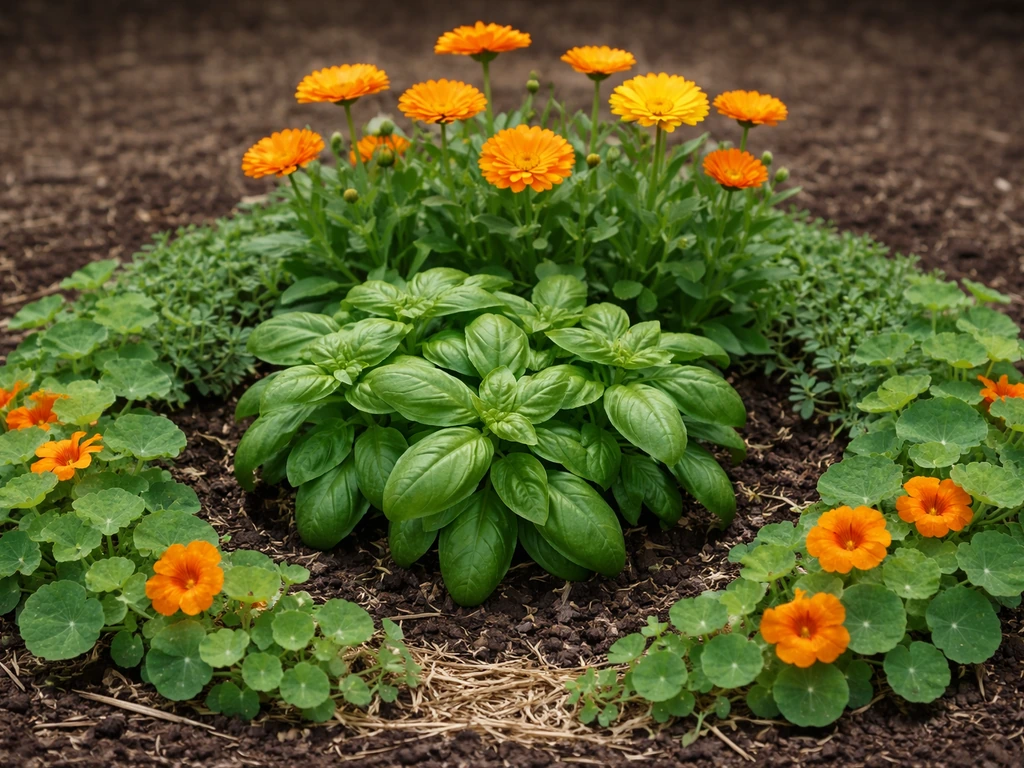
Three plants grow well together when they share the same light, water, and soil needs, don't compete for root space, and ideally help each other out. The most reliable trios pair one tall or structure-giving plant, one mid-layer plant, and one low-growing or ground-covering plant. Think tomato, basil, and marigold. Or corn, beans, and squash. Or, in a container, a dwarf pepper, oregano, and lettuce. The trick is matching those three to your actual conditions right now, not just picking a classic combo that might be wrong for your season or space.
What 3 Plants Grow Well Together Best Companion Trios
Rachel Hartley
3 May 2026
The compatibility rules every trio needs to pass
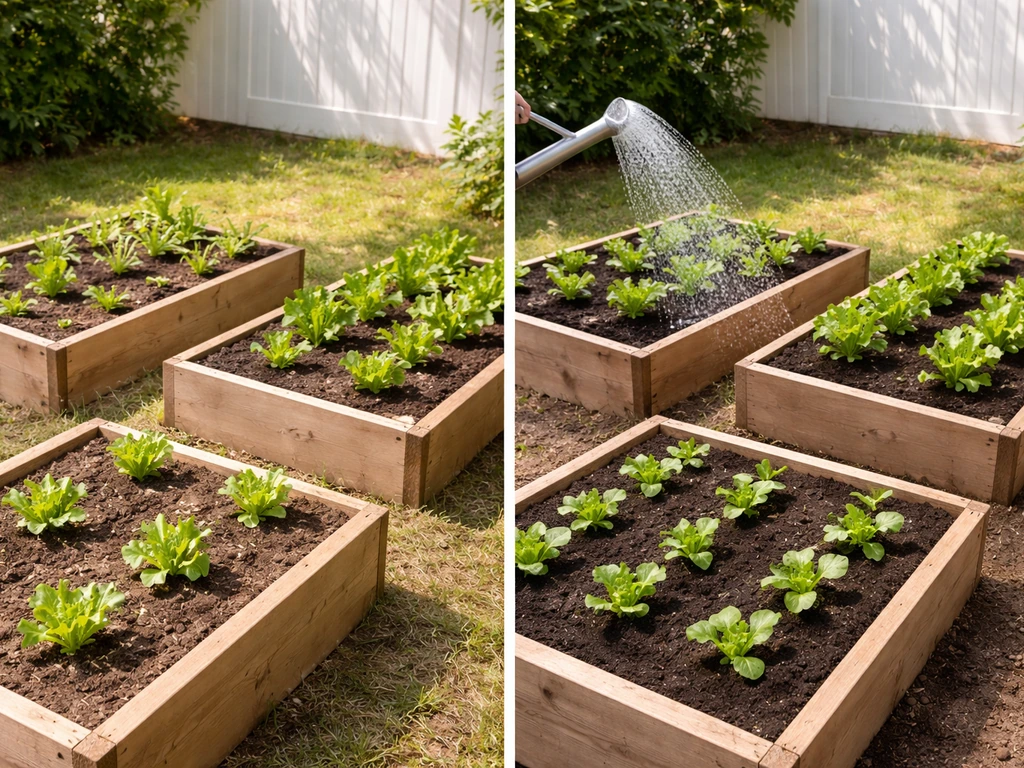
Before you plant anything together, run every trio through four quick checks. Skip any one of these and you'll either stunt one of the three plants or lose the whole group.
Light
All three plants need to tolerate the same light level. Most vegetable trios need full sun, which extension services define as over 8 hours of direct sun daily. Herbs like basil, cilantro, and dill also want that full sun. Leafy greens like lettuce and spinach are more flexible: they actually prefer partial shade in hot weather, which makes them smart partners for taller plants that cast some afternoon shadow. Mixing a shade-tolerant plant with two full-sun plants isn't automatically a problem if the taller plants provide just enough cover, but mixing a true shade-lover with sun-hungry tomatoes will always leave one plant miserable.
Water
Mismatched water needs are the most common reason trios fail. Putting a drought-tolerant herb like rosemary next to moisture-loving basil means someone always gets the wrong amount. In containers, this is amplified because the soil dries out far faster than in-ground beds, so frequent watering is basically mandatory regardless of what you plant. Match the three plants' moisture preferences as closely as possible, and in containers, lean toward plants that all tolerate consistent moisture rather than plants that need to dry out between waterings.
Soil and pH
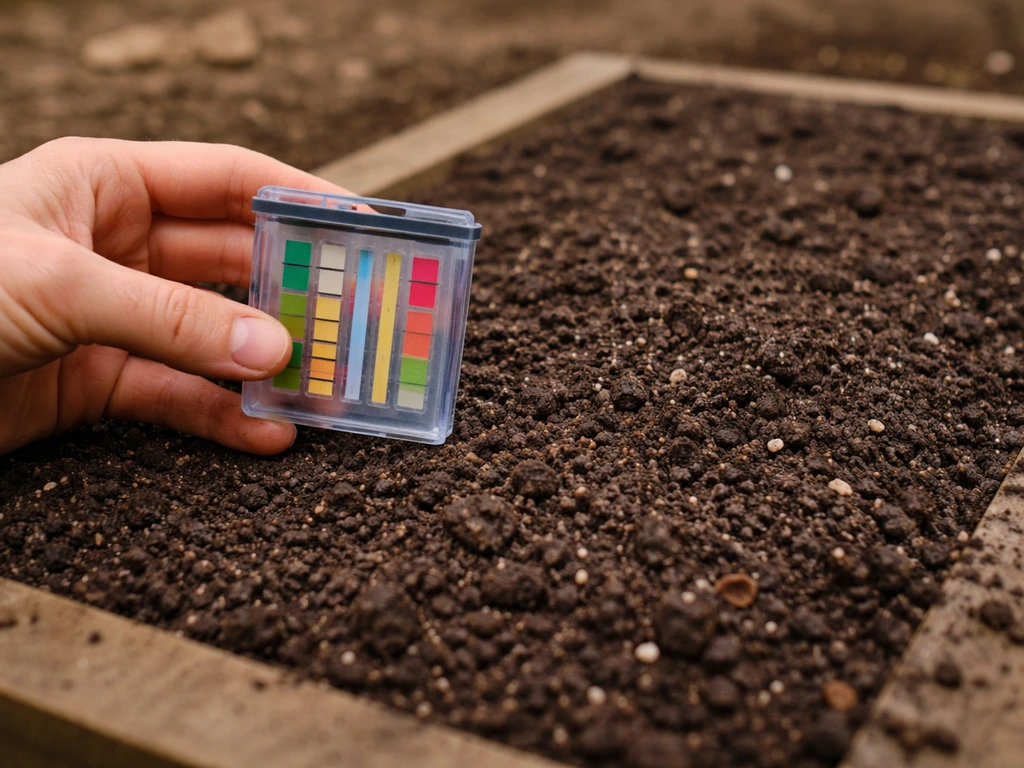
Most vegetables, herbs, and many flowers thrive in soil with a pH between 6.2 and 6.8. That's slightly acidic, and it covers almost everything you'd want to grow together. If you're planting in a raised bed or container, use a quality potting or garden mix and you'll likely land in that range automatically. If you're going straight into the ground, a quick soil test will tell you if you need to adjust. Waterlogging is the other soil problem: all three plants need drainage, because roots need oxygen and vegetables especially cannot handle sitting in water.
Space and root depth
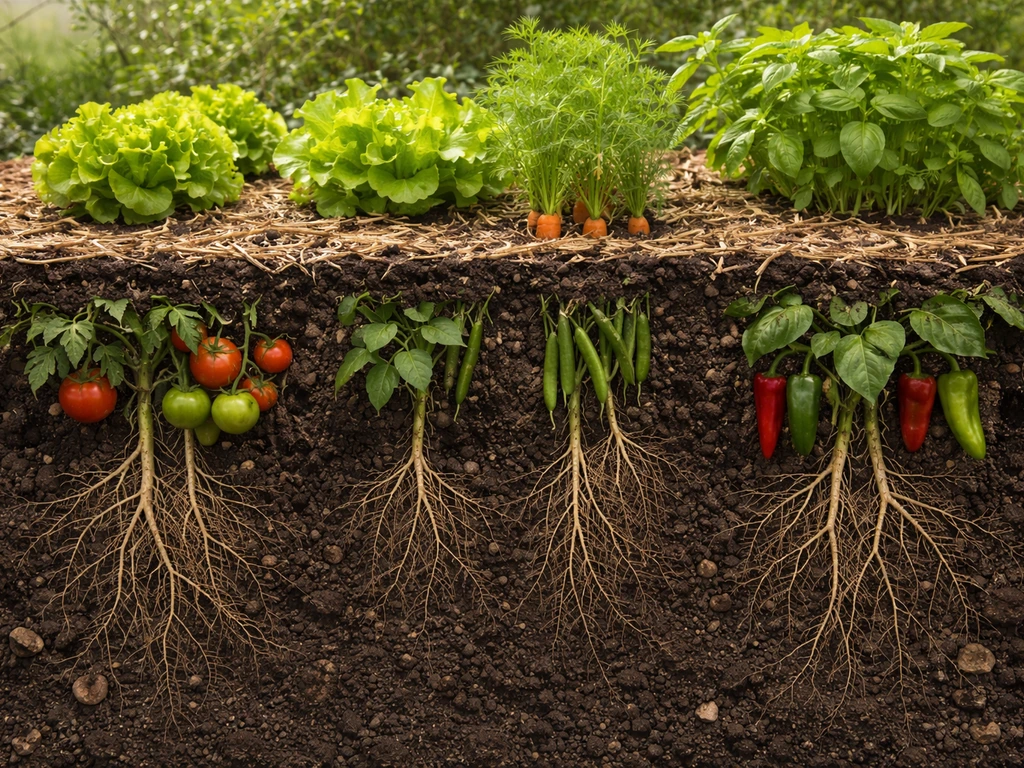
The goal is three plants that fill different layers without fighting for the same root zone. Deep-rooted plants (tomatoes, peppers, beans) and shallow-rooted plants (lettuce, basil, herbs) can coexist in the same bed because they're pulling water and nutrients from different depths. Respect normal spacing for each plant, especially air circulation around leaves since crowded foliage leads to disease. Basil, for example, wants 10 to 18 inches between plants. Lettuce can go as close as 6 inches. Don't squeeze plants just because they're companions; spacing rules still apply.
Easy 3-plant trios for beginners
These combos are forgiving, widely available at any garden center in May, and hard to mess up. They're the best starting point if you're new to planting things together.
| Trio | Why it works | Best setting |
|---|---|---|
| Tomato + Basil + Marigold | Classic for a reason. Basil and tomato share sun and water needs. Marigolds attract beneficial insects and add color. All three want full sun. | In-ground bed or large container |
| Zucchini + Nasturtium + Dill | Nasturtium lures aphids away from zucchini. Dill attracts predatory insects that eat pests. Zucchini provides shade that keeps nasturtium cooler in summer. | In-ground or raised bed |
| Lettuce + Chives + Calendula | All three are cool-tolerant. Calendula attracts beneficial insects; chives add mild pest deterrence. Lettuce stays short and fills gaps between the others. | Raised bed, container, or partial-shade spot |
| Pepper + Oregano + Sweet Alyssum | Peppers and oregano both love heat and moderate water. Sweet alyssum draws pollinators and beneficial insects all season with almost no care. | In-ground bed or large pot |
One honest note: some companion planting claims have thin research behind them. The idea that marigolds repel every pest, for example, has more anecdote than controlled study behind it. What is solid is the light/water/soil compatibility and the fact that flowering plants near vegetables reliably bring in more beneficial insects. One Reddit thread likewise highlights companion planting as a practical matter of soil health and beneficial insects, while warning that “magic pest control” claims are not reliably supported. Plant these trios for the compatibility and the insects, not for magic pest control.
Edible 3-plant companion trios for the kitchen garden
If you want everything in your trio to be edible or useful in the kitchen, these combinations deliver. Each one is built around a main vegetable, a supporting herb, and a third plant that either improves growing conditions or fills a different harvest window.
| Main crop | Herb partner | Third plant | What you get |
|---|---|---|---|
| Tomato | Basil | Parsley | Tomatoes and basil are culinary classics. Parsley is a slower-growing biennial that fills space without competing, and its flowers later attract beneficial insects. |
| Green beans | Dill | Spinach | Beans fix nitrogen in the soil. Dill draws beneficial insects. Spinach is a quick crop (25–40 days) that you harvest before the beans fully take over the space. |
| Cucumber | Cilantro | Nasturtium | Cucumbers climb; nasturtium spreads low and its flowers and leaves are edible. Cilantro bolts in heat and attracts lacewings and parasitic wasps when it flowers. |
| Pepper | Basil | Green onion | All three want warmth and consistent moisture. Green onions are harvestable in as little as 60 days and can be tucked into gaps around the pepper plant. |
| Kale | Thyme | Beets | A cool-season powerhouse trio. Kale and beets are both cold-hardy. Thyme is drought-tolerant and woody, so it won't compete much for moisture with the others. |
The interplanting trick here is using short-season plants to fill space while the main crop establishes. Spinach and lettuce are ready in under 40 days, which means they're done and out of the way before your beans or tomatoes need all the room. This is one of the most practical ways to get more food from the same square footage.
Pollinator-friendly and beneficial-insect trios
Supporting pollinators and beneficial insects comes down to variety: different flower shapes, different bloom times, and some structure for insects to shelter in. A good trio covers early, mid, and late season blooms so there's always something available. Penn State Extension recommends planting three or more of the same species together rather than single specimens, because a mass planting is far more effective at drawing insects than a lone plant.
- Calendula + Dill + Sweet Alyssum: calendula blooms long and attracts aphid-eating beneficial insects; dill in flower draws lacewings, ladybugs, and parasitic wasps; sweet alyssum provides dense, low-growing nectar all season. All three are easy annuals.
- Lavender + Echinacea + Borage: lavender blooms early and long; echinacea peaks in midsummer; borage reseeds and blooms all season with star-shaped flowers bees absolutely love. This trio works great along a garden border.
- Fennel + Marigold + Phacelia: fennel is a host plant for swallowtail caterpillars and draws predatory wasps when it flowers; marigolds bring in hoverflies; phacelia is one of the highest-rated bee plants available and blooms quickly from seed.
- Cilantro (allowed to bolt) + Nasturtium + Black-eyed Susan: great for a low-maintenance patch. Cilantro's tiny flowers draw parasitic wasps and syrphid flies. Nasturtium lures aphids away from nearby vegetables. Black-eyed Susan blooms late summer into fall, extending the season.
The 'bad bugs first' principle is worth knowing here: some predatory insects won't move into your garden unless there's already prey for them. Letting a few aphids exist on a nasturtium or letting caterpillars nibble the fennel can actually bring in more beneficial predators than a pristine, pest-free garden would. You're managing an ecosystem, not sterilizing one.
Cool-season vs. warm-season trios
Season matters more than almost any other factor. Plant a warm-season trio in April in Minnesota and a frost will kill it. Plant a cool-season trio in July in Texas and the heat will melt it. Here's how to think about timing, plus specific trio options for each season.
Cool-season trios (plant now in spring or return to in early fall)
Cool-season crops go in the ground as soon as soil is workable in spring, often weeks before your last frost date. They thrive when daytime temps are in the 45 to 65 degrees Fahrenheit range and can tolerate light frost. By midsummer you'll harvest them and swap in warm-season crops, then circle back to cool-season plants again in late summer or early fall.
| Cool-season trio | Spacing notes | When to plant |
|---|---|---|
| Spinach + Beets + Kale | Beets 3–4 inches apart, spinach 2–4 inches, kale 12–18 inches. Kale goes in center or back. | 4–6 weeks before last frost in spring; again in late August for fall |
| Lettuce + Chives + Peas | Peas need a trellis or support. Lettuce fills the ground layer. Chives go at edges. | As soon as soil thaws; peas can tolerate frost |
| Arugula + Cilantro + Calendula | All relatively compact. Thin arugula to 6 inches, cilantro to 6 inches, calendula to 12 inches. | Early spring and early fall; all bolt in summer heat |
Warm-season trios (wait until after last frost)
Warm-season crops want temperatures between 70 and 95 degrees Fahrenheit and will stall or die if a week of daytime temperatures drops below 55 degrees. Don't rush these. In most of the northern US and Canada, that means waiting until mid to late May. In the South, Gulf Coast, and parts of the West, you may already be past that window. Basil is especially cold-sensitive and shouldn't go out until nighttime temps reliably stay above 50 degrees.
| Warm-season trio | Spacing notes | When to plant |
|---|---|---|
| Tomato + Basil + Marigold | Tomatoes 24–36 inches apart; basil 10–18 inches; marigolds 8–12 inches around the edge of the bed. | After last frost, soil temp above 60°F |
| Corn + Beans + Squash (Three Sisters) | Corn in the center in clusters; beans planted at the base of corn stalks; squash planted to spread outward as ground cover. | After last frost; corn should be a few inches tall before beans go in |
| Cucumber + Dill + Nasturtium | Cucumbers on a trellis; dill 8–10 inches apart nearby; nasturtium allowed to sprawl at the base. | After last frost; cucumber soil temp ideally 70°F+ |
The Three Sisters (corn, beans, squash) is one of the most tested companion trios in existence. Corn provides a climbing structure for the beans. Beans fix atmospheric nitrogen that feeds the corn and squash. Squash leaves spread low and wide, shading the soil to retain moisture and suppress weeds. Beans and corn have different rooting depths too, so they're not in direct competition for water. It's a genuinely functional system, not garden folklore.
Container and apartment 3-plant combinations
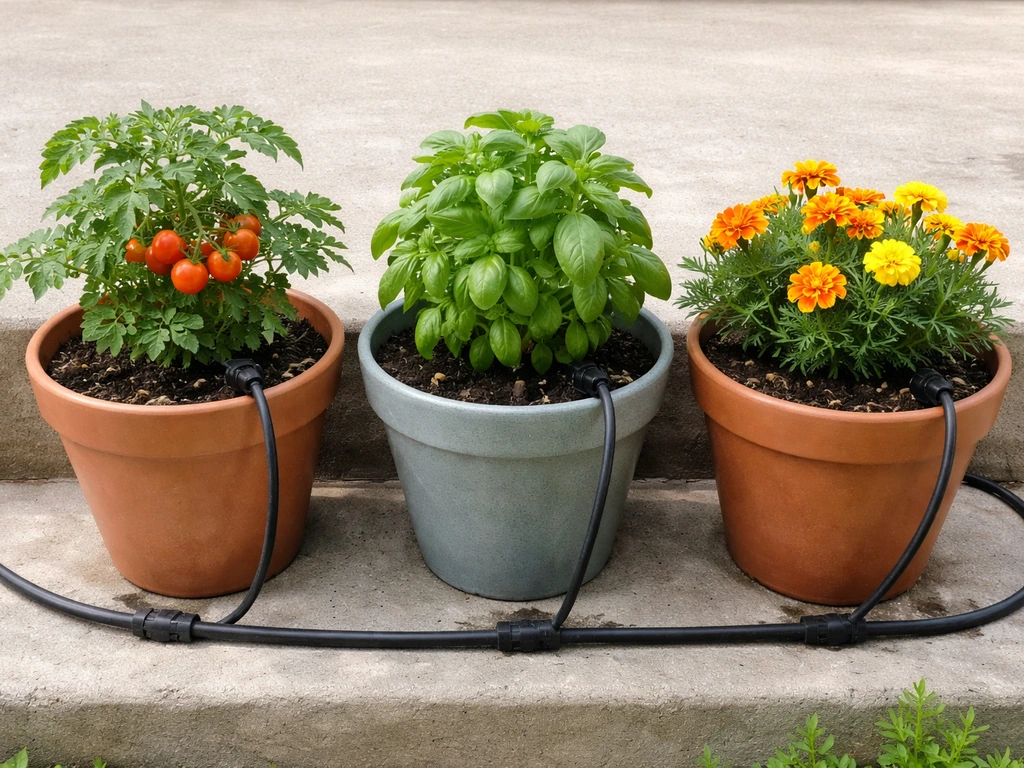
Container growing changes the rules in two important ways: soil dries out faster than in-ground beds, so all three plants need to tolerate consistent watering, and container size limits what you can grow together. Large vegetables like full-sized tomatoes generally get one plant per container. But dwarf, bush, and compact varieties open up a lot of options for combining plants. Your container needs 6 to 8 hours of direct sun and drainage holes, full stop.
| Container trio | Minimum container size | Notes |
|---|---|---|
| Dwarf tomato (or cherry tomato) + Basil + Marigold | 15–20 gallon pot | Classic trio scales down well with bush or patio tomato varieties. Keep basil trimmed so it doesn't shade itself out. |
| Pepper + Oregano + Lettuce | 12–15 gallon pot | WVU extension recommends exactly this kind of combo: lettuce tucked in around the pepper, herbs at the edge. Harvest lettuce before summer heat sets in. |
| Chives + Parsley + Calendula | 8–10 gallon pot or window box | All three are compact, hardy, and useful. Great for a balcony or small patio. Calendula blooms continuously if you deadhead it. |
| Kale + Thyme + Pansies | 10–12 gallon pot | An all cool-season container trio. Kale is the centerpiece; thyme drapes over the edge; pansies add color and are edible. All tolerate frost. |
| Basil + Parsley + Green onion | 6–8 gallon pot or large window box | A pure culinary herb container. All three want consistent moisture and full sun. Green onions are ready in 60 days and can be snipped repeatedly. |
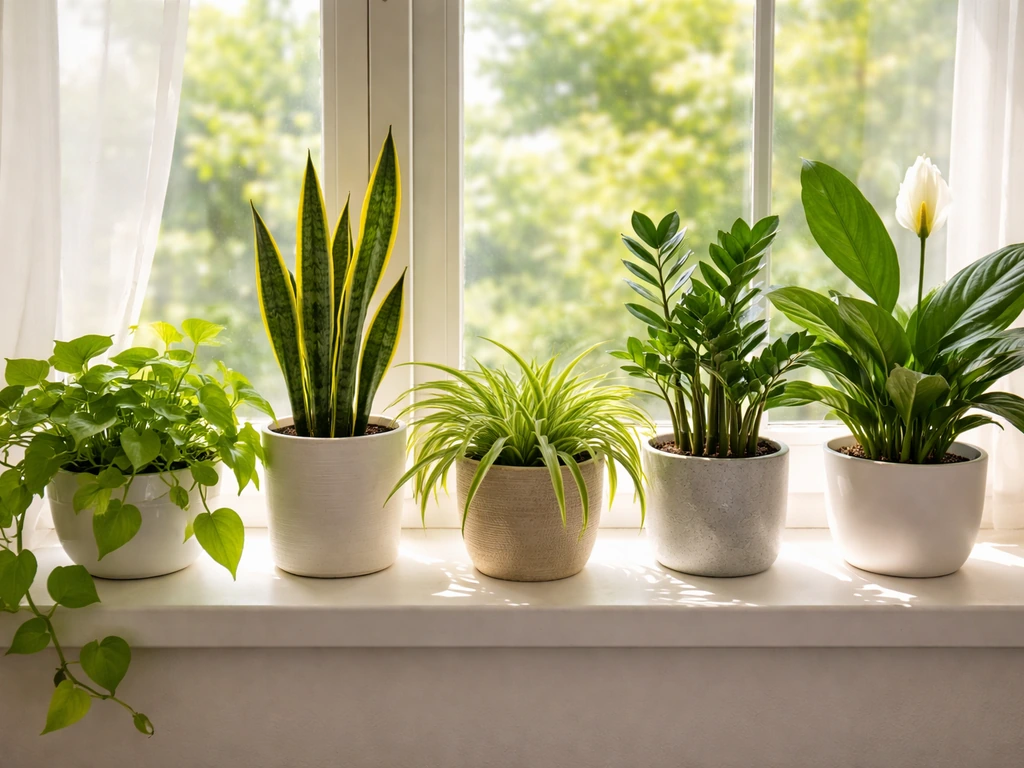
For apartment growers with limited outdoor space, the herb-focused trios are genuinely the most rewarding. You get constant harvests, the plants stay manageable in smaller pots, and they're useful enough in the kitchen that you'll actually pay attention to them. If you're interested in plants that require even less attention, low-maintenance houseplant trios that grow well together indoors follow similar compatibility rules but with lower light requirements.
Low-maintenance easy to grow houseplants that are safe for cats can fit into the same indoor trio approach with compatible light and watering needs. When you want house plants that grow together, start by matching their light and watering needs, then confirm they all like similar humidity and well-draining soil. If you want an even more tailored list, look at the best houseplants to grow for your specific indoor light and space.
If you're looking for houseplants that are easy to grow, choosing low-maintenance trios that share similar light and watering needs is a great shortcut low-maintenance houseplant trios.
How to pick the right trio for your location right now
Here's a simple process to go from 'I want to plant three things together' to 'I know exactly what I'm planting and where.' Work through this before you buy anything.
- Figure out your current season window. It's early May 2026. If you're in USDA zones 7 and warmer (most of the South, Pacific Coast, and Mid-Atlantic), you're already into warm-season planting. If you're in zones 5 to 6 (much of the Midwest and Northeast), you're right at the last frost window and can start hardening off warm-season transplants now. If you're in zones 3 to 4 (upper Midwest, northern New England, Canada), stick with cool-season trios a little longer.
- Count your sun hours honestly. Stand outside at your planting spot and note sun from 9am to 5pm. If it gets shade from a fence, tree, or building for more than 2 to 3 hours of that window, you have partial shade. That rules out most warm-season vegetable trios but opens the door to lettuce, kale, chives, parsley, and shade-tolerant flowers.
- Check your soil or potting mix. If you're planting in-ground for the first time, get a basic soil test (most cooperative extension offices offer them for under $20). You're targeting pH 6.2 to 6.8. If you're using a container or raised bed with purchased mix, you're likely already in range.
- Match water habits. Pick three plants that all want the same watering frequency. In a container this means all three should tolerate daily or near-daily watering in summer heat. In-ground, match drought-tolerant with drought-tolerant and moisture-loving with moisture-loving.
- Choose your trio from the tables above that fits your season, sun level, and space. Don't mix a cool-season and a warm-season plant in the same trio unless the cool-season plant is being used as a short-term filler you plan to pull in 4 to 6 weeks.
- Lay out your planting plan before you dig. Put the tallest plant on the north side of the bed (so it doesn't shade the others in the northern hemisphere). Use normal recommended spacing for each plant, not squeezed companion spacing. Allow airflow between plants to prevent fungal issues.
- Plant, water deeply, and watch for two common failure points in the first 3 to 4 weeks: (1) one plant taking over and crowding the others (trim aggressively, especially herbs), and (2) one plant wilting when the others look fine, which almost always means a mismatch in water needs or root competition.
What to monitor after planting
The first two weeks are about establishment. Water consistently and don't fertilize yet. After week two, start watching for these specific failure signals: yellowing lower leaves on one plant (usually overwatering or nitrogen competition), bolting in cool-season plants (they're telling you it's getting too warm and they need to be harvested and replaced), or one plant shading out a smaller neighbor (time to trim or stake the taller one). If you planted a short-season crop like spinach or lettuce alongside a slower-growing main crop, be ready to harvest the leafy greens within 25 to 40 days and either leave that space open or plant a warm-season succession crop in its place.
The goal with companion trios isn't perfection on the first try. It's learning which combinations work in your specific microclimate, your soil, your light. Keep notes on what actually grows well together in your garden, because that practical knowledge, built season by season, is worth more than any planting chart.
FAQ
What 3 plants grow well together if my garden gets less than 8 hours of direct sun?
Pick a trio where at least one plant is shade-tolerant and the other two can still photosynthesize well with partial sun. For many gardens, that means pairing a leafy green (like lettuce) with two plants that tolerate morning sun plus afternoon shade, then keep soil moisture consistent. If one plant needs full sun but your site is mostly partial shade, the trio will usually fail even if watering and spacing are perfect.
Can I plant a warm-season trio and a cool-season trio in the same bed at the same time?
Yes, if you use the short-season crop as a “placeholder” and harvest it before the warm-season plants need full space. The key is timing, not proximity, because cool-season crops will bolt as temperatures rise and you do not want to wait too long and have one plant shading or crowding the other.
What 3 plants grow well together in containers when I forget to water regularly?
Choose three that all tolerate consistent moisture rather than ones with opposite watering cycles. In practice, that often means avoiding drought-tolerant herbs like rosemary in the same container with moisture-loving leafy crops, and using larger containers (they dry out more slowly). Also, confirm each plant’s sun needs match your patio hours, since heat speeds up drying regardless of your watering schedule.
How do I tell whether my plants in the trio are failing because of overwatering, not bad companion choice?
Look for patterns tied to soil saturation. Yellowing lower leaves can happen from overwatering, and wilting with soggy soil usually points to poor drainage. If only one plant shows symptoms, check that plant’s specific moisture preference first, then confirm the container or bed actually drains well before blaming the trio.
What 3 plants grow well together for beginners if I don’t want to adjust soil pH?
Aim for plants that generally tolerate a mildly acidic range, roughly pH 6.2 to 6.8, and use quality potting mix or garden mix rather than raw soil in containers. If you are planting in the ground without testing, avoid trios where one plant is known to require distinctly different soil conditions, because you lose the “forgiving” compatibility the article discusses.
Do deep-root and shallow-root plants always work well together in the same trio?
They often do, but only if spacing is correct and roots are not forced to share the same compacted zone. In beds with hardpan, heavy clay, or frequent foot traffic, shallow-root plants can still struggle if drainage and aeration are poor. If your soil is dense, prioritize drainage improvement before relying on rooting depth as the compatibility factor.
Can I use the classic tomato, basil, marigold trio if I have fungal disease issues?
It can work, but you must protect airflow. Follow the spacing rules for each plant and avoid crowding, because dense foliage increases leaf wetness time and disease pressure. If your garden stays humid, consider choosing a trio with one plant that casts less dense shade or prune to maintain airflow rather than relying on the companion effect.
What 3 plants grow well together if I want to minimize pests without relying on “magic” claims?
Prioritize the compatibility checklist (light, water, soil, drainage, spacing), then add variety that supports beneficial insects. A practical approach is to include one flowering plant near the other two and ensure it has blooms across different weeks. Also, use the “bad bugs first” idea carefully, because beneficial insects still need some prey, and starving predators by removing every pest can slow their arrival.
Why do some companion trios still fail even when the plants seem to match their needs?
Common misses are incorrect spacing, insufficient sun, and poor drainage. Another frequent edge case is nitrogen imbalance, where fast-growing plants can outcompete slower ones, leading to symptoms like yellowing in the wrong plant. If the whole trio declines together, re-check sun hours and wetness levels first, since those are usually the root cause.
What 3 plants grow well together for succession planting, and how do I avoid leaving bare gaps?
Use a short-season leafy crop alongside a slower main crop, then plan the swap window in advance. Harvest the leaf crop on schedule (often within 25 to 40 days) and immediately follow with a warm-season succession crop if your local conditions support it. If you wait too long, the leafy crop can shade or complicate the transplanting of the next crop.
In a single container, what determines whether I can grow three plants together or should I use one per pot?
Container size and mature plant width matter more than the species list. Full-sized vegetables like standard tomatoes usually need one plant per container, while dwarf or compact varieties can share space if they still get matching sun and the pot remains large enough to hold consistent moisture. If you cannot provide reliable watering, reduce the number of plants per container or pick all members that tolerate consistent moisture.
Next Article
Houseplants That Are Easy to Grow: Beginner Guide
Beginner-friendly shortlist of easy houseplants, with light, watering, setup tips, and seasonal troubleshooting for apar