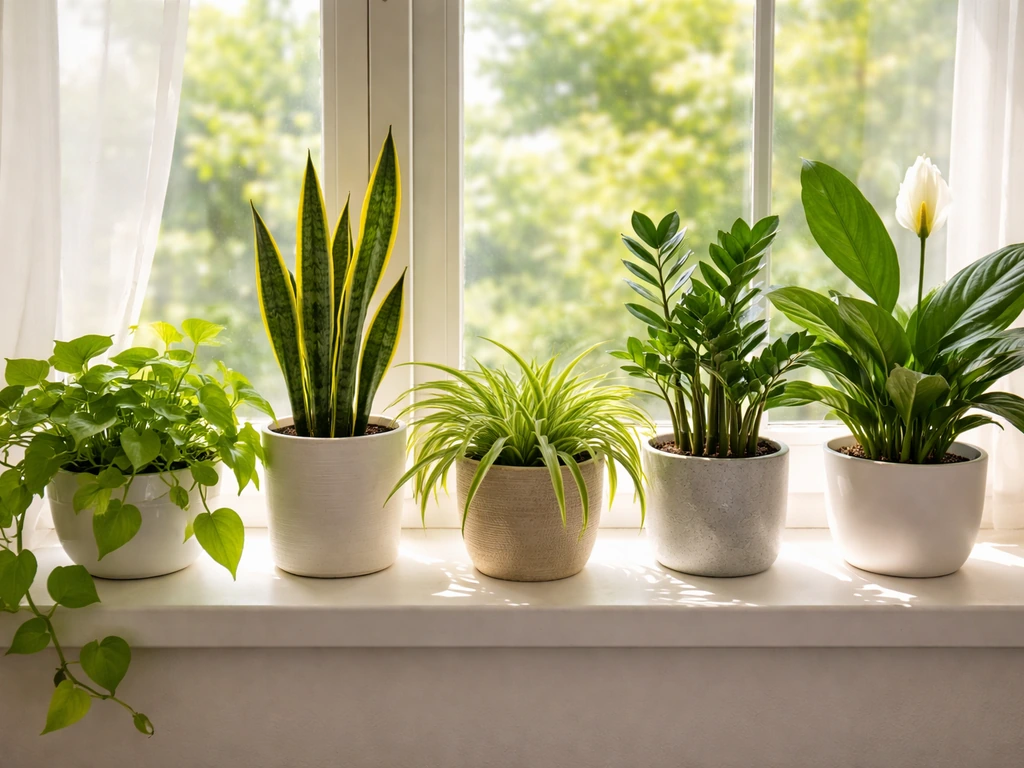
The easiest houseplants to grow are pothos, snake plant, spider plant, peace lily, and Chinese evergreen (aglaonema). Those five will survive real beginner conditions: irregular watering, less-than-ideal light, and the occasional week of neglect. If you want just one recommendation, start with a pothos or a snake plant. They are genuinely hard to kill, they look good in almost any room, and they cost next to nothing at any garden center right now.
Houseplants That Are Easy to Grow: Beginner Guide
Rachel Hartley
7 Apr 2026
Quick picks: the easiest houseplants for most homes
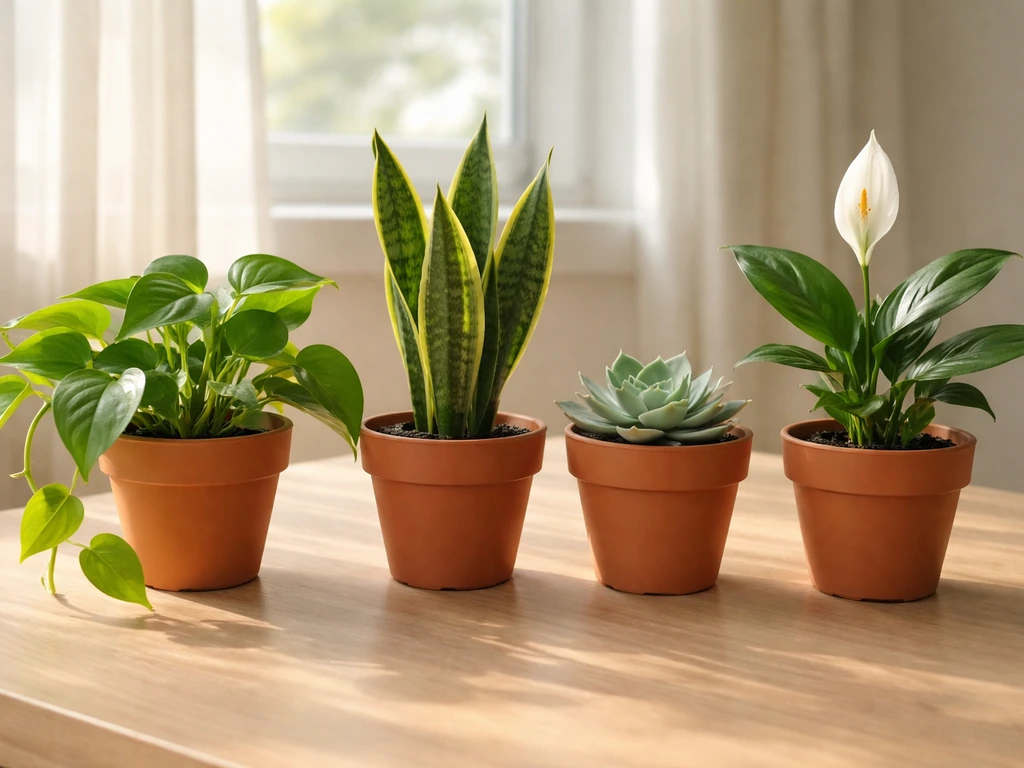
Here is the short list I recommend to anyone starting out. Each of these plants has been flagged by multiple university extension programs as beginner-friendly specifically because they tolerate the conditions most homes actually have, not the ideal conditions a plant catalog describes.
| Plant | Best light | Watering habit | Biggest strength | Pet-safe? |
|---|---|---|---|---|
| Pothos (golden pothos) | Low to bright indirect | Let soil dry slightly between waterings | Tolerates low light and irregular watering | No (toxic to cats and dogs) |
| Snake plant | Low to medium indirect | Water only when soil is fully dry | Near-indestructible; survives drought | No (toxic to cats and dogs) |
| Spider plant | Medium to bright indirect | Keep soil lightly moist; tolerates some drying | Fast-growing; easy to propagate; non-toxic | Yes |
| Peace lily | Low to medium indirect | Water when top inch of soil dries out | Thrives in low-light apartments | No (toxic to cats and dogs) |
| Chinese evergreen (aglaonema) | Low to medium indirect | Water when top 1–2 inches of soil dry | Extremely low-light tolerant | No (toxic to cats and dogs) |
Pothos and snake plant are the two I reach for most. Pothos grows fast, trails beautifully off a shelf, and does fine even in a dim corner. Snake plant is almost the opposite visually, with stiff upright leaves, but it shares that same forgiveness. University of New Hampshire Extension puts it plainly: snake plant is the one to choose if you have struggled to keep houseplants alive. It survives drought, tolerates medium to low light, and only needs water when the soil feels completely dry.
One important note on pet safety: pothos and snake plant are both listed as toxic to cats and dogs by ASPCA. Pothos contains insoluble calcium oxalate crystals that can cause burning and irritation in the mouth, drooling, vomiting, and difficulty swallowing if chewed. Snake plant can cause similar GI symptoms. If you have pets, spider plant is the safest pick on this list. For a deeper look at easy to grow houseplants that are safe for cats, that is worth reading before you buy.
Small, compact easy houseplants for shelves and desks
If your space is limited, you do not need to skip the low-maintenance plants. Most of the easiest options also come in compact forms or stay naturally small. Here are the best choices when you are working with a shelf, a desk, or a windowsill rather than a floor spot.
- Pothos in a 4-inch or 6-inch pot: trail it off the edge of a shelf for visual interest without needing floor space
- Mini snake plant (Sansevieria 'Hahnii' or 'Bird's Nest' varieties): stays 6–8 inches tall, perfect for a desk corner
- Spider plant in a small hanging basket or 4-inch pot: produces offshoots you can eventually propagate
- Peperomia: not always on the 'easiest' lists but genuinely low-maintenance, stays compact, and tolerates low light well
- Aloe vera in a 4-inch terracotta pot: needs bright light but is extremely drought-tolerant and practically self-sufficient
For shelves and desks, pot size matters more than people expect. A 4-inch pot dries out faster than a 6-inch pot, which means you will water more frequently even though the plant is the same species. If you know you forget to water, go one pot size up. The goal is matching the container to your actual habits, not the plant's theoretical preferences. If you are curious which of these common easy to grow houseplants look best grouped together on a shelf, that is a good place to start planning your setup.
Match the plant to your light level and home conditions
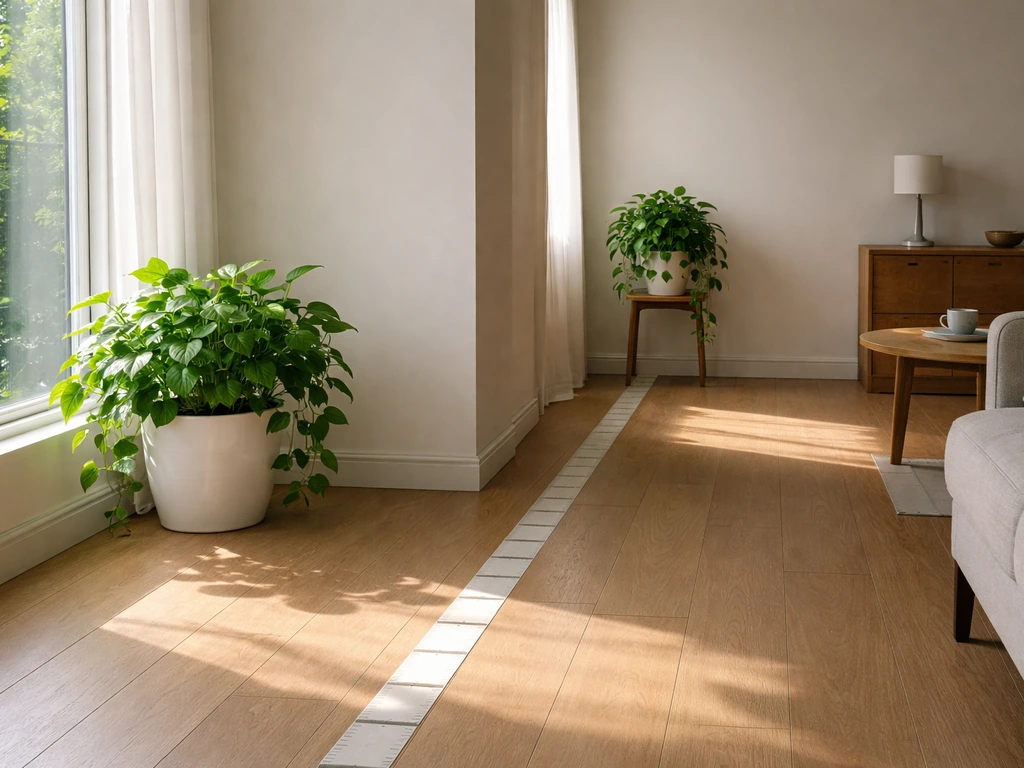
Light is the single biggest factor that determines whether a beginner succeeds or fails with a houseplant. Not watering, not fertilizer. Light. And most people overestimate how much light their home actually has. Here is a practical way to think about it: if you cannot comfortably read a book by the natural light in a spot, it is low light. That is the baseline.
| Light condition | What it looks like in your home | Best plant picks |
|---|---|---|
| Low light | No direct sun; room lit by windows in another room or north-facing windows | Peace lily, Chinese evergreen, pothos, snake plant, cast iron plant |
| Medium indirect | Bright enough to read by; a few feet from a window; east-facing windows | Spider plant, pothos, snake plant, aglaonema |
| Bright indirect | Within 3 feet of a south or west window, no direct sun beam on leaves | Pothos, spider plant, aloe vera, peperomia |
| Direct sun (2+ hours) | Sunbeam hits the pot or leaves at some point during the day | Aloe vera, succulents (not on our main list but worth knowing) |
UF/IFAS Gardening Solutions groups aglaonema, golden pothos, peace lily, and cast iron plant specifically as low-light options. These are the plants to reach for if your apartment faces north or your desk is away from any windows. The cast iron plant in particular earns its name: it handles near-darkness, temperature swings, and serious neglect better than almost anything else.
If you are putting together a collection and want to know which plants will actually coexist without one outcompeting or shading another, it helps to plan it out. A resource on what house plants can grow together will help you avoid the common mistake of pairing a sun-lover with a shade plant in the same window spot.
Simple care routines for beginners
Watering: the one rule that fixes most problems
Overwatering kills more houseplants than anything else. University of Missouri Extension is clear on this: wet feet cause yellowing, leaf drop, and roots that turn brown and rot. The fix is simple but takes some discipline. For pothos, let the soil dry slightly between waterings. For snake plant, wait until the soil is completely dry, not just the surface. For spider plant and peace lily, check the top inch of soil and water when that inch is dry. You do not need a schedule. You need to check the soil.
When you do water, water thoroughly. NCSU Extension recommends taking the plant to a sink or shower and watering until the water drains freely from the bottom, then letting it drain completely before putting it back. That approach beats the common mistake of adding a small amount to the top of the pot, which wets only the surface and leads to shallow roots.
Soil and containers: keep it simple
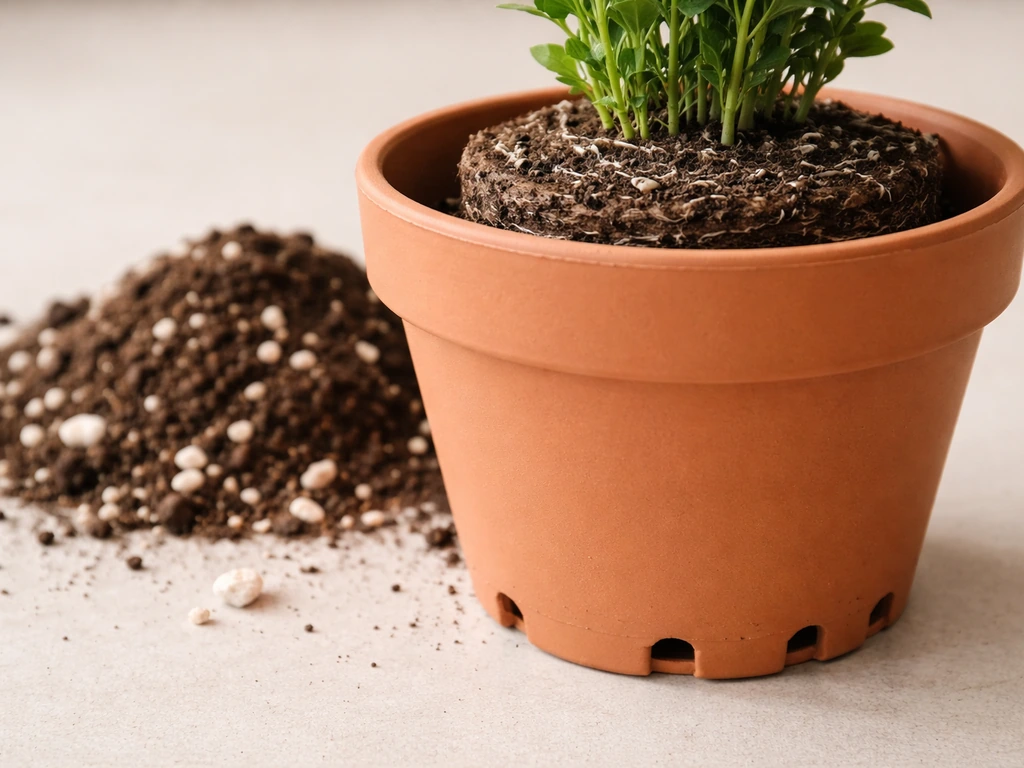
Use a standard well-draining potting mix for all five of the recommended plants. For snake plant and aloe, add about 20–30% perlite to improve drainage even further. The most important hardware decision is this: always use a pot with drainage holes. Decorative containers without drainage holes can work, but only if you pot the plant into a smaller container with holes first and set that inside the decorative one. Illinois Extension also recommends using a drained insert for attractive decorative pots, rather than relying on incorrect methods like gravel layers Decorative containers without drainage holes can work. Penn State Extension is explicit on this point: repot into a drainage-hole container first, then place that container inside your decorative pot.
When repotting, position the root ball so the top sits about one inch below the pot's rim. University of Maryland Extension recommends this one-to-two-inch gap to leave room for watering without overflow. Before you repot, water the plant in its original container and let it rest for about an hour first. That reduces transplant stress noticeably.
Fertilizing: less is more (and none in winter)
New plant owners often over-fertilize hoping to speed things up. It does not work that way. For all five beginner plants, fertilize lightly once a month during spring and summer with a balanced liquid fertilizer at half the recommended strength. During fall and winter, stop completely. Iowa State University Extension and University of Missouri Extension both state that fertilization is generally not necessary in winter because most houseplants are not actively growing. Adding fertilizer when a plant is dormant or slow-growing just builds up salts in the soil and can burn roots.
Season and location tips so they thrive year-round
Right now it is early April 2026, which means most of the US is moving into the growing season. If you are in the South or Southwest (Texas, Arizona, Florida), your indoor plants are probably already picking up some growth. If you are in the upper Midwest, Pacific Northwest, or Northeast, you may still have gray, low-light days stretching into May. That matters.
Spring and summer is the right time to start new plants, repot anything that has outgrown its container, and resume fertilizing. Plants wake up fast once indoor light levels increase. If you started a pothos or spider plant in February and it looked stagnant, do not give up on it. Give it four to six weeks of April light before judging.
For winter, NCSU Extension advises that growth decreases significantly and watering should be reduced to match. A pothos that needed water every seven days in summer might only need it every ten to fourteen days in a northern winter. The risk is not usually drying out, it is watering on the summer schedule when the plant has slowed down and the soil is staying wet much longer. UIUC Extension echoes this: during winter's short days, houseplants usually need very little or no additional fertilizer.
Location affects this too. An apartment in Minneapolis in January with north-facing windows is genuinely challenging even for the toughest plants. A grow light on a timer (12–14 hours per day) solves it. An apartment in San Diego with west-facing windows does not have this problem at all. Know your actual conditions before assuming a plant is failing because of something you did wrong.
If you are planning a small indoor garden and want to maximize the space you have, thinking through companion planting indoors is useful. For example, knowing what 3 plants grow well together in a single window spot can help you build a low-effort collection that works as a system rather than a collection of individual experiments.
Common problems and fast fixes
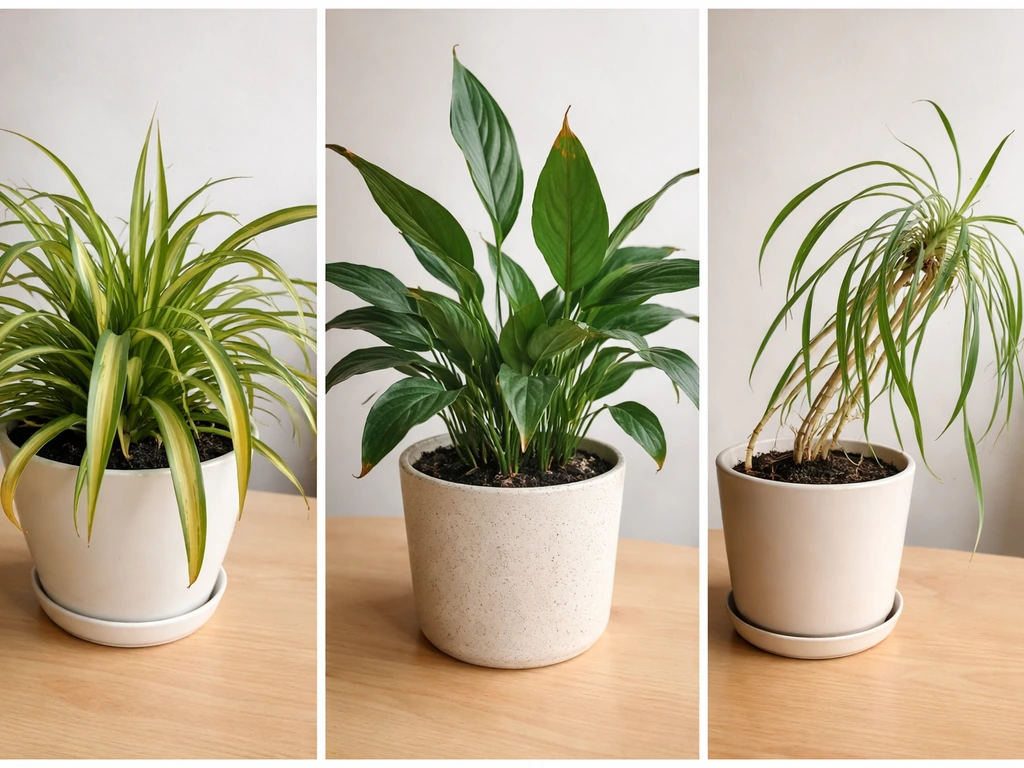
Yellowing leaves
Yellow leaves are almost always a watering problem, either too much or (less often) too little. Check the soil before you do anything else. If it is wet and has been wet for more than a week, you are overwatering. Pull the plant out of the pot if you can and look at the roots: healthy roots are white or tan, rotting roots are brown and mushy. If you catch root rot early, trim the brown roots, let them dry out for an hour, and repot into fresh dry mix. If the soil is bone dry and the leaves are yellow, water thoroughly and it will likely bounce back within a week.
Brown leaf tips
Brown tips on spider plants or peace lilies usually mean low humidity or fluoride in tap water. The fix: let tap water sit out overnight before using it, or switch to filtered water. You can also trim the brown tips with clean scissors at an angle and the plant will look fine. This is cosmetic, not a sign of serious trouble.
Leggy, spindly growth
Spindly growth means the plant is reaching for light it is not getting. University of Missouri Extension notes that poor light causes spindly growth and yellow foliage. Move the plant closer to a window or supplement with a grow light. Pothos will stretch noticeably in very low light, and new leaves will be smaller. Once you move it to better light, the next few leaves will come in fuller.
Pests: mites, mealybugs, and scale
The most common pests on indoor easy-care plants are spider mites, mealybugs, and scale insects. Spider mites show up as fine webbing on the undersides of leaves, usually when the air is hot and dry. Penn State Extension notes that spider mites thrive in hot, dry conditions, so keeping humidity reasonable helps prevent them. For mealybugs (which look like small white cotton patches), dab them with rubbing alcohol on a cotton swab. For scale (brown bumps on stems), scrape them off and follow up with neem oil. For any of these, isolate the affected plant immediately so the infestation does not spread.
Colorado State University Extension recommends washing plants and using targeted treatments as part of indoor pest management rather than immediately reaching for broad pesticides. For beginner plants, a weekly wipe-down of leaves with a damp cloth does double duty: it keeps the plant clean and lets you spot pest problems before they get out of hand.
A note on pets and plant toxicity
If a pet chews a toxic plant like pothos or snake plant, do not wait to see if symptoms develop. Contact a poison hotline immediately. The ASPCA notes that calcium oxalate plants can cause nausea, vomiting, diarrhea, drooling, and mouth irritation. Poison Control (1-800-222-1222) handles human cases and there are 24/7 animal poison control services available for pet concerns. Having one of those numbers saved is just good household practice if you keep any plants at all.
What to do next: your buying checklist and 30-day setup plan
Before you buy: the checklist
- Identify your lightest spot: stand in the room and note which window gets the most natural light and how many hours of it
- Decide if pets are a concern: if yes, spider plant is your first pick; avoid pothos, snake plant, and peace lily
- Choose pot size based on your watering habits: forgetful waterers should go 6-inch or larger; attentive waterers can start at 4-inch
- Get a pot with drainage holes: no exceptions for beginners
- Buy standard potting mix; for snake plant or aloe, pick up a small bag of perlite
- Have a saucer or tray under every pot to catch drainage
Your first 30 days
- Day 1: Buy your plant and pot. Water the plant in its nursery pot first and let it drain for an hour before repotting. Position the root ball about an inch below the rim of the new pot. Fill in with fresh potting mix and water lightly to settle the soil.
- Days 2–7: Place it in your chosen spot and leave it alone. Plants need a week or two to adjust to a new environment. Do not fertilize, do not repot again, do not move it repeatedly.
- Week 2: Check the soil. Push your finger about an inch deep. If it feels moist, come back in three days. If it feels dry, water thoroughly until water drains from the bottom.
- Weeks 2–4: Establish your check-in habit. Every three to four days, check the soil. You are building a feel for how fast your specific plant in your specific spot dries out. Write it down if it helps.
- Day 30: Assess. Is the plant holding its color? Is new growth appearing (even slowly)? If yes, you are doing it right. If leaves are yellowing, revisit watering. If growth is very slow or spindly, revisit light. If it looks great, consider adding a second plant from the list.
Once you have one or two plants dialed in, the jump to a fuller collection is not hard. The skills transfer. The best overview of which plants to add next, organized by what works for different home setups, is a solid look at the best houseplants to grow when you are ready to expand beyond the beginner list. Start simple, get confident, then build from there.
FAQ
How often should I water easy houseplants if I do not want to check soil every time?
Use the “hands-in-soil” approach instead of a fixed schedule. If you truly cannot check, increase the pot size and use a moisture-retentive potting mix, then water in longer intervals. For pothos, you can often wait until the soil is clearly dry and the leaves look slightly less firm, but snake plant should be left fully dry before watering to avoid root rot.
What pot size is best for beginners so the plant stays forgiving?
Aim for a pot that is only about 1 to 2 inches wider than the root ball. Oversized pots stay wet longer, which makes overwatering more likely even for “easy” plants. If you repot, choose a size increase gradually rather than jumping multiple sizes at once.
Are these plants safe to keep around birds?
The pet-safety guidance in the article covers cats and dogs. For birds, assume risk with known-to-be-toxic plants like pothos and snake plant, since chewing can happen and birds are sensitive to mouth and GI irritation. If you have birds, choose non-chewable placement or consider safer plant options specifically labeled for avian households.
What should I do if my pothos or snake plant grows slowly even with good care?
Slow growth is often seasonal or light-related, but check one more thing first, root crowding. If the plant has been in the same pot for a long time and the roots circle or push up the soil, growth may stall until it is repotted. Also, avoid fertilizing during winter or if light is still low, since extra nutrients will not fix the underlying limitation.
My spider plant keeps making babies, but the mother plant looks tired. Is that normal?
It can be normal, but it can also indicate the plant is using energy inefficiently or getting crowded. Let the offsets form roots before separating, and consider repotting the mother into a slightly larger pot if it is tight or if leaf growth is thinning. Do not separate immediately at the first sign of baby plantlets if the mother is already struggling.
What causes “brown mushy spots” on roots or stems in these easy plants?
Usually it is persistent moisture plus low airflow, often from decorative pots without drainage or from watering before the plant dries enough. If you see mushiness, remove the plant from the pot, trim affected tissue, and repot into completely dry, fresh mix in a container with drainage holes. Then wait to water again until the mix is dry at least the first few inches, depending on pot size.
Can I use tap water for these plants if I notice brown tips?
Yes, but brown tips can signal fluoride or mineral buildup. A practical approach is to rotate: use tap water initially, then switch to filtered water or let tap water sit overnight for a few weeks to see if symptoms improve. If the tips keep worsening, flush the pot by running water through it (letting it drain fully) once, but only when the plant is otherwise ready to be watered.
Do I need to trim dead leaves or can I leave them alone?
You should remove leaves that are fully dead or rotting, especially on peace lily and spider plant. Trimming improves airflow around the crown and reduces the chance of secondary issues. Use clean scissors, cut at the base of the leaf, and avoid tearing the plant’s growing point.
Are neem oil or rubbing alcohol treatments safe for beginners on these specific plants?
They can be, but use them carefully. Rub-on alcohol on mealybugs should be dabbed directly, not sprayed heavily, and avoid soaking the foliage. Neem oil is slower and can leave residue, and some plants can get leaf spotting under bright light after treatment. Spot-test on a small area and apply when light is indirect.
What is the fastest way to tell whether yellow leaves are from too much or too little water?
Do the soil check first, then look at texture. If the soil is wet for days and stems feel soft, it is usually overwatering. If the soil is bone dry, leaves may yellow while feeling thin or limp, and the plant often rebounds after a thorough watering. If the mix is wet but the plant is wilting, that is a strong overwatering sign.
Should I isolate a pest problem even if I only suspect it?
Yes. When dealing with spider mites, mealybugs, or scale, early isolation prevents spread to your whole collection. Quarantine the plant in a separate room and inspect nearby plants, especially undersides of leaves and stem joints.
Is it better to start with cuttings for pothos, or buy a rooted plant?
Both work, but cuttings are often easiest if you want faster wins. Rooting a pothos cutting in water lets you monitor root development, and once roots are established you can transfer to soil. Buying a rooted plant reduces the rooting step, but it is slower to see visible improvement because the plant has to adjust to its new pot and light conditions.
Next Article
Best Indoor Plants That Grow Tall: Top Picks & Care Guide
Best tall indoor plants by light, care and season, real heights, potting, pruning, pests, plus a quick picker's guide.