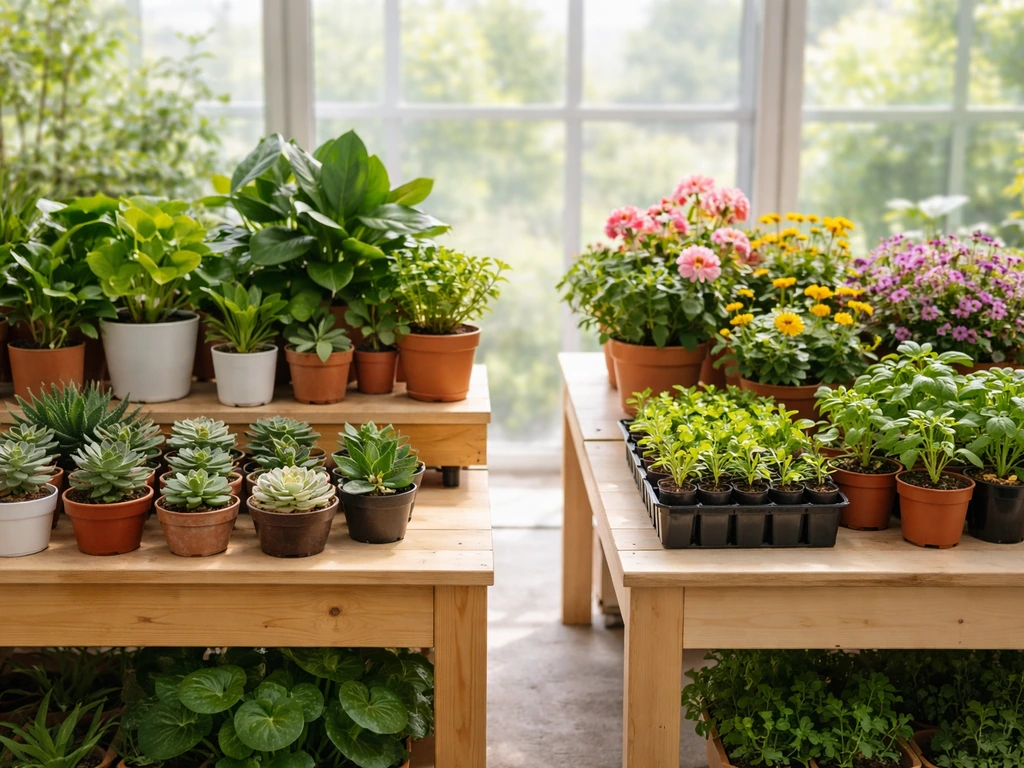
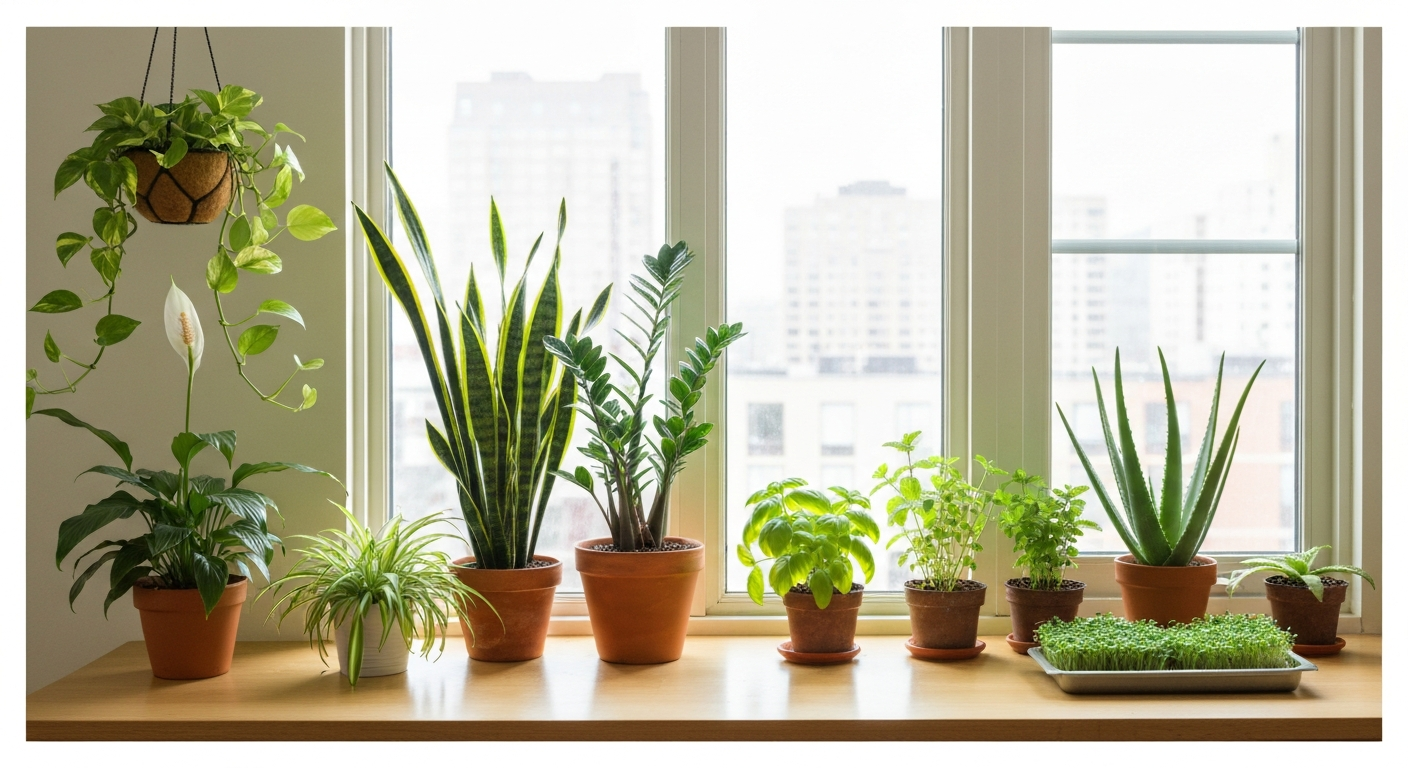
You can grow dozens of plants successfully in an apartment, even with low light, no outdoor space, and a busy schedule. The best all-around picks for beginners are pothos, snake plant (Dracaena trifasciata), ZZ plant, spider plant, and peace lily for foliage; basil, mint, and microgreens for edibles; and aloe vera for a medicinal option. If you have a bright south- or west-facing window, your choices expand dramatically to include herbs, dwarf peppers, cherry tomatoes, and tropical beauties like monstera. The key is matching a plant's actual needs to what your apartment genuinely offers, not what you hope it offers.
Plants I Can Grow in My Apartment: Best Picks for Any Space
Rachel Hartley
11 Aug 2026
Quick recommendations at a glance
Before diving into details, here is a fast-reference list organized by the most common apartment growing goals. These are reliable, widely available, and tested in real indoor conditions.
| Goal | Top Pick | Runner-Up | Why It Works |
|---|---|---|---|
| Best low-light | ZZ plant | Cast iron plant (Aspidistra) | Tolerates dim corners; slow-growing; very drought-tolerant |
| Best low-care | Snake plant | Pothos | Survives neglect, infrequent watering, and average humidity |
| Best edible | Microgreens | Basil | Fast crop (7–14 days), no deep containers needed, bright windowsill or grow light |
| Best medicinal | Aloe vera | Lemon balm | Aloe gel for minor burns; lemon balm for tea (use caution with all medicinal herbs) |
| Best pet-safe | Spider plant | Calathea | Non-toxic to cats and dogs per ASPCA database |
| Best aesthetic | Monstera deliciosa | Pothos 'Marble Queen' | Bold foliage, forgiving of irregular watering, statement piece in medium-to-bright light |
15 easy apartment plants with care cards
These 15 plants cover the full range of apartment conditions, from bright sunny studios to north-facing rooms with minimal natural light. Each care card gives you the one-line summary you actually need before you buy.
| Plant | Light | Water | Key Gotcha |
|---|---|---|---|
| Pothos (Epipremnum aureum) | Low to bright indirect | Every 7–10 days | Root rot if pot has no drainage |
| Snake plant (Dracaena trifasciata) | Low to bright indirect | Every 2–6 weeks | Overwatering kills it faster than anything |
| ZZ plant (Zamioculcas zamiifolia) | Low to medium indirect | Every 2–3 weeks | Toxic if ingested; keep away from pets and kids |
| Spider plant (Chlorophytum comosum) | Medium to bright indirect | Weekly | Fluoride in tap water causes brown tips; use filtered water |
| Peace lily (Spathiphyllum) | Low to medium indirect | Weekly | Droops visibly when thirsty; bounces back quickly |
| Aloe vera | Bright direct or indirect | Every 2–3 weeks | Needs gritty, fast-draining soil; standard potting mix holds too much moisture |
| Monstera deliciosa | Medium to bright indirect | Every 7–10 days | Needs space; can reach 3–4 ft wide indoors within a couple of years |
| Heartleaf philodendron | Low to bright indirect | Every 7–10 days | Very similar to pothos; slightly more sensitive to cold drafts |
| Chinese evergreen (Aglaonema) | Low to medium indirect | Every 7–10 days | Red/pink varieties need more light than green ones |
| Rubber plant (Ficus elastica) | Medium to bright indirect | Every 7–10 days | Hates being moved; pick a spot and leave it |
| Basil | Bright direct (6+ hrs) | Every 1–2 days | Bolts fast in heat; pinch flowers immediately to extend harvest |
| Microgreens | Bright indirect or grow light | Daily misting | Poor air circulation causes mold; use clean trays and good drainage |
| Calathea/Maranta | Low to medium indirect | Weekly | Needs humidity; brown edges mean air is too dry |
| Pothos 'Marble Queen' | Medium to bright indirect | Every 7–10 days | Less variegation in low light; needs more light than standard pothos |
| String of pearls (Senecio rowleyanus) | Bright indirect to direct | Every 2–3 weeks | Extremely sensitive to overwatering; hanging basket essential for drainage |
Matching plants to your light level
Light is the single biggest factor in what you can grow. The RHS puts it simply: if you can comfortably read a book without turning on a lamp, there is usually enough light for a low-light houseplant. The Royal Horticultural Society’s 'Houseplants for dark and shady rooms – RHS Advice' lists low‑light species such as Aspidistra, Sansevieria (Dracaena trifasciata), and Epipremnum (pothos) and states that 'if you can read a book there is usually enough light for a houseplant.'. For anything more demanding, you need to actually measure. A basic light meter (accurate to 1 foot-candle) costs under $20 and takes the guesswork out of it, as UF/IFAS recommends. South-facing windows in the Northern Hemisphere get the most direct sun; north-facing windows are the dimmest. East- and west-facing windows land in the middle.
Bright light (1,000+ foot-candles / 10,000+ lux)
- Within 1–2 feet of a south- or west-facing window
- Best for: aloe vera, basil, string of pearls, cacti, succulents, cherry tomatoes in containers, dwarf peppers, microgreens under supplemental light
- Supplemental grow lights can replicate this level; University of Minnesota Extension recommends 12–16 hours of supplemental light for herbs and seedlings
Medium/indirect light (100–500 foot-candles / 1,000–5,000 lux)
- Within 3–5 feet of a window, or near a bright east-facing window
- Best for: pothos, philodendron, monstera, rubber plant, spider plant, peace lily, Chinese evergreen, most tropical foliage plants
- This is the sweet spot for most popular apartment plants
Low light (25–100 foot-candles / 250–1,000 lux)
- Several feet from any window, or in rooms with north-facing windows
- Best for: ZZ plant, snake plant, cast iron plant (Aspidistra), heartleaf philodendron, Chinese evergreen (green varieties)
- Nothing truly thrives in zero light, but these species hold on longer than almost any other
Best plants for small spaces
Small apartments call for creative placement. You do not need floor space to grow a meaningful collection of plants. Vertical and overhead space is almost always underused.
Windowsills
Windowsills are prime real estate. Shallow-rooted plants work best here: herb pots (basil, thyme, chives), small succulents, aloe vera in a 4-inch pot, or a microgreen tray. Keep pots under 6 inches wide so they do not block light from each other. A south-facing sill in a sunny apartment is genuinely enough to grow a continuous supply of herbs year-round.
Hanging baskets and wall planters
Trailing plants are made for hanging. Pothos, string of pearls, heartleaf philodendron, and spider plants all look better cascading downward. Wall-mounted planter grids let you arrange small pots vertically on a single wall and work well for herbs if placed near a bright window. String of pearls needs a hanging basket anyway since its delicate stems break easily if they pool on a surface.
Shelves
A tiered shelf near a window can hold 10 or more plants in the footprint of a small side table. Put the light-hungry plants on the top shelves (closer to the window) and the low-light tolerant ones below. Monstera, rubber plant, and larger calatheas can anchor lower shelves while pothos and spider plant trail off upper ones.
Terrariums
Closed terrariums create a self-sustaining humid microclimate, ideal for ferns, moss, small fittonia, and peperomia. Open terrariums suit succulents and cacti since the low humidity suits them well. Either way, terrariums let you grow plants on a bookshelf or coffee table with minimal upkeep once established. The main failure mode is too much direct sun through the glass, which overheats the enclosed space quickly.
Humidity-aware picks for your apartment
Most apartments in winter-heated climates have 20–30% relative humidity, which is on the dry side for many tropical plants. Apartments in humid climates (coastal cities, or humid summers without air conditioning) can run 50–70% or higher. Knowing which category you fall into matters for plant selection.
| Condition | Good Plant Choices | Plants to Avoid | Easy Fix |
|---|---|---|---|
| Dry apartment (20–35% RH) | Snake plant, ZZ plant, succulents, cacti, aloe vera, pothos, rubber plant | Calathea, ferns, orchids, fittonias | Group plants together; use a pebble tray with water under the pot |
| Average apartment (40–55% RH) | Almost all tropical foliage plants, herbs, spider plant, peace lily | High-humidity ferns, terrarium mosses without enclosure | No special action needed for most plants |
| Humid apartment (60%+ RH) | Ferns, orchids, calathea, anthuriums, nerve plant (fittonia) | Cacti, succulents, string of pearls (prone to rot) | Ensure good air circulation; a small fan prevents mold on soil |
Misting is a popular tip but largely ineffective as a humidity solution because it raises humidity for only a few minutes. A better approach: group plants together so their transpiration creates a slightly more humid microenvironment, place a shallow tray of pebbles and water under the pot (making sure the pot bottom sits above the waterline), or run a small humidifier in the plant area during dry winter months.
Plants for dorm rooms, classrooms, and nurseries
The needs of a dorm room plant are basically an extreme version of apartment plant needs: inconsistent care during breaks, variable light, and limited space. Classrooms and nurseries (childcare settings) add safety requirements that change the selection entirely.
Dorm rooms
Snake plant and ZZ plant are the strongest choices for dorm rooms because they genuinely tolerate neglect over winter and spring breaks. UF/IFAS 'Houseplants for the Forgetful Gardener' lists snake plant (Dracaena trifasciata) and ZZ plant (Zamioculcas zamiifolia) among easy, low‑care indoor species and provides basic cultural notes for low‑maintenance situations Houseplants for the Forgetful Gardener – UF/IFAS Gardening Solutions. Pothos is nearly as tough and grows fast enough to stay visually rewarding even with minimal care. Avoid plants that need daily watering (basil, ferns) or precise humidity (calathea). A small succulent collection under a grow light is also a good dorm option since the light doubles as a desk lamp.
Classrooms
For classrooms, durability and child safety come first. For additional guidance on selecting the single best option for school settings, see what is the best plant to grow in a classroom. Spider plants, pothos (kept out of reach since they are mildly toxic if ingested in quantity), and African violets are reliable and low-maintenance enough to survive school holidays. For elementary settings, swap pothos for pet- and child-safe alternatives like spider plant or calathea. Growing microgreens in class is an excellent short-term project: seeds germinate in 2–3 days and are ready to eat in 7–14 days, making them ideal for science lessons.
Nurseries and childcare settings
In nurseries (childcare), non-toxic species are non-negotiable. The ASPCA Toxic and Non-Toxic Plants database is the standard reference used by veterinarians and should be your first stop for checking any plant. For small children, apply the same standard to avoid confusion. Safe standouts include spider plants, African violets, Boston ferns, calathea, and most orchids. Remove any plant from a childcare space if you cannot verify its safety status with certainty.
How to assess your space before you buy a single plant
Buying a plant before checking what your apartment actually offers is the number-one beginner mistake. A 10-minute assessment prevents most plant failures.
Light and space assessment checklist
- Identify your window orientations (compass or phone app). South = most sun, North = least, East/West = moderate.
- Measure light levels at the spots where you plan to put plants. Use a light meter app or a dedicated meter ($15–20). Do this on a sunny midday and record the foot-candle reading.
- Note any seasonal obstructions: trees that block summer sun, a neighboring building that creates winter shade, or an overhang that cuts direct light in summer.
- Measure available surface space: windowsill width and depth, shelf space, and floor space for larger plants.
- Check your average indoor humidity with a $10 hygrometer. Take readings in winter (heating season) and summer (air conditioning season) if possible.
- Note your schedule honestly. If you travel regularly or tend to forget watering, note how many days you are realistically away at a stretch.
- If you have pets or small children, list every plant you own or want and cross-check it with the ASPCA database before purchasing.
Containers, soil, and drainage
The container you choose affects watering frequency, root health, and plant longevity more than most people realize. Drainage holes are not optional for most plants. The only reliable exception is a terrarium with a thick drainage layer at the base.
Container types compared
| Container Type | Best For | Dries Out | Notes |
|---|---|---|---|
| Terracotta | Succulents, cacti, aloe, herbs | Quickly (1–3 days) | Breathable walls help prevent root rot; heavy when large |
| Plastic / nursery pot | Tropical foliage, philodendrons, pothos | Slowly (5–10 days) | Lightweight, cheap; holds moisture longer; easiest for beginners who tend to underwater |
| Ceramic / glazed | Most plants | Moderate (3–7 days) | Heavy; good for larger plants that need stability; match drainage hole to plant type |
| Self-watering pot | Herbs, peace lily, ferns | Reservoir-controlled | Reduces frequency of watering; can cause root rot in plants that prefer dry intervals |
| Hanging basket (liner) | Trailing plants: pothos, string of pearls, spider plant | Quickly | Ensure water does not drip on floors; use a drip tray or move to sink to water |
Soil mixes for common apartment plants
- General tropical foliage (pothos, philodendron, monstera): standard potting mix as-is, or add 10–20% perlite to improve drainage
- Succulents and cacti: cactus/succulent mix, or standard potting mix plus 50% coarse perlite or grit
- Herbs: standard potting mix with added perlite or bark; herbs need fast drainage or they rot at the roots
- Microgreens: shallow trays with a 1–1.5 inch layer of potting mix or coconut coir; no need for deep soil
- Terrariums: drainage layer of gravel or lava rock at the base, then horticultural charcoal, then a mix of potting soil and orchid bark
DIY drainage fix for containers without holes
If you love a decorative pot without a drainage hole, use it as a cachepot: place your plant in a plain nursery pot that fits inside it, and just lift the inner pot out to water over a sink. This is far more reliable than trying to manage drainage with a gravel layer at the bottom of a sealed container, which does not actually drain the soil above it.
Watering and fertilizing schedules for container plants
The right watering schedule depends on the plant, the container, the season, and your light levels. There is no universal weekly schedule. The most reliable rule: check the soil before you water. Stick your finger 1–2 inches into the soil. If it is still moist, wait. If it is dry, water thoroughly until it drains from the bottom.
| Plant Type | Spring/Summer (active growth) | Fall/Winter (slow/dormant) | Fertilizer |
|---|---|---|---|
| Tropical foliage (pothos, monstera, philodendron) | Every 7–10 days | Every 14–21 days | Balanced liquid fertilizer (e.g., 10-10-10) monthly in spring/summer; none in winter |
| Snake plant, ZZ plant | Every 2–3 weeks | Every 4–6 weeks | Diluted balanced fertilizer 2–3x per growing season; skip winter |
| Succulents and cacti | Every 7–14 days | Every 3–6 weeks | Low-nitrogen cactus fertilizer once in spring, once in summer |
| Herbs (basil, mint, chives) | Every 1–3 days (soil dries fast) | Grow under lights; water every 2–3 days | Diluted balanced fertilizer every 2 weeks during active growth |
| Microgreens | Daily misting or light watering from below | Not applicable (fast crop) | No fertilizer needed; nutrients come from the seed itself |
| Orchids (Phalaenopsis) | Every 7–10 days (soak and drain) | Every 10–14 days | Orchid fertilizer at 1/4 strength weekly when in active growth |
For fertilizing, less is almost always better indoors. Over-fertilizing causes salt buildup in potting mix, which shows as crusty white deposits on the soil surface and brown leaf tips. If you see this, flush the pot thoroughly with plain water and skip fertilizer for a month.
When and how to repot, prune, and divide
Signs it is time to repot
- Roots are circling the bottom of the pot or growing out of drainage holes
- Water runs straight through without being absorbed (soil has become hydrophobic or root-bound)
- Plant wilts within 1–2 days of watering even in the right light
- Visible salt crust on the soil surface that flushing has not resolved
The best time to repot most plants is spring (March to May in the Northern Hemisphere), when they are entering active growth. Go up only one pot size at a time, typically 1–2 inches larger in diameter. A pot that is too large holds excess moisture around the roots and invites rot.
Pruning and dividing
Most foliage plants benefit from occasional pruning to remove dead or yellowing leaves and to encourage bushier growth. Pinch back basil and mint regularly to prevent flowering (called bolting), which makes the leaves bitter and signals the end of the plant's productive life. Divide clumping plants like spider plants, peace lily, and calathea when the clump becomes overcrowded, typically every 2–3 years. You can split them by hand or with a clean knife and pot each section separately.
Regional and seasonal timing for indoor growing
Most foliage houseplants are genuinely year-round since they do not track outdoor seasons the way vegetables do. But if you want to grow edibles or start seeds indoors, timing matters considerably.
Windowsill herbs and edibles
In Northern states and Canada (zones 3–6), start basil indoors 4–6 weeks before your last frost date if you plan to move it to a balcony for summer. In Sun Belt apartments (zones 8–11, think August in Texas or Arizona), basil may bolt quickly on a hot south-facing sill; try growing it under a grow light or on an east-facing window where temperatures are cooler. Microgreens are a year-round crop indoors regardless of region, limited only by light availability.
Balcony growing (seasonal)
If you have a balcony, your outdoor growing season is roughly your frost-free window. Move heat-tolerant herbs and tomatoes outdoors after your last frost date. Bring them back inside before the first fall frost. In apartments without balconies, year-round indoor growing under supplemental lights is your best option for edibles; University of Minnesota Extension data supports 12–16 hours of grow-light coverage for herbs and seedlings to perform well indoors.
Grow lights for year-round production
When shopping for grow lights, look at PPF (photosynthetic photon flux) and PPFD (photosynthetic photon flux density) values, not just watts or lumens. University of Missouri Extension explains that these are the only metrics that tell you how much usable light actually reaches your plants. A full-spectrum LED with a solid PPFD rating at 12–18 inches will outperform a higher-wattage lamp with a poor spectrum for far less electricity.
Propagation basics for beginners
Propagating your own plants from cuttings or division is one of the most satisfying and cost-effective things you can do as an apartment gardener. Most popular houseplants are easy to multiply at home.
Stem cuttings
Works for: pothos, philodendron, basil, mint, rubber plant, monstera. Cut a stem just below a node (the bump where leaves attach), remove lower leaves, and place in water or moist potting mix. Pothos and philodendron root in water in 1–2 weeks. Rubber plant and monstera prefer direct soil propagation with a rooting hormone dusted on the cut end.
Leaf cuttings
Works for: snake plant, succulents, African violets. For snake plants, cut a leaf into 3–4 inch sections and insert the base end into moist cactus mix. Roots and pups appear in 6–8 weeks. For succulents, let a plump leaf dry for a day (to callous the cut end), then lay it on moist soil. Baby rosettes emerge from the base in 3–6 weeks.
Division
Works for: spider plant (via plantlets/spiderettes), peace lily, calathea, ZZ plant. Spider plant babies (spiderettes) can be snipped off the mother plant and rooted in water or potted directly. Peace lily and calathea divisions can be separated at repotting time and each section potted individually with some roots attached.
Seed starting
For microgreens, seeds go directly onto moist growing medium in a shallow tray. Mist twice daily and harvest with scissors at 1–2 inches tall. For herbs from seed, use a standard seed-starting mix in small cells, keep moist, and provide 12–16 hours of light (grow light or bright south-facing window). Basil germinates in 5–7 days at 70–75°F; mint is slower and often easier to start from a cutting.
Troubleshooting common problems
| Symptom | Most Likely Cause | Fix |
|---|---|---|
| Yellow leaves (lower leaves, widespread) | Overwatering or root rot | Check roots; trim rotten roots; repot into fresh dry mix; reduce watering frequency |
| Yellow leaves (new growth at top) | Nutrient deficiency (usually nitrogen or iron) | Apply diluted balanced fertilizer; check soil pH if using tap water with high mineral content |
| Brown, crispy leaf tips | Low humidity or fluoride in tap water | Use filtered or rainwater; increase humidity with pebble tray; check for salt buildup in soil |
| Drooping/wilting with moist soil | Root rot; compacted soil blocking drainage | Remove from pot; check roots for rot; repot with drainage layer |
| Drooping/wilting with dry soil | Underwatering | Water thoroughly; if soil is hydrophobic, submerge pot in water for 30 minutes |
| Leggy, stretched growth | Insufficient light | Move closer to window or add a grow light; rotate pot quarterly for even growth |
| Sudden leaf drop | Temperature shock, cold draft, or being moved | Keep away from drafty windows/air vents; avoid moving plants unnecessarily |
Pests and diseases: what to look for and how to handle them
Apartment plants are not immune to pests. The most common offenders are fungus gnats (from overwatered soil), spider mites (from dry conditions), mealybugs, and scale insects. Catching them early is everything since a small infestation is easy to handle and a large one is a serious problem.
Common pests and non-toxic control
- Fungus gnats: tiny black flies hovering around soil; caused by consistently wet topsoil. Fix: let the top inch of soil dry between waterings; use yellow sticky traps to catch adults; add a layer of coarse sand or perlite on the soil surface to deter egg-laying.
- Spider mites: fine webbing on leaf undersides; tiny dots on leaves; worst in dry conditions. Fix: spray plants with a diluted neem oil solution or insecticidal soap; increase humidity; isolate affected plants.
- Mealybugs: white cottony clusters in leaf axils and stem joints. Fix: dab with a cotton swab dipped in 70% isopropyl alcohol; follow up with neem oil spray; repeat weekly for 3–4 weeks.
- Scale insects: brown or tan bumps on stems and leaf veins that do not move. Fix: scrape off manually; treat with neem oil or insecticidal soap; check monthly for reappearance.
- Root rot (not a pest, but common): soft, dark, mushy roots; foul-smelling soil. Fix: unpot, trim all rotten roots with sterile scissors, dust with sulfur powder or cinnamon, repot in fresh dry mix.
Always quarantine a new plant for 2 weeks before placing it near your existing collection. Most apartment pest infestations trace back to a newly purchased plant that was already carrying something.
Pet and child safety: what to know before you buy
Pet toxicity is not a minor consideration. The Pet Poison Helpline documents that some extremely popular houseplants, including lilies (all species for cats), sago palm, and oleander, can cause severe or fatal toxicity. Even plants considered mildly toxic can cause serious problems in small pets or children who chew on them regularly. The ASPCA Toxic and Non-Toxic Plants database is the most practical reference: it is searchable by plant name, lists effects, and is updated regularly.
Pet-safe choices (verified non-toxic to cats and dogs per ASPCA)
- Spider plant (Chlorophytum comosum)
- Calathea / prayer plant (Maranta)
- Boston fern (Nephrolepis exaltata)
- African violet (Saintpaulia)
- Orchids (Phalaenopsis species)
- Areca palm (Dypsis lutescens)
- Peperomia (most species)
Common plants to keep away from pets and young children
- Pothos and philodendron: mildly toxic; cause mouth irritation and gastrointestinal upset
- ZZ plant: contains calcium oxalate crystals; toxic if ingested
- Peace lily: toxic to cats and dogs; causes drooling, vomiting
- Aloe vera: toxic to cats and dogs if ingested; keep on high shelves
- All true lilies (Lilium and Hemerocallis species): extremely toxic to cats; can cause kidney failure
For placement, use high shelves, hanging baskets, or locked rooms to keep toxic plants physically inaccessible. If a pet or child ingests a plant, contact the Pet Poison Helpline at 1-855-764-7661 or your veterinarian immediately.
Medicinal plants: what is realistic and what to be careful about
Aloe vera is the most practical medicinal apartment plant: the gel from its leaves genuinely soothes minor burns and skin irritation and is well-documented. Lemon balm and chamomile can be grown indoors for tea. Lavender is possible on a very bright windowsill but is fussy about drainage. That said, NCCIH (the NIH's complementary health office) is clear that medicinal herbs are pharmacologically active substances, not inert decorations. They can interact with prescription medications and vary widely in potency. Grow them by all means, but treat them with the same respect you would any pharmacologically active substance. The NASA 1989 study showing that houseplants remove VOCs from air is frequently cited, but a subsequent peer-reviewed analysis in the Journal of Exposure Science and Environmental Epidemiology found that it would take 10–1,000 plants per square meter to match normal building ventilation. A few houseplants are excellent for other reasons; air purification is not a reliable one.
Classroom and nursery care: keeping plants alive with group routines
The challenge in classrooms and childcare settings is not lack of care but inconsistent care, too many carers, and long holiday gaps. The solution is a written schedule, a named plant monitor (rotating among students is a great lesson in responsibility), and a plant selection that tolerates the inevitable missed waterings.
Practical classroom project ideas
- Microgreens growing: visible germination in 2–3 days, harvest in under 2 weeks. Ideal for science units on plant life cycles.
- Spider plant propagation: root spiderettes in cups of water on the windowsill. Students can take plants home at the end of term.
- Succulent leaf propagation: place leaves on soil, observe baby rosettes developing over several weeks. Minimal daily care needed.
- Seed-to-sprout in a zip-lock bag: bean or radish seeds between damp paper towels; tape to a sunny window. Roots and shoots are visible within days.
How to buy healthy plants and what to look for
Whether you buy locally or online, the same rules apply. A healthy plant has firm, green leaves (no yellowing or browning except at the very bottom), stems that are not stretched or leggy, and soil that smells clean (not sour or musty). Avoid plants with visible pests, soft or collapsed stems, or roots that are already escaping the drainage holes on a small nursery pot, which usually signals the plant is already stressed.
Where to buy
- Local independent nurseries: best for seeing exactly what you get, getting advice tailored to your region, and buying pest-free plants that have been properly hardened
- Big-box garden centers (Home Depot, Lowe's, IKEA): convenient and cheap; inspect carefully since turnover is high and plants are sometimes stressed
- Specialty online retailers (The Sill, Bloomscape, Steve's Leaves, Etsy plant sellers): good for unusual varieties; shipping stress is real so buy from sellers who ship quickly and pack well
- Local Facebook/Nextdoor plant swaps: excellent way to get free cuttings of proven local growers
Starter kit for a new apartment gardener
- One snake plant or ZZ plant (no-fuss foliage)
- One pothos (fast grower, easy propagation, mood-booster)
- A packet of microgreen seeds and one shallow tray
- One small terracotta pot with a saucer (for a succulent or aloe)
- A bag of standard potting mix and a small bag of perlite
- A basic light meter app or $15 device
- A small watering can with a narrow spout
- A bag of slow-release fertilizer pellets (works for most foliage plants with zero measuring)
Monthly maintenance calendar for busy people
| Frequency | Task |
|---|---|
| Every watering (check before each) | Stick finger 1–2 inches into soil; water only if dry at that depth |
| Weekly | Check for pests on leaf undersides and stem joints; remove dead or yellowing leaves; mist herbs if on a dry windowsill |
| Monthly (spring and summer) | Apply diluted fertilizer to actively growing plants; check if any plants need rotating toward the light |
| Every 1–2 months | Wipe dust off large leaves with a damp cloth (improves light absorption); inspect roots of fast-growing plants |
| Every spring | Repot any root-bound plants; refresh the top inch of soil on older plants; start seeds or cuttings for new plants |
| Every fall | Reduce watering frequency as light drops; stop fertilizing; bring any balcony plants inside before first frost; check for pests before bringing anything indoors |
Where to go next for deeper guidance
If you are narrowing down your choices to the absolute best options for apartment living specifically, a focused look at the best plants to grow in an apartment goes deeper into ranked picks by category. For students setting up a plant shelf in a small room, a dedicated guide to the best plants to grow in a dorm room covers the break-proof, low-maintenance species that make the most sense when you are gone for weeks at a time. See our dedicated guide to the best plants to grow in a dorm room (ac67589a-d869-4b59-9a32-8d45f58c41e4) for break-proof, low-maintenance species ideal when you are away for weeks. If you are a teacher looking for classroom-specific project ideas and safe species lists, both a guide to the best classroom plants to grow and a guide on what is the best plant to grow in a classroom offer practical, child-safe options with lesson plan hooks. Childcare professionals will find nursery-specific safety and care routines in a guide focused on the best nursery plants to grow.
FAQ
What is a short, search‑friendly title and meta description for an article about plants I can grow in my apartment?
Title: "Plants You Can Grow in an Apartment: Best Picks for Windowsills, Dorms & Classrooms". Meta description: "Practical, season‑aware guide to low‑care, edible, pet‑safe and decorative plants for apartments, dorms, classrooms and nurseries—includes light assessment, container care, propagation, pest fixes and buying tips."
Which quick plant recommendations should I consider based on light and care needs?
Low‑light (shady rooms): Snake plant (Sansevieria/Dracaena trifasciata), ZZ plant (Zamioculcas zamiifolia), pothos (Epipremnum), cast‑iron plant (Aspidistra). Medium/bright indirect light: Spider plant (Chlorophytum), peace lily (Spathiphyllum), Chinese evergreen (Aglaonema), philodendron. High/bright light (sunny windows/balcony): Herbs (basil, thyme), succulents (Echeveria, Haworthia), tomato/chili micro‑varieties, kalanchoe. Edible/space‑efficient: Microgreens, salad herbs (basil, parsley, chives), dwarf tomato or pepper cultivars in containers. Medicinal/gentle herbs: Aloe vera (topical use), lemon balm, chamomile (use with caution—see safety). Pet‑safe options: Spider plant, Boston fern, Areca palm—verify species with ASPCA/Pet Poison Helpline. Aesthetic/low‑care: Pothos, fiddle‑leaf fig (needs more light), rubber plant (Ficus elastica). For 'forgetful' caretakers: ZZ plant, snake plant, succulents, cast‑iron plant.
How do I assess light, space and season in any apartment, dorm room or classroom before choosing plants?
Light: Use a simple light meter or smartphone lux app for baseline—low light <100–250 lux (or if you can’t read a book there’s likely low light), medium 250–1000 lux, bright indirect >1000 lux. Match plant to window orientation: north = low/medium, east = morning sun/medium, south = brightest, west = warm afternoon light. Space: Measure available footprint and vertical clearance; note if shelves, hanging planters or windowsills are options. Consider airflow and crowding. Season: Note local climate and heating/cooling cycles—winter shortens natural light and indoor air becomes drier (raise light or add humidity), summer increases heat and light (watch sun scorch). For classrooms/nurseries, map high‑traffic/child‑accessible zones and choose durable, non‑toxic species for those areas.
What container, soil and basic watering/fertilizer schedules work for most apartment plants?
Containers: Use pots with drainage holes and a saucer; for decorative outer pots use a plastic liner. Size: pot diameter about 1–2" larger than root ball. Soil: Use well‑draining potting mix (not garden soil). Amend succulents/cacti with coarse sand or perlite. Watering: Check by finger test or use moisture meter—water when top 1–2" (houseplants) or top 0.5" (succulents) is dry. Avoid overwatering; empty saucers. Typical schedules (approximate): low‑care: every 3–6 weeks; medium‑care: every 1–2 weeks; herbs/edibles in bright light: every 3–7 days depending on pot size and heat. Fertilizer: Balanced liquid houseplant fertilizer (e.g., 10‑10‑10) diluted to half label strength every 4–6 weeks during active growth (spring–summer). Reduce or stop feeding in winter for most species. Always follow label and adjust to plant response.
How should timing and region influence when and where to start indoor plants (windowsill vs balcony vs year‑round)?
Windowsill growing: Best for herbs, succulents and seedlings in spring–summer; south/east windows give most success. Balcony/outdoor: Move frost‑tender plants outside in late spring (after local last frost) for summer growth; bring indoors before first fall frost. Year‑round indoor: Low‑light houseplants and container herbs with supplemental light can be grown year‑round. Use grow lights when natural light falls below recommended bands—many herbs/seedlings need 12–16 hours light (supplemental) in winter. Regional notes: In northern latitudes, expect weaker winter light—use bright‑light species on south windows or grow lights. In hot, sunny regions, protect plants from intense afternoon sun and overheating on balconies.
What special considerations apply to classrooms and nurseries?
Durability and safety: Choose rugged, low‑maintenance, non‑toxic plants (verify species with ASPCA or Pet Poison Helpline). Examples: spider plant, Boston fern, maranta (prayer plant) for low light; avoid toxic plants like dieffenbachia, oleander, lilies. Group activities: Use propagation projects with fast growers (pothos cuttings, spider plant pups, basil seedlings) and clear safety rules for handling soil and tools. Low‑maintenance routines: Assign watering rotations, use self‑watering planters or capillary mats, label plants with care cards, keep hand sanitizer/hand‑washing protocols after soil handling. Pest control and hygiene: Prioritize inspection, quarantine new plants, use sticky traps, and teach safe, non‑toxic treatments (soapy water, neem oil) rather than harsh pesticides in child settings.
Next Article
Best Nursery Plants to Grow Now: Safe Picks by Zone and Season
Best nursery plants to grow now by zone and season, with safe indoor, outdoor, edible picks and a nursery checklist.