
The best classroom plants to grow are spider plants, pothos, ZZ plants, snake plants, and cast iron plants. If you want similar low-fuss options for home, see which plants i can grow in my apartment. All five handle irregular watering, tolerate typical indoor light, survive long weekends without attention, and are easy enough for a student or teacher with zero plant experience. If you have a sunny window, add succulents or a peace lily to the mix. Start with one of these and you will have a living plant in your classroom within a week that practically takes care of itself.
Best Classroom Plants to Grow: Easy Picks for Any Room
Rachel Hartley
15 Jun 2026
How to choose plants for your classroom
Three things determine which plants work in a classroom: light, space, and your real watering schedule. Get those three right and almost anything on this list will thrive. Get them wrong and even the toughest plant will struggle.
Light: the honest assessment
Most classrooms fall into one of two categories. A classroom with a large south- or east-facing window gets bright indirect light, which opens up more options. A classroom with small windows, north-facing windows, or only fluorescent overhead lighting is a low-light environment, and your plant choices narrow considerably. A practical way to check: typical office or classroom work-lighting sits around 30 to 50 foot-candles of illumination. Most houseplants marketed as 'low light' can survive at the lower end of that range, but growth will slow. If your room feels dim even during midday, stick to the low-light list below. Do not try to grow succulents or flowering plants in a windowless corner and expect success.
Space and structure
Classrooms have more options than people realize. Windowsills, shelf tops, desk corners, hanging planters near ceilings, and rolling carts all work. Small 4- to 6-inch pots fit most desks and shelves. Spider plants, pothos, and string of pearls all trail nicely from a high shelf or hanging planter, which frees up desk space. ZZ plants and cast iron plants stay compact and upright, making them great for corners and shelving. Just match pot size to the plant's root system: overpotting (too large a container) holds excess moisture and causes root rot, which is one of the most common ways classroom plants die.
The watering reality in a classroom
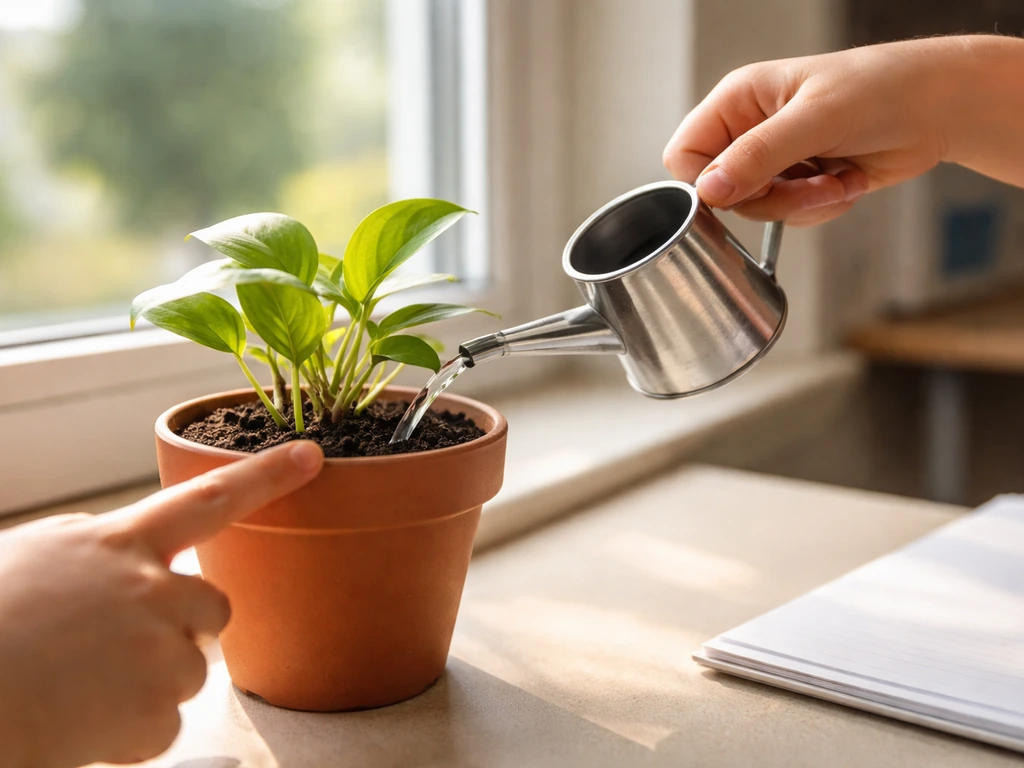
The biggest killer of classroom plants is not underwatering. It is overwatering by well-meaning helpers who water on a fixed schedule regardless of whether the plant actually needs it. Classrooms also go unattended for two- to three-day weekends, school breaks, and snow days. This means you want drought-tolerant plants that store water in their leaves or roots, have thick waxy foliage, or simply slow down gracefully when dry rather than wilting and dying. Every plant on this list fits that profile. Set a simple rule: check the soil before watering. If it feels damp more than an inch down, skip it.
Best classroom plants for low light
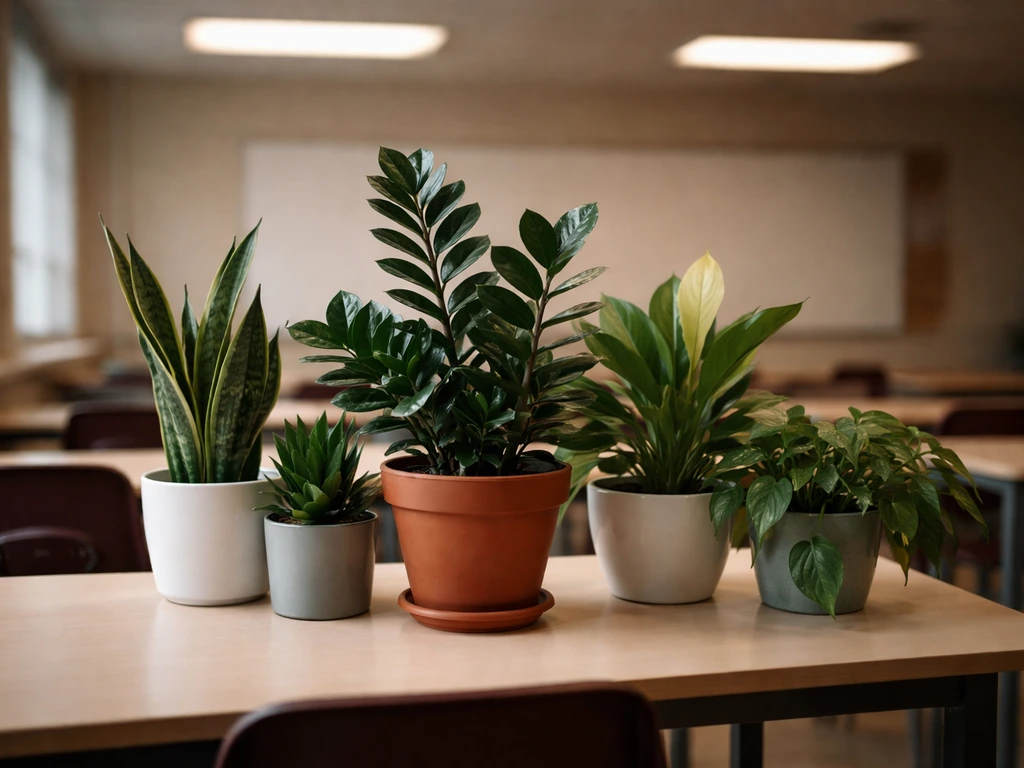
These five plants are the most reliable choices for classrooms with limited natural light. They all handle fluorescent lighting, irregular watering, and temperature fluctuations with minimal drama.
ZZ plant (Zamioculcas zamiifolia)
The ZZ plant is arguably the most forgiving plant you can put in a classroom. It tolerates low light including fluorescent-only rooms, stores water in its thick rhizomes, and can go two to three weeks without water without complaint. Growth does slow in low light, so do not expect rapid changes, but it will stay glossy and green all year. Water it only when the top half of the soil is completely dry. It is practically indestructible and requires almost no attention beyond occasional dusting of its waxy leaves.
Cast iron plant (Aspidistra elatior)
The name tells you everything. Cast iron plants tolerate low light, low humidity, irregular watering, and temperature swings better than almost any other houseplant. Water it only when the top 50 to 75 percent of the soil is dry, which in a typical low-light classroom might mean watering once every two to three weeks. It grows slowly, which is actually a bonus in a space where you do not want roots escaping their pots. It will not win any drama contests, but it will be alive and healthy at the end of the school year no matter what.
Pothos (Epipremnum aureum)
Pothos is probably the most common classroom plant for good reason. It trails beautifully from shelves, tolerates low to moderate light, and bounces back from missed waterings. The leaves will tell you when it is thirsty: they start to look slightly less perky. Water when the top inch of soil is dry. One important note: pothos is toxic to cats and dogs, so if there is ever an animal in your classroom, keep it completely out of reach. It is fine for a standard classroom with only humans.
Snake plant (Sansevieria / Dracaena trifasciata)
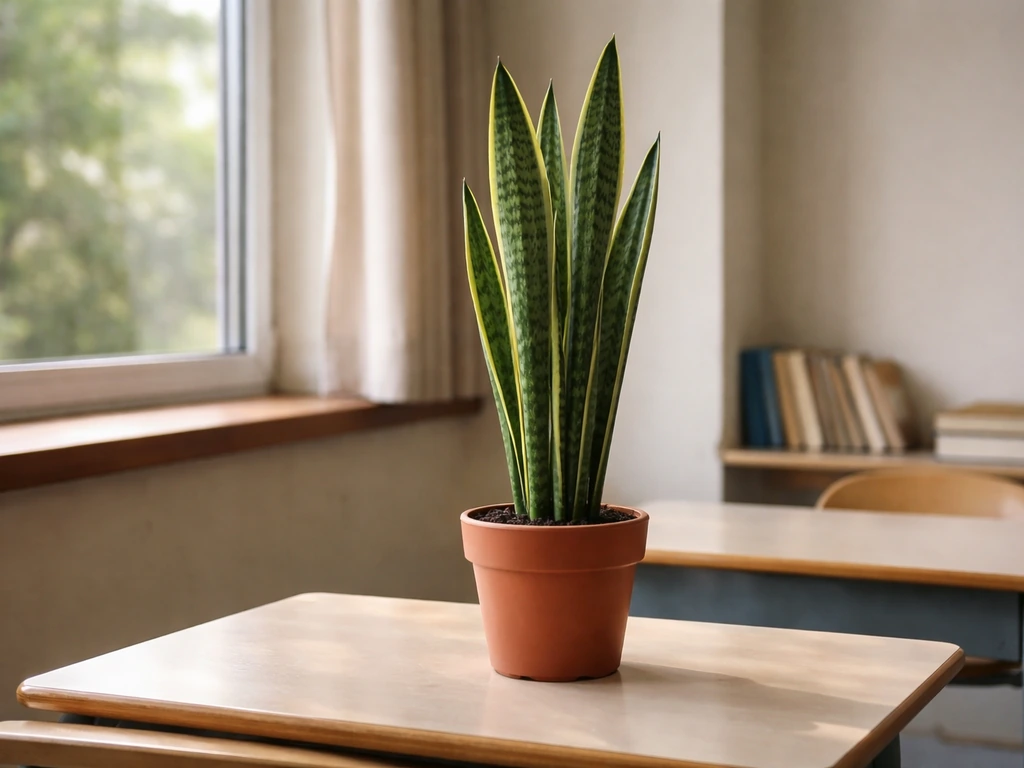
Snake plants are architectural, upright, and virtually impossible to kill. They store water in their thick leaves and handle low light for extended periods. Water sparingly: once every two to three weeks in a low-light room, and even less in winter. The main way people kill snake plants is by overwatering them in poorly draining pots. Use a well-draining mix and a pot with drainage holes. Like pothos, snake plants are toxic to cats and dogs, so keep them elevated in pet-accessible spaces.
Spider plant (Chlorophytum comosum)
Spider plants prefer bright indirect light but are one of the few plants that genuinely survive and stay attractive under standard classroom fluorescent lighting. They store food reserves in their adapted root structures, which is part of why they are so resilient. Let the soil get partially to fully dry between waterings. They produce cascading 'babies' (plantlets) that students love to propagate, making them a natural fit for a science classroom. Avoid wet feet: tip browning is often a sign of overwatering or fluoride in tap water. Let tap water sit overnight before using it, or switch to filtered water.
Best classroom plants for bright light (window plants)
If your classroom has a south- or east-facing window with several hours of natural light daily, you have more options. These plants do best with that extra light and will reward you with faster growth and more visual interest.
Succulents
Succulents like echeveria, haworthia, and aloe are perfect for a bright windowsill. They store water in their leaves and genuinely prefer to be left alone between waterings. Follow a wet-dry cycle: water thoroughly until it drains out the bottom, then wait until the soil is completely dry before watering again. In a bright classroom window, this might mean watering every ten to fourteen days in summer and even less in winter. Haworthia is the one exception that handles lower light fairly well, making it a bridge option if your window is moderate rather than truly bright.
Peace lily (Spathiphyllum)
Peace lilies are beautiful, flower indoors without much fuss, and thrive in bright indirect light. Water when the top inch of the potting mix is dry. They will dramatically droop when they need water, which is actually a helpful visual cue for classroom caretakers. The important caveat: peace lilies contain calcium oxalate crystals and are toxic to both pets and humans. They can cause oral burning, drooling, and vomiting if chewed. In a classroom with young children who put things in their mouths, keep it out of reach or skip it entirely.
African violet (Saintpaulia)
African violets are small, colorful, and bloom repeatedly under bright indirect light, making them satisfying for students to tend. Water from the bottom (set the pot in water for 20 minutes, then drain) to avoid leaf spotting. They like consistent moisture but not soggy roots. They are non-toxic to pets and humans, which is a genuine plus in a classroom setting.
Pet and child safety: what to avoid and what is fine
This is not optional reading if you have young children or animals in your space. Some of the most popular houseplants are genuinely hazardous, and a classroom is not the place to find out the hard way.
| Plant | Toxicity to Pets | Toxicity to Humans (especially kids) | Classroom Verdict |
|---|---|---|---|
| Pothos | Toxic to cats and dogs (vomiting, drooling) | Mild irritant if chewed | Keep elevated; avoid if pets present |
| Snake plant | Toxic to cats and dogs (nausea, vomiting) | Mild irritant | Keep elevated; avoid if pets present |
| Peace lily | Toxic to cats and dogs (oral burning, vomiting) | Toxic to humans: calcium oxalate crystals cause burning, drooling, vomiting | Avoid in classrooms with young children or pets |
| ZZ plant | Toxic if ingested (mild to moderate) | Toxic if ingested; sap can irritate skin | Use caution; keep out of reach |
| Euphorbia / Pencil cactus | Toxic; milky sap very irritating | Milky sap causes burning in mouth, throat, skin, eyes | Avoid entirely in classrooms |
| Dieffenbachia | Toxic; calcium oxalate crystals | Toxic; oral burning and throat swelling risk | Avoid entirely in classrooms |
| Spider plant | Non-toxic | Non-toxic | Excellent safe choice |
| African violet | Non-toxic | Non-toxic | Excellent safe choice |
| Haworthia | Non-toxic | Non-toxic | Excellent safe choice |
| Cast iron plant | Non-toxic | Non-toxic | Excellent safe choice |
The general rule: if your classroom includes very young children (PreK through grade 2) who might mouth plants, stick exclusively to non-toxic options like spider plants, African violets, haworthia, and cast iron plants. For older students where you can confidently say the plant will not be handled or eaten, pothos and snake plants are fine on high shelves. Skip euphorbia-family plants (pencil cactus, milk bush) and dieffenbachia entirely in any classroom setting.
Quick care plans and classroom routines
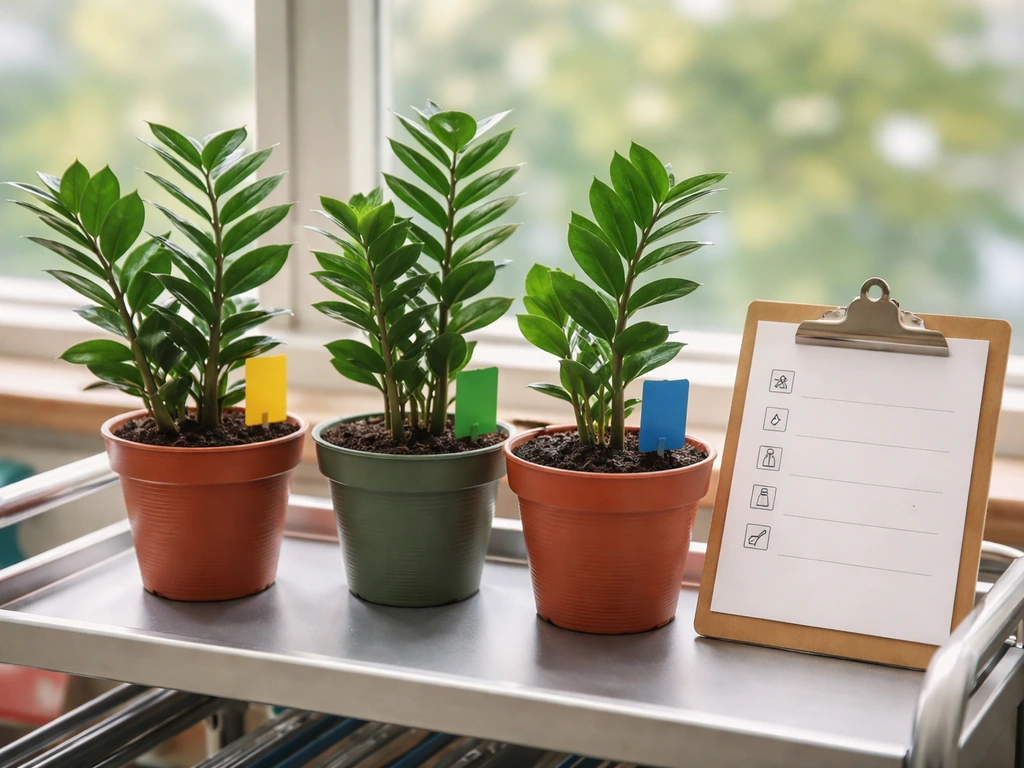
The key to keeping classroom plants alive is building a simple routine that survives student absences, teacher meetings, and three-day weekends. Here is a quick-reference guide for each recommended plant, plus the most common problems you will run into.
| Plant | Light Needs | Water Trigger | Difficulty | Biggest Risk |
|---|---|---|---|---|
| ZZ plant | Low to medium indirect | Water when top 50% of soil is dry | Very easy | Overwatering / root rot |
| Cast iron plant | Low to medium indirect | Water when top 50–75% of soil is dry | Very easy | Direct sun burns leaves |
| Pothos | Low to bright indirect | Water when top inch of soil is dry | Very easy | Toxic if ingested; overwatering |
| Snake plant | Low to bright indirect | Water when top 2 inches are fully dry | Very easy | Overwatering in low light |
| Spider plant | Medium to bright indirect | Water when soil is partially dry | Easy | Tip browning from fluoride or overwatering |
| Succulents | Bright indirect to direct | Full wet-dry cycle; wait until soil is bone dry | Easy | Low light causes leggy growth |
| Peace lily | Medium to bright indirect | Water when top inch is dry; drooping = thirsty | Easy | Toxic to pets and young children |
| African violet | Bright indirect | Bottom-water; keep consistently moist but not soggy | Moderate | Leaf spotting from cold water / overhead watering |
Troubleshooting common classroom plant problems
- Yellowing leaves: almost always overwatering or poor drainage. Check that the pot has drainage holes and reduce watering frequency.
- Leggy, stretched growth (succulents especially): not enough light. Move to a brighter window or supplement with a small grow light positioned 6 to 12 inches above the plant.
- Brown leaf tips on spider plants: fluoride in tap water or inconsistent watering. Let tap water sit overnight before use, or switch to filtered water.
- White cottony masses on stems or in soil: mealybugs. Wipe off with a cotton swab dipped in rubbing alcohol, then treat with insecticidal soap labeled for indoor use. Check around drainage holes too, since mealybugs hide there.
- Fine webbing on leaf undersides with pale yellow stippling: spider mites. Wipe leaves with a damp cloth, isolate the plant, and treat with insecticidal soap. Spider mites thrive in hot, dry conditions, which is common near classroom heating vents in winter.
- Drooping peace lily: usually just thirsty. Water it and it recovers within a few hours. If it does not recover after watering, check for root rot.
- Slow or no growth: normal in low light and winter. Do not fertilize to force growth; wait for brighter months.
Season and location tweaks to keep plants thriving
Indoor plants are not completely insulated from the outside world. Heating systems, shorter days, and summer intensity all affect how your classroom plants behave, even behind glass. Here is how to adjust by season and region.
Winter (roughly October through February)
This is when most classroom plants get into trouble. Heating systems dry out the air significantly, which stresses plants and encourages spider mite infestations. At the same time, light levels drop sharply, especially in northern states. Water less frequently in winter across the board, because lower light means slower growth and slower water uptake. Move light-hungry plants like succulents and African violets as close to the window as possible without letting them touch cold glass. In Minnesota, Wisconsin, or Michigan, a windowsill in January can drop to near-freezing at night: keep plants a few inches back from the glass and check temperatures before leaving for winter break.
Spring and summer (roughly March through August)
Longer days and higher light intensity are generally great for classroom plants, but there are a few things to watch. Direct afternoon sun through south- or west-facing windows can scorch even sun-tolerant plants in June and July, especially in Texas, Arizona, or Florida. Sheer curtains or repositioning plants a foot or two back from the glass fixes this. In summer, growth accelerates and plants need water more frequently. Check the soil more often, especially during heat waves. Before summer break, water plants thoroughly, move them to the brightest spot available, and ask a colleague or student to check them every week or two if possible.
Rotating for even light
Plants grow toward light, and classroom plants on a fixed windowsill will lean toward the window and become lopsided over a few weeks. Rotate pots a quarter turn every week or two to keep growth even. This is a great task for a student helper and takes about thirty seconds.
Regional notes
If you are in a cloudy northern region (think Seattle, Portland, or the Great Lakes area), assume low-light conditions for most of the school year and choose accordingly. ZZ plants, cast iron plants, and spider plants are your most reliable choices. If you are in the Southwest or South, you likely have plenty of light but deal with dry air and warmer indoor temperatures year-round: succulents will thrive, and watering frequency for all plants will be higher than the averages listed here. Coastal regions with high humidity may find that soil stays moist longer, so water even less frequently than the triggers above suggest.
Where to start if you're new to classroom plants
If this is your first classroom plant, start with one ZZ plant or one spider plant. If you want to branch out from classroom-safe starter plants, the best nursery plants to grow offer more variety, but still follow the same basics like matching light and watering.
Both are widely available at garden centers and big-box stores for under ten dollars, both are hard to kill, and both give you the experience of reading a plant's signals before you expand to more options. Once you feel confident with one plant's rhythms, add a second. A classroom can eventually support a small collection on multiple surfaces without much extra effort, but the most important thing early on is building the habit of checking soil moisture before watering.
Do that consistently and almost any plant on this list will thrive.
If you are looking at other constrained indoor spaces beyond classrooms, the same logic applies to dorm rooms and apartments, where light and irregular care schedules create very similar challenges. If you want the best plants to grow in an apartment, look for the same traits: steady light and the ability to handle irregular watering. The plants that work best in classrooms overlap heavily with the best choices for those environments too. If you are also shopping for the best nursery plants to grow for a similar low-maintenance indoor setup, start with hardy options and match them to your light and watering habits best choices.
FAQ
Do classroom plants need drainage holes and saucers?
Use pots with drainage holes and a saucer, then empty any runoff after watering. If your classroom uses decorative planters without drainage, keep the plant in its nursery pot inside and only water the inner pot, otherwise excess water can pool and kill roots within weeks.
How do I know if my classroom is truly low light versus “just dim”?
“Low light” still needs indirect light from workday hours, target roughly near the brightest available area, not a hallway corner. If your office-style lighting makes it hard to read small print comfortably, treat the room as low light and avoid succulents, African violets, and most flowering plants.
What should I do if the soil surface looks dry or wet, but I am unsure?
Skip a fixed calendar. Instead, water only when the plant-specific soil rule is met (for example top half dry for ZZ, top inch dry for pothos). In classrooms, condensation can make the surface look damp, so check one to two inches down before deciding.
Can I fix poor growth by changing pot size or soil?
Yes, and it is often the best way to reduce mistakes. If the potting mix holds moisture too long, plants like snake plants and cast iron plants are more prone to root rot. When in doubt, use a chunky indoor mix (cactus mix plus extra perlite) and avoid oversized pots.
Should classroom plants be fertilized, and how often?
Fertilize lightly, only after the plant shows stable new growth (usually in spring), and at half strength. In classrooms with fluorescent light and irregular care, heavy feeding can cause salt buildup and crispy leaf tips, especially on pothos and spider plants.
My spider plant has brown tips. What is the likely cause?
For spider plants, browning tips can come from overwatering, fluoride or mineral buildup, and low humidity. If you see tip browning without soggy soil, switch to filtered or dechlorinated water (let tap water sit is helpful for chlorine, but minerals still build), and flush the potting mix occasionally.
How should I adjust watering schedules around weekends and school breaks?
Aim for a gentle, consistent check during weeks when students are present. After long weekends or snow days, recheck soil before the usual next watering, since dryness can reset the schedule. Also avoid watering right before you leave for a break, unless the plant’s rule says it is due.
What temperature or draft issues should I watch for?
Most of the listed plants handle temperature swings better than delicate flowering plants, but avoid drafts from HVAC vents and cold windows at night. In winter, keep plants a few inches back from cold glass and move them if the window area gets near-freezing overnight.
How often should I rotate pots so they do not get lopsided?
Rotate pots about a quarter turn every one to two weeks for plants that lean toward light (commonly spider plants, pothos, succulents). Do not over-rotate daily, because constant movement can stress smaller root systems in low light.
Can students propagate these plants, and how do I keep it classroom-friendly?
Plan for fallen leaves and propagation mess. Spider plant “babies” can be clipped for propagation, but do it in a separate workspace to reduce soil spills. For classrooms, keep extra small starters in labeled cups or small pots so you do not lose track of which plants are already rooted.
What pests are most likely in classrooms, and how can I spot them early?
Most common pests in heated indoor rooms are spider mites and fungus gnats (gnats often point to consistently wet soil). Check leaves weekly under fluorescent light, and if you see webbing or tiny specks, isolate the plant and let the soil dry more between waterings.
How do I tell if my plant is thirsty or overwatered?
If a plant is drooping, first check soil moisture. Drooping from dryness is common with peace lilies (it is a visual cue), but drooping from rot is common with overwatering. When in doubt, pause watering and confirm whether the soil is damp one to two inches down before taking action.
Is repotting or trimming okay during the school year?
Yes, but do it carefully. For pothos, snake plants, and spider plants, use clean scissors and only trim a small amount at first, then let cuts dry briefly. For classroom safety, keep cuttings and propagation water out of reach of pets and small children.
How can I make toxic-but-reliable plants safer if animals are present?
For pet safety, keep any toxic plant entirely out of reach by using high shelves and closed storage, not just “near” the edge. Also be aware that curious pets may knock down trailing plants like pothos and spider plants, so anchor hanging baskets and use sturdy stands.
Next Article
Best Plants to Grow in an Apartment: Easy Picks by Light
Best apartment plants by light level, easy care, pet-safe options, seasonal tips, and fixes for yellowing and overwateri
