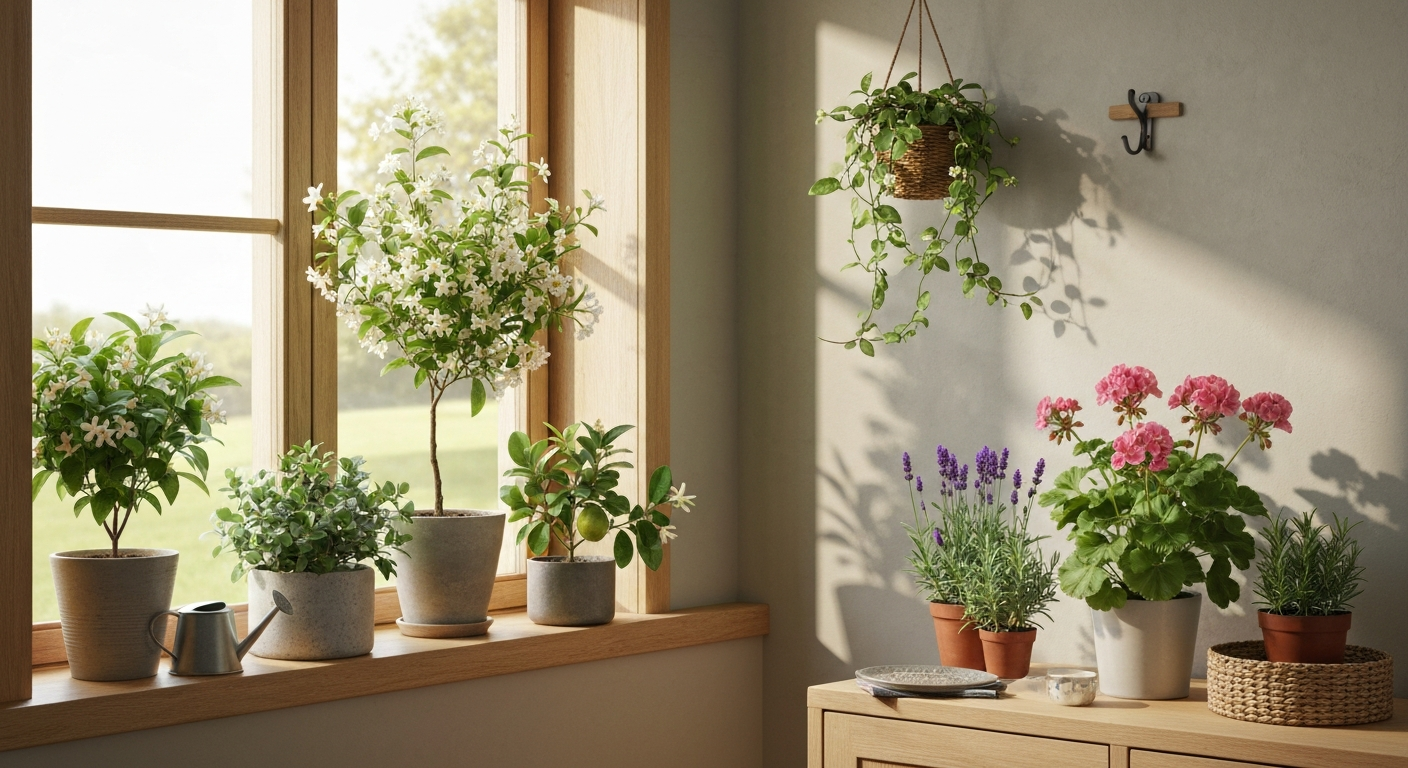
The best pot plants to grow indoors right now depend on three things: how much light your space actually gets, how much time you want to spend on them, and what you want from them, food, fragrance, a dramatic focal point, or just something green that won't die on you. For most beginners, pothos, snake plants, and herbs like chives or thyme are the practical starting point. If you have a bright south- or west-facing window, you can push into basil, lettuce, cherry tomatoes, or even a dwarf citrus. This guide gives you a clear path through all of those options, organized by your actual conditions rather than a generic list.
Best Pot Plants to Grow Indoors: Practical Guide for Apartments
Rachel Hartley
27 Jul 2026
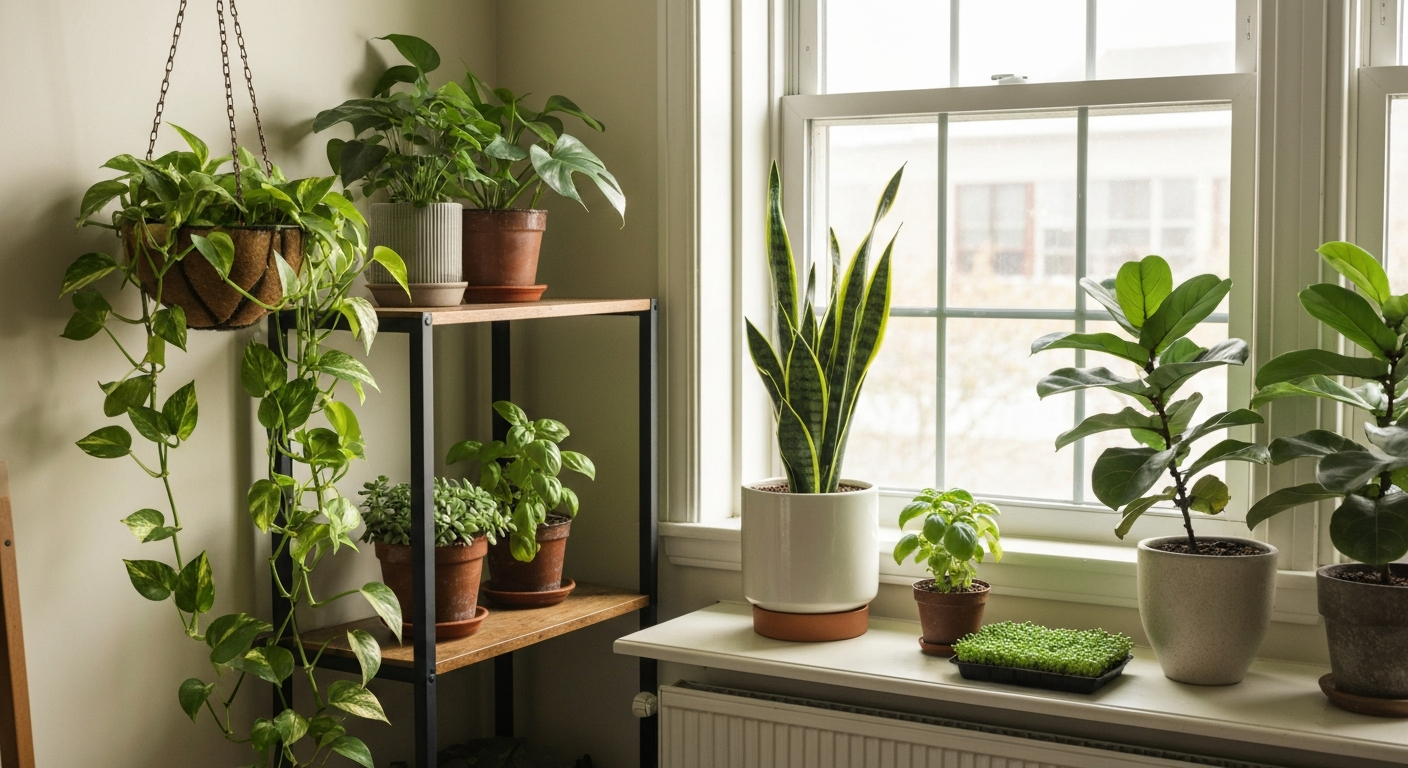
Who this guide is for and how to use it
Whether you're in a studio apartment with one north-facing window, a balcony in Phoenix, or a cold Minnesota house in January, the plants you can realistically grow indoors are different. This guide is written for all of those situations. It covers edible herbs and greens, fragrant houseplants, trailing and hanging plants, tall statement species, and compact options that work on windowsills and shelves. For more on tall varieties, see our guide to the best indoor plants that grow tall (a21b6d4c-354a-4fbf-b78d-c6d9ac734183). For concrete recommendations and varieties, see our guide to the best edible plants to grow indoors. Each section tells you what that plant actually needs, measured light, pot depth, watering rhythm, fertilizer, difficulty level, and what goes wrong. If you want to go deeper on a specific category, the related guides on edible plants, hanging plants, tall indoor plants, mini plants, small plants, and fragrant plants cover those topics in more detail. For very small spaces, see our guide to the best mini plants to grow indoors.
Use the decision flow below to land on the right plant type for your situation, then jump to the plant-level details. If you already know what you want, skip straight to the charts. Seasonally, we're in late July 2026, which is a good window for starting herbs, microgreens, and leafy greens indoors across most of the Northern Hemisphere, and for refreshing tired houseplants before the light starts dropping in September.
Quick decision flow: pick your plant by light, space, and skill
Before you buy anything, measure your light. 'Bright indirect' and 'low light' are not useful without numbers. A phone-based lux meter app is imperfect but far better than guessing. A south-facing window on a clear day typically delivers 5,000–10,000+ lux at the glass, which is 'bright direct.' Two meters back from that same window might be 500–1,000 lux, borderline for most edibles but fine for peace lilies and snake plants. A north window in winter may only give you 200–400 lux, which limits you to very shade-tolerant species. UF/IFAS guidance is direct on this: match your plant to a measured light level, not a vague description.
- Step 1 — Measure your light: use a lux meter or PPFD meter near the window where the plant will live. Do it on a clear day at midday.
- Step 2 — Assess your space: windowsill, shelf, floor, hanging position, or a dedicated grow-light setup?
- Step 3 — Be honest about your schedule: if you travel often or forget to water, skip thirsty plants like basil and lettuce in favor of succulents, snake plants, or ZZ plants.
- Step 4 — Decide what you want from the plant: food/herbs, fragrance, aesthetics, or a mix.
- Step 5 — Check your season and region: winter in northern states means short days and dry heated air, which changes everything about what will thrive without supplemental light.
Light-level quick reference
| Light Level | Approx. Lux at Plant | Approx. PPFD (µmol·m⁻²·s⁻¹) | What grows here |
|---|---|---|---|
| Low (north window, back of room) | 200–500 lux | ~5–25 | Snake plant, ZZ plant, cast iron plant, pothos |
| Medium (east window, 1–2m from bright window) | 500–2,500 lux | ~25–100 | Pothos, peace lily, philodendron, ferns, spider plant |
| Bright indirect (south/west window, filtered) | 2,500–10,000 lux | ~100–300 | Herbs, microgreens, lettuce, monstera, fiddle-leaf fig |
| Bright direct (south window, unobstructed) | 10,000+ lux | 300+ | Succulents, cacti, rosemary, basil, citrus, tomatoes |
| Grow light (full-spectrum LED) | Controllable | 100–400+ (dial in per crop) | Microgreens, lettuce, herbs, seedlings |
Plant selection charts: light, space, and skill level
The table below is your main reference. It covers the most reliably successful indoor pot plants across all goal categories, with the core specs you need to make a decision. Difficulty is scored Easy, Moderate, or Advanced based on five real axes: light tolerance range, water sensitivity, pest susceptibility, growth-rate maintenance demands, and propagation ease, the same framework used by the RHS when characterizing beginner versus advanced plants.
| Plant | Goal | Min. Light (lux) | Pot Depth Needed | Watering Frequency | Difficulty | Best For |
|---|---|---|---|---|---|---|
| Pothos (Epipremnum aureum) | Aesthetics / trailing | 500+ | 4–6 in (10–15 cm) | Every 7–14 days | Easy | Beginners, low-light rooms, hanging |
| Snake plant (Sansevieria trifasciata) | Aesthetics | 500+ | 6–8 in (15–20 cm) | Every 14–21 days | Easy | Forgetful waterers, low light |
| ZZ plant (Zamioculcas zamiifolia) | Aesthetics | 500+ | 6–8 in (15–20 cm) | Every 14–28 days | Easy | Very low light, drought tolerance |
| Spider plant (Chlorophytum comosum) | Aesthetics / hanging | 1,000–5,000 | 4–6 in (10–15 cm) | Every 7–10 days | Easy | Hanging baskets, beginners |
| Peace lily (Spathiphyllum) | Aesthetics / fragrance | 500–2,500 | 6–8 in (15–20 cm) | Every 7–10 days | Easy | Low-light fragrant option |
| Monstera deliciosa | Statement / tall | 2,500–10,000 | 10–14 in (25–35 cm) | Every 7–10 days | Easy–Moderate | Bright rooms, dramatic look |
| Fiddle-leaf fig (Ficus lyrata) | Statement / tall | 5,000–10,000 | 12–16 in (30–40 cm) | Every 7–10 days | Moderate–Advanced | Experienced growers, bright rooms |
| Heartleaf philodendron | Trailing / hanging | 1,000–5,000 | 4–6 in (10–15 cm) | Every 7–14 days | Easy | Hanging, beginners |
| String of pearls (Senecio rowleyanus) | Mini / trailing | 5,000–10,000 (direct) | 4–6 in (10–15 cm) | Every 14–21 days | Moderate | Bright windowsill, hanging |
| Basil (Ocimum basilicum) | Edible herb | 5,000–10,000+ | 4–6 in (10–15 cm) | Every 2–3 days | Moderate | South window or grow light |
| Chives (Allium schoenoprasum) | Edible herb | 3,000–8,000 | 4–6 in (10–15 cm) | Every 3–5 days | Easy | Kitchen windowsill |
| Parsley (Petroselinum crispum) | Edible herb | 3,000–8,000 | 6–8 in (15–20 cm) deep | Every 3–5 days | Easy–Moderate | South/west window |
| Thyme (Thymus vulgaris) | Edible herb | 5,000–10,000+ | 4–6 in (10–15 cm) | Every 5–7 days | Easy | Bright window, drought-tolerant |
| Rosemary (Salvia rosmarinus) | Edible herb / fragrant | 5,000–10,000+ | 6–8 in (15–20 cm) | Every 5–10 days | Moderate | Bright window, Mediterranean feel |
| Lettuce / mixed salad greens | Edible greens | 2,500–8,000 | 4–6 in (10–15 cm) | Every 2–3 days | Easy | Grow light or bright window |
| Microgreens (radish, kale, sunflower) | Edible fast-crop | 2,500–8,000 | 1–2 in (2–5 cm) tray | Daily misting or bottom-watering | Easy | Any setup, 7–21 day harvest |
| Lavender (Lavandula angustifolia) | Fragrant | 5,000–10,000+ | 6–8 in (15–20 cm) | Every 7–14 days | Moderate | Bright south window |
| Jasmine (Jasminum polyanthum) | Fragrant / trailing | 5,000–10,000 | 8–10 in (20–25 cm) | Every 5–7 days | Moderate | Bright window, winter bloomer |
| Echeveria (succulent) | Mini / aesthetics | 5,000–10,000+ (direct) | 3–4 in (8–10 cm) | Every 14–21 days | Easy | Sunny windowsill, beginners |
| Moth orchid (Phalaenopsis) | Fragrant / aesthetics | 2,500–5,000 (indirect) | Bark mix, 4–6 in (10–15 cm) | Every 7–10 days (soak and drain) | Moderate | Bright indirect, long-lasting blooms |
Indoor climate matrix: matching plants to your home environment
Your indoor environment is not just about light. Temperature, humidity, and airflow shape what survives and what struggles. Most heated or air-conditioned homes sit at 35–50% RH in summer and can drop to 10–20% RH in winter when the furnace runs. Many U.S. homes drop to ~10–15% RH in winter, well below the 40–60% preferred by tropical houseplants, so extensions recommend grouping plants, using humidifiers or pebble trays, and anticipating higher watering needs in warm, dry indoor conditions (placeholder). Tropical plants like ferns, orchids, and peace lilies prefer 40–60% RH. Succulents, cacti, and Mediterranean herbs (rosemary, thyme, lavender) are comfortable in dry indoor air. If your home runs dry in winter, group tropical plants together and use a small humidifier or a pebble tray with water under the pot, WSU Extension and NC State both flag this as one of the most overlooked indoor plant killers.
| Plant Category | Preferred Temp (°F) | Preferred RH (%) | Handles Dry Heated Air? | Handles AC (cold drafts)? |
|---|---|---|---|---|
| Tropical foliage (pothos, philodendron, monstera) | 65–85°F | 50–60% | Tolerates, but prefers higher | No — keep away from vents |
| Mediterranean herbs (rosemary, thyme, lavender) | 60–80°F | 30–50% | Yes | Yes, if not frost-level cold |
| Tender herbs (basil, cilantro) | 65–85°F | 40–60% | Struggles below 50% RH | No — cold air slows growth severely |
| Succulents and cacti | 60–85°F | 20–40% | Yes — prefers it | Tolerates, avoids frost |
| Ferns and orchids | 60–80°F | 50–70% | No — needs supplemental humidity | No — keep away from vents |
| Leafy greens and herbs (lettuce, chives) | 60–72°F | 40–60% | Tolerates moderate dryness | Tolerates moderate, dislikes strong drafts |
| Microgreens | 65–75°F | 40–60% | Tolerates moderate dryness | Tolerates moderate |
Container and growing-method options
The container you choose affects watering frequency, root health, and what plants you can realistically keep. Terracotta pots are porous, which means they breathe and dry out faster than plastic or glazed ceramic, Virginia Cooperative Extension is explicit on this point. A basil plant in a small terracotta pot on a sunny windowsill in July might need water every day or two. The same plant in a plastic nursery pot stays moist for three or four days. Neither is wrong, but you have to water according to your container, not a generic schedule.
Hanging baskets open up a whole category of trailing plants, pothos, heartleaf philodendron, string of pearls, spider plants, that look awkward on a shelf but spectacular suspended from a hook near a bright window. The trade-off is that hanging pots dry out faster than floor pots because they get more airflow on all sides. If you're going that route, a self-watering hanging basket or a liner that holds moisture will save you a lot of daily top-ups. You can find much more detail on which plants actually work in those setups in the guide to best hanging plants to grow indoors.
Windowsill growing is the most accessible method for herbs and compact plants. A south- or west-facing windowsill gets enough light for basil, thyme, chives, succulents, and microgreens without any extra equipment. East-facing windowsills work for lettuce, chives, parsley, and most foliage houseplants. North-facing windowsills are really only suitable for shade-tolerant species like pothos or ZZ plants, or for microgreen trays if you add a small grow light overhead.
Grow lights are a genuine game-changer if your apartment doesn't have good natural light. A full-spectrum LED panel running 14–16 hours per day can deliver the PPFD that microgreens (100–300 µmol·m⁻²·s⁻¹) and lettuce (150–300 µmol·m⁻²·s⁻¹) need with no window required at all. Virginia Tech's microgreen production guidance pegs the practical DLI target at 9–16 mol·m⁻²·d⁻¹ depending on species, entry-level grow light strips can hit this easily with a timer. Keep the light 6–12 inches from the plant canopy to avoid stretching (etiolation) in low-light setups.
Simple kratky-style hydroponics (passive, no pump required) works well for lettuce and herbs in a home setting. You fill a container with diluted nutrient solution, suspend the plant's roots just above the solution level, and let the roots grow down as the solution drops. It requires no soil, no drainage holes, and almost no maintenance beyond topping up the solution. For beginners who want to grow edible greens indoors, this is one of the cleanest and lowest-fuss setups available.
Pot sizes, soil mixes, drainage, and basic tools
Pot size needs to match the plant's root system, not your aesthetic preference. Container volume and depth directly affect root development and shoot growth, putting a small plant in an oversized pot doesn't help it; it just increases the risk of waterlogged soil around the roots. For most herbs and leafy greens, 4–6 inches of rooting depth is sufficient, as Colorado State University Extension confirms for lettuce, Asian greens, and compact herbs. Parsley and rosemary have deeper taproots and do better in 6–8 inch deep pots. Monstera, fiddle-leaf fig, and other large statement plants need pots 10–16 inches deep and wide to support their root systems without tipping over.
For soil, the practical baseline for most houseplants and herbs is a soilless potting mix: roughly equal parts peat moss or coir, perlite or vermiculite, and compost. This is what NC State Extension Gardener Handbook Chapter 18 recommends as a standard container mix. See Plants Grown in Containers, NC State Extension Gardener Handbook (Chapter 18) for the official NC State recommendation on standard soilless container mixes and guidelines for adjusting mixes for different plant types Plants Grown in Containers — NC State Extension Gardener Handbook (Chapter 18). It holds enough moisture without waterlogging and drains well enough to prevent root rot. For succulents and cacti, go coarser: a mix that is at least 50% pumice or coarse perlite with a smaller organic fraction. For orchids, skip potting soil entirely and use chunky fir bark mixed with a little sphagnum moss, the American Orchid Society is clear that standard potting mixes will rot orchid roots in weeks.
Every pot needs drainage holes. Without them, excess water sits in the root zone and causes root rot, the single most common reason houseplants die. If you love a decorative pot without drainage, use it as a cachepot: put the plant in a plain nursery pot with drainage and slide it inside the decorative one. Empty the saucer after watering so the pot isn't sitting in standing water.
Basic tool kit for indoor pot gardening
- Watering can with a long narrow spout — directs water at the soil, not the leaves
- Moisture meter or finger-probe habit — more reliable than a watering calendar
- Lux meter or PPFD meter app — know your actual light levels before buying plants
- Spray bottle — for misting humidity-loving plants and wetting microgreen trays
- Potting scoop and a bag of quality perlite — for amending and repotting
- Small trowel and pruning scissors — for harvesting herbs and trimming dead growth
- Drainage saucers for every pot — saves floors and removes temptation to overwater
- Timer for grow lights — consistency matters more than the exact photoperiod
Watering and fertilizing: schedules, rules of thumb, and seasonal adjustments
The most reliable watering rule is soak-and-drain: water thoroughly until it runs out the drainage holes, then let the appropriate portion of the rootzone dry before watering again. University of Maryland Extension and Virginia Cooperative Extension both recommend this over calendar schedules. For most foliage houseplants, let the top 1–2 inches dry out before the next watering. For succulents and cacti, let the entire rootzone go dry. For herbs and greens, keep the top half-inch moist but never waterlogged. Test by pressing a finger into the soil or lifting the pot, a light pot is dry; a heavy pot is still wet.
Expect to water more in summer (faster evaporation, active growth) and less in winter (slow growth, low light). Small pots and terracotta pots dry out faster than large plastic ones. In a heated winter home where RH drops to 10–15%, you may actually need to water foliage plants slightly more often than you'd expect, even though plants are growing slowly, the dry air pulls moisture from the soil. Check the soil rather than following any fixed schedule.
For fertilizing, most edible herbs and houseplants do well on a balanced water-soluble fertilizer (10-10-10 or similar) at half the label-recommended strength, applied every two to four weeks during active growth (typically April through September in Northern Hemisphere conditions). UNH Cooperative Extension recommends this approach for container herbs specifically. Stop or significantly reduce fertilizer from October through February when growth slows and the plant can't process the extra nutrients, unused fertilizer salts accumulate in the soil and can damage roots. For microgreens, don't bother with fertilizer at all: the short 7–21 day harvest cycle means the seed itself and a decent starter mix supply everything the plant needs, as University of Maine Cooperative Extension confirms.
| Plant Type | Watering Frequency (Summer) | Watering Frequency (Winter) | Fertilizer Type | Fertilizer Frequency |
|---|---|---|---|---|
| Edible herbs (basil, chives, parsley) | Every 2–5 days | Every 5–10 days | Balanced 10-10-10 or similar at half strength | Every 2–4 weeks (growing season) |
| Leafy greens / lettuce | Every 2–3 days | Every 3–5 days (or grow-light setup) | Balanced liquid feed at half strength | Every 2–3 weeks |
| Microgreens | Daily misting/bottom water | Daily misting/bottom water | None needed | None |
| Tropical foliage (pothos, philodendron) | Every 7–10 days | Every 10–14 days | Balanced 10-10-10 at half strength | Every 4 weeks (growing season only) |
| Succulents and cacti | Every 14–21 days | Every 21–35 days | Low-nitrogen cactus formula | Once in spring, once in summer |
| Orchids (Phalaenopsis) | Soak every 7–10 days | Soak every 10–14 days | Orchid-specific 20-20-20 at quarter strength | Every 2–3 weeks (growing season) |
| Mediterranean herbs (rosemary, thyme) | Every 5–10 days | Every 10–14 days | Balanced at half strength | Every 4–6 weeks (growing season) |
Propagation, buying tips, and when to start
For most beginners, buying established nursery plants is the fastest and most reliable route. You skip the germination phase, reduce failure risk, and get a harvestable or displayable plant within days. Herbs in 3–4 inch nursery pots are inexpensive and can be divided and repotted immediately into larger containers for much better productivity than a grocery-store windowsill pot. Those supermarket herb pots are usually four to eight seedlings crammed together, splitting them into two or three pots and feeding them is one of the best value moves in indoor gardening.
Growing from seed is rewarding and gives you access to more variety, but it requires more time and patience. Microgreens are the best entry point: sow densely in a shallow tray, keep moist under moderate light, and harvest at 7–21 days. You don't need to propagate anything, just sow a new tray every week or two for a continuous supply. For herbs like basil and parsley, starting from seed in late July (now) gives you harvestable plants by September indoors. Basil germinates in 5–10 days at 70–80°F (21–27°C); parsley is slower at 14–21 days and needs consistent moisture.
Stem cuttings are the easiest propagation method for most tropical houseplants. Pothos, philodendron, and heartleaf philodendron will root in a jar of water on a bright windowsill within 1–3 weeks. Rosemary and thyme can be propagated from 3–4 inch tip cuttings in late summer: strip the lower leaves, dip in rooting hormone, and stick in a moist perlite-coir mix. Expect roots in 3–5 weeks. Snake plants can be propagated from leaf cuttings in water or soil, though it takes 2–4 months, not urgent, but satisfying.
| Plant | Best Start Method | Time to Harvest / Display Ready | Best Starting Window (Northern Hemisphere) |
|---|---|---|---|
| Microgreens | Direct seed in tray | 7–21 days after sowing | Year-round (grow light helps in winter) |
| Lettuce / salad greens | Direct seed or transplant | 30–45 days from seed | Year-round under lights; Sep–Apr at bright windows |
| Basil | Seed or nursery plant | 3–4 weeks from nursery plant; 6–8 weeks from seed | Apr–Aug (grow light extends season) |
| Chives | Seed or nursery clump division | 8–10 weeks from seed; 2–3 weeks from division | Year-round indoors |
| Parsley | Seed or nursery plant | 3–4 weeks from nursery; 8–10 weeks from seed | Mar–Aug |
| Rosemary | Nursery plant or tip cutting | Weeks from nursery; 3–5 weeks cutting to root | Year-round (slow grower) |
| Pothos / philodendron | Stem cutting in water | 1–3 weeks to root, display-ready immediately | Year-round |
| Snake plant | Leaf cutting or division | 2–4 months from cutting | Spring–summer ideal, year-round possible |
| Monstera | Stem cutting with node | 2–6 weeks to root, months to mature | Spring–summer for fastest growth |
| Echeveria (succulent) | Leaf cutting or offset | 2–3 months from leaf cutting | Spring–summer |
| Moth orchid | Buy in bud from nursery | Display-ready immediately; reblooms in 6–12 months | Year-round |
Seasonal timing and regional caveats
Late July is actually one of the better windows for setting up an indoor growing system. Days are long, temperatures are warm, and most plants are in active growth. If you're in the northern U.S. or Canada and you want to keep growing edibles through winter, this is the time to set up a grow-light shelf, not October when you've already lost the light. Start herbs from seed now and they'll be established before the photoperiod drops below 10 hours in September.
Regional variation matters indoors more than most people expect. In humid climates (Gulf Coast, Pacific Northwest in winter), fungal issues like powdery mildew on basil or root rot in succulents are more common, increase airflow and hold back water. In dry climates (Southwest, Rocky Mountain states, northern winters with forced heating), low humidity is the main challenge for tropical plants. If you're in Phoenix in July, your air-conditioned house is both cool and dry, great for most Mediterranean herbs but stressful for ferns and orchids without a humidifier nearby.
If you're moving any houseplants outside for summer, University of Minnesota Extension advises waiting until night temperatures are consistently above 50–60°F (10–16°C) and acclimating plants to higher outdoor light gradually over one to two weeks to prevent sunburn. Bring them back in before nights consistently drop back below that threshold in fall, in most northern states that means early to mid September. Basil is especially cold-sensitive and will blacken and collapse at 45°F (7°C), even if that seems 'not that cold.'
In winter, all Northern Hemisphere indoor growers face the same two challenges: shortened photoperiod and dry heated air. Natural light through south-facing windows drops by 30–50% between June and December. For edibles and light-hungry plants, supplement with a grow light from October onward. For tropical foliage plants, move them closer to the window and reduce watering as growth slows. WSU Extension recommends grouping plants together in winter, the combined transpiration slightly raises local humidity and compensates for dry furnace air.
Regional risk flags by plant type
| Plant / Category | Northern States (USDA Zones 3–5) | Southern States (Zones 8–11) | High-Humidity Climates | Low-Humidity / Arid Climates |
|---|---|---|---|---|
| Basil | Needs grow light Oct–Mar; cold-sensitive near doors | Watch for spider mites in AC-dry air; great summer window | Prone to powdery mildew — boost airflow | May need more frequent watering; grows fast in warm dry heat |
| Rosemary / thyme | Struggles under low winter light without grow light | Thrives indoors year-round with bright window | Root rot risk in humid summer — ensure sharp drainage | Ideal conditions; tolerates dry air well |
| Tropical foliage (pothos, monstera) | Move to brightest window in winter; reduce watering | AC-chilled rooms fine; avoid cold floor-level drafts | Watch for fungus gnats in consistently moist soil | Humidifier or pebble tray recommended; watch for spider mites |
| Succulents / cacti | Fine indoors year-round; reduce water sharply in winter | Great in sunny windows; avoid overwatering in humid rooms | Root rot risk is high — go extra coarse on soil mix, water very sparingly | Ideal conditions; minimal intervention needed |
| Lettuce / salad greens | Grow light essential from Oct–Mar for consistent harvest | Prefers cooler indoor temps (60–68°F) — use AC or cool room | Fungal risk on leaves — avoid overhead watering | Good growth under lights; consistent watering critical |
| Orchids (Phalaenopsis) | Low winter light delays reblooming — supplement if possible | AC rooms suitable; avoid cold drafts | Excellent humidity; watch for bacterial rot in bark if waterlogged | Humidifier strongly recommended; mist roots weekly |
| Microgreens | Year-round under grow light; consistent performance | Year-round under grow light; heat above 80°F slows growth | Mold risk on seeds — ensure airflow and avoid overwatering | Mist more frequently; growth can be fast and vigorous |
Quick pest and maintenance notes
The most common indoor plant pests are fungus gnats (from consistently moist soil, let the top inch dry out to break the cycle), spider mites (from dry air and stressed plants, raise humidity and rinse leaves), and scale or mealybugs (treat with diluted neem oil or rubbing alcohol on a cotton swab). Yellowing leaves are almost always overwatering or insufficient light, not nutrient deficiency, fix those two things first before adding fertilizer. Leggy, stretched growth almost always means the plant needs more light or a closer grow light. Root rot smells musty and the stem base goes soft, remove the plant from its pot, trim dead roots, let them air dry for an hour, and repot into fresh well-draining mix.
For edible plants specifically, pruning is management. Harvest basil by pinching off the top two to three sets of leaves regularly to prevent bolting (going to flower and turning bitter). Cut chives at about one inch above soil level and they'll regrow in two to three weeks. Harvest outer lettuce leaves first and the plant keeps producing for weeks longer than if you cut the whole head. Regular harvesting is not just getting food, it actively keeps the plant productive and compact.
The broader category of indoor pot plants rewards a practical mindset: start with easy wins like pothos or chives, learn what your light levels actually are, and build from there. If you want to explore compact species that do well on shelves and windowsills, the guide to best small plants to grow indoors and the one on best mini plants to grow indoors both go deeper on those choices. If fragrance is your priority, there's a dedicated guide to best smelling plants to grow indoors worth reading alongside this one. See our guide to best smelling plants to grow indoors for plant recommendations and care specifics. The main thing is to start, an imperfect plant in a slightly-wrong pot, actually growing, teaches you far more than a perfect plan that never leaves the browser.
FAQ
What plant‑level data points are essential for each recommended indoor pot plant?
For each species/cultivar include: quantified light needs (PPFD, lux or foot‑candles and descriptive range), ideal photoperiod/DLI where known, pot size/depth (cm/in and minimum volume), recommended substrate type and pH range, watering strategy (soak‑and‑drain, pot‑weight cues, target rootzone moisture % or tension if available), fertilizing schedule and strength (soluble and/or slow‑release recommendations and ppm/EC when possible), difficulty rating based on explicit axes (light tolerance range, water‑sensitivity, pest susceptibility, growth/maintenance load, propagation ease), seasonal timing and regional caveats (cold/hot thresholds, indoor humidity sensitivity, when to move outdoors), and concise troubleshooting (symptom → likely causes → corrective actions). Cite empirical ranges (e.g., 150–300 µmol·m⁻²·s⁻¹ for many leafy greens) rather than only words like “bright”.
Which authoritative source types should be consulted and cited?
Primary sources: land‑grant university extensions (e.g., Penn State, UF/IFAS, NC State, Colorado State, WSU, Virginia Tech, UMN), peer‑reviewed horticulture/controlled‑environment agriculture journals and review articles, professional societies (Royal Horticultural Society, American Orchid Society), Cooperative Extension fact sheets and bulletins, and reputable CEA/microgreen guides. Secondary: extension handbooks, grower protocols from commercial CEA with transparent data, cultivar trial reports, and established seed/propagation protocol documents. Use tiered attribution (university/peer‑reviewed as tier‑1).
What measured light metrics and standards should the guide use to match plants to locations?
Report PPFD (µmol·m⁻²·s⁻¹) where available plus interpreted lux/foot‑candles equivalents and DLI (mol·m⁻²·d⁻¹). Provide mapping between common descriptive categories and measured ranges (e.g., low: <50 µmol·m⁻²·s⁻¹; medium: 50–150; bright indirect: 150–300; direct sun: >300) and cite UF/IFAS/extension guidance recommending measurement with a light meter. Include advice on measuring at pot level and across seasons.
What container and substrate evidence is needed?
Cite extension recommendations for minimum rooting depth (e.g., 10–15 cm / 4–6 in for many herbs and salad greens) and species‑specific pot volumes. Include studies/reviews on container volume and shape effects on root and shoot development to justify larger pots for tall/tap‑rooted species. Provide substrate recipes from extensions (peat/coir + perlite/vermiculite + compost) and specific mixes for succulents, orchids (bark/moss) and microgreen media. Note drainage and porosity implications of container materials (terracotta vs plastic) with extension sources.
What watering and fertilization data should be included and how quantified?
Provide practical rules: soak‑and‑drain method, pot‑weight cues, expected drying intervals by pot size and season, and adjustments for porous pots and coarse mixes. Give fertilization regimens with timings (e.g., slow‑release at planting + water‑soluble at half‑strength every 2–4 weeks during active growth) and edible‑crop specifics (ppm/EC ranges or N‑PK suggestions where available). For microgreens state no fertilizer often required within the short harvest window. Cite university extension watering/fertilizer guides.
What seasonal and regional caveats must be researched?
Gather local climate/indoor environment data: typical indoor winter RH ranges under heating/AC, average daylight hours and seasonal light decline for major regions, safe outdoor‑to‑indoor transition temperature thresholds (e.g., nights consistently >10–16°C / 50–60°F to move out), and advice on acclimation to direct sunlight. Recommend humidity mitigation strategies and note that many tropical species require 40–60% RH. Use regional extension handbooks (PNW, Midwest, Northeast, Southeast) for locale‑specific guidance.
Next Article
Best Smelling Plants to Grow Indoors: Top Picks & Care Guide
Find best-smelling indoor plants, quick picks, care, containers, safety & troubleshooting, tailored by light, space, and季