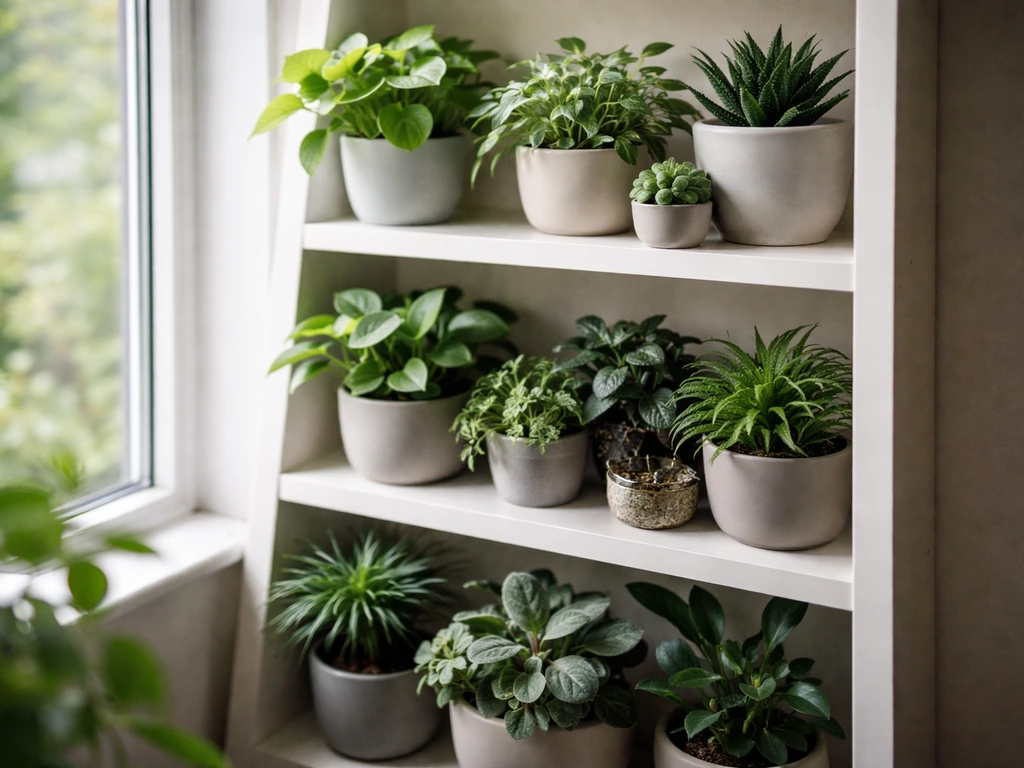
The best hanging plants to grow indoors right now are pothos, tradescantia, string of pearls, heartleaf philodendron, spider plant, and Boston fern, depending on your light and how much attention you can realistically give them. If you have a bright window, add a trailing rosemary or a strawberry plant for something edible. If your apartment is dim and you travel frequently, pothos or spider plant will outlast almost anything else you try. The rest of this guide breaks it down by what you actually need: apartment-friendly picks, edibles, fragrant options, size considerations, and container choices.
Best Hanging Plants to Grow Indoors: Top Picks & Care Guide!
Rachel Hartley
17 Jul 2026
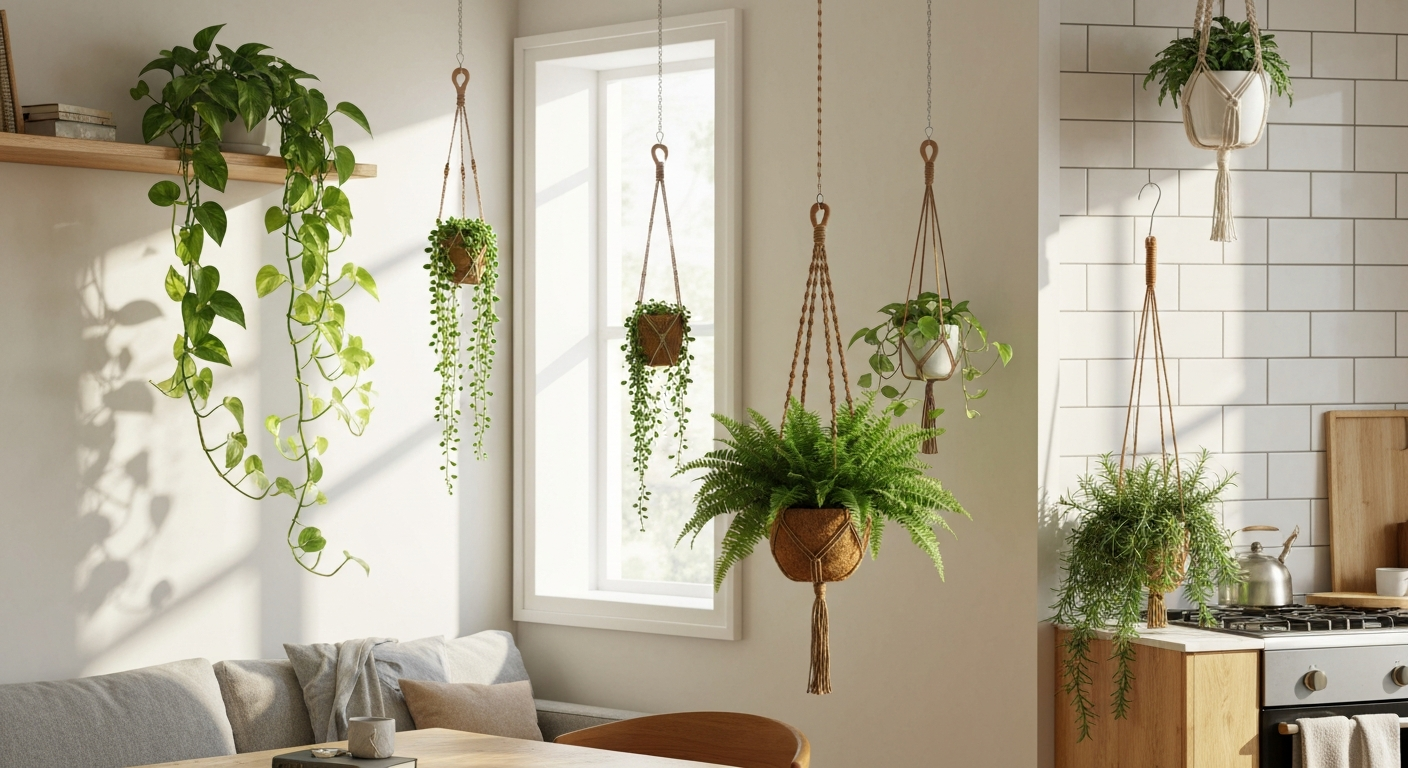
How to use this guide
This guide is built around your specific situation, not a generic top-ten list. Answer these four questions and jump to the section that fits.
| Your situation | Go to this section |
|---|---|
| I live in an apartment and want something I won't kill | Low-maintenance apartment hangers |
| I want to grow food (herbs, fruit) in a hanging basket | Edible hanging plants |
| I want the plant to smell good | Best smelling fragrant hangers |
| I have a tall space or a tiny shelf — which fits? | Tall vs. compact hanging plants |
| I'm not sure which pot or basket to use | Best pot and hanging-basket plants |
A few things that apply across every section: most indoor hanging plants want indirect bright light (a south- or east-facing window within 5 feet is ideal), well-draining potting mix, and drainage holes in the pot. Weight matters too. A fully watered medium-size hanging basket with wet substrate, pot, and plant can reach 15 to 30-plus pounds. Before you put a hook in the ceiling, make sure your anchor is rated for that load, more on that in the containers section.
Top picks at a glance
These 10 plants cover the broadest range of intents and conditions. Every one of them can genuinely thrive indoors in a hanging basket rather than just surviving.
| Plant | Why it earns its spot | Light need | Ideal for |
|---|---|---|---|
| Pothos (Epipremnum aureum) | Trails 6+ feet, tolerates low light and neglect | Low to bright indirect | Beginners, dim apartments |
| Heartleaf philodendron (Philodendron hederaceum) | Similar resilience to pothos, slightly softer leaf texture | Low to medium indirect | Beginners, low-light rooms |
| Spider plant (Chlorophytum comosum) | Produces baby plantlets, extremely forgiving | Medium to bright indirect | Beginners, propagation fans |
| Tradescantia zebrina | Fast-growing, purple-silver foliage, almost indestructible | Medium to bright indirect | Color impact, small spaces |
| String of pearls (Curio rowleyanus) | Dramatic trailing beads, loves dry conditions | Bright indirect to some direct | Sunny windows, low-watering households |
| Boston fern (Nephrolepis exaltata) | Lush, classic cascading fronds | Medium indirect, high humidity | Bathrooms, humid kitchens |
| Burro's tail / Donkey tail (Sedum morganianum) | Chunky trailing succulent, low water needs | Bright indirect | Sunny spots, forgetful waterers |
| Trailing rosemary (Rosmarinus officinalis 'Prostratus') | Edible, fragrant, spills beautifully from a basket | Bright direct or indirect | Edible/fragrant overlap, sunny kitchens |
| Hoya carnosa (wax plant) | Waxy leaves, clusters of intensely scented flowers | Bright indirect | Fragrance seekers, patient growers |
| Alpine/everbearing strawberry (Fragaria vesca) | Produces fruit indoors under grow lights | Bright indirect plus supplemental light | Edible indoor gardens |
Low-maintenance apartment hangers
If you are renting, working long hours, or just new to houseplants, start here. The goal is a plant that looks good even when you are inconsistent with watering and does not shed constantly onto your floors.
The core four for beginners
Pothos (Epipremnum aureum) is the most forgiving trailing plant in existence. It tolerates low PPFD levels that would kill most other species, goes days without water, and tells you clearly when it is thirsty (leaves start to curl slightly). The 'Golden' cultivar is the classic choice; 'Marble Queen' is slightly slower but has striking white variegation. Heartleaf philodendron behaves almost identically and is a good swap if you want a darker green, slightly matte leaf. Spider plant (Chlorophytum comosum) is the one to pick if you also want to propagate. The dangling 'babies' (stolons) root in water in one to two weeks, meaning one plant becomes many within a season. Tradescantia zebrina is the choice for color. The purple and silver stripes look intentional and designed, and the plant grows so fast you will be trimming it back rather than worrying about whether it is alive.
Care routine that actually works
- Water when the top 2 inches of soil are dry — stick your finger in rather than guessing by schedule
- Use a pot with a drainage hole and place a saucer underneath; never let a hanging pot sit in pooled water
- Feed with a balanced liquid fertilizer at half strength once a month during spring and summer; skip autumn and winter
- Wipe leaves with a damp cloth every few weeks to remove dust, which genuinely reduces photosynthesis and invites spider mites
- Rotate the basket a quarter turn each week so all sides get equal light exposure
Alternate picks if you want something different
String of pearls (Curio rowleyanus) is worth trying once you have kept something alive for six months. It needs more light than pothos but far less water, which suits people who forget to water more than people who overwater. English ivy (Hedera helix) looks classic but can be aggressive with pests indoors and is toxic to pets, so factor that in. Lipstick plant (Aeschynanthus radicans) is a step up in difficulty but rewards you with tubular red flowers that emerge from dark calyces, genuinely impressive in a hanging basket near a bright window.
Quick troubleshooting
The most common problem with apartment hangers is root rot from overwatering, not underwatering. If the lower stems are mushy and the soil smells sour, trim the rotted roots, repot into fresh dry mix, and water much less frequently. Spider mites are the second most common issue. They show up as tiny webbing on the undersides of leaves, usually when the air is dry. A strong shower spray, followed by weekly wipes with insecticidal soap solution, handles most infestations. Houseplant Problems (UC Statewide IPM Program, UC ANR) provides authoritative IPM diagnosis and practical non‑chemical control steps for mealybugs, spider mites, scale, fungus gnats, and general indoor plant sanitation. For mealybugs (white cottony clusters at leaf joints), dab individual insects with a cotton swab dipped in 70% isopropyl alcohol, then apply neem oil as a follow-up spray. Fungus gnats come from consistently wet topsoil. Let the surface dry completely between waterings and they largely disappear.
Edible hanging plants
Hanging edibles are genuinely productive indoors if you match them to the right light. The honest caveat: most fruiting crops (tomatoes, full-size peppers) need more light than a typical indoor window delivers without supplemental grow lights. Herbs and alpine strawberries are more realistic. If you are also thinking about what else to grow indoors for food, dedicated edible indoor plants deserve their own exploration alongside hanging options. For a focused list and care tips, see best edible plants to grow indoors.
Herbs that trail well in baskets
Trailing rosemary (Rosmarinus officinalis 'Prostratus', also listed under Salvia rosmarinus 'Prostratus') is the most useful edible hanger for a sunny kitchen window. It drapes attractively, smells incredible, and you can snip sprigs directly onto food. It needs at least 4 to 6 hours of direct or very bright indirect light. A south-facing window in July is ideal. In lower light, a 6500K grow light running 14 to 16 hours a day will substitute. Thyme (Thymus vulgaris) and creeping thyme (Thymus serpyllum) also cascade from baskets, tolerate dry spells better than most herbs, and produce a tidy silvery mound. Mint (Mentha spp.) trails aggressively and smells good, but it needs consistent moisture and spreads roots fast, so use a pot large enough to contain it.
Small fruiting varieties worth trying
Alpine strawberries (Fragaria vesca) are the realistic fruiting choice for indoors. They are smaller than garden strawberries, produce fruit nearly year-round under adequate light, and do not need as many pollinators since many cultivars are self-fertile. The cultivar 'Alexandria' is widely available, compact, and runnerless, which keeps it tidy in a hanging basket. Aim for a PPFD of around 200 to 300 µmol/m²/s at the canopy using a full-spectrum LED grow light. A single plant will not feed you, but two or three 8-inch baskets together will produce a small handful of berries a week. For tomatoes, cherry varieties like 'Tumbling Tom Red' were bred specifically for hanging baskets. Indoors they need a very bright south-facing window or dedicated grow lights, plus weekly feeding with a high-potassium liquid fertilizer once flowers appear.
Edible hanger care notes
Edible plants in hanging baskets dry out faster than floor-standing pots because air circulates around them on all sides. Penn State Extension research on container vegetables recommends combining a slow-release granular fertilizer at planting with weekly liquid soluble feeding during the growing season. For herbs, a half-strength balanced liquid fertilizer weekly is plenty. For fruiting crops, switch to a higher-potassium formula once the plant starts flowering to support fruit set. Use a free-draining potting mix rather than heavy garden soil. Drainage matters even more in baskets because waterlogged mix in a confined hanging container collapses air pockets fast, cutting off root oxygen.
Best smelling fragrant indoor hanging plants
Fragrance is one of the most underused reasons to hang a plant indoors. At nose height, a scented trailing plant perfumes a room in a way that a floor pot simply cannot. The key is choosing species that actually bloom reliably indoors, not just ones that smell great in theory.
Top scented species for hanging baskets
Hoya carnosa is the standout. The clusters of star-shaped, waxy flowers (called umbels) have a heavy, sweet fragrance that intensifies at night. The plant itself is a slow grower, but once it flowers, it does so from the same spurs (peduncles) year after year, so never cut spent flower stalks. It needs bright indirect light and should be kept slightly pot-bound to encourage blooming. Hoya 'Krimson Queen' and 'Krimson Princess' add pink-and-cream variegation while keeping the same fragrance. Jasmine (Jasminum polyanthum) is a faster payoff for fragrance. It blooms heavily in late winter through spring and trails willingly. It needs a cool rest period in autumn (ideally dropping to around 50 to 55°F / 10 to 13°C at night) to set buds for the next season. A cool spare room or a spot near an uninsulated window works. Trailing rosemary, mentioned in the edibles section, earns its place here too. The scent when you brush the foliage is immediate and clean, and the lavender-blue flowers add a bonus fragrance note in late winter.
Where scented hangers thrive best
- Hoya carnosa: bright indirect light, east or west window, temperatures above 60°F (15°C), allow soil to dry between waterings
- Jasmine (J. polyanthum): bright light with some direct sun, cool nights in autumn for bud set, regular moisture during active growth
- Trailing rosemary: maximum sun available, well-draining gritty mix, low humidity preferred
- Scented geraniums (Pelargonium graveolens and related): bright indirect to direct light, dry between waterings, foliage releases fragrance on touch
Scented geraniums are worth a mention specifically for apartment growers. The foliage smells of rose, lemon, mint, or nutmeg depending on the cultivar (try 'Attar of Roses', 'Mabel Grey' for lemon, or 'Chocolate Mint'). They trail softly from baskets, tolerate the dry indoor air that most apartments have, and do not need the cool nights that jasmine requires. If you are interested in plants that complement or compete on indoor scent, fragrant indoor plants more broadly are worth exploring as a companion topic. For more options and scent profiles, see our guide to the best smelling plants to grow indoors.
Tall vs. compact hanging plants
Hanging plants affect the vertical feel of a room more than almost any other placement choice. A long-trailing pothos from a high shelf can cascade 4 to 6 feet, making a ceiling feel intentional. A compact mounding plant in a 6-inch basket suits a small shelf or bathroom corner. Matching the plant to the available drop distance matters.
Long-trailing and tall growers
Pothos and heartleaf philodendron both trail to impressive lengths, up to 6 to 8 feet indoors over a couple of years if you let them run. String of pearls (Curio rowleyanus) trails 1.5 to 3 feet and looks spectacular from a high-mounted ceiling hook, with the pearl-like beads catching light. Wax begonia (Begonia boliviensis and trailing hybrids) creates a long arching waterfall of flowers in a bright spot. Burro's tail (Sedum morganianum) builds slowly but eventually produces stems 2 to 3 feet long, each densely packed with plump blue-green leaves. Handle it gently because the leaves detach easily. If you want height through vertical structure rather than trailing, tall indoor plants are a separate but related consideration worth exploring alongside hanging options.
Compact and mini varieties for small spaces
For a bathroom shelf, a kitchen window, or any space where a 3-foot trail would be impractical, go compact. Tradescantia fluminensis 'Quicksilver' stays neat even with light trimming and fits happily in a 4-inch basket. Miniature African violets (Saintpaulia miniature hybrids) are technically not trailers but grow as tight mounds that look beautiful in small ceramic hanging pots in bright indirect light. For a broader list of compact options, see our guide to the best small plants to grow indoors. String of turtles (Peperomia prostrata) is a genuine mini choice with tiny turtle-shell-patterned leaves on delicate stems. It stays under 12 inches, needs moderate indirect light, and is slow enough to hold its shape without constant trimming. Small and mini indoor plants more broadly share many of the same container and light considerations as compact hanging varieties, so the two categories overlap more than they seem. Trimming is the main maintenance task for compact hangers. Pinch or cut stems back by a third every couple of months to keep the shape dense rather than sparse and leggy.
Space-saving tips
- Use adjustable-length macramé hangers to control the drop distance without changing the ceiling hook
- Group two or three small 4-inch baskets on a single ceiling hook using a multi-arm hanger bracket — it looks intentional and saves ceiling real estate
- Hang near a corner to use vertical space that is otherwise dead in a room
- For short trailing plants on shelves, use a pot clip that hooks over the shelf edge rather than a ceiling hook
Best pot and hanging-basket plants by container type
The container you choose affects both how well the plant grows and whether it is safe to hang in your space. Weight is the critical variable most people skip until something goes wrong.
Container types and what they suit
| Container type | Weight when wet | Best plants | Notes |
|---|---|---|---|
| Plastic hanging pot with saucer (6–8 in) | 3–6 lb | Pothos, tradescantia, spider plant | Lightest option, good for renters with drywall ceilings |
| Coco-liner wire basket (10–12 in) | 12–20 lb | Boston fern, jasmine, trailing begonia | Dries quickly, good for humid-loving plants; needs frequent watering |
| Terracotta hanging pot (6 in) | 5–9 lb | String of pearls, burro's tail, rosemary | Heavy for its size but excellent drainage and breathability for succulents/herbs |
| Fabric grow bag with hanger (8 in) | 4–8 lb | Alpine strawberry, mint, thyme | Air-prunes roots well; dries fast so suits edibles that need consistent moisture checks |
| Ceramic glazed pot with chain (6 in) | 6–12 lb | Hoya, peperomia, mini violets | Decorative, retains moisture longer; check that chain hardware is load-rated |
Anchor and hardware selection
A fully watered medium hanging basket can easily reach 15 to 30 pounds when you include the wet substrate, pot, and plant together. That means your ceiling anchor needs to be selected accordingly, not just grabbed from whatever is on the hardware shelf. For drywall ceilings, toggle bolts (butterfly anchors) are the reliable standard. Hilti and similar manufacturers publish load ratings per anchor model. For a 25-pound basket, use an anchor rated for at least 50 pounds to build in a proper safety margin. Always aim to hit a ceiling joist with a lag screw if you can locate one; a joist-mounted hook rated at 50 pounds will hold far more reliably than even a well-installed toggle anchor in drywall. In UK homes with plaster-and-lath ceilings, check with a structural survey before loading anything above 10 kilograms. For apartment renters worried about ceiling damage, an over-door or tension-rod plant hanger shelf is a no-drill alternative that works well for plants under 5 pounds.
Matching plants to pot types
Succulents and Mediterranean herbs (rosemary, thyme) do best in terracotta or unglazed ceramic because the porous walls wick away excess moisture. Tropical foliage plants (pothos, philodendron, hoya) are more tolerant and do well in plastic or glazed ceramic as long as drainage holes are present. Ferns and jasmine are the thirstiest group and benefit from a coco-liner basket that holds some moisture while still draining, or a glazed pot large enough to hold a moisture-retaining peat-free potting mix. Edible herbs in fabric grow bags dry out quickly, which is actually ideal for woody herbs but requires daily checking for leafy herbs like basil in summer. The broader topic of which pot plants thrive indoors, including pot material and sizing across all indoor plant types, covers much of the same ground for non-hanging varieties. For a broader overview, see our guide to the best pot plants to grow indoors.
Propagating your hanging plants
Most trailing indoor plants propagate so easily that you will have more plants than you know what to do with within a year. Pothos, philodendron, tradescantia, and spider plant all root from stem cuttings in water at room temperature within one to three weeks. Cut a 4- to 6-inch stem just below a node (the bump where a leaf attaches), remove the lower leaves, and place in a glass of water in bright indirect light. Change the water every few days. Once roots reach about an inch, pot into moist potting mix.
For succulents like burro's tail or string of pearls, leaf or stem cuttings root better in dry propagation mix (50% perlite, 50% cactus mix) rather than water. Let the cut end callus for 24 to 48 hours before laying it on the surface of the mix. Do not bury it; just let it sit on top and mist lightly every couple of days. For hoya, take a stem cutting with two to three nodes, let it dry briefly, then root in moist perlite with bottom heat if possible. Jasmine roots best from semi-hardwood cuttings taken in late summer, treated with a light dusting of rooting hormone powder, and placed in a free-draining cutting mix. Most species-level propagation works best in spring and early summer when growth hormones are most active, though tropical houseplants like pothos propagate year-round in a warm apartment.
Light mapping: finding the right spot before you hang
One of the most useful things you can do before buying any hanging plant is measure or estimate the light at your intended hanging position. Plants describe their light needs in lux, foot-candles, or PPFD (photosynthetic photon flux density, measured in µmol/m²/s). In practical terms: a south-facing window in direct summer sun might deliver 10,000 to 50,000 lux at the glass. Two feet back from that window, you are typically looking at 1,000 to 5,000 lux. A north-facing room away from any window might drop to 200 to 500 lux, which is genuinely only suitable for pothos and heartleaf philodendron among this list.
Purdue Extension research on daily light integral (DLI) is useful here: edible crops like herbs need a DLI of roughly 12 to 20+ mol/m²/day to produce well, which a typical indoor window rarely delivers in winter at northern latitudes. A south window in July in Texas delivers plenty. A west window in January in Minnesota will not. If your space is marginal for edibles or flowering plants, a full-spectrum LED grow light positioned 6 to 12 inches above the basket and running 14 to 16 hours per day can supply the PPFD that the window cannot, typically targeting 150 to 300 µmol/m²/s for herbs and strawberries.
Seasonal timing and regional adjustments
In the northern hemisphere in mid-July (which is right now as this is written), most indoor plants are actively growing and can handle repotting, propagation, and heavy feeding. This is the best time to start a new hanging basket from scratch because cuttings root fast in the warmth and plants settle quickly. If you are in Australia or New Zealand, it is mid-winter, which means growth has slowed. Stick to the low-maintenance species (pothos, spider plant, philodendron) and hold off on repotting or propagating tender species until September.
For US growers in USDA zones 6 to 9, hanging baskets started outdoors in spring can be brought inside in September before the first frost. Boston fern, trailing rosemary, and scented geraniums overwinter beautifully indoors after a summer outside. In zones 3 to 5, do this earlier, by mid-August at the latest. In the UK, most of the fragrant and edible hangers (rosemary, trailing geraniums) come inside by October. In year-round warm climates (zones 10 to 13, Florida, coastal California, Hawaii), indoor hanging plants often do better near open windows or on screened porches than fully inside during summer, where heat builds up without air circulation.
Where to buy and what to check before purchasing
For US buyers, reputable online nurseries such as Logee's, Steve's Leaves (for hoya), and Josh's Frogs (for unusual tropicals) ship well-rooted plants in protective packaging. Local independent nurseries beat big-box stores for plant health almost every time, but big-box stores are fine for common species like pothos and spider plant if you inspect them carefully before buying. When buying online, check USDA APHIS regulations for any live plants shipped from international sources. Importing bare-root plants or soil-attached plants from outside the US requires phytosanitary certification and may be subject to inspection at US Plant Inspection Stations. Never bring live plant material into the country in checked luggage without declaring it and checking current APHIS requirements, because prohibited plant material can be confiscated and fines apply.
For UK buyers, DEFRA's plant health rules require that commercial plant imports from outside Great Britain carry phytosanitary certificates. Passenger imports of plants are subject to strict controls. Stick to UK-based nurseries for most common hanging basket plants. The RHS Plant Finder is an excellent free resource for locating UK nurseries that stock specific cultivars like Hoya 'Krimson Queen' or Fragaria vesca 'Alexandria'. When inspecting any plant before purchase, check the undersides of leaves for mealybugs or spider mites, and check the soil surface for fungus gnat larvae (tiny white worms). A clean plant from a reputable source saves months of pest management.
FAQ
What primary botanical databases should I consult to verify scientific names and native ranges for recommended hanging-plant species?
Use Plants of the World Online (Royal Botanic Gardens, Kew) for accepted scientific names, synonyms, descriptions and global distributions. For U.S.-centric verification (nativity, legal/weed status), consult the USDA PLANTS Database. These ensure correct taxonomy and avoid recommending misnamed or invasive taxa.
Which horticultural/extension sources provide reliable, actionable care recommendations (light, soil, hardiness, watering, fertilizer) for indoor hanging plants?
Royal Horticultural Society (RHS) plant profiles are excellent for care conditions and cultivar notes (UK). For North American, use land-grant extension resources (Penn State Extension, Oregon State, Utah State, Purdue Extension, Virginia Tech) for container/edible specifics, seed-starting and watering/fertilizer schedules. These give evidence-based container sizing, media and feeding protocols.
What scientific resources explain indoor light metrics (lux, foot‑candles, PPFD, DLI) so I can give precise light recommendations?
Purdue Extension’s 'Measuring Daily Light Integral' primer and Virginia Tech/other extension publications on PPFD/DLI for herbs and leafy crops provide conversions and target ranges. Use these to translate window orientations into practical DLI/PPFD bands and to recommend when supplemental grow lighting is required.
Where should I source authoritative pest and disease troubleshooting and non‑chemical IPM protocols for houseplants?
University of California IPM (UC ANR / UC IPM) provides species‑agnostic houseplant pest/disease diagnoses and stepwise IPM controls (cultural, mechanical, biological, labeled chemical options). Use UC IPM for mealybugs, spider mites, scale and fungus gnat guidance and safe home remedies.
Which propagation references should I cite for reliable step‑by‑step cutting, division and seed protocols tailored to apartment growers?
Hartmann & Kester’s 'Plant Propagation: Principles and Practices' is the authoritative textbook for methods, seasonal timing and hormone use. Complement it with practical extension primers (Oregon State, other land‑grant extensions) for low‑tech, high‑success techniques appropriate for beginners and limited-space growers.
What resources are needed to give safe, code‑aware advice on hanging hardware, anchor selection and weight calculations?
Use manufacturer technical datasheets and load tables from reputable anchor makers (Hilti, Simpson Strong‑Tie) to compute safe anchor choices for drywall, hollow-wall and masonry. Combine those specs with practical weight estimates for wet hanging baskets (15–30+ lb typical) and include safety factors to prevent failures in apartment ceilings and walls.
Next Article
Best Small Plants to Grow Indoors: Easy Picks by Light
Compact indoor plants by light, easy care and watering, plus herbs and shelf picks for every season