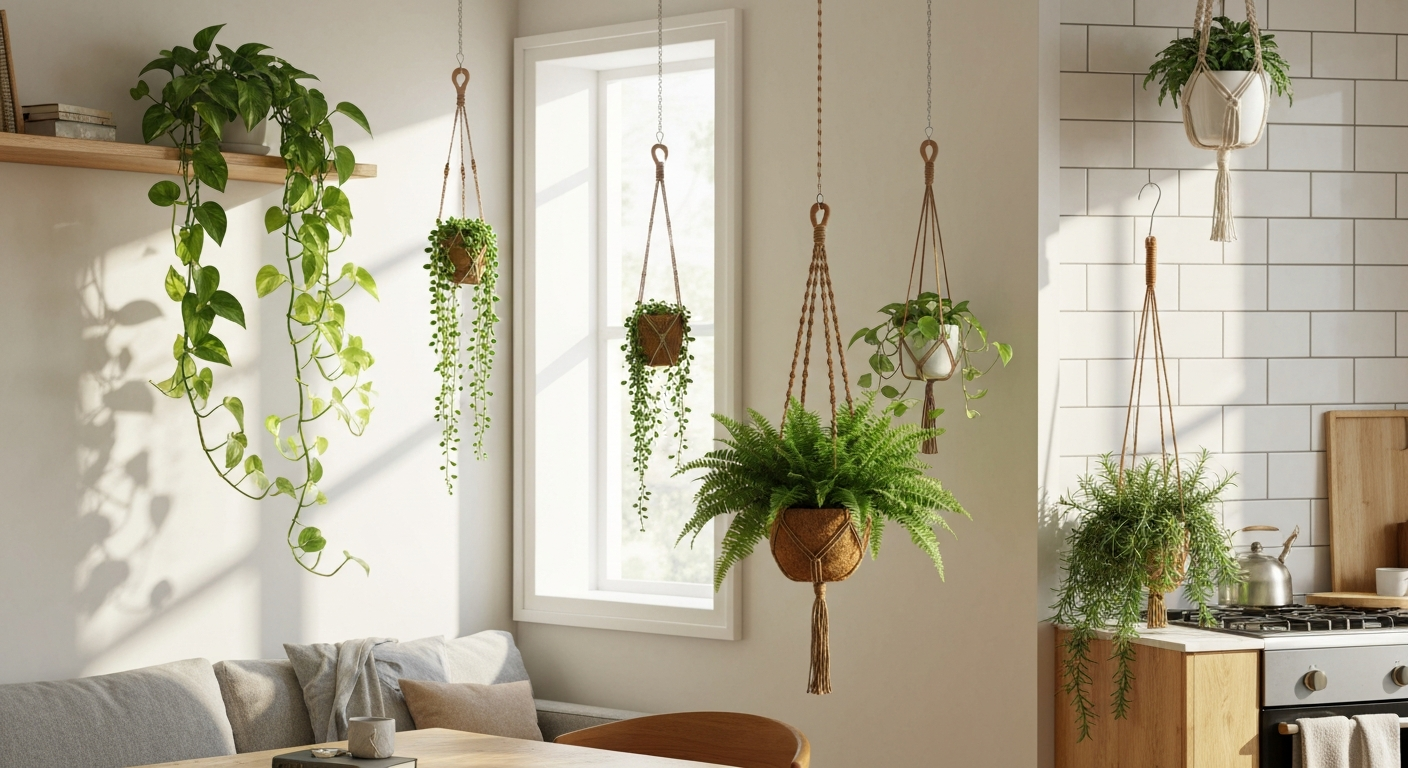
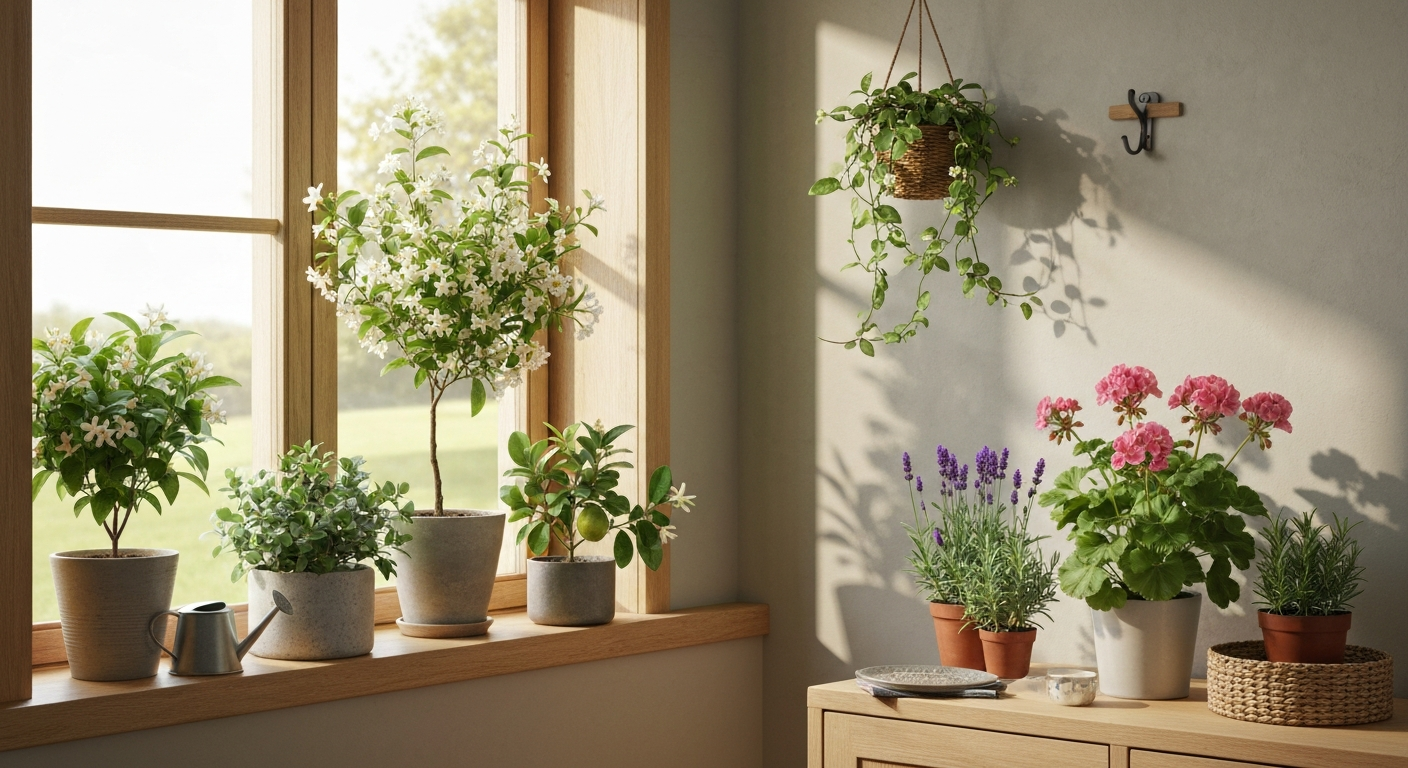
The best smelling plants to grow indoors are Jasminum polyanthum (many-flowered jasmine), Gardenia jasminoides, scented Pelargoniums, compact citrus like Improved Meyer lemon, Hoya carnosa, lavender, paperwhite narcissus, and fragrant herbs like rosemary, lemon balm, and mint. Each one reliably fills a room with scent, but each has a different set of requirements around light, humidity, and timing. Pick by matching the plant to your actual window, season, and purpose rather than just what smells best in a nursery.
Best Smelling Plants to Grow Indoors: Top Picks & Care Guide
Rachel Hartley
22 Jul 2026
Top picks at a glance
Before getting into how to choose and care for these plants, here is a fast reference table covering the most reliably fragrant indoor options, what they actually smell like, how demanding they are, and where they fit best in a home.
| Plant | Scent Profile | Difficulty | Best Use |
|---|---|---|---|
| Jasminum polyanthum | Sweet, heady floral; strongest at night | Moderate | Hanging basket, trellis, winter bloomer |
| Gardenia jasminoides | Rich, creamy, sweet; classic gardenia | Challenging | Statement pot, humid bathroom, shelves |
| Scented Pelargonium (e.g., 'Attar of Roses') | Rose, lemon, mint, or citronella from leaves | Easy | Windowsill, small pots, year-round foliage scent |
| Improved Meyer Lemon / Calamondin | Bright citrus blossom; fruity when ripening | Moderate | Sunny window, balcony, edible + ornamental |
| Hoya carnosa / H. lacunosa | Sweet, vanilla-honey; strongest at dusk | Easy–Moderate | Hanging, shelf trailing, low-maintenance |
| Lavandula angustifolia 'Munstead' | Classic lavender; herbal, floral, calming | Moderate | Sunniest windowsill, small pot, medicinal |
| Paperwhite Narcissus | Intense sweet floral, slightly musky | Very Easy | Forced bulb, winter gift, short-term display |
| Rosemary (Salvia rosmarinus) | Pine, camphor, lemon when brushed | Easy | Kitchen windowsill, edible herb, compact pot |
| Lemon Balm (Melissa officinalis) | Fresh citrus from leaves | Very Easy | Small pot, herbal tea, beginner-friendly |
| Stephanotis floribunda | Sweet, waxy tropical floral | Challenging | Trellis, bright room, special project |
How to choose the right fragrant plant for your space
The biggest mistake people make is buying a plant because it smells amazing in the store, then watching it sit scentless (or dead) on a dim shelf at home. Fragrance from flowers is almost always tied to light and temperature. Fragrance from foliage is more forgiving. Before you buy anything, answer four questions: How much light do you actually have? What season is it? How much space do you have? And do you want something edible, medicinal, or purely ornamental?
Light: the single biggest factor
Flowering fragrant plants like jasmine, gardenia, citrus, and lavender all need serious light. A south- or west-facing window in full sun gives you roughly 3,000 to 5,000 lux at the windowsill and maybe 1,000 lux two feet back. Bright indirect is not enough for citrus or gardenia to bloom. University of Missouri Extension recommends 14 to 18 hours under full-spectrum artificial lights for flowering and fruiting houseplants when natural light is insufficient, and that advice holds here. University of Missouri Extension advises providing about 10–12 hours of full‑spectrum supplemental lighting for flowering/fruiting houseplants and increasing humidity (humidifiers or pebble trays) for moisture‑sensitive species like gardenia and stephanotis Bringing sunshine indoors — University of Missouri Extension (supplemental lighting & humidity tips). If you are in a northern apartment between October and March, budget for a decent LED grow light. A cheap lux meter app on your phone can map your windows in about five minutes and save you a lot of wasted effort and dead plants.
Season and climate matter more than most guides admit
Many of these plants use temperature cues to bloom. Jasminum polyanthum sets buds when it gets cool nights in autumn, which is why it reliably blooms indoors in winter when you bring it in from a cool porch or garage in September. Citrus and jasmine both benefit from a 10-degree Fahrenheit day-to-night temperature differential to initiate and sustain flowering. If your apartment is a steady 72 degrees year-round, expect less flower production. Paperwhites and hyacinths are the exception: they bloom on a fast, predictable schedule regardless of where you live, making them the best scented options for a guaranteed winter fragrance hit. Hyacinths need 10 to 12 weeks of pre-chilling (around 40 degrees Fahrenheit); paperwhites flower 3 to 5 weeks after potting with no chill at all.
Space: matching plant form to your setup
Trailing or vining plants like jasmine, Hoya, and Stephanotis work naturally in hanging baskets or trained on a small trellis in a pot. Compact upright plants like lavender, scented Pelargonium, and herbs suit windowsill pots. Citrus trees and tall rosemary need floor space and a pot with at least a 12-inch diameter. If space is your primary constraint, scented Pelargoniums and Hoyas are the most flexible: they smell great, stay manageable, and tolerate some crowding.
Purpose: edible vs. ornamental vs. both
Fragrant herbs (rosemary, lemon balm, mint, basil) do double duty as scent and kitchen ingredients. Citrus gives you flowers, scent, and edible fruit if you meet its light needs. Purely ornamental picks like gardenia and Stephanotis give you the most dramatic flower scent but nothing to cook with. Scented Pelargoniums are edible in small amounts and are used in baking and teas, though they are mostly grown for foliage fragrance. Decide upfront whether fragrance alone justifies the care, or whether you want edible or medicinal returns too.
Decision checklist and quick planting plans
Use this checklist before buying. It takes two minutes and will save you from the wrong plant in the wrong spot.
- Measure your light: use a lux app at midday. Under 1,000 lux? Stick to foliage-scented plants (Pelargonium, Hoya, herbs). Over 3,000 lux for 4+ hours? You can attempt jasmine, citrus, or gardenia.
- Check your season: buying in autumn or winter? Paperwhites, forced hyacinths, and jasmine are timely. Spring and summer? Citrus, Pelargonium, and herbs thrive.
- Measure your space: windowsill under 12 inches deep? Go for mini Pelargoniums, lavender 'Munstead', small herb pots, or paperwhites. Have a hanging hook or high shelf? Hoya or jasmine on a small trellis.
- Set your humidity baseline: dry heated apartment in winter? Avoid gardenia and Stephanotis until you add a humidifier or pebble tray. They drop buds in dry air.
- Decide on purpose: want something you can eat or use in tea? Start with rosemary, lemon balm, or scented Pelargonium. Want pure flower impact? Gardenia or jasmine.
- Commit to your light supplement: if you cannot give citrus or lavender 6+ hours of direct sun, budget for an LED panel before buying.
Quick planting plans by space and goal
| Space / Goal | Best Pick(s) | Container Type | Notes |
|---|---|---|---|
| Kitchen windowsill, edible + scent | Rosemary, Lemon Balm, Lemon Thyme | 4–6 inch pots | Brush leaves when passing for instant scent |
| Small living room, low maintenance | Hoya carnosa, Scented Pelargonium | 6 inch pot or hanging | Tolerates some neglect; scent builds over time |
| Bright sunny window, ornamental | Lavender 'Munstead', Jasmine on trellis | 8–10 inch pot | Needs the sunniest spot you have |
| Winter fragrance, quick win | Paperwhite Narcissus, Forced Hyacinth | Shallow bowl or pot | Start paperwhites in October for December bloom |
| Balcony or bright patio door, statement plant | Improved Meyer Lemon, Calamondin | 12–14 inch pot | Bring in before first frost; feed monthly in growing season |
| Hanging basket, trailing scent | Hoya lacunosa, Jasmine (trained) | 8 inch hanging pot | Jasmine needs bright spot; Hoya tolerates lower light |
| Humid bathroom with bright light | Gardenia jasminoides 'August Beauty' | 8 inch ceramic pot | Steam from showers helps with humidity needs |
| Mini shelf or desk | Scented Pelargonium 'Attar of Roses' | 4 inch pot | Pinch regularly to keep compact and release scent |
Best edible fragrant herbs for indoors
Fragrant herbs are the easiest entry point for anyone new to growing scented plants indoors. They smell great from the foliage alone (no flowers required), they are useful in the kitchen, and they stay compact enough for a windowsill. The key constraint for all of them is light: herbs want at least 4 to 6 hours of direct sun, or equivalent supplemental lighting.
| Herb | Light Need | Watering | Scent Intensity | Best Bloom / Harvest Timing |
|---|---|---|---|---|
| Rosemary (Salvia rosmarinus) | Full sun, 6+ hrs or LED supplement | Low; let soil dry between waterings | High (pine, camphor, lemon when brushed) | Foliage year-round; small flowers in late winter–spring |
| Lemon Balm (Melissa officinalis) | Bright indirect to partial sun | Moderate; keep evenly moist | Medium-High (fresh citrus from leaves) | Foliage year-round; harvest before flowering for strongest scent |
| Mint (Mentha spp.) | Bright indirect light | High; keep consistently moist | High (varies by cultivar: spearmint, peppermint, chocolate) | Foliage year-round; pinch flowers to keep leaf production strong |
| Fragrant Basil (Ocimum spp.) | Full sun, 6+ hrs | Moderate; water when top inch is dry | High (sweet, spicy, clove or citrus depending on variety) | Summer grower; scent peaks before flowering—pinch flower buds off |
| Lemon Thyme (Thymus citriodorus) | Full sun, 5–6 hrs | Low; well-draining soil, drought-tolerant | Medium (bright lemon-herb) | Foliage year-round; tiny flowers in spring-summer attract pollinators |
One practical note on mint: it spreads aggressively if you let it, so keep it in its own pot rather than mixing it with other herbs. Pinch mint and basil flowers off as soon as you see them. Once they bolt to seed, the leaf fragrance drops noticeably. For anyone exploring edible indoor plants more broadly, herbs like these overlap nicely with a full kitchen garden setup indoors.
Best hanging fragrant plants for limited space
Hanging plants solve a real problem in small apartments: they use vertical space that would otherwise go to waste, and several of the best-scented species naturally want to trail or vine. See our guide to the best hanging plants to grow indoors for options, care tips, and space-saving recommendations. Hoyas in particular are low-drama, high-reward plants that many apartment growers overlook in favor of flashier options.
| Plant | Light Need | Watering | Scent Intensity | Bloom / Scent Timing |
|---|---|---|---|---|
| Hoya carnosa (Wax Plant) | Bright indirect; tolerates lower light but blooms less | Low-Moderate; let dry between waterings | High when blooming (sweet, honey-vanilla) | Spring–summer; evening and night scent is strongest |
| Hoya lacunosa | Bright indirect | Low-Moderate | High (sweet, cinnamon-vanilla at dusk) | Can bloom multiple times per year indoors |
| Jasminum polyanthum (trained/trailing) | Bright light, some direct sun preferred | Moderate; keep moist during growth | Very High (heady sweet floral) | Winter to early spring indoors; scent strongest at night |
| Stephanotis floribunda | Bright indirect to some direct sun | Moderate; even moisture, no soggy roots | Very High (sweet, waxy tropical) | Spring–summer; needs stable temps and humidity |
Hoya is probably my top recommendation for anyone who wants low-effort hanging fragrance. A mature H. carnosa or H. lacunosa in a bright spot will bloom repeatedly and fill a room in the evening. The main rule: never remove old flower spurs after blooming. New flowers emerge from the same spurs year after year. If you cut them off, you reset the plant's flowering timeline by a year or more. Jasmine makes a superb hanging or trailing option too, but it is thirstier and needs much more light than Hoya. If you are already thinking about which plants to grow in baskets or from hooks, the hanging plant category is worth exploring in its own right.
Best tall indoor fragrance producers
Tall fragrant plants make a real statement and can anchor a room with scent as well as structure. The trade-off is that they need more pot volume, more light, and more maintenance than smaller plants. If you have the floor space and a genuinely bright room, these are worth the investment.
| Plant | Light Need | Watering | Scent Intensity | Bloom / Scent Timing |
|---|---|---|---|---|
| Improved Meyer Lemon | Full sun, 6+ hrs direct or strong LED | Moderate; consistent moisture, good drainage | Very High (sweet citrus blossom + fruit) | Can bloom multiple times/year; heaviest in spring and fall indoors |
| Calamondin Orange | Full sun, 6+ hrs | Moderate; even moisture | High (sweet citrus flowers, tart fragrant fruit) | Nearly year-round bloomer in bright conditions |
| Gardenia jasminoides 'August Beauty' | Bright indirect to filtered sun | Moderate-High; keep moist, high humidity | Very High (rich, sweet, creamy classic gardenia) | Late spring–summer; can rebloom in fall in stable conditions |
| Rosemary (mature standard form) | Full sun, 6+ hrs | Low; excellent drainage required | High (herbal, pine, camphor) | Foliage year-round; blue flowers in late winter–spring |
Citrus in containers is genuinely one of the best indoor fragrance experiences you can have. Growing Citrus in Pots, UC ANR (UC Master Gardeners) notes dwarf/compact citrus such as Improved Meyer lemon, calamondin, and kumquat are reliably fragrant container plants but require high light (≥6 hours direct sun or equivalent supplemental PPFD) and regular balanced feeding to set and sustain blooms Growing Citrus in Pots — UC ANR (UC Master Gardeners). A Meyer lemon in full bloom smells extraordinary and delivers edible fruit on top of that. The honest caveat: it needs more light than most apartments can provide without a supplemental LED setup. If you are in a sun-belt city (Phoenix, Miami, Los Angeles) with a south-facing window or balcony, this is easy. If you are in Chicago or Seattle in January, plan on a decent grow light. Gardenia is the other high-reward option here, but it will drop buds the moment it gets too dry, too warm at night, or hit with a cold draft. It rewards patience and consistency more than any other plant on this list. Tall plants like these fit naturally alongside other indoor plants that grow tall, and they share many of the same care principles around light and pot size.
Best mini and small-pot fragrant plants
Not everyone has a bright floor corner or a deep windowsill. If your growing space is genuinely small, these plants deliver real fragrance in a 4 to 6 inch pot on a desk, shelf, or narrow windowsill ledge. For more container-friendly options and detailed recommendations, see our roundup of the best pot plants to grow indoors.
| Plant | Light Need | Watering | Scent Intensity | Bloom / Scent Timing |
|---|---|---|---|---|
| Scented Pelargonium 'Attar of Roses' | Bright indirect to partial direct sun | Low-Moderate; let dry slightly between waterings | High (from foliage; rose-geranium scent) | Foliage fragrance year-round; small flowers spring–summer |
| Scented Pelargonium 'Lemon' types | Bright indirect to partial sun | Low-Moderate | High (sharp lemon from leaves) | Foliage year-round |
| Lavandula angustifolia 'Hidcote' | Full sun, 5–6 hrs minimum | Low; fast-draining mix essential | Very High (classic lavender spike) | Late spring–summer; cut after flowering for rebloom attempt |
| Paperwhite Narcissus | Bright light during forcing; low after | Low (bulb forcing in water/pebbles is simplest) | Very High (intense sweet floral) | 3–5 weeks from potting; autumn start for winter bloom |
| Forced Hyacinth | Bright light once sprouted | Low-Moderate during forcing | Very High (intense sweet spring floral) | Needs 10–12 weeks pre-chill; blooms 2–3 weeks after chilling ends |
| Lemon Thyme (Thymus citriodorus) | Full sun or 5+ hrs bright light | Low; drought-tolerant once established | Medium (lemon-herb from foliage) | Foliage year-round; pinch to keep compact |
Scented Pelargoniums are my go-to recommendation for anyone who wants reliable fragrance in a small pot with minimal drama. They do not need to flower to smell incredible, you control the intensity by touching or brushing the leaves, and they stay compact if you pinch them regularly. 'Attar of Roses' in particular smells so much like actual rose that people do a double-take when they find out it is a geranium. Paperwhites and forced hyacinths are the best option when you want a dramatic scent event on a defined timeline, like filling a room for a holiday gathering. They are not long-term houseplants, but for a 3 to 4 week perfume performance, nothing else is as reliable or easy. These smaller, desk-friendly plants pair well with other mini plants grown indoors, sharing similar container requirements. For more options that fit similar container requirements, see a guide to the best mini plants to grow indoors. For more ideas on compact options, see a short guide to the best small plants to grow indoors.
Versatile pot-friendly fragrant plants for edible, medicinal, and ornamental use
Some fragrant plants justify their pot space three times over because they are useful in multiple ways. If you are limited on space or attention, these multi-purpose options give you the best return per square foot of windowsill.
| Plant | Light | Watering | Scent Intensity | Uses | Bloom / Timing |
|---|---|---|---|---|---|
| Improved Meyer Lemon | Full sun, 6+ hrs | Moderate, consistent | Very High (flowers + fruit) | Edible fruit, ornamental, fragrant display | Multiple bloom cycles; heaviest spring and fall |
| Rosemary | Full sun, 6 hrs+ | Low; let dry between waterings | High (foliage, year-round) | Culinary herb, medicinal, ornamental, bee-friendly | Foliage always; flowers late winter–spring |
| Scented Pelargonium 'Attar of Roses' | Bright indirect+ | Low-Moderate | High (foliage) | Edible in baking, teas; medicinal; ornamental | Foliage year-round; flowers spring–summer |
| Lemon Balm | Bright indirect to partial sun | Moderate | High (foliage) | Culinary (teas, salads), medicinal (calming), ornamental | Foliage year-round; harvest before flowering |
| Lavender 'Munstead' | Full sun, 5–6 hrs | Low; excellent drainage | Very High (flowers + dried) | Medicinal, culinary garnish, aromatherapy, ornamental | Flowers late spring–summer; dry spikes for off-season scent |
| Calamondin Orange | Full sun, 6 hrs | Moderate | High (flowers + fruit) | Edible (tart fruit for cooking), ornamental, fragrant | Near year-round bloomer in good light |
Rosemary deserves special mention here. A well-grown rosemary plant on a sunny kitchen windowsill might be the most practical fragrant plant on this entire list. It smells incredible, you use it in cooking constantly, it tolerates some drought, and if you get a good cultivar like 'Arp' or 'Tuscan Blue', it will stay compact and healthy for years in a pot. The only thing that kills indoor rosemary reliably is overwatering and poor drainage. Get that right and it is nearly indestructible. Lavender shares those care priorities and gives you dried flowers that hold scent for months after cutting, making it a great option for people who want indoor fragrance without a living plant in every room. Both plants also fit naturally into pot-based indoor growing setups alongside other container-friendly species.
Care fundamentals and season-aware timing
Soil and containers
The right potting mix matters more than most people realize. A reliable all-purpose fragrant-plant mix is one part peat or coir, one part perlite, and one part composted bark or fine compost. This gives drainage without drying out too fast. Gardenias are the exception: they need an ericaceous (acidic) mix at roughly pH 5.0 to 6.5. Using a standard potting mix for gardenia leads to yellowing leaves and bud drop within weeks. Pick up an ericaceous mix or add acidifying amendments when potting it. For herbs and lavender, lean heavier on the perlite for faster drainage. Citrus does well in a cactus/citrus blend available at most garden centers, or make your own with extra grit.
Watering and fertilizing
Overwatering is the number one killer of fragrant indoor plants. Jasmine, lavender, rosemary, and scented Pelargoniums all prefer to dry out slightly between waterings. Gardenia and citrus want more consistent moisture but still need drainage holes and freely draining soil. For fertilizing, hold back on high-nitrogen feeds when you want flowers. Excessive nitrogen pushes leafy growth at the expense of blooms and scent. A balanced or slightly phosphorus-heavy feed (like a 5-10-5 or tomato feed) during the growing season supports flowering. Feed citrus with a dedicated citrus fertilizer monthly from spring through early autumn.
Pruning and scent management
Pruning is your main tool for managing both plant shape and scent intensity. Pinching herbs and scented Pelargoniums regularly keeps them compact and constantly producing the fresh new growth that carries the strongest scent. For jasmine, prune hard after flowering to control growth and encourage next year's bud set. Lavender should be cut back after flowering but never into old woody stems, as it does not regenerate from old wood well. Placement also controls scent experience: a fragrant plant near an air vent will disperse scent widely through a room. Near a doorway, it creates a scent experience every time you enter. In a bedroom, evening-scented plants like Hoya and jasmine are well placed; strongly musky scents like paperwhites may be too intense in a small sleeping space for some people.
Bloom windows and regional timing
In Northern states and Canada, the shortest day length and weakest sunlight falls from November through February. This is when supplemental lighting matters most for flowering plants. Jasmine is a counter-seasonal exception: it actually performs best as an indoor winter bloomer precisely because it sets buds in the cool nights of autumn. Bring it in from a porch or cool garage in September and expect flowers from December through February. Citrus in a sunny southern window or under LED lights can bloom in late winter and again in summer. In warmer climates (USDA zones 9 to 11), you have the option of moving plants like gardenia, citrus, and jasmine outdoors for summer, then bringing them in as a fragrant display plant for the cooler months.
Propagation and variety selection
Most of the plants on this list propagate easily from stem cuttings, which means once you have a plant you like, you can make more for free. Scented Pelargoniums root readily in water or moist perlite from 3 to 4 inch tip cuttings taken in spring or summer. Rosemary and lavender take softwood cuttings in early summer; strip the lower leaves, dip in rooting hormone, and stick in a gritty mix. Jasmine and gardenia need semi-hardwood cuttings with rooting hormone and bottom heat (a heat mat at around 70 to 75 degrees Fahrenheit increases success significantly). Hoya propagates from stem cuttings or by layering. Bulbs like paperwhites and hyacinths are always grown from fresh bulbs each season; the forced bulbs can be composted after blooming indoors as reflowering them reliably indoors is not practical.
Variety selection matters a lot for some of these species. With Pelargoniums, 'Attar of Roses' and 'Lady Plymouth' have noticeably stronger and more pleasant scent than generic varieties sold as scented geraniums. For lavender, 'Hidcote' and 'Munstead' are the most compact and fragrant for pot culture. For gardenia, 'August Beauty' and 'Veitchii' are standard indoor performers. Avoid impulse-buying unnamed varieties of any of these plants from discount retailers if scent is your priority.
Safety, allergies, and pet risks
Several fragrant indoor plants are toxic to cats and dogs and need careful placement in pet households. Paperwhite narcissus bulbs and flowers are toxic to cats and dogs if ingested. Gardenia is mildly toxic to pets (causes gastrointestinal upset). Stephanotis can cause digestive issues in animals. Hoya is generally considered non-toxic and is one of the safer choices for pet owners. Rosemary, lemon balm, and most culinary herbs are safe for humans and generally low-risk around pets in normal amounts. Scented Pelargoniums are considered mildly toxic to cats and dogs in larger quantities. If you have cats that chew plants, hang your Hoya or jasmine well out of reach, and avoid paperwhites on accessible surfaces entirely.
Allergy considerations are also real. Paperwhites and hyacinths are among the most intensely scented bulb flowers and can trigger headaches or respiratory irritation in sensitive individuals. Gardenia and jasmine are similarly heady. If anyone in your household is fragrance-sensitive or asthmatic, start with foliage-scented plants like Pelargoniums and herbs, which release scent primarily on contact rather than continuously into the air, then introduce flowering plants cautiously and assess the response.
Troubleshooting: no scent, no flowers, and common problems
Why your plant has no scent
The most common cause of weak or absent scent from flowering plants is insufficient light. Volatile aromatic compounds that create fragrance are produced in higher quantities under strong light. If your jasmine or citrus is sitting in low light, it may survive but produce almost no scent. The second cause is warm, dry winter air. Central heating drops indoor humidity well below what gardenias and Stephanotis need to open and sustain fragrant flowers. Add a pebble tray with water beneath the pot or run a small humidifier nearby. For foliage-scented plants like Pelargonium, simply touch or brush the leaves more frequently. The scent is released mechanically from the leaf glands.
Why your plant is not flowering
- Jasmine not blooming: it likely did not get cool enough nights (below 60°F) in autumn to set buds. Move it outside or to a cool room in September and October.
- Gardenia dropping buds: most often caused by dry air, sudden temperature changes, or a cold draft. Check for heating vents nearby and maintain consistent humidity.
- Citrus not blooming: almost always a light problem. It needs 6+ hours of direct sun or supplemental LED lighting at adequate intensity (aim for 200+ µmol/m²/s at plant level).
- Lavender not blooming: usually insufficient light, overwatering, or heavy soil. Move to the sunniest spot and repot into a gritty, fast-draining mix.
- Hoya not blooming: the plant may be too young (Hoyas can take 2 to 5 years to reach blooming maturity), or old flower spurs may have been removed. Be patient and never cut the spurs.
Common pests and how to handle them
Jasmine and gardenia are magnets for spider mites in dry indoor air. Check the undersides of leaves regularly and treat at the first sign with insecticidal soap or a strong water spray. Citrus indoors commonly gets scale insects and mealybugs; dab with isopropyl alcohol on a cotton swab for small infestations, or use neem oil spray for larger ones. Scented Pelargoniums are relatively pest-resistant. Rosemary and lavender can get root rot if overwatered, which is the main growing failure with these plants indoors. There is no recovery from severe root rot; prevention through proper drainage is the only reliable approach.
Where to go from here
The best starting point depends entirely on your setup. If you have a bright window and want something you can eat as well as smell, start with rosemary or a scented Pelargonium. If you want a dramatic winter fragrance event with minimal effort, order paperwhite bulbs now and pot them up in October. If you have a sunny south-facing room and patience, a Meyer lemon or Gardenia 'August Beauty' will reward you with some of the most extraordinary scent a container plant can produce. Match the plant to your actual conditions first, get the light right, and the fragrance will follow.
FAQ
What are the immediate top indoor plants for strongest, pleasant scent (quick picks with scent profile and difficulty)?
Top immediate picks: Jasminum polyanthum — intense sweet jasmine, best in cool nights; Difficulty: intermediate (needs bright light, training). Gardenia jasminoides (‘August Beauty’, ‘Veitchii’) — heady tropical gardenia, Difficulty: intermediate–advanced (acidic soil, high humidity). Stephanotis floribunda — rich, perfume‑like white blooms, Difficulty: intermediate (vine training, humidity). Hoya spp. (H. carnosa, H. lacunosa) — sweet, often evening fragrance, Difficulty: easy–intermediate (prefers bright indirect light). Dwarf citrus (Improved Meyer lemon, calamondin) — strong floral/citrus blossom aroma, Difficulty: intermediate (high light, feeding). Scented pelargoniums (’Attar of Roses’, lemon types) — scented foliage (rose/lemon/mint), Difficulty: easy. English lavender (’Munstead’, ’Hidcote’) — classic floral/herb scent from flowers, Difficulty: intermediate (very bright light, good drainage). Paperwhite narcissus / forced hyacinth — very strong floral scent on a short forcing schedule, Difficulty: easy.
How should I choose a fragrant indoor plant for my apartment based on light, climate/season, space and purpose?
Decision aids: Light — high/sun (dwarf citrus, lavender, paperwhites), bright indirect (gardenia with supplemental light, jasmine near bright east/west window), low light (some Hoyas, scented pelargoniums tolerate lower midday sun). Climate/season — cool nights in winter encourage jasmines and some jasminoids to bud; gardenias need humidity and steady warmth to keep buds; force bulbs for winter/holiday scent. Space — hanging (Hoya, Stephanotis trained in a basket), tall (jasmine on a trellis, citrus in a large pot), mini/small pots (pelargoniums, dwarf rosemary, paperwhites), balcony/large windows for sun lovers (lavender, citrus). Purpose — edible/culinary (basil, lemon balm, rosemary, dwarf citrus blossoms and fruit), medicinal/tea (lavender, lemon balm), ornamental scent (gardenia, jasmine, hyacinth). Pick plants matching your least limiting resource (light is most critical).
Which fragrant plants are best by category (with quick care icons: Light, Water, Scent intensity, Bloom/timing)?
Edible herbs: Rosemary — Light: bright sun; Water: moderate, drought tolerant; Scent intensity: medium‑high when brushed; Bloom: late spring/summer. Lemon balm — Light: bright indirect; Water: moderate; Scent: medium (leaf); Bloom: summer. Basil (Thai, lemon) — Light: bright sun; Water: moderate; Scent: high (leaf when clipped); Bloom: summer (pinch to prolong foliage). Hanging plants: Hoya spp. — Light: bright indirect; Water: low‑moderate; Scent: medium–high (often evening); Bloom: variable (seasonal/when mature). Stephanotis — Light: bright indirect; Water: moderate; Scent: high; Bloom: spring–summer. Tall fragrance producers: Jasminum polyanthum — Light: bright indirect to sun; Water: moderate; Scent: very high (often winter bloom indoors); Bloom: late winter–spring. Dwarf citrus — Light: full sun (≥6 hrs); Water: moderate (steady); Scent: very high (blossoms); Bloom: spring–summer. Mini/small‑pot friendly: Scented pelargoniums — Light: bright sun; Water: low‑moderate; Scent: medium (foliage); Bloom: spring–fall. Paperwhites/hyacinths (bulbs) — Light: bright indirect; Water: moderate; Scent: very high (short, 3–6 week window); Bloom: forced in weeks after planting. Versatile pot plants: Gardenia jasminoides — Light: bright indirect to filtered sun; Water: moderate (acidic); Scent: very high; Bloom: late spring–summer (indoors may bloom in cooler season). Lavandula angustifolia — Light: full sun; Water: low; Scent: high when flowered; Bloom: late spring–summer (needs high light indoors).
What are the fundamentals to maximize scent and healthy blooms (soil, watering, feeding, pruning, temperature/humidity)?
Soil: use species‑appropriate, free‑draining mixes — herbs/lavender: gritty, well‑drained; gardenia: acidic (pH ≈5–6), organic‑rich mix. Watering: steady but avoid waterlogging — allow top 1–2 cm to dry for many herbs; keep moist but not soggy for gardenia and jasmine during bud set. Fertilizing: balanced low‑to‑moderate N with higher P/K when encouraging blooms; avoid heavy high‑N fertilizers that favor foliage over flowers. Pruning: pinch/trim to encourage branching on herbs and to shape vines; remove spent flowers to redirect energy; light pruning after bloom encourages next flush. Temperature & humidity: many scent producers benefit from modest day/night differentials — jasmines and citrus set buds with slightly cooler nights; gardenia and stephanotis need higher humidity (50–70%) to prevent bud drop — use humidifiers or pebble trays. Light timing: provide adequate light duration — 10–14 h/day with supplemental LEDs for flowering houseplants in low‑light seasons.
How do seasons and regional/indoor timing affect scent and flowering windows?
Season cues: many indoor bloomers follow outdoor seasonal signals — jasmines and citrus respond to cool nights and increased light; bulbs (paperwhite/hyacinth) are forced on a short schedule (3–6 weeks). Regional adjustments: northern apartments often need supplemental lights and longer light hours in winter; southern/warm climates may allow natural bloom with full sun windows. Indoor season tips: move plants to brighter windows in winter, provide humidification when indoor heating dries air, and reduce fertilizer late in year for temperate dormancy for some species. Plan forcing and bloom: pot bulbs 4–6 weeks before desired bloom; start citrus bloom care in late winter to spring; expect gardenias to bloom when humidity and acid soil are stable (often late spring indoors).
What container and soil recommendations improve scent production and health for apartment growers?
Containers: choose pots with good drainage and size matched to root system — slightly root‑bound can encourage flowering in some species (pelargoniums), but avoid extreme crowding for citrus and jasmine. Materials: terracotta for herbs/lavender (good aeration), glazed/insulated pots for moisture‑loving gardenia to retain humidity. Soil mixes: herbs/lavender — 1 part compost/coarse bark : 1 part coir/peat : 1 part perlite/pumice; gardenia — ericaceous mix with added peatmoss or rhododendron mix and slow‑release acid fertilizer. Potting frequency: repot young plants annually or every 2 years; citrus and gardenia into slightly larger pots in spring. Drainage: always use saucers with airflow and avoid standing water to reduce root rot and loss of bloom/scent.
Next Article
Best Hanging Plants to Grow Indoors: Top Picks & Care Guide!
Best hanging plants to grow indoors: low-maintenance, edible, fragrant, tall & mini picks with clear care tips for every