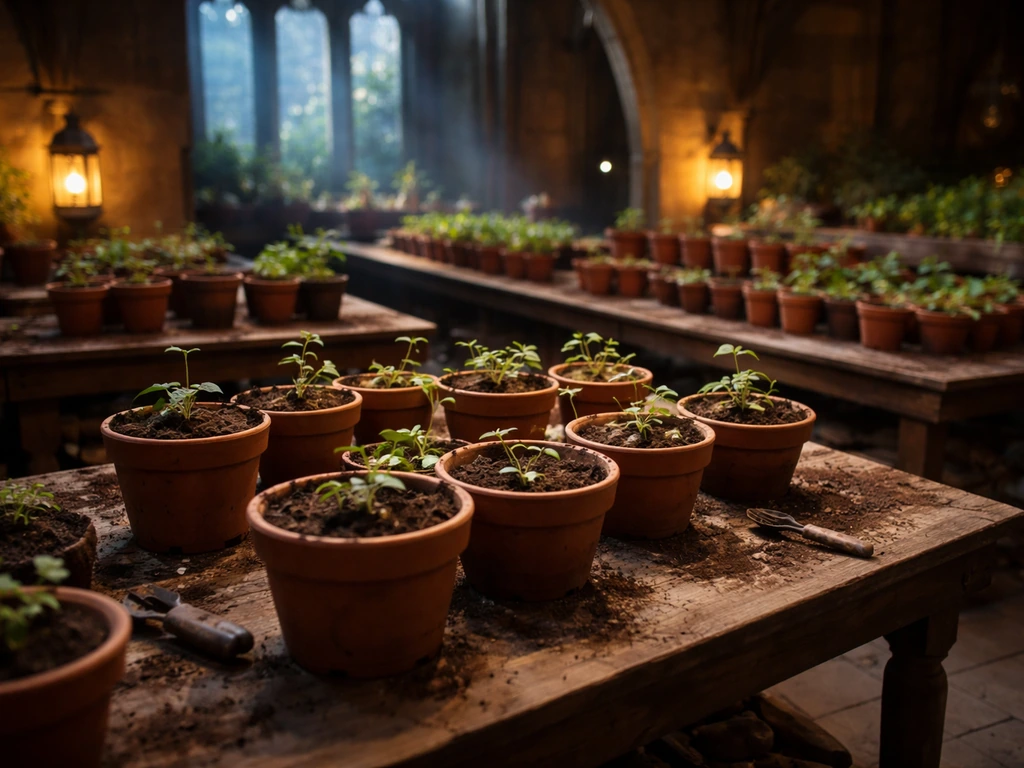
The best all-around plants to grow in Icarus are Soy Beans, Wheat, Corn, and Pumpkins. Soy Beans and Wheat are your fastest crops at 30 minutes baseline, making them ideal for short drops. Corn and Pumpkins take an hour but pay off big in calories and crafting materials. Add in a medicinal row of Aloe Vera and Cabbage, and you have a functional farm that covers food, healing, and basic crafting from a single set of plots.
Icarus Best Plants to Grow: Top Picks by Purpose & Biome
Rachel Hartley
26 Jul 2026
How to use this guide
This guide is written for Icarus players at every experience level, from someone who just dropped into their first open-world mission and spotted a crop plot blueprint, to a seasoned squad leader optimizing a homestead build around a powered hydroponic bay. If you just want to eat and survive, jump straight to the food plants section. If you are gearing up for healing and combat, skip to medicinal plants. If you are deep into crafting and want to run a supply chain, the crafting and utility plants section is where you want to be. The biome and season section will tell you what actually grows where you are dropping, and the playstyle section at the end helps solo players and squads plan their seed budgets and plot layouts differently. One note before we start: Icarus receives weekly updates from RocketWerkz, so specific growth times and seed extractor recipes can shift. All numbers in this guide reflect the current live build as of late July 2026, anchored to the Week 175 patch and its confirmed figures.
Icarus planting fundamentals
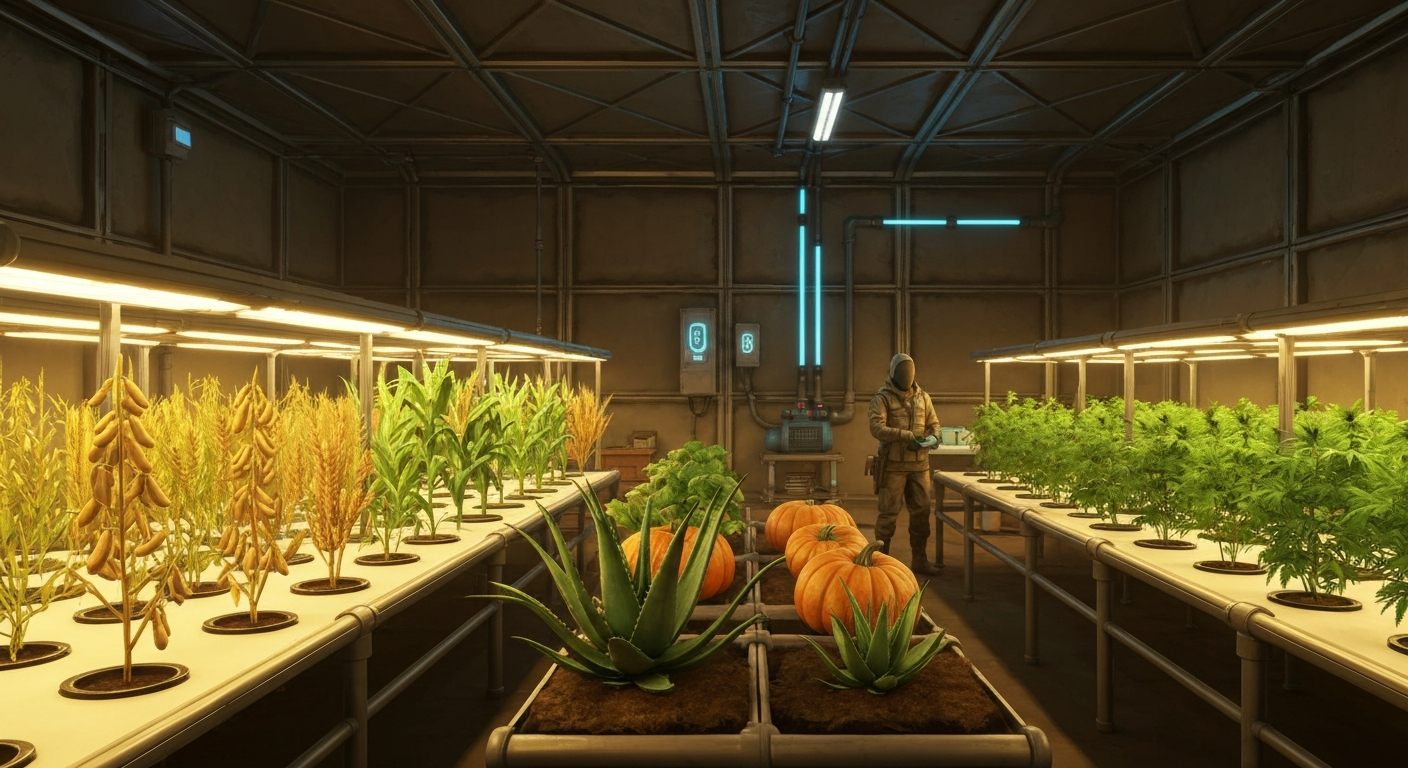
Before you place a single seed, it helps to understand how the farming system actually works. Icarus has four main plot tiers: the Wood Crop Plot (your starting option), the Iron Crop Plot, the Tier-4 Hydroponic Crop Plot, and the Aeroponic Crop Plot. The Homestead Planter Box is also available and is crafted with 20 Refined Wood, 10 Sulfur, 30 Dirt, and 30 Steel Screws, making it a mid-game option for indoor base gardening. The Hydroponic Crop Plot is the powerhouse: it is crafted at the Fabricator and requires shelter to deploy properly. Once it is wired to power, it gains a Perfect Lighting modifier that boosts crop growth speed by 50%. Connect it to a powered Water Pump and you get an additional 50% growth speed bonus from watering. Stack both and your baseline 30-minute Soy Bean is effectively much faster, which matters enormously on timed missions.
Plant Fatigue is the mechanic that trips up most new farmers. Every time you harvest a plot, the crop takes a cumulative hit of minus 10% growth speed and minus 5% yield per harvest cycle. If you keep harvesting without intervention, your efficient hydroponic setup slowly becomes mediocre. The fix: either harvest by hand or with a sickle, which auto-reseeds the plot and keeps your modifiers intact, or remove the crop entirely and replant to reset fatigue back to zero. The sickle is the better tool here anyway since it also increases yield and seed drop chance, especially when fitted with the Threshing attachment.
Fertilizers give you another lever to pull. Basic Fertilizer, Growth (Speed) Fertilizer, and High-Quality Fertilizer all exist in the game. High-Quality Fertilizer is the most impactful: it increases yield by 50% but slows growth speed by 25% for 1200 seconds. You craft it at a Chemistry Bench using Basic Fertilizer and Sulfur. To apply any fertilizer, equip it to your hotbar and left-click the plot. This is easy to miss in the interface. Use Growth Fertilizer when you are on a tighter time window, and High-Quality Fertilizer when you have time to spare and want maximum output per seed.
Talents round out your farming efficiency. Green Thumb increases planted crop growth speed, Fresh is Best prevents planted crops from withering (critical for longer solo sessions where you cannot babysit plots), and Gathering Guru increases your yield from foraging. If you are committing to a farming build, those three talents form the backbone of your stat investment.
Seed sources and building your reserve
Seeds come from four main sources in Icarus, and knowing all of them is what separates a player who runs out of seeds mid-mission from one who always has a backup stock.
- Harvesting wild flora: Use a sickle with the Threshing attachment when gathering wild plants. This is your best early-game method and requires no crafting infrastructure.
- Seed Extractor: This Tier-1 deployable grinds produce into seeds. After the Week-175 buff it processes one seed in about 30 seconds. Ratios matter: it takes 3 Corn to make 1 Corn Seed, 6 Wheat to make 1 Wheat Seed, 3 Soy Beans to make 1 Soy Bean Seed, and 25 Fiber to make 1 Fiber Seed. Plan your harvest to feed the extractor, not just to eat.
- Farming Packets via the Workshop and Orbital Exchange: These are right-clickable meta items (Corn Farming Packet, Wheat Farming Packet, etc.) that drop seeds directly. This is the only reliable source for plants like Sugar Cane, which does not spawn naturally in the world and must be brought down from orbit.
- Mission and vendor rewards: Certain missions award seed packets as loot or as quest rewards. Keep an eye on your mission rewards before dropping, because a well-chosen packet can seed your entire first plot tier without any wild harvesting.
For building a seed reserve, the practical loop is: harvest wild plants on arrival using a sickle to fill an initial seed buffer, plant your first Soy Bean and Wheat rows since they return seeds quickly, feed surplus produce into the Seed Extractor while your second plot cycle runs, and use Farming Packets from orbit for specialty plants you cannot find on the surface. Never eat all your produce before running it through the extractor. A reserve of 10 to 20 seeds per crop type is a reasonable safety stock for solo play.
Best food plants to grow
Food farming in Icarus is about calorie density and cycle speed. You want crops that grow quickly enough to keep you fed between missions and yield enough produce per harvest to be worth the plot space. Here are the top picks ranked by overall usefulness.
| Rank | Crop | Baseline Growth Time | Biomes | Primary Use | Seed Extractor Ratio |
|---|---|---|---|---|---|
| 1 | Soy Bean | 30 min | Conifer, Volcanic, Geothermal | High-protein food, oil crafting | 3 beans → 1 seed |
| 2 | Wheat | 30 min | Conifer, Tundra | Bread/flour, fast calorie cycle | 6 wheat → 1 seed |
| 3 | Corn | 1 hour | Conifer, Grasslands | High calorie yield, versatile cooking | 3 corn → 1 seed |
| 4 | Pumpkin | 1 hour | Conifer, Grasslands | Large calorie output, soups | Check extractor table |
| 5 | Strawberry | 40 min | Conifer, Grasslands | Quick snack, cooking ingredient | Check extractor table |
Soy Bean is the single most versatile food crop in the game. It grows in 30 minutes, fits into almost every mission timeline, produces in multiple biomes, and the Seed Extractor only needs 3 beans per seed, so your plot essentially pays for itself after two or three cycles. Wheat shares the same 30-minute window but is limited to Conifer and Tundra biomes, so check your drop zone before committing an entire row to it. Corn and Pumpkin take an hour each but deliver higher per-harvest calorie loads, making them the right call for homestead builds and longer open-world sessions where you are not racing the clock. Strawberry at 40 minutes sits in a good middle ground and adds variety to cooking recipes that matter for buffs.
Best medicinal plants to grow
Medicinal plants in Icarus feed your healing and status-effect crafting. Running out of healing items mid-mission is one of the most common reasons a solo run ends early. Prioritizing one or two medicinal rows alongside your food plots is worth it from the first mission.
| Rank | Crop | Baseline Growth Time | Primary Craft Use | Notes |
|---|---|---|---|---|
| 1 | Aloe Vera | 30 min | Healing Salve, Bandages | Fast cycle, essential for wound care |
| 2 | Cabbage | 40 min | Stew, immune/health recovery foods | Good food-medicine crossover crop |
| 3 | Fiber (Hemp/Flax) | 20–30 min | Bandages, cloth, rope | 25 Fiber → 1 seed via extractor; high utility |
Aloe Vera is your highest-priority medicinal plant. The growth time is fast, it slots into healing salve recipes that you will need constantly, and it is one of the few crops where running a dedicated plot row is always justified regardless of playstyle or session length. Cabbage doubles as a food and medicine input, which makes it efficient plot real estate: one row contributes to both your calorie count and your healing item supply. Fiber crops (Hemp or Flax depending on your build) grow quickly and serve as inputs to bandages, cloth, and rope, all of which are high-consumption items in any active run. The extractor ratio of 25 Fiber per 1 seed sounds harsh, but because fiber grows so fast and in high quantities per harvest, the math works out favorably over time.
Best crafting and utility plants
Crafting plants are the ones that feed your production lines rather than your stomach or your health bar. These are longer investments but they become critical in homestead and team play where you are building toward advanced tiers.
| Rank | Crop | Baseline Growth Time | Key Crafting Output | Notes |
|---|---|---|---|---|
| 1 | Fiber (Hemp/Flax) | 20–30 min | Rope, cloth, bandages | Fastest crafting crop; always in demand |
| 2 | Corn | 1 hour | Ethanol, feed, cooking components | Double-dips as food and fuel input |
| 3 | Soy Bean | 30 min | Oil, food processing | Cross-purpose food and crafting staple |
| 4 | Sugar Cane | Varies | Sugar, ethanol, refined consumables | Orbit/Workshop packet only — plan ahead |
| 5 | Pumpkin | 1 hour | Pumpkin Seed Oil, advanced cooking | Best in homestead long-form sessions |
Sugar Cane deserves a specific callout here. It does not spawn naturally anywhere on the planet surface, so you cannot wild-harvest your way into a Sugar Cane supply. The only way to get it is through a Farming Packet purchased via the Workshop or Orbital Exchange. Community guides and players report Sugar Cane does not spawn naturally and must be brought from orbit via Farming Packets (Workshop/Orbital Exchange) Community guides and players report Sugar Cane does not spawn naturally and must be brought from orbit via Farming Packets (Workshop/Orbital Exchange).. If Sugar Cane fits your crafting plan, add it to your orbital loadout before dropping, not as an afterthought when you realize you need it. Forgetting to bring it down from orbit is one of the most common avoidable mistakes in farming-focused missions.
What grows where: biome and season breakdown
Not every crop grows in every biome, and ignoring this when planning your seed loadout will cost you wasted plot space. The biome compatibility table below covers the major growing zones and the crops that perform in each.
| Biome | Top Food Crops | Top Medicinal Crops | Top Crafting Crops | Notes |
|---|---|---|---|---|
| Conifer | Soy Bean, Wheat, Corn, Pumpkin, Strawberry | Aloe Vera, Cabbage | Fiber, Corn | Most permissive biome; good all-rounder |
| Tundra | Wheat | Fiber | Fiber | Limited crop variety; prioritize fast growers |
| Grasslands | Corn, Pumpkin, Strawberry | Cabbage | Corn, Fiber | Good calorie crops; longer growth viable |
| Volcanic / Geothermal | Soy Bean | Aloe Vera | Soy Bean | Harsh biome; stick to hardy fast growers |
| Tropical | Corn, Pumpkin, Sugar Cane (packet) | Aloe Vera | Sugar Cane, Fiber | Sugar Cane thrives here if brought from orbit |
In-game seasons affect how forgiving your farming window is, even if biome compatibility stays constant. During colder in-game season phases, fast-cycling crops like Soy Bean and Wheat are safer bets because they complete before environmental conditions tighten on mission timers. During extended warmer sessions or open-world homestead play, you can afford the one-hour crops like Corn and Pumpkin and should lean into High-Quality Fertilizer to maximize their yields. For any timed mission under four hours of real session time, avoid betting your food supply on one-hour crops alone. Mix one row of 30-minute fast crops with one row of hour-long yield crops as a safety hedge.
Step-by-step planting checklist for a standard drop
- On arrival: harvest wild flora immediately with a sickle and Threshing attachment to build an initial seed supply.
- Place a Wood Crop Plot as soon as you have materials. Plant Soy Beans or Wheat first; they return seeds in 30 minutes to fund the next cycle.
- Craft a Seed Extractor and feed surplus produce into it while your second planting cycle runs.
- Upgrade to Iron or Hydroponic Crop Plot when resources allow. Wire hydroponic plots to power and a Water Pump for the stacked 50%+50% growth speed modifier.
- Apply Growth Fertilizer if you are time-constrained, or High-Quality Fertilizer (+50% yield, -25% speed for 1200 seconds) if you have the time window.
- Invest talent points in Green Thumb (growth speed) and Fresh is Best (prevents withering) before your farming sessions scale up.
- Harvest with a sickle to auto-reseed and benefit from higher yield and seed drop chance. Monitor plant fatigue; replant if growth or yield degrades noticeably.
- Reserve at least 10 seeds per crop type as a safety buffer before consuming or extracting surplus.
Solo vs team farming: plans for every playstyle
Solo farming in Icarus is a tight resource management problem. You are doing everything yourself, so the emphasis is on fast-cycling crops, low plot overhead, and crops that cross-purpose well (food and medicine from the same plant). The recommended solo plant mix is two rows of Soy Beans or Wheat for food and seed cycling, one row of Aloe Vera for healing, and one row of Fiber for bandages and rope. That is four plots covering every essential supply category. Apply the Fresh is Best talent to prevent your crops from withering when you are off doing mission objectives and cannot babysit the farm.
Team play changes the equation significantly. With two to four players, you can specialize roles and plots without leaving any supply category uncovered. A squad of four can comfortably run dedicated food rows, medicinal rows, and a full crafting supply line simultaneously. One player should own the seed economy, managing the Seed Extractor and Farming Packets, while another manages plot upgrades and fertilizer application. The designated farmer should invest in Green Thumb and Gathering Guru talents to maximize output for the whole team.
| Playstyle | Recommended Crops | Plot Priority | Seed Strategy | Role Focus |
|---|---|---|---|---|
| Solo | Soy Bean, Wheat, Aloe Vera, Fiber | 2 food + 1 medicinal + 1 fiber | Wild harvest first, extractor cycle second | All roles; prioritize Fresh is Best talent |
| Duo (2 players) | Soy Bean, Corn, Aloe Vera, Cabbage, Fiber | 3 food + 2 medicinal + 1 crafting | One player harvests wild, one runs extractor | Split food supply and healing supply |
| Squad (3–4 players) | Soy Bean, Wheat, Corn, Pumpkin, Aloe Vera, Cabbage, Fiber, Sugar Cane | Dedicated rows per category | Farming Packets from orbit + full extractor bay | Dedicated farmer with Green Thumb + Gathering Guru |
Scaling tips for larger squads
Once you are running four or more players on a homestead build, the Hydroponic Crop Plot becomes your core infrastructure rather than an upgrade. Build your hydroponic bay inside a sheltered structure, wire every plot to power and a Water Pump, and assign one squad member to manage fertilizer application across all plots. Use High-Quality Fertilizer on your Corn and Pumpkin rows during downtime phases to stack yields, and Growth Fertilizer on Soy Bean and Wheat rows during active mission phases when cycle speed matters more than raw output. With the Week-175 Seed Extractor buff making seed production take only 30 seconds per seed, a dedicated seed runner can keep an entire squad's plots fully stocked without falling behind, as long as you are not eating your entire harvest before extracting a portion.
Common problems and how to fix them
- Crops withering before harvest: Invest in the Fresh is Best talent. This is especially critical for solo players who leave plots unattended during long exploration sessions.
- Declining yields over time: Plant Fatigue is the culprit. Each harvest reduces yield by 5%. Replant the crop entirely to reset fatigue, or accept the slow degradation if you are close to the end of a mission.
- Running out of seeds mid-mission: You either ate too much of your harvest or skipped the Seed Extractor loop. Always extract seeds before consuming produce. Keep 10+ seeds per crop type in reserve.
- Hydroponic plots not growing faster: Check that both power and Water Pump connections are active. Both bonuses must be live simultaneously to stack the 50%+50% modifier.
- Sugar Cane missing from the biome: Sugar Cane does not spawn wild anywhere. It only comes from Farming Packets purchased via the Workshop or Orbital Exchange. Bring it down from orbit in your pre-drop loadout.
- High-Quality Fertilizer slowing things down: That is intentional. The +50% yield comes at the cost of -25% growth speed for 1200 seconds. Do not apply it if you are on a tight mission timer.
How Icarus farming compares to other game farming systems
If you have come to Icarus from other games with plant and farming systems, it helps to know what is similar and what is different. Skyrim's plant system is almost entirely about foraging and alchemy ingredient harvesting from the world, with no crop plot mechanics at all, making it a much simpler passive-collection loop compared to Icarus's active plot management. No Man's Sky has a more comparable system: you can build farming installations on planets and on freighters, manage growth cycles, and produce trade commodities, which is structurally close to what Icarus does with its tiered crop plots and hydroponic upgrades. Freighter farming in No Man's Sky is especially similar to Icarus homestead hydroponic builds in that both involve indoor, powered environments for maximum output. See our companion guide on the best plants to grow on a No Man's Sky freighter for specific crop recommendations and freighter setup tips. Hogwarts Legacy's plant system sits somewhere in between: it uses magical containers with timers and growth cycles, prioritizing combat-use plants like Mandrakes and Venomous Tentacula over food or crafting supply chains, which is a fundamentally different design goal from Icarus's survival-driven farming. For a focused list of effective magical crops in that game, see the guide 'hogwarts legacy best plants to grow'. Icarus is the most mechanically deep of the four when it comes to supply chain farming, thanks to its fertilizer stacking, plot fatigue, powered modifiers, and biome restrictions.
FAQ
Which plants should I prioritize in Icarus and how are they ranked by purpose (food, medicine, crafting)?
Ranked shortlists by purpose (practical balance of growth time, yield, and biome availability): - Food (fast → best staple): 1) Soy Bean (30m) — fastest, good yield and ubiquitous; 2) Wheat (30m) — bakery recipes, mid yield; 3) Strawberry (40m) — fast high-food value; 4) Corn (1h) — high calories for mid/late missions; 5) Pumpkin (1h) — high yield for preserves. - Medicine: 1) Aloe (if present on map) / equivalent healing herb (fastest local herb) ; 2) Plantain/HerbX (map dependent) — pick the fastest healing herb available that grows in your biome. - Crafting / Industrial: 1) Fiber plants (fast seed -> fiber) — for ropes/sails; 2) Sugar‑cane (if available via packet) — alcohol/fuel; 3) Cotton/hemp (if present) — textiles. Use locally-available crops first (check map biome) and prefer Soy Bean/Wheat for emergency food runs because of 30m growth.
How do I get seeds reliably (best sources and economics)?
Seed sources and most efficient methods: 1) Harvest wild flora with a sickle (increases seed chance). 2) Seed Extractor — grinds harvested produce into seeds (recipe yields vary; extractor crafts one seed in ~30s after recent buffs, e.g., 3 Corn -> 1 seed). 3) Farming Packets from the Orbital Exchange/Workshop — guaranteed seeds for scarce plants (bring for rare crops like Sugar Cane). 4) Vendor/mission rewards and auto‑seed from hydroponic plots after harvest. Workflow: harvest wild, feed excess produce to Seed Extractor for repeatable seeding; buy Farming Packets for mission-critical crops you can’t find locally.
What are the exact baseline growth times and typical yields I should plan around?
Common baseline growth times (use as scheduling anchors): Soy Bean 30m, Wheat 30m, Strawberry 40m, Corn 1h, Pumpkin 1h. Typical yields depend on plot type and tools: hand harvest baseline yields are modest; using a sickle increases harvested amount and seed chance. Hydroponic plots auto‑reseed but apply Plant Fatigue (‑10% growth speed and ‑5% yield per harvest). Fertilizers: High‑Quality Fertilizer +50% yield but slows growth by 25% for 1,200s. Use the baseline times above, then apply modifiers from plot, power, water, fertilizer, and talents to compute adjusted timers.
How do plot types, power and water affect growth speed — what exact modifiers should I plan for?
Practical modifiers to use when calculating grow schedules: Hydroponic Crop Plot + Powered Lighting = +50% growth speed; connecting to a powered Water Pump (watered) = +50% growth speed; these two stack for +100% total (i.e., halving baseline grow time). Fertilizers modify yield/speed: Speed fertilizer accelerates growth; High‑Quality Fertilizer increases yield +50% but reduces growth speed by 25% for 1,200s. Talents like Green Thumb increase planted crop growth speed and Fresh is Best prevents wither — factor talents into personal calculations.
Step-by-step planting checklist for plots (field crop plots) — what exactly to do?
Field/plot planting checklist: 1) Choose location with correct biome and sheltered if required. 2) Craft and place appropriate plot (Wood/Iron/Hydroponic/Aeroponic or Homestead Planter Box). 3) If using Hydroponic/Aeroponic, wire to Power and Water Pump for lighting/water bonuses. 4) Clear and level ground; mark grid spacing for crop types. 5) Prepare fertilizer (if using) and have sickle for harvest. 6) Plant seeds (right item in hotbar, interact with plot). 7) Record plant time in mission timer or notebook. 8) Monitor growth; harvest with sickle to maximize yield and seed drop. 9) If fatigue is high or you need full yields, remove and replant to clear fatigue.
Step-by-step planting checklist for containers (homestead planter / portable) and boosts?
Container/portable checklist: 1) Craft Homestead Planter Box or portable plot. 2) Place in sheltered area (planter boxes are best inside bases or vehicle shelters). 3) Fill with dirt/required component. 4) Place seeds and optionally apply fertilizer (equip fertilizer and left‑click the plot). 5) If portable hydroponic is used, add power/water where possible; if not, expect baseline growth times. 6) Use Speed Fertilizer if you need faster results (short missions). 7) Harvest with sickle; extract extra seeds via Seed Extractor. 8) For long missions, rotate planters to manage Plant Fatigue (remove/replant when yields drop).
Next Article
Hogwarts Legacy Best Plants to Grow by Season and Goal
Season and goal based picks for Hogwarts Legacy gardening: fastest, most useful plants to grow and when to swap.