
The best plants to grow in Hogwarts Legacy are Dittany, Mallowsweet, and Fluxweed. Dittany and Mallowsweet both harvest in about 10 minutes, work in small pots, and feed two of the most useful potions in the game. blank" rel="noopener noreferrer">Fluxweed takes 15 minutes and needs a large pot, but yields 5 stems per harvest and is the only way to brew Focus Potion. If you only grow those three, you will have the potion supply to handle almost every combat encounter and challenge the game throws at you. If you are also thinking about freighter bases, check out the nms best plants to grow on freighter for reliable, low-maintenance food and crafting materials.
Hogwarts Legacy Best Plants to Grow by Season and Goal
Rachel Hartley
11 Jun 2026
How the planting system actually works

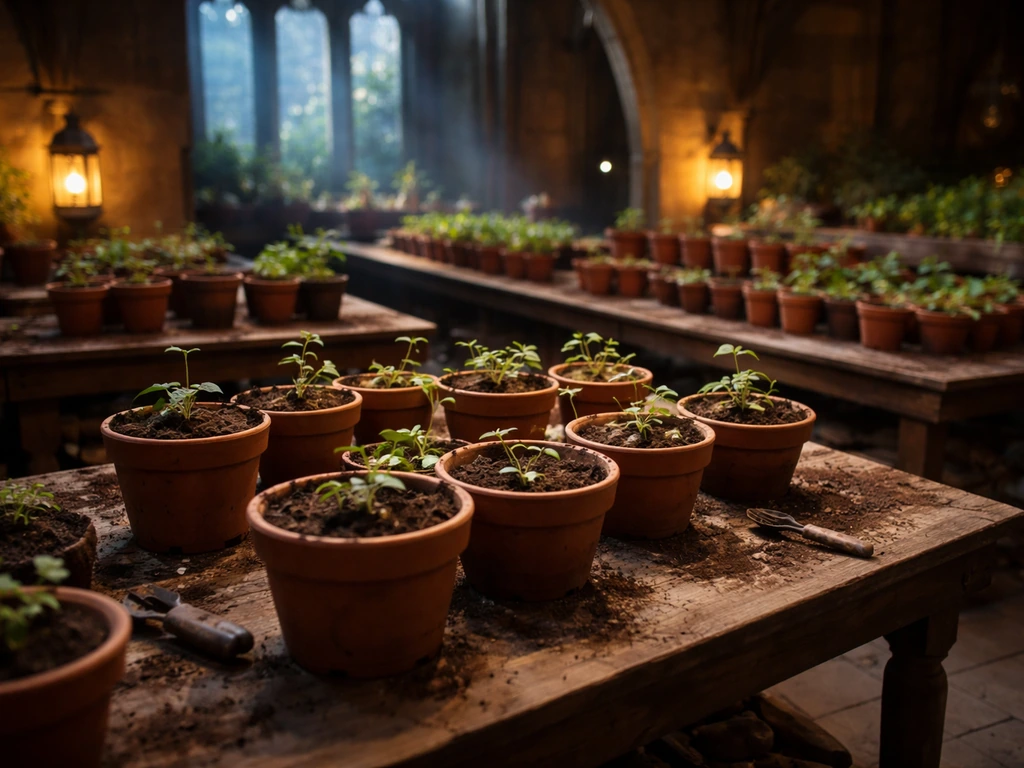
You cannot grow anything until you unlock the Room of Requirement by completing the main story quest literally named 'The Room of Requirement.' Once you are in there, you place Potting Tables using the Conjuring Spell. Those tables hold your growing pots, and each pot has a size: small, medium, or large. The size determines which plants you can grow, and that is the single biggest constraint you will hit early on. You start with limited space, so you have to prioritize. As you progress and expand your Potting Table setup, you get more growing slots, which is when longer rotations and specialty plants become worth thinking about. With multiple pot tool “places” and growing spots, the Room of Requirement lets you restock plant tools quickly by tending plants, making plant-tool efficiency depend on how much capacity you have.
Every plant has a real-time growth timer. You plant seeds, wait the specified number of minutes, then harvest. The harvested ingredient goes straight into your inventory for brewing. You can replant the same seeds immediately after harvesting, so once you have a seed type, it is a permanent resource. Switching plant types in a pot means waiting until the current crop is harvested and cleared before replanting something different, so plan your slot assignments ahead of time. Fertilizer from a Dung Composter boosts yield for one harvest cycle only, so save it for plants you need large quantities of fast.
The top plants worth growing, ranked
Here are the plants that give you the most return for your pot space, whether you are brand new or already deep into the game: If you want the best picks for your setup, Icarus best plants to grow is a great comparison point for what tends to be efficient in similar farming loops plants worth growing.
- Dittany: 10-minute grow time, fits in small pots, and is the key ingredient in Wiggenweld Potion (your main healing potion). This is a must-grow from day one. Every available small pot should have Dittany in it until you feel genuinely stocked on healing potions.
- Mallowsweet: Also 10 minutes, easy to grow, and useful for ritual/challenge content. It is the most beginner-friendly option because the constraints are minimal and the harvest cycle is fast. If you are new to the system, start here.
- Fluxweed: 15-minute grow time, requires a large pot, but yields 5 stems per harvest. It is the main ingredient for Focus Potion, which reduces spell cooldowns. For any player who relies on spells heavily in combat, this is worth the larger pot investment.
- Mandrake: Needs a medium or large pot and has a longer grow time, but the Mandrake itself is a throwable combat item that stuns nearby enemies. Great for players who like crowd control options beyond just potions.
- Venomous Tentacula: Large pot required, longer cycle, but produces Venomous Tentacula Leaves used in Venomous Tentacula Potion (damage over time). Best for advanced players with enough large pots to spare after covering Fluxweed.
Timing your crops: what to plant now vs. what to add later

In Hogwarts Legacy, there is no real in-game seasonal calendar the way there is in farming simulators, but timing still matters because of where you are in the story. Think of it in three phases based on your progression.
Early game (just unlocked Room of Requirement)
You will have limited pot sizes and table space. Plant Dittany in every small pot you have. It is a 10-minute cycle, it feeds Wiggenweld Potion, and it requires zero special setup. Do not overthink it here. Get the heal loop running first. If you can place a medium pot, add a Mandrake for a bit of combat versatility. Do not chase Fluxweed yet if all you have are small or medium pots.
Mid game (expanded Room of Requirement, large pots available)
This is when you should commit one or two large pots to Fluxweed. The 15-minute cycle and 5-stem yield make it worth the wait, and Focus Potion becomes increasingly valuable as enemy difficulty ramps up. Keep your Dittany rotation running in parallel. At this stage you might also consider adding Chinese Chomping Cabbage (medium/large pot) for a throwable combat plant option alongside your potions.
Late game (multiple tables, full pot variety)
Now you can afford to be strategic. Dedicate slots to Venomous Tentacula for damage potions, experiment with Shrivelfig and other specialty plants, and use fertilizer on your Fluxweed harvests to stockpile Focus Potion ingredients before tough fights. The key late-game move is batching: plant everything at the same time before a session, do other content for 15 minutes, then come back to harvest everything at once.
Choosing plants by your potion goal
If you know what you want out of your potion stock, you can align your growing slots directly to that goal. Here is how the most useful potions map to specific plants:
| Potion | Primary Plant Ingredient | Pot Size Needed | Grow Time | Best For |
|---|---|---|---|---|
| Wiggenweld Potion | Dittany Leaves | Small | 10 min | Healing / survival |
| Focus Potion | Fluxweed Stem | Large | 15 min | Cooldown reduction / spellcasting |
| Venomous Tentacula Potion | Venomous Tentacula Leaves | Large | Longer cycle | Damage over time / offense |
| Mandrake (throwable) | Mandrake plant | Medium/Large | Medium cycle | Crowd control in combat |
| Chinese Chomping Cabbage (throwable) | Chomping Cabbage plant | Medium/Large | Medium cycle | Area damage / distraction |
If you are optimizing purely for survival, lock in Dittany across every small pot. If you want a spellcasting-heavy build, split your large pots between Fluxweed and one offensive option. Do not spread yourself thin trying to grow everything at once when you are still building out your Potting Table capacity.
Beginner vs. advanced strategy
If you are just getting started
Keep it simple: Dittany in every small pot, Mallowsweet if you have extras. Both grow in 10 minutes, neither requires a large pot, and both give you useful output immediately. Do not worry about fertilizer yet. Just get comfortable with the harvest-replant loop. The biggest beginner mistake is planting something with a long cycle in a slot you needed for a quick-turnaround crop, then running out of healing potions mid-dungeon.
If you want to optimize efficiency
Advanced play is really about slot allocation and batching. Assign your pots by role: small pots for Dittany (fast heal loop), large pots for Fluxweed (cooldown potions) and one offensive plant. Use fertilizer specifically on Fluxweed right before a challenging quest or boss fight, since that single-harvest yield boost is most valuable when you need to stockpile fast. The Dung Composter is worth setting up once you have your core rotation locked, not before. Also: because switching plant types requires clearing the pot, assign each pot a permanent role rather than swapping constantly. Treat them like dedicated garden beds.
Your planting and harvesting workflow
Here is a practical routine that keeps your potion supply consistent without spending large chunks of play time in the Room of Requirement:
- At the start of every play session, go to the Room of Requirement first. Harvest anything ready, then replant immediately. This takes under two minutes.
- Assign pots permanently by plant type. Small pots: Dittany. Large pots: one or two for Fluxweed, one for your preferred offensive plant. Do not rotate these slots casually.
- When you need to stockpile for a tough fight, apply fertilizer to your Fluxweed pots on the harvest right before you head into that content. You get the 5-stem yield boosted for that one cycle, which can give you several extra Focus Potions.
- Check your potion count at each fast travel stop. If Wiggenweld stock drops below 5, prioritize your next Room of Requirement visit to harvest and replant Dittany.
- Once you have a Dung Composter set up, add fertilizing your high-priority plants to your session-start routine right after replanting.
- Late game: batch-plant everything at the same time at the start of a session, go do exploration or side quests for 15 minutes, then return to harvest all crops at once. This is the most time-efficient loop in the system.
The system is more forgiving than it looks once you have the right plants assigned to the right pots. The players who run out of potions are usually the ones who either skipped growing entirely or kept switching plants without a plan. Lock in Dittany, add Fluxweed when you can, and let the 10-to-15-minute cycles do the work while you explore. If you are wondering which crops to prioritize, this guide breaks down the nms best plants to grow by pot size and potion goal Lock in Dittany, add Fluxweed when you can, and let the 10-to-15-minute cycles do the work while you explore.. That is really all there is to it.
If you enjoy in-game growing systems like this one, it is worth noting that other games handle resource farming in similar but distinct ways. If you are also looking for growing tips in Skyrim, check the best plants to grow for reliable harvests and useful resources. The approach you use in Hogwarts Legacy, where pot size, grow time, and ingredient-to-potion mapping drive every decision, shares some DNA with crafting-focused systems in other open-world games, each with their own constraints worth understanding on their own terms.
FAQ
Can I replant the same seeds right after harvesting, or do I have to wait?
Yes. Replanting is limited by what you actually have in inventory, but once you harvest a crop you can immediately plant the same seeds again in that same pot. The practical tip is to avoid frequent switching early, because changing plant types forces you to wait for the current crop to finish and clear before you start a new timer.
What does batching mean in practice, and how should I plan my timing?
Seed growth timers run independently per pot, so “batching” is about aligning start times, not about harvesting every exact minute. A good rule is to plant everything you want to harvest in one session, then leave the Room of Requirement for a window long enough to cover the longest grow time you planted (10 minutes for Dittany or Mallowsweet, 15 minutes for Fluxweed).
When is fertilizer actually worth using, and should I use it as soon as I get it?
Fertilizer boosts only a single harvest cycle, so you should not treat it as a background buff. Use it when you can predict you will need ingredients soon, for example right before a boss quest or a dungeon run where potion crafting would otherwise interrupt your progress.
What should I do if I only have small pots, should I still try to grow Fluxweed?
If you cannot place large pots yet, do not force Fluxweed. Put Dittany in every small pot and add Mandrake only if you can support medium pots. Fluxweed requires a large pot and longer downtime, so trying to add it without the right space usually delays your healing loop, which is the most punishing bottleneck early.
If Fluxweed is the long-cycle crop, where does Mallowsweet fit into my garden priorities?
Mallowsweet is a good “extra slot” crop because it matches the 10 minute cadence and supports potion crafting without special constraints. The common mistake is using medium or large pots for slower or niche options before your healing supply is stable.
Why do my plants feel like they take too long, is it a pot-size problem or a story-gating problem?
Room of Requirement access is story-gated, but after you unlock it, the faster bottleneck is usually Potting Table expansion. If your garden feels slow or cramped, the decision aid is simple: upgrade pot capacity first, then start experimenting with specialty plants that have higher opportunity cost.
How should I assign pot sizes if I want both survival and offense?
Budget your pot types by role. For survival, dedicate small pots to Dittany. For cooldown-based spellcasting support, dedicate large pots to Fluxweed and keep one offensive option on large or medium depending on your space. This prevents the common issue where you run out of healing because you replaced your fast loop with variety.
Is it bad to rotate plant types in the same pot, or can I swap freely?
The main penalty is efficiency loss. Switching plant types requires waiting for that pot’s current crop to finish and clear, then starting a new timer. If you keep rotating plants, you constantly break your batching schedule and end up with uneven ingredient supplies.
Do I really need Fluxweed, or can I skip it if my build uses different potions?
Focus Potion is the main reason Fluxweed is “mandatory” for many players, because it is the only way to brew it. If your build does not rely on Focus Potion, you can delay Fluxweed until you have large pots and a reason to stockpile, but most late-game encounters make it increasingly valuable.
How can I avoid running out of potions right before a boss?
Keep a reserve buffer rather than crafting on demand. A practical approach is to harvest Fluxweed on a predictable cycle and craft or store Focus Potion ingredients so you are not forced to stop questing to wait out timers during tougher fights.
Next Article
NMS Best Plants to Grow on Freighter: Starter Guide
Best NMS freighter plants by goal, setup tips, and season aware picking for reliable harvests and quick profit